

No date
 |
Description
Book Introduction
The world is ending, but love has begun.
Extreme weather, heavy snow, disaster, and the last day
A lover's attitude toward the end
Jang Eun-jin's full-length novel, "No Date," was published in Minumsa's "Today's Young Writer" series.
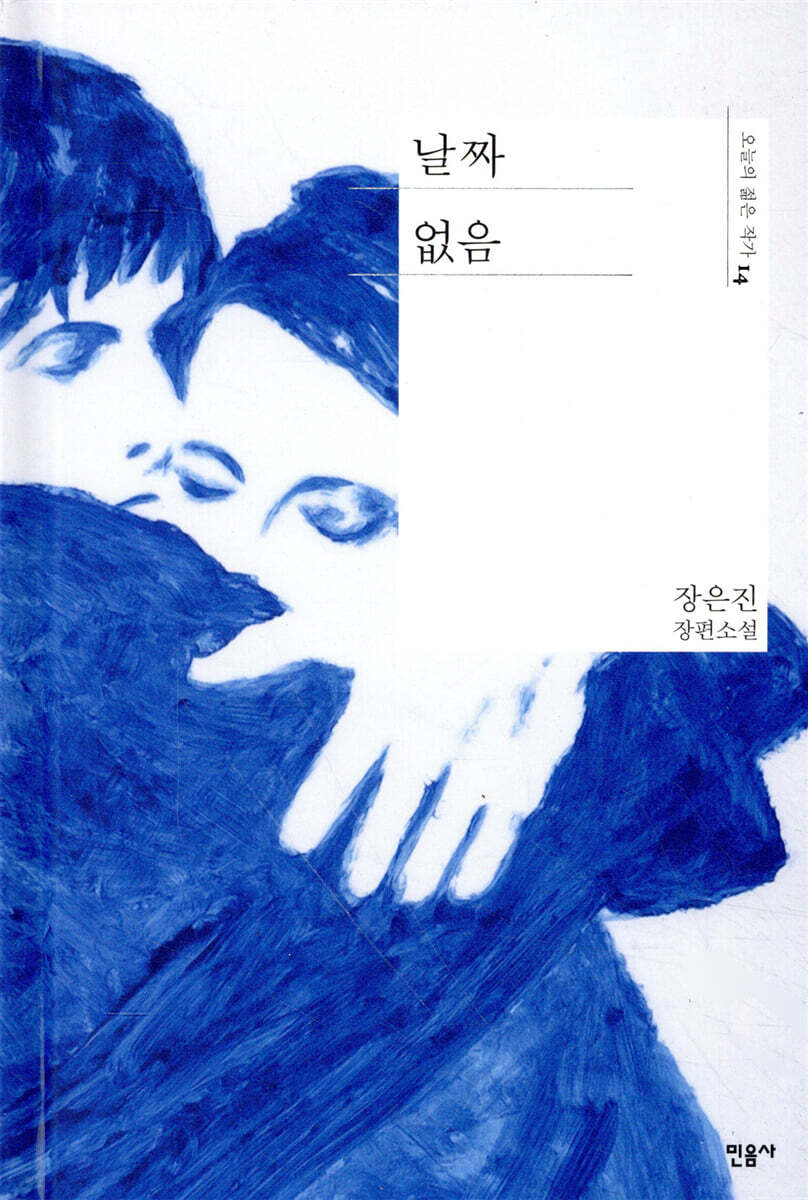
"No Date" is an isolated disaster romance by Jang Eun-jin, set against the backdrop of a strange disaster that lasts a long winter, and filled with colorful emotions and conversations about the day of a couple living in an empty city where everyone has left.
Most of Jang Eun-jin's novels feature characters who are isolated in their own spaces.
Jang Eun-jin's specialty is portraying the desire to be disconnected from others while simultaneously wanting to be connected.
Most apocalyptic novels feature characters embarking on long journeys or engaging in perilous survival games, often in fierce battles with disaster.
However, the people that Jang Eun-jin focuses on are those who did not leave and stayed behind, those who chose not to do it.
For them, the love they have now is more important than the fact that if they brave the cold and fear to escape the city, they might arrive in a better place or meet the family they lost before.
This young couple's attitude toward the future is also a huge metaphor for the attitudes and values that young people of our generation have toward the future.
Extreme weather, heavy snow, disaster, and the last day
A lover's attitude toward the end
Jang Eun-jin's full-length novel, "No Date," was published in Minumsa's "Today's Young Writer" series.
"No Date" is an isolated disaster romance by Jang Eun-jin, set against the backdrop of a strange disaster that lasts a long winter, and filled with colorful emotions and conversations about the day of a couple living in an empty city where everyone has left.
Most of Jang Eun-jin's novels feature characters who are isolated in their own spaces.
Jang Eun-jin's specialty is portraying the desire to be disconnected from others while simultaneously wanting to be connected.
Most apocalyptic novels feature characters embarking on long journeys or engaging in perilous survival games, often in fierce battles with disaster.
However, the people that Jang Eun-jin focuses on are those who did not leave and stayed behind, those who chose not to do it.
For them, the love they have now is more important than the fact that if they brave the cold and fear to escape the city, they might arrive in a better place or meet the family they lost before.
This young couple's attitude toward the future is also a huge metaphor for the attitudes and values that young people of our generation have toward the future.
- You can preview some of the book's contents.
Preview
index
No date 7
Author's Note 262
Author's Note 262
Into the book
After the heavy snowfall, the city could no longer be called a city.
Cars disappeared from the roads, water pipes froze, and electricity and communications were frequently cut off.
The paralyzed city lost or was stripped of its competent functions one by one.
The city was no different from a giant toy that had once been fun to play with, but had become so boring that it was thrown away without a second thought.
--- p.9
How harsh and mean would he be if he argued with me?
As your affection deepens, what words will you try to express in your grammar?
When boredom sets in, what metaphors will he use to convey his own lazy and withered feelings?
I felt like asking him a favor.
Let's try to have a deeper relationship today, have some arguments, and feel some boredom.
Let's find all the sentences that we each have kept or hidden inside and write them down in advance.
--- p.58~59
They say it's coming.
If that happens, the clothes he's wearing now will be the last.
They say that people continue to wear the clothes they were wearing last, even after they die.
So even if that comes, I'll be able to find him anywhere now.
If you find it, you might be able to chase it.
You'll be able to tell right away by the oddly colored buttons and shoulder seams on the sweater.
He will also naturally think of me when he sees the buttons and sweater.
Then I won't forget.
Then he asked while wiping the table with a dishcloth.
“What are you going to do by chasing me?”
“I want to date.
With you.
Even after death.”
He wasn't smiling anymore.
--- p.183
Not just Christmas, there were more things we didn't do than things we did.
When we met, the world was already covered in snow, so there were many things we wanted to do but couldn't.
Going for a bike ride together or going on a long trip.
We were never bored or awkward walking in silence all day, but we had never walked a long, straight path without speaking.
The road was blocked on all sides, leading nowhere.
So we spent most of our time inside the container box.
Cars disappeared from the roads, water pipes froze, and electricity and communications were frequently cut off.
The paralyzed city lost or was stripped of its competent functions one by one.
The city was no different from a giant toy that had once been fun to play with, but had become so boring that it was thrown away without a second thought.
--- p.9
How harsh and mean would he be if he argued with me?
As your affection deepens, what words will you try to express in your grammar?
When boredom sets in, what metaphors will he use to convey his own lazy and withered feelings?
I felt like asking him a favor.
Let's try to have a deeper relationship today, have some arguments, and feel some boredom.
Let's find all the sentences that we each have kept or hidden inside and write them down in advance.
--- p.58~59
They say it's coming.
If that happens, the clothes he's wearing now will be the last.
They say that people continue to wear the clothes they were wearing last, even after they die.
So even if that comes, I'll be able to find him anywhere now.
If you find it, you might be able to chase it.
You'll be able to tell right away by the oddly colored buttons and shoulder seams on the sweater.
He will also naturally think of me when he sees the buttons and sweater.
Then I won't forget.
Then he asked while wiping the table with a dishcloth.
“What are you going to do by chasing me?”
“I want to date.
With you.
Even after death.”
He wasn't smiling anymore.
--- p.183
Not just Christmas, there were more things we didn't do than things we did.
When we met, the world was already covered in snow, so there were many things we wanted to do but couldn't.
Going for a bike ride together or going on a long trip.
We were never bored or awkward walking in silence all day, but we had never walked a long, straight path without speaking.
The road was blocked on all sides, leading nowhere.
So we spent most of our time inside the container box.
--- p.197
Publisher's Review
An apocalyptic novel with no escape from disaster
In novels depicting a cold disaster that heralds the end of the world, or a dystopian space after the end of the world, the protagonists usually have to go on a long journey and overcome adversity to survive in extreme situations.
Unlike these apocalyptic novels, Jang Eun-jin's "No Date" is not an "adventure story."
In the city of "No Date," an abnormal climate continues for a year, with winter continuing, and rumors are circulating that the final day will come at the end of this disaster.
As the last day approaches, almost everyone forms a procession and leaves the city.
A small container box sits in a corner of an empty city where people have left. There is a lover who promised not to follow the procession and stay behind.
They doubt and question those who have left.
How the apocalypse is coming, can we escape it by leaving this city, and where are all the people who left?
In short, 'why' you should leave.
And these are questions that readers have been wondering about, but that apocalyptic novels have not asked.
How should we spend the last day given to us?
They are just a couple who have just fallen in love.
They are confident that they will not leave because there are still so many things they have not tried and stories they have not shared.
If there are lovers who leave for somewhere other than here, it is because they “have no new stories to tell each other.”
“We will never follow each other.” The couple’s determination is firm as they promise repeatedly.
How long can they endure the never-ending snowstorm? Their future is uncertain.
I'm not even sure if I'll find a better place if I leave here.
Between 'no future' and 'no certainty', they choose 'no reason to leave' and stay together.
They try to live each day as vividly as a year, feeling and remembering it.
Outside the container box, it is a colorless world covered in gray snow, a world of numbness frozen in sub-zero temperatures.
However, the container box that the lovers took refuge in is filled with various colored emotions such as excitement, jealousy, trust, and fights that they share, as well as the sense of wanting to embrace each other more deeply.
These are people who would be happy to die if they could be together until the end.
The novel shows the push and pull of a day between lovers as they ponder 'the last day given to us'.
A loose solidarity shared by isolated people
Jang Eun-jin's previous works, such as a man who wanders from motel to motel with a blind dog (『Nobody Writes Letters』) and a woman who locks herself in her room and never comes out (『Alice's Lifestyle』), have always focused on lonely and solitary people, people who are alone but do not want to be alone.
They are always alone, but eventually they meet someone.
The author's key words, 'isolation' and 'encounter,' reveal their colors and meanings more vividly in his new work, 'No Date.'
The lover's container box is the only place with a yellow light in the gray city.
His and her space, where they vividly feel the passing of every minute and second, is visited by the few remaining neighbors in the city.
A snack shop owner who refuses to accept the changed reality and opens her shop every day, an old woman who wanders around collecting waste paper in a city where recycling has become meaningless, an umbrella seller who became rich from the constant, poisonous snow, a cheeky high school student who doesn't get depressed even in the face of disaster, and even a man's ex-lover.
Those who are isolated due to the disaster.
People who stop by the container box ask about their loved ones' well-being and tell their stories.
They fix shoes, get coffee, and share dried persimmons.
And then they each go back to their own space.
Encounters with neighbors who visit the container box are fleeting and brief.
A day that may be the last for everyone.
The attitude of a neighbor who came to say goodbye through the heavy snow for what might be the last time, carries a warmth even in the frozen city.
This short greeting to each other is a 'dateless' solidarity between lonely people who, for their own reasons, do not leave the city and try to maintain their daily lives until the very end.
In novels depicting a cold disaster that heralds the end of the world, or a dystopian space after the end of the world, the protagonists usually have to go on a long journey and overcome adversity to survive in extreme situations.
Unlike these apocalyptic novels, Jang Eun-jin's "No Date" is not an "adventure story."
In the city of "No Date," an abnormal climate continues for a year, with winter continuing, and rumors are circulating that the final day will come at the end of this disaster.
As the last day approaches, almost everyone forms a procession and leaves the city.
A small container box sits in a corner of an empty city where people have left. There is a lover who promised not to follow the procession and stay behind.
They doubt and question those who have left.
How the apocalypse is coming, can we escape it by leaving this city, and where are all the people who left?
In short, 'why' you should leave.
And these are questions that readers have been wondering about, but that apocalyptic novels have not asked.
How should we spend the last day given to us?
They are just a couple who have just fallen in love.
They are confident that they will not leave because there are still so many things they have not tried and stories they have not shared.
If there are lovers who leave for somewhere other than here, it is because they “have no new stories to tell each other.”
“We will never follow each other.” The couple’s determination is firm as they promise repeatedly.
How long can they endure the never-ending snowstorm? Their future is uncertain.
I'm not even sure if I'll find a better place if I leave here.
Between 'no future' and 'no certainty', they choose 'no reason to leave' and stay together.
They try to live each day as vividly as a year, feeling and remembering it.
Outside the container box, it is a colorless world covered in gray snow, a world of numbness frozen in sub-zero temperatures.
However, the container box that the lovers took refuge in is filled with various colored emotions such as excitement, jealousy, trust, and fights that they share, as well as the sense of wanting to embrace each other more deeply.
These are people who would be happy to die if they could be together until the end.
The novel shows the push and pull of a day between lovers as they ponder 'the last day given to us'.
A loose solidarity shared by isolated people
Jang Eun-jin's previous works, such as a man who wanders from motel to motel with a blind dog (『Nobody Writes Letters』) and a woman who locks herself in her room and never comes out (『Alice's Lifestyle』), have always focused on lonely and solitary people, people who are alone but do not want to be alone.
They are always alone, but eventually they meet someone.
The author's key words, 'isolation' and 'encounter,' reveal their colors and meanings more vividly in his new work, 'No Date.'
The lover's container box is the only place with a yellow light in the gray city.
His and her space, where they vividly feel the passing of every minute and second, is visited by the few remaining neighbors in the city.
A snack shop owner who refuses to accept the changed reality and opens her shop every day, an old woman who wanders around collecting waste paper in a city where recycling has become meaningless, an umbrella seller who became rich from the constant, poisonous snow, a cheeky high school student who doesn't get depressed even in the face of disaster, and even a man's ex-lover.
Those who are isolated due to the disaster.
People who stop by the container box ask about their loved ones' well-being and tell their stories.
They fix shoes, get coffee, and share dried persimmons.
And then they each go back to their own space.
Encounters with neighbors who visit the container box are fleeting and brief.
A day that may be the last for everyone.
The attitude of a neighbor who came to say goodbye through the heavy snow for what might be the last time, carries a warmth even in the frozen city.
This short greeting to each other is a 'dateless' solidarity between lonely people who, for their own reasons, do not leave the city and try to maintain their daily lives until the very end.
GOODS SPECIFICS
- Date of publication: November 25, 2016
- Format: Hardcover book binding method guide
- Page count, weight, size: 268 pages | 378g | 128*188*20mm
- ISBN13: 9788937473142
- ISBN10: 8937473143
You may also like
카테고리
korean


korean

![GQ KOREA Mark (Monthly): December [2025]](http://librairie.coreenne.fr/cdn/shop/files/8ef265dbbfbf186523ed75ba7319009d.jpg?v=1765340328&width=3840)


