

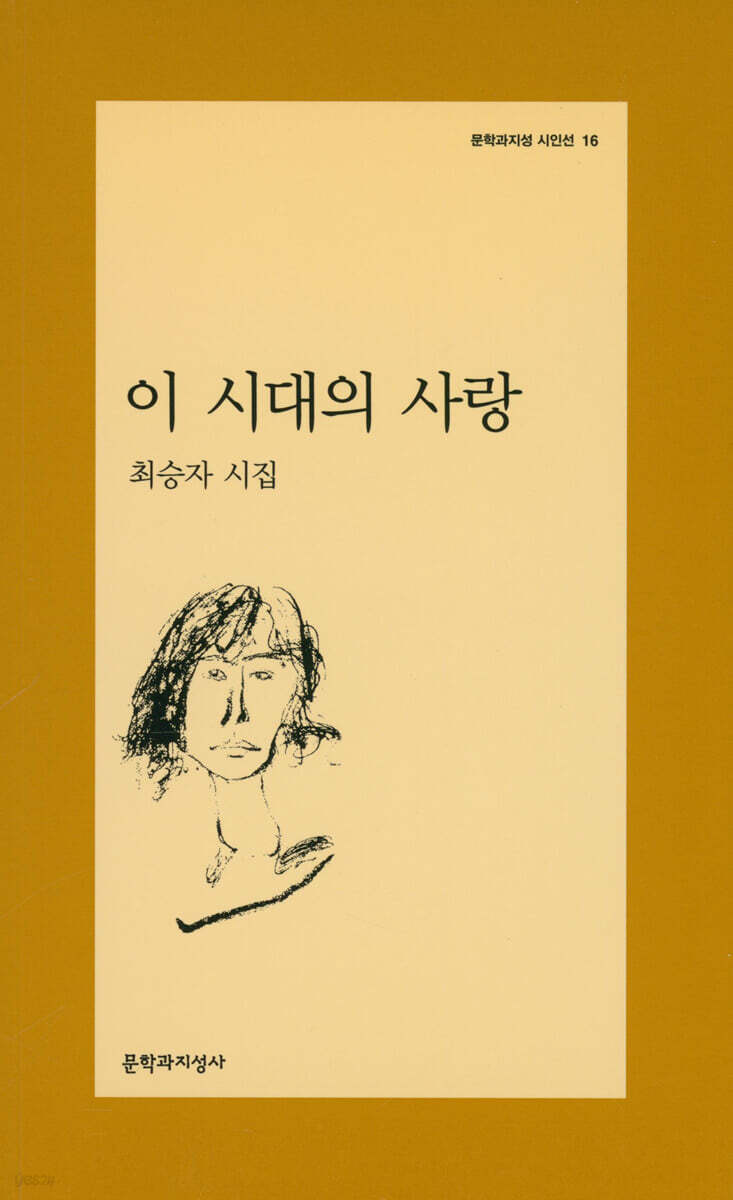
Love in this era
 |
Description
Book Introduction
In her debut work, which was also the title of her first poetry collection, poet Choi Seung-ja pours out a passionate, tragic passion that could not be contained by orthodox methods, and makes a desperate appeal for the meaning of life and its true value that this era has destroyed.
This appeal is also a linguistic decision for love and freedom as a human being before being a woman.
This appeal is also a linguistic decision for love and freedom as a human being before being a woman.
Into the book
I used to be nothing.
Mold on dry bread
Urine stains on the wall and eyes
A thousand-year-old corpse still covered in maggots.
No parents raised me.
Sleeping in a rat hole and eating the liver of a flea
Dying endlessly anywhere
I used to be nothing
Like falling meteors we
Therefore, when it passes by for a moment,
Don't tell me you know me.
I don't know you I don't know you.
You, you, you, happiness
you, you, you, love
That I am alive,
It is nothing more than an eternal rumor.
Mold on dry bread
Urine stains on the wall and eyes
A thousand-year-old corpse still covered in maggots.
No parents raised me.
Sleeping in a rat hole and eating the liver of a flea
Dying endlessly anywhere
I used to be nothing
Like falling meteors we
Therefore, when it passes by for a moment,
Don't tell me you know me.
I don't know you I don't know you.
You, you, you, happiness
you, you, you, love
That I am alive,
It is nothing more than an eternal rumor.
--- p.
I get hurt, I stare, I dream.
In this way, the poet exists.
He believes in the certain despair of today rather than the uncertain hope of tomorrow.
So poetry starts from a state of poverty or destitution.
Poetry is the power to stare intently at nothingness, to deny the reality of nothingness, or to dream of something that exists in the midst of nothingness.
However violent and destructive that negativity may be, it is at the same time a healthy force of dreaming.
Thus, between poverty and the dream in which that poverty is denied, the poet creates poetry with imagination, the product of the most brutal realism, the result of a gaze on wounds.
Yet, poetry can do nothing.
You can't earn a living, you can't help your neighbors, you can't start a revolution.
However, it is only that you can cry together when others cry because they are hungry, or you can cry boldly even when others do not cry.
The most constructive thing a poet can do is dream, and even then, it is only a dream reflected through the mirror of negativity that gazes upon pain and wounds.
I get hurt, I stare, I dream.
In this way, the poet exists.
He believes in the certain despair of today rather than the uncertain hope of tomorrow.
So poetry starts from a state of poverty or destitution.
Poetry is the power to stare intently at nothingness, to deny the reality of nothingness, or to dream of something that exists in the midst of nothingness.
However violent and destructive that negativity may be, it is at the same time a healthy force of dreaming.
Thus, between poverty and the dream in which that poverty is denied, the poet creates poetry with imagination, the product of the most brutal realism, the result of a gaze on wounds.
Yet, poetry can do nothing.
You can't earn a living, you can't help your neighbors, you can't start a revolution.
However, it is only that you can cry together when others cry because they are hungry, or you can cry boldly even when others do not cry.
The most constructive thing a poet can do is dream, and even then, it is only a dream reflected through the mirror of negativity that gazes upon pain and wounds.
In this way, the poet exists.
He believes in the certain despair of today rather than the uncertain hope of tomorrow.
So poetry starts from a state of poverty or destitution.
Poetry is the power to stare intently at nothingness, to deny the reality of nothingness, or to dream of something that exists in the midst of nothingness.
However violent and destructive that negativity may be, it is at the same time a healthy force of dreaming.
Thus, between poverty and the dream in which that poverty is denied, the poet creates poetry with imagination, the product of the most brutal realism, the result of a gaze on wounds.
Yet, poetry can do nothing.
You can't earn a living, you can't help your neighbors, you can't start a revolution.
However, it is only that you can cry together when others cry because they are hungry, or you can cry boldly even when others do not cry.
The most constructive thing a poet can do is dream, and even then, it is only a dream reflected through the mirror of negativity that gazes upon pain and wounds.
I get hurt, I stare, I dream.
In this way, the poet exists.
He believes in the certain despair of today rather than the uncertain hope of tomorrow.
So poetry starts from a state of poverty or destitution.
Poetry is the power to stare intently at nothingness, to deny the reality of nothingness, or to dream of something that exists in the midst of nothingness.
However violent and destructive that negativity may be, it is at the same time a healthy force of dreaming.
Thus, between poverty and the dream in which that poverty is denied, the poet creates poetry with imagination, the product of the most brutal realism, the result of a gaze on wounds.
Yet, poetry can do nothing.
You can't earn a living, you can't help your neighbors, you can't start a revolution.
However, it is only that you can cry together when others cry because they are hungry, or you can cry boldly even when others do not cry.
The most constructive thing a poet can do is dream, and even then, it is only a dream reflected through the mirror of negativity that gazes upon pain and wounds.
--- From the preface
thirty years old
When I can neither live like this nor die like this
Thirty is coming.
Waving a white handkerchief like a stinging toothache
Pleading with surprised, wide-eyed eyes.
My dream is that cancer cells sprout in my stomach.
I'm getting married, the poison in my liver sparkles.
The red traffic lights of death are lit in both eye sockets
Blood is jelly, nails are sawdust, hair is wire
Through the endless fog of minerals
A bodyless shadow moves forward
Now, the birds that have no new dreams
Fly to the Golgotha of memories and bury the bones
A white handkerchief is dropped
The whites of the eyes are swollen shut.
Oh happy happy happy surrender
I'm glad we're thirty years old.
When I can neither live like this nor die like this
Thirty is coming.
Waving a white handkerchief like a stinging toothache
Pleading with surprised, wide-eyed eyes.
My dream is that cancer cells sprout in my stomach.
I'm getting married, the poison in my liver sparkles.
The red traffic lights of death are lit in both eye sockets
Blood is jelly, nails are sawdust, hair is wire
Through the endless fog of minerals
A bodyless shadow moves forward
Now, the birds that have no new dreams
Fly to the Golgotha of memories and bury the bones
A white handkerchief is dropped
The whites of the eyes are swollen shut.
Oh happy happy happy surrender
I'm glad we laid the iron plate.
When I can neither live like this nor die like this
Thirty is coming.
Waving a white handkerchief like a stinging toothache
Pleading with surprised, wide-eyed eyes.
My dream is that cancer cells sprout in my stomach.
I'm getting married, the poison in my liver sparkles.
The red traffic lights of death are lit in both eye sockets
Blood is jelly, nails are sawdust, hair is wire
Through the endless fog of minerals
A bodyless shadow moves forward
Now, the birds that have no new dreams
Fly to the Golgotha of memories and bury the bones
A white handkerchief is dropped
The whites of the eyes are swollen shut.
Oh happy happy happy surrender
I'm glad we're thirty years old.
When I can neither live like this nor die like this
Thirty is coming.
Waving a white handkerchief like a stinging toothache
Pleading with surprised, wide-eyed eyes.
My dream is that cancer cells sprout in my stomach.
I'm getting married, the poison in my liver sparkles.
The red traffic lights of death are lit in both eye sockets
Blood is jelly, nails are sawdust, hair is wire
Through the endless fog of minerals
A bodyless shadow moves forward
Now, the birds that have no new dreams
Fly to the Golgotha of memories and bury the bones
A white handkerchief is dropped
The whites of the eyes are swollen shut.
Oh happy happy happy surrender
I'm glad we laid the iron plate.
--- p.30
This dog-like autumn
The dog-like autumn is coming.
Autumn like syphilis
And death, the twilight that paralyzes
It comes to one leg.
All things lose moisture
The boundaries of all roads are blurred.
The voice of the old singer on the record is withered
Hello, it's not a bamboo line, it's a bamboo line, bamboo line
The phone line loses its recipient in the air.
Lovers who leave once never come back, not even in dreams.
And then the wastewater of the frozen memories
In the brass room of the past, where Hanup smells like horse urine,
I ask in a voice that has just woken up from the dead.
How far have we come and how far do we have to go?
Can a river become a sea? This dog-like autumn
The dog-like autumn is coming.
Autumn like syphilis
And death, the twilight that paralyzes
It comes to one leg.
All things lose moisture
The boundaries of all roads are blurred.
The voice of the old singer on the record is withered
Hello, it's not a bamboo line, it's a bamboo line, bamboo line
The phone line loses its recipient in the air.
Lovers who leave once never come back, not even in dreams.
And then the wastewater of the frozen memories
In the brass room of the past, where Hanup smells like horse urine,
I ask in a voice that has just woken up from the dead.
How far have we come and how far do we have to go?
Can a river become a sea?
The dog-like autumn is coming.
Autumn like syphilis
And death, the twilight that paralyzes
It comes to one leg.
All things lose moisture
The boundaries of all roads are blurred.
The voice of the old singer on the record is withered
Hello, it's not a bamboo line, it's a bamboo line, bamboo line
The phone line loses its recipient in the air.
Lovers who leave once never come back, not even in dreams.
And then the wastewater of the frozen memories
In the brass room of the past, where Hanup smells like horse urine,
I ask in a voice that has just woken up from the dead.
How far have we come and how far do we have to go?
Can a river become a sea? This dog-like autumn
The dog-like autumn is coming.
Autumn like syphilis
And death, the twilight that paralyzes
It comes to one leg.
All things lose moisture
The boundaries of all roads are blurred.
The voice of the old singer on the record is withered
Hello, it's not a bamboo line, it's a bamboo line, bamboo line
The phone line loses its recipient in the air.
Lovers who leave once never come back, not even in dreams.
And then the wastewater of the frozen memories
In the brass room of the past, where Hanup smells like horse urine,
I ask in a voice that has just woken up from the dead.
How far have we come and how far do we have to go?
Can a river become a sea?
--- p.
14
14
GOODS SPECIFICS
- Date of issue: June 30, 1999
- Page count, weight, size: 96 pages | 128*205*15mm
- ISBN13: 9788932001258
- ISBN10: 8932001251
You may also like
카테고리
korean


korean

![ELLE 엘르 스페셜 에디션 A형 : 12월 [2025]](http://librairie.coreenne.fr/cdn/shop/files/b8e27a3de6c9538896439686c6b0e8fb.jpg?v=1766436872&width=3840)


