

castle
 |
Description
Book Introduction
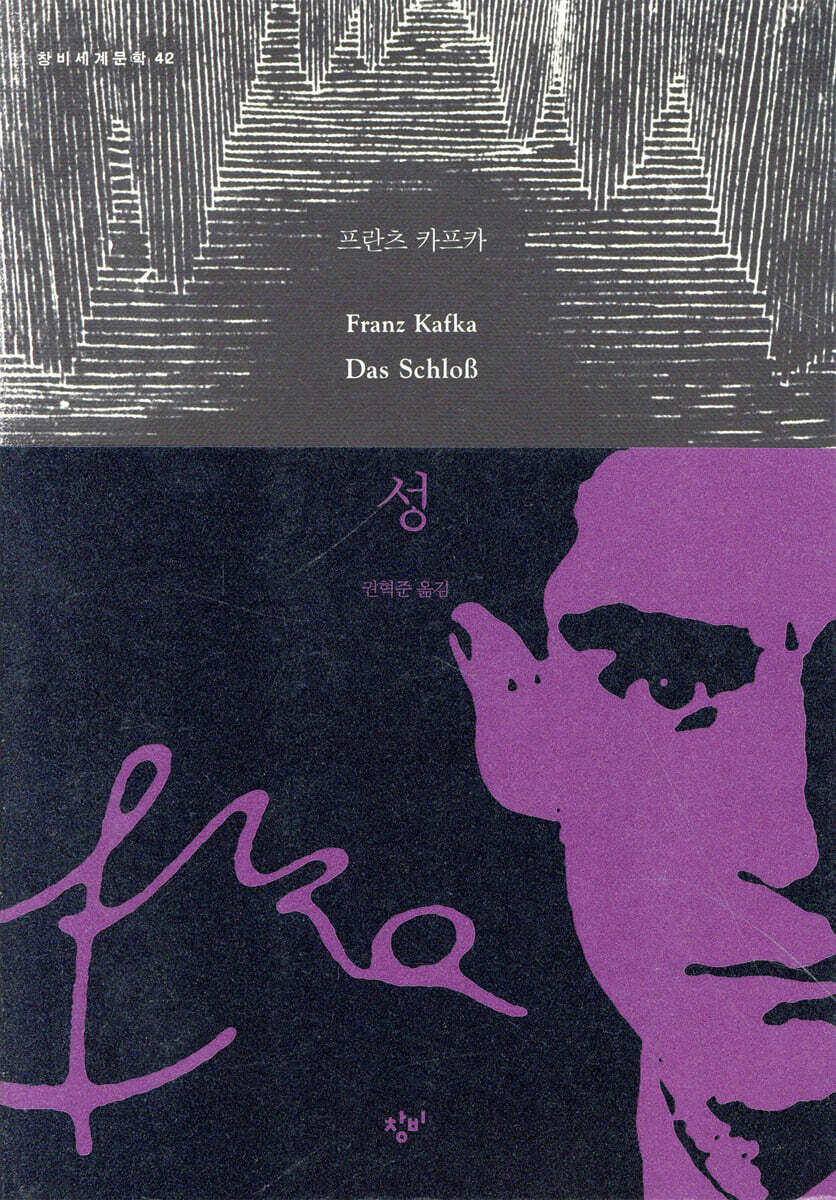
"The Castle" is the last full-length novel by Franz Kafka, a representative 20th-century writer who surrealistically portrays the existential absurdity experienced by modern people.
Kafka left three unfinished novels, known as the "Trilogy of Solitude." Among them, "The Castle" is the most captivating novel among Kafka's works, as it fully reflects the author's intentions and concept while simultaneously provoking various interpretations by depicting a labyrinthine world.
『The Castle』, which is being presented as the 42nd volume of Changbi World Literature, is based on the critical edition edited by Malcolm Pasley based on Kafka's posthumous works, rather than the first edition edited by Max Brod.
Professor Kwon Hyuk-jun of Incheon National University, who has consistently translated Kafka's works, presents a new translation, including faithful annotations and commentary on the ending and revision direction envisioned by Kafka.
Kafka left three unfinished novels, known as the "Trilogy of Solitude." Among them, "The Castle" is the most captivating novel among Kafka's works, as it fully reflects the author's intentions and concept while simultaneously provoking various interpretations by depicting a labyrinthine world.
『The Castle』, which is being presented as the 42nd volume of Changbi World Literature, is based on the critical edition edited by Malcolm Pasley based on Kafka's posthumous works, rather than the first edition edited by Max Brod.
Professor Kwon Hyuk-jun of Incheon National University, who has consistently translated Kafka's works, presents a new translation, including faithful annotations and commentary on the ending and revision direction envisioned by Kafka.
- You can preview some of the book's contents.
Preview
index
Chapter 1 Arrival
Chapter 2 Barnabas
Chapter 3 Frida
Chapter 4: First Conversation with the Mistress
Chapter 5 At the Village Chief's House
Chapter 6: Second Conversation with the Mistress
Chapter 7 School Teacher
Chapter 8: Waiting for Clam
Chapter 9 Resistance to Interrogation
Chapter 10 On the Street
Chapter 11 At School
Chapter 12: Assistants
Chapter 13 Hans
Chapter 14: Frida's Accusation
Chapter 15 At Amalia's House
Chapter 16
Chapter 17: Amalia's Secret
Chapter 18: Amalia's Punishment
Chapter 19 Petition
Chapter 20 Olga's Plan
Chapter 21
Chapter 22
Chapter 23
Chapter 24
Chapter 25
Commentary / "A Strange Land"? Experience an incomprehensible world of chaos and bewilderment.
Author's Chronology
Preface
Chapter 2 Barnabas
Chapter 3 Frida
Chapter 4: First Conversation with the Mistress
Chapter 5 At the Village Chief's House
Chapter 6: Second Conversation with the Mistress
Chapter 7 School Teacher
Chapter 8: Waiting for Clam
Chapter 9 Resistance to Interrogation
Chapter 10 On the Street
Chapter 11 At School
Chapter 12: Assistants
Chapter 13 Hans
Chapter 14: Frida's Accusation
Chapter 15 At Amalia's House
Chapter 16
Chapter 17: Amalia's Secret
Chapter 18: Amalia's Punishment
Chapter 19 Petition
Chapter 20 Olga's Plan
Chapter 21
Chapter 22
Chapter 23
Chapter 24
Chapter 25
Commentary / "A Strange Land"? Experience an incomprehensible world of chaos and bewilderment.
Author's Chronology
Preface
Into the book
What I want is not the gift of grace bestowed by the castle, but my rights. --- p.108
At that moment, K felt as if all connection between himself and others had been severed, and he felt freer than ever, as if he could wait in the place where he was normally forbidden to enter.
He felt like he had achieved this freedom that no one else could.
No one will be able to touch him or drive him out, let alone speak to him.
But at the same time—and this thought was equally powerful—it occurred to me that nothing could be more meaningless, more hopeless, than this freedom, this waiting, this impregnable state.—p.153
Come and have a look.
Who knows what awaits you on the other side? Everything here is filled with opportunity.
Of course, some opportunities are too big to take advantage of, and in some cases, we find ourselves frustrated for no other reason than ourselves.
Yes, it is truly amazing.
At that moment, K felt as if all connection between himself and others had been severed, and he felt freer than ever, as if he could wait in the place where he was normally forbidden to enter.
He felt like he had achieved this freedom that no one else could.
No one will be able to touch him or drive him out, let alone speak to him.
But at the same time—and this thought was equally powerful—it occurred to me that nothing could be more meaningless, more hopeless, than this freedom, this waiting, this impregnable state.—p.153
Come and have a look.
Who knows what awaits you on the other side? Everything here is filled with opportunity.
Of course, some opportunities are too big to take advantage of, and in some cases, we find ourselves frustrated for no other reason than ourselves.
Yes, it is truly amazing.
--- p.382
Publisher's Review
A dash towards the last frontier on earth
Franz Kafka, who portrayed the absurdity of human existence in a surrealistic way and was admired by Sartre and Camus as a pioneer of modern existentialist literature.
Kafka was born in 1883 in Prague, the eldest son of a German-speaking Jewish family, a minority in the city.
Following his father's wishes, who was a self-made man, he went to a German school and then majored in law at university.
I found a job that allowed me to leave work at 2 p.m. and worked there for 14 years.
He suffered from a nervous breakdown due to repeated broken engagements and conflicts with his father, and the pulmonary tuberculosis he developed at the age of thirty-four gradually worsened, eventually leading to his death in 1924 at the age of forty.
For the writer Kafka, this life history was merely a side event that occurred behind the scenes of his work of recording his “dreamlike inner world.”
Kafka's breakthrough as a writer came on the night of September 22-23, 1912, when he completed the short story "The Sentence."
In the same year, he wrote "Metamorphosis," widely known as his masterpiece, and published his first collection of works, "Observation," continuing to write consistently while balancing his work life and life as a writer.
Then, due to his deteriorating health, he took a year-long break from 1920 and devoted himself to writing a new novel, which became his last full-length novel, "The Castle."
At the time, Kafka described his health and writing as “a rush towards the last frontier of the earth.”
However, 『The Castle』 never sees completion.
Kafka asked his lifelong friend Max Brod to burn all of his manuscripts discovered after his death, but Brod edited and published three novels himself: The Trial (1925), The Castle (1926), and The Disappeared (published as America in 1927).
Among these works, which are called the 'Trilogy of Solitude', 'The Castle' has become Kafka's representative work, as it fully reflects Kafka's writing intentions and conception, while at the same time provoking various interpretations by depicting a labyrinthine world that seems impossible to interpret.
That is, “Every sentence asks me to interpret it, but no sentence allows it,” said Adorno (Theodor W.
As Adorno's words suggest, this work is particularly enticing to readers because it can be read in a multi-layered way from various perspectives, ranging from theological and religious interpretations to existentialist, psychoanalytic, biographical, and social interpretations.
『The Castle』, the 42nd volume of Changbi World Literature, is based on the critical edition edited by Malcolm Passley based on Kafka's posthumous works, instead of the first edition edited by Brod. Professor Kwon Hyuk-jun of Incheon National University, who has consistently translated Kafka's works such as 『Kafka Short Stories』 and 『The Trial』, presents a new translation, and with faithful annotations and commentary that include Kafka's comments to Brod about the ending of this unfinished novel and explanations of Kafka's direction in revising it, he has broadened the horizon of interpretation so that readers can seek understanding in their own way, making the most of the charm of the work, which is bound to have so many interpretations.
The Stranger K and Kafka against the deformed majority subordinated to the authority of the castle
Late one snowy night, a man arrives in a castle town.
K, who calls himself a land surveyor, enters an inn to find a place to stay and encounters the villagers, where he encounters a series of absurd situations. From this point on, K spends a week in and out of the castle, trying to have his work recognized by the castle authorities and to become integrated into the village community through marriage to a village girl, which is the main plot of 『The Castle』.
K is confident that he is a land surveyor invited by the Count, and that his only tentative knowledge of the castle is that “the people there know how to find a good land surveyor,” but to the villagers, he is “not a land surveyor at all,” but a shabby man in his thirties who appears to be “a lying, vulgar vagrant, or worse,” a stranger who may cause harm to the village.
K has traveled a long way with hopes for the future, guided by his own will and choice, but the castle itself falls short of his expectations in terms of size and appearance, and the closer he tries to approach it, the farther away it seems, leaving him with a confused impression.
The villagers, who also appear to have been abused, blindly obey the castle officials and obstruct K's attempts to enter the castle, implicating him in their own inexplicable events or offering him inexplicable hints.
As an outsider and a stranger, K distances himself from the villagers' unconditional obedience to sex and responds critically.
K continues to defy taboos, especially demanding a confrontation with Clam, the castle's high-ranking official, and strives to demonstrate the power of common sense and enlightenment to a village community caught up in incomprehensible customs.
But, as K's lover, Frida, criticized, the situation only repeats itself: "You can certainly refute everything, but in the end, nothing is refuted."
This repetition of irony creates a labyrinthine world and raises countless questions.
Will K's efforts ultimately fail? Who is K, and why does he desperately seek the castle? What exactly is the castle?
In response to these questions, the novel itself tempts readers by offering so many possibilities.
Some see 'sex' as patriarchal authority, and K's struggle as a challenge to the authority of the father.
It is understood as a political and social struggle, and some view it as a work depicting the power structure of the totalitarian system that emerged in the 20th century, as well as a satire of modern bureaucracy.
There is also an interpretation that sex is a symbol of the masculine world filled with symbolic systems such as documents and records that contrast with the realm of the unconscious or the intimate realm of the home.
Kafka's work can also be read as a depiction of the situation of the Jewish people, who try in vain to gain recognition in Western society, by extending the individual to the Jewish people.
It can even be read as a description of the author's own failed life as a bachelor who repeatedly failed in marriage, suffered from tuberculosis, and was unable to settle down anywhere, as well as a record of reflection on the exceptional existence that isolated his life while immersing himself in writing.
But, taking all these interpretations into account, it may be that 『The Castle』 is the ‘last frontier on earth’ that Kafka, a man who lived his life as a writer, tried to reach in the last moments of his life.
And that boundary was embodied in what Thomas Mann called a 'completely autobiographical novel'.
■ Translator's Note
Like other works by Kafka, The Castle begins in a confined situation with no clear context.
The novel's main plot is about a man named K, who calls himself a land surveyor, arriving in a village and desperately struggling to have his professional activities and personal life recognized by the castle and the castle authorities of the village.
The structure of an individual struggling over a certain object can be seen in many of Kafka's works, and in "The Castle," the individual's struggle expands into a struggle for survival.
But K's efforts do not bear fruit.
A week-long attempt to enter the castle, as well as to settle in the village, fails.
K hopes to gain access to the castle through the villagers, but they are peculiar and tragic figures who implicate K in events that are difficult to understand and offer him contradictory hints that he cannot decipher.
Franz Kafka, who portrayed the absurdity of human existence in a surrealistic way and was admired by Sartre and Camus as a pioneer of modern existentialist literature.
Kafka was born in 1883 in Prague, the eldest son of a German-speaking Jewish family, a minority in the city.
Following his father's wishes, who was a self-made man, he went to a German school and then majored in law at university.
I found a job that allowed me to leave work at 2 p.m. and worked there for 14 years.
He suffered from a nervous breakdown due to repeated broken engagements and conflicts with his father, and the pulmonary tuberculosis he developed at the age of thirty-four gradually worsened, eventually leading to his death in 1924 at the age of forty.
For the writer Kafka, this life history was merely a side event that occurred behind the scenes of his work of recording his “dreamlike inner world.”
Kafka's breakthrough as a writer came on the night of September 22-23, 1912, when he completed the short story "The Sentence."
In the same year, he wrote "Metamorphosis," widely known as his masterpiece, and published his first collection of works, "Observation," continuing to write consistently while balancing his work life and life as a writer.
Then, due to his deteriorating health, he took a year-long break from 1920 and devoted himself to writing a new novel, which became his last full-length novel, "The Castle."
At the time, Kafka described his health and writing as “a rush towards the last frontier of the earth.”
However, 『The Castle』 never sees completion.
Kafka asked his lifelong friend Max Brod to burn all of his manuscripts discovered after his death, but Brod edited and published three novels himself: The Trial (1925), The Castle (1926), and The Disappeared (published as America in 1927).
Among these works, which are called the 'Trilogy of Solitude', 'The Castle' has become Kafka's representative work, as it fully reflects Kafka's writing intentions and conception, while at the same time provoking various interpretations by depicting a labyrinthine world that seems impossible to interpret.
That is, “Every sentence asks me to interpret it, but no sentence allows it,” said Adorno (Theodor W.
As Adorno's words suggest, this work is particularly enticing to readers because it can be read in a multi-layered way from various perspectives, ranging from theological and religious interpretations to existentialist, psychoanalytic, biographical, and social interpretations.
『The Castle』, the 42nd volume of Changbi World Literature, is based on the critical edition edited by Malcolm Passley based on Kafka's posthumous works, instead of the first edition edited by Brod. Professor Kwon Hyuk-jun of Incheon National University, who has consistently translated Kafka's works such as 『Kafka Short Stories』 and 『The Trial』, presents a new translation, and with faithful annotations and commentary that include Kafka's comments to Brod about the ending of this unfinished novel and explanations of Kafka's direction in revising it, he has broadened the horizon of interpretation so that readers can seek understanding in their own way, making the most of the charm of the work, which is bound to have so many interpretations.
The Stranger K and Kafka against the deformed majority subordinated to the authority of the castle
Late one snowy night, a man arrives in a castle town.
K, who calls himself a land surveyor, enters an inn to find a place to stay and encounters the villagers, where he encounters a series of absurd situations. From this point on, K spends a week in and out of the castle, trying to have his work recognized by the castle authorities and to become integrated into the village community through marriage to a village girl, which is the main plot of 『The Castle』.
K is confident that he is a land surveyor invited by the Count, and that his only tentative knowledge of the castle is that “the people there know how to find a good land surveyor,” but to the villagers, he is “not a land surveyor at all,” but a shabby man in his thirties who appears to be “a lying, vulgar vagrant, or worse,” a stranger who may cause harm to the village.
K has traveled a long way with hopes for the future, guided by his own will and choice, but the castle itself falls short of his expectations in terms of size and appearance, and the closer he tries to approach it, the farther away it seems, leaving him with a confused impression.
The villagers, who also appear to have been abused, blindly obey the castle officials and obstruct K's attempts to enter the castle, implicating him in their own inexplicable events or offering him inexplicable hints.
As an outsider and a stranger, K distances himself from the villagers' unconditional obedience to sex and responds critically.
K continues to defy taboos, especially demanding a confrontation with Clam, the castle's high-ranking official, and strives to demonstrate the power of common sense and enlightenment to a village community caught up in incomprehensible customs.
But, as K's lover, Frida, criticized, the situation only repeats itself: "You can certainly refute everything, but in the end, nothing is refuted."
This repetition of irony creates a labyrinthine world and raises countless questions.
Will K's efforts ultimately fail? Who is K, and why does he desperately seek the castle? What exactly is the castle?
In response to these questions, the novel itself tempts readers by offering so many possibilities.
Some see 'sex' as patriarchal authority, and K's struggle as a challenge to the authority of the father.
It is understood as a political and social struggle, and some view it as a work depicting the power structure of the totalitarian system that emerged in the 20th century, as well as a satire of modern bureaucracy.
There is also an interpretation that sex is a symbol of the masculine world filled with symbolic systems such as documents and records that contrast with the realm of the unconscious or the intimate realm of the home.
Kafka's work can also be read as a depiction of the situation of the Jewish people, who try in vain to gain recognition in Western society, by extending the individual to the Jewish people.
It can even be read as a description of the author's own failed life as a bachelor who repeatedly failed in marriage, suffered from tuberculosis, and was unable to settle down anywhere, as well as a record of reflection on the exceptional existence that isolated his life while immersing himself in writing.
But, taking all these interpretations into account, it may be that 『The Castle』 is the ‘last frontier on earth’ that Kafka, a man who lived his life as a writer, tried to reach in the last moments of his life.
And that boundary was embodied in what Thomas Mann called a 'completely autobiographical novel'.
■ Translator's Note
Like other works by Kafka, The Castle begins in a confined situation with no clear context.
The novel's main plot is about a man named K, who calls himself a land surveyor, arriving in a village and desperately struggling to have his professional activities and personal life recognized by the castle and the castle authorities of the village.
The structure of an individual struggling over a certain object can be seen in many of Kafka's works, and in "The Castle," the individual's struggle expands into a struggle for survival.
But K's efforts do not bear fruit.
A week-long attempt to enter the castle, as well as to settle in the village, fails.
K hopes to gain access to the castle through the villagers, but they are peculiar and tragic figures who implicate K in events that are difficult to understand and offer him contradictory hints that he cannot decipher.
GOODS SPECIFICS
- Date of issue: May 8, 2015
- Page count, weight, size: Checking page count | 652g | 153*224*22mm
- ISBN13: 9788936464424
- ISBN10: 8936464426
You may also like
카테고리
korean


korean

![GQ KOREA Mark (Monthly): December [2025]](http://librairie.coreenne.fr/cdn/shop/files/8ef265dbbfbf186523ed75ba7319009d.jpg?v=1765340328&width=3840)


