

Part-time job
 |
Description
Book Introduction
“That’s why the world is crazy these days!”
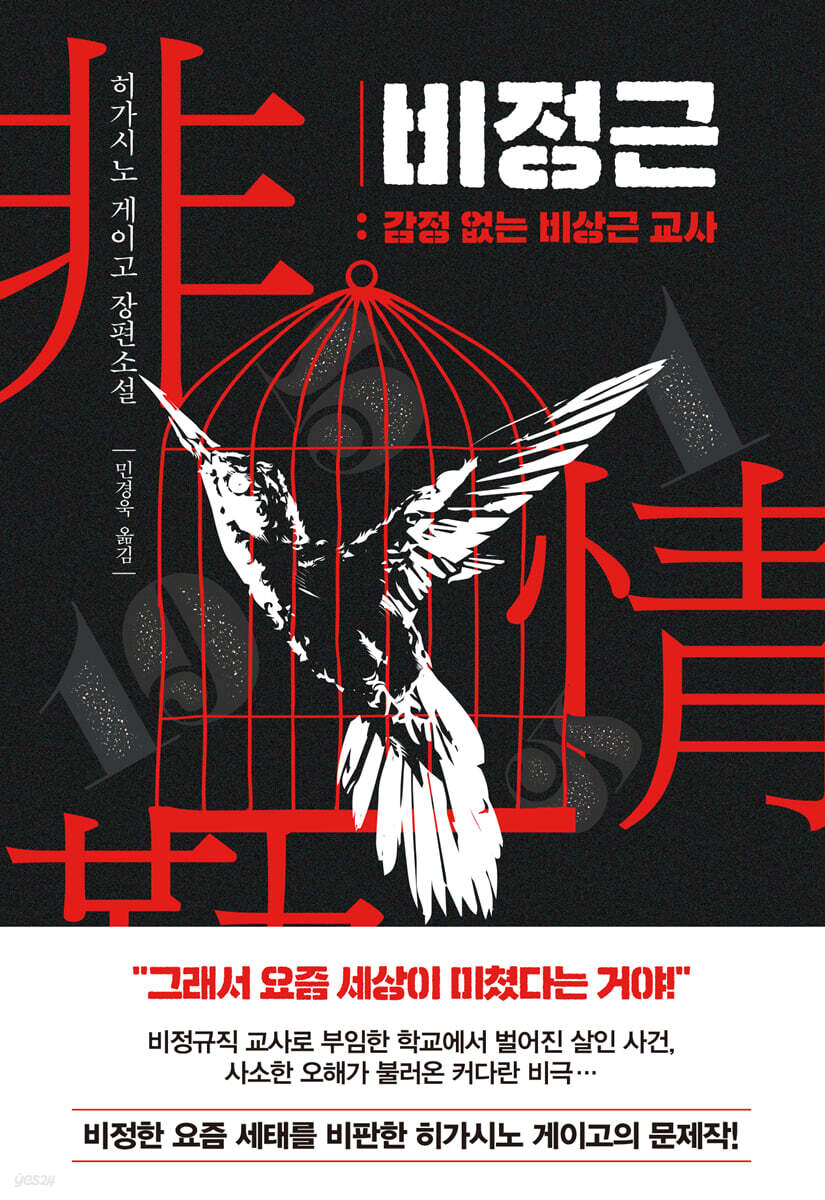
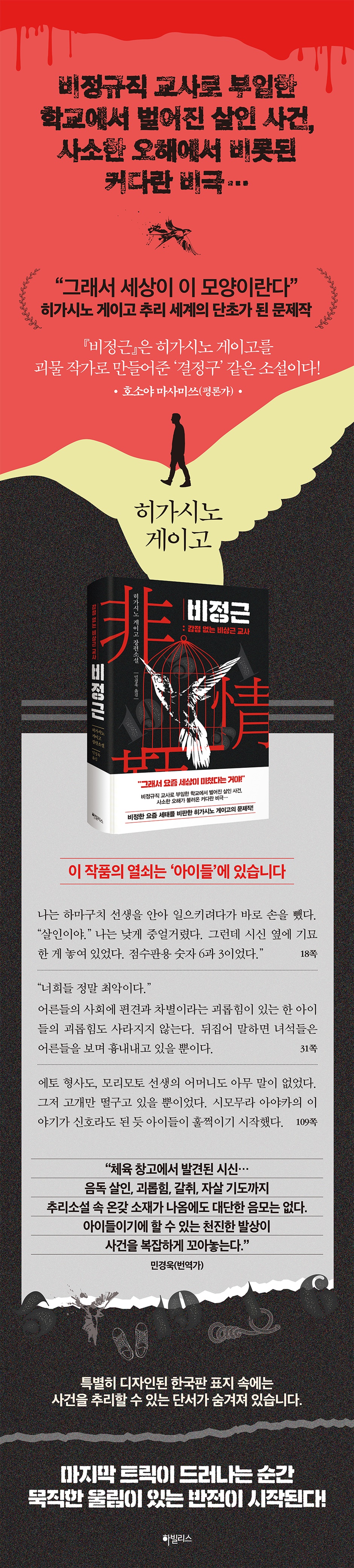
A murder case that occurred at a school where a non-regular teacher was assigned.
A small misunderstanding leads to a great tragedy…
Keigo Higashino's early problematic work that criticized the harsh reality!
The protagonist is a part-time homeroom teacher who was assigned to class 3, grade 5 at Mitsuba Elementary School to replace the previous teacher, Morimoto, who lost his life in a mysterious accident during the previous Golden Week.
Morimoto's death is presumed to be suicide because he fell from the window of the classroom he was in charge of, but the police ask the protagonist for his cooperation in the investigation, saying that there are some suspicious aspects to this case. The history of Morimoto's shopping the day before he died, the equation '5X10+5+1' written on the blackboard, the suspicious behavior of the children in the class... During the investigation, the protagonist gets closer to the truth of the shocking incident.
"The Unjust" is evaluated to have added Higashino Keigo's meticulous tricks and a touching twist, and is one of the few representative early works of Higashino Keigo that has been introduced in Korea.
In this work, which consists of six main episodes and two hidden tracks, readers who were reassured by the fact that the main character's occupation is an elementary school teacher are faced with a 'murder case' right from the beginning.
Through six unrefined short stories from his debut, you can experience the beginnings of Keigo Higashino's style of mystery and his unique perspective, so this book is a must-read for readers who love his mystery world.
A murder case that occurred at a school where a non-regular teacher was assigned.
A small misunderstanding leads to a great tragedy…
Keigo Higashino's early problematic work that criticized the harsh reality!
The protagonist is a part-time homeroom teacher who was assigned to class 3, grade 5 at Mitsuba Elementary School to replace the previous teacher, Morimoto, who lost his life in a mysterious accident during the previous Golden Week.
Morimoto's death is presumed to be suicide because he fell from the window of the classroom he was in charge of, but the police ask the protagonist for his cooperation in the investigation, saying that there are some suspicious aspects to this case. The history of Morimoto's shopping the day before he died, the equation '5X10+5+1' written on the blackboard, the suspicious behavior of the children in the class... During the investigation, the protagonist gets closer to the truth of the shocking incident.
"The Unjust" is evaluated to have added Higashino Keigo's meticulous tricks and a touching twist, and is one of the few representative early works of Higashino Keigo that has been introduced in Korea.
In this work, which consists of six main episodes and two hidden tracks, readers who were reassured by the fact that the main character's occupation is an elementary school teacher are faced with a 'murder case' right from the beginning.
Through six unrefined short stories from his debut, you can experience the beginnings of Keigo Higashino's style of mystery and his unique perspective, so this book is a must-read for readers who love his mystery world.
- You can preview some of the book's contents.
Preview
index
Chapter 1 6X3
Chapter 2 1/64
Chapter 3 10X5+5+1
Chapter 4 Molcon
Chapter 5 Mutotato
Chapter 6: The Water of God
Hidden Track 1.
Ryuta's Story: Find the Arsonist!
Hidden Track 2.
Ryuta's Story: The Ghost Call
Commentary on the work
Translator's Note
reference
Chapter 2 1/64
Chapter 3 10X5+5+1
Chapter 4 Molcon
Chapter 5 Mutotato
Chapter 6: The Water of God
Hidden Track 1.
Ryuta's Story: Find the Arsonist!
Hidden Track 2.
Ryuta's Story: The Ghost Call
Commentary on the work
Translator's Note
reference
Detailed image
Into the book
“You guys are really the worst.”
Many children lowered their heads at these words.
But some children just turn their heads with a sullen face.
It's no use saying anything to those who are rotten to the core.
Of course.
There have been kids like that since ancient times.
It is because we cannot correct that that only stupid adults exist today.
In other words, the guys are just imitating the adults.
As long as the bullying of prejudice and discrimination exists in adult society, bullying among children will not disappear.
--- p.31
Neither Detective Eto nor Mr. Morimoto's mother said anything.
He just hung his head.
As if Ayaka Shimomura's story was a signal, the children began to sob.
I let out a deep sigh.
“Humans are weak beings.
Teachers are human too.
I am weak, and you are weak too.
“If the weak do not help each other, no one can be happy.”
--- p.109
“That’s what people are like.
Of course, you like and dislike someone.
But one thing is certain: there is much to be gained from liking people, but little to be gained from disliking them.
“Then there is no need to hate people.”
--- p.141
Actually, I was a little depressed when I decided to start working as a part-time teacher at this school in September.
It's hard enough teaching a class to a bunch of bratty kids, but getting them to listen to me at events like sports days is just too much.
Thinking about that difficult process made me shudder.
Moreover, I felt dizzy when I heard that the student I was supposed to be in charge of was a sixth grader.
6th graders go on a school trip right after the sports day.
There's no way dozens of children will stay quiet on a trip that includes an overnight stay.
--- p.146
“People say they forget everything quickly.
But how foolish is it to wrap your head around it and worry about running away? You shouldn't try to avoid it at all costs.
There is nothing in this world that can be solved by running away.
Do you understand?
--- p.173
“That plastic bottle.”
Detective Kasai opened his mouth in the police car on the way to the hospital.
“What was in it?”
He nodded to my question.
"arsenic……."
I felt the color drain from my face.
Arsenic is a poison often used in murder.
--- p.182
“If you want to take care of life, you have to take responsibility.
“If there were an adult who said, ‘Just give the child food, what else does he need?’, wouldn’t that feel irresponsible?”
“But there are a lot of parents like that.”
“That’s why the world is like this.”
--- p.210
The next day at school, I told Yamashita about the missed message.
Yamashita's eyes widened.
“Hey! You got a call saying they made curry at your house too?! They came to my house too.
“At our house, my mom got the missed message, so nothing like what happened at your house happened.”
“What does your mom say?”
“It was a wrong number…….”
"Hmm, really? But isn't that strange? If it were just my house, wouldn't it be okay? But the same person is making the same mistake at your house?"
Many children lowered their heads at these words.
But some children just turn their heads with a sullen face.
It's no use saying anything to those who are rotten to the core.
Of course.
There have been kids like that since ancient times.
It is because we cannot correct that that only stupid adults exist today.
In other words, the guys are just imitating the adults.
As long as the bullying of prejudice and discrimination exists in adult society, bullying among children will not disappear.
--- p.31
Neither Detective Eto nor Mr. Morimoto's mother said anything.
He just hung his head.
As if Ayaka Shimomura's story was a signal, the children began to sob.
I let out a deep sigh.
“Humans are weak beings.
Teachers are human too.
I am weak, and you are weak too.
“If the weak do not help each other, no one can be happy.”
--- p.109
“That’s what people are like.
Of course, you like and dislike someone.
But one thing is certain: there is much to be gained from liking people, but little to be gained from disliking them.
“Then there is no need to hate people.”
--- p.141
Actually, I was a little depressed when I decided to start working as a part-time teacher at this school in September.
It's hard enough teaching a class to a bunch of bratty kids, but getting them to listen to me at events like sports days is just too much.
Thinking about that difficult process made me shudder.
Moreover, I felt dizzy when I heard that the student I was supposed to be in charge of was a sixth grader.
6th graders go on a school trip right after the sports day.
There's no way dozens of children will stay quiet on a trip that includes an overnight stay.
--- p.146
“People say they forget everything quickly.
But how foolish is it to wrap your head around it and worry about running away? You shouldn't try to avoid it at all costs.
There is nothing in this world that can be solved by running away.
Do you understand?
--- p.173
“That plastic bottle.”
Detective Kasai opened his mouth in the police car on the way to the hospital.
“What was in it?”
He nodded to my question.
"arsenic……."
I felt the color drain from my face.
Arsenic is a poison often used in murder.
--- p.182
“If you want to take care of life, you have to take responsibility.
“If there were an adult who said, ‘Just give the child food, what else does he need?’, wouldn’t that feel irresponsible?”
“But there are a lot of parents like that.”
“That’s why the world is like this.”
--- p.210
The next day at school, I told Yamashita about the missed message.
Yamashita's eyes widened.
“Hey! You got a call saying they made curry at your house too?! They came to my house too.
“At our house, my mom got the missed message, so nothing like what happened at your house happened.”
“What does your mom say?”
“It was a wrong number…….”
"Hmm, really? But isn't that strange? If it were just my house, wouldn't it be okay? But the same person is making the same mistake at your house?"
--- p.238
Publisher's Review
A problematic work that gives a glimpse into the early mystery world of Keigo Higashino!
“Through ‘Non-Jeonggeun’, Keigo Higashino
“He became a monster pitcher who equipped every changeup as a decisive pitch!” - Masamitsu Hosoya (critic)
A murder case that occurred at a school where a non-regular teacher was assigned.
A small misunderstanding leads to a great tragedy…
An unusual mystery set in a school!
The protagonist is a part-time homeroom teacher who was assigned to class 3, grade 5 at Mitsuba Elementary School to replace the previous teacher, Morimoto, who lost his life in a mysterious accident during the previous Golden Week.
Morimoto's suicide is presumed, as he fell from the window of the classroom he was in charge of. However, the police ask the protagonist for his cooperation in the investigation, saying that there are some suspicious aspects to this case. The fact that Morimoto went shopping the day before he died, the equation '5X10+5+1' written on the blackboard, the suspicious behavior of the children in the class... The more the protagonist digs into the case, the closer he gets to the truth of the shocking incident.
『Bijeonggeun』, which is evaluated to have rewritten the genre of youth mystery, is a novel that is like a decisive pitch that made Keigo Higashino, who had been known as a mystery novel writer until then, into a 'monster pitcher (writer) who equipped all changeups (genres) as his decisive pitches.'
This work opens with a 'murder case' as its first incident, making readers who were already at ease because the setting is an elementary school feel tense.
Also, the process of solving the case is surprisingly delicate and original, leading to comments like, 'As expected of a mystery master!'
This work consists of six main episodes and two hidden tracks, and as the title suggests, it conveys the harsh reality from an observer's perspective while also leaving a heavy resonance at the end.
Through six unrefined short stories from his debut, you can feel the beginnings of Keigo Higashino's style of mystery and his unique perspective on the world, so this book is a must-read for readers who love his mystery world.
“We are all weak.
“We cannot be happy unless we help each other and live together as weak people.”
Keigo Higashino's direct attack on the harsh reality of today
The original title of the work, Bijonggeun (非情勤), means ‘a part-time teacher who works without emotion.’
Because they are temporary workers who are not affiliated with the school, it means 'working ruthlessly (without putting in any effort)', but it is ironic that the ruthless gaze of the protagonist sometimes helps children when they are most in need.
“Even if the target is a child, it is much better to honestly say that you do not believe than to pretend to believe without meaning.
“For mental health too.”
The protagonist describes his temporary situation as an outsider who can "borrow the space above the desk for a while, but is not allowed to use the space below the desk," and even the police officer who approaches the protagonist for the investigation tells a similar story.
Because he is an outsider, he said he might be able to get help with the investigation.
This novel develops in a way that is possible because the protagonist is an outsider, an observer.
His gaze is ruthless but objective.
At the same time, it feels cold, but it is not like that behind the scenes.
In Chapter 4, "Mole Cone," the author discovers the weakness hidden in the vicious pranks the children commit against their classmates and advises that "weak people should help each other and live together," a part that resonates deeply as it connects with the author's thoughts and the times we live in.
Isn't it because Keigo Higashino's works are based on a belief in the goodness of human beings, regardless of the subject matter, that they have been loved by so many people for so long?
“The most important thing in this work is ‘children.’”
When a small, unintentional mistake can lead to fatal consequences
What can we do?
Sometimes, there are moments when we hurt someone without intending to.
Sometimes a small mistake can lead to fatal consequences.
Translator Min Kyung-wook, who translated this book, said, “The things that children can think about twist and complicate the events,” and that the key to the events that appear in the work lies in the “children.”
As the saying goes, at the center of this work is a 'league of children' that closely resembles adult society.
The goodness and evil of the children who appear in the six incidents each have their own persuasive power.
The protagonist speaks to children who sometimes commit mistakes without even knowing that they are wrong.
No matter how difficult it is, there are things that cannot be forgiven.
So, maybe it's a blessing to be able to ask for forgiveness.
Although it features all the elements of a detective novel, such as murder, gambling, extortion, bullying, ostracism, intimidation, and attempted suicide, there is no grand or grand conspiracy.
It can't be helped since it's set in an elementary school.
However, because they know the consequences of such 'innocent' children, readers cannot let go of the tension until the truth of the incident is revealed.
And at the last moment, the Higashino Keigo-style twist and heavy resonance that presents double and triple surprises reaches its climax in the hidden track, completing a mystery that is unique to Higashino Keigo on a different level.
“Through ‘Non-Jeonggeun’, Keigo Higashino
“He became a monster pitcher who equipped every changeup as a decisive pitch!” - Masamitsu Hosoya (critic)
A murder case that occurred at a school where a non-regular teacher was assigned.
A small misunderstanding leads to a great tragedy…
An unusual mystery set in a school!
The protagonist is a part-time homeroom teacher who was assigned to class 3, grade 5 at Mitsuba Elementary School to replace the previous teacher, Morimoto, who lost his life in a mysterious accident during the previous Golden Week.
Morimoto's suicide is presumed, as he fell from the window of the classroom he was in charge of. However, the police ask the protagonist for his cooperation in the investigation, saying that there are some suspicious aspects to this case. The fact that Morimoto went shopping the day before he died, the equation '5X10+5+1' written on the blackboard, the suspicious behavior of the children in the class... The more the protagonist digs into the case, the closer he gets to the truth of the shocking incident.
『Bijeonggeun』, which is evaluated to have rewritten the genre of youth mystery, is a novel that is like a decisive pitch that made Keigo Higashino, who had been known as a mystery novel writer until then, into a 'monster pitcher (writer) who equipped all changeups (genres) as his decisive pitches.'
This work opens with a 'murder case' as its first incident, making readers who were already at ease because the setting is an elementary school feel tense.
Also, the process of solving the case is surprisingly delicate and original, leading to comments like, 'As expected of a mystery master!'
This work consists of six main episodes and two hidden tracks, and as the title suggests, it conveys the harsh reality from an observer's perspective while also leaving a heavy resonance at the end.
Through six unrefined short stories from his debut, you can feel the beginnings of Keigo Higashino's style of mystery and his unique perspective on the world, so this book is a must-read for readers who love his mystery world.
“We are all weak.
“We cannot be happy unless we help each other and live together as weak people.”
Keigo Higashino's direct attack on the harsh reality of today
The original title of the work, Bijonggeun (非情勤), means ‘a part-time teacher who works without emotion.’
Because they are temporary workers who are not affiliated with the school, it means 'working ruthlessly (without putting in any effort)', but it is ironic that the ruthless gaze of the protagonist sometimes helps children when they are most in need.
“Even if the target is a child, it is much better to honestly say that you do not believe than to pretend to believe without meaning.
“For mental health too.”
The protagonist describes his temporary situation as an outsider who can "borrow the space above the desk for a while, but is not allowed to use the space below the desk," and even the police officer who approaches the protagonist for the investigation tells a similar story.
Because he is an outsider, he said he might be able to get help with the investigation.
This novel develops in a way that is possible because the protagonist is an outsider, an observer.
His gaze is ruthless but objective.
At the same time, it feels cold, but it is not like that behind the scenes.
In Chapter 4, "Mole Cone," the author discovers the weakness hidden in the vicious pranks the children commit against their classmates and advises that "weak people should help each other and live together," a part that resonates deeply as it connects with the author's thoughts and the times we live in.
Isn't it because Keigo Higashino's works are based on a belief in the goodness of human beings, regardless of the subject matter, that they have been loved by so many people for so long?
“The most important thing in this work is ‘children.’”
When a small, unintentional mistake can lead to fatal consequences
What can we do?
Sometimes, there are moments when we hurt someone without intending to.
Sometimes a small mistake can lead to fatal consequences.
Translator Min Kyung-wook, who translated this book, said, “The things that children can think about twist and complicate the events,” and that the key to the events that appear in the work lies in the “children.”
As the saying goes, at the center of this work is a 'league of children' that closely resembles adult society.
The goodness and evil of the children who appear in the six incidents each have their own persuasive power.
The protagonist speaks to children who sometimes commit mistakes without even knowing that they are wrong.
No matter how difficult it is, there are things that cannot be forgiven.
So, maybe it's a blessing to be able to ask for forgiveness.
Although it features all the elements of a detective novel, such as murder, gambling, extortion, bullying, ostracism, intimidation, and attempted suicide, there is no grand or grand conspiracy.
It can't be helped since it's set in an elementary school.
However, because they know the consequences of such 'innocent' children, readers cannot let go of the tension until the truth of the incident is revealed.
And at the last moment, the Higashino Keigo-style twist and heavy resonance that presents double and triple surprises reaches its climax in the hidden track, completing a mystery that is unique to Higashino Keigo on a different level.
GOODS SPECIFICS
- Date of issue: December 24, 2024
- Format: Hardcover book binding method guide
- Page count, weight, size: 272 pages | 378g | 128*188*22mm
- ISBN13: 9791142303821
- ISBN10: 1142303829
You may also like
카테고리
korean


korean

![GQ KOREA Mark (Monthly): December [2025]](http://librairie.coreenne.fr/cdn/shop/files/8ef265dbbfbf186523ed75ba7319009d.jpg?v=1765340328&width=3840)


