

Literacy tools you can use right in your classroom
 |
Description
Book Introduction
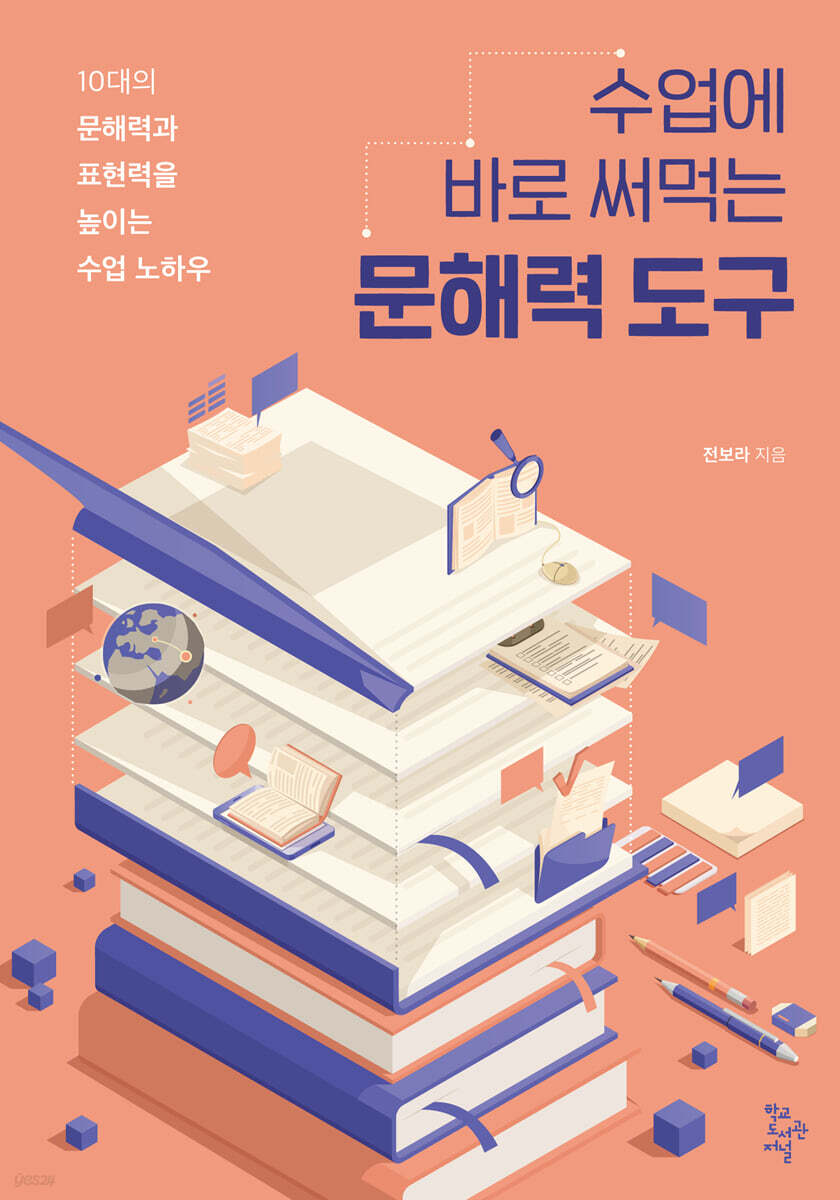
A book that introduces practical methods to improve students' literacy skills during class time.
The author defines literacy as the "problem-solving ability" to achieve what one wants by using writing and speech, and presents literacy and expressive tools that can help students improve their problem-solving abilities.
It includes basic concepts, usage methods, curriculum application examples, and activity sheets for each tool so that anyone can easily understand and use it.
Teachers who are considering ways to develop students' reading, thinking, and expressing skills can apply this method to their classes without any burden.
If you are a teacher who wants to help your students grow into "independent learners," I encourage you to put the various methods presented in this book into practice as appropriate for your situation.
The author defines literacy as the "problem-solving ability" to achieve what one wants by using writing and speech, and presents literacy and expressive tools that can help students improve their problem-solving abilities.
It includes basic concepts, usage methods, curriculum application examples, and activity sheets for each tool so that anyone can easily understand and use it.
Teachers who are considering ways to develop students' reading, thinking, and expressing skills can apply this method to their classes without any burden.
If you are a teacher who wants to help your students grow into "independent learners," I encourage you to put the various methods presented in this book into practice as appropriate for your situation.
- You can preview some of the book's contents.
Preview
index
introduction
Literacy class direction and practice methods for first period subject learning
Literacy Instruction Directions for Subject Learning
How to Implement Literacy Instruction for Subject Matter Learning
How to schedule class time
How to select and secure appropriate texts for class time
How to guide students to understand the text well
How to Give Appropriate Feedback
How to link assessments and records
Literacy Tools for Second Period Subject Learning
Thinking literacy to form ideas
Speaking and recalling background knowledge from the subject: Brainstorming
Finding Writing Ideas Related to Your Subject: Brainwriting
Develop ideas by concretizing the learning topic: Concept Map
Increase your vocabulary with words starting with ○○: Consonant chart
Reading literacy that experiences change in learning
Choose your own books to read during class time: Bookmatch
Read and summarize informational text: KWL
Organize your reading process at a glance: Graphic organizer
Understanding the story structure: Drawing by story
Reading with a focus on the key words in the textbook: Ten key words
Literacy in finding information when gathering materials
Find books to study your subject: Find a Book
Wisely record and manage the information you find: Information Analysis Sheet
Evaluate information while reading a website: Ask questions with CRAAP
Information Has Owners: Citation to Prevent Plagiarism
Expressive tools for learning the 3rd period subject
The expressive power of an insider who listens well and speaks well
Developing a Perspective on Reading Through Questions: The QAR Strategy
Anyone can participate freely through doodles: World Cafe Conversation
Explain and share what you've learned: Topic-focused presentations
Organize your content and understand it more deeply: Create a mind map in groups.
Writing skills that develop the power to express and persuade thoughts
The most useful writing outside of school: Report writing
Take notes to avoid overwriting: Reference cards
Experience the power of collective intelligence through Wikipedia editing: Wikipedia writing
If you're tired of reading reviews, reflect on yourself through books: Reading Reflection Paper
Reflect on your learning process at the end of your course: Write a self-reflection evaluation.
Creative expression that turns what you read into your knowledge
Experience the ultimate in fandom with your own interpretation: Create a dictionary
Write freely without being bound by format: Creating a magazine
Reduce your psychological burden and write something more feasible: Create a mini-book.
Become an author and write for a brighter life: Creating a book
Write promotional material that catches the eye at a glance: Creating a leaflet
Appendix 1 | Learn various search tips because not everything you search for will show up.
Appendix 2 | How to Integrate Literacy Tools into Your Classroom
Appendix 3 | How to Collaborate with Librarians on Designing and Conducting Literacy Lessons
References
Literacy class direction and practice methods for first period subject learning
Literacy Instruction Directions for Subject Learning
How to Implement Literacy Instruction for Subject Matter Learning
How to schedule class time
How to select and secure appropriate texts for class time
How to guide students to understand the text well
How to Give Appropriate Feedback
How to link assessments and records
Literacy Tools for Second Period Subject Learning
Thinking literacy to form ideas
Speaking and recalling background knowledge from the subject: Brainstorming
Finding Writing Ideas Related to Your Subject: Brainwriting
Develop ideas by concretizing the learning topic: Concept Map
Increase your vocabulary with words starting with ○○: Consonant chart
Reading literacy that experiences change in learning
Choose your own books to read during class time: Bookmatch
Read and summarize informational text: KWL
Organize your reading process at a glance: Graphic organizer
Understanding the story structure: Drawing by story
Reading with a focus on the key words in the textbook: Ten key words
Literacy in finding information when gathering materials
Find books to study your subject: Find a Book
Wisely record and manage the information you find: Information Analysis Sheet
Evaluate information while reading a website: Ask questions with CRAAP
Information Has Owners: Citation to Prevent Plagiarism
Expressive tools for learning the 3rd period subject
The expressive power of an insider who listens well and speaks well
Developing a Perspective on Reading Through Questions: The QAR Strategy
Anyone can participate freely through doodles: World Cafe Conversation
Explain and share what you've learned: Topic-focused presentations
Organize your content and understand it more deeply: Create a mind map in groups.
Writing skills that develop the power to express and persuade thoughts
The most useful writing outside of school: Report writing
Take notes to avoid overwriting: Reference cards
Experience the power of collective intelligence through Wikipedia editing: Wikipedia writing
If you're tired of reading reviews, reflect on yourself through books: Reading Reflection Paper
Reflect on your learning process at the end of your course: Write a self-reflection evaluation.
Creative expression that turns what you read into your knowledge
Experience the ultimate in fandom with your own interpretation: Create a dictionary
Write freely without being bound by format: Creating a magazine
Reduce your psychological burden and write something more feasible: Create a mini-book.
Become an author and write for a brighter life: Creating a book
Write promotional material that catches the eye at a glance: Creating a leaflet
Appendix 1 | Learn various search tips because not everything you search for will show up.
Appendix 2 | How to Integrate Literacy Tools into Your Classroom
Appendix 3 | How to Collaborate with Librarians on Designing and Conducting Literacy Lessons
References
Detailed image

Into the book
Rather than waiting for a perfect lesson, if you boldly challenge yourself and have students read and write in connection with the subject, you will see more students reading and learning well.
---From the "Preface"
Rather than waiting for students to develop the ability to read and express themselves, we should teach them a lot of material during class time so that they can read systematically.
---From "Directions for Literacy Instruction for Subject Learning"
What's the best way to help students interact with text? Show them that there's an intersection between them and the text.
Idea generation activities that provide tools to recall prior experiences and background knowledge can help students make connections between the text and themselves.
---From "Thinking Literacy: Forming Ideas"
What is a meaningful speaking activity? It involves a teacher posing an open-ended question to students, who then seek out information to answer that question and express it in a contextually appropriate way.
Rather than focusing on right or wrong answers, students should be able to reveal their thought processes through activities that involve finding and synthesizing information.
---From "The expressive power of popular kids who listen well and speak well"
Regardless of what you read, asking yourself the question, "What can I do with this text?" will help you read actively.
The more we encourage and expose students to expressive activities—drawing lines, writing, scribbling, creating, and exploring the utility of text—the better prepared they will be for the future.
---From the "Preface"
Rather than waiting for students to develop the ability to read and express themselves, we should teach them a lot of material during class time so that they can read systematically.
---From "Directions for Literacy Instruction for Subject Learning"
What's the best way to help students interact with text? Show them that there's an intersection between them and the text.
Idea generation activities that provide tools to recall prior experiences and background knowledge can help students make connections between the text and themselves.
---From "Thinking Literacy: Forming Ideas"
What is a meaningful speaking activity? It involves a teacher posing an open-ended question to students, who then seek out information to answer that question and express it in a contextually appropriate way.
Rather than focusing on right or wrong answers, students should be able to reveal their thought processes through activities that involve finding and synthesizing information.
---From "The expressive power of popular kids who listen well and speak well"
Regardless of what you read, asking yourself the question, "What can I do with this text?" will help you read actively.
The more we encourage and expose students to expressive activities—drawing lines, writing, scribbling, creating, and exploring the utility of text—the better prepared they will be for the future.
---From "The creative expression that turns what you read into your knowledge"
Publisher's Review
I took notes while reading the book.
I have written down on one side the materials I would like to receive from Teacher Jeon Bo-ra, such as leaflet class materials, a consonant chart template to improve vocabulary, and Wikipedia writing class materials.
There were more than 20 of them.
As I closed the book, I realized something more important than the material.
The detailed and professional explanations provided by the school library on everything from preparing literacy classes to assessing them, both big and small, were a source of encouragement for me.
"I could also teach literacy classes in conjunction with the curriculum!" said Hwang Wang-yong, a librarian at Gwangyang Gwangyeong High School.
Reading classics, reading on unfamiliar topics during advanced English classes, and trying to write something about it was difficult.
I had a hard time getting past the threshold of studying on my own after only receiving education in the form of understanding and memorizing the knowledge given in the classroom.
At that time, teacher Jeon Bo-ra taught me how to choose a topic, find information, select information, and write an essay.
Learning how to handle 'information' allowed me to complete the assignment without giving up.
Through teacher Jeon Bo-ra's class, I was able to develop the ability to learn on my own, which is essential in this age of information overload.
Park Se-yeon, third year at Seoul Shinmok High School
The brainstorming, KWL, mind maps, and citation methods that I used in my first library utilization class with Professor Jeon Bo-ra are tools that I still frequently use in many classes today.
But when I looked at the book, I found that there were many more teaching tools that I didn't know about, and some of them I could apply right away.
While the overall goal is to improve literacy, it's packed with tips for enriching lessons and process-focused assessments across all subjects.
I hope other teachers will also experience the excitement of seeing examples from various subjects and having their own lesson ideas come to them! Sim Eun-hwa, biology teacher at Seoul Whibong High School
I have written down on one side the materials I would like to receive from Teacher Jeon Bo-ra, such as leaflet class materials, a consonant chart template to improve vocabulary, and Wikipedia writing class materials.
There were more than 20 of them.
As I closed the book, I realized something more important than the material.
The detailed and professional explanations provided by the school library on everything from preparing literacy classes to assessing them, both big and small, were a source of encouragement for me.
"I could also teach literacy classes in conjunction with the curriculum!" said Hwang Wang-yong, a librarian at Gwangyang Gwangyeong High School.
Reading classics, reading on unfamiliar topics during advanced English classes, and trying to write something about it was difficult.
I had a hard time getting past the threshold of studying on my own after only receiving education in the form of understanding and memorizing the knowledge given in the classroom.
At that time, teacher Jeon Bo-ra taught me how to choose a topic, find information, select information, and write an essay.
Learning how to handle 'information' allowed me to complete the assignment without giving up.
Through teacher Jeon Bo-ra's class, I was able to develop the ability to learn on my own, which is essential in this age of information overload.
Park Se-yeon, third year at Seoul Shinmok High School
The brainstorming, KWL, mind maps, and citation methods that I used in my first library utilization class with Professor Jeon Bo-ra are tools that I still frequently use in many classes today.
But when I looked at the book, I found that there were many more teaching tools that I didn't know about, and some of them I could apply right away.
While the overall goal is to improve literacy, it's packed with tips for enriching lessons and process-focused assessments across all subjects.
I hope other teachers will also experience the excitement of seeing examples from various subjects and having their own lesson ideas come to them! Sim Eun-hwa, biology teacher at Seoul Whibong High School
GOODS SPECIFICS
- Date of issue: June 5, 2023
- Page count, weight, size: 280 pages | 352g | 140*200*17mm
- ISBN13: 9788969151469
- ISBN10: 896915146X
You may also like
카테고리
korean


korean

![GQ KOREA Mark (Monthly): December [2025]](http://librairie.coreenne.fr/cdn/shop/files/8ef265dbbfbf186523ed75ba7319009d.jpg?v=1765340328&width=3840)


