

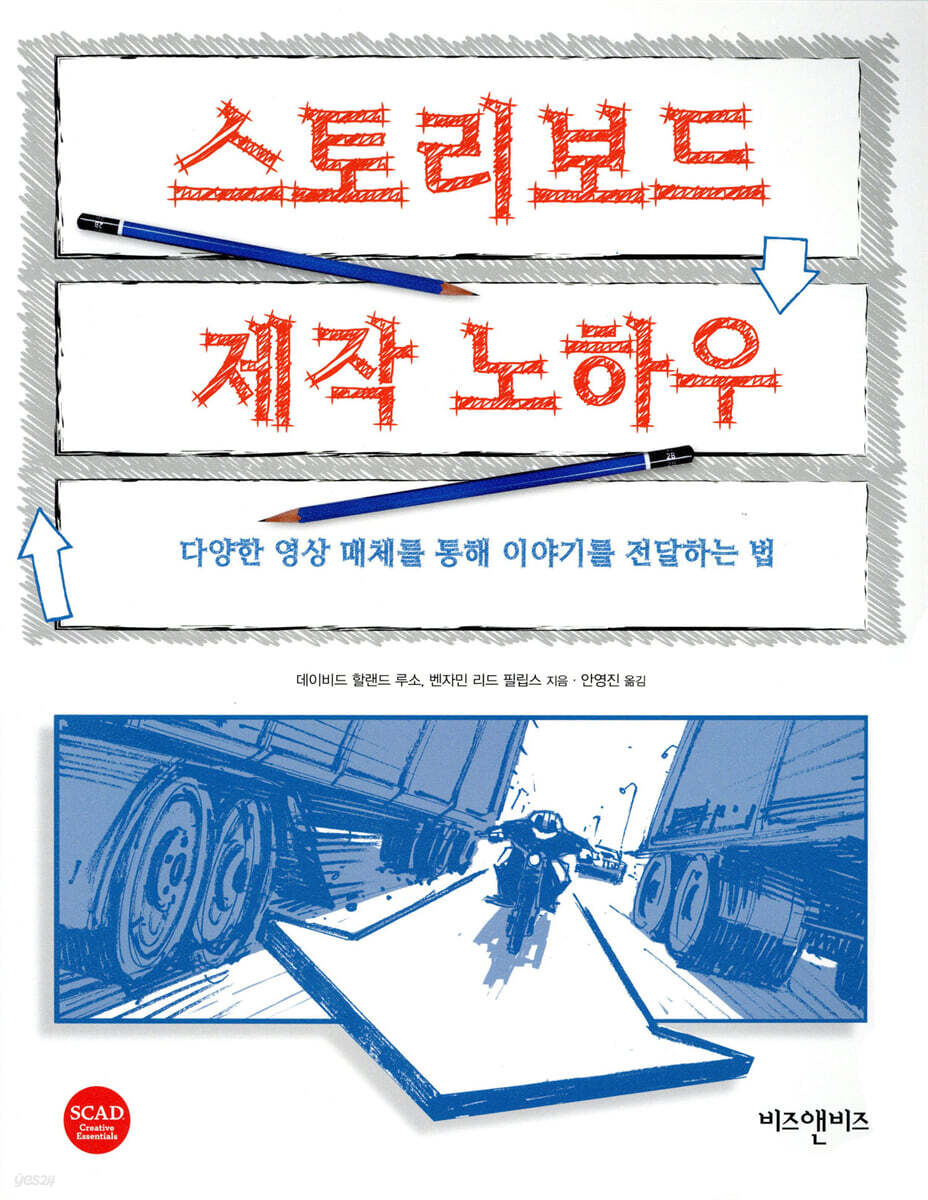
Storyboard production know-how
 |
Description
Book Introduction
Master the art of visual storytelling.
Storyboarding is the art of bringing ideas to life, making it a must-have communication tool for filmmakers, animators, commercial directors, screenwriters, and video game artists.
Now, let's learn the key secrets to creating professional-level storyboards with "Storyboard Production Know-How: Telling Stories Through Various Visual Media."
Through this book, you'll learn the core topics of storyboard production, including how to translate the content of a script into pictures, how to divide frames, and how to create a smooth narrative based on visual logic.
It's also packed with engaging content, including interviews with leading filmmakers and storyboard artists, in-depth explorations of professional storyboard sequences, templates you can use to create your own storyboards, and practice assignments to test your knowledge.
By making the tools, techniques, and tips covered in this book your own, you can take your storyboards to the next level.
Storyboarding is the art of bringing ideas to life, making it a must-have communication tool for filmmakers, animators, commercial directors, screenwriters, and video game artists.
Now, let's learn the key secrets to creating professional-level storyboards with "Storyboard Production Know-How: Telling Stories Through Various Visual Media."
Through this book, you'll learn the core topics of storyboard production, including how to translate the content of a script into pictures, how to divide frames, and how to create a smooth narrative based on visual logic.
It's also packed with engaging content, including interviews with leading filmmakers and storyboard artists, in-depth explorations of professional storyboard sequences, templates you can use to create your own storyboards, and practice assignments to test your knowledge.
By making the tools, techniques, and tips covered in this book your own, you can take your storyboards to the next level.
index
Opening Remarks - Stratton Leopold 9
Entering 10
1.
What is a storyboard?
14 Types of Storyboards
Visual Roadmap 17
2.
Interpreting written content
Script Basics 20
Script Analysis 22
Spec Script vs. Shooting Script 24
Advertisement Script 26
Differences of Opinion: "The Great Savannah Race" 28
Interview: Ken Chaplin, DGA/DGC 38
3.
Describe
Descriptive level and completeness 42
Keep your head busy rather than your hands 43
The Right Tool for the Job 52
Synthesize 60
Differences of Opinion: "Undeadwood" 62
Interview: Keith Ingham, storyboard artist and animator, 70
4.
Work policies and rules
Aspect ratio 74
Preparation work 76
Organizing and Systematizing 77
Insert Shot 80
Exercise: Numbering 84
5.
continuity
What is continuity? 88
180-degree rule and axis 89
30-degree rule and jump cut 94
Screen Direction and Visual Logic 96
100% tension and surprise
Differences of Opinion: The Chase from Jekyll to Hyde 104
6.
What the camera sees
Camera 112
Depth and width 113
Location shooting 114
Framing size and camera angle 116
Straightforward and Slapstick 120
Behind the Scenes 126
Exercise: Identifying Framing Size and Angles 130
7.
Move me!
There's no reaction without "action!" 134
Movement 135
Photomatics and Digimatics 142
Order from Chaos 146
Exercise: Directing Camera Movement 152
Differences of Opinion: "From Jekyll to Hyde" Transformation 154
Interview: Whitney Koger, Storyboard Artist 160
8.
finish
Comprehensive Finish 166
Cheers to the storyboard 171
Conclusion - Tina O'Hailey 172
Appendix 173
Search 190
Entering 10
1.
What is a storyboard?
14 Types of Storyboards
Visual Roadmap 17
2.
Interpreting written content
Script Basics 20
Script Analysis 22
Spec Script vs. Shooting Script 24
Advertisement Script 26
Differences of Opinion: "The Great Savannah Race" 28
Interview: Ken Chaplin, DGA/DGC 38
3.
Describe
Descriptive level and completeness 42
Keep your head busy rather than your hands 43
The Right Tool for the Job 52
Synthesize 60
Differences of Opinion: "Undeadwood" 62
Interview: Keith Ingham, storyboard artist and animator, 70
4.
Work policies and rules
Aspect ratio 74
Preparation work 76
Organizing and Systematizing 77
Insert Shot 80
Exercise: Numbering 84
5.
continuity
What is continuity? 88
180-degree rule and axis 89
30-degree rule and jump cut 94
Screen Direction and Visual Logic 96
100% tension and surprise
Differences of Opinion: The Chase from Jekyll to Hyde 104
6.
What the camera sees
Camera 112
Depth and width 113
Location shooting 114
Framing size and camera angle 116
Straightforward and Slapstick 120
Behind the Scenes 126
Exercise: Identifying Framing Size and Angles 130
7.
Move me!
There's no reaction without "action!" 134
Movement 135
Photomatics and Digimatics 142
Order from Chaos 146
Exercise: Directing Camera Movement 152
Differences of Opinion: "From Jekyll to Hyde" Transformation 154
Interview: Whitney Koger, Storyboard Artist 160
8.
finish
Comprehensive Finish 166
Cheers to the storyboard 171
Conclusion - Tina O'Hailey 172
Appendix 173
Search 190
Into the book
Surprisingly, Alfred Hitchcock drew storyboards for every scene in his films and then shot them by transferring them to film.
Director Orson Welles' working method was the same.
For both master directors, storyboards were a means of gaining insight into camera movements for each scene.
Storyboards have always been at the heart of filmmaking, especially action sequences.
For the films I was involved with, the storyboard served as a 'bible' for the locations to be filmed that day on set.
Those few sheets of paper, along with previsualization (a digital extension of traditional storyboards), helped us craft solutions for complex action sequences, allowing us to plan our day's shoot as efficiently as possible.
Storyboards can also save valuable production time by clearly communicating what the director wants to the second crew (typically responsible for filming establishing shots, insert shots, and action sequences involving stunts).
Simply put, storyboards solve problems, provide clarity, and thereby save time and money.
"Storyboard Production Know-How" is a must-read for all video producers, from beginners to seasoned professionals.
This book will guide readers through every step of the storyboarding process, preparing them to dive into the world of creativity.
Have fun storyboarding!
- Traton Leopold (Producer, SCAD Professor)
Director Orson Welles' working method was the same.
For both master directors, storyboards were a means of gaining insight into camera movements for each scene.
Storyboards have always been at the heart of filmmaking, especially action sequences.
For the films I was involved with, the storyboard served as a 'bible' for the locations to be filmed that day on set.
Those few sheets of paper, along with previsualization (a digital extension of traditional storyboards), helped us craft solutions for complex action sequences, allowing us to plan our day's shoot as efficiently as possible.
Storyboards can also save valuable production time by clearly communicating what the director wants to the second crew (typically responsible for filming establishing shots, insert shots, and action sequences involving stunts).
Simply put, storyboards solve problems, provide clarity, and thereby save time and money.
"Storyboard Production Know-How" is a must-read for all video producers, from beginners to seasoned professionals.
This book will guide readers through every step of the storyboarding process, preparing them to dive into the world of creativity.
Have fun storyboarding!
- Traton Leopold (Producer, SCAD Professor)
--- From the text
GOODS SPECIFICS
- Date of publication: July 12, 2019
- Page count, weight, size: 192 pages | 626g | 216*276*12mm
- ISBN13: 9791160580273
- ISBN10: 1160580278
You may also like
카테고리
korean


korean

![GQ KOREA Mark (Monthly): December [2025]](http://librairie.coreenne.fr/cdn/shop/files/8ef265dbbfbf186523ed75ba7319009d.jpg?v=1765340328&width=3840)


