

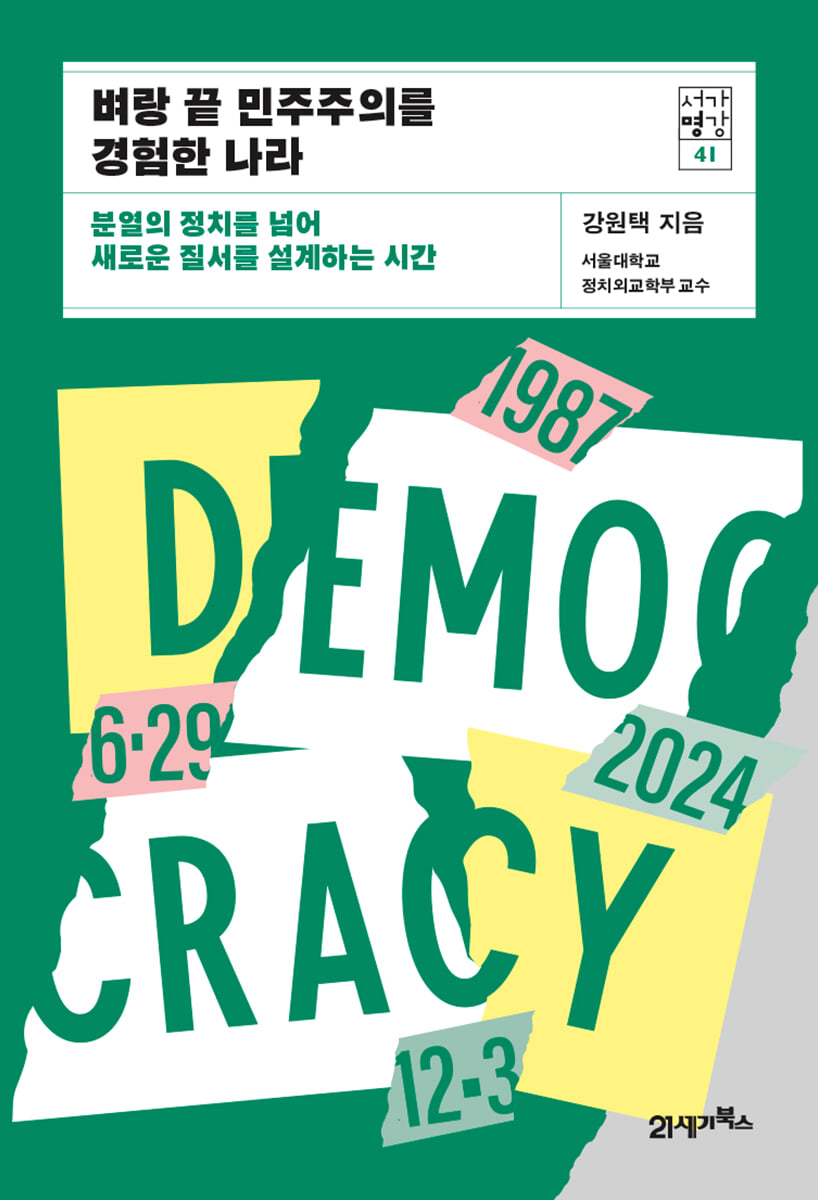
A country that experienced democracy on the brink
 |
Description
Book Introduction
"Seogamyeonggang": A famous lecture you can attend without going to Seoul National University.
It's time to design a new order beyond the politics of division.
Discover Korea's finest lectures in book form! The forty-first volume of the "Seogamyeonggang" series, featuring carefully curated lectures by current Seoul National University faculty, has been published.
The Seoga Myunggang series, which transcribes the lectures of Seoul National University's top professors in various fields, including history, philosophy, science, medicine, and art, into books, provides readers with the expansion of knowledge and the joy of learning.
"A Country That Experienced Democracy on the Edge of a Cliff" is a book that examines how democracy operates in Korean society, starting with the December 3 martial law.
By identifying the causes of the "civil war" that led to a national crisis and examining the roots of extreme political polarization through Korean political history, we will explore what sustainable democracy is.
This seeks to overcome division and explore the direction of political reform after the 1987 regime, presenting a new political system suited to the changing times.
For Professor Kang Won-taek of the Department of Political Science and Diplomacy at Seoul National University, the author of this book and a political scientist who has studied the domestic political system and political party issues for a long time, the catastrophe of martial law was a completely unexpected 'event.'
This is because I thought that although Korean politics was in the midst of extreme conflict and confrontation, it maintained a relatively stable democracy.
The author diagnosed that a fundamental problem had arisen in the way democracy functioned as of December 3, 2024, and wrote this book to find the cause of the crisis and clues to a solution in Korean political history since the democratization in 1987.
His reflections delve into the essence of Korean politics and go so far as to design a new order.
This book's diagnosis, which examines the causes of the pathological phenomena in Korean democracy, is that the politics of coexistence and compromise have disappeared.
In order to avoid repeating a catastrophe like the December 3 martial law incident, political restoration is necessary.
Restoring politics is the most important condition for the restoration of democracy in Korea, and not only efforts by the political sphere but also institutional reform is urgent.
This book, which helps readers understand the challenges facing Korean politics today and comprehensively examine the need for future reform, examines Korean political history to remind us that institutional change and a spirit of tolerance and consideration are necessary to restore democracy.
It also reminds us that the masters of democracy are none other than ourselves.
It's time to design a new order beyond the politics of division.
Discover Korea's finest lectures in book form! The forty-first volume of the "Seogamyeonggang" series, featuring carefully curated lectures by current Seoul National University faculty, has been published.
The Seoga Myunggang series, which transcribes the lectures of Seoul National University's top professors in various fields, including history, philosophy, science, medicine, and art, into books, provides readers with the expansion of knowledge and the joy of learning.
"A Country That Experienced Democracy on the Edge of a Cliff" is a book that examines how democracy operates in Korean society, starting with the December 3 martial law.
By identifying the causes of the "civil war" that led to a national crisis and examining the roots of extreme political polarization through Korean political history, we will explore what sustainable democracy is.
This seeks to overcome division and explore the direction of political reform after the 1987 regime, presenting a new political system suited to the changing times.
For Professor Kang Won-taek of the Department of Political Science and Diplomacy at Seoul National University, the author of this book and a political scientist who has studied the domestic political system and political party issues for a long time, the catastrophe of martial law was a completely unexpected 'event.'
This is because I thought that although Korean politics was in the midst of extreme conflict and confrontation, it maintained a relatively stable democracy.
The author diagnosed that a fundamental problem had arisen in the way democracy functioned as of December 3, 2024, and wrote this book to find the cause of the crisis and clues to a solution in Korean political history since the democratization in 1987.
His reflections delve into the essence of Korean politics and go so far as to design a new order.
This book's diagnosis, which examines the causes of the pathological phenomena in Korean democracy, is that the politics of coexistence and compromise have disappeared.
In order to avoid repeating a catastrophe like the December 3 martial law incident, political restoration is necessary.
Restoring politics is the most important condition for the restoration of democracy in Korea, and not only efforts by the political sphere but also institutional reform is urgent.
This book, which helps readers understand the challenges facing Korean politics today and comprehensively examine the need for future reform, examines Korean political history to remind us that institutional change and a spirit of tolerance and consideration are necessary to restore democracy.
It also reminds us that the masters of democracy are none other than ourselves.
- You can preview some of the book's contents.
Preview
index
To avoid being pushed into crisis again
Part 1: What Democracy Has Left Us
The prelude to Korean democracy
How was democratization achieved in 1987?
Procedural democracy is established
Q/A Ask and Answer
Part 2: Rediscovering the Leadership That Led to the Consolidation of Democracy
The Age of Transition: The Politics of Compromise and Consensus
The Age of Reform: The Era of Military Politics
The Age of Harmony: The Politics of Reconciliation and Integration
Q/A Ask and Answer
Part 3: Democracy is always challenged.
Democracy under threat globally
When agitation and exclusion dominated politics
Polarized politics leading to division
Q/A Ask and Answer
Part 4: Time to Restore Democracy on the Brink
Why Democracy Was in Crisis That Day
We have experienced the limitations of an imperial presidency.
Redesigning Order Beyond the Politics of Hate
Q/A Ask and Answer
Outgoing Article: Now is the time for imagination for democracy.
annotation
Part 1: What Democracy Has Left Us
The prelude to Korean democracy
How was democratization achieved in 1987?
Procedural democracy is established
Q/A Ask and Answer
Part 2: Rediscovering the Leadership That Led to the Consolidation of Democracy
The Age of Transition: The Politics of Compromise and Consensus
The Age of Reform: The Era of Military Politics
The Age of Harmony: The Politics of Reconciliation and Integration
Q/A Ask and Answer
Part 3: Democracy is always challenged.
Democracy under threat globally
When agitation and exclusion dominated politics
Polarized politics leading to division
Q/A Ask and Answer
Part 4: Time to Restore Democracy on the Brink
Why Democracy Was in Crisis That Day
We have experienced the limitations of an imperial presidency.
Redesigning Order Beyond the Politics of Hate
Q/A Ask and Answer
Outgoing Article: Now is the time for imagination for democracy.
annotation
Detailed image

Into the book
The crisis of Korean democracy that erupted in late 2024 was a difficult and painful time, but it also reminded us of the preciousness of democracy.
It gave me a chance to think deeply about how democracy can collapse and what efforts are needed to prevent it.
--- p.14 From "Introduction | To avoid being pushed into crisis again"
Among these, Korea's democratization in 1987 corresponds to 'democratization through compromise'.
The June 29th Declaration was the result of a political compromise reached by authoritarian forces accepting the demands of the pro-democracy movement, and this laid the foundation for the subsequent constitutional order to be established based on the continuity of the system rather than radical collapse or transformation.
--- p.64-65 From "Part 1 | What Has Democracy Left Us?"
The recent resurgence of instability in Korean politics and the regression of democracy are due to the collapse of the political practices of "concession and compromise" of this period and the disappearance of political leadership based on "tolerance and integration."
--- p.117 From "Part 2 | Rediscovering the Leadership That Led to the Consolidation of Democracy"
If the activist movement represented the hard-line currents of the progressive camp, the eradication of deep-rooted evils they promoted led to the rise of hard-line forces within the conservative camp as well.
Unlike previous political situations where moderates and centrists dominated the political landscape, this resulted in the growing voice and influence of hardliners in both camps.
--- p.183 From "Part 3 | Democracy is Always Challenged"
Now is the time to change the governing system.
Above all, the current presidential system must be reformed.
This is not to deny the previous successful history.
Korea's presidential system has functioned very effectively so far.
Capable people took charge of state affairs, boldly resolving the problems of the times and leading to great change and development.
Their leadership led to economic growth, democratic progress, and social reform.
However, the past ruling system no longer appears sustainable in light of real politics.
--- p.228 From "Part 4 | Time to Restore Democracy on the Brink"
The political crisis that erupted in December 2024 sounded the alarm that a transition to a new system was needed.
This is not an issue that can be dismissed as a temporary solution. Rather, we must move forward toward new changes based on a thorough diagnosis.
If we do not respond appropriately and with vigilance, this political crisis may not be a one-time thing.
It gave me a chance to think deeply about how democracy can collapse and what efforts are needed to prevent it.
--- p.14 From "Introduction | To avoid being pushed into crisis again"
Among these, Korea's democratization in 1987 corresponds to 'democratization through compromise'.
The June 29th Declaration was the result of a political compromise reached by authoritarian forces accepting the demands of the pro-democracy movement, and this laid the foundation for the subsequent constitutional order to be established based on the continuity of the system rather than radical collapse or transformation.
--- p.64-65 From "Part 1 | What Has Democracy Left Us?"
The recent resurgence of instability in Korean politics and the regression of democracy are due to the collapse of the political practices of "concession and compromise" of this period and the disappearance of political leadership based on "tolerance and integration."
--- p.117 From "Part 2 | Rediscovering the Leadership That Led to the Consolidation of Democracy"
If the activist movement represented the hard-line currents of the progressive camp, the eradication of deep-rooted evils they promoted led to the rise of hard-line forces within the conservative camp as well.
Unlike previous political situations where moderates and centrists dominated the political landscape, this resulted in the growing voice and influence of hardliners in both camps.
--- p.183 From "Part 3 | Democracy is Always Challenged"
Now is the time to change the governing system.
Above all, the current presidential system must be reformed.
This is not to deny the previous successful history.
Korea's presidential system has functioned very effectively so far.
Capable people took charge of state affairs, boldly resolving the problems of the times and leading to great change and development.
Their leadership led to economic growth, democratic progress, and social reform.
However, the past ruling system no longer appears sustainable in light of real politics.
--- p.228 From "Part 4 | Time to Restore Democracy on the Brink"
The political crisis that erupted in December 2024 sounded the alarm that a transition to a new system was needed.
This is not an issue that can be dismissed as a temporary solution. Rather, we must move forward toward new changes based on a thorough diagnosis.
If we do not respond appropriately and with vigilance, this political crisis may not be a one-time thing.
--- p.242 From "Outgoing Writing | Now is the Time for Imagination for Democracy"
Publisher's Review
To avoid being pushed into crisis again,
Now is the time to talk about democracy
Why Democracy Was in Crisis That Day
From the 1987 regime to the December 3 civil war,?
Core values of democracy as seen through the lens of Korean political history
2 hours and 38 minutes.
This is the time it took from the declaration of martial law on December 3rd last year until the National Assembly lifted it.
That day, which lasted less than three hours, had a decisive impact on the history of the Republic of Korea.
President Yoon Seok-yeol's declaration of martial law was a challenge to Korean democracy.
This incident, which destroyed the democracy that had been solid since democratization in 1987, not only caused political chaos but also raised fundamental questions about the political system.
Although the crisis was temporarily resolved with the National Assembly's resolution to lift martial law, the impeachment of the president, and the Constitutional Court's decision to remove him from office, Korean society was driven into division and conflict as different opinions emerged.
Regardless of the development of democracy in Korea, the political conflicts we actually face are quite deep.
Even when just two people get together, their stances on 'politics' are different, and 'Korean politics' is the topic they want to avoid if possible.
Korean politics is a conflict triggered by political events rather than policy factors.
Political events such as the investigation of former President Roh Moo-hyun and the progressive outrage over his death, the state administration scandal that led to the impeachment of Park Geun-hye, the conservative outrage over the Moon Jae-in administration's "elimination of deep-rooted evils," and the December 3rd civil war that engulfed Korean democracy, exacerbated the conflict, and the polarization of politics ultimately led to division.
In this way, we experienced democracy on the edge of a cliff.
What values do we need now to restore democracy, which is riddled with division and conflict?
For democracy to function healthily, we must calmly look back on the path Korean politics has taken and accurately diagnose the causes of the crisis.
The author of this book focuses on three leaders who led the consolidation of democracy in the process of seeking a new order beyond the politics of division.
These include the compromises and agreements of the Roh Tae-woo government, which enabled a transition from authoritarianism to democratization by accepting the demand for a direct presidential election system through the June 29th Declaration; the Kim Young-sam government, which liquidated the military political culture and reformed it into a new political order; and the Kim Dae-jung government, which completed the consolidation of democracy through reconciliation, forgiveness, and unification.
This reminds us of what we have forgotten about today's Korean politics, which is characterized by injustice, revenge, division, self-righteousness, and exclusion.
Finding Sustainable Democracy in Turbulent Korean Politics
Korean politics classes that improve political literacy
Reading Today Through the Lens of Democracy
This book began with Professor Kang Won-taek, who teaches at the Department of Political Science and Diplomacy at Seoul National University and serves as the director of the Seoul National University Institute for National Strategy, reflecting on the workings of Korean democracy and its values in the wake of the December 3 martial law.
The author traces the democratic landscape of Korean politics to this day, starting with the 1987 system, the political and social order formed after the June 1987 Struggle, and explores the direction of future political reform.
Now that the new regime has emerged, ending the civil war and uniting the nation have become crucial tasks. What does "democracy" really mean to us?
In the wake of the December 3rd Incident, the very foundations that supported the "1987 regime" have crumbled. Where is Korean politics headed? Now is the time to seek new change.
If we know the causes of a crisis, we can at least prevent it.
The author argues that for Korean democracy to function properly, we must “go back to basics.”
Democracy can only be stable when political differences are understood not as issues of 'right and wrong' or 'good and evil' but as 'differences', and when a politics of compromise and tolerance is established to narrow those differences.
And he points out that the democratization process in 1987 and the subsequent consolidation of democracy were also due to the premise of ‘compromise and coexistence.’
This book, which awakens us to the history of democracy in Korean politics and the core values of democracy, is composed of four parts.
Part 1, "What Has Democracy Been to Us?" examines the origins of Korean democracy, the democratization process, and the flow of procedural democracy established.
In particular, we closely examine the political background of the emergence of the 1987 regime, which still has influence today.
Part 2, "Rediscovering the Leadership that Led to the Consolidation of Democracy," analyzes 15 years of Korean political history in detail, from the Roh Tae-woo administration, which accepted the demand for a direct presidential election system through the June 29th Declaration, to the Kim Young-sam administration, which demonstrated a strong will for reform, to the Kim Dae-jung administration, which pursued a politics of reconciliation and unification.
We will explore how democracy took root and solidified in Korean society after the June Struggle of 1987, and discover what values are necessary for today's political realities in the democratic spirit formed during this period.
Part 3, “Democracy is Always Challenged,” interprets the signs of a crisis in democracy that has recently emerged around the world.
We examine the causes of democracy's endangerment through various examples of democracy being shaken, such as populist politics that appeal to public sentiment and extreme political polarization.
Part 4, “Time to Restore Democracy on the Brink,” explores ways to move beyond the 1987 system and toward a better democracy.
It examines the collapse of political practices and the limitations of the imperial presidency, and suggests a path forward from the politics of hate to the politics of coexistence and tolerance.
This book, which helps readers easily understand the flow and characteristics of today's Korean politics through the lens of "democracy," will not only provide a minimum level of "civic education," but also enhance political literacy for viewing today's world.
“Now is the time to seek new changes.
“We must calmly look back on the path our politics has taken, accurately diagnose the cause of the crisis, and use this as an opportunity to restore our broken democracy through political reform.”_From the text
Now is the time to talk about democracy
Why Democracy Was in Crisis That Day
From the 1987 regime to the December 3 civil war,?
Core values of democracy as seen through the lens of Korean political history
2 hours and 38 minutes.
This is the time it took from the declaration of martial law on December 3rd last year until the National Assembly lifted it.
That day, which lasted less than three hours, had a decisive impact on the history of the Republic of Korea.
President Yoon Seok-yeol's declaration of martial law was a challenge to Korean democracy.
This incident, which destroyed the democracy that had been solid since democratization in 1987, not only caused political chaos but also raised fundamental questions about the political system.
Although the crisis was temporarily resolved with the National Assembly's resolution to lift martial law, the impeachment of the president, and the Constitutional Court's decision to remove him from office, Korean society was driven into division and conflict as different opinions emerged.
Regardless of the development of democracy in Korea, the political conflicts we actually face are quite deep.
Even when just two people get together, their stances on 'politics' are different, and 'Korean politics' is the topic they want to avoid if possible.
Korean politics is a conflict triggered by political events rather than policy factors.
Political events such as the investigation of former President Roh Moo-hyun and the progressive outrage over his death, the state administration scandal that led to the impeachment of Park Geun-hye, the conservative outrage over the Moon Jae-in administration's "elimination of deep-rooted evils," and the December 3rd civil war that engulfed Korean democracy, exacerbated the conflict, and the polarization of politics ultimately led to division.
In this way, we experienced democracy on the edge of a cliff.
What values do we need now to restore democracy, which is riddled with division and conflict?
For democracy to function healthily, we must calmly look back on the path Korean politics has taken and accurately diagnose the causes of the crisis.
The author of this book focuses on three leaders who led the consolidation of democracy in the process of seeking a new order beyond the politics of division.
These include the compromises and agreements of the Roh Tae-woo government, which enabled a transition from authoritarianism to democratization by accepting the demand for a direct presidential election system through the June 29th Declaration; the Kim Young-sam government, which liquidated the military political culture and reformed it into a new political order; and the Kim Dae-jung government, which completed the consolidation of democracy through reconciliation, forgiveness, and unification.
This reminds us of what we have forgotten about today's Korean politics, which is characterized by injustice, revenge, division, self-righteousness, and exclusion.
Finding Sustainable Democracy in Turbulent Korean Politics
Korean politics classes that improve political literacy
Reading Today Through the Lens of Democracy
This book began with Professor Kang Won-taek, who teaches at the Department of Political Science and Diplomacy at Seoul National University and serves as the director of the Seoul National University Institute for National Strategy, reflecting on the workings of Korean democracy and its values in the wake of the December 3 martial law.
The author traces the democratic landscape of Korean politics to this day, starting with the 1987 system, the political and social order formed after the June 1987 Struggle, and explores the direction of future political reform.
Now that the new regime has emerged, ending the civil war and uniting the nation have become crucial tasks. What does "democracy" really mean to us?
In the wake of the December 3rd Incident, the very foundations that supported the "1987 regime" have crumbled. Where is Korean politics headed? Now is the time to seek new change.
If we know the causes of a crisis, we can at least prevent it.
The author argues that for Korean democracy to function properly, we must “go back to basics.”
Democracy can only be stable when political differences are understood not as issues of 'right and wrong' or 'good and evil' but as 'differences', and when a politics of compromise and tolerance is established to narrow those differences.
And he points out that the democratization process in 1987 and the subsequent consolidation of democracy were also due to the premise of ‘compromise and coexistence.’
This book, which awakens us to the history of democracy in Korean politics and the core values of democracy, is composed of four parts.
Part 1, "What Has Democracy Been to Us?" examines the origins of Korean democracy, the democratization process, and the flow of procedural democracy established.
In particular, we closely examine the political background of the emergence of the 1987 regime, which still has influence today.
Part 2, "Rediscovering the Leadership that Led to the Consolidation of Democracy," analyzes 15 years of Korean political history in detail, from the Roh Tae-woo administration, which accepted the demand for a direct presidential election system through the June 29th Declaration, to the Kim Young-sam administration, which demonstrated a strong will for reform, to the Kim Dae-jung administration, which pursued a politics of reconciliation and unification.
We will explore how democracy took root and solidified in Korean society after the June Struggle of 1987, and discover what values are necessary for today's political realities in the democratic spirit formed during this period.
Part 3, “Democracy is Always Challenged,” interprets the signs of a crisis in democracy that has recently emerged around the world.
We examine the causes of democracy's endangerment through various examples of democracy being shaken, such as populist politics that appeal to public sentiment and extreme political polarization.
Part 4, “Time to Restore Democracy on the Brink,” explores ways to move beyond the 1987 system and toward a better democracy.
It examines the collapse of political practices and the limitations of the imperial presidency, and suggests a path forward from the politics of hate to the politics of coexistence and tolerance.
This book, which helps readers easily understand the flow and characteristics of today's Korean politics through the lens of "democracy," will not only provide a minimum level of "civic education," but also enhance political literacy for viewing today's world.
“Now is the time to seek new changes.
“We must calmly look back on the path our politics has taken, accurately diagnose the cause of the crisis, and use this as an opportunity to restore our broken democracy through political reform.”_From the text
GOODS SPECIFICS
- Date of issue: August 4, 2025
- Page count, weight, size: 252 pages | 128*188*20mm
- ISBN13: 9791173574238
- ISBN10: 1173574239
You may also like
카테고리
korean


korean

![GQ KOREA Mark (Monthly): December [2025]](http://librairie.coreenne.fr/cdn/shop/files/8ef265dbbfbf186523ed75ba7319009d.jpg?v=1765340328&width=3840)


