

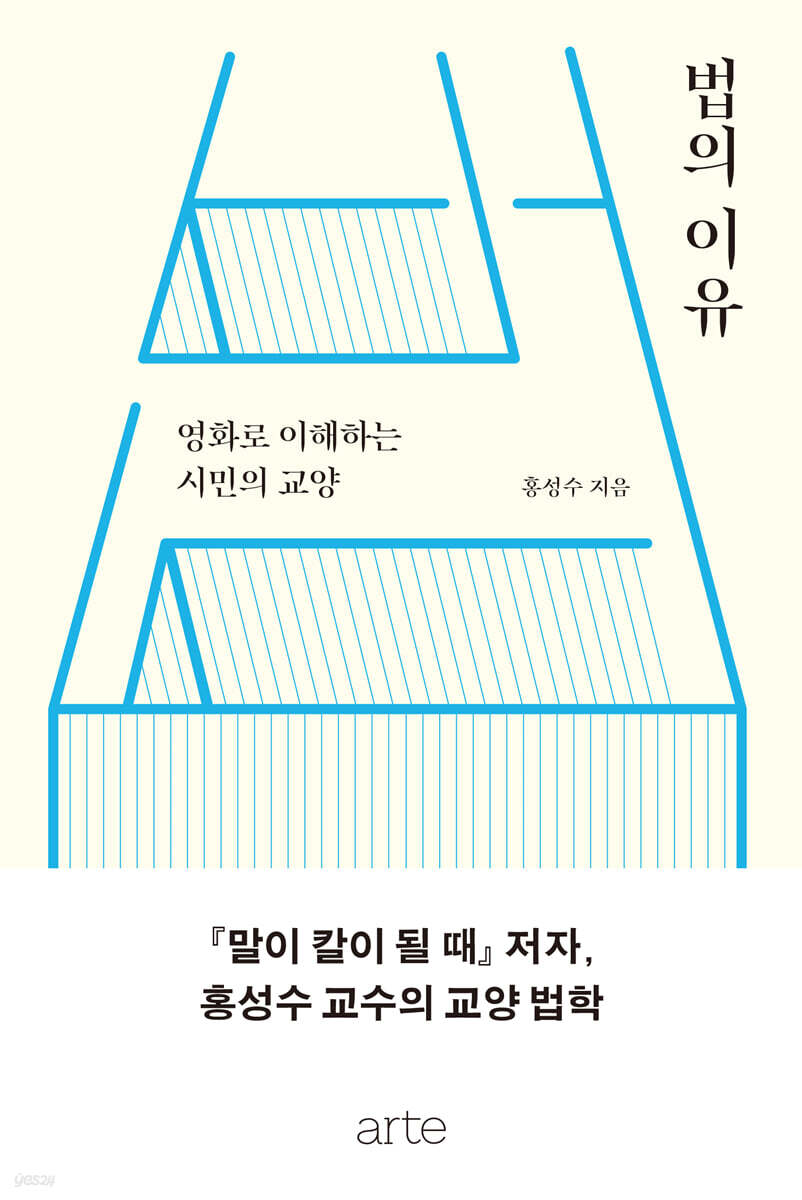
Reason for the law
 |
Description
Book Introduction
How did the law come to exist in this form?
Understanding the 'reasons' behind the enactment and application of laws through film
Professor Hong Seong-su became one of the most renowned legal scholars in South Korea with his best-selling book, When Words Become Swords (Across), published in 2018.
His areas of expertise, including freedom of expression, anti-discrimination law, and human rights law, were not widely recognized in Korea, but the situation has changed.
Since 2016, with the emergence of various incidents related to sexual violence, the MeToo movement, hate speech, and minority rights, practical discourses have been formed in various fields, and the problems of poverty and disability, which had clearly existed before but were invisible, have become urgent tasks required of the current government, such as changing the support obligation system and abolishing the disability grading system, and reflection on the role of law as a means of solving social problems and its limitations has become a public debate.
And still, issues related to the judiciary have captured the public's attention on the law.
This is because social problems related to the judiciary and the prosecution remain so prevalent that allegations of prosecutorial corruption and controversies over preferential treatment of former judicial officials are still frequently reported in the news.
Professor Hong Seong-su has consistently raised his voice on several sharp issues in Korean society related to law and human rights.
『The Reason for Law』 is a book version of the popular lecture [Understanding Law through Film], which was opened by the author, Professor Hong Seong-su, at Sookmyung Women's University in the first semester of 2011, and which was then offered to the general public as a general education lecture titled [Understanding Law through Literature and Film] through K-MOOC starting in 2016 due to its excellence, and which was chosen by thousands of students.
According to the author, film is an effective medium that can show specific situations and the associated legal limitations, problems, and solutions in a variety of situations.
Through the unique perspective of a legal scholar and a wealth of case studies from film situations, this book examines the relationship between the fundamental principles of law and reality, revealing the role and importance of law in our current reality.
The law exists as a minimum promise and system to guarantee the innate rights and dignity of all human beings.
The author cautions against the arguments of some who blindly believe or distrust the law, and conveys the message that we must all strive to ensure that the various social mechanisms and laws complement each other to achieve the ultimate goal of law: equality and justice.
Understanding the 'reasons' behind the enactment and application of laws through film
Professor Hong Seong-su became one of the most renowned legal scholars in South Korea with his best-selling book, When Words Become Swords (Across), published in 2018.
His areas of expertise, including freedom of expression, anti-discrimination law, and human rights law, were not widely recognized in Korea, but the situation has changed.
Since 2016, with the emergence of various incidents related to sexual violence, the MeToo movement, hate speech, and minority rights, practical discourses have been formed in various fields, and the problems of poverty and disability, which had clearly existed before but were invisible, have become urgent tasks required of the current government, such as changing the support obligation system and abolishing the disability grading system, and reflection on the role of law as a means of solving social problems and its limitations has become a public debate.
And still, issues related to the judiciary have captured the public's attention on the law.
This is because social problems related to the judiciary and the prosecution remain so prevalent that allegations of prosecutorial corruption and controversies over preferential treatment of former judicial officials are still frequently reported in the news.
Professor Hong Seong-su has consistently raised his voice on several sharp issues in Korean society related to law and human rights.
『The Reason for Law』 is a book version of the popular lecture [Understanding Law through Film], which was opened by the author, Professor Hong Seong-su, at Sookmyung Women's University in the first semester of 2011, and which was then offered to the general public as a general education lecture titled [Understanding Law through Literature and Film] through K-MOOC starting in 2016 due to its excellence, and which was chosen by thousands of students.
According to the author, film is an effective medium that can show specific situations and the associated legal limitations, problems, and solutions in a variety of situations.
Through the unique perspective of a legal scholar and a wealth of case studies from film situations, this book examines the relationship between the fundamental principles of law and reality, revealing the role and importance of law in our current reality.
The law exists as a minimum promise and system to guarantee the innate rights and dignity of all human beings.
The author cautions against the arguments of some who blindly believe or distrust the law, and conveys the message that we must all strive to ensure that the various social mechanisms and laws complement each other to achieve the ultimate goal of law: equality and justice.
index
introduction
Part 1: The State and Punishment
Chapter 1: Can Justice Be Served in Court? - Citizen Participation Trials
Chapter 2: Where Does Distrust in the Judiciary Come From? - The Legal Community
Chapter 3: Preventing the State from Becoming a Monster - Criminal Procedure
Chapter 4 Imprisonment, Deprivation of the Most Important Rights - Punishment
Chapter 5: For Whom Is the Death Penalty Really for?
Chapter 6: Can Historical Denial Be Punishable by Law? - Historical Denial
Part 2 Rights and Freedoms
Chapter 7: Finding Citizens' Rights through Law - Civil Procedure
Chapter 8: The Promises of Free Individuals - Contract Law
Chapter 9: Can Morality Be Enforced by Law? - The Dilemma of Legal Regulation
Chapter 10: Why Labor Rights Must Be Guaranteed - Labor Law
Chapter 11: People with Disabilities in Film - Rights and Law for People with Disabilities
Chapter 12: If Films Promote Prejudice - Prejudice and Hate Speech
- main
- Legal terms
Part 1: The State and Punishment
Chapter 1: Can Justice Be Served in Court? - Citizen Participation Trials
Chapter 2: Where Does Distrust in the Judiciary Come From? - The Legal Community
Chapter 3: Preventing the State from Becoming a Monster - Criminal Procedure
Chapter 4 Imprisonment, Deprivation of the Most Important Rights - Punishment
Chapter 5: For Whom Is the Death Penalty Really for?
Chapter 6: Can Historical Denial Be Punishable by Law? - Historical Denial
Part 2 Rights and Freedoms
Chapter 7: Finding Citizens' Rights through Law - Civil Procedure
Chapter 8: The Promises of Free Individuals - Contract Law
Chapter 9: Can Morality Be Enforced by Law? - The Dilemma of Legal Regulation
Chapter 10: Why Labor Rights Must Be Guaranteed - Labor Law
Chapter 11: People with Disabilities in Film - Rights and Law for People with Disabilities
Chapter 12: If Films Promote Prejudice - Prejudice and Hate Speech
- main
- Legal terms
Into the book
The significance of citizen participation in the judiciary lies above all in the fact that citizens' judgment can lead to fairer judgments.
As we have seen in rulings on self-defense, expert judgment is not always correct.
Especially in criminal cases where fact-finding is paramount, citizens' judgment can lead to fairer decisions.
--- p.24
A trial is a process of finding the 'maximum' truth within the 'limits' of a 'courtroom'.
The reason I specifically used the expressions 'limit' and 'maximum' is because, no matter how hard a human being tries, it is impossible to discover a truth that is 100% consistent with reality.
Moreover, the court is a place where the truth must be discovered within established rules and a limited time.
It is also a place where decisions must be made after a certain amount of time or when physical limits are reached.
These limitations clearly exist in the real world of courts.
--- p.44
To put it differently, the law on criminal procedure is written in a way that is very 'disadvantageous' to the state.
It is because only by setting it so unfavorably can the imbalance of power between the state and its citizens be resolved.
In the film, the state breaks through unfavorable regulations and turns a citizen into a criminal.
Even if the law is set to the disadvantage of the state, it is never to the disadvantage of the state.
It also proves how beneficial it would be for the country if there were no such restrictions.
It is for the same reason that suspects and defendants are allowed to appoint lawyers.
Only with the assistance of legal experts can the balance of power be guaranteed.
--- p.65
Many people point out that “prison should not be glorified” after watching prison-related movies.
Of course, there is no need to 'beautify' it.
But, such criticism seems to be based on the idea that prisoners have to suffer very hard.
But just how far does the "responsibility" for committing a crime extend? Is it only through subhuman treatment or substandard facilities that prisoners can be held accountable for their crimes?
--- p.103
Moreover, there is no humane way to execute the death penalty.
Although hanging or the drug-assisted executions commonly used in the United States are said to be less painful, they are no different in terms of cruelty.
--- p.131
I broadly categorize the justification for historical denial into four categories.
The first is the truth argument.
The point is that historical denial is necessary to uncover historical truth.
The second is the victim argument.
We must protect the honor of the surviving victims and their descendants and prevent them from suffering again due to historical denial.
The third is the argument of human dignity.
Denial of a human tragedy like the Holocaust is in itself a denial of human dignity, which is the foundation of international and constitutional order.
Finally, there is the discrimination argument, which argues that historical denial justifies or encourages discrimination against minority groups.
--- p.149
The goal of civil litigation is for both parties to compromise and reach the best possible agreement, not to go all the way and find ultimate justice.
In fact, in the United States, where civil litigation is highly developed, it is said that 95 percent of lawsuits end in mediation or settlement midway through the trial.
As we will see later, this is also a characteristic of civil litigation that is different from criminal litigation.
Chapter 7: Finding Citizens' Rights through Law - Civil Procedure
--- p.164
However, Portia's ruling is problematic in two respects.
First, if Shylock's contract itself contained the intention to 'murder', it is reasonable to view the contract itself as invalid.
Then there would be no need to ask Shylock to have mercy, and there would be no need to make the strange request that he cut off exactly one pound without shedding any blood.
The contract itself should have been challenged right from the start of the trial.
--- p.199
There is a sharp distinction to be made here.
The argument that 'Larry Flynt's freedom should be guaranteed' is not necessarily connected to the argument that 'Larry Flynt is right.'
That is, while some might argue that Larry Flynt's actions were desirable and right and therefore warrant his freedom, others might argue that his actions were morally wrong and yet his freedom should be guaranteed and the law should not intervene.
--- p.211
So, our law protects the rights of workers, on the one hand, collectively through the three labor rights, and on the other hand, individually by guaranteeing the minimum working conditions for individual workers.
Chapter 10: Why Labor Rights Must Be Guaranteed - Labor Law
--- p.241
It may be better to be safely protected in a facility for the disabled than in a situation where survival is difficult, but life in a facility cannot be said to be a life in which one is treated with dignity as a human being.
Even if you could cross an intersection using an underpass lift, if you had to get someone's help every time you crossed the street, along with a loud siren, you couldn't really call the situation "equal."
--- p.256
In fact, some European countries have criminal penalties for hate speech.
It's not like we regulate art like that.
We punish acts that incite discrimination and violence, that is, acts that encourage others to participate in discrimination and violence.
Even if we agree with this solution, we cannot solve content like movies through criminal punishment.
As we have seen in rulings on self-defense, expert judgment is not always correct.
Especially in criminal cases where fact-finding is paramount, citizens' judgment can lead to fairer decisions.
--- p.24
A trial is a process of finding the 'maximum' truth within the 'limits' of a 'courtroom'.
The reason I specifically used the expressions 'limit' and 'maximum' is because, no matter how hard a human being tries, it is impossible to discover a truth that is 100% consistent with reality.
Moreover, the court is a place where the truth must be discovered within established rules and a limited time.
It is also a place where decisions must be made after a certain amount of time or when physical limits are reached.
These limitations clearly exist in the real world of courts.
--- p.44
To put it differently, the law on criminal procedure is written in a way that is very 'disadvantageous' to the state.
It is because only by setting it so unfavorably can the imbalance of power between the state and its citizens be resolved.
In the film, the state breaks through unfavorable regulations and turns a citizen into a criminal.
Even if the law is set to the disadvantage of the state, it is never to the disadvantage of the state.
It also proves how beneficial it would be for the country if there were no such restrictions.
It is for the same reason that suspects and defendants are allowed to appoint lawyers.
Only with the assistance of legal experts can the balance of power be guaranteed.
--- p.65
Many people point out that “prison should not be glorified” after watching prison-related movies.
Of course, there is no need to 'beautify' it.
But, such criticism seems to be based on the idea that prisoners have to suffer very hard.
But just how far does the "responsibility" for committing a crime extend? Is it only through subhuman treatment or substandard facilities that prisoners can be held accountable for their crimes?
--- p.103
Moreover, there is no humane way to execute the death penalty.
Although hanging or the drug-assisted executions commonly used in the United States are said to be less painful, they are no different in terms of cruelty.
--- p.131
I broadly categorize the justification for historical denial into four categories.
The first is the truth argument.
The point is that historical denial is necessary to uncover historical truth.
The second is the victim argument.
We must protect the honor of the surviving victims and their descendants and prevent them from suffering again due to historical denial.
The third is the argument of human dignity.
Denial of a human tragedy like the Holocaust is in itself a denial of human dignity, which is the foundation of international and constitutional order.
Finally, there is the discrimination argument, which argues that historical denial justifies or encourages discrimination against minority groups.
--- p.149
The goal of civil litigation is for both parties to compromise and reach the best possible agreement, not to go all the way and find ultimate justice.
In fact, in the United States, where civil litigation is highly developed, it is said that 95 percent of lawsuits end in mediation or settlement midway through the trial.
As we will see later, this is also a characteristic of civil litigation that is different from criminal litigation.
Chapter 7: Finding Citizens' Rights through Law - Civil Procedure
--- p.164
However, Portia's ruling is problematic in two respects.
First, if Shylock's contract itself contained the intention to 'murder', it is reasonable to view the contract itself as invalid.
Then there would be no need to ask Shylock to have mercy, and there would be no need to make the strange request that he cut off exactly one pound without shedding any blood.
The contract itself should have been challenged right from the start of the trial.
--- p.199
There is a sharp distinction to be made here.
The argument that 'Larry Flynt's freedom should be guaranteed' is not necessarily connected to the argument that 'Larry Flynt is right.'
That is, while some might argue that Larry Flynt's actions were desirable and right and therefore warrant his freedom, others might argue that his actions were morally wrong and yet his freedom should be guaranteed and the law should not intervene.
--- p.211
So, our law protects the rights of workers, on the one hand, collectively through the three labor rights, and on the other hand, individually by guaranteeing the minimum working conditions for individual workers.
Chapter 10: Why Labor Rights Must Be Guaranteed - Labor Law
--- p.241
It may be better to be safely protected in a facility for the disabled than in a situation where survival is difficult, but life in a facility cannot be said to be a life in which one is treated with dignity as a human being.
Even if you could cross an intersection using an underpass lift, if you had to get someone's help every time you crossed the street, along with a loud siren, you couldn't really call the situation "equal."
--- p.256
In fact, some European countries have criminal penalties for hate speech.
It's not like we regulate art like that.
We punish acts that incite discrimination and violence, that is, acts that encourage others to participate in discrimination and violence.
Even if we agree with this solution, we cannot solve content like movies through criminal punishment.
--- p.274
Publisher's Review
Sentencing, the death penalty, judicial reform, freedom of expression, anti-discrimination laws, etc.
We explore the hottest legal issues of the moment with film.
"The Reason for the Law" allows us to consider the role of law in our daily lives by discovering legal issues in various situations seen in movies and thinking about the legal situations presented in the movies.
This book is largely divided into two parts.
Part 1, State and Punishment, examines the dangers of state power that may arise in the process of enforcing law for the purpose of social well-being, although the establishment and exercise of state power is possible only with the consent of the people.
Chapter 1, “Can Justice Be Realized in Court?” uses the movie [Minority Rights] and the legal issues of the Yongsan Tragedy, which served as the motif for the movie, to discuss citizen participation trials and other ways to increase transparency in the courts. Chapter 2, “Where Does Judicial Distrust Come From?” uses the movie [Broken Arrow] and the real-life “Crossbow Incident”, which served as the basis for the movie, to discuss the issues of judicial distrust and judicial reform. Chapter 3, “So That the State Does Not Become a Monster,” uses the Japanese movie [But I Didn’t Do It Anyway] to show that the state can always become a monster that wields omnipotent power during criminal proceedings, and that various legal devices have been created to check this and protect individuals.
Chapter 4, “Imprisonment, Deprivation of the Most Important Rights,” makes us think about what the current prisons should look like if the true purpose of correctional facilities is education and reform.
In addition, Chapter 5, “For Whom Is the Punishment Really for?” examines the effectiveness of the death penalty as the most severe punishment against human rights from the perspective of the purpose and effectiveness of law enforcement.
Chapter 6, "Can Historical Denial Be Punishable by Law?" examines the social debate that can arise from denying historical wrongdoing and then turning it into legal action, using the examples of films dealing with the Holocaust and the May 18 Gwangju Democratization Movement.
Part 2, "Rights and Freedoms," examines legal issues that are closer to our daily lives and will become increasingly important in the future, such as civil affairs, anti-discrimination, freedom of expression, and the rights of the disabled. This discussion discusses the legal mechanisms necessary for diverse individuals to coexist and the efforts that individuals must make to expand human rights.
Chapter 7, "Finding Citizens' Rights through Law," uses the film "Erin Brockovich" as an example, examining the imbalance inherent in the conflict between a "corporation" and an "individual," despite it being a civil lawsuit between individuals, and whether "justice"—the pursuit of citizens' legitimate rights—can be realized in such a situation.
Chapter 8, "The Promises of Free Individuals," examines the foundations of contract law through William Shakespeare's famous play, The Merchant of Venice.
It also presents an interesting argument that Portia's case, known as an example of a great judgment, is legally unfair.
Chapter 9, “Can Morality Be Enforced by Law?” uses the film “Larry Flynt” to show how far freedom of expression can be permitted and how the role of law, often referred to as “minimum morality,” creates a tension between freedom of expression and the law.
Chapter 10, "Labor: The Struggle to Protect Dignity," examines the relationship between labor, human rights, and law, a topic of great debate in Korean society, through the film [Cart].
Chapters 11 and 12 examine how prejudice against minorities in society is reinforced and how minorities are isolated, and examine issues related to disability rights and hate speech against minorities in film through the themes of the limits of institutions and the dangers of freedom.
A new era of education to protect freedom and rights
Taking a step closer to the fundamental principles of law that touch our lives.
In the preface to “The Reason for Law,” the author mentions Article 12, Paragraphs 1, 3, and 4 of the Constitution, which stipulate “liberty of the body,” and points out that understanding the law is not simply reading the legal text and interpreting its meaning.
The first step to understanding law is to understand how the right to "personal liberty" was codified in the Magna Carta in 1215 and came to live and breathe as a practical norm in modern times.
In other words, he emphasizes that the important reason for studying law is to constantly strive to prevent violations of citizens' rights enshrined in the Constitution through struggle.
The issues of trials, lawyers, criminal procedures, punishment, the death penalty, historical denial, civil litigation, contract law, freedom of expression, labor law, hate speech, and anti-discrimination legislation covered in this book are not only the institutions that form the foundation of our society, but also issues that must always be discussed with interest in the small and large conflicts we face on a daily basis, the hostility that occurs in the political, social, and cultural contexts, and even in the realm of life where serious violations of human rights openly occur.
One of the important functions of law is to ensure peace and stability in human society.
If the author's previous work, "When Words Become Swords," pondered how to create conditions for coexistence, focusing on hate speech and anti-discrimination laws, "The Reason for the Law" explores the fundamental ideas of law, that law is a "means to guarantee civil liberties" and that "citizens are the masters of the law," within a social and cultural context, while unraveling the various concepts and spirit of law that are commonly discussed through various materials in film.
For readers who have found the law difficult, this book will provide an opportunity to get one step closer to the law, and for those interested in protecting and expanding civil rights, it will provide a guide that allows them to examine more closely the realm of everyday struggle.
We explore the hottest legal issues of the moment with film.
"The Reason for the Law" allows us to consider the role of law in our daily lives by discovering legal issues in various situations seen in movies and thinking about the legal situations presented in the movies.
This book is largely divided into two parts.
Part 1, State and Punishment, examines the dangers of state power that may arise in the process of enforcing law for the purpose of social well-being, although the establishment and exercise of state power is possible only with the consent of the people.
Chapter 1, “Can Justice Be Realized in Court?” uses the movie [Minority Rights] and the legal issues of the Yongsan Tragedy, which served as the motif for the movie, to discuss citizen participation trials and other ways to increase transparency in the courts. Chapter 2, “Where Does Judicial Distrust Come From?” uses the movie [Broken Arrow] and the real-life “Crossbow Incident”, which served as the basis for the movie, to discuss the issues of judicial distrust and judicial reform. Chapter 3, “So That the State Does Not Become a Monster,” uses the Japanese movie [But I Didn’t Do It Anyway] to show that the state can always become a monster that wields omnipotent power during criminal proceedings, and that various legal devices have been created to check this and protect individuals.
Chapter 4, “Imprisonment, Deprivation of the Most Important Rights,” makes us think about what the current prisons should look like if the true purpose of correctional facilities is education and reform.
In addition, Chapter 5, “For Whom Is the Punishment Really for?” examines the effectiveness of the death penalty as the most severe punishment against human rights from the perspective of the purpose and effectiveness of law enforcement.
Chapter 6, "Can Historical Denial Be Punishable by Law?" examines the social debate that can arise from denying historical wrongdoing and then turning it into legal action, using the examples of films dealing with the Holocaust and the May 18 Gwangju Democratization Movement.
Part 2, "Rights and Freedoms," examines legal issues that are closer to our daily lives and will become increasingly important in the future, such as civil affairs, anti-discrimination, freedom of expression, and the rights of the disabled. This discussion discusses the legal mechanisms necessary for diverse individuals to coexist and the efforts that individuals must make to expand human rights.
Chapter 7, "Finding Citizens' Rights through Law," uses the film "Erin Brockovich" as an example, examining the imbalance inherent in the conflict between a "corporation" and an "individual," despite it being a civil lawsuit between individuals, and whether "justice"—the pursuit of citizens' legitimate rights—can be realized in such a situation.
Chapter 8, "The Promises of Free Individuals," examines the foundations of contract law through William Shakespeare's famous play, The Merchant of Venice.
It also presents an interesting argument that Portia's case, known as an example of a great judgment, is legally unfair.
Chapter 9, “Can Morality Be Enforced by Law?” uses the film “Larry Flynt” to show how far freedom of expression can be permitted and how the role of law, often referred to as “minimum morality,” creates a tension between freedom of expression and the law.
Chapter 10, "Labor: The Struggle to Protect Dignity," examines the relationship between labor, human rights, and law, a topic of great debate in Korean society, through the film [Cart].
Chapters 11 and 12 examine how prejudice against minorities in society is reinforced and how minorities are isolated, and examine issues related to disability rights and hate speech against minorities in film through the themes of the limits of institutions and the dangers of freedom.
A new era of education to protect freedom and rights
Taking a step closer to the fundamental principles of law that touch our lives.
In the preface to “The Reason for Law,” the author mentions Article 12, Paragraphs 1, 3, and 4 of the Constitution, which stipulate “liberty of the body,” and points out that understanding the law is not simply reading the legal text and interpreting its meaning.
The first step to understanding law is to understand how the right to "personal liberty" was codified in the Magna Carta in 1215 and came to live and breathe as a practical norm in modern times.
In other words, he emphasizes that the important reason for studying law is to constantly strive to prevent violations of citizens' rights enshrined in the Constitution through struggle.
The issues of trials, lawyers, criminal procedures, punishment, the death penalty, historical denial, civil litigation, contract law, freedom of expression, labor law, hate speech, and anti-discrimination legislation covered in this book are not only the institutions that form the foundation of our society, but also issues that must always be discussed with interest in the small and large conflicts we face on a daily basis, the hostility that occurs in the political, social, and cultural contexts, and even in the realm of life where serious violations of human rights openly occur.
One of the important functions of law is to ensure peace and stability in human society.
If the author's previous work, "When Words Become Swords," pondered how to create conditions for coexistence, focusing on hate speech and anti-discrimination laws, "The Reason for the Law" explores the fundamental ideas of law, that law is a "means to guarantee civil liberties" and that "citizens are the masters of the law," within a social and cultural context, while unraveling the various concepts and spirit of law that are commonly discussed through various materials in film.
For readers who have found the law difficult, this book will provide an opportunity to get one step closer to the law, and for those interested in protecting and expanding civil rights, it will provide a guide that allows them to examine more closely the realm of everyday struggle.
GOODS SPECIFICS
- Publication date: June 21, 2021
- Page count, weight, size: 292 pages | 408g | 140*210*20mm
- ISBN13: 9788950996116
- ISBN10: 8950996111
You may also like
카테고리
korean


korean

![GQ KOREA Mark (Monthly): December [2025]](http://librairie.coreenne.fr/cdn/shop/files/8ef265dbbfbf186523ed75ba7319009d.jpg?v=1765340328&width=3840)


