

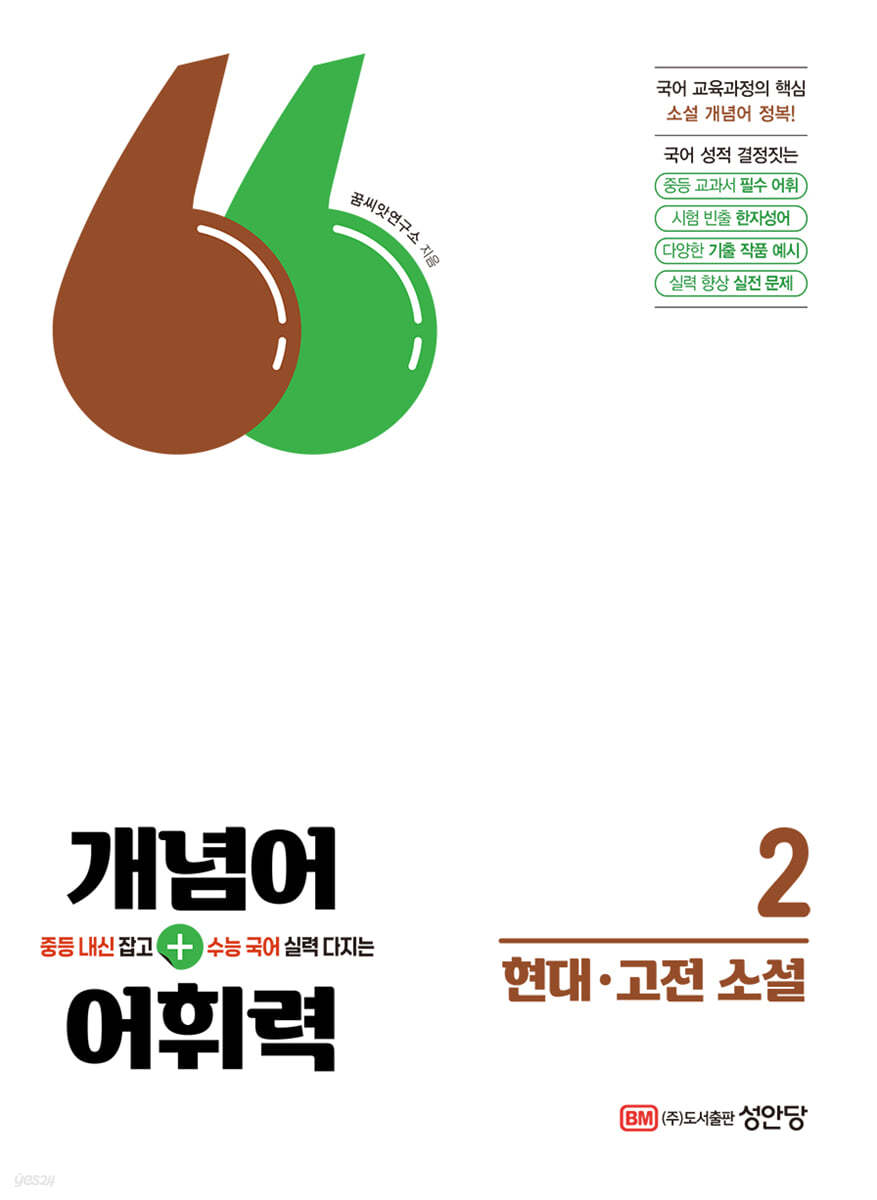
Conceptual Words and Vocabulary 2 - Modern and Classical Novels
 |
Description
Book Introduction
Boost your vocabulary and Korean language skills at the same time with concept words!
Mastering the core concepts of the Korean language curriculum: novel concepts!
The "Conceptual Words and Vocabulary to Improve Middle School Grades and College Scholastic Ability to Score Korean Language" series is a vocabulary textbook that allows students to study conceptual words, which are the core of Korean language studies, divided into three volumes: "Poetry Literature, Modern Literature, Classical Novels, and Non-Literature" regardless of grade level.
This book covers frequently tested concepts and vocabulary in Korean language tests, using practice problems and abundant examples to help you fully understand them and develop your actual Korean language skills.
In addition, you can effectively learn essential vocabulary from middle school textbooks through real-life examples and confirmation problems, and the four-character idioms, which serve as useful background knowledge, are explained in Chinese characters to accurately understand their meaning, and the explanation of their origins greatly helps expand vocabulary.
Even if you have excellent reading comprehension skills, it will be difficult to get the correct answer if you do not know the concepts that frequently appear in the novel section.
Simply knowing the dictionary definitions of concepts does not help much in improving your Korean language skills.
In order to understand the intention of a problem and choose the correct answer from the choices, you must accurately understand the concepts of the types of characters and how they are presented, the novel's point of view, the type of conflict, and the structure of the text.
In 『Concept Words/Vocabulary 2 - Modern/Classical Novels』, you can systematically learn related concepts that frequently appear in novel-related questions and passages.
Mastering the core concepts of the Korean language curriculum: novel concepts!
The "Conceptual Words and Vocabulary to Improve Middle School Grades and College Scholastic Ability to Score Korean Language" series is a vocabulary textbook that allows students to study conceptual words, which are the core of Korean language studies, divided into three volumes: "Poetry Literature, Modern Literature, Classical Novels, and Non-Literature" regardless of grade level.
This book covers frequently tested concepts and vocabulary in Korean language tests, using practice problems and abundant examples to help you fully understand them and develop your actual Korean language skills.
In addition, you can effectively learn essential vocabulary from middle school textbooks through real-life examples and confirmation problems, and the four-character idioms, which serve as useful background knowledge, are explained in Chinese characters to accurately understand their meaning, and the explanation of their origins greatly helps expand vocabulary.
Even if you have excellent reading comprehension skills, it will be difficult to get the correct answer if you do not know the concepts that frequently appear in the novel section.
Simply knowing the dictionary definitions of concepts does not help much in improving your Korean language skills.
In order to understand the intention of a problem and choose the correct answer from the choices, you must accurately understand the concepts of the types of characters and how they are presented, the novel's point of view, the type of conflict, and the structure of the text.
In 『Concept Words/Vocabulary 2 - Modern/Classical Novels』, you can systematically learn related concepts that frequently appear in novel-related questions and passages.
- You can preview some of the book's contents.
Preview
index
01
STEP 1: Check your basic skills
STEP 2: Understanding Korean language concepts with frequently appearing vocabulary on the test
Fiction | Authenticity | Plausibility | Narrative | Prose | Reality
STEP 3: Build your vocabulary with essential textbook words
Readability | Acceleration | Values | Alertness | Chanting | Commonplace | Homogeneity | Population | Inevitable | Indispensable
STEP 4: Expand your vocabulary with idioms
Each pain | Each bone | Mutual help | Deeply moved | Exclamation | A great debate
STEP 5: Complete your vocabulary with practice problems
02
STEP 1: Check your basic skills
STEP 2: Understanding Korean language concepts with frequently appearing vocabulary on the test
Theme | Composition | Style | Characters | Events | Background
STEP 3: Build your vocabulary with essential textbook words
Reconstruction | Compilation | Work | Preconception | Implication | From the beginning | A field | A stranger | A refugee | Spoils of war
STEP 4: Expand your vocabulary with idioms
Geojapilban | Geongonilcheok | Geogmulchiji | Geuksejigam | Gyeongangbuhoe | Gyeonmajiro
STEP 5: Complete your vocabulary with practice problems
03
STEP 1: Check your basic skills
STEP 2: Understanding Korean language concepts with frequently appearing vocabulary on the test
Protagonist | Antipode | Central figure | Peripheral figure | Typical figure | Unique figure | Flat figure | Three-dimensional figure
STEP 3: Build your vocabulary with essential textbook words
Functional | Dysfunctional | Watershed | Edge | Clumsy | Extravagance | Cohesiveness | Harmful | Petition | Impatience
STEP 4: Expand your vocabulary with idioms
The Sword of Knowledge | The Beauty of the Country | Egg Remains | The Way of the Precepts | The Delicacies of Goryang | Isolation and Freedom
STEP 5: Complete your vocabulary with practice problems
04
STEP 1: Check your basic skills
STEP 2: Understanding Korean language concepts with frequently appearing vocabulary on the test
Narrative | Narrator | Direct Presentation | Indirect Presentation
STEP 3: Build your vocabulary with essential textbook words
Reverse thinking | Messing | Patchwork | The art of living | Subterfuge | Anonymity | Gag order | Validity | Likes and dislikes | New path
STEP 4: Expand your vocabulary with idioms
Broken Name | Fair and Just | Bridge Killer | Nine Mil Swords | Nine Ui Il Mo | Powerful Ten Years
STEP 5: Complete your vocabulary with practice problems
05
STEP 1: Check your basic skills
STEP 2: Understanding Korean language concepts with frequently appearing vocabulary on the test
First-person protagonist point of view | First-person observer point of view | Third-person observer point of view | Omniscient author point of view
STEP 3: Build your vocabulary with essential textbook words
Respect | Respect | Criticism | Praise | Criticism | Prejudice ...
STEP 4: Expand your vocabulary with idioms
Golden and jade landscape | Brilliant rivers and mountains | First-time experience | Golden night journey | Geography | Falling flowers and flowing water
STEP 5: Complete your vocabulary with practice problems
06
STEP 1: Check your basic skills
STEP 2: Understanding Korean language concepts with frequently appearing vocabulary on the test
Summary presentation (narration) | Description | Dialogue
STEP 3: Build your vocabulary with essential textbook words
Hypothesis | Argument | Reason | Poorness | Antipathy | Symbiosis | Policy | Slip of the tongue | Symbol | Abuse
STEP 4: Expand your vocabulary with idioms
Impregnable | Difficult and difficult | Namga Ilmong | Nambu Women's University | Nanjungjichu | Rewards and rewards
STEP 5: Complete your vocabulary with practice problems
07
STEP 1: Check your basic skills
STEP 2: Understanding Korean language concepts with frequently appearing vocabulary on the test
Narrator Intervention | Stream of Consciousness Technique | Unreliable Narrator Effect
STEP 3: Build your vocabulary with essential textbook words
Solidarity | Citation | Compilation | Draft | Final Draft | Humiliation | Trust | Gateway | Mutation | Costume
STEP 4: Expand your vocabulary with idioms
Yellow status | Neungso Neungdae | Dagimangyang | Dandojipip | Dansa phoneme | Daegyeongsilsaek
STEP 5: Complete your vocabulary with practice problems
08
STEP 1: Check your basic skills
STEP 2: Understanding Korean language concepts with frequently appearing vocabulary on the test
Concise | Pervasive | Rigorous | Fluent | Colloquial | Literary
STEP 3: Build your vocabulary with essential textbook words
Transcription | Plagiarism | Out of Print | Humiliation | Mistake | Summary | Ridge | Refutation | Argument | Silent Reading
STEP 4: Expand your vocabulary with idioms
Chronic Waiting | Crying loudly | Dotanjigo | General Dokbul | Three Ways of Reading | Doksu Workshop
STEP 5: Complete your vocabulary with practice problems
09
STEP 1: Check your basic skills
STEP 2: Understanding Korean language concepts with frequently appearing vocabulary on the test
Conflict | Development of the plot | Dramatic tension | Character development | Thematic expression
STEP 3: Build your vocabulary with essential textbook words
Generosity | Passion | Destruction | Between the Lines | Initiation | Master | Between the Eyebrows | Absurdity | Collusion | Dehydration
STEP 4: Expand your vocabulary with idioms
Reading Sacred | Reading the Night | Dongga Hongsang | Sharing Joy and Joy | Dreams of the Same Person | Staying Home
STEP 5: Complete your vocabulary with practice problems
10
STEP 1: Check your basic skills
STEP 2: Understanding Korean language concepts with frequently appearing vocabulary on the test
Internal conflict | External conflict
STEP 3: Build your vocabulary with essential textbook words
Emotion | Class | Payment | Settlement | Chills | Aid | Campaign | Fable | Disrespect | Speech
STEP 4: Expand your vocabulary with idioms
Proud | Desperate | Unwavering | Unwavering | Unwavering | Unwavering
STEP 5: Complete your vocabulary with practice problems
11
STEP 1: Check your basic skills
STEP 2: Understanding Korean language concepts with frequently appearing vocabulary on the test
Introduction | Development | Crisis | Climax | Conclusion | Open Ending
STEP 3: Build your vocabulary with essential textbook words
Banseok | Bua | Cultivation | Restoration | Private interest | Public interest | The naked eye | Incision | Scenery | Appearance
STEP 4: Expand your vocabulary with idioms
Mangunjijeong | Myeonjongbokbae | Myeongyakwanhwa | Myeongjaegyeonggak | Mokbulsikjeong | Mokbulingyeon
STEP 5: Complete your vocabulary with practice problems
12
STEP 1: Check your basic skills
STEP 2: Understanding Korean language concepts with frequently appearing vocabulary on the test
Single composition | Composite composition | Procedural composition | Retrograde composition | Frame composition
STEP 3: Build your vocabulary with essential textbook words
Shame | Awareness | Overview | Laughter | Insight | Magnitude | Plan | Backseat | Seedling | Brain
STEP 4: Expand your vocabulary with idioms
Omnipotent | Unstoppable | Mungyeongjigyo | A city full of people | Half-belief | Root cause investigation
STEP 5: Complete your vocabulary with practice problems
13
STEP 1: Check your basic skills
STEP 2: Understanding Korean language concepts with frequently appearing vocabulary on the test
Picaresque structure | Omnibus structure | Parallel structure | Episodic structure | Biographical structure
STEP 3: Build your vocabulary with essential textbook words
Misuse | Voice | Foreign land | Title | Inquiry | Interrogation | Dynamics | Intermission | Eradication | Extreme
STEP 4: Expand your vocabulary with idioms
Unstoppable | 100-year-old subcontractor | 100-year-old indomitable | 100-year-old world | 100-year-old crisis ...Countless
STEP 5: Complete your vocabulary with practice problems
14
STEP 1: Check your basic skills
STEP 2: Understanding Korean language concepts with frequently appearing vocabulary on the test
Story | Plot | Foreshadowing | Motif | Irony | Wordplay
STEP 3: Build your vocabulary with essential textbook words
Common sense | Wavelength | Atrocity | Trend | Condemnation | Truth | Noise | Relief | Injection | Inference
STEP 4: Expand your vocabulary with idioms
Bunchitangcheon | Bulcheoljeonya | Bulchihamun | Biyukjitan | Sagomuchin | Sasangtongak
STEP 5: Complete your vocabulary with practice problems
15
STEP 1: Check your basic skills
STEP 2: Understanding Korean language concepts with frequently appearing vocabulary on the test
Temporal background | Spatial background | Social background | Psychological background | Situational background
STEP 3: Build your vocabulary with essential textbook words
Idea | Release | Rapid Decrease | Rapid Increase | Frequency | Strategy | Depletion | Conviction | Disdain | Catfish
STEP 4: Expand your vocabulary with idioms
Samgochoryeo | Samsun Gusik | Sangjeonbyeokhae | Seon-gong-hu-sa | Seonwoo-hu-rak | Su-gu-cho-sim
STEP 5: Complete your vocabulary with practice problems
16
STEP 1: Check your basic skills
STEP 2: Understanding Korean language concepts with frequently appearing vocabulary on the test
Coming-of-Age Novels | Journey Novels | Post-War Novels | Sleepwalking Novels | Military Novels
STEP 3: Build your vocabulary with essential textbook words
Observation | Conflict | Permanent | Constant | Reading | Shortcut | Illusion | Hint | Observation | Best policy
STEP 4: Expand your vocabulary with idioms
Subulseokkwon | Sujeokcheonseok | Sujudaeto | Sunmangchihan | Sipbeoljimok | Ajeoninsoo
STEP 5: Complete your vocabulary with practice problems
17
STEP 1: Check your basic skills
STEP 2: Understanding Korean language concepts with frequently appearing vocabulary on the test
Chapter | Act | Commentary | Text | Dialogue | Adaptation | Narration
STEP 3: Build your vocabulary with essential textbook words
Reign | Consequence | Hardship | Enforcement | Observation | Refutation | Charm | Distant View | Predicament | Extreme
STEP 4: Expand your vocabulary with idioms
A fierce struggle | A contented life | Groping in the dark | Begging and begging | Aibulbi | Two heads and six
STEP 5: Complete your vocabulary with practice problems
18
STEP 1: Check your basic skills
STEP 2: Understanding Korean language concepts with frequently appearing vocabulary from classic novels
Each story | Each poem | Each story | Anecdote | Anecdote | Anecdote | Anecdote | Anecdote | Anecdote | Anecdote | Anecdote
STEP 3: Build your vocabulary with essential textbook words
Export | Distribution | Situation | Return | Virtue | Sympathy | Practice | Message | Contribution | Matter
STEP 4: Expand your vocabulary with idioms
Affluence | Nonsense | A heart that is too weak to speak | Thinking from another's perspective | A sage's tongue | Successive victories
STEP 5: Complete your vocabulary with practice problems
19
STEP 1: Check your basic skills
STEP 2: Understanding Korean language concepts with frequently appearing vocabulary from classic novels
Gyeong | Po | Gak | Sikgyeong | Najeol | Paru
STEP 3: Build your vocabulary with essential textbook words
Theft | Movement | Rescue | Investigation | Statute of limitations | Fall | Maternal | Gratuitous | Accumulation | Bias
STEP 4: Expand your vocabulary with idioms
Soft and hard | Salty weather | Five seasons | Five moons and five moons | Five rabble | Wasin consultation
STEP 5: Complete your vocabulary with practice problems
20
STEP 1: Check your basic skills
STEP 2: Understanding Korean language concepts with frequently appearing vocabulary from classic novels
Gasan | Objects | Love | Naedang | Pavilion | Sleeping Ship | Bedroom | Backyard | Women's House | Auxiliary Building
STEP 3: Build your vocabulary with essential textbook words
Rampant | Intrusion | Intense | Slowing | Power | Nature | Acquisition | Neglect | Distribution | Capture
STEP 4: Expand your vocabulary with idioms
Yoji Budong | Yongdusamimi | Yonguijudo | Yonghosangbak | Ugongisan | Uijeonggyeong
STEP 5: Complete your vocabulary with practice problems
21
STEP 1: Check your basic skills
STEP 2: Understanding Korean language concepts with frequently appearing vocabulary from classic novels
Wedding | Gain | Lucky Day | Spouse | Fortune | Fate | Chastity | Wedding Date | Wedding Place | Wedding Candle
STEP 3: Build your vocabulary with essential textbook words
Secular | Sepha | Category | Transformation | Transition | Estimation | Bandwagon | Content | Encouragement | Bloodshot
STEP 4: Expand your vocabulary with idioms
Wipyeonsamjeol | Yujongjimi | Yujigyeongseong | Euninjajung | Eumpungnongwol | Isiljikgo
STEP 5: Complete your vocabulary with practice problems
22
STEP 1: Check your basic skills
STEP 2: Understanding Korean language concepts with frequently appearing vocabulary from classic novels
Peach blossom | Marumjil | Manseok | Manjeol | Jeoksam | Jeolhaeng | Juryeom | Jirak | Hwasang | Hoepo
STEP 3: Build your vocabulary with essential textbook words
Disrespect | Ingenious idea | Explanation | Adaptation | Parallelism | Vulgarity | Emphasis | Expression | Pretense | Production
STEP 4: Expand your vocabulary with idioms
Fighting two fires | Fighting a hundred times | Fighting in unison | Fighting at breakneck speed | Fighting at breakneck speed | Fighting at breakneck speed | Fighting at breakneck speed | Fighting at breakneck speed
STEP 5: Complete your vocabulary with practice problems
23
STEP 1: Check your basic skills
STEP 2: Understanding Korean language concepts with frequently appearing vocabulary from classic novels
maid | servant | concubine | first daughter | young lady | petty person | minor | widow | young lady | daughter
STEP 3: Build your vocabulary with essential textbook words
Conflict | Success or failure | Clan | Faction | Despotism | Abuse | Resistance | Command | Aptitude | Leader
STEP 4: Expand your vocabulary with idioms
One word, one ignorance | One step forward and one step back | One stroke of a pen | One stroke of luck | One stroke of joy and one stroke of sorrow
STEP 5: Complete your vocabulary with practice problems
24
STEP 1: Check your basic skills
STEP 2: Understanding Korean language concepts with frequently appearing vocabulary from classic novels
Ilsek | Chaste | Yangju | Noble class | Three Prime Ministers | Official | Gwan-gwan | Commoner | Family background | Tribute
STEP 3: Build your vocabulary with essential textbook words
Sorcery | Renovation | Opinion | Creed | Intention | Mindset | Arrangement | Designation | True Meaning | Comfort
STEP 4: Expand your vocabulary with idioms
Improvisation | Success and fame | Beginning of autumn and moving towards the future | Self-contradiction | Self-made success | Self-success and self-destruction
STEP 5: Complete your vocabulary with practice problems
25
STEP 1: Check your basic skills
STEP 2: Understanding Korean language concepts with frequently appearing vocabulary from classic novels
Seongsang | Seongui | Jesu | Yongan | Yongsang | Yun-eum | Janggye | Remonstrance | Ipbeon | Hwangok
STEP 3: Build your vocabulary with essential textbook words
Threat | Survival | Self-reliance | Preparation | Rebuke | Usurpation | Rumor | Behind the Scenes | Section | Situation
STEP 4: Expand your vocabulary with idioms
Self-restraint | Enemy's right to strike | Trembling | Trembling | Trembling | A thousand miles | A single blow to the front gate
STEP 5: Complete your vocabulary with practice problems
26
STEP 1: Check your basic skills
STEP 2: Understanding Korean language concepts with frequently appearing vocabulary from classic novels
Korean | Interrogation | Soldier | Prisoner | Border | Military Strategy | Rank | Retreat | Gatekeeper | Royal Inspector
STEP 3: Build your vocabulary with essential textbook words
Self-reproach | Precedent | Establishment | Promotion | Acquisition | Nearness | Return | Mediation | Sign | Illusion
STEP 4: Expand your vocabulary with idioms
Jollingmogae | Jogowoomyeon | Jumagapyeon | Gwaneongeonyeon | Jirokwima | Georichaeryeol
STEP 5: Complete your vocabulary with practice problems
27
STEP 1: Check your basic skills
STEP 2: Understanding Korean language concepts with frequently appearing vocabulary from classic novels
Scheme | Offering | Underworld | Reincarnation | Mantra | Mandate of Heaven | Heavenly Realm | Heavenly Deeds | Illusion | Misfortune
STEP 3: Build your vocabulary with essential textbook words
Avoidance | Direction | Progress | Texture | Overwork | Tragedy | Appropriate | Perfect | Extra | Dormant
STEP 4: Expand your vocabulary with idioms
A miracle that touches the heart | A miracle that touches the heart | A miracle that touches the heart | A miracle that touches the heart | A miracle that touches the heart | Autumn wind and falling leaves
STEP 5: Complete your vocabulary with practice problems
28
STEP 1: Check your basic skills
STEP 2: Understanding Korean language concepts with frequently appearing vocabulary from classic novels
Virtually | In a daze | Indignantly | As it should | Numberly | Likely | Obviously | Surely | Unambiguously
STEP 3: Build your vocabulary with essential textbook words
National | Chronic | Radical | Physical | Lukewarm | Universal | Leapfrogging | Instigative | Implicit | Indirect
STEP 4: Expand your vocabulary with idioms
Feng Shui Jitan | Handanjimong | Hampogobok | Heojangseongse | Hogahowi | Hojeopjimong
STEP 5: Complete your vocabulary with practice problems
29
STEP 1: Check your basic skills
STEP 2: Understanding Korean language concepts with frequently appearing vocabulary from classic novels
To report | To bow | To be strange | To be remote | To be vain | To be simple | To be young | To be ordinary |
Emergency | Desperate
STEP 3: Build your vocabulary with essential textbook words
Ritualistic | Exotic | Artificial | Potential | Provisional | Subordinate | Direct | Conventional | Popular | Innate
STEP 4: Expand your vocabulary with idioms
Hocheonmanggeuk | Hohyunghosei | Hossemumin | Honjeongsinseong | Hwasacheomjok | Hwajungjibyeong
STEP 5: Complete your vocabulary with practice problems
30
STEP 1: Check your basic skills
STEP 2: Understanding Korean language concepts with frequently appearing vocabulary from classic novels
Twilight | Poor | Auspicious | Report | Despicable | Mournful | Decaying | Cheerful | Frightened | Desperate
STEP 3: Build your vocabulary with essential textbook words
absurd | bizarre | perpetrate | surround | solemn | indirect | laugh | generous | boundless | spacious
STEP 4: Expand your vocabulary with idioms
A whirlwind of change | A complete transformation | A clean sweep | A bold, unwavering effort | A cheerful face
STEP 5: Complete your vocabulary with practice problems
STEP 1: Check your basic skills
STEP 2: Understanding Korean language concepts with frequently appearing vocabulary on the test
Fiction | Authenticity | Plausibility | Narrative | Prose | Reality
STEP 3: Build your vocabulary with essential textbook words
Readability | Acceleration | Values | Alertness | Chanting | Commonplace | Homogeneity | Population | Inevitable | Indispensable
STEP 4: Expand your vocabulary with idioms
Each pain | Each bone | Mutual help | Deeply moved | Exclamation | A great debate
STEP 5: Complete your vocabulary with practice problems
02
STEP 1: Check your basic skills
STEP 2: Understanding Korean language concepts with frequently appearing vocabulary on the test
Theme | Composition | Style | Characters | Events | Background
STEP 3: Build your vocabulary with essential textbook words
Reconstruction | Compilation | Work | Preconception | Implication | From the beginning | A field | A stranger | A refugee | Spoils of war
STEP 4: Expand your vocabulary with idioms
Geojapilban | Geongonilcheok | Geogmulchiji | Geuksejigam | Gyeongangbuhoe | Gyeonmajiro
STEP 5: Complete your vocabulary with practice problems
03
STEP 1: Check your basic skills
STEP 2: Understanding Korean language concepts with frequently appearing vocabulary on the test
Protagonist | Antipode | Central figure | Peripheral figure | Typical figure | Unique figure | Flat figure | Three-dimensional figure
STEP 3: Build your vocabulary with essential textbook words
Functional | Dysfunctional | Watershed | Edge | Clumsy | Extravagance | Cohesiveness | Harmful | Petition | Impatience
STEP 4: Expand your vocabulary with idioms
The Sword of Knowledge | The Beauty of the Country | Egg Remains | The Way of the Precepts | The Delicacies of Goryang | Isolation and Freedom
STEP 5: Complete your vocabulary with practice problems
04
STEP 1: Check your basic skills
STEP 2: Understanding Korean language concepts with frequently appearing vocabulary on the test
Narrative | Narrator | Direct Presentation | Indirect Presentation
STEP 3: Build your vocabulary with essential textbook words
Reverse thinking | Messing | Patchwork | The art of living | Subterfuge | Anonymity | Gag order | Validity | Likes and dislikes | New path
STEP 4: Expand your vocabulary with idioms
Broken Name | Fair and Just | Bridge Killer | Nine Mil Swords | Nine Ui Il Mo | Powerful Ten Years
STEP 5: Complete your vocabulary with practice problems
05
STEP 1: Check your basic skills
STEP 2: Understanding Korean language concepts with frequently appearing vocabulary on the test
First-person protagonist point of view | First-person observer point of view | Third-person observer point of view | Omniscient author point of view
STEP 3: Build your vocabulary with essential textbook words
Respect | Respect | Criticism | Praise | Criticism | Prejudice ...
STEP 4: Expand your vocabulary with idioms
Golden and jade landscape | Brilliant rivers and mountains | First-time experience | Golden night journey | Geography | Falling flowers and flowing water
STEP 5: Complete your vocabulary with practice problems
06
STEP 1: Check your basic skills
STEP 2: Understanding Korean language concepts with frequently appearing vocabulary on the test
Summary presentation (narration) | Description | Dialogue
STEP 3: Build your vocabulary with essential textbook words
Hypothesis | Argument | Reason | Poorness | Antipathy | Symbiosis | Policy | Slip of the tongue | Symbol | Abuse
STEP 4: Expand your vocabulary with idioms
Impregnable | Difficult and difficult | Namga Ilmong | Nambu Women's University | Nanjungjichu | Rewards and rewards
STEP 5: Complete your vocabulary with practice problems
07
STEP 1: Check your basic skills
STEP 2: Understanding Korean language concepts with frequently appearing vocabulary on the test
Narrator Intervention | Stream of Consciousness Technique | Unreliable Narrator Effect
STEP 3: Build your vocabulary with essential textbook words
Solidarity | Citation | Compilation | Draft | Final Draft | Humiliation | Trust | Gateway | Mutation | Costume
STEP 4: Expand your vocabulary with idioms
Yellow status | Neungso Neungdae | Dagimangyang | Dandojipip | Dansa phoneme | Daegyeongsilsaek
STEP 5: Complete your vocabulary with practice problems
08
STEP 1: Check your basic skills
STEP 2: Understanding Korean language concepts with frequently appearing vocabulary on the test
Concise | Pervasive | Rigorous | Fluent | Colloquial | Literary
STEP 3: Build your vocabulary with essential textbook words
Transcription | Plagiarism | Out of Print | Humiliation | Mistake | Summary | Ridge | Refutation | Argument | Silent Reading
STEP 4: Expand your vocabulary with idioms
Chronic Waiting | Crying loudly | Dotanjigo | General Dokbul | Three Ways of Reading | Doksu Workshop
STEP 5: Complete your vocabulary with practice problems
09
STEP 1: Check your basic skills
STEP 2: Understanding Korean language concepts with frequently appearing vocabulary on the test
Conflict | Development of the plot | Dramatic tension | Character development | Thematic expression
STEP 3: Build your vocabulary with essential textbook words
Generosity | Passion | Destruction | Between the Lines | Initiation | Master | Between the Eyebrows | Absurdity | Collusion | Dehydration
STEP 4: Expand your vocabulary with idioms
Reading Sacred | Reading the Night | Dongga Hongsang | Sharing Joy and Joy | Dreams of the Same Person | Staying Home
STEP 5: Complete your vocabulary with practice problems
10
STEP 1: Check your basic skills
STEP 2: Understanding Korean language concepts with frequently appearing vocabulary on the test
Internal conflict | External conflict
STEP 3: Build your vocabulary with essential textbook words
Emotion | Class | Payment | Settlement | Chills | Aid | Campaign | Fable | Disrespect | Speech
STEP 4: Expand your vocabulary with idioms
Proud | Desperate | Unwavering | Unwavering | Unwavering | Unwavering
STEP 5: Complete your vocabulary with practice problems
11
STEP 1: Check your basic skills
STEP 2: Understanding Korean language concepts with frequently appearing vocabulary on the test
Introduction | Development | Crisis | Climax | Conclusion | Open Ending
STEP 3: Build your vocabulary with essential textbook words
Banseok | Bua | Cultivation | Restoration | Private interest | Public interest | The naked eye | Incision | Scenery | Appearance
STEP 4: Expand your vocabulary with idioms
Mangunjijeong | Myeonjongbokbae | Myeongyakwanhwa | Myeongjaegyeonggak | Mokbulsikjeong | Mokbulingyeon
STEP 5: Complete your vocabulary with practice problems
12
STEP 1: Check your basic skills
STEP 2: Understanding Korean language concepts with frequently appearing vocabulary on the test
Single composition | Composite composition | Procedural composition | Retrograde composition | Frame composition
STEP 3: Build your vocabulary with essential textbook words
Shame | Awareness | Overview | Laughter | Insight | Magnitude | Plan | Backseat | Seedling | Brain
STEP 4: Expand your vocabulary with idioms
Omnipotent | Unstoppable | Mungyeongjigyo | A city full of people | Half-belief | Root cause investigation
STEP 5: Complete your vocabulary with practice problems
13
STEP 1: Check your basic skills
STEP 2: Understanding Korean language concepts with frequently appearing vocabulary on the test
Picaresque structure | Omnibus structure | Parallel structure | Episodic structure | Biographical structure
STEP 3: Build your vocabulary with essential textbook words
Misuse | Voice | Foreign land | Title | Inquiry | Interrogation | Dynamics | Intermission | Eradication | Extreme
STEP 4: Expand your vocabulary with idioms
Unstoppable | 100-year-old subcontractor | 100-year-old indomitable | 100-year-old world | 100-year-old crisis ...Countless
STEP 5: Complete your vocabulary with practice problems
14
STEP 1: Check your basic skills
STEP 2: Understanding Korean language concepts with frequently appearing vocabulary on the test
Story | Plot | Foreshadowing | Motif | Irony | Wordplay
STEP 3: Build your vocabulary with essential textbook words
Common sense | Wavelength | Atrocity | Trend | Condemnation | Truth | Noise | Relief | Injection | Inference
STEP 4: Expand your vocabulary with idioms
Bunchitangcheon | Bulcheoljeonya | Bulchihamun | Biyukjitan | Sagomuchin | Sasangtongak
STEP 5: Complete your vocabulary with practice problems
15
STEP 1: Check your basic skills
STEP 2: Understanding Korean language concepts with frequently appearing vocabulary on the test
Temporal background | Spatial background | Social background | Psychological background | Situational background
STEP 3: Build your vocabulary with essential textbook words
Idea | Release | Rapid Decrease | Rapid Increase | Frequency | Strategy | Depletion | Conviction | Disdain | Catfish
STEP 4: Expand your vocabulary with idioms
Samgochoryeo | Samsun Gusik | Sangjeonbyeokhae | Seon-gong-hu-sa | Seonwoo-hu-rak | Su-gu-cho-sim
STEP 5: Complete your vocabulary with practice problems
16
STEP 1: Check your basic skills
STEP 2: Understanding Korean language concepts with frequently appearing vocabulary on the test
Coming-of-Age Novels | Journey Novels | Post-War Novels | Sleepwalking Novels | Military Novels
STEP 3: Build your vocabulary with essential textbook words
Observation | Conflict | Permanent | Constant | Reading | Shortcut | Illusion | Hint | Observation | Best policy
STEP 4: Expand your vocabulary with idioms
Subulseokkwon | Sujeokcheonseok | Sujudaeto | Sunmangchihan | Sipbeoljimok | Ajeoninsoo
STEP 5: Complete your vocabulary with practice problems
17
STEP 1: Check your basic skills
STEP 2: Understanding Korean language concepts with frequently appearing vocabulary on the test
Chapter | Act | Commentary | Text | Dialogue | Adaptation | Narration
STEP 3: Build your vocabulary with essential textbook words
Reign | Consequence | Hardship | Enforcement | Observation | Refutation | Charm | Distant View | Predicament | Extreme
STEP 4: Expand your vocabulary with idioms
A fierce struggle | A contented life | Groping in the dark | Begging and begging | Aibulbi | Two heads and six
STEP 5: Complete your vocabulary with practice problems
18
STEP 1: Check your basic skills
STEP 2: Understanding Korean language concepts with frequently appearing vocabulary from classic novels
Each story | Each poem | Each story | Anecdote | Anecdote | Anecdote | Anecdote | Anecdote | Anecdote | Anecdote | Anecdote
STEP 3: Build your vocabulary with essential textbook words
Export | Distribution | Situation | Return | Virtue | Sympathy | Practice | Message | Contribution | Matter
STEP 4: Expand your vocabulary with idioms
Affluence | Nonsense | A heart that is too weak to speak | Thinking from another's perspective | A sage's tongue | Successive victories
STEP 5: Complete your vocabulary with practice problems
19
STEP 1: Check your basic skills
STEP 2: Understanding Korean language concepts with frequently appearing vocabulary from classic novels
Gyeong | Po | Gak | Sikgyeong | Najeol | Paru
STEP 3: Build your vocabulary with essential textbook words
Theft | Movement | Rescue | Investigation | Statute of limitations | Fall | Maternal | Gratuitous | Accumulation | Bias
STEP 4: Expand your vocabulary with idioms
Soft and hard | Salty weather | Five seasons | Five moons and five moons | Five rabble | Wasin consultation
STEP 5: Complete your vocabulary with practice problems
20
STEP 1: Check your basic skills
STEP 2: Understanding Korean language concepts with frequently appearing vocabulary from classic novels
Gasan | Objects | Love | Naedang | Pavilion | Sleeping Ship | Bedroom | Backyard | Women's House | Auxiliary Building
STEP 3: Build your vocabulary with essential textbook words
Rampant | Intrusion | Intense | Slowing | Power | Nature | Acquisition | Neglect | Distribution | Capture
STEP 4: Expand your vocabulary with idioms
Yoji Budong | Yongdusamimi | Yonguijudo | Yonghosangbak | Ugongisan | Uijeonggyeong
STEP 5: Complete your vocabulary with practice problems
21
STEP 1: Check your basic skills
STEP 2: Understanding Korean language concepts with frequently appearing vocabulary from classic novels
Wedding | Gain | Lucky Day | Spouse | Fortune | Fate | Chastity | Wedding Date | Wedding Place | Wedding Candle
STEP 3: Build your vocabulary with essential textbook words
Secular | Sepha | Category | Transformation | Transition | Estimation | Bandwagon | Content | Encouragement | Bloodshot
STEP 4: Expand your vocabulary with idioms
Wipyeonsamjeol | Yujongjimi | Yujigyeongseong | Euninjajung | Eumpungnongwol | Isiljikgo
STEP 5: Complete your vocabulary with practice problems
22
STEP 1: Check your basic skills
STEP 2: Understanding Korean language concepts with frequently appearing vocabulary from classic novels
Peach blossom | Marumjil | Manseok | Manjeol | Jeoksam | Jeolhaeng | Juryeom | Jirak | Hwasang | Hoepo
STEP 3: Build your vocabulary with essential textbook words
Disrespect | Ingenious idea | Explanation | Adaptation | Parallelism | Vulgarity | Emphasis | Expression | Pretense | Production
STEP 4: Expand your vocabulary with idioms
Fighting two fires | Fighting a hundred times | Fighting in unison | Fighting at breakneck speed | Fighting at breakneck speed | Fighting at breakneck speed | Fighting at breakneck speed | Fighting at breakneck speed
STEP 5: Complete your vocabulary with practice problems
23
STEP 1: Check your basic skills
STEP 2: Understanding Korean language concepts with frequently appearing vocabulary from classic novels
maid | servant | concubine | first daughter | young lady | petty person | minor | widow | young lady | daughter
STEP 3: Build your vocabulary with essential textbook words
Conflict | Success or failure | Clan | Faction | Despotism | Abuse | Resistance | Command | Aptitude | Leader
STEP 4: Expand your vocabulary with idioms
One word, one ignorance | One step forward and one step back | One stroke of a pen | One stroke of luck | One stroke of joy and one stroke of sorrow
STEP 5: Complete your vocabulary with practice problems
24
STEP 1: Check your basic skills
STEP 2: Understanding Korean language concepts with frequently appearing vocabulary from classic novels
Ilsek | Chaste | Yangju | Noble class | Three Prime Ministers | Official | Gwan-gwan | Commoner | Family background | Tribute
STEP 3: Build your vocabulary with essential textbook words
Sorcery | Renovation | Opinion | Creed | Intention | Mindset | Arrangement | Designation | True Meaning | Comfort
STEP 4: Expand your vocabulary with idioms
Improvisation | Success and fame | Beginning of autumn and moving towards the future | Self-contradiction | Self-made success | Self-success and self-destruction
STEP 5: Complete your vocabulary with practice problems
25
STEP 1: Check your basic skills
STEP 2: Understanding Korean language concepts with frequently appearing vocabulary from classic novels
Seongsang | Seongui | Jesu | Yongan | Yongsang | Yun-eum | Janggye | Remonstrance | Ipbeon | Hwangok
STEP 3: Build your vocabulary with essential textbook words
Threat | Survival | Self-reliance | Preparation | Rebuke | Usurpation | Rumor | Behind the Scenes | Section | Situation
STEP 4: Expand your vocabulary with idioms
Self-restraint | Enemy's right to strike | Trembling | Trembling | Trembling | A thousand miles | A single blow to the front gate
STEP 5: Complete your vocabulary with practice problems
26
STEP 1: Check your basic skills
STEP 2: Understanding Korean language concepts with frequently appearing vocabulary from classic novels
Korean | Interrogation | Soldier | Prisoner | Border | Military Strategy | Rank | Retreat | Gatekeeper | Royal Inspector
STEP 3: Build your vocabulary with essential textbook words
Self-reproach | Precedent | Establishment | Promotion | Acquisition | Nearness | Return | Mediation | Sign | Illusion
STEP 4: Expand your vocabulary with idioms
Jollingmogae | Jogowoomyeon | Jumagapyeon | Gwaneongeonyeon | Jirokwima | Georichaeryeol
STEP 5: Complete your vocabulary with practice problems
27
STEP 1: Check your basic skills
STEP 2: Understanding Korean language concepts with frequently appearing vocabulary from classic novels
Scheme | Offering | Underworld | Reincarnation | Mantra | Mandate of Heaven | Heavenly Realm | Heavenly Deeds | Illusion | Misfortune
STEP 3: Build your vocabulary with essential textbook words
Avoidance | Direction | Progress | Texture | Overwork | Tragedy | Appropriate | Perfect | Extra | Dormant
STEP 4: Expand your vocabulary with idioms
A miracle that touches the heart | A miracle that touches the heart | A miracle that touches the heart | A miracle that touches the heart | A miracle that touches the heart | Autumn wind and falling leaves
STEP 5: Complete your vocabulary with practice problems
28
STEP 1: Check your basic skills
STEP 2: Understanding Korean language concepts with frequently appearing vocabulary from classic novels
Virtually | In a daze | Indignantly | As it should | Numberly | Likely | Obviously | Surely | Unambiguously
STEP 3: Build your vocabulary with essential textbook words
National | Chronic | Radical | Physical | Lukewarm | Universal | Leapfrogging | Instigative | Implicit | Indirect
STEP 4: Expand your vocabulary with idioms
Feng Shui Jitan | Handanjimong | Hampogobok | Heojangseongse | Hogahowi | Hojeopjimong
STEP 5: Complete your vocabulary with practice problems
29
STEP 1: Check your basic skills
STEP 2: Understanding Korean language concepts with frequently appearing vocabulary from classic novels
To report | To bow | To be strange | To be remote | To be vain | To be simple | To be young | To be ordinary |
Emergency | Desperate
STEP 3: Build your vocabulary with essential textbook words
Ritualistic | Exotic | Artificial | Potential | Provisional | Subordinate | Direct | Conventional | Popular | Innate
STEP 4: Expand your vocabulary with idioms
Hocheonmanggeuk | Hohyunghosei | Hossemumin | Honjeongsinseong | Hwasacheomjok | Hwajungjibyeong
STEP 5: Complete your vocabulary with practice problems
30
STEP 1: Check your basic skills
STEP 2: Understanding Korean language concepts with frequently appearing vocabulary from classic novels
Twilight | Poor | Auspicious | Report | Despicable | Mournful | Decaying | Cheerful | Frightened | Desperate
STEP 3: Build your vocabulary with essential textbook words
absurd | bizarre | perpetrate | surround | solemn | indirect | laugh | generous | boundless | spacious
STEP 4: Expand your vocabulary with idioms
A whirlwind of change | A complete transformation | A clean sweep | A bold, unwavering effort | A cheerful face
STEP 5: Complete your vocabulary with practice problems
Detailed image

Publisher's Review
Boost your vocabulary and Korean language skills at the same time with concept words!
Korean language test, don't solve it by feeling!
After taking the Korean language test, many children say they got it wrong because they misread the question.
But this is because the intention and purpose of the problem were not accurately understood.
So how should we study to interpret the text and answer correctly as required on the exam? The answer lies in "conceptual language."
The most important thing in studying Korean is to know the related concepts accurately.
If you don't know the concept words accurately, you won't be able to properly understand the questions and passages on the Korean language test.
In fact, most of the questions that children get wrong on Korean language tests are related to vocabulary, and among them, conceptual words are the most difficult.
To improve your Korean language skills, you must learn the characteristics and concepts of each genre, such as poetry, modern novels, classical novels, and non-fiction.
The "Conceptual Words and Vocabulary to Improve Middle School Grades and College Scholastic Ability to Score Korean Language" series is a vocabulary textbook that allows you to study conceptual words, which are the core of Korean language study, divided into three volumes: "Poetry Literature, Modern Literature, Classical Novels, and Non-Literature" regardless of grade level.
This book covers frequently tested concepts and vocabulary in Korean language tests, using practical problems and abundant examples to help you fully understand them and develop your actual Korean language skills.
Additionally, you can effectively learn essential vocabulary from middle school textbooks through real-life examples and confirmation questions, and the meaning of Chinese characters in idioms, which serve as useful background knowledge, is explained, helping you understand the exact meaning, and the explanation of their origins greatly helps expand your vocabulary.
Mastering the core concepts of the Korean language curriculum: novel concepts!
Even if you have excellent reading comprehension skills, it will be difficult to get the correct answer if you don't know the concepts that frequently appear in the novel section.
Simply knowing the dictionary definitions of concepts does not help much in improving your Korean language skills.
To understand the intention of a problem and choose the correct answer from the choices, you must have a precise understanding of the concepts of the types of characters and how they are presented, the novel's point of view, the type of conflict, and the structure of the text.
In "Concept Words and Vocabulary 2: Modern and Classical Novels," you can systematically learn related concepts that frequently appear in novel-related questions and essays.
The structure of this book is as follows:
STEP 1 Check your basic skills - Before starting full-scale vocabulary study, solve the 'Korean language skills test questions' to check what you know and what you don't know.
STEP 2: Understanding Korean concepts with frequently appearing vocabulary - This is the most important step in studying Korean, where you accurately learn Korean-related concepts.
STEP 3: Build vocabulary with essential vocabulary from textbooks - This is the stage where you learn essential vocabulary carefully selected from Korean language textbooks used in many middle schools.
STEP 4 Expanding your vocabulary with four-character idioms - This is the step where you expand your vocabulary with four-character idioms, which are useful background knowledge not only for Korean language tests but also in everyday life.
STEP 5 Complete your vocabulary with practice problems - This is the step where you check whether you have properly understood the previously learned content through practice problems.
If you fully master the concepts and vocabulary in the series "Conceptual Words and Vocabulary to Improve Middle School Grades and College Scholastic Ability to Read the Korean Language", even students who find studying Korean difficult and daunting will have the amazing experience of being able to read the passages and options on the Korean language exam smoothly.
Korean language test, don't solve it by feeling!
After taking the Korean language test, many children say they got it wrong because they misread the question.
But this is because the intention and purpose of the problem were not accurately understood.
So how should we study to interpret the text and answer correctly as required on the exam? The answer lies in "conceptual language."
The most important thing in studying Korean is to know the related concepts accurately.
If you don't know the concept words accurately, you won't be able to properly understand the questions and passages on the Korean language test.
In fact, most of the questions that children get wrong on Korean language tests are related to vocabulary, and among them, conceptual words are the most difficult.
To improve your Korean language skills, you must learn the characteristics and concepts of each genre, such as poetry, modern novels, classical novels, and non-fiction.
The "Conceptual Words and Vocabulary to Improve Middle School Grades and College Scholastic Ability to Score Korean Language" series is a vocabulary textbook that allows you to study conceptual words, which are the core of Korean language study, divided into three volumes: "Poetry Literature, Modern Literature, Classical Novels, and Non-Literature" regardless of grade level.
This book covers frequently tested concepts and vocabulary in Korean language tests, using practical problems and abundant examples to help you fully understand them and develop your actual Korean language skills.
Additionally, you can effectively learn essential vocabulary from middle school textbooks through real-life examples and confirmation questions, and the meaning of Chinese characters in idioms, which serve as useful background knowledge, is explained, helping you understand the exact meaning, and the explanation of their origins greatly helps expand your vocabulary.
Mastering the core concepts of the Korean language curriculum: novel concepts!
Even if you have excellent reading comprehension skills, it will be difficult to get the correct answer if you don't know the concepts that frequently appear in the novel section.
Simply knowing the dictionary definitions of concepts does not help much in improving your Korean language skills.
To understand the intention of a problem and choose the correct answer from the choices, you must have a precise understanding of the concepts of the types of characters and how they are presented, the novel's point of view, the type of conflict, and the structure of the text.
In "Concept Words and Vocabulary 2: Modern and Classical Novels," you can systematically learn related concepts that frequently appear in novel-related questions and essays.
The structure of this book is as follows:
STEP 1 Check your basic skills - Before starting full-scale vocabulary study, solve the 'Korean language skills test questions' to check what you know and what you don't know.
STEP 2: Understanding Korean concepts with frequently appearing vocabulary - This is the most important step in studying Korean, where you accurately learn Korean-related concepts.
STEP 3: Build vocabulary with essential vocabulary from textbooks - This is the stage where you learn essential vocabulary carefully selected from Korean language textbooks used in many middle schools.
STEP 4 Expanding your vocabulary with four-character idioms - This is the step where you expand your vocabulary with four-character idioms, which are useful background knowledge not only for Korean language tests but also in everyday life.
STEP 5 Complete your vocabulary with practice problems - This is the step where you check whether you have properly understood the previously learned content through practice problems.
If you fully master the concepts and vocabulary in the series "Conceptual Words and Vocabulary to Improve Middle School Grades and College Scholastic Ability to Read the Korean Language", even students who find studying Korean difficult and daunting will have the amazing experience of being able to read the passages and options on the Korean language exam smoothly.
GOODS SPECIFICS
- Date of issue: February 15, 2023
- Page count, weight, size: 196 pages | 478g | 190*260*9mm
- ISBN13: 9788931559224
- ISBN10: 8931559224
- Reference book for use in grades: Common for middle school students
You may also like
카테고리
korean


korean

![GQ KOREA Mark (Monthly): December [2025]](http://librairie.coreenne.fr/cdn/shop/files/8ef265dbbfbf186523ed75ba7319009d.jpg?v=1765340328&width=3840)


