

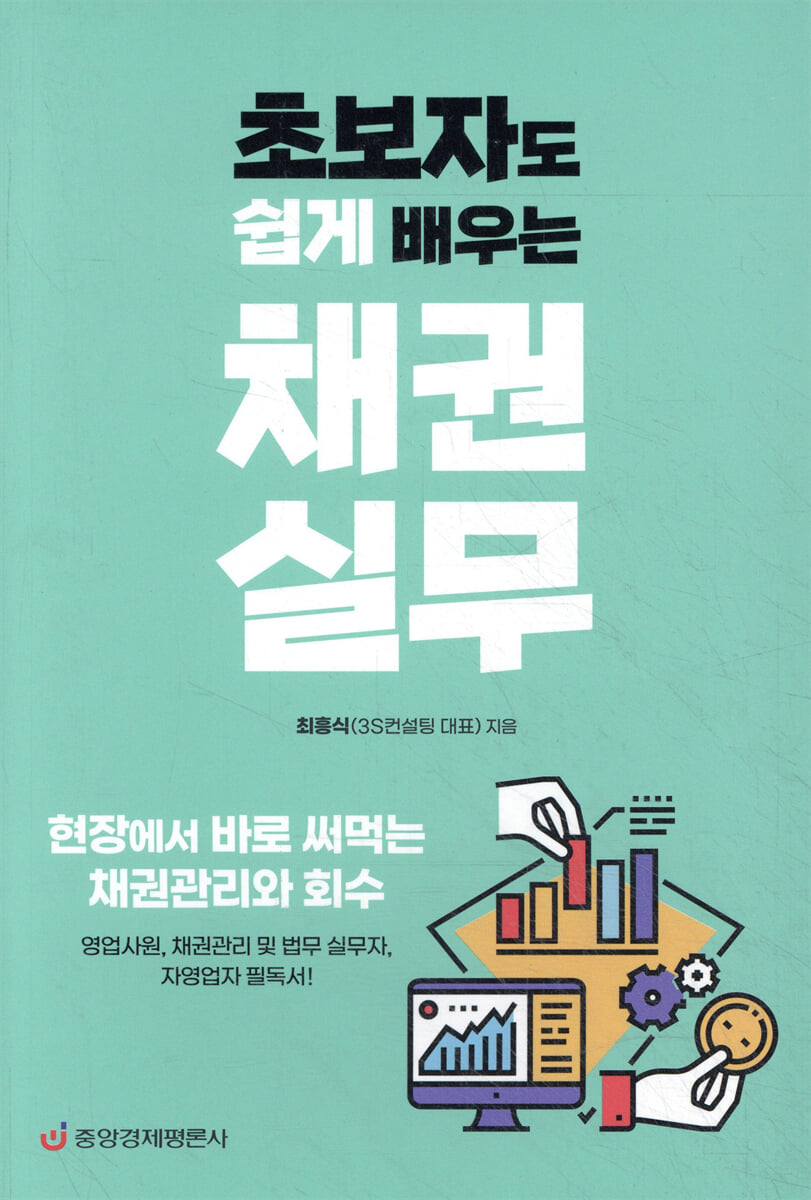
Bond Practice (Easy to Learn Even for Beginners)
 |
Description
Book Introduction
* Debt management and collection that can be used right on site! * A must-read for salespeople, accountants, legal professionals, and the self-employed! * A book containing the secrets of debt management that will save your company! This book is a practical guidebook written by the author, who has been working and teaching in the field for over 20 years, and has gathered opinions from salespeople, account management, and legal practitioners he has met along the way, so that the book can be applied directly to practice. Therefore, the content has been designed to be helpful not only to various business practitioners but also to the self-employed. It also adds practicality by covering legal action that can be taken electronically over the Internet. |
- You can preview some of the book's contents.
Preview
index
preface
Chapter 1: Credit Investigation and Evaluation of Business Partners
1.
Credit investigation using credit information services
2.
Credit evaluation through financial analysis of business partners
3.
Credit investigation for non-financial factors
4.
Credit investigation through inspection of public ledgers
5.
Business Partner Credit Rating and ABC Classification
6.
Bad Business Partner Checklist
Chapter 2 Contract Management
1.
Why You Should Write a Contract
2.
How to write a contract
3.
Conclusion and management of contracts
4.
Conclusion of contract according to terms and conditions
Chapter 3 Collateral Establishment and Management
1.
Types of collateral
2.
Establishment and management of mortgage rights
3.
How to establish and enforce a lien
4.
Payment guarantee, payment guarantee insurance, credit insurance
Chapter 4 Promissory Notes and Electronic Payment Management
1.
Details of promissory note
2.
How to Identify a Promissory Note That May Default
3.
Electronic bill
4.
Dishonored promissory notes and measures to be taken
5.
Electronic Payments and Precautions
Chapter 5: Counting Management and Recovery Techniques
1.
Accounts Receivable Turnover and Turnover Days Management
2.
Accounts Receivable Aging Analysis by Period
3.
Setting and managing credit limits
4.
The Importance of Debt Collection
5.
This is how to collect debt
Chapter 6: Using Random Recall
1.
Urging by the Chief
2.
Recovering debts using assignment of debts
3.
Transfer and acceptance of goods and points to note
4.
Utilizing debt assumption
5.
If you have debts as well as credits, use offsets.
Chapter 7 General Bond Preservation
1.
How to track down a debtor
2.
Method of investigating debtor's assets
3.
Reasons for change of debtor and actions to be taken
4.
Cancellation of fraudulent acts
5.
The statute of limitations must be managed.
Chapter 8 Application for Attachment and Procedure
1.
How to apply for attachment
2.
Electronic attachment procedures
3.
Seizure of real estate, automobiles, and construction equipment
4.
Attachment of movable property
5.
Attachment on bonds
6.
Debtor's objection to and cancellation of attachment
7.
How to recover deposit
Chapter 9 Civil Litigation Practice
1.
Filing a civil suit
2.
Electronic Litigation Procedure
3.
Litigation procedures and progress
4.
Application for evidence
5.
Pronouncement of judgment and delivery of judgment
6.
Small Claims Trial Procedure
Chapter 10 Payment Orders and Civil Mediation
1.
Let's use the payment order
2.
Electronic Payment Order Procedure
3.
Let's learn about civil mediation.
Chapter 11 Enforcement Practices
1.
Real Estate Auction Application and Procedures
2.
Auction of movable property
3.
Attachment and collection orders and transfer orders
4.
Use of the list of defaulters
5.
Let's use the property statement
Chapter 12: Exercising Claims in Corporate Rehabilitation Proceedings
1.
Preservation measures, suspensions, and prohibition orders prior to the commencement of rehabilitation proceedings
2.
Effects of initiating rehabilitation proceedings
3.
Reporting and reporting period for rehabilitation claims, etc.
4.
Rehabilitation bonds and public interest bonds
5.
Right of denial in rehabilitation proceedings
6.
Confirmation and description of rehabilitation creditors, rehabilitation secured creditors, etc.
Chapter 13: Treatment of Bad Debt and Bad Debt Tax Deduction
1.
Allowance for bad debts and processing of bad debts
2.
Receivables subject to write-off
3.
Deduction for bad debt tax
Chapter 1: Credit Investigation and Evaluation of Business Partners
1.
Credit investigation using credit information services
2.
Credit evaluation through financial analysis of business partners
3.
Credit investigation for non-financial factors
4.
Credit investigation through inspection of public ledgers
5.
Business Partner Credit Rating and ABC Classification
6.
Bad Business Partner Checklist
Chapter 2 Contract Management
1.
Why You Should Write a Contract
2.
How to write a contract
3.
Conclusion and management of contracts
4.
Conclusion of contract according to terms and conditions
Chapter 3 Collateral Establishment and Management
1.
Types of collateral
2.
Establishment and management of mortgage rights
3.
How to establish and enforce a lien
4.
Payment guarantee, payment guarantee insurance, credit insurance
Chapter 4 Promissory Notes and Electronic Payment Management
1.
Details of promissory note
2.
How to Identify a Promissory Note That May Default
3.
Electronic bill
4.
Dishonored promissory notes and measures to be taken
5.
Electronic Payments and Precautions
Chapter 5: Counting Management and Recovery Techniques
1.
Accounts Receivable Turnover and Turnover Days Management
2.
Accounts Receivable Aging Analysis by Period
3.
Setting and managing credit limits
4.
The Importance of Debt Collection
5.
This is how to collect debt
Chapter 6: Using Random Recall
1.
Urging by the Chief
2.
Recovering debts using assignment of debts
3.
Transfer and acceptance of goods and points to note
4.
Utilizing debt assumption
5.
If you have debts as well as credits, use offsets.
Chapter 7 General Bond Preservation
1.
How to track down a debtor
2.
Method of investigating debtor's assets
3.
Reasons for change of debtor and actions to be taken
4.
Cancellation of fraudulent acts
5.
The statute of limitations must be managed.
Chapter 8 Application for Attachment and Procedure
1.
How to apply for attachment
2.
Electronic attachment procedures
3.
Seizure of real estate, automobiles, and construction equipment
4.
Attachment of movable property
5.
Attachment on bonds
6.
Debtor's objection to and cancellation of attachment
7.
How to recover deposit
Chapter 9 Civil Litigation Practice
1.
Filing a civil suit
2.
Electronic Litigation Procedure
3.
Litigation procedures and progress
4.
Application for evidence
5.
Pronouncement of judgment and delivery of judgment
6.
Small Claims Trial Procedure
Chapter 10 Payment Orders and Civil Mediation
1.
Let's use the payment order
2.
Electronic Payment Order Procedure
3.
Let's learn about civil mediation.
Chapter 11 Enforcement Practices
1.
Real Estate Auction Application and Procedures
2.
Auction of movable property
3.
Attachment and collection orders and transfer orders
4.
Use of the list of defaulters
5.
Let's use the property statement
Chapter 12: Exercising Claims in Corporate Rehabilitation Proceedings
1.
Preservation measures, suspensions, and prohibition orders prior to the commencement of rehabilitation proceedings
2.
Effects of initiating rehabilitation proceedings
3.
Reporting and reporting period for rehabilitation claims, etc.
4.
Rehabilitation bonds and public interest bonds
5.
Right of denial in rehabilitation proceedings
6.
Confirmation and description of rehabilitation creditors, rehabilitation secured creditors, etc.
Chapter 13: Treatment of Bad Debt and Bad Debt Tax Deduction
1.
Allowance for bad debts and processing of bad debts
2.
Receivables subject to write-off
3.
Deduction for bad debt tax
Detailed image
.jpg)
Into the book
Credit can be assessed through financial analysis based on financial statements.
Financial statements include a balance sheet, income statement, statement of changes in equity, statement of cash flows, and notes. The balance sheet and income statement are primarily used for financial analysis to evaluate the creditworthiness of business partners.
Financial statements can be obtained directly from business partners, or if direct acquisition is difficult, they can be easily obtained using the Financial Supervisory Service's Electronic Disclosure System (DART).
--- p.15
If the owner of the real estate registration certificate is listed as a company and its representative, it is considered to have relatively good credit.
And whether it's owned or rented, figure out what kind of thing it is.
Even if the business is owned, if the floor area of the business is less than 20 pyeong, or if the business is leased and the floor area of the business is over 2,000 pyeong, in this case, the case of leasing a 2,000 pyeong business may be considered to have better credit.
--- p.31
A contract is established simply by one party's offer and the other party's acceptance.
In other words, even a verbal contract is considered a contract.
However, if a contract is made orally, it becomes difficult to prove the fact and content of the contract when a dispute arises in the future.
Therefore, it is advisable to write a contract for the following reasons:
--- p.43
Collateral can be broadly divided into physical collateral and personal collateral.
If you set up a collateral, you can receive payment with priority over general creditors in the event that the collateral is auctioned.
Personal security holds the guarantor responsible for paying the debt when the debtor defaults, which has the effect of adding one more debtor.
--- p.73
A promissory note must contain the necessary information stipulated in the Bills of Exchange Act.
If a promissory note is presented for payment without these necessary details being included, the issuer's right to demand repayment from the endorser of the promissory note is extinguished when the issuer defaults, unless the remedy provisions, such as supplementary provisions under the Bills of Exchange Act, are followed.
Therefore, it is essential to check the required information, and to ensure the security of the bond, it is advisable to receive a promissory note that contains all required information.
--- p.103
When a debtor does not pay a debt despite repeated phone calls or visits from the creditor, a collection method by the chief debt collector is used.
This method has the effect of placing psychological burden on the debtor and urging the debtor to make voluntary repayment before taking legal action.
--- p.153
If the debtor voluntarily repays the debt when the creditor collects the debt, there will be no problem. However, if the debtor does not repay the debt even when requested to do so, the creditor has no choice but to collect the debt through compulsory execution.
In order to enforce a judgment, a final judgment or other enforcement document is required, and to obtain a final judgment or other enforcement document, a civil lawsuit or other procedure must be followed. However, obtaining a enforcement document through such civil lawsuits takes a considerable amount of time.
--- p.207
When an application for commencement of rehabilitation proceedings is filed, the court may, upon application by an interested party or ex officio, order seizure, provisional disposition, or other necessary preservation measures regarding the debtor's business and property until a decision to commence rehabilitation proceedings is made.
--- p.365
When a bad debt arises and the debt cannot be collected, taxes can be reduced by writing off the debt.
If you are unable to recover the debt due to the debtor's insolvency despite various attempts to recover the debt, you should consider a method of dealing with bad debts.
For companies that usually settle accounts in December, the requirements for bad debt processing are checked in December, and the receivables subject to bad debt processing are determined and reflected in the year-end settlement.
Financial statements include a balance sheet, income statement, statement of changes in equity, statement of cash flows, and notes. The balance sheet and income statement are primarily used for financial analysis to evaluate the creditworthiness of business partners.
Financial statements can be obtained directly from business partners, or if direct acquisition is difficult, they can be easily obtained using the Financial Supervisory Service's Electronic Disclosure System (DART).
--- p.15
If the owner of the real estate registration certificate is listed as a company and its representative, it is considered to have relatively good credit.
And whether it's owned or rented, figure out what kind of thing it is.
Even if the business is owned, if the floor area of the business is less than 20 pyeong, or if the business is leased and the floor area of the business is over 2,000 pyeong, in this case, the case of leasing a 2,000 pyeong business may be considered to have better credit.
--- p.31
A contract is established simply by one party's offer and the other party's acceptance.
In other words, even a verbal contract is considered a contract.
However, if a contract is made orally, it becomes difficult to prove the fact and content of the contract when a dispute arises in the future.
Therefore, it is advisable to write a contract for the following reasons:
--- p.43
Collateral can be broadly divided into physical collateral and personal collateral.
If you set up a collateral, you can receive payment with priority over general creditors in the event that the collateral is auctioned.
Personal security holds the guarantor responsible for paying the debt when the debtor defaults, which has the effect of adding one more debtor.
--- p.73
A promissory note must contain the necessary information stipulated in the Bills of Exchange Act.
If a promissory note is presented for payment without these necessary details being included, the issuer's right to demand repayment from the endorser of the promissory note is extinguished when the issuer defaults, unless the remedy provisions, such as supplementary provisions under the Bills of Exchange Act, are followed.
Therefore, it is essential to check the required information, and to ensure the security of the bond, it is advisable to receive a promissory note that contains all required information.
--- p.103
When a debtor does not pay a debt despite repeated phone calls or visits from the creditor, a collection method by the chief debt collector is used.
This method has the effect of placing psychological burden on the debtor and urging the debtor to make voluntary repayment before taking legal action.
--- p.153
If the debtor voluntarily repays the debt when the creditor collects the debt, there will be no problem. However, if the debtor does not repay the debt even when requested to do so, the creditor has no choice but to collect the debt through compulsory execution.
In order to enforce a judgment, a final judgment or other enforcement document is required, and to obtain a final judgment or other enforcement document, a civil lawsuit or other procedure must be followed. However, obtaining a enforcement document through such civil lawsuits takes a considerable amount of time.
--- p.207
When an application for commencement of rehabilitation proceedings is filed, the court may, upon application by an interested party or ex officio, order seizure, provisional disposition, or other necessary preservation measures regarding the debtor's business and property until a decision to commence rehabilitation proceedings is made.
--- p.365
When a bad debt arises and the debt cannot be collected, taxes can be reduced by writing off the debt.
If you are unable to recover the debt due to the debtor's insolvency despite various attempts to recover the debt, you should consider a method of dealing with bad debts.
For companies that usually settle accounts in December, the requirements for bad debt processing are checked in December, and the receivables subject to bad debt processing are determined and reflected in the year-end settlement.
--- p.383
Publisher's Review
* A bond guidebook that can be applied immediately to practice!
* How to collect bonds properly and at the right time!
* Also introduces legal action methods that can be taken online!
Managing and collecting receivables involves a lot of legal work, so it can feel daunting and even intimidating.
In this book, we try to write about the law in a way that is as easy to understand as possible.
Any business needs operating funds, and for a business to operate normally and grow, it must collect its debts in a timely manner.
This book provides a clear and concise overview of debt management and collection, so that it can be applied directly to practical matters.
It also details legal action that can be taken electronically over the Internet.
Therefore, if you read it carefully from beginning to end and apply it to your work, you will be able to complete the task without much difficulty.
* Bond management that anyone can easily do!
* Prevent bond accidents before they happen!
This book broadly explains how to prevent debt defaults, how to deal with defaults, and legal action to take when a debt default occurs.
Chapters 1 to 5 explain how to manage credit investigations, contracts, collateral, bills of exchange, electronic payments, and accounts to prevent bond accidents in advance.
Chapters 5 to 7 explain how to deal with delinquent payments, including collection techniques, arbitrary collection, and general debt preservation.
Meanwhile, chapters 8 to 11 cover legal measures in the event of a debt default, such as seizure, acquisition of enforcement rights (civil lawsuits, etc.), and compulsory execution.
Chapters 12 and 13 also provide detailed information on the exercise of claims, bad debt processing, and bad debt tax deduction in corporate rehabilitation proceedings.
In particular, it has been structured to be immediately applicable by gathering opinions from practitioners such as sales representatives, accounts receivable managers, and legal staff, so it contains abundant examples of documents that can be used as is, such as actual contracts and legal notices.
In addition, it is easy to understand by providing examples of bond management and explaining how to deal with it.
* How to collect bonds properly and at the right time!
* Also introduces legal action methods that can be taken online!
Managing and collecting receivables involves a lot of legal work, so it can feel daunting and even intimidating.
In this book, we try to write about the law in a way that is as easy to understand as possible.
Any business needs operating funds, and for a business to operate normally and grow, it must collect its debts in a timely manner.
This book provides a clear and concise overview of debt management and collection, so that it can be applied directly to practical matters.
It also details legal action that can be taken electronically over the Internet.
Therefore, if you read it carefully from beginning to end and apply it to your work, you will be able to complete the task without much difficulty.
* Bond management that anyone can easily do!
* Prevent bond accidents before they happen!
This book broadly explains how to prevent debt defaults, how to deal with defaults, and legal action to take when a debt default occurs.
Chapters 1 to 5 explain how to manage credit investigations, contracts, collateral, bills of exchange, electronic payments, and accounts to prevent bond accidents in advance.
Chapters 5 to 7 explain how to deal with delinquent payments, including collection techniques, arbitrary collection, and general debt preservation.
Meanwhile, chapters 8 to 11 cover legal measures in the event of a debt default, such as seizure, acquisition of enforcement rights (civil lawsuits, etc.), and compulsory execution.
Chapters 12 and 13 also provide detailed information on the exercise of claims, bad debt processing, and bad debt tax deduction in corporate rehabilitation proceedings.
In particular, it has been structured to be immediately applicable by gathering opinions from practitioners such as sales representatives, accounts receivable managers, and legal staff, so it contains abundant examples of documents that can be used as is, such as actual contracts and legal notices.
In addition, it is easy to understand by providing examples of bond management and explaining how to deal with it.
GOODS SPECIFICS
- Publication date: November 27, 2021
- Page count, weight, size: 396 pages | 590g | 153*225*30mm
- ISBN13: 9788960542853
- ISBN10: 8960542857
You may also like
카테고리
korean


korean

![ELLE 엘르 스페셜 에디션 A형 : 12월 [2025]](http://librairie.coreenne.fr/cdn/shop/files/b8e27a3de6c9538896439686c6b0e8fb.jpg?v=1766436872&width=3840)


