

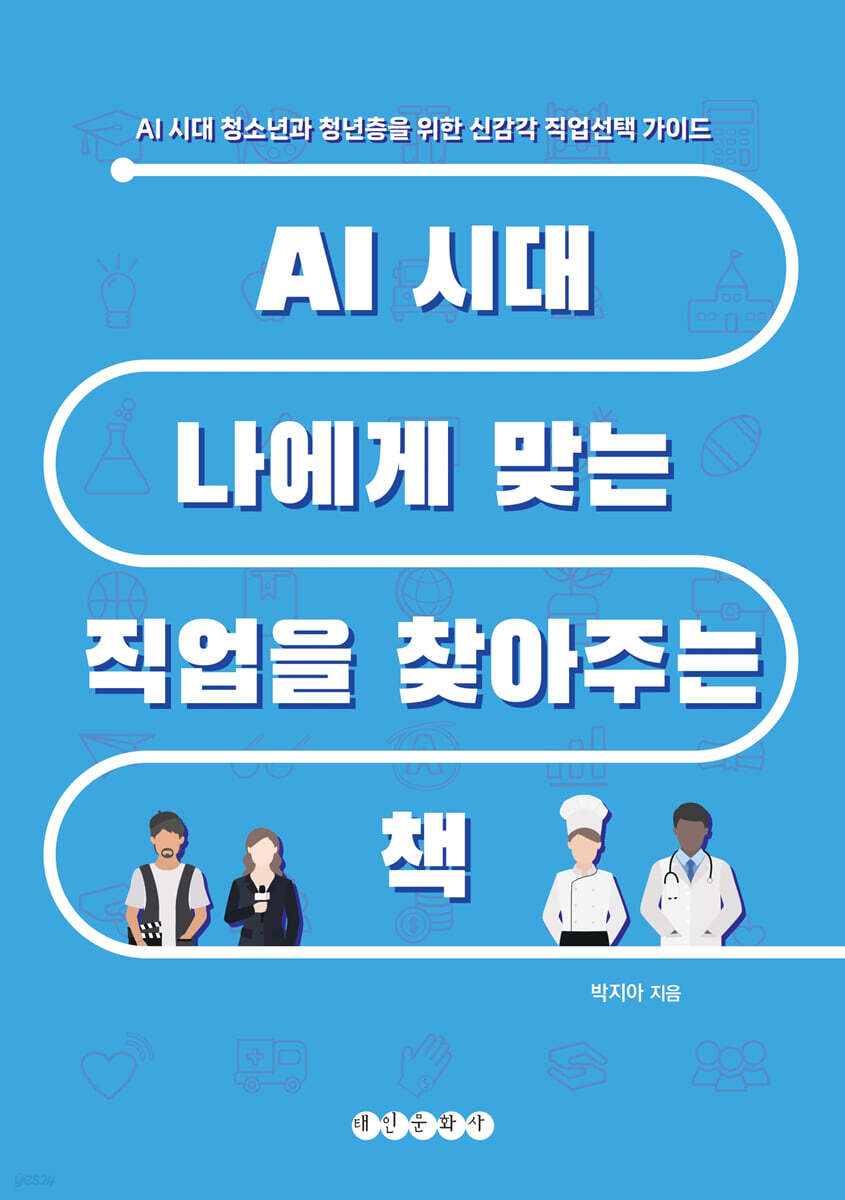
A book that helps you find the right job for you in the AI era.
 |
Description
Book Introduction
"The Book That Finds the Right Job for You in the AI Era" presents a systematic method for finding the right job for each individual in a job market rapidly changing due to AI and the digital revolution.
Many teenagers and young adults choose careers without considering their aptitude and future career prospects, and with vague anxiety.
This book provides them with career selection criteria that will remain unshaken even in the age of AI, as well as strategies to leverage their unique strengths.
The book analyzes the impact of AI on the job market, looking at jobs that will disappear and new ones that will emerge.
It also provides specific guidance on how to find the right career for you by analyzing your personal values, interests, and strengths, and even covers career strategies for continuous growth after choosing a career.
It is designed to allow readers to personally examine their own situations through a variety of case studies and practical questions, and to learn how to choose a career that will ensure competitiveness in the AI era.
A must-read for anyone looking for a job, providing a clear guide.
Many teenagers and young adults choose careers without considering their aptitude and future career prospects, and with vague anxiety.
This book provides them with career selection criteria that will remain unshaken even in the age of AI, as well as strategies to leverage their unique strengths.
The book analyzes the impact of AI on the job market, looking at jobs that will disappear and new ones that will emerge.
It also provides specific guidance on how to find the right career for you by analyzing your personal values, interests, and strengths, and even covers career strategies for continuous growth after choosing a career.
It is designed to allow readers to personally examine their own situations through a variety of case studies and practical questions, and to learn how to choose a career that will ensure competitiveness in the AI era.
A must-read for anyone looking for a job, providing a clear guide.
- You can preview some of the book's contents.
Preview
index
Prologue | Is this career right for me?
PART 1.
What you need to know before choosing a career
1.
What do people work for?
1.
Why it's hard to find a job
1.
How do I find out what I want to do?
1.
Is there something that suits me well?
1.
Choose something that helps others.
1.
There is no such thing as a trivial or useless job.
1.
Good jobs and bad jobs
PART 2.
Criteria for Choosing a Career I
1.
Differentiation within a profession is more important than finding a high-paying job.
2.
There are about 17,000 jobs in our country.
3.
The standard for enjoyable things varies from person to person.
4.
Now, you will have more than 5 jobs in your lifetime.
5.
Why You Shouldn't Choose a Career That's Recognized and Respected by Others
6.
Don't choose a career based on fantasy after watching a drama.
7.
Focus on your own achievements rather than competing with others.
PART 3.
Criteria for Choosing a Career II
1.
Failure and challenge are essential for growth.
2.
What should I choose, something I like and something I am good at?
3.
What if I still don't have anything I want to do?
4.
How to bridge the gap between career fantasy and reality
5.
When choosing a career, money is important, but intrinsic motivation is even more important.
6.
Just because you like soccer doesn't mean you have to become a soccer player.
7.
Just because you can't study doesn't mean you can't succeed.
PART 4.
Future job prospects and how to choose the right career
1.
Promising jobs of the future and jobs that are rapidly disappearing
2. There is an image of future talent working with AI.
3.
Go with the flow of change.
An era of entrepreneurship has begun.
4.
Clarify the direction of your life and how you want to live it.
5.
Imagine your future 10 years from now and paint a big picture of your career.
6.
Don't just chase a stable job from the start. Start by working and look for opportunities.
7.
If you look at successful people, you can see why they don't just sit around and do nothing, no matter how much money they have.
8.
Don't live as an office worker, live as a professional.
PART 5.
Voices from the Career and Employment Counseling Field
1.
My major is psychology, but I want to change my career to IT.
2.
I have a variety of interests, so I can't choose a career.
3.
I have no work experience.
Please find a job that suits me.
4.
I want to get a job, but I'm having a hard time because of the feeling of helplessness.
What should I do?
5.
I'm confused because what I want to do is different from what my parents want.
6.
I have a high school diploma and my only experience is as a server at a restaurant, but I want to become an accountant.
Appendix/Q&A
1.
How can I choose the right career for me?
2.
How do I know if this job is a good fit for me?
3.
How can I keep working for a long time?
4.
How can I find out my aptitude?
5.
I have no dreams, no goals, and nothing I want to do. Do I really need to get a job?
6.
What job should I choose to make me happy?
7.
How do I discover my natural talent?
8.
What jobs are promising for the future?
9.
How do I become irreplaceable?
10.
Could you give me some advice on what kind of job I should have?
11 I want to have a job that pays well. How can I do that?
12.
How many years of preparation is required to enter a public corporation?
13.
I have so many dreams, what should I do?
14.
My major doesn't match my aptitude.
What should I do?
15.
Maybe it's because I don't have a dream, but I have no motivation.
I don't know why I live.
Is there no way?
Reference books
PART 1.
What you need to know before choosing a career
1.
What do people work for?
1.
Why it's hard to find a job
1.
How do I find out what I want to do?
1.
Is there something that suits me well?
1.
Choose something that helps others.
1.
There is no such thing as a trivial or useless job.
1.
Good jobs and bad jobs
PART 2.
Criteria for Choosing a Career I
1.
Differentiation within a profession is more important than finding a high-paying job.
2.
There are about 17,000 jobs in our country.
3.
The standard for enjoyable things varies from person to person.
4.
Now, you will have more than 5 jobs in your lifetime.
5.
Why You Shouldn't Choose a Career That's Recognized and Respected by Others
6.
Don't choose a career based on fantasy after watching a drama.
7.
Focus on your own achievements rather than competing with others.
PART 3.
Criteria for Choosing a Career II
1.
Failure and challenge are essential for growth.
2.
What should I choose, something I like and something I am good at?
3.
What if I still don't have anything I want to do?
4.
How to bridge the gap between career fantasy and reality
5.
When choosing a career, money is important, but intrinsic motivation is even more important.
6.
Just because you like soccer doesn't mean you have to become a soccer player.
7.
Just because you can't study doesn't mean you can't succeed.
PART 4.
Future job prospects and how to choose the right career
1.
Promising jobs of the future and jobs that are rapidly disappearing
2. There is an image of future talent working with AI.
3.
Go with the flow of change.
An era of entrepreneurship has begun.
4.
Clarify the direction of your life and how you want to live it.
5.
Imagine your future 10 years from now and paint a big picture of your career.
6.
Don't just chase a stable job from the start. Start by working and look for opportunities.
7.
If you look at successful people, you can see why they don't just sit around and do nothing, no matter how much money they have.
8.
Don't live as an office worker, live as a professional.
PART 5.
Voices from the Career and Employment Counseling Field
1.
My major is psychology, but I want to change my career to IT.
2.
I have a variety of interests, so I can't choose a career.
3.
I have no work experience.
Please find a job that suits me.
4.
I want to get a job, but I'm having a hard time because of the feeling of helplessness.
What should I do?
5.
I'm confused because what I want to do is different from what my parents want.
6.
I have a high school diploma and my only experience is as a server at a restaurant, but I want to become an accountant.
Appendix/Q&A
1.
How can I choose the right career for me?
2.
How do I know if this job is a good fit for me?
3.
How can I keep working for a long time?
4.
How can I find out my aptitude?
5.
I have no dreams, no goals, and nothing I want to do. Do I really need to get a job?
6.
What job should I choose to make me happy?
7.
How do I discover my natural talent?
8.
What jobs are promising for the future?
9.
How do I become irreplaceable?
10.
Could you give me some advice on what kind of job I should have?
11 I want to have a job that pays well. How can I do that?
12.
How many years of preparation is required to enter a public corporation?
13.
I have so many dreams, what should I do?
14.
My major doesn't match my aptitude.
What should I do?
15.
Maybe it's because I don't have a dream, but I have no motivation.
I don't know why I live.
Is there no way?
Reference books
Detailed image

Into the book
When choosing a career, you should not only look at what is immediately in front of you, but also plan your career path with a long-term perspective.
Sometimes, even if the job is unrelated to your major, you can find connections with areas of interest.
Don't hesitate and do your best at what you can do now.
It's important to have connections and look for opportunities.
--- p.46
You shouldn't judge a person based on what job he or she has.
Because every human being is precious and each person has a task assigned to them.
There is no society in the world where everyone becomes president, teacher, or doctor.
Each person does the work assigned to them in their own position.
If each person works with a sense of mission in their profession, we will create a society that creates high added value.
--- p.58
It would be ideal if you could do something you love while also making a lot of money.
If you have to choose between the two, you should choose according to your own situation.
If you have a hard time making a living, you should earn money first, but if you have even a little financial freedom, you should choose what you like.
If you do what you love, you will become good at it, and as you build differentiated expertise, the money will follow.
In the long run, having your own unique expertise is the secret to success.
--- p.69
Teenagers and young adults who have difficulty deciding on a career path feel a great burden of having to decide on one career.
They must break free from the shackles of one career and lifelong occupation instilled in them by older generations.
Because it is an idea that does not fit with the changing times.
Rather than creating a single job, we need to create categories that allow us to transition from one job group to multiple jobs.
Hybrid jobs (those that combine two or more different functions) that require skills and capabilities in various fields are the trend these days, so the first task is to understand your own characteristics.
--- p.89-90
'When choosing a job, should I do this or that?
And which one would be a more rational choice? The answer to this question would be, 'Choose a job that best suits your aptitude.'
If you ask me again, "How can I know which job is right for me?", I would like to answer, "You can't know without experience."
--- p.122
To live as a proactive and creative human being in the 21st century, it is important to understand the internal workings of our minds.
If we become a society where people choose what they do based on their own internal motivation, they will be able to unleash their creativity and become the driving force that can change the world.
--- p.156
These days, generalists with knowledge in various fields are in demand.
We live in an era where cross-disciplinary, convergent thinking and problem-solving skills are increasingly needed.
When you choose a job and take on a job, you are actually taking on several tasks, including menial tasks.
--- p.190
Technological changes have changed many things.
The era of graduating from college and working is over, and an era without jobs is approaching.
Have you ever imagined yourself not belonging to an organization?
Sometimes, even if the job is unrelated to your major, you can find connections with areas of interest.
Don't hesitate and do your best at what you can do now.
It's important to have connections and look for opportunities.
--- p.46
You shouldn't judge a person based on what job he or she has.
Because every human being is precious and each person has a task assigned to them.
There is no society in the world where everyone becomes president, teacher, or doctor.
Each person does the work assigned to them in their own position.
If each person works with a sense of mission in their profession, we will create a society that creates high added value.
--- p.58
It would be ideal if you could do something you love while also making a lot of money.
If you have to choose between the two, you should choose according to your own situation.
If you have a hard time making a living, you should earn money first, but if you have even a little financial freedom, you should choose what you like.
If you do what you love, you will become good at it, and as you build differentiated expertise, the money will follow.
In the long run, having your own unique expertise is the secret to success.
--- p.69
Teenagers and young adults who have difficulty deciding on a career path feel a great burden of having to decide on one career.
They must break free from the shackles of one career and lifelong occupation instilled in them by older generations.
Because it is an idea that does not fit with the changing times.
Rather than creating a single job, we need to create categories that allow us to transition from one job group to multiple jobs.
Hybrid jobs (those that combine two or more different functions) that require skills and capabilities in various fields are the trend these days, so the first task is to understand your own characteristics.
--- p.89-90
'When choosing a job, should I do this or that?
And which one would be a more rational choice? The answer to this question would be, 'Choose a job that best suits your aptitude.'
If you ask me again, "How can I know which job is right for me?", I would like to answer, "You can't know without experience."
--- p.122
To live as a proactive and creative human being in the 21st century, it is important to understand the internal workings of our minds.
If we become a society where people choose what they do based on their own internal motivation, they will be able to unleash their creativity and become the driving force that can change the world.
--- p.156
These days, generalists with knowledge in various fields are in demand.
We live in an era where cross-disciplinary, convergent thinking and problem-solving skills are increasingly needed.
When you choose a job and take on a job, you are actually taking on several tasks, including menial tasks.
--- p.190
Technological changes have changed many things.
The era of graduating from college and working is over, and an era without jobs is approaching.
Have you ever imagined yourself not belonging to an organization?
--- p.238
Publisher's Review
Today, we live in an era where AI (artificial intelligence) is rapidly transforming industries and jobs.
Due to the advancement of automation and digital technology, many existing jobs are disappearing, and new jobs are constantly being created.
Amidst these changes, how can we find the right career for us? Many people choose careers without considering their aptitudes and abilities, or they feel a vague sense of anxiety due to a lack of information about the changing times.
"The AI Era: Finding the Right Job for You" is a new career selection guidebook for teenagers and young adults with these concerns.
This book analyzes the key factors to consider when choosing a career and systematically guides career selection strategies suited to the AI era.
Rather than simply listing "promising future jobs," the goal of this book is to help individuals discover which careers are right for them, taking into account their individual aptitudes and capabilities.
This book covers three main topics.
First, we examine the impact of AI and digital innovation on the job market and its future prospects.
It predicts which jobs will disappear and which new ones will emerge, and discusses the "essence of jobs" that will remain unchanged even in the AI era.
Second, it provides practical guidance for career selection.
It specifically explains how to analyze an individual's values, interests, and strengths and find a career that suits them based on these.
Third, it presents strategies for developing a career beyond a lifelong career and for how to continuously grow after choosing a career, from the perspective of lifelong learning.
In particular, this book helps readers examine and analyze their own situations through various examples and practical questions.
It presents questions to ask yourself, such as, "What makes me happiest when I'm doing this?", "In what environment can I be most immersed?", and "What are my strengths, and what career can utilize them?", and serves as a compass for career selection.
Even in the age of AI advancement, what is still important is ‘me’.
The key is how to utilize my individuality and abilities and in what direction I will move forward in a changing environment.
Through this book, readers will be able to establish solid career selection criteria that will remain unshaken even in the age of AI and find the right career for them.
I recommend this book to anyone who wants to learn how to find opportunity in change rather than feeling anxious about the future.
Due to the advancement of automation and digital technology, many existing jobs are disappearing, and new jobs are constantly being created.
Amidst these changes, how can we find the right career for us? Many people choose careers without considering their aptitudes and abilities, or they feel a vague sense of anxiety due to a lack of information about the changing times.
"The AI Era: Finding the Right Job for You" is a new career selection guidebook for teenagers and young adults with these concerns.
This book analyzes the key factors to consider when choosing a career and systematically guides career selection strategies suited to the AI era.
Rather than simply listing "promising future jobs," the goal of this book is to help individuals discover which careers are right for them, taking into account their individual aptitudes and capabilities.
This book covers three main topics.
First, we examine the impact of AI and digital innovation on the job market and its future prospects.
It predicts which jobs will disappear and which new ones will emerge, and discusses the "essence of jobs" that will remain unchanged even in the AI era.
Second, it provides practical guidance for career selection.
It specifically explains how to analyze an individual's values, interests, and strengths and find a career that suits them based on these.
Third, it presents strategies for developing a career beyond a lifelong career and for how to continuously grow after choosing a career, from the perspective of lifelong learning.
In particular, this book helps readers examine and analyze their own situations through various examples and practical questions.
It presents questions to ask yourself, such as, "What makes me happiest when I'm doing this?", "In what environment can I be most immersed?", and "What are my strengths, and what career can utilize them?", and serves as a compass for career selection.
Even in the age of AI advancement, what is still important is ‘me’.
The key is how to utilize my individuality and abilities and in what direction I will move forward in a changing environment.
Through this book, readers will be able to establish solid career selection criteria that will remain unshaken even in the age of AI and find the right career for them.
I recommend this book to anyone who wants to learn how to find opportunity in change rather than feeling anxious about the future.
GOODS SPECIFICS
- Date of issue: April 30, 2025
- Page count, weight, size: 312 pages | 148*210*30mm
- ISBN13: 9791193709061
- ISBN10: 1193709067
You may also like
카테고리
korean


korean

![GQ KOREA Mark (Monthly): December [2025]](http://librairie.coreenne.fr/cdn/shop/files/8ef265dbbfbf186523ed75ba7319009d.jpg?v=1765340328&width=3840)


