

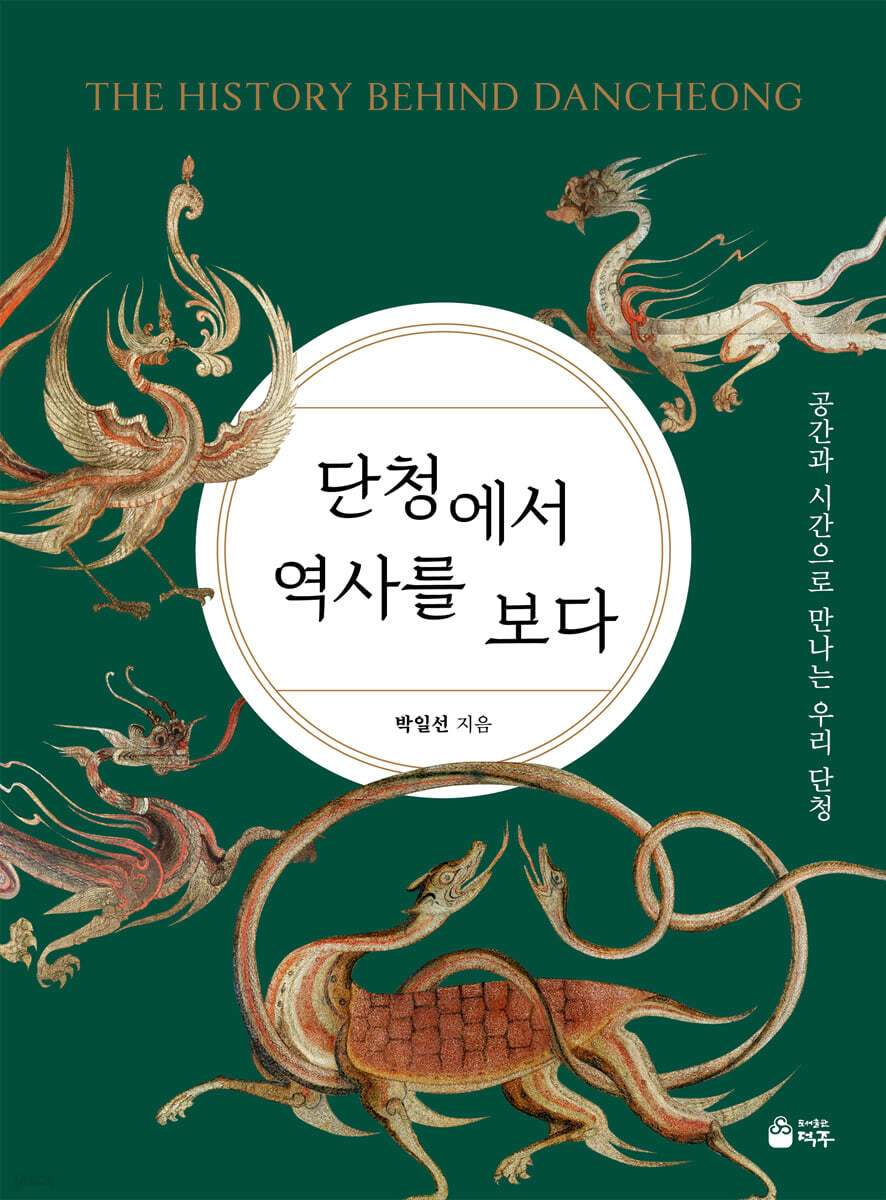
See history in Dancheong
 |
Description
Book Introduction
Connecting the history of time and the changes of space,
Experience the beauty of Dancheong!
Although we have never learned the names of Dancheong and the process of painting them, we have naturally encountered Dancheong while traveling around the country and reading about our history.
Beautiful Dancheong can be found anywhere in Korea, including the splendid Dancheong beneath the tiles of Hanok houses dyed in autumn leaves, the ancient patterns and murals decorating the gates of temples, and the Dancheong painted on the majestic pillars of Jongmyo Shrine.
But Dancheong is familiar yet unfamiliar.
The type and technique are unfamiliar, and its history is difficult.
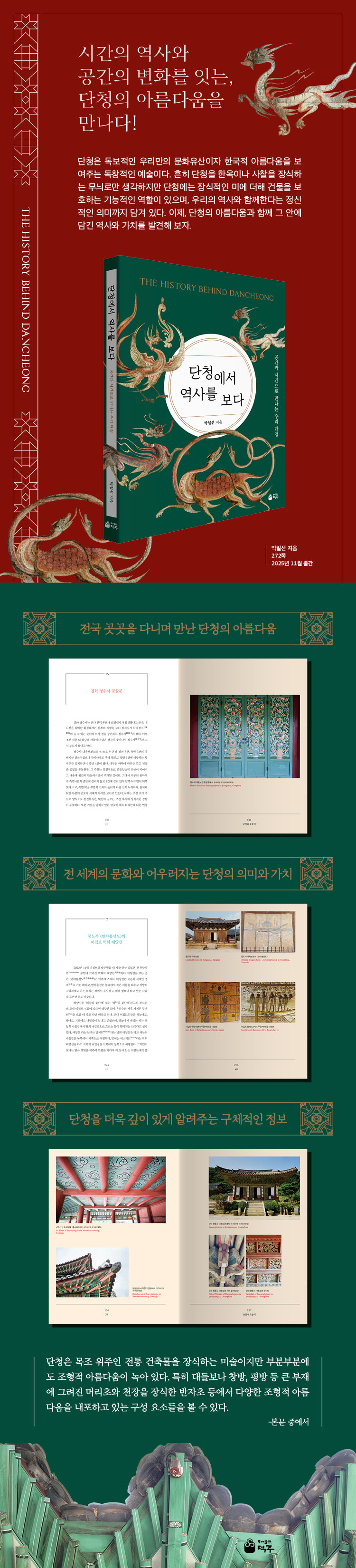
So, this book introduces Dancheong from all over the country, while also showing its history, meaning, and value.
Dancheong is often thought of as a painting that decorates traditional Korean houses or temples, but it is also a decorative art form that has a functional role and spiritual meaning.
Now, let us explore the beauty of Dancheong and the value and meaning contained within it.
Experience the beauty of Dancheong!
Although we have never learned the names of Dancheong and the process of painting them, we have naturally encountered Dancheong while traveling around the country and reading about our history.
Beautiful Dancheong can be found anywhere in Korea, including the splendid Dancheong beneath the tiles of Hanok houses dyed in autumn leaves, the ancient patterns and murals decorating the gates of temples, and the Dancheong painted on the majestic pillars of Jongmyo Shrine.
But Dancheong is familiar yet unfamiliar.
The type and technique are unfamiliar, and its history is difficult.
So, this book introduces Dancheong from all over the country, while also showing its history, meaning, and value.
Dancheong is often thought of as a painting that decorates traditional Korean houses or temples, but it is also a decorative art form that has a functional role and spiritual meaning.
Now, let us explore the beauty of Dancheong and the value and meaning contained within it.
- You can preview some of the book's contents.
Preview
index
Prologue: Dancheong Relationship
Part 1 Dancheong as Art
1 Dancheong is very modern
2 Dancheong and painting, is Dancheong painting?
3. Fusion of Dancheong and Painting, Dancheong Landscape Painting
4 Dancheong, Buddhist painting, and folk painting
5 Impressionist Dancheong, Huijeongdang
6 Minimalist Dancheong, Jongmyo
7. The Sun, Moon, and Five Peaks, Guan Yu, and Dongmyo
8. Sudeoksa Temple Murals and Living Cultural Heritage, Imcheon
9 Dancheong, Arabesque, and Tessellation
Part 2 Dancheong and the Five Colors
1 History of Dancheong
2 Dancheong and the five cardinal colors
3 Types of Dancheong: Gachil Dancheong and Geutgi Dancheong
4 Types of Dancheong: Moro Dancheong and Geum Dancheong
5. The snail pattern of Dancheong and Park Saeng-gwang
6. Taegeuk pattern of Dancheong
7. Sumidan's Dancheong
8 ceiling painting, half-tone tiles
9. Door latticework, flower latticework
10 Palace Dancheong, Palace Elementary School
11. The Four Guardians, the Commander's Dancheong
12. The flying eagle painted on the ceiling
13. Water tower and peace flower
14. Reinforcement of the Sumidan and the Ghost Mask of the Jeondeungsa Temple
15 Gangwha Jeongsu Temple Flower Gate
16 Rainbow painted on Dancheong, Hui
17 Fruits painted on Dancheong, pomegranate
18 Dancheong Nakgeun-dong and straw shoes
19. Tapgol Park's Octagonal Pavilion and Dancheong
20 Phoenix painted on the ceiling of the palace
Part 3: Dancheong through History
1. Thinking about Dancheong in front of the Sejong-ro Monument
2. Thinking about Dancheong at the site of Hwangudan in Sogong-dong
3. Thinking about Dancheong at Geumseonggwan in Naju
4. Thinking about Dancheong at Naju Hyanggyo
5. Thinking about Dancheong at Naju Bulhoesa Temple
6. Thinking about Dancheong at Jukrimsa Temple in Naju
7. Reflecting on Dancheong in King Gojong's study, Jibokjae
8. Thinking about Dancheong at Heungbokheon in Changdeokgung Palace
9. Thinking about Dancheong at Bogwangsa Temple in Paju
10. Thinking about Dancheong at Manseru Pavilion in Seonunsa Temple
11. Reflecting on Dancheong at the Anglican Church of Korea Ganghwa Cathedral
Part 4: Déjà vu of Dancheong found overseas
1 Dancheong and Iznik tiles, azulejo tiles
2 Tongdosa Temple's "Prajna Dragon Boat Painting" and Egyptian mural of the sun boat
3. The Twin Phoenixes and Bayon Temple in Cambodia
4. The Giants of the Great Enemy and the Spanish St. Christopher murals
5 Dancheong and Armenian Khachkar, parchment manuscript
6. Dancheong's early-leaf pattern and Gustav Klimt
7. Dancheong's Chilbomun and Benz emblem
8 Dancheong's main ridge and curtain
9 The Cloud Dragon and St. George
Criticism: Park Il-seon's Painting by Go Chung-hwan
Part 1 Dancheong as Art
1 Dancheong is very modern
2 Dancheong and painting, is Dancheong painting?
3. Fusion of Dancheong and Painting, Dancheong Landscape Painting
4 Dancheong, Buddhist painting, and folk painting
5 Impressionist Dancheong, Huijeongdang
6 Minimalist Dancheong, Jongmyo
7. The Sun, Moon, and Five Peaks, Guan Yu, and Dongmyo
8. Sudeoksa Temple Murals and Living Cultural Heritage, Imcheon
9 Dancheong, Arabesque, and Tessellation
Part 2 Dancheong and the Five Colors
1 History of Dancheong
2 Dancheong and the five cardinal colors
3 Types of Dancheong: Gachil Dancheong and Geutgi Dancheong
4 Types of Dancheong: Moro Dancheong and Geum Dancheong
5. The snail pattern of Dancheong and Park Saeng-gwang
6. Taegeuk pattern of Dancheong
7. Sumidan's Dancheong
8 ceiling painting, half-tone tiles
9. Door latticework, flower latticework
10 Palace Dancheong, Palace Elementary School
11. The Four Guardians, the Commander's Dancheong
12. The flying eagle painted on the ceiling
13. Water tower and peace flower
14. Reinforcement of the Sumidan and the Ghost Mask of the Jeondeungsa Temple
15 Gangwha Jeongsu Temple Flower Gate
16 Rainbow painted on Dancheong, Hui
17 Fruits painted on Dancheong, pomegranate
18 Dancheong Nakgeun-dong and straw shoes
19. Tapgol Park's Octagonal Pavilion and Dancheong
20 Phoenix painted on the ceiling of the palace
Part 3: Dancheong through History
1. Thinking about Dancheong in front of the Sejong-ro Monument
2. Thinking about Dancheong at the site of Hwangudan in Sogong-dong
3. Thinking about Dancheong at Geumseonggwan in Naju
4. Thinking about Dancheong at Naju Hyanggyo
5. Thinking about Dancheong at Naju Bulhoesa Temple
6. Thinking about Dancheong at Jukrimsa Temple in Naju
7. Reflecting on Dancheong in King Gojong's study, Jibokjae
8. Thinking about Dancheong at Heungbokheon in Changdeokgung Palace
9. Thinking about Dancheong at Bogwangsa Temple in Paju
10. Thinking about Dancheong at Manseru Pavilion in Seonunsa Temple
11. Reflecting on Dancheong at the Anglican Church of Korea Ganghwa Cathedral
Part 4: Déjà vu of Dancheong found overseas
1 Dancheong and Iznik tiles, azulejo tiles
2 Tongdosa Temple's "Prajna Dragon Boat Painting" and Egyptian mural of the sun boat
3. The Twin Phoenixes and Bayon Temple in Cambodia
4. The Giants of the Great Enemy and the Spanish St. Christopher murals
5 Dancheong and Armenian Khachkar, parchment manuscript
6. Dancheong's early-leaf pattern and Gustav Klimt
7. Dancheong's Chilbomun and Benz emblem
8 Dancheong's main ridge and curtain
9 The Cloud Dragon and St. George
Criticism: Park Il-seon's Painting by Go Chung-hwan
Detailed image
Into the book
The murals in the Daeungjeon Hall of Sudeoksa Temple were painted in 1308, long before Western still life paintings became popular, but they are comparable to any outstanding Western still life painting.
This replica, which depicts flowers and grass in full bloom so realistically, would undoubtedly be considered a high-quality work of art if exhibited in an art gallery or museum in another country without any explanation, and would be mistaken for a Western still life painting.
--- p.50
The history of Korean Dancheong can be seen as following the same path as the history of painting.
As with paintings, it is not known exactly when Dancheong began to be painted on the Korean Peninsula.
Since most of the buildings in our country are wooden structures, there are no remaining buildings or relics that can prove this, so it is very difficult to determine the origin of Dancheong.
However, we can infer the Dancheong of that time through the tomb murals of the Three Kingdoms period.
--- p.65
Since ancient times, messengers and spirits have been depicted in many murals.
The messengers were mainly depicted in tomb murals, and the commanders were depicted as materials for Dancheong.
Among them, dragons were most often painted on the ceilings of palaces and castle walls.
The Four Guardian Gods are imaginary animals believed to guard the four cardinal directions: the blue dragon in the east, the white tiger in the west, the red bird in the south, and the black tortoise in the north.
In our country, Goguryeo was the first to express the concept or form of a messenger.
--- p.119
The ceiling of the Daeungjeon Hall of Bulhoesa Temple is also covered with Dancheong, which is full of mystery no less than this.
High above the ground, in the air, on the ceiling, lotus buds bloom at the ends of two forked stems that intersect in an X shape on lotus leaves.
These two lotus buds are lined up symmetrically, facing each other.
The sight of lotus flowers and peonies blooming, white cranes flying, and aquatic animals such as crabs, turtles, and fish coexisting in the water suggests that it is a fantasy world beyond the real world, the Dragon Palace.
--- p.187
In Buddhism, it is said that to be reborn in the Pure Land, one must either bloom as a lotus flower and be reincarnated in Pure Land, or ride the Prajnaparamita boat that Amitabha Buddha uses to guide one to the Western Paradise.
However, this mural contains a novel imagination that suggests a new path to paradise.
The giant in the mural of the Paradise Hall of Daejeoksa Temple is lifting all living beings with both hands and sending them across the distant sky to Paradise.
This replica, which depicts flowers and grass in full bloom so realistically, would undoubtedly be considered a high-quality work of art if exhibited in an art gallery or museum in another country without any explanation, and would be mistaken for a Western still life painting.
--- p.50
The history of Korean Dancheong can be seen as following the same path as the history of painting.
As with paintings, it is not known exactly when Dancheong began to be painted on the Korean Peninsula.
Since most of the buildings in our country are wooden structures, there are no remaining buildings or relics that can prove this, so it is very difficult to determine the origin of Dancheong.
However, we can infer the Dancheong of that time through the tomb murals of the Three Kingdoms period.
--- p.65
Since ancient times, messengers and spirits have been depicted in many murals.
The messengers were mainly depicted in tomb murals, and the commanders were depicted as materials for Dancheong.
Among them, dragons were most often painted on the ceilings of palaces and castle walls.
The Four Guardian Gods are imaginary animals believed to guard the four cardinal directions: the blue dragon in the east, the white tiger in the west, the red bird in the south, and the black tortoise in the north.
In our country, Goguryeo was the first to express the concept or form of a messenger.
--- p.119
The ceiling of the Daeungjeon Hall of Bulhoesa Temple is also covered with Dancheong, which is full of mystery no less than this.
High above the ground, in the air, on the ceiling, lotus buds bloom at the ends of two forked stems that intersect in an X shape on lotus leaves.
These two lotus buds are lined up symmetrically, facing each other.
The sight of lotus flowers and peonies blooming, white cranes flying, and aquatic animals such as crabs, turtles, and fish coexisting in the water suggests that it is a fantasy world beyond the real world, the Dragon Palace.
--- p.187
In Buddhism, it is said that to be reborn in the Pure Land, one must either bloom as a lotus flower and be reincarnated in Pure Land, or ride the Prajnaparamita boat that Amitabha Buddha uses to guide one to the Western Paradise.
However, this mural contains a novel imagination that suggests a new path to paradise.
The giant in the mural of the Paradise Hall of Daejeoksa Temple is lifting all living beings with both hands and sending them across the distant sky to Paradise.
--- p.235
Publisher's Review
A book that revisits the beauty of Korean traditional painting.
Recently, the National Museum of Korea's museum shop became a hot topic by selling a keyboard that captured the charm of Dancheong.
Dancheong is a unique and attractive Korean art form, and its unique beauty is attracting attention through various reinterpretations.
Where does the beauty of Dancheong come from? Its vivid and distinct colors, unique yet splendid patterns, and beauty that harmonizes with nature make it a captivating experience for anyone.
The author, who majored in art, was captivated by the beauty of Dancheong, so he traveled around the country to take photos of Dancheong and portrayed Dancheong with a modern sensibility through Dancheong landscape paintings.
And, with his passion for Dancheong, he introduces Dancheong to readers in this book and encourages them to experience its beauty together.
Now, let us rediscover the beauty of our Dancheong.
A book that rediscovers the history of Korean Dancheong
Dancheong is often seen as a decorative art, but it also has a functional role of preventing trees from warping, as well as a spiritual meaning of wishing for good fortune, driving away evil spirits, and hoping for paradise.
From the murals of the Three Kingdoms period depicting the Four Guardian Guardians, to the Dancheong of the Goryeo Dynasty, which embodies the spirit of Buddhist art, and the Dancheong of the Joseon Dynasty, which embodies the beauty of Confucian restraint, Dancheong, which embodies the breath of our people, is a unique art form whose history must be preserved.
Dancheong contains our time as it is.
That is why discovering Dancheong is also an act of looking back on our time.
Let's read about our history through the vivid and unique story of Dancheong, including murals that breathe life into history, patterns with interesting stories, and unique, colorful colors.
A book that delves deeply into the essence of Korean Dancheong
“Seeing History in Dancheong” is not a book that simply introduces Dancheong.
It is like a timeline of Dancheong that shows how Dancheong has changed over time and what stories those changes have created.
The Anglican Church of Korea Ganghwa Cathedral is a traditional Korean-style cathedral that naturally incorporates our culture by using the Taegeuk pattern. The flower lattice doors of Heungcheonsa Temple in Seoul are carved with grapes symbolizing fertility, and the Namhansanseong Fortress guard post was built for defense purposes and features a painting of the Taepyeonghwa, a flower that prays for the stability and peace of the country.
In this way, Dancheong has reflected the times and contained our wishes.
And the essence of Dancheong is contained in these changes.
Dancheong is an art that flows with people.
Let's expand the world of Dancheong and appreciate its value by looking into the stories, time, and history contained within it.
Recently, the National Museum of Korea's museum shop became a hot topic by selling a keyboard that captured the charm of Dancheong.
Dancheong is a unique and attractive Korean art form, and its unique beauty is attracting attention through various reinterpretations.
Where does the beauty of Dancheong come from? Its vivid and distinct colors, unique yet splendid patterns, and beauty that harmonizes with nature make it a captivating experience for anyone.
The author, who majored in art, was captivated by the beauty of Dancheong, so he traveled around the country to take photos of Dancheong and portrayed Dancheong with a modern sensibility through Dancheong landscape paintings.
And, with his passion for Dancheong, he introduces Dancheong to readers in this book and encourages them to experience its beauty together.
Now, let us rediscover the beauty of our Dancheong.
A book that rediscovers the history of Korean Dancheong
Dancheong is often seen as a decorative art, but it also has a functional role of preventing trees from warping, as well as a spiritual meaning of wishing for good fortune, driving away evil spirits, and hoping for paradise.
From the murals of the Three Kingdoms period depicting the Four Guardian Guardians, to the Dancheong of the Goryeo Dynasty, which embodies the spirit of Buddhist art, and the Dancheong of the Joseon Dynasty, which embodies the beauty of Confucian restraint, Dancheong, which embodies the breath of our people, is a unique art form whose history must be preserved.
Dancheong contains our time as it is.
That is why discovering Dancheong is also an act of looking back on our time.
Let's read about our history through the vivid and unique story of Dancheong, including murals that breathe life into history, patterns with interesting stories, and unique, colorful colors.
A book that delves deeply into the essence of Korean Dancheong
“Seeing History in Dancheong” is not a book that simply introduces Dancheong.
It is like a timeline of Dancheong that shows how Dancheong has changed over time and what stories those changes have created.
The Anglican Church of Korea Ganghwa Cathedral is a traditional Korean-style cathedral that naturally incorporates our culture by using the Taegeuk pattern. The flower lattice doors of Heungcheonsa Temple in Seoul are carved with grapes symbolizing fertility, and the Namhansanseong Fortress guard post was built for defense purposes and features a painting of the Taepyeonghwa, a flower that prays for the stability and peace of the country.
In this way, Dancheong has reflected the times and contained our wishes.
And the essence of Dancheong is contained in these changes.
Dancheong is an art that flows with people.
Let's expand the world of Dancheong and appreciate its value by looking into the stories, time, and history contained within it.
GOODS SPECIFICS
- Date of issue: November 28, 2025
- Page count, weight, size: 272 pages | 170*230*15mm
- ISBN13: 9791199346215
You may also like
카테고리
korean


korean

![GQ KOREA Mark (Monthly): December [2025]](http://librairie.coreenne.fr/cdn/shop/files/8ef265dbbfbf186523ed75ba7319009d.jpg?v=1765340328&width=3840)


