

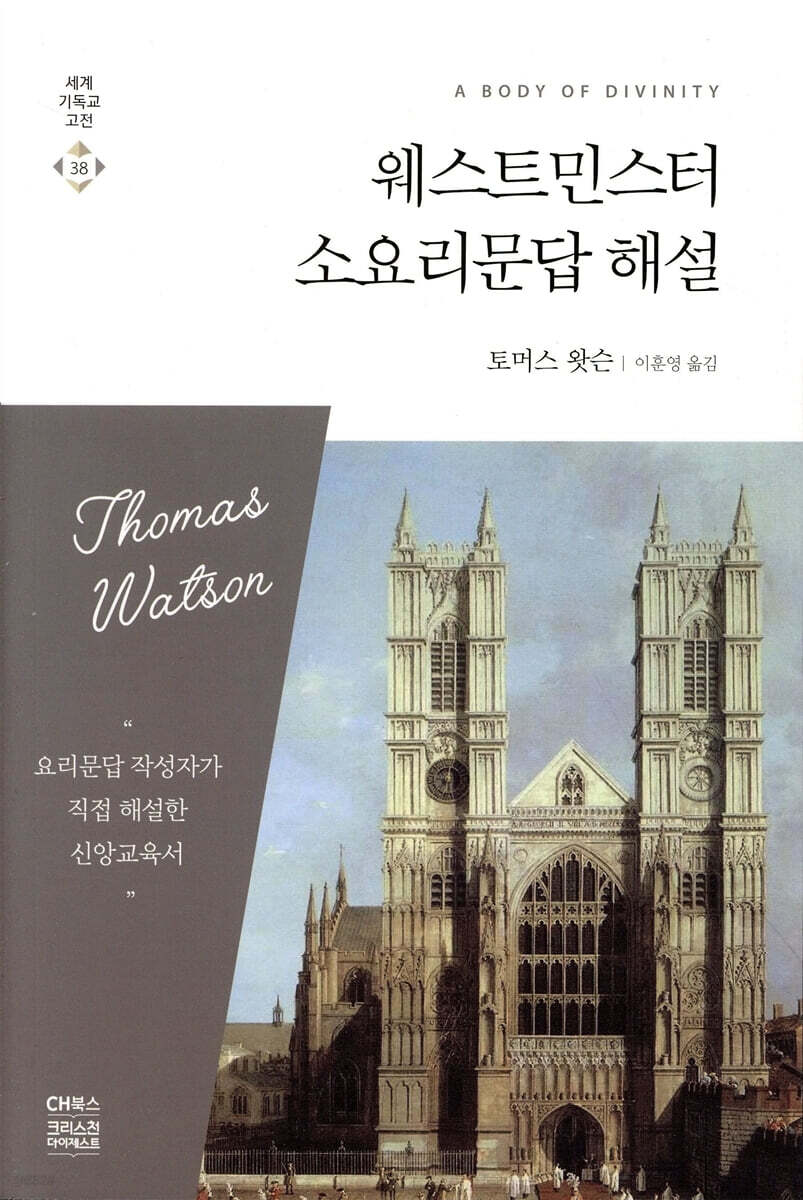
Westminster Shorter Catechism Commentary
 |
Description
Book Introduction
A book lauded by Joel Beeke, the leading living Puritan expert.
43 commentaries written by the author of the Westminster Catechism!
The Westminster Shorter Catechism Commentary contains sermons given by Thomas Watson during the peak of his preaching career, who participated in the Westminster Assembly held from 1643 to 1649 and directly participated in the writing of the catechism.
He preached 43 consecutive sermons, focusing on the Westminster Shorter Catechism and referring to the Larger Catechism.
There is a special reason why he preached a sermon using the catechism.
Watson argues that it is the Christian's duty to remain unwavering in his faith in doctrine.
In order for one's faith to remain unshaken, one must lay a solid foundation. He says that he preached using the catechism because it is helpful in laying the foundation.
This book is considered one of the most precious treasures among Puritan works.
Joel Beeke, one of the world's leading experts on Puritanism, evaluated the book this way:
“This sermon demonstrates the author’s deep understanding of spiritual truth and Watson’s ability to make it clear to anyone.
Unlike most other systematic theology books, this book combines knowledge and piety and can be used effectively for daily devotion.
“This book is probably the best systematic theology ever written, with the possible exception of Wilhelmus à Brakel’s The Christian’s Reasonable Service.”
The Westminster Shorter Catechism Commentary covers the most important doctrinal and experiential truths of the Christian faith.
These truths are conveyed in a style that is original, concise, powerful, sharp, lively, and rich.
This book has been used to train countless pastors and Christians over the years, and it remains timeless and invaluable today in laying the foundation for the Christian faith.
Every preacher should always keep this book open on his desk for reference, as it explains the truth in depth and accuracy.
Every saint should hold this book in his hand and read it every day.
Anyone who reads this book will gain a great treasure of faith.
43 commentaries written by the author of the Westminster Catechism!
The Westminster Shorter Catechism Commentary contains sermons given by Thomas Watson during the peak of his preaching career, who participated in the Westminster Assembly held from 1643 to 1649 and directly participated in the writing of the catechism.
He preached 43 consecutive sermons, focusing on the Westminster Shorter Catechism and referring to the Larger Catechism.
There is a special reason why he preached a sermon using the catechism.
Watson argues that it is the Christian's duty to remain unwavering in his faith in doctrine.
In order for one's faith to remain unshaken, one must lay a solid foundation. He says that he preached using the catechism because it is helpful in laying the foundation.
This book is considered one of the most precious treasures among Puritan works.
Joel Beeke, one of the world's leading experts on Puritanism, evaluated the book this way:
“This sermon demonstrates the author’s deep understanding of spiritual truth and Watson’s ability to make it clear to anyone.
Unlike most other systematic theology books, this book combines knowledge and piety and can be used effectively for daily devotion.
“This book is probably the best systematic theology ever written, with the possible exception of Wilhelmus à Brakel’s The Christian’s Reasonable Service.”
The Westminster Shorter Catechism Commentary covers the most important doctrinal and experiential truths of the Christian faith.
These truths are conveyed in a style that is original, concise, powerful, sharp, lively, and rich.
This book has been used to train countless pastors and Christians over the years, and it remains timeless and invaluable today in laying the foundation for the Christian faith.
Every preacher should always keep this book open on his desk for reference, as it explains the truth in depth and accuracy.
Every saint should hold this book in his hand and read it every day.
Anyone who reads this book will gain a great treasure of faith.
index
Preliminary Sermon on the Catechism
Ⅰ.
introduction
1.
The first purpose of human beings
2.
Bible
Ⅱ.
God and Creation
1.
God's existence
2.
Knowledge of God
3.
God's eternity
4.
God's immutability
5.
God's wisdom
6.
God's power
7.
God's holiness
8.
God's justice
9.
God's mercy
10.
God's truthfulness
11.
The Unity of God
12.
Trinity
13.
creation
14.
God's providence
Ⅲ.
corruption
1.
Covenant of Works
2.
crime
3.
Adam's crime
4.
original sin
5.
The misery of humanity due to the fall
Ⅳ.
The Covenant of Grace and Its Mediator
1.
Covenant of Grace
2.
Christ, the Mediator of the Covenant
3.
The Prophetic Office of Christ
4.
The Priesthood of Christ
5.
The Kingship of Christ
6.
The Humiliation of Christ in the Incarnation
7.
The Exaltation of Christ
8.
Christ the Redeemer
V.
Application of restraint
1.
trust
2.
Valid calling
3.
Justification
4.
Quantum
5.
Seonghwa
6.
assurance
7.
Pyeonggang
8.
delight
9.
Growth in Grace
10.
The traction of the saints
Ⅵ.
Death and the Last Day
1.
The death of a righteous man
2.
The privilege of believers at death
3.
resurrection
Ⅰ.
introduction
1.
The first purpose of human beings
2.
Bible
Ⅱ.
God and Creation
1.
God's existence
2.
Knowledge of God
3.
God's eternity
4.
God's immutability
5.
God's wisdom
6.
God's power
7.
God's holiness
8.
God's justice
9.
God's mercy
10.
God's truthfulness
11.
The Unity of God
12.
Trinity
13.
creation
14.
God's providence
Ⅲ.
corruption
1.
Covenant of Works
2.
crime
3.
Adam's crime
4.
original sin
5.
The misery of humanity due to the fall
Ⅳ.
The Covenant of Grace and Its Mediator
1.
Covenant of Grace
2.
Christ, the Mediator of the Covenant
3.
The Prophetic Office of Christ
4.
The Priesthood of Christ
5.
The Kingship of Christ
6.
The Humiliation of Christ in the Incarnation
7.
The Exaltation of Christ
8.
Christ the Redeemer
V.
Application of restraint
1.
trust
2.
Valid calling
3.
Justification
4.
Quantum
5.
Seonghwa
6.
assurance
7.
Pyeonggang
8.
delight
9.
Growth in Grace
10.
The traction of the saints
Ⅵ.
Death and the Last Day
1.
The death of a righteous man
2.
The privilege of believers at death
3.
resurrection
Publisher's Review
A book of religious education directly commented by the author of the catechism
Thomas Watson was a very popular preacher and writer in London at the time.
As a representative leader of the Puritan movement, he participated in the Westminster Assembly held from 1643 to 1649 and directly participated in the writing of the catechism.
At the height of his preaching career, Watson preached 43 sermons in a row, focusing on the Westminster Shorter Catechism and referring to the Larger Catechism, under the theme of "System of Theology."
There is a special reason why he preached a sermon using the catechism.
He argues that it is the Christian's duty to remain unwavering in his faith in doctrine.
In order for one's faith to remain unshaken, one must lay a solid foundation. He says that he preached using the catechism because it is helpful in laying the foundation.
Watson's Commentary on the Westminster Shorter Catechism is the standard for 17th-century Calvinist thought.
This work provides helpful doctrinal guidance based on the Westminster Standards for those seeking a deeper interpretation of the Westminster Catechism and Confession of Faith.
Considered one of the most precious treasures of Puritan writings, this book has been reprinted countless times as a masterpiece on the Shorter Catechism for over 300 years since its first publication in 1692.
Spurgeon, known as the prince of preachers, said this:
“Thomas Watson’s book has been a textbook for teaching theology to laymen for many years, and is still a common sight in Scottish peasant homes.”
Joel Beeke, one of the foremost living Puritan experts, also evaluated the book this way:
“This sermon demonstrates the author’s deep understanding of spiritual truth and Watson’s ability to make it clear to anyone.
Unlike most other systematic theology books, this book combines knowledge and piety and can be used effectively for daily devotion.
“This book is probably the best systematic theology ever written, with the possible exception of Wilhelmus à Brakel’s The Christian’s Reasonable Service.”
Features of the Westminster Shorter Catechism Commentary
1.
Watson's central concern is applying truth to the Christian life.
He consistently maintains that truth is the basis of action.
Soon, doctrine must come before life.
This is also the background to his sermon on the Small Catechism.
This book does not miss either truth or action.
The Westminster Shorter Catechism Commentary summarizes systematic theology and Christian ethics in a concise and easy-to-understand manner.
1.
Watson repeatedly emphasizes the importance of meditation.
Meditation is the key to personal piety.
It is not enough to listen to sermons, participate in Bible studies, and read the Word alone.
We must develop the ability to meditate on God's truth—all that He has done, is doing, and will do, and on eternity.
This book serves as a guide.
The most precious treasure among Puritan works
Ian Murray, one of the greatest biographers and revivalist theologians of the 20th century, evaluated Thomas Watson's book as follows:
“If you want to start with Puritan writings, start with Thomas Watson.”
The Westminster Shorter Catechism Commentary is one of Watson's finest works.
This book covers the most important doctrinal and experiential truths of the Christian faith.
These truths are conveyed in a style that is original, concise, powerful, sharp, lively, and rich.
This book has been used to train countless pastors and Christians over the years, and it remains timeless and invaluable today in laying the foundation for the Christian faith.
Every preacher should always keep this book open on his desk for reference, as it explains the truth in depth and accuracy.
Every saint should hold this book in his hand and read it every day.
Anyone who reads this book will gain a great treasure of faith.
Thomas Watson was a very popular preacher and writer in London at the time.
As a representative leader of the Puritan movement, he participated in the Westminster Assembly held from 1643 to 1649 and directly participated in the writing of the catechism.
At the height of his preaching career, Watson preached 43 sermons in a row, focusing on the Westminster Shorter Catechism and referring to the Larger Catechism, under the theme of "System of Theology."
There is a special reason why he preached a sermon using the catechism.
He argues that it is the Christian's duty to remain unwavering in his faith in doctrine.
In order for one's faith to remain unshaken, one must lay a solid foundation. He says that he preached using the catechism because it is helpful in laying the foundation.
Watson's Commentary on the Westminster Shorter Catechism is the standard for 17th-century Calvinist thought.
This work provides helpful doctrinal guidance based on the Westminster Standards for those seeking a deeper interpretation of the Westminster Catechism and Confession of Faith.
Considered one of the most precious treasures of Puritan writings, this book has been reprinted countless times as a masterpiece on the Shorter Catechism for over 300 years since its first publication in 1692.
Spurgeon, known as the prince of preachers, said this:
“Thomas Watson’s book has been a textbook for teaching theology to laymen for many years, and is still a common sight in Scottish peasant homes.”
Joel Beeke, one of the foremost living Puritan experts, also evaluated the book this way:
“This sermon demonstrates the author’s deep understanding of spiritual truth and Watson’s ability to make it clear to anyone.
Unlike most other systematic theology books, this book combines knowledge and piety and can be used effectively for daily devotion.
“This book is probably the best systematic theology ever written, with the possible exception of Wilhelmus à Brakel’s The Christian’s Reasonable Service.”
Features of the Westminster Shorter Catechism Commentary
1.
Watson's central concern is applying truth to the Christian life.
He consistently maintains that truth is the basis of action.
Soon, doctrine must come before life.
This is also the background to his sermon on the Small Catechism.
This book does not miss either truth or action.
The Westminster Shorter Catechism Commentary summarizes systematic theology and Christian ethics in a concise and easy-to-understand manner.
1.
Watson repeatedly emphasizes the importance of meditation.
Meditation is the key to personal piety.
It is not enough to listen to sermons, participate in Bible studies, and read the Word alone.
We must develop the ability to meditate on God's truth—all that He has done, is doing, and will do, and on eternity.
This book serves as a guide.
The most precious treasure among Puritan works
Ian Murray, one of the greatest biographers and revivalist theologians of the 20th century, evaluated Thomas Watson's book as follows:
“If you want to start with Puritan writings, start with Thomas Watson.”
The Westminster Shorter Catechism Commentary is one of Watson's finest works.
This book covers the most important doctrinal and experiential truths of the Christian faith.
These truths are conveyed in a style that is original, concise, powerful, sharp, lively, and rich.
This book has been used to train countless pastors and Christians over the years, and it remains timeless and invaluable today in laying the foundation for the Christian faith.
Every preacher should always keep this book open on his desk for reference, as it explains the truth in depth and accuracy.
Every saint should hold this book in his hand and read it every day.
Anyone who reads this book will gain a great treasure of faith.
GOODS SPECIFICS
- Date of issue: March 8, 2019
- Page count, weight, size: 560 pages | 1,064g | 150*225*35mm
- ISBN13: 9788944785276
- ISBN10: 8944785279
You may also like
카테고리
korean


korean

![ELLE 엘르 스페셜 에디션 A형 : 12월 [2025]](http://librairie.coreenne.fr/cdn/shop/files/b8e27a3de6c9538896439686c6b0e8fb.jpg?v=1766436872&width=3840)


