

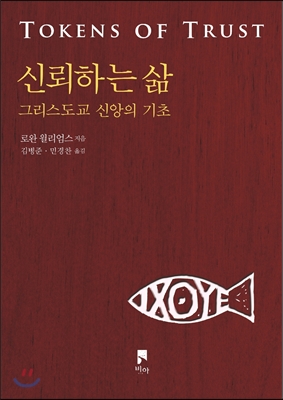
A life of trust
 |
Description
Book Introduction
The Foundations of the Christian Faith Explained by Rowan Williams, "Theologians' Guide" and "Clergy's Guide"
What does Christianity believe?
An introductory book to the Christian faith, based on a lecture given by Rowan Williams at Canterbury Cathedral in 2005 while he was serving as Archbishop of Canterbury, on the core of the Christian faith, represented by the Apostles' Creed and the Nicene Creed.
Using the language of the Apostles' Creed and the Nicene Creed, which are commonly confessed by major Christian bodies around the world, we reveal the 'big picture' of Christianity and the core contents of the Christian faith.
It consists of six chapters and consistently explains the starting point of Christian faith, the God confessed by Christianity, the meaning of Jesus, the definition of the church, and the eternal life envisioned by Christianity, focusing on the concept of 'trust.'
As befitting a work published at the height of his career as a priest and theologian, it is filled with thoughtful interpretations of Christian tradition and traces of dialogue with modern thought.
The Christian confessions of faith, represented by the Apostles' Creed and the Nicene Creed, can be said to be the product of long reflection by the Christian faith community on how to understand the experiences and materials that serve as the source of Christianity and how to connect them with the direction indicated by the sources.
In this book, Rowan Williams urges readers to seriously reflect on the struggles, fundamental experiences, and directions contained in the creed, and even to join in.
For those who have entered the rich and profound world of Christianity, those who ponder the connection between their "here and now" and the Christian tradition, and those who seek to understand what Christianity truly means, this book will be a valuable compass.
What does Christianity believe?
An introductory book to the Christian faith, based on a lecture given by Rowan Williams at Canterbury Cathedral in 2005 while he was serving as Archbishop of Canterbury, on the core of the Christian faith, represented by the Apostles' Creed and the Nicene Creed.
Using the language of the Apostles' Creed and the Nicene Creed, which are commonly confessed by major Christian bodies around the world, we reveal the 'big picture' of Christianity and the core contents of the Christian faith.
It consists of six chapters and consistently explains the starting point of Christian faith, the God confessed by Christianity, the meaning of Jesus, the definition of the church, and the eternal life envisioned by Christianity, focusing on the concept of 'trust.'
As befitting a work published at the height of his career as a priest and theologian, it is filled with thoughtful interpretations of Christian tradition and traces of dialogue with modern thought.
The Christian confessions of faith, represented by the Apostles' Creed and the Nicene Creed, can be said to be the product of long reflection by the Christian faith community on how to understand the experiences and materials that serve as the source of Christianity and how to connect them with the direction indicated by the sources.
In this book, Rowan Williams urges readers to seriously reflect on the struggles, fundamental experiences, and directions contained in the creed, and even to join in.
For those who have entered the rich and profound world of Christianity, those who ponder the connection between their "here and now" and the Christian tradition, and those who seek to understand what Christianity truly means, this book will be a valuable compass.
- You can preview some of the book's contents.
Preview
index
Apostles' Creed
Nicene Creed
introduction
1.
Who can you trust?
2.
risky love
3.
A human being who carries the entire world and era on his shoulders
4.
The price of peace
5.
God who is with us in friendship
6.
Truly, love
Translator's Note
Nicene Creed
introduction
1.
Who can you trust?
2.
risky love
3.
A human being who carries the entire world and era on his shoulders
4.
The price of peace
5.
God who is with us in friendship
6.
Truly, love
Translator's Note
Into the book
The underlying premise of everything covered in this book is that the Christian faith is truly about knowing who and what to trust.
Christianity asks you to trust in the God it speaks of before it asks you to register your name with the system.
The source of practical teaching and doctrine is to take a step of trust.
I hope this makes it clear to you.
The teachings of Christianity have always been consistent with righteousness and reason, having grown out of an exploration of what it means to believe in a completely trustworthy God.
--- p.17
The faith that Christianity professes—the Apostles' Creed and the first sentence of the Nicene Creed—makes a difference in how we perceive ourselves and the world.
...
“I believe.
The phrase “God the Father Almighty” is not an answer to a question about “some idea or image in my head,” like an imaginary UFO or ghost.
Asking questions like this puts God on the same level as a bunch of questionable entities.
“I believe.
The confession, "Almighty God, the Father," is the starting point of my declaration about where I will firmly hold on to my life and where I will find my roots and home. --- p.24~5
For God, creation is about working uninterruptedly to sustain Himself and other entities, about being 'completely focused' on His life.
To illustrate this with an analogy similar to the image of a watchmaker, there is the example of a light bulb that emits light.
Electricity is what makes a light bulb glow.
Current doesn't just flow through a light bulb at the exact moment you press the switch to turn it on.
If that were the case, light itself would be a result separate from the current.
In fact, the opposite is true.
Since current is flowing here now, light can also be emitted here now.
Just like that, it is the 'flow' created by divine activity that makes us truly present here and now. --- p.60
Jesus is a human being in whom God's activity is working without any interference or constraint.
But at the same time, in the Gospels we meet Jesus, a human being who prays, a human being who says that he will submit his will and decisions to the will and decisions of the Father.
Jesus is a human being in a relationship of dependence on the One to whom he calls and prays as Father.
In Jesus there is divine purpose, power, and activity, as well as humility, response, and acceptance.
The presence of God in Jesus, in all he did and said, was revealed not simply through the power he displayed, as we understand it, but through the humility and response he displayed.
It is here that a deeper truth emerges.
We cannot understand 'God' in terms of power or initiative alone.
'God' includes both acceptance in gratitude and giving back.
To put it bluntly, if Jesus were just strong and could control everything, he would not be God.
Jesus is God when he speaks lovingly to God the Father, when he lets go of the fears and longings of his human nature in love for the Father.
If we accept Jesus' life as a whole, we can think of God's love as both giving and receiving, overflowing and returning, leading and relying. --- p.98~9
The Christian faith is fundamentally rooted in the deepest roots of humanity...
The distortion is summarized in the word ‘original sin.’
...
The tendency to turn inward, to turn only to ourselves, is deeply ingrained in us and has been passed down throughout human history.
We learn to be human only by cultivating a love for ourselves.
As many modern thinkers have emphasized, we learn what we want by observing what others want, and then we compete with them to get it.
In this way, even before we make a choice, our options are already secretly narrowed.
Original sin does not necessarily mean a great metaphysical curse placed upon humanity.
By speaking of original sin, we see that the process of learning how to live and be is intertwined with the process of learning what blocks our life, our vitality, and our joy.
Every failure and every wrong turn in a person's life traps him more and more firmly in his own prison.
Christianity asks you to trust in the God it speaks of before it asks you to register your name with the system.
The source of practical teaching and doctrine is to take a step of trust.
I hope this makes it clear to you.
The teachings of Christianity have always been consistent with righteousness and reason, having grown out of an exploration of what it means to believe in a completely trustworthy God.
--- p.17
The faith that Christianity professes—the Apostles' Creed and the first sentence of the Nicene Creed—makes a difference in how we perceive ourselves and the world.
...
“I believe.
The phrase “God the Father Almighty” is not an answer to a question about “some idea or image in my head,” like an imaginary UFO or ghost.
Asking questions like this puts God on the same level as a bunch of questionable entities.
“I believe.
The confession, "Almighty God, the Father," is the starting point of my declaration about where I will firmly hold on to my life and where I will find my roots and home. --- p.24~5
For God, creation is about working uninterruptedly to sustain Himself and other entities, about being 'completely focused' on His life.
To illustrate this with an analogy similar to the image of a watchmaker, there is the example of a light bulb that emits light.
Electricity is what makes a light bulb glow.
Current doesn't just flow through a light bulb at the exact moment you press the switch to turn it on.
If that were the case, light itself would be a result separate from the current.
In fact, the opposite is true.
Since current is flowing here now, light can also be emitted here now.
Just like that, it is the 'flow' created by divine activity that makes us truly present here and now. --- p.60
Jesus is a human being in whom God's activity is working without any interference or constraint.
But at the same time, in the Gospels we meet Jesus, a human being who prays, a human being who says that he will submit his will and decisions to the will and decisions of the Father.
Jesus is a human being in a relationship of dependence on the One to whom he calls and prays as Father.
In Jesus there is divine purpose, power, and activity, as well as humility, response, and acceptance.
The presence of God in Jesus, in all he did and said, was revealed not simply through the power he displayed, as we understand it, but through the humility and response he displayed.
It is here that a deeper truth emerges.
We cannot understand 'God' in terms of power or initiative alone.
'God' includes both acceptance in gratitude and giving back.
To put it bluntly, if Jesus were just strong and could control everything, he would not be God.
Jesus is God when he speaks lovingly to God the Father, when he lets go of the fears and longings of his human nature in love for the Father.
If we accept Jesus' life as a whole, we can think of God's love as both giving and receiving, overflowing and returning, leading and relying. --- p.98~9
The Christian faith is fundamentally rooted in the deepest roots of humanity...
The distortion is summarized in the word ‘original sin.’
...
The tendency to turn inward, to turn only to ourselves, is deeply ingrained in us and has been passed down throughout human history.
We learn to be human only by cultivating a love for ourselves.
As many modern thinkers have emphasized, we learn what we want by observing what others want, and then we compete with them to get it.
In this way, even before we make a choice, our options are already secretly narrowed.
Original sin does not necessarily mean a great metaphysical curse placed upon humanity.
By speaking of original sin, we see that the process of learning how to live and be is intertwined with the process of learning what blocks our life, our vitality, and our joy.
Every failure and every wrong turn in a person's life traps him more and more firmly in his own prison.
--- p.118~9
Publisher's Review
The Foundations of the Christian Faith Explained by Rowan Williams, "Theologians' Guide" and "Clergy's Guide"
A work that presents the rich and profound world of Christianity
This is an introductory book to the Christian faith, written based on a lecture given by Rowan Williams at Canterbury Cathedral in 2005 while he was serving as Archbishop of Canterbury, on the core of the Christian faith, represented by the Apostles' Creed and the Nicene Creed.
Considering that theologians and those in leadership positions in the church often express their theological views and beliefs by explaining common Christian confessions such as the Apostles' Creed and the Nicene Creed when their theological and faith journeys have matured, this book cannot be viewed as a simple introductory text.
Like works such as Karl Rahner's "Introduction to the Christian Faith" and Karl Barth's "Introduction to Protestant Theology", this book can also be seen as a work that shows the core of Rowan Williams' theological thought.
It can be compared to Joseph Ratzinger's "Christian Faith? Yesterday and Today" (Einfuhrung in das Christentum) in that it states the core of the Christian faith not as a simple theologian but as a priest who is a "public witness who tells people about the resurrection of Jesus" in the space of the church, and in that it reveals the "big picture" of Christianity and the core contents of the Christian faith by borrowing the language of the Apostles' Creed and the Nicene Creed, which are commonly confessed by major Christian bodies around the world.
It consists of six chapters and consistently explains the starting point of Christian faith, the God confessed by Christianity, the meaning of Jesus, the definition of the church, and the eternal life envisioned by Christianity, focusing on the concept of 'trust.'
The 'trust' that Rowan Williams speaks of is not a vague belief that arises without any encounter, a blind faith in a specific object, or a belief that questions the existence or non-existence of a thing.
This does not mean that we agree with any knowledge or argument.
Trust begins with the realization that someone or something is working for you without any conditions or constraints, that you are not alone in every aspect of your life, that someone is supporting you.
Based on this trust, the Christian faith sees and holds onto a reality that transcends the here and now, a reality that supports the here and now while simultaneously penetrating and renewing it, and joins the journey toward that reality even in desperate situations.
He reveals the richness and depth of this journey through a thoughtful interpretation of Christian tradition and its dialogue with contemporary thought.
A work that presents the rich and profound world of Christianity
This is an introductory book to the Christian faith, written based on a lecture given by Rowan Williams at Canterbury Cathedral in 2005 while he was serving as Archbishop of Canterbury, on the core of the Christian faith, represented by the Apostles' Creed and the Nicene Creed.
Considering that theologians and those in leadership positions in the church often express their theological views and beliefs by explaining common Christian confessions such as the Apostles' Creed and the Nicene Creed when their theological and faith journeys have matured, this book cannot be viewed as a simple introductory text.
Like works such as Karl Rahner's "Introduction to the Christian Faith" and Karl Barth's "Introduction to Protestant Theology", this book can also be seen as a work that shows the core of Rowan Williams' theological thought.
It can be compared to Joseph Ratzinger's "Christian Faith? Yesterday and Today" (Einfuhrung in das Christentum) in that it states the core of the Christian faith not as a simple theologian but as a priest who is a "public witness who tells people about the resurrection of Jesus" in the space of the church, and in that it reveals the "big picture" of Christianity and the core contents of the Christian faith by borrowing the language of the Apostles' Creed and the Nicene Creed, which are commonly confessed by major Christian bodies around the world.
It consists of six chapters and consistently explains the starting point of Christian faith, the God confessed by Christianity, the meaning of Jesus, the definition of the church, and the eternal life envisioned by Christianity, focusing on the concept of 'trust.'
The 'trust' that Rowan Williams speaks of is not a vague belief that arises without any encounter, a blind faith in a specific object, or a belief that questions the existence or non-existence of a thing.
This does not mean that we agree with any knowledge or argument.
Trust begins with the realization that someone or something is working for you without any conditions or constraints, that you are not alone in every aspect of your life, that someone is supporting you.
Based on this trust, the Christian faith sees and holds onto a reality that transcends the here and now, a reality that supports the here and now while simultaneously penetrating and renewing it, and joins the journey toward that reality even in desperate situations.
He reveals the richness and depth of this journey through a thoughtful interpretation of Christian tradition and its dialogue with contemporary thought.
GOODS SPECIFICS
- Date of issue: July 7, 2015
- Page count, weight, size: 224 pages | 378g | 148*210*13mm
- ISBN13: 9788928630745
- ISBN10: 8928630746
You may also like
카테고리
korean


korean

![ELLE 엘르 스페셜 에디션 A형 : 12월 [2025]](http://librairie.coreenne.fr/cdn/shop/files/b8e27a3de6c9538896439686c6b0e8fb.jpg?v=1766436872&width=3840)


