

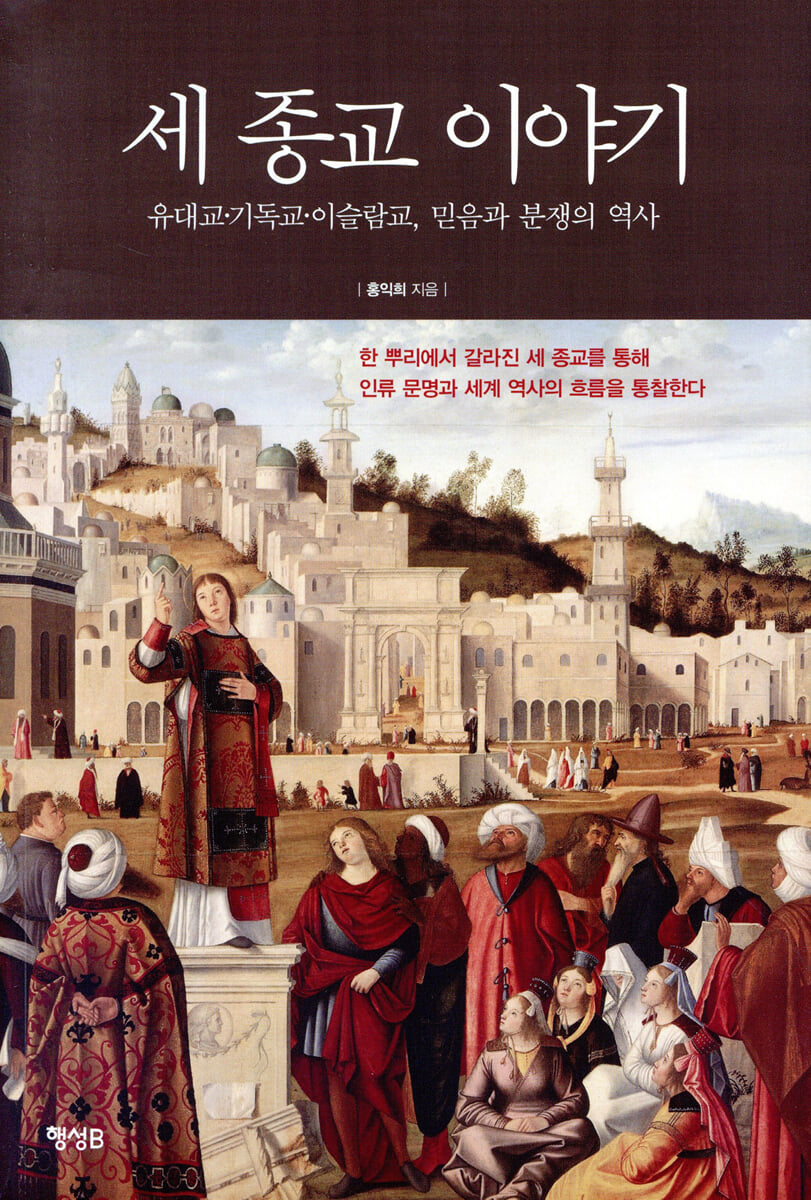
A Tale of Three Religions
 |
Description
Book Introduction
Through a comparative analysis of Judaism, Christianity, and Islam
We seek a path to peaceful coexistence that acknowledges differences, not mistakes.
The biggest difference between the three religions is their perspective on Jesus.
Judaism and Islam do not regard Jesus as the Son of God, but as one of the prophets, while Christianity recognizes Jesus as the Son of God.
This difference is what has caused the various religions to be at odds over time.
In other words, the sin that the Roman Empire imposed on Judaism when it made Christianity its state religion, namely the sin of not recognizing Jesus and crucifying him, was the biggest cause of the persecution of Jews in Europe during the Middle Ages and modern times, which continued with the Crusades following the Roman Empire.
Due to the exclusive nature of Judaism, which has a strong sense of chosen people, the doctrines of Jesus' universality could not be accepted, and Islam, founded by Muhammad, was also difficult for Judaism to accept.
While Christianity and Islam gradually grew stronger and became major players in world history, Jews simply wandered from place to place to escape persecution.
For them, active information exchange within the community was essential, and the Jews used this for commerce and accumulated wealth.
However, this, coupled with the subsequent industrialization, created a vicious cycle in which the discontent among the general public due to the extreme gap between rich and poor during the early days of capitalism turned into anti-Semitism.
The Nazi Holocaust, the most horrific event in human history, was a good example of this being used in domestic politics.
Ultimately, the purpose of this book is not to argue about who is theologically right or wrong.
The three religions all believe in the same thing: the recognition that who can follow the more 'appropriate' path to God's will, and the fact that it is now the responsibility of humans who believe in God to find that appropriateness.
Traditionally, Buddhism and Confucianism have been strong in our culture, but for those of us who currently have many Christians who believe in Protestantism or Catholicism, it is rare to find a book that presents an objective and balanced perspective on religion, including Islam and Judaism.
In that sense, this book, which seeks peace and coexistence, the essence of religion, in an age of conflict and confrontation, is worth reading.
We seek a path to peaceful coexistence that acknowledges differences, not mistakes.
The biggest difference between the three religions is their perspective on Jesus.
Judaism and Islam do not regard Jesus as the Son of God, but as one of the prophets, while Christianity recognizes Jesus as the Son of God.
This difference is what has caused the various religions to be at odds over time.
In other words, the sin that the Roman Empire imposed on Judaism when it made Christianity its state religion, namely the sin of not recognizing Jesus and crucifying him, was the biggest cause of the persecution of Jews in Europe during the Middle Ages and modern times, which continued with the Crusades following the Roman Empire.
Due to the exclusive nature of Judaism, which has a strong sense of chosen people, the doctrines of Jesus' universality could not be accepted, and Islam, founded by Muhammad, was also difficult for Judaism to accept.
While Christianity and Islam gradually grew stronger and became major players in world history, Jews simply wandered from place to place to escape persecution.
For them, active information exchange within the community was essential, and the Jews used this for commerce and accumulated wealth.
However, this, coupled with the subsequent industrialization, created a vicious cycle in which the discontent among the general public due to the extreme gap between rich and poor during the early days of capitalism turned into anti-Semitism.
The Nazi Holocaust, the most horrific event in human history, was a good example of this being used in domestic politics.
Ultimately, the purpose of this book is not to argue about who is theologically right or wrong.
The three religions all believe in the same thing: the recognition that who can follow the more 'appropriate' path to God's will, and the fact that it is now the responsibility of humans who believe in God to find that appropriateness.
Traditionally, Buddhism and Confucianism have been strong in our culture, but for those of us who currently have many Christians who believe in Protestantism or Catholicism, it is rare to find a book that presents an objective and balanced perspective on religion, including Islam and Judaism.
In that sense, this book, which seeks peace and coexistence, the essence of religion, in an age of conflict and confrontation, is worth reading.
- You can preview some of the book's contents.
Preview
index
preface
The Origins of the First Religion, the Age of Abraham
Characteristics of Sumerian civilization
Ur, Abraham's hometown
The chaotic social conditions of the Sumerian civilization
2 How was Judaism born?
The eternal covenant with God
Exodus
3 How did Judaism become established as a religion?
Jerusalem becomes a holy place
The Northern Kingdom of Israel is destroyed by idolatry.
The First Diaspora, the Beginning of the Jewish Exile
The transformation of Judaism
The Return of the Jews
Establishing Judaism
Reform Judaism and the Welfare System
Secondary discrete
§1 Jewish scriptures, the Pentateuch
§2 Three Currents of Modern Judaism
4 How was Christianity born?
The Life of Jesus and the Birth of Christianity
5 How did Christianity become established as a religion?
The activities of the twelve disciples
Changes in primitive Christian thought
Early Christianity, a sect of Judaism
Christianity, the state religion of the Roman Empire
The Catholic Schism and the Reformation
Jesus from a Jewish perspective
6 How was Islam born?
The emergence of Islam
Islamic scriptures
7 How did Islam become established as a religion?
The expansion of Islam
§3 Islamic sects
What are the similarities and differences between the eight religions?
Same thing
Differences
9 A History of Repetition and Conflict
Persecution of Jews in the Roman Empire
Islamic persecution of Jews
Catholic Persecution of Islam and Jews
Why Jews Were Persecuted So Much
Nazi anti-Semitism
The founding of Israel and the Middle East war
History of the subsequent Palestinian conflict
§4 Distribution of World Religions
Conclusion
References
Search
The Origins of the First Religion, the Age of Abraham
Characteristics of Sumerian civilization
Ur, Abraham's hometown
The chaotic social conditions of the Sumerian civilization
2 How was Judaism born?
The eternal covenant with God
Exodus
3 How did Judaism become established as a religion?
Jerusalem becomes a holy place
The Northern Kingdom of Israel is destroyed by idolatry.
The First Diaspora, the Beginning of the Jewish Exile
The transformation of Judaism
The Return of the Jews
Establishing Judaism
Reform Judaism and the Welfare System
Secondary discrete
§1 Jewish scriptures, the Pentateuch
§2 Three Currents of Modern Judaism
4 How was Christianity born?
The Life of Jesus and the Birth of Christianity
5 How did Christianity become established as a religion?
The activities of the twelve disciples
Changes in primitive Christian thought
Early Christianity, a sect of Judaism
Christianity, the state religion of the Roman Empire
The Catholic Schism and the Reformation
Jesus from a Jewish perspective
6 How was Islam born?
The emergence of Islam
Islamic scriptures
7 How did Islam become established as a religion?
The expansion of Islam
§3 Islamic sects
What are the similarities and differences between the eight religions?
Same thing
Differences
9 A History of Repetition and Conflict
Persecution of Jews in the Roman Empire
Islamic persecution of Jews
Catholic Persecution of Islam and Jews
Why Jews Were Persecuted So Much
Nazi anti-Semitism
The founding of Israel and the Middle East war
History of the subsequent Palestinian conflict
§4 Distribution of World Religions
Conclusion
References
Search
Into the book
Among the legacies left by the Sumerians, the invention of currency is the most significant in economic history.
Since around 9000 BC, people have used livestock as a unit of exchange.
Later, with the development of agriculture, people began using sheaves of wheat for barter.
This was called 'Shekel'.
The Sumerians began manufacturing and using coins around 3000 BC, and named them shekels after this place.
It was the first monetary unit of mankind.
In this way, the Sumerians invented currency, making barter much easier.
However, gold and silver were used for large transactions.
The Bible also mentions Abraham using the shekel as a currency when purchasing a burial plot for Sarah.
Even today, Israel uses the shekel as its currency.
The shekel is the first and oldest currency unit in use.
-From "The First Currency of Mankind"
If you look at the path the Jewish people took through the wilderness, it was a distance that could be traveled in a week in a straight line.
But they took a winding road and walked a difficult path for 40 years.
The Israelites tested God and disbelieved Him ten times during their wandering in the wilderness.
They had to learn through a lot of trial and error.
This is where faith began.
In Judaism, the 40 years of wandering in the wilderness are a very important collective memory.
The number '40' has a special meaning.
It refers to a period of purification for salvation.
It is to make people repent and atone for their sins through hardship and trials.
Also, '40' signifies revival to a higher state through purification and signifies God's providence that gives grace through the process of suffering.
-From “Abraham the Chosen, From Ur to Canaan”
The Jews are a perpetual nomad, and their history of wandering and dispersion continues to this day.
A wandering people must overcome hardships in a harsh environment to survive.
The settled people can never defeat them.
It is impossible for a people who have grown up comfortably in a settled society to defeat nomads who have been trained by the trials of the desert and wilderness and who will brave any danger to survive.
History proves this.
Even if Jews live within a settled nation, they are eternal foreigners and outliers.
An outlier is often described as someone who stands apart from the central group.
Historically, Jews have been marginalized, hidden in the shadows, and buried in society.
However, history gives these outliers unexpected opportunities.
That too is a golden opportunity.
They were driven out of the agricultural society and turned to commerce, driven out of commerce and turned to trade and finance, and scattered to become a global people.
It's an irony of history.
No, maybe this is the way of history.
-From “Receive Grace Through Suffering and Adversity”
Early Christianity was a sect of Judaism that held the imminent end of the world at the core of its doctrine.
The Apostle Paul played a very important role in the transformation of this Jewish Christianity into the Christianity of today.
Primitive Christianity believed in the Book of Revelation and expected the kingdom of God to come soon.
So, the Apostle Paul shifted the direction of Christian thought to focus on the afterlife and the inner self.
Soon, what was important was not this world but the next, and not external reality but the purification of the human mind.
Christianity, systematized by Paul, spread to the people of the Aegean region and eliminated the practices they had as Judaism.
And by combining it with the ideas of Gnosticism, Stoic natural philosophy, Logos, Plato, etc. that were popular in the region, it became a universal Christianity, not just for Jews.
- From the Birth of Universal Christianity
Since then, the flourishing of Christian civilization has often been achieved through the alternative means of coercion: proselytization and war.
Since Christianity took root in human history, there have been countless wars and countless sacrifices caused by them in the name of faith.
On the other hand, Judaism does not have the concept of proselytization or evangelism.
Because Judaism is a religion reserved only for the chosen people, there is no reason to spread it to pagans.
Therefore, there is no history of armed struggles for missionary purposes.
This exclusive aspect has in some ways exacerbated the historical persecution of Jews.
Since around 9000 BC, people have used livestock as a unit of exchange.
Later, with the development of agriculture, people began using sheaves of wheat for barter.
This was called 'Shekel'.
The Sumerians began manufacturing and using coins around 3000 BC, and named them shekels after this place.
It was the first monetary unit of mankind.
In this way, the Sumerians invented currency, making barter much easier.
However, gold and silver were used for large transactions.
The Bible also mentions Abraham using the shekel as a currency when purchasing a burial plot for Sarah.
Even today, Israel uses the shekel as its currency.
The shekel is the first and oldest currency unit in use.
-From "The First Currency of Mankind"
If you look at the path the Jewish people took through the wilderness, it was a distance that could be traveled in a week in a straight line.
But they took a winding road and walked a difficult path for 40 years.
The Israelites tested God and disbelieved Him ten times during their wandering in the wilderness.
They had to learn through a lot of trial and error.
This is where faith began.
In Judaism, the 40 years of wandering in the wilderness are a very important collective memory.
The number '40' has a special meaning.
It refers to a period of purification for salvation.
It is to make people repent and atone for their sins through hardship and trials.
Also, '40' signifies revival to a higher state through purification and signifies God's providence that gives grace through the process of suffering.
-From “Abraham the Chosen, From Ur to Canaan”
The Jews are a perpetual nomad, and their history of wandering and dispersion continues to this day.
A wandering people must overcome hardships in a harsh environment to survive.
The settled people can never defeat them.
It is impossible for a people who have grown up comfortably in a settled society to defeat nomads who have been trained by the trials of the desert and wilderness and who will brave any danger to survive.
History proves this.
Even if Jews live within a settled nation, they are eternal foreigners and outliers.
An outlier is often described as someone who stands apart from the central group.
Historically, Jews have been marginalized, hidden in the shadows, and buried in society.
However, history gives these outliers unexpected opportunities.
That too is a golden opportunity.
They were driven out of the agricultural society and turned to commerce, driven out of commerce and turned to trade and finance, and scattered to become a global people.
It's an irony of history.
No, maybe this is the way of history.
-From “Receive Grace Through Suffering and Adversity”
Early Christianity was a sect of Judaism that held the imminent end of the world at the core of its doctrine.
The Apostle Paul played a very important role in the transformation of this Jewish Christianity into the Christianity of today.
Primitive Christianity believed in the Book of Revelation and expected the kingdom of God to come soon.
So, the Apostle Paul shifted the direction of Christian thought to focus on the afterlife and the inner self.
Soon, what was important was not this world but the next, and not external reality but the purification of the human mind.
Christianity, systematized by Paul, spread to the people of the Aegean region and eliminated the practices they had as Judaism.
And by combining it with the ideas of Gnosticism, Stoic natural philosophy, Logos, Plato, etc. that were popular in the region, it became a universal Christianity, not just for Jews.
- From the Birth of Universal Christianity
Since then, the flourishing of Christian civilization has often been achieved through the alternative means of coercion: proselytization and war.
Since Christianity took root in human history, there have been countless wars and countless sacrifices caused by them in the name of faith.
On the other hand, Judaism does not have the concept of proselytization or evangelism.
Because Judaism is a religion reserved only for the chosen people, there is no reason to spread it to pagans.
Therefore, there is no history of armed struggles for missionary purposes.
This exclusive aspect has in some ways exacerbated the historical persecution of Jews.
---From the text
Publisher's Review
Who is religion for?
Rethinking the reconciliation of the three religions and the essence of faith
The conflicts and disputes between religions that exist in the world today stem from each trying to monopolize God and mistakenly believing that only they are inevitable, eternal, and infinite.
Pascal, Pensees
In the first half of 2014, many people around the world, both domestically and internationally, were suffering from various tragic situations carried out in the name of religion.
In Korea, various news reports related to the Salvation Sect, which was linked to the Sewol Ferry disaster, were pouring in every day, while on the other side of the globe, endless tragic news of the horrific civilian massacres taking place in the Middle East's powder keg, the Gaza Strip, Israel, was heard.
Unlike the love, mercy, gospel, and salvation advocated by Judaism, Christianity, and Islam, which are representative of the world's major religions and are sibling religions that believe in the same God, reality is filled with conflict and discord.
The irony of tragedy committed in the name of God, where will it end?
The three religions of faith and conflict,
Its essence is revealed in the flow of history.
Author Hong Ik-hee, who already received acclaim for his previous bestseller, The Jewish Story (2013), covers world history from all angles, from the ancient Sumerian civilization that is the root of Abraham, the person who started the three religions, to the Roman Empire that established Christianity as the state religion, the Crusades between Christianity and Islam, the Dark Ages of the Middle Ages when Judaism was unilaterally persecuted, and even the Holocaust and the Palestinian conflict. Through this book, he argues that we must end the conflict between the three religions and seek a relationship of peaceful coexistence.
Having worked at KOTRA for 22 years and experienced various economic environments while traveling to trade sites from New York, Milan, Madrid, and Sao Paulo, the author came to focus on the Jews who, in return for the pain and suffering of separation and wandering, opened their eyes to 'wealth', and the power of Judaism that supported them.
However, while previous works such as "The Jewish Story" and "The Secret of Jewish Creativity" focused on Jews, this book examines the history of Christianity and Islam, religions that branched out from Judaism and underwent different developments, and through comparative analysis of the three religions, examines how these religions were reborn as universal world religions and reached their current positions.
The author's narrative of the three religions is meticulous yet accessible and objective, perfectly suited to the general public. It is also a valuable domestic work that covers the vast history of world religions.
This is especially true in the current situation where conflict in the Middle East has reached its peak, making it even more crucial to understand the world situation from our perspective.
This is because the history of conflict and strife that has lasted for thousands of years is not just a record of the past, but is an ongoing history that still reveals its scars all over the world.
Through a comparative analysis of Judaism, Christianity, and Islam
We seek a path to peaceful coexistence that acknowledges differences, not mistakes.
The biggest difference between the three religions is their perspective on Jesus.
Judaism and Islam do not regard Jesus as the Son of God, but as one of the prophets, while Christianity recognizes Jesus as the Son of God.
This difference is what has caused the various religions to be at odds over time.
In other words, the sin that the Roman Empire imposed on Judaism when it made Christianity its state religion, namely the sin of not recognizing Jesus and crucifying him, was the biggest cause of the persecution of Jews in Europe during the Middle Ages and modern times, which continued with the Crusades following the Roman Empire.
Due to the exclusive nature of Judaism, which has a strong sense of chosen people, the doctrines of Jesus' universality could not be accepted, and Islam, founded by Muhammad, was also difficult for Judaism to accept.
While Christianity and Islam gradually grew stronger and became major players in world history, Jews simply wandered from place to place to escape persecution.
For them, active information exchange within the community was essential, and the Jews used this for commerce and accumulated wealth.
However, this, coupled with the subsequent industrialization, created a vicious cycle in which the discontent among the general public due to the extreme gap between rich and poor during the early days of capitalism turned into anti-Semitism.
The Nazi Holocaust, the most horrific event in human history, was a good example of this being used in domestic politics.
Ultimately, the purpose of this book is not to argue about who is theologically right or wrong.
The three religions all believe in the same thing: the recognition that who can follow the more 'appropriate' path to God's will, and the fact that it is now the responsibility of humans who believe in God to find that appropriateness.
Traditionally, Buddhism and Confucianism have been strong in our culture, but for those of us who currently have many Christians who believe in Protestantism or Catholicism, it is rare to find a book that presents an objective and balanced perspective on religion, including Islam and Judaism.
In that sense, this book, which seeks peace and coexistence, the essence of religion, in an age of conflict and confrontation, is worth reading.
Rethinking the reconciliation of the three religions and the essence of faith
The conflicts and disputes between religions that exist in the world today stem from each trying to monopolize God and mistakenly believing that only they are inevitable, eternal, and infinite.
Pascal, Pensees
In the first half of 2014, many people around the world, both domestically and internationally, were suffering from various tragic situations carried out in the name of religion.
In Korea, various news reports related to the Salvation Sect, which was linked to the Sewol Ferry disaster, were pouring in every day, while on the other side of the globe, endless tragic news of the horrific civilian massacres taking place in the Middle East's powder keg, the Gaza Strip, Israel, was heard.
Unlike the love, mercy, gospel, and salvation advocated by Judaism, Christianity, and Islam, which are representative of the world's major religions and are sibling religions that believe in the same God, reality is filled with conflict and discord.
The irony of tragedy committed in the name of God, where will it end?
The three religions of faith and conflict,
Its essence is revealed in the flow of history.
Author Hong Ik-hee, who already received acclaim for his previous bestseller, The Jewish Story (2013), covers world history from all angles, from the ancient Sumerian civilization that is the root of Abraham, the person who started the three religions, to the Roman Empire that established Christianity as the state religion, the Crusades between Christianity and Islam, the Dark Ages of the Middle Ages when Judaism was unilaterally persecuted, and even the Holocaust and the Palestinian conflict. Through this book, he argues that we must end the conflict between the three religions and seek a relationship of peaceful coexistence.
Having worked at KOTRA for 22 years and experienced various economic environments while traveling to trade sites from New York, Milan, Madrid, and Sao Paulo, the author came to focus on the Jews who, in return for the pain and suffering of separation and wandering, opened their eyes to 'wealth', and the power of Judaism that supported them.
However, while previous works such as "The Jewish Story" and "The Secret of Jewish Creativity" focused on Jews, this book examines the history of Christianity and Islam, religions that branched out from Judaism and underwent different developments, and through comparative analysis of the three religions, examines how these religions were reborn as universal world religions and reached their current positions.
The author's narrative of the three religions is meticulous yet accessible and objective, perfectly suited to the general public. It is also a valuable domestic work that covers the vast history of world religions.
This is especially true in the current situation where conflict in the Middle East has reached its peak, making it even more crucial to understand the world situation from our perspective.
This is because the history of conflict and strife that has lasted for thousands of years is not just a record of the past, but is an ongoing history that still reveals its scars all over the world.
Through a comparative analysis of Judaism, Christianity, and Islam
We seek a path to peaceful coexistence that acknowledges differences, not mistakes.
The biggest difference between the three religions is their perspective on Jesus.
Judaism and Islam do not regard Jesus as the Son of God, but as one of the prophets, while Christianity recognizes Jesus as the Son of God.
This difference is what has caused the various religions to be at odds over time.
In other words, the sin that the Roman Empire imposed on Judaism when it made Christianity its state religion, namely the sin of not recognizing Jesus and crucifying him, was the biggest cause of the persecution of Jews in Europe during the Middle Ages and modern times, which continued with the Crusades following the Roman Empire.
Due to the exclusive nature of Judaism, which has a strong sense of chosen people, the doctrines of Jesus' universality could not be accepted, and Islam, founded by Muhammad, was also difficult for Judaism to accept.
While Christianity and Islam gradually grew stronger and became major players in world history, Jews simply wandered from place to place to escape persecution.
For them, active information exchange within the community was essential, and the Jews used this for commerce and accumulated wealth.
However, this, coupled with the subsequent industrialization, created a vicious cycle in which the discontent among the general public due to the extreme gap between rich and poor during the early days of capitalism turned into anti-Semitism.
The Nazi Holocaust, the most horrific event in human history, was a good example of this being used in domestic politics.
Ultimately, the purpose of this book is not to argue about who is theologically right or wrong.
The three religions all believe in the same thing: the recognition that who can follow the more 'appropriate' path to God's will, and the fact that it is now the responsibility of humans who believe in God to find that appropriateness.
Traditionally, Buddhism and Confucianism have been strong in our culture, but for those of us who currently have many Christians who believe in Protestantism or Catholicism, it is rare to find a book that presents an objective and balanced perspective on religion, including Islam and Judaism.
In that sense, this book, which seeks peace and coexistence, the essence of religion, in an age of conflict and confrontation, is worth reading.
GOODS SPECIFICS
- Date of publication: August 27, 2014
- Page count, weight, size: 484 pages | 859g | 153*224*22mm
- ISBN13: 9788997132485
- ISBN10: 8997132482
You may also like
카테고리
korean


korean

![ELLE 엘르 스페셜 에디션 A형 : 12월 [2025]](http://librairie.coreenne.fr/cdn/shop/files/b8e27a3de6c9538896439686c6b0e8fb.jpg?v=1766436872&width=3840)


