

Snowfall in Jeungdo
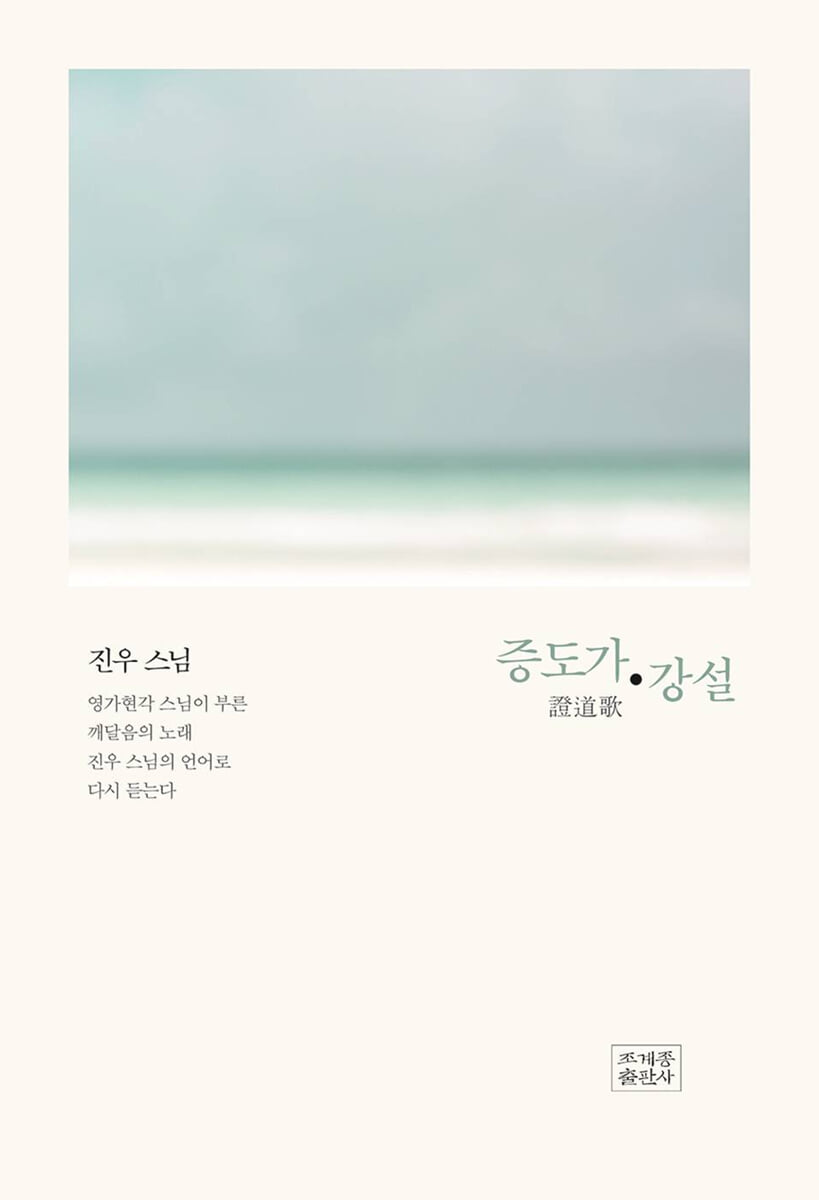 |
Description
Book Introduction
The power of classical Zen Buddhism, leading to enlightenment, comes alive in modern life.
Director of the General Affairs Office, Venerable Jinwoo, publishes 『Jeungdo Lecture』!
The Zen poem "Jeungdoga" written by the Chinese Tang Dynasty monk Yongjia Xuanjue (永嘉玄覺, 665-713) is a collection of immortal verses that encapsulate the practice and enlightenment of Zen Buddhism.
However, the short and compressed poem was full of Chinese characters and metaphors, making it difficult for the general public to approach.
Accordingly, Venerable Jinwoo, the head of the Jogye Order of Korean Buddhism, explained ‘enlightenment’ in modern language through ‘Jeungdo Lectures.’
This is not a lecture that simply explains the meaning of each letter.
Through this book, readers will soon discover that the teachings in 『Jeungdoga』 are not the exclusive domain of Zen practitioners, but rather life wisdom that anyone can put into practice in their daily lives.
『Jeungdo Kangseol』 revives the classics of Seon Buddhism, providing a chance for long-time Buddhists to re-focus their minds, and for those approaching Buddhism for the first time, it will serve as a daily guide that leads them down a wise path.
Director of the General Affairs Office, Venerable Jinwoo, publishes 『Jeungdo Lecture』!
The Zen poem "Jeungdoga" written by the Chinese Tang Dynasty monk Yongjia Xuanjue (永嘉玄覺, 665-713) is a collection of immortal verses that encapsulate the practice and enlightenment of Zen Buddhism.
However, the short and compressed poem was full of Chinese characters and metaphors, making it difficult for the general public to approach.
Accordingly, Venerable Jinwoo, the head of the Jogye Order of Korean Buddhism, explained ‘enlightenment’ in modern language through ‘Jeungdo Lectures.’
This is not a lecture that simply explains the meaning of each letter.
Through this book, readers will soon discover that the teachings in 『Jeungdoga』 are not the exclusive domain of Zen practitioners, but rather life wisdom that anyone can put into practice in their daily lives.
『Jeungdo Kangseol』 revives the classics of Seon Buddhism, providing a chance for long-time Buddhists to re-focus their minds, and for those approaching Buddhism for the first time, it will serve as a daily guide that leads them down a wise path.
- You can preview some of the book's contents.
Preview
index
Starting the lecture
Episode 1: Still Can't See It?
Episode 2: What is Life?
Episode 3: If you have worries and concerns in your heart
Episode 4: How to Control Your Mind
Episode 5: How to Talk to Others
Episode 6: If you deceive people with lies
Episode 7: At the Border of Heaven and Hell
Episode 8: Living in a Dream
Episode 9: An Empty Mind Without Obsession
Episode 10: How to Prevent Disaster
Episode 11: Don't Be Obsessed
Episode 12: When Life Feels Meaningless
Episode 13: Live according to your fate
Episode 14: My Heart, Here and Now
Episode 15: Everything that comes into existence eventually disappears.
Episode 16: Cutting Off the Source
Episode 17: Don't Be Fooled by Illusions
Episode 18: A Life Without Obstacles
Episode 19: First, You Must Open Your Eyes
Episode 20: A Thousand Rivers, A Thousand Moons
Episode 21: The Joy of Living Alone
Episode 22: The Miracle of Foresight
Episode 23: How to Become Truly Rich
Episode 24: A Priceless Treasure
Episode 25: Don't Have a Discriminating Mind
Episode 26: The Heart is Full of Pervasiveness
Episode 27: A Belief
Episode 28: The Sea is Originally Calm
Episode 29: When Someone Insults Me
Episode 30: How Should We Live?
Episode 31: When Someone Makes Me Uncomfortable
Episode 32: When the Other Person's Words Still Worry
Episode 33: To Own Is to Create
Episode 34: You Are Buddha
Episode 35: A Lion's Loud Voice
Episode 36: The Opponent is My Shadow
Episode 37: The Reason for Seeking the Master and Asking for the Way
Episode 38: The Heart That Wants to Do It Is Sick
Episode 39: What is True Success?
Episode 40: The Relative Distinction Between Pleasure and Pain
Episode 41: True Action Before Thought
Episode 42: Why was I born?
Episode 43: Free Yourself from Obsession and Discrimination
Episode 44: That Place Is Here
Episode 45: A Life Without Effort
Episode 46: True Blessing
Episode 47: Don't Laugh Out Loud, Don't Cry Out Loud
Episode 48: Accepting Fate as It Is
Episode 49: Don't Worry
Episode 50: Do you want to be happy now?
Episode 51: A Life Without Hope
Episode 52: What should I wear today?
Episode 53: When You're Sick
Episode 54: When I'm Ignored Because They Don't Recognize Me
Episode 55: Don't Seek Truth
Episode 56: The True Appearance of the Tathagata
Episode 57: The Mirror of the Heart
Episode 58: As long as it's not me
Episode 59: When you meet someone with an empty heart
Episode 60: Like a Moth to a Flame
Episode 61: The Mind of Taking and Throwing Away
Episode 62: Adopting a Thief as Your Son
Episode 63: There is no one without a story
Episode 64: The Impact of Karma on Life
Episode 65: The Old Man of the Saengongjima
Episode 66: Putting Your Mind at Peace
Episode 67: Discernment is the Root of All Disaster
Episode 68: A Message of Hope
Episode 69: There is not a single weed
Episode 70: One Law, All Laws
Episode 71: Organize Your Feelings First
Episode 72: Crying and Laughing in Love
Episode 73: Don't Make Mistakes in Advance
Episode 74: Don't Go Against the Times
Episode 75: What does an awakened mind look like?
Episode 76: Endless as the Sky
Episode 77: I'll tell you for sure when I find it.
Episode 78: Why Does This Happen to Me?
Episode 79: The Door to Great Giving Opens Wide
Episode 80: The Weight of Happiness and the Weight of Unhappiness
Episode 81: People Don't Know Right from Wrong
Episode 82: Don't Think of Problems as Problems
Episode 83: Don't Be Obsessed with Anything
Episode 84: The Buddha's Will
Episode 85: When Something Happens
Episode 86: How to Relieve Stress
Episode 87: When to Decide and Disagree
Episode 88: How to Win with Exhilaration
Episode 89: The Folly of Losing People and Money
Episode 90: Self-torture
Episode 91: An Easy Way to Awaken Your Heart
Episode 92: Your Destiny and Mys
Episode 93: What is right and what is wrong?
Episode 94: How to Resolve a Conflict
Episode 95: How to Meet a Good Person
Episode 96: Between Parents and Children
Episode 97: Don't Stop at Recognition
Episode 98: When you feel depressed or irritated
Episode 99: What's Right and Wrong
Episode 100: If you are enlightened, you are a Buddha; if you are deluded, you are a sentient being.
Episode 101: Making a Living
Episode 102: A Life of Deception
Episode 103: I Misunderstood and Misunderstood
Episode 104: Discrimination is not the Way
Episode 105: The Finger is Not the Moon
Episode 106: Like a Reflection in a Mirror
Episode 107: If you don't want to meet people you hate anymore
Episode 108: Holding the bowl upside down
Episode 109: The Power of Knowing and Seeing Things as They Are
Episode 110: The Way Without Life or Death
Episode 111: The Man Who Doesn't Know Shame
Episode 112: The Sinful Nature Does Not Exist
Episode 113: The Path to Escape from Suffering
Episode 114: Whom Should We Blame?
Episode 115: Stopping those who come and holding on to those who leave
Episode 116: The Highest and Most Excellent Teaching
Episode 117: The Middle Way Without Discrimination
Episode 118: No People, No Buddha
Episode 119: Like Bubbles and Lightning
Episode 120: Selection and Wisdom Are Bright
Episode 121: Even if I could make the moon hot
Episode 122: The Grasshopper Blocking the Cart
Episode 123: Leisure Like an Elephant
Episode 124: Throw Away the Lantern and Look at the Sky
Episode 1: Still Can't See It?
Episode 2: What is Life?
Episode 3: If you have worries and concerns in your heart
Episode 4: How to Control Your Mind
Episode 5: How to Talk to Others
Episode 6: If you deceive people with lies
Episode 7: At the Border of Heaven and Hell
Episode 8: Living in a Dream
Episode 9: An Empty Mind Without Obsession
Episode 10: How to Prevent Disaster
Episode 11: Don't Be Obsessed
Episode 12: When Life Feels Meaningless
Episode 13: Live according to your fate
Episode 14: My Heart, Here and Now
Episode 15: Everything that comes into existence eventually disappears.
Episode 16: Cutting Off the Source
Episode 17: Don't Be Fooled by Illusions
Episode 18: A Life Without Obstacles
Episode 19: First, You Must Open Your Eyes
Episode 20: A Thousand Rivers, A Thousand Moons
Episode 21: The Joy of Living Alone
Episode 22: The Miracle of Foresight
Episode 23: How to Become Truly Rich
Episode 24: A Priceless Treasure
Episode 25: Don't Have a Discriminating Mind
Episode 26: The Heart is Full of Pervasiveness
Episode 27: A Belief
Episode 28: The Sea is Originally Calm
Episode 29: When Someone Insults Me
Episode 30: How Should We Live?
Episode 31: When Someone Makes Me Uncomfortable
Episode 32: When the Other Person's Words Still Worry
Episode 33: To Own Is to Create
Episode 34: You Are Buddha
Episode 35: A Lion's Loud Voice
Episode 36: The Opponent is My Shadow
Episode 37: The Reason for Seeking the Master and Asking for the Way
Episode 38: The Heart That Wants to Do It Is Sick
Episode 39: What is True Success?
Episode 40: The Relative Distinction Between Pleasure and Pain
Episode 41: True Action Before Thought
Episode 42: Why was I born?
Episode 43: Free Yourself from Obsession and Discrimination
Episode 44: That Place Is Here
Episode 45: A Life Without Effort
Episode 46: True Blessing
Episode 47: Don't Laugh Out Loud, Don't Cry Out Loud
Episode 48: Accepting Fate as It Is
Episode 49: Don't Worry
Episode 50: Do you want to be happy now?
Episode 51: A Life Without Hope
Episode 52: What should I wear today?
Episode 53: When You're Sick
Episode 54: When I'm Ignored Because They Don't Recognize Me
Episode 55: Don't Seek Truth
Episode 56: The True Appearance of the Tathagata
Episode 57: The Mirror of the Heart
Episode 58: As long as it's not me
Episode 59: When you meet someone with an empty heart
Episode 60: Like a Moth to a Flame
Episode 61: The Mind of Taking and Throwing Away
Episode 62: Adopting a Thief as Your Son
Episode 63: There is no one without a story
Episode 64: The Impact of Karma on Life
Episode 65: The Old Man of the Saengongjima
Episode 66: Putting Your Mind at Peace
Episode 67: Discernment is the Root of All Disaster
Episode 68: A Message of Hope
Episode 69: There is not a single weed
Episode 70: One Law, All Laws
Episode 71: Organize Your Feelings First
Episode 72: Crying and Laughing in Love
Episode 73: Don't Make Mistakes in Advance
Episode 74: Don't Go Against the Times
Episode 75: What does an awakened mind look like?
Episode 76: Endless as the Sky
Episode 77: I'll tell you for sure when I find it.
Episode 78: Why Does This Happen to Me?
Episode 79: The Door to Great Giving Opens Wide
Episode 80: The Weight of Happiness and the Weight of Unhappiness
Episode 81: People Don't Know Right from Wrong
Episode 82: Don't Think of Problems as Problems
Episode 83: Don't Be Obsessed with Anything
Episode 84: The Buddha's Will
Episode 85: When Something Happens
Episode 86: How to Relieve Stress
Episode 87: When to Decide and Disagree
Episode 88: How to Win with Exhilaration
Episode 89: The Folly of Losing People and Money
Episode 90: Self-torture
Episode 91: An Easy Way to Awaken Your Heart
Episode 92: Your Destiny and Mys
Episode 93: What is right and what is wrong?
Episode 94: How to Resolve a Conflict
Episode 95: How to Meet a Good Person
Episode 96: Between Parents and Children
Episode 97: Don't Stop at Recognition
Episode 98: When you feel depressed or irritated
Episode 99: What's Right and Wrong
Episode 100: If you are enlightened, you are a Buddha; if you are deluded, you are a sentient being.
Episode 101: Making a Living
Episode 102: A Life of Deception
Episode 103: I Misunderstood and Misunderstood
Episode 104: Discrimination is not the Way
Episode 105: The Finger is Not the Moon
Episode 106: Like a Reflection in a Mirror
Episode 107: If you don't want to meet people you hate anymore
Episode 108: Holding the bowl upside down
Episode 109: The Power of Knowing and Seeing Things as They Are
Episode 110: The Way Without Life or Death
Episode 111: The Man Who Doesn't Know Shame
Episode 112: The Sinful Nature Does Not Exist
Episode 113: The Path to Escape from Suffering
Episode 114: Whom Should We Blame?
Episode 115: Stopping those who come and holding on to those who leave
Episode 116: The Highest and Most Excellent Teaching
Episode 117: The Middle Way Without Discrimination
Episode 118: No People, No Buddha
Episode 119: Like Bubbles and Lightning
Episode 120: Selection and Wisdom Are Bright
Episode 121: Even if I could make the moon hot
Episode 122: The Grasshopper Blocking the Cart
Episode 123: Leisure Like an Elephant
Episode 124: Throw Away the Lantern and Look at the Sky
Into the book
To awaken the mind is first to know the law of cause and effect.
Causality means that if there is a cause, there will definitely be a result.
If you once had a desire and felt joy, happiness, and pleasure, then as a result, you will inevitably experience the same amount of pain, sadness, and unhappiness.
--- p.17
Right now, at this very moment, if your mind is not at peace, it is proof that you have not yet awakened your mind, that you do not know that 'ignorance is your true nature', that you do not know that 'this body is the Dharmakaya', and that your mind is caught up in the cause and effect of suffering.
--- p.23
They say that having what you want is a gain.
But when you lose what you have, you mistake it for a loss.
Even though I didn't have anything originally.
Also, getting what you want or seeing benefits is called a blessing and you feel happy, joyful, and joyful.
However, joy, happiness, and gladness are bound to have their own karmic consequences, so there will come times of suffering, sadness, and unhappiness.
Therefore, if there is profit, there must be loss.
So, profit is not really profit, and loss is not really loss.
--- p.49
A living being has two minds.
A happy heart that is joyful and glad, and a sad and unhappy heart that is miserable.
If you have one mind, an opposite mind will naturally arise.
Because of that, you can't have just one of the two minds.
However, people completely overlook the fact that when one thing arises, another opposite thing arises, and they only seek to find joy and happiness.
But someday, something painful and unfortunate will inevitably happen.
This is called karma and the relationship between the times.
--- p.102
The problem is that being happy and joyful has its own rewards.
As good causes arise, so do bad consequences.
It means that something bad will happen.
Just as the more you look, the more blessings you receive. As the arrows that pierce the sky fly farther the more you count them, but when the arrows lose their strength, they fall to the ground.
When that blessing is all gone, the next thing you know, you will feel empty and regretful again and it will turn into suffering.
--- p.201
In fact, there are many parts of what Monk Yeonga says in 『Jeungdoga』 that are difficult to understand even for those who have studied Buddhism extensively.
Even if you reach a certain level of mental maturity through practice, you still need to study a lot to acquire it.
So, you must read and reread it carefully, savoring it and absorbing it line by line, until you have made it your own.
The most important thing in life is to find my mind, which only wanders outside, and make it comfortable right now.
To do that, you must first make prayer, meditation, charity, and diligence a habit.
--- p.211
There are many cases like this in secular life as well.
No matter how right something is, if you become overly obsessed with it and get angry to the point of burdening both yourself and the other person, it can never be right.
However, it is truly difficult to control this because wisdom is lacking and karma and habits are thick.
So it is true that there are many things I regret.
Therefore, it is important not to be lazy in practicing the mind and not to stop.
In all situations and circumstances, we must strive not to develop discriminatory emotions of like and dislike.
After all, everything happens without a single error according to cause and effect and dependent origination.
--- p.262
The problem of life and death is an illusion created by the mind, so how much more so are the Buddha, sentient beings, paradise, and hell.
Good karma creates bad karma, creating an endless cycle of life and death.
If you eliminate the discriminating mind of joy, sorrow, right and wrong, you will attain Buddhahood.
So, let's leave everything to fate and put down our worries right now.
Causality means that if there is a cause, there will definitely be a result.
If you once had a desire and felt joy, happiness, and pleasure, then as a result, you will inevitably experience the same amount of pain, sadness, and unhappiness.
--- p.17
Right now, at this very moment, if your mind is not at peace, it is proof that you have not yet awakened your mind, that you do not know that 'ignorance is your true nature', that you do not know that 'this body is the Dharmakaya', and that your mind is caught up in the cause and effect of suffering.
--- p.23
They say that having what you want is a gain.
But when you lose what you have, you mistake it for a loss.
Even though I didn't have anything originally.
Also, getting what you want or seeing benefits is called a blessing and you feel happy, joyful, and joyful.
However, joy, happiness, and gladness are bound to have their own karmic consequences, so there will come times of suffering, sadness, and unhappiness.
Therefore, if there is profit, there must be loss.
So, profit is not really profit, and loss is not really loss.
--- p.49
A living being has two minds.
A happy heart that is joyful and glad, and a sad and unhappy heart that is miserable.
If you have one mind, an opposite mind will naturally arise.
Because of that, you can't have just one of the two minds.
However, people completely overlook the fact that when one thing arises, another opposite thing arises, and they only seek to find joy and happiness.
But someday, something painful and unfortunate will inevitably happen.
This is called karma and the relationship between the times.
--- p.102
The problem is that being happy and joyful has its own rewards.
As good causes arise, so do bad consequences.
It means that something bad will happen.
Just as the more you look, the more blessings you receive. As the arrows that pierce the sky fly farther the more you count them, but when the arrows lose their strength, they fall to the ground.
When that blessing is all gone, the next thing you know, you will feel empty and regretful again and it will turn into suffering.
--- p.201
In fact, there are many parts of what Monk Yeonga says in 『Jeungdoga』 that are difficult to understand even for those who have studied Buddhism extensively.
Even if you reach a certain level of mental maturity through practice, you still need to study a lot to acquire it.
So, you must read and reread it carefully, savoring it and absorbing it line by line, until you have made it your own.
The most important thing in life is to find my mind, which only wanders outside, and make it comfortable right now.
To do that, you must first make prayer, meditation, charity, and diligence a habit.
--- p.211
There are many cases like this in secular life as well.
No matter how right something is, if you become overly obsessed with it and get angry to the point of burdening both yourself and the other person, it can never be right.
However, it is truly difficult to control this because wisdom is lacking and karma and habits are thick.
So it is true that there are many things I regret.
Therefore, it is important not to be lazy in practicing the mind and not to stop.
In all situations and circumstances, we must strive not to develop discriminatory emotions of like and dislike.
After all, everything happens without a single error according to cause and effect and dependent origination.
--- p.262
The problem of life and death is an illusion created by the mind, so how much more so are the Buddha, sentient beings, paradise, and hell.
Good karma creates bad karma, creating an endless cycle of life and death.
If you eliminate the discriminating mind of joy, sorrow, right and wrong, you will attain Buddhahood.
So, let's leave everything to fate and put down our worries right now.
--- pp.508-509
Publisher's Review
The song of enlightenment, 『Jeungdo-ga』
Solve with life wisdom
『Jeungdoga』 is a Zen poem that sings of the enlightenment that Monk Yeonggahyeon Gak achieved.
From the time of the Tang Dynasty to the present, it has been regarded as a 'guide to enlightenment' and a 'textbook for practice' by Zen practitioners.
Because enlightenment itself is expressed in the form of a verse, it has the character of being something that must be acquired with the heart rather than understood with the head.
But this very point has become a barrier to entry for modern people.
The sentences, full of metaphors and symbols, are based on a thorough experience of Zen, so they are bound to be difficult to understand for those without any experience in practice.
It contains timeless practical values, but it was difficult to approach its meaning.
This is the reason why Monk Jinwoo lectured on 『Jeungdoga』 to the public.
In this book, 『Jeungdo Kangseol』, Monk Jinwoo repeatedly says that we should let go of the pleasures and sorrows of liking and disliking, and the discrimination between right and wrong.
Rather than simply interpreting text or explaining terms, it presents concrete examples of how modern people can practice Buddhist teachings in their daily lives and achieve enlightenment.
It is interpreted in connection with the conflicts in relationships experienced in daily life, success and failure at work, and the joys and sorrows that occur within the family.
Readers can not only understand the meaning of the passage intellectually, but also accept it as a practical guideline for their own lives.
“If you are swayed by emotions of joy and sorrow, and by the ups and downs of everything, all that will remain in the end is a lump in your heart and pain.”
Monk Jinwoo's book, "Jeungdo Kangseol," can be called a guidebook for modern people's lives, as anyone can read it and reflect on the direction of their lives.
Without awakening the mind
There is nothing that can be solved
Based on his long experience in practice and education, Monk Jinwoo has interpreted Buddhist classics such as 『Shinsimmyeong Lectures』 and 『Monk Jinwoo's Lectures on the Diamond Sutra』 in a modern way.
Monk Jinwoo's lectures always focus on 'how we can practice Buddhist wisdom in modern life.'
Monk Jinwoo emphasized that “enlightenment is not found in a special place, but in looking at this very moment, at the present moment, with a relaxed mind,” and connected the story contained in the song of “Jeungdoga” to vivid scenes from our lives.
It explains in specific scenes how to view joy and sorrow, success and failure, gain and loss.
For example, it makes us think about the waves of emotions we commonly feel when we are hurt by someone's words, when business succeeds or fails, or when we experience love and separation, and connect them with the teachings of the Zen master.
The key is to “accept things as they are, free from the discrimination of good and bad, right and wrong.”
Venerable Jinwoo emphasizes that this is the most practical way to maintain peace and not be swayed by suffering in daily life.
This is the moment when the teachings of Zen Buddhism no longer remain as the 'language of the mountain monks' but come to us in the language of our lives 'here and now.'
The path to letting go of anxiety and finding peace
“The most important thing in life is to find my mind, which only wanders outside, and make it comfortable right now.”
Monk Jinwoo is not a transmitter of knowledge, but rather a companion who walks the path to enlightenment with his readers.
So, this book seems to be a friendly conversation, even though it is a snowstorm.
Thanks to this, readers have the experience of looking back on their daily lives and finding clues to enlightenment rather than feeling like they are studying scriptures.
This can be said to be a place of practice that carries on the tradition of Zen Buddhism into present-day practice.
Through Monk Jinwoo's 『Jeungdo Lecture』, you will come into contact with the essence of Seon Buddhism and will be able to move forward on the path of wisdom, peace, and enlightenment.
Solve with life wisdom
『Jeungdoga』 is a Zen poem that sings of the enlightenment that Monk Yeonggahyeon Gak achieved.
From the time of the Tang Dynasty to the present, it has been regarded as a 'guide to enlightenment' and a 'textbook for practice' by Zen practitioners.
Because enlightenment itself is expressed in the form of a verse, it has the character of being something that must be acquired with the heart rather than understood with the head.
But this very point has become a barrier to entry for modern people.
The sentences, full of metaphors and symbols, are based on a thorough experience of Zen, so they are bound to be difficult to understand for those without any experience in practice.
It contains timeless practical values, but it was difficult to approach its meaning.
This is the reason why Monk Jinwoo lectured on 『Jeungdoga』 to the public.
In this book, 『Jeungdo Kangseol』, Monk Jinwoo repeatedly says that we should let go of the pleasures and sorrows of liking and disliking, and the discrimination between right and wrong.
Rather than simply interpreting text or explaining terms, it presents concrete examples of how modern people can practice Buddhist teachings in their daily lives and achieve enlightenment.
It is interpreted in connection with the conflicts in relationships experienced in daily life, success and failure at work, and the joys and sorrows that occur within the family.
Readers can not only understand the meaning of the passage intellectually, but also accept it as a practical guideline for their own lives.
“If you are swayed by emotions of joy and sorrow, and by the ups and downs of everything, all that will remain in the end is a lump in your heart and pain.”
Monk Jinwoo's book, "Jeungdo Kangseol," can be called a guidebook for modern people's lives, as anyone can read it and reflect on the direction of their lives.
Without awakening the mind
There is nothing that can be solved
Based on his long experience in practice and education, Monk Jinwoo has interpreted Buddhist classics such as 『Shinsimmyeong Lectures』 and 『Monk Jinwoo's Lectures on the Diamond Sutra』 in a modern way.
Monk Jinwoo's lectures always focus on 'how we can practice Buddhist wisdom in modern life.'
Monk Jinwoo emphasized that “enlightenment is not found in a special place, but in looking at this very moment, at the present moment, with a relaxed mind,” and connected the story contained in the song of “Jeungdoga” to vivid scenes from our lives.
It explains in specific scenes how to view joy and sorrow, success and failure, gain and loss.
For example, it makes us think about the waves of emotions we commonly feel when we are hurt by someone's words, when business succeeds or fails, or when we experience love and separation, and connect them with the teachings of the Zen master.
The key is to “accept things as they are, free from the discrimination of good and bad, right and wrong.”
Venerable Jinwoo emphasizes that this is the most practical way to maintain peace and not be swayed by suffering in daily life.
This is the moment when the teachings of Zen Buddhism no longer remain as the 'language of the mountain monks' but come to us in the language of our lives 'here and now.'
The path to letting go of anxiety and finding peace
“The most important thing in life is to find my mind, which only wanders outside, and make it comfortable right now.”
Monk Jinwoo is not a transmitter of knowledge, but rather a companion who walks the path to enlightenment with his readers.
So, this book seems to be a friendly conversation, even though it is a snowstorm.
Thanks to this, readers have the experience of looking back on their daily lives and finding clues to enlightenment rather than feeling like they are studying scriptures.
This can be said to be a place of practice that carries on the tradition of Zen Buddhism into present-day practice.
Through Monk Jinwoo's 『Jeungdo Lecture』, you will come into contact with the essence of Seon Buddhism and will be able to move forward on the path of wisdom, peace, and enlightenment.
GOODS SPECIFICS
- Date of issue: October 10, 2025
- Page count, weight, size: 512 pages | 140*205*35mm
- ISBN13: 9791155802595
- ISBN10: 1155802594
You may also like
카테고리
korean


korean

![GQ KOREA Mark (Monthly): December [2025]](http://librairie.coreenne.fr/cdn/shop/files/8ef265dbbfbf186523ed75ba7319009d.jpg?v=1765340328&width=3840)


