

The story of grace
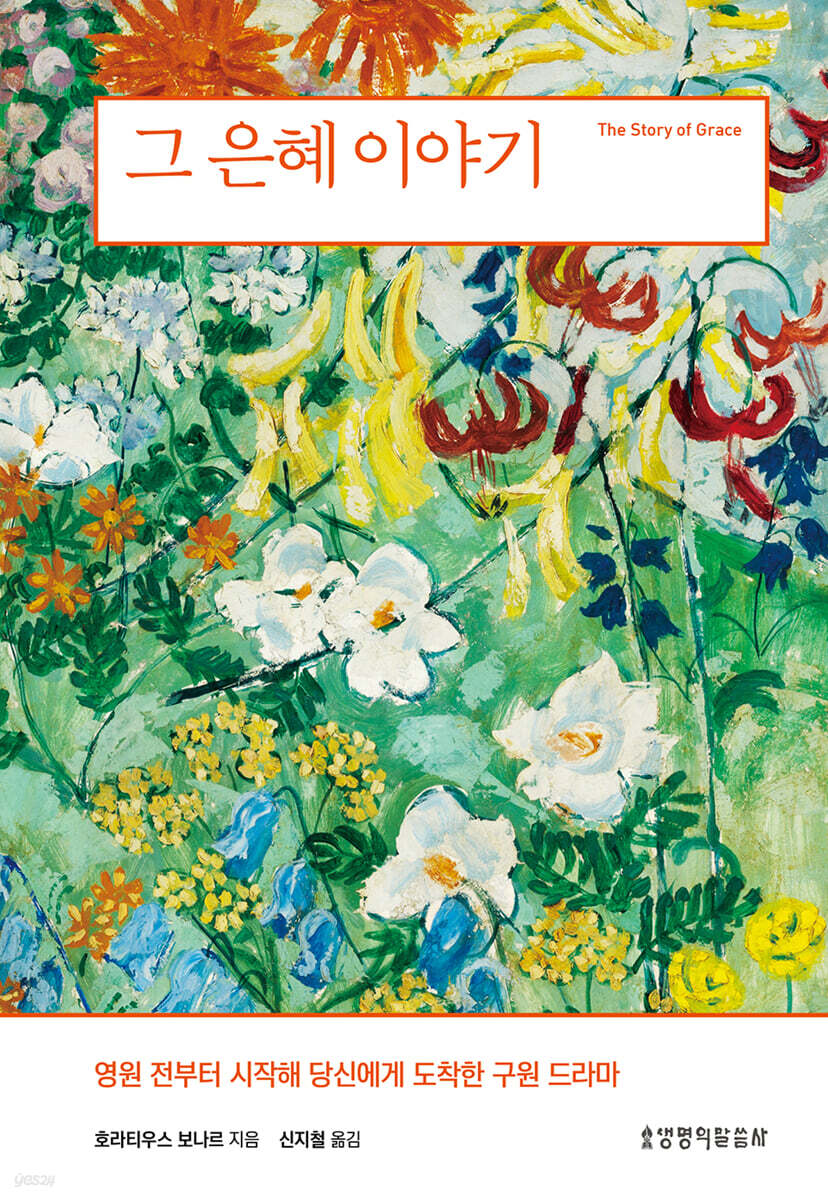 |
Description
Book Introduction
Horace Bonnard, who played a key role in the 19th-century Scottish evangelical revival movement, preaching the simple truths of the gospel with passionate sermons and beautiful poetry.
With its signature flowing style and biblical storytelling, it passionately conveys the story of creation, fall, redemption, and restoration contained in Genesis 1-3.
The theological depth and clear presentation of the gospel that can only be experienced in the classics will thrill your heart and draw you into reading the classics!
With its signature flowing style and biblical storytelling, it passionately conveys the story of creation, fall, redemption, and restoration contained in Genesis 1-3.
The theological depth and clear presentation of the gospel that can only be experienced in the classics will thrill your heart and draw you into reading the classics!
- You can preview some of the book's contents.
Preview
index
preface
1.
The Good Story God Told in Eden
2.
A person who interfered with God's story
3.
God who accomplished his purpose beyond obstacles
4.
God's Purpose Revealed
5.
The beginning of the story of grace
6.
Where the story of Grace was first told
7.
A person who tells stories of grace
8.
The first ray of grace in the story
9.
The Offspring of the Woman, the Sufferer, the Conqueror
10.
The Exile: Living by Faith
11.
Eden Left Behind: Lessons of Grace
12.
The Flame Guardian: The Lamb Before Him
13.
Two Worshippers: Cain or Abel?
1.
The Good Story God Told in Eden
2.
A person who interfered with God's story
3.
God who accomplished his purpose beyond obstacles
4.
God's Purpose Revealed
5.
The beginning of the story of grace
6.
Where the story of Grace was first told
7.
A person who tells stories of grace
8.
The first ray of grace in the story
9.
The Offspring of the Woman, the Sufferer, the Conqueror
10.
The Exile: Living by Faith
11.
Eden Left Behind: Lessons of Grace
12.
The Flame Guardian: The Lamb Before Him
13.
Two Worshippers: Cain or Abel?
Detailed image

Into the book
Again I walk along the foothills.
Wild flowers bloom in places untouched by anyone's hand and unseen by anyone's eyes.
I pick up a bunch of purple wildflowers there.
The flower that bloomed willingly, as if it had met thousands of eyes… … .
How beautiful, how perfect! But what does it tell me? It is the wisdom of God.
But is that all? By no means.
The rich colors and delicate harmonies do not merely speak of God's understanding and intelligence.
Can't you hear His heart? We won't just gaze at that purple flower and say,
“If this flower is so beautiful, how much more glorious must He be, the source of all beauty!” And we confess even more deeply:
“How deep and delicate is the heart of the One who created this world for us, making even its barren fields so beautiful and fragrant!”
In all that God has done, He has constantly been thinking of us.
It is full of consideration for our comfort, our joy, and our happiness.
In every leaf, every petal, every scent, every color, it seems as if He always had us in mind, thinking about how we could be happiest.
It was his intention to place us in the middle of his world.
In , he poured out his heart without reserve.
Only when we look at God's heart revealed through His actions do we arrive at its true meaning.
You come to understand the story his work is trying to tell.
It's a story about God's heart.
--- 「1.
From the story of goodness told by God in Eden
In this way, people cut off the good story that God had told them.
He didn't want to hear that story anymore.
He didn't think about it.
How many stories remain, and if those stories continue, how many blessings will open before them.
He turned his back on God and His voice.
As if I had already heard enough.
But God is not one to be mocked.
The story he told people was a true story.
He did not leave his words to be doubted.
God could never allow His goodness to be denied by the creatures He had made.
Moreover, God is holy.
Therefore, He could not help but hate this hideous sin.
He could not overlook this sin.
He could not remain silent as if it had nothing to do with him.
Now God had to speak in a new voice that man had never heard before.
This new voice told the man how much his actions had brought upon God's hatred.
This voice of holy wrath also had to flow out from all the creatures made by God's hands.
Until then, all creation had been bearing witness to God's goodness.
But now he began to testify to his righteousness.
Each part of creation was to speak God's message, and the whole creation was to cry out to the ears of man: … …
So the whole world (the world that had previously testified universally to God's goodness) had to say that there was not only goodness in Him.
God has another nature called 'righteousness', and He had to make it known to all creation that He loves 'righteousness' and hates 'evil'.
--- 「2.
Among those who interrupted God's story
To human eyes, the intervention of evil does not seem to be the most appropriate way to reveal God's heart.
Rather, a world where there is only light and no darkness, where there is perfect unity without discord, and where there is only holiness without sin seems to be the most suitable world for the full manifestation of God's nature.
In a perfect world, love would not be met with cold reactions or harsh suspicion.
Rather, you will be answered with complete empathy from all eyes and hearts.
The fellowship will continue without interruption.
Joy will flow purely, unmixed with anything.
And in this flow between heaven and earth, all that is good and blessed will be continually added.
If this state of affairs were to continue forever, there would surely be ample space and opportunity for God to reveal His richest treasures.
We reason rationally like this.
But in trying to design God's plan, we forget ourselves.
Such a perfect world would certainly be able to answer the following question:
“Does God love those who are like Himself?” But that love does not solve a much deeper and more difficult problem.
That is, “Does God love those who are not like Him?” God loves those who are loved and lovable.
So can He love those who do not love and are not lovable?
--- 「4.
From “God’s Purpose Revealed”
Only when we stand beside the coffin of our loved one, in front of the grave, does the love that wells up from the depths of our heart finally burst forth.
God's heart is like that too.
His mercy is poured out upon a lost world with a tender compassion that cannot be expressed in words.
The father's heart runs out to the prodigal son who is naked, hungry, and wandering.
God sighs and sheds tears for that son.
He sees.
That son has no home, no friends, and wanders away from his father's house.
He thinks of him.
He lay in poverty and rags, in filth and famine, preparing to die.
He drinks from the drunkard's glass.
Sitting among the unclean.
I sit among the sinners, a sinner among sinners, amidst the laughter that mocks holiness.
When God thinks of this sight, his heart is shaken to the core.
In his intense longing for his lost son, he almost forgets the blessed multitude that is with him.
God pities this world, which wanders and drifts so lonely.
The love that flows from His heart infinitely surpasses the affection of a father or the deepest affection of a mother.
This is grace.
That feeling of grace arises not because of the value of the object, but rather because of its worthlessness.
That feeling awakens only when faced with deprivation, misery, and sin.
Before man sinned, only God's goodness was revealed.
Soon, it was love for the good and worthy.
But after sin entered the world, God's goodness could no longer find an object on which to exert its power on this earth.
Just then, as the line receded, grace descended.
And from then on, the story of grace for the wicked began.
Just as it was a story of goodness told to sinless humans, it has now been transformed into a story of grace told to fallen humans.
--- 「5.
From “The Beginning of the Story of Grace”
The story of grace was first told in the Garden of Eden.
Soon, at the very spot where man intervened in the conversation about God's goodness and interrupted its flow.
Of course, the story was later told outside of Eden.
Because man was driven out of the garden, and the door was closed to him.
The story was a gospel that had to be preached to 'every creature under heaven' living on the whole earth.
Nevertheless, the Garden of Eden was where the story first began.
There the man sinned.
It was there that God declared forgiveness.
There man provoked God, and there God showed His grace even to such rebels.
It was after God had finished the story of grace that he 'expelled the man from Eden'.
This fact is very impressive and has deep implications.
This is not the human way.
Before the stroke of punishment fell upon the sinner, before the rod of discipline was applied to him, he must first learn how gracious is the God whom he has transgressed and rebelled against.
This in itself is grace.
Not only was it a message of love, but the way it was delivered, the tone, the timing, and the place all testified to the love contained within.
All these elements now reveal and make shine even brighter the depth of that love to which man must now listen.
In fact, even if the word had been proclaimed in a prison or a wilderness, it would have been a grace in itself.
Even so, it would have been a grace that no one could have even expected, a grace that was infinitely precious and so worthy of him.
But that grace was proclaimed right where the evil was committed, and it was given the light of even deeper mercy.
The entire scene was filled with evidence of human sin and blasphemy against God.
God could appeal to all creatures there:
“What more can I do for my vineyard that I have not done for it?” (Isaiah 5:4).
But right there, God revealed forgiveness to the sinner.
In that place where the evidence of sin surrounded him, grace came to the sinner and appeared to him.
How profound is God's compassion and mercy contained here!
Wild flowers bloom in places untouched by anyone's hand and unseen by anyone's eyes.
I pick up a bunch of purple wildflowers there.
The flower that bloomed willingly, as if it had met thousands of eyes… … .
How beautiful, how perfect! But what does it tell me? It is the wisdom of God.
But is that all? By no means.
The rich colors and delicate harmonies do not merely speak of God's understanding and intelligence.
Can't you hear His heart? We won't just gaze at that purple flower and say,
“If this flower is so beautiful, how much more glorious must He be, the source of all beauty!” And we confess even more deeply:
“How deep and delicate is the heart of the One who created this world for us, making even its barren fields so beautiful and fragrant!”
In all that God has done, He has constantly been thinking of us.
It is full of consideration for our comfort, our joy, and our happiness.
In every leaf, every petal, every scent, every color, it seems as if He always had us in mind, thinking about how we could be happiest.
It was his intention to place us in the middle of his world.
In , he poured out his heart without reserve.
Only when we look at God's heart revealed through His actions do we arrive at its true meaning.
You come to understand the story his work is trying to tell.
It's a story about God's heart.
--- 「1.
From the story of goodness told by God in Eden
In this way, people cut off the good story that God had told them.
He didn't want to hear that story anymore.
He didn't think about it.
How many stories remain, and if those stories continue, how many blessings will open before them.
He turned his back on God and His voice.
As if I had already heard enough.
But God is not one to be mocked.
The story he told people was a true story.
He did not leave his words to be doubted.
God could never allow His goodness to be denied by the creatures He had made.
Moreover, God is holy.
Therefore, He could not help but hate this hideous sin.
He could not overlook this sin.
He could not remain silent as if it had nothing to do with him.
Now God had to speak in a new voice that man had never heard before.
This new voice told the man how much his actions had brought upon God's hatred.
This voice of holy wrath also had to flow out from all the creatures made by God's hands.
Until then, all creation had been bearing witness to God's goodness.
But now he began to testify to his righteousness.
Each part of creation was to speak God's message, and the whole creation was to cry out to the ears of man: … …
So the whole world (the world that had previously testified universally to God's goodness) had to say that there was not only goodness in Him.
God has another nature called 'righteousness', and He had to make it known to all creation that He loves 'righteousness' and hates 'evil'.
--- 「2.
Among those who interrupted God's story
To human eyes, the intervention of evil does not seem to be the most appropriate way to reveal God's heart.
Rather, a world where there is only light and no darkness, where there is perfect unity without discord, and where there is only holiness without sin seems to be the most suitable world for the full manifestation of God's nature.
In a perfect world, love would not be met with cold reactions or harsh suspicion.
Rather, you will be answered with complete empathy from all eyes and hearts.
The fellowship will continue without interruption.
Joy will flow purely, unmixed with anything.
And in this flow between heaven and earth, all that is good and blessed will be continually added.
If this state of affairs were to continue forever, there would surely be ample space and opportunity for God to reveal His richest treasures.
We reason rationally like this.
But in trying to design God's plan, we forget ourselves.
Such a perfect world would certainly be able to answer the following question:
“Does God love those who are like Himself?” But that love does not solve a much deeper and more difficult problem.
That is, “Does God love those who are not like Him?” God loves those who are loved and lovable.
So can He love those who do not love and are not lovable?
--- 「4.
From “God’s Purpose Revealed”
Only when we stand beside the coffin of our loved one, in front of the grave, does the love that wells up from the depths of our heart finally burst forth.
God's heart is like that too.
His mercy is poured out upon a lost world with a tender compassion that cannot be expressed in words.
The father's heart runs out to the prodigal son who is naked, hungry, and wandering.
God sighs and sheds tears for that son.
He sees.
That son has no home, no friends, and wanders away from his father's house.
He thinks of him.
He lay in poverty and rags, in filth and famine, preparing to die.
He drinks from the drunkard's glass.
Sitting among the unclean.
I sit among the sinners, a sinner among sinners, amidst the laughter that mocks holiness.
When God thinks of this sight, his heart is shaken to the core.
In his intense longing for his lost son, he almost forgets the blessed multitude that is with him.
God pities this world, which wanders and drifts so lonely.
The love that flows from His heart infinitely surpasses the affection of a father or the deepest affection of a mother.
This is grace.
That feeling of grace arises not because of the value of the object, but rather because of its worthlessness.
That feeling awakens only when faced with deprivation, misery, and sin.
Before man sinned, only God's goodness was revealed.
Soon, it was love for the good and worthy.
But after sin entered the world, God's goodness could no longer find an object on which to exert its power on this earth.
Just then, as the line receded, grace descended.
And from then on, the story of grace for the wicked began.
Just as it was a story of goodness told to sinless humans, it has now been transformed into a story of grace told to fallen humans.
--- 「5.
From “The Beginning of the Story of Grace”
The story of grace was first told in the Garden of Eden.
Soon, at the very spot where man intervened in the conversation about God's goodness and interrupted its flow.
Of course, the story was later told outside of Eden.
Because man was driven out of the garden, and the door was closed to him.
The story was a gospel that had to be preached to 'every creature under heaven' living on the whole earth.
Nevertheless, the Garden of Eden was where the story first began.
There the man sinned.
It was there that God declared forgiveness.
There man provoked God, and there God showed His grace even to such rebels.
It was after God had finished the story of grace that he 'expelled the man from Eden'.
This fact is very impressive and has deep implications.
This is not the human way.
Before the stroke of punishment fell upon the sinner, before the rod of discipline was applied to him, he must first learn how gracious is the God whom he has transgressed and rebelled against.
This in itself is grace.
Not only was it a message of love, but the way it was delivered, the tone, the timing, and the place all testified to the love contained within.
All these elements now reveal and make shine even brighter the depth of that love to which man must now listen.
In fact, even if the word had been proclaimed in a prison or a wilderness, it would have been a grace in itself.
Even so, it would have been a grace that no one could have even expected, a grace that was infinitely precious and so worthy of him.
But that grace was proclaimed right where the evil was committed, and it was given the light of even deeper mercy.
The entire scene was filled with evidence of human sin and blasphemy against God.
God could appeal to all creatures there:
“What more can I do for my vineyard that I have not done for it?” (Isaiah 5:4).
But right there, God revealed forgiveness to the sinner.
In that place where the evidence of sin surrounded him, grace came to the sinner and appeared to him.
How profound is God's compassion and mercy contained here!
--- 「6.
From “Where the Story of Grace Was First Told”
From “Where the Story of Grace Was First Told”
Publisher's Review
The first ray of grace in Genesis 1-3
Before sin entered, the world God created spoke of God's goodness to mankind.
When sin entered, the world began to make known the righteousness of God.
And right where sin occurred, the story of God's grace began.
Horace Bonar, a central figure in the 19th-century Scottish evangelical revival, vividly portrays the central themes of Christianity—creation, fall, redemption, and restoration—in the Reformed tradition.
You will be moved to realize that the scenes in the first three chapters of the Bible that were difficult to understand were actually God's grace toward us.
Biblical storytelling that enriches the story of grace
Horace Bonnard was also a poet who left behind over 600 hymns.
Seven hymns were also included in the hymnbook published by the Korean Hymn Society.
His writings always combine sermons, poetry, doctrine, and hymns.
"The Story of Grace" is not simply a logical development, but is filled with lyrical and literary writing that touches the reader's heart.
As you read the book, each passage will soon become a prayer and a hymn, and you will experience the truth of faith deeply in your heart.
Pastoral Comfort for the Restless Soul
The 19th-century Scottish Church was full of believers who had lost their faith amid doctrinal disputes and social unrest.
Many people have been troubled by the question, “Am I saved?”
Bonnard approached these souls with the warm heart of a pastor and declared that salvation is firmly established on the grace of God.
"The Story of Grace" is not a simple theological commentary, but a pastoral letter that offers comfort and consolation to those in doubt and anxiety.
This message is still valid for Korean church members today who are in the midst of confusion over various ideologies and values.
Reader, you are now
We are facing the scene where the story of God's grace begins.
It is the truest and most blessed story ever told.
There is no exaggeration, no imaginary description.
All of this is reality, the reality of grace.
It is a word given not only to Adam, but also to you.
This message is for you from the beginning.
And depending on how you take this message,
Your forgiveness and blessings are determined.
Now, how should we take this story?
Will you listen to God who tells you this love story?
Or will we let His loving words fall like rain?
There is only one thing He wants: for you to listen.
“Come to me, listen, and your soul will live” (Isaiah 55:3).
_ From the text
▶ I recommend it!
- Christians who need the assurance of salvation and the comfort of the gospel
- Leaders and pastors looking for books to read together in the new family class or to give as gifts
- A preacher who wants to passionately spread the gospel in a way that moves the hearts of the saints.
- Christians who want to enjoy the joy of reading classics
Before sin entered, the world God created spoke of God's goodness to mankind.
When sin entered, the world began to make known the righteousness of God.
And right where sin occurred, the story of God's grace began.
Horace Bonar, a central figure in the 19th-century Scottish evangelical revival, vividly portrays the central themes of Christianity—creation, fall, redemption, and restoration—in the Reformed tradition.
You will be moved to realize that the scenes in the first three chapters of the Bible that were difficult to understand were actually God's grace toward us.
Biblical storytelling that enriches the story of grace
Horace Bonnard was also a poet who left behind over 600 hymns.
Seven hymns were also included in the hymnbook published by the Korean Hymn Society.
His writings always combine sermons, poetry, doctrine, and hymns.
"The Story of Grace" is not simply a logical development, but is filled with lyrical and literary writing that touches the reader's heart.
As you read the book, each passage will soon become a prayer and a hymn, and you will experience the truth of faith deeply in your heart.
Pastoral Comfort for the Restless Soul
The 19th-century Scottish Church was full of believers who had lost their faith amid doctrinal disputes and social unrest.
Many people have been troubled by the question, “Am I saved?”
Bonnard approached these souls with the warm heart of a pastor and declared that salvation is firmly established on the grace of God.
"The Story of Grace" is not a simple theological commentary, but a pastoral letter that offers comfort and consolation to those in doubt and anxiety.
This message is still valid for Korean church members today who are in the midst of confusion over various ideologies and values.
Reader, you are now
We are facing the scene where the story of God's grace begins.
It is the truest and most blessed story ever told.
There is no exaggeration, no imaginary description.
All of this is reality, the reality of grace.
It is a word given not only to Adam, but also to you.
This message is for you from the beginning.
And depending on how you take this message,
Your forgiveness and blessings are determined.
Now, how should we take this story?
Will you listen to God who tells you this love story?
Or will we let His loving words fall like rain?
There is only one thing He wants: for you to listen.
“Come to me, listen, and your soul will live” (Isaiah 55:3).
_ From the text
▶ I recommend it!
- Christians who need the assurance of salvation and the comfort of the gospel
- Leaders and pastors looking for books to read together in the new family class or to give as gifts
- A preacher who wants to passionately spread the gospel in a way that moves the hearts of the saints.
- Christians who want to enjoy the joy of reading classics
GOODS SPECIFICS
- Date of issue: September 24, 2025
- Page count, weight, size: 232 pages | 346g | 135*195*18mm
- ISBN13: 9788904169375
- ISBN10: 8904169372
You may also like
카테고리
korean


korean

![ELLE 엘르 스페셜 에디션 A형 : 12월 [2025]](http://librairie.coreenne.fr/cdn/shop/files/b8e27a3de6c9538896439686c6b0e8fb.jpg?v=1766436872&width=3840)


