

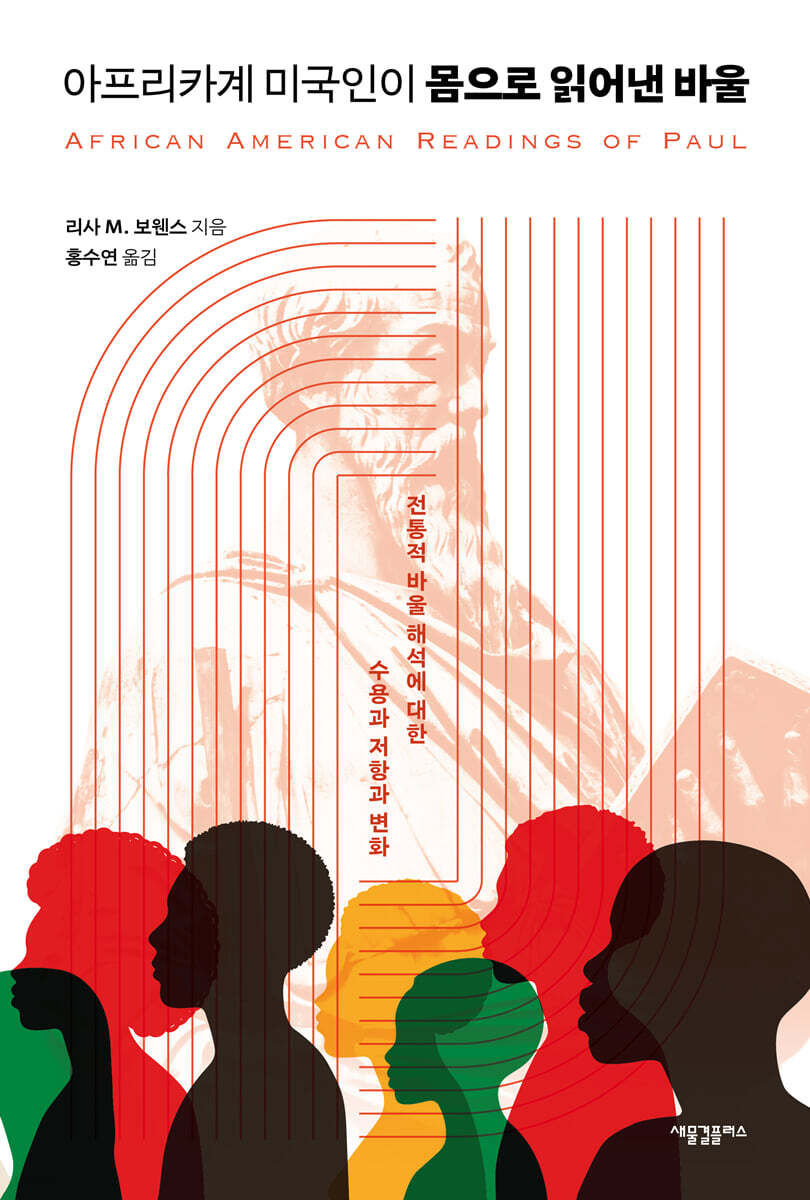
Paul as read by African Americans
 |
Description
Book Introduction
“In the midst of the suffering and hope of black people, Paul became a companion of liberation.”
『Paul Read Through the Body by African Americans』 is not simply a book that records a scene from the past.
Opening a new chapter in the history of biblical reception, it revives the legacy of African American faith and intellect for today's readers.
The author asks us:
How should we read the Bible in an age of oppression and discrimination?
Lisa Bowen's insightful account of the African American struggle and faith surrounding the Apostle Paul offers remarkable insight.
This book spans slavery and the civil rights movement, and powerfully conveys the voices of the Black community who revived Paul as a language of liberation.
Academically outstanding and narratively powerful, this book is a must-read for theological scholars, pastors, and all readers who yearn for justice and liberation.
Paul is no longer a symbol of oppression, but is reborn as a witness to liberation that overthrows oppression.
"Paul: A Brief History of African Americans" is a masterpiece that captures that remarkable journey.
『Paul Read Through the Body by African Americans』 is not simply a book that records a scene from the past.
Opening a new chapter in the history of biblical reception, it revives the legacy of African American faith and intellect for today's readers.
The author asks us:
How should we read the Bible in an age of oppression and discrimination?
Lisa Bowen's insightful account of the African American struggle and faith surrounding the Apostle Paul offers remarkable insight.
This book spans slavery and the civil rights movement, and powerfully conveys the voices of the Black community who revived Paul as a language of liberation.
Academically outstanding and narratively powerful, this book is a must-read for theological scholars, pastors, and all readers who yearn for justice and liberation.
Paul is no longer a symbol of oppression, but is reborn as a witness to liberation that overthrows oppression.
"Paul: A Brief History of African Americans" is a masterpiece that captures that remarkable journey.
- You can preview some of the book's contents.
Preview
index
Preface_ Emerson B.
Powerly
introduction
Introduction: An African American Hermeneutic of Paul
Chapter 1: From the early 18th century to the early 19th century
Chapter 2: From the mid-19th century to the late 19th century
Chapter 3: From the late 19th century to the mid-20th century
Chapter 4: Paul's Language in the Story of a Slave's Conversion Experience and Calling
Chapter 5: African American Hermeneutics of Paul and the Art of Biblical Interpretation
Conclusion_ Beverly Roberts Gaventa
References
Powerly
introduction
Introduction: An African American Hermeneutic of Paul
Chapter 1: From the early 18th century to the early 19th century
Chapter 2: From the mid-19th century to the late 19th century
Chapter 3: From the late 19th century to the mid-20th century
Chapter 4: Paul's Language in the Story of a Slave's Conversion Experience and Calling
Chapter 5: African American Hermeneutics of Paul and the Art of Biblical Interpretation
Conclusion_ Beverly Roberts Gaventa
References
Into the book
In this passage, Walker borrows and varies Paul's body metaphor with the expression “the salvation of our whole body.”
Here, “the whole body” refers to the entire black community, and salvation encompasses spiritual, mental, and physical liberation from slavery.
Walker previously understood sin not simply as an individual problem but also at a social and national level, and saw sin as being revealed in the divisions of the community.
Likewise, here he does not confine salvation to a mere matter of the individual soul, but expands it to a more comprehensive and collective concept that includes physical liberation from slavery.
Free Negroes must not remain confined to their own liberation, but must work together for the freedom of their still oppressed brothers and sisters.
Whether free or slave, they all form one body.
Paul's language emphasizes that the Black community is united as one body, revealing that Black people are a community that must stand in solidarity for each other's liberation and life.
Walker also emphasizes both divine initiative and human responsibility in the process of liberation.
“God will do it,” but at the same time, African Americans must “work hard” and, in keeping with the prophetic tradition, “prepare the way of the Lord.” According to Walker, liberation and freedom are a joint task of God and humanity.
It is never the work of God alone, nor is it something that can be done through human effort alone.
--- From “Chapter 1, From the Early 18th Century to the Early 19th Century”
Jacobs's purpose in writing was to expose the horrors of slavery suffered by African Americans in general, and women in particular, to women in the North.100 The sexual abuse suffered by African women was not generally acknowledged or discussed openly, as the topic was considered too sensitive and uncomfortable.
In this context, it becomes clear that Jacobs hoped that white women in the North would feel solidarity with African women in the South. Lydia Maria Child, a prominent female writer and abolitionist of the time, helped edit Jacobs' autobiography and publicly expressed her support in the book's preface.
Childe was aware that Jacobs's candid and frank portrayal of the sexual abuse suffered by female slaves might strike some readers as inappropriate or overly graphic.
Nonetheless, she saw the revelation of these truths as an urgent and inevitable task, and she gladly accepted the role she would play in bringing this story to the world.
--- From "Chapter 2, From the Mid-19th Century to the Late 19th Century"
Furthermore, according to Martin Luther King's understanding that "the Christian gospel is a gospel that seeks social change religiously and morally," humans are God's co-workers and are beings who cooperate with God to realize that change on this earth.
Justice and liberation cannot be achieved through human effort alone or through God's intervention alone.
King, citing Paul's expression "co-workers with God," emphasizes that change is achieved through cooperation between God and humans.
When a person becomes a new creation, the change that begins within ultimately leads to a change in the external world.
The need for this divine-human collaboration is particularly evident in what King recalls as one of the most difficult moments of his life: the incident that followed the phone call that threatened his life.
It felt like all my fears were coming at me at once.
I reached a point where I could no longer endure it… My courage was almost exhausted, and my body and mind were exhausted.
At that time, I decided to leave this matter to God.
I sat down at the table, my head buried in my hands, and prayed loudly to God.
The prayer I offered to God around midnight that day is still vivid in my memory.
“I take a firm stance on what I believe is right and act accordingly.
But now I'm afraid.
People look to me for leadership, but if I stand before them without strength or courage, they too will waver.
My strength is almost depleted now.
I have nothing left.
“I can no longer handle this on my own.” At that moment, I deeply experienced God’s presence like I had never experienced before.
It was as if a quiet voice from within was reassuring me.
“Stand up for righteousness.
Stand up for the truth.
“God will be with you forever.”… From then on, the uncertainty within me disappeared, and I was ready to face any situation.
Although my external circumstances had not changed at all, God gave me inner peace.
--- From "Chapter 3, Late 19th Century to Mid 20th Century"
This brief discussion of how Paul's language was received and what function it served in the conversion and calling narratives of enslaved Africans demonstrates that the apostolic language provided a crucial interpretive framework for Black people to understand God and recognize His power at work on their behalf.
Indeed, biblical language and imagery permeate this conversion story, giving us a glimpse into the specific acts of God intervening in the lives of the enslaved.
As Cheryl Sanders points out, “[The slaves] believed that God, who had transformed their sinful souls through their conversion experience, would also transform the sinful structures of society.
“The God who freed their souls from sin could surely free their bodies from slavery as well.” Sanders’ insight shows that the enslaved people clearly recognized the intimate connection inherent between spiritual and physical freedom.
For them, these two were never separable.
Paul and his experiences served as a “prototype of faith” for African Americans within these conversion narratives.
The same God who dealt with Paul, called him on the road to Damascus, and led him to the third heaven, was at work in their lives as well.
This divine encounter strengthened their dignity and self-esteem, and challenged the idea that slavery defined their existence.
In fact, they were privileged to see visions and were permitted, through God's sovereign intervention, to see and hear the transcendent reality that unfolded beyond them.
Paul's language not only provided them with a theological vocabulary that allowed them to connect their own experiences with his, but also gave them the agency to accept and interpret those experiences as their own.
--- From “Paul’s Language in Chapter 4: The Story of the Slave’s Conversion Experience and Calling”
Throughout this volume, we have traced the importance of bodily hermeneutics in African American interpretations of Paul and examined how this hermeneutics manifests itself in the writings of these interpreters in a variety of ways.
This hermeneutics of the body is formed around two questions that interpreters ask Paul.
The question is, “Can my black body interpret Paul?” and “Can Paul interpret my black body?”
As we have seen, these questions have generated a wide variety of responses, some of which include:
In a context where the message that enslaved people must obey their slave owners to obtain salvation was constantly repeated, Hammon used Paul's text to argue that African Americans must work out their own salvation (Philippians 2:12) and actively use their bodies to do so.
Through the passage, “For you shall confess with your mouth that Jesus is Lord,” and “for you shall believe with your heart and be justified” (Romans 10:9-10), the importance of the black body in the process of salvation is emphasized along with the subjectivity of black people.
Furthermore, the fact that African Americans are included in Paul's resurrection language of "we will all be changed" (1 Cor. 15:51) serves as a theological affirmation that black bodies also belong to God and are considered objects of divine transformation.
Here, “the whole body” refers to the entire black community, and salvation encompasses spiritual, mental, and physical liberation from slavery.
Walker previously understood sin not simply as an individual problem but also at a social and national level, and saw sin as being revealed in the divisions of the community.
Likewise, here he does not confine salvation to a mere matter of the individual soul, but expands it to a more comprehensive and collective concept that includes physical liberation from slavery.
Free Negroes must not remain confined to their own liberation, but must work together for the freedom of their still oppressed brothers and sisters.
Whether free or slave, they all form one body.
Paul's language emphasizes that the Black community is united as one body, revealing that Black people are a community that must stand in solidarity for each other's liberation and life.
Walker also emphasizes both divine initiative and human responsibility in the process of liberation.
“God will do it,” but at the same time, African Americans must “work hard” and, in keeping with the prophetic tradition, “prepare the way of the Lord.” According to Walker, liberation and freedom are a joint task of God and humanity.
It is never the work of God alone, nor is it something that can be done through human effort alone.
--- From “Chapter 1, From the Early 18th Century to the Early 19th Century”
Jacobs's purpose in writing was to expose the horrors of slavery suffered by African Americans in general, and women in particular, to women in the North.100 The sexual abuse suffered by African women was not generally acknowledged or discussed openly, as the topic was considered too sensitive and uncomfortable.
In this context, it becomes clear that Jacobs hoped that white women in the North would feel solidarity with African women in the South. Lydia Maria Child, a prominent female writer and abolitionist of the time, helped edit Jacobs' autobiography and publicly expressed her support in the book's preface.
Childe was aware that Jacobs's candid and frank portrayal of the sexual abuse suffered by female slaves might strike some readers as inappropriate or overly graphic.
Nonetheless, she saw the revelation of these truths as an urgent and inevitable task, and she gladly accepted the role she would play in bringing this story to the world.
--- From "Chapter 2, From the Mid-19th Century to the Late 19th Century"
Furthermore, according to Martin Luther King's understanding that "the Christian gospel is a gospel that seeks social change religiously and morally," humans are God's co-workers and are beings who cooperate with God to realize that change on this earth.
Justice and liberation cannot be achieved through human effort alone or through God's intervention alone.
King, citing Paul's expression "co-workers with God," emphasizes that change is achieved through cooperation between God and humans.
When a person becomes a new creation, the change that begins within ultimately leads to a change in the external world.
The need for this divine-human collaboration is particularly evident in what King recalls as one of the most difficult moments of his life: the incident that followed the phone call that threatened his life.
It felt like all my fears were coming at me at once.
I reached a point where I could no longer endure it… My courage was almost exhausted, and my body and mind were exhausted.
At that time, I decided to leave this matter to God.
I sat down at the table, my head buried in my hands, and prayed loudly to God.
The prayer I offered to God around midnight that day is still vivid in my memory.
“I take a firm stance on what I believe is right and act accordingly.
But now I'm afraid.
People look to me for leadership, but if I stand before them without strength or courage, they too will waver.
My strength is almost depleted now.
I have nothing left.
“I can no longer handle this on my own.” At that moment, I deeply experienced God’s presence like I had never experienced before.
It was as if a quiet voice from within was reassuring me.
“Stand up for righteousness.
Stand up for the truth.
“God will be with you forever.”… From then on, the uncertainty within me disappeared, and I was ready to face any situation.
Although my external circumstances had not changed at all, God gave me inner peace.
--- From "Chapter 3, Late 19th Century to Mid 20th Century"
This brief discussion of how Paul's language was received and what function it served in the conversion and calling narratives of enslaved Africans demonstrates that the apostolic language provided a crucial interpretive framework for Black people to understand God and recognize His power at work on their behalf.
Indeed, biblical language and imagery permeate this conversion story, giving us a glimpse into the specific acts of God intervening in the lives of the enslaved.
As Cheryl Sanders points out, “[The slaves] believed that God, who had transformed their sinful souls through their conversion experience, would also transform the sinful structures of society.
“The God who freed their souls from sin could surely free their bodies from slavery as well.” Sanders’ insight shows that the enslaved people clearly recognized the intimate connection inherent between spiritual and physical freedom.
For them, these two were never separable.
Paul and his experiences served as a “prototype of faith” for African Americans within these conversion narratives.
The same God who dealt with Paul, called him on the road to Damascus, and led him to the third heaven, was at work in their lives as well.
This divine encounter strengthened their dignity and self-esteem, and challenged the idea that slavery defined their existence.
In fact, they were privileged to see visions and were permitted, through God's sovereign intervention, to see and hear the transcendent reality that unfolded beyond them.
Paul's language not only provided them with a theological vocabulary that allowed them to connect their own experiences with his, but also gave them the agency to accept and interpret those experiences as their own.
--- From “Paul’s Language in Chapter 4: The Story of the Slave’s Conversion Experience and Calling”
Throughout this volume, we have traced the importance of bodily hermeneutics in African American interpretations of Paul and examined how this hermeneutics manifests itself in the writings of these interpreters in a variety of ways.
This hermeneutics of the body is formed around two questions that interpreters ask Paul.
The question is, “Can my black body interpret Paul?” and “Can Paul interpret my black body?”
As we have seen, these questions have generated a wide variety of responses, some of which include:
In a context where the message that enslaved people must obey their slave owners to obtain salvation was constantly repeated, Hammon used Paul's text to argue that African Americans must work out their own salvation (Philippians 2:12) and actively use their bodies to do so.
Through the passage, “For you shall confess with your mouth that Jesus is Lord,” and “for you shall believe with your heart and be justified” (Romans 10:9-10), the importance of the black body in the process of salvation is emphasized along with the subjectivity of black people.
Furthermore, the fact that African Americans are included in Paul's resurrection language of "we will all be changed" (1 Cor. 15:51) serves as a theological affirmation that black bodies also belong to God and are considered objects of divine transformation.
--- From “Chapter 5 African American Hermeneutics of Paul and the Art of Biblical Interpretation”
Publisher's Review
The Apostle Paul was the most controversial biblical figure in African American history.
White people who justified harsh slavery and racial discrimination forced subservience on black people by citing Paul's letters, especially the passage "Servants, obey your masters."
But African Americans read the same apostle's language in the opposite way.
To them, Paul was not a figure who subjected them to oppression and discrimination, but a companion who proclaimed freedom, dignity, and liberation.
Princeton Theological Seminary New Testament scholar Lisa M.
In this book, Bowen meticulously traces the Bible, especially Paul's, as read through the bodies of African Americans from the colonial era in the early 18th century to the civil rights movement in the mid-20th century.
In the harsh realities of slavery and racial discrimination, the Bible and Paul were sometimes used as tools of oppression and at other times as weapons of resistance.
For many years, white preachers insisted that first, God created white people, and then Satan copied him and created black people; second, black people are descendants of Ham, who was cursed by Noah, and therefore should serve white people; third, black people do not have souls and therefore cannot be saved and go to heaven; and fourth, it is God's will that servants and slaves serve their masters.
But in response, black Christians somehow managed to read the Bible on their own, realizing that the origins of human conflict, division, oppression, and exploitation did not come from Noah's family, but from Adam, and that the salvation of Jesus Christ on the cross liberates and unites all humanity.
And this realization creates the power to overturn the narrative of white domination by restoring the original voice of Scripture, especially Paul.
The author vividly documents this through meticulous analysis of the petitions and sermons of early Black preachers such as Jupiter Hammon and Lemuel Haynes, slave narratives and conversion stories, and the visions and testimonies of Black women believers such as John Gia, Jarena Lee, and Zilpha Ilo.
And these materials eloquently demonstrate that Paul was not just an ancient apostle, but a living, breathing speaker amidst oppression and resistance, suffering and hope.
In particular, Bowen focuses on the “hermeneutics of the body” of black people.
Those who could not learn to read and write read Paul's words anew through dreams, visions, and experiences of the Holy Spirit coming upon their bodies, and built a community under the authority of the Holy Spirit.
Their interpretations gave a powerful voice to those who had been silenced within white society and patriarchal church structures.
This journey ultimately led to the civil rights movement of the mid-20th century.
Martin Luther King Jr. was also a preacher who deeply loved Paul.
In letters and speeches written from prison, he presented Paul as a model for believers who resisted oppression and practiced justice, extending Paul's language to the language of American democracy and the struggle for human rights.
For King, Paul was no longer an ancient figure, but a fellow worker leading the “march to freedom.”
『Paul Read Through the Body by African Americans』 is not simply a book that records a scene from the past.
Opening a new chapter in the history of biblical reception, it revives the legacy of African American faith and intellect for today's readers.
The author asks us:
How should we read the Bible in an age of oppression and discrimination?
Lisa Bowen's insightful account of the African American struggle and faith surrounding the Apostle Paul provides remarkable insight.
This book spans slavery and the civil rights movement, and powerfully conveys the voices of the Black community who revived Paul as a language of liberation.
Academically outstanding and narratively powerful, this book is a must-read for theological scholars, pastors, and all readers who yearn for justice and liberation.
Paul is no longer a symbol of oppression, but is reborn as a witness to liberation that overthrows oppression.
"Paul: A Brief History of African Americans" is a masterpiece that captures that remarkable journey.
White people who justified harsh slavery and racial discrimination forced subservience on black people by citing Paul's letters, especially the passage "Servants, obey your masters."
But African Americans read the same apostle's language in the opposite way.
To them, Paul was not a figure who subjected them to oppression and discrimination, but a companion who proclaimed freedom, dignity, and liberation.
Princeton Theological Seminary New Testament scholar Lisa M.
In this book, Bowen meticulously traces the Bible, especially Paul's, as read through the bodies of African Americans from the colonial era in the early 18th century to the civil rights movement in the mid-20th century.
In the harsh realities of slavery and racial discrimination, the Bible and Paul were sometimes used as tools of oppression and at other times as weapons of resistance.
For many years, white preachers insisted that first, God created white people, and then Satan copied him and created black people; second, black people are descendants of Ham, who was cursed by Noah, and therefore should serve white people; third, black people do not have souls and therefore cannot be saved and go to heaven; and fourth, it is God's will that servants and slaves serve their masters.
But in response, black Christians somehow managed to read the Bible on their own, realizing that the origins of human conflict, division, oppression, and exploitation did not come from Noah's family, but from Adam, and that the salvation of Jesus Christ on the cross liberates and unites all humanity.
And this realization creates the power to overturn the narrative of white domination by restoring the original voice of Scripture, especially Paul.
The author vividly documents this through meticulous analysis of the petitions and sermons of early Black preachers such as Jupiter Hammon and Lemuel Haynes, slave narratives and conversion stories, and the visions and testimonies of Black women believers such as John Gia, Jarena Lee, and Zilpha Ilo.
And these materials eloquently demonstrate that Paul was not just an ancient apostle, but a living, breathing speaker amidst oppression and resistance, suffering and hope.
In particular, Bowen focuses on the “hermeneutics of the body” of black people.
Those who could not learn to read and write read Paul's words anew through dreams, visions, and experiences of the Holy Spirit coming upon their bodies, and built a community under the authority of the Holy Spirit.
Their interpretations gave a powerful voice to those who had been silenced within white society and patriarchal church structures.
This journey ultimately led to the civil rights movement of the mid-20th century.
Martin Luther King Jr. was also a preacher who deeply loved Paul.
In letters and speeches written from prison, he presented Paul as a model for believers who resisted oppression and practiced justice, extending Paul's language to the language of American democracy and the struggle for human rights.
For King, Paul was no longer an ancient figure, but a fellow worker leading the “march to freedom.”
『Paul Read Through the Body by African Americans』 is not simply a book that records a scene from the past.
Opening a new chapter in the history of biblical reception, it revives the legacy of African American faith and intellect for today's readers.
The author asks us:
How should we read the Bible in an age of oppression and discrimination?
Lisa Bowen's insightful account of the African American struggle and faith surrounding the Apostle Paul provides remarkable insight.
This book spans slavery and the civil rights movement, and powerfully conveys the voices of the Black community who revived Paul as a language of liberation.
Academically outstanding and narratively powerful, this book is a must-read for theological scholars, pastors, and all readers who yearn for justice and liberation.
Paul is no longer a symbol of oppression, but is reborn as a witness to liberation that overthrows oppression.
"Paul: A Brief History of African Americans" is a masterpiece that captures that remarkable journey.
GOODS SPECIFICS
- Date of issue: September 15, 2025
- Page count, weight, size: 606 pages | 152*225*35mm
- ISBN13: 9791161293059
- ISBN10: 1161293051
You may also like
카테고리
korean


korean

![ELLE 엘르 스페셜 에디션 A형 : 12월 [2025]](http://librairie.coreenne.fr/cdn/shop/files/b8e27a3de6c9538896439686c6b0e8fb.jpg?v=1766436872&width=3840)


