

God who became human
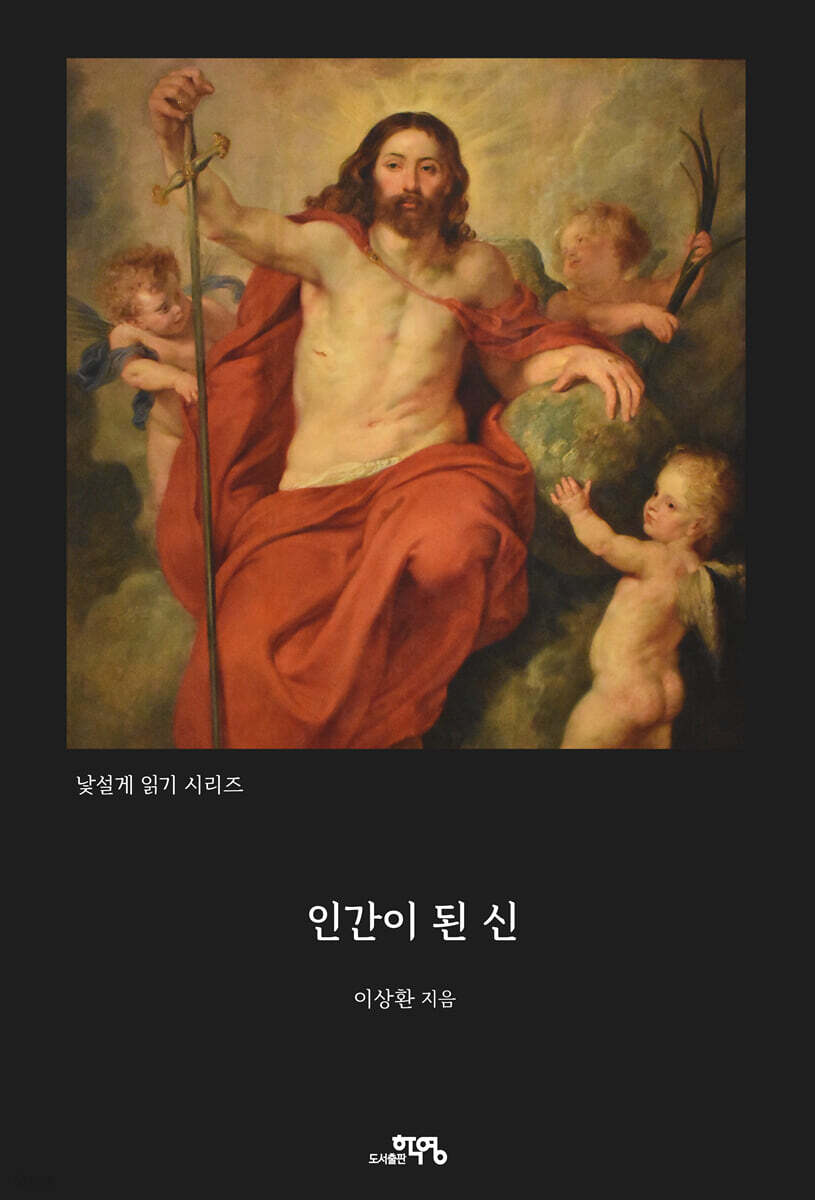 |
Description
Book Introduction
Reading Unfamiliarly Series Volume 1
"God Became Human: A Stranger Reading of the Incarnation of Jesus" is a theological exploration that sheds new light on the Incarnation, the core of the gospel that has become so familiar.
Professor Lee Sang-hwan attempts to read the incarnation of Jesus in a ‘strange’ way, using the cultural background of ancient Greco-Roman mythology as a lens.
Unlike myths where gods appeared only as humans, Jesus actually became human, and even his name was the ordinary 'Jesus'.
The author explains the radical and revolutionary truth of the gospel in a moving and persuasive way.
This book is not a simple doctrinal commentary; it is a journey that shakes our common sense and familiarity and allows us to rediscover the wonder of the gospel.
I highly recommend this book to readers who want to gain a new understanding of the incarnation and to those who want to rekindle their faith.
"God Became Human: A Stranger Reading of the Incarnation of Jesus" is a theological exploration that sheds new light on the Incarnation, the core of the gospel that has become so familiar.
Professor Lee Sang-hwan attempts to read the incarnation of Jesus in a ‘strange’ way, using the cultural background of ancient Greco-Roman mythology as a lens.
Unlike myths where gods appeared only as humans, Jesus actually became human, and even his name was the ordinary 'Jesus'.
The author explains the radical and revolutionary truth of the gospel in a moving and persuasive way.
This book is not a simple doctrinal commentary; it is a journey that shakes our common sense and familiarity and allows us to rediscover the wonder of the gospel.
I highly recommend this book to readers who want to gain a new understanding of the incarnation and to those who want to rekindle their faith.
- You can preview some of the book's contents.
Preview
index
Prologue: The Incarnation Seen Unfamiliarly, a New Encounter with Jesus 15
Chapter 1: The Mythical Gate to Truth 23
Chapter 2: God's Visit 57
Chapter 3: A Whole Different Kind of Manifestation 79
Chapter 4: God Becomes Paper 103
Chapter 5: Jesus, That Common Name 125
Chapter 6: The Son of Virgo 155
Chapter 7: In That Dark and Desolate Night 185
Epilogue: The Open Path to the Mystery of Jesus 209
Small Group Sharing 215
Chapter 1: The Mythical Gate to Truth 23
Chapter 2: God's Visit 57
Chapter 3: A Whole Different Kind of Manifestation 79
Chapter 4: God Becomes Paper 103
Chapter 5: Jesus, That Common Name 125
Chapter 6: The Son of Virgo 155
Chapter 7: In That Dark and Desolate Night 185
Epilogue: The Open Path to the Mystery of Jesus 209
Small Group Sharing 215
Detailed image
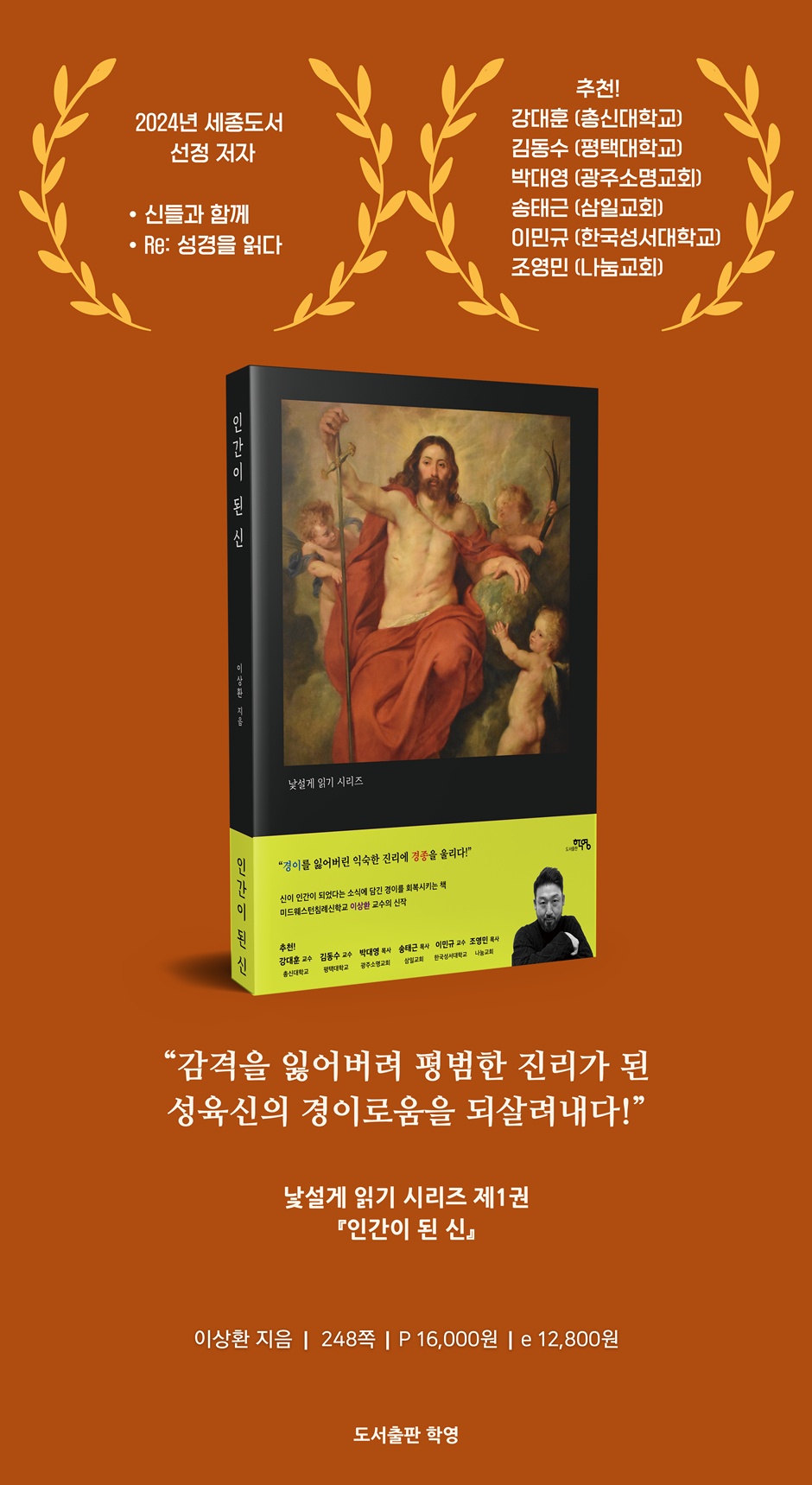
Into the book
When I was in middle school, I had a friend who was scolded severely by the pastor for spreading Greco-Roman mythology at church.
He was a notorious bookworm.
I devoured books of all genres, and after lunch, I would go down to the underground chapel and savor mythological stories while waiting for the service.
Then one day, I caught the pastor's eye.
“Myths are stories of idols.
“God is not pleased with reading myths.” The preacher’s voice was firm, and the air in the chapel froze for a moment.
As I watched the scene from the front, I felt that the myth was a forbidden book that Christians should not approach, like a book of the devil.
After that, the pastor started searching through our bags to see if there were any other banned books.
Some kids were caught and given 'red tags', which we looked at as a sign of guilt.
At that time, such things were justified under the name of “faith.”
Some parents and teachers who witnessed the evangelist's actions held him up as a defender of the faith, and his censorship was seen as a ritual performed by a priest guarding a temple.
--- p.28
The tradition of Zeus and Hermes appearing together in the human world was by no means welcome news.
Their visit was a prelude to testing and judgment, a warning that soon there would be a blessed few and a perishing many.
Now, with this story in mind, let us reread the account in the Acts of the Apostles.
Modern people might note Paul's healing miracles, but the ancients would have noted that Paul and Barnabas were mistaken for Hermes and Zeus.
This meant that the gods of destruction had appeared in Lystra, and therefore it was an ominous sign that a great judgment would soon come.
“Papa-baba night!” Can’t you hear Beethoven’s “Symphony No. 5”?
--- p.64
We often believe that paradise or heaven, where believers go when they die, is a place where there are no tears or pain, but only peace and happiness.
But this is only a half-baked concept.
Surprisingly, the Bible shows that even among the saints who are embraced by God, there are those who do not enjoy complete rest.
Let's take a look at that shocking scene.
(Quote from Revelation 6:9-11) Here an amazing scene unfolds.
The souls beneath God's altar, the "souls of those who have been slain," are overcome with injustice.
Isn't that strange? We've been learning.
The souls of saints who have gone to the afterlife are only joyful, happy, and glad.
Heaven is a place where there are no tears, no worries, and no resentment.
But what is this? The souls appearing in the text still feel aggrieved, sigh, and cry out.
They are urging God to judge and demanding justice.
“God, how long must we wait?”, “When will those who killed us be judged?”, “When will you avenge our blood?”
--- p.170~171
It is no coincidence that the news of Jesus' birth was first delivered to the shepherds.
It was a revelation from God that had profound meaning.
Let us recall the shepherds who appear in ‘Pastoral’.
They were not simply herders of sheep in the fields.
They were symbols of the oppressed and the underprivileged.
Widows, orphans, the marginalized, and the oppressed, they were all united under the name of the Shepherd.
They held sheep's staffs in their hands, but their lives were no different from those taken away by their rulers.
But God came to them first.
He sent his angels to be the first to spread the good news that would shake the whole world.
Why a shepherd, of all people? Let's examine the meaning of this question by examining the Pastoral Song and the Gospel of Luke together.
Luke 2:1-21 does not give any details about the shepherds' identities or backgrounds.
This suggests that the “shepherd” in the text may not be a simple occupation, but may have a deeper symbolism.
He was a notorious bookworm.
I devoured books of all genres, and after lunch, I would go down to the underground chapel and savor mythological stories while waiting for the service.
Then one day, I caught the pastor's eye.
“Myths are stories of idols.
“God is not pleased with reading myths.” The preacher’s voice was firm, and the air in the chapel froze for a moment.
As I watched the scene from the front, I felt that the myth was a forbidden book that Christians should not approach, like a book of the devil.
After that, the pastor started searching through our bags to see if there were any other banned books.
Some kids were caught and given 'red tags', which we looked at as a sign of guilt.
At that time, such things were justified under the name of “faith.”
Some parents and teachers who witnessed the evangelist's actions held him up as a defender of the faith, and his censorship was seen as a ritual performed by a priest guarding a temple.
--- p.28
The tradition of Zeus and Hermes appearing together in the human world was by no means welcome news.
Their visit was a prelude to testing and judgment, a warning that soon there would be a blessed few and a perishing many.
Now, with this story in mind, let us reread the account in the Acts of the Apostles.
Modern people might note Paul's healing miracles, but the ancients would have noted that Paul and Barnabas were mistaken for Hermes and Zeus.
This meant that the gods of destruction had appeared in Lystra, and therefore it was an ominous sign that a great judgment would soon come.
“Papa-baba night!” Can’t you hear Beethoven’s “Symphony No. 5”?
--- p.64
We often believe that paradise or heaven, where believers go when they die, is a place where there are no tears or pain, but only peace and happiness.
But this is only a half-baked concept.
Surprisingly, the Bible shows that even among the saints who are embraced by God, there are those who do not enjoy complete rest.
Let's take a look at that shocking scene.
(Quote from Revelation 6:9-11) Here an amazing scene unfolds.
The souls beneath God's altar, the "souls of those who have been slain," are overcome with injustice.
Isn't that strange? We've been learning.
The souls of saints who have gone to the afterlife are only joyful, happy, and glad.
Heaven is a place where there are no tears, no worries, and no resentment.
But what is this? The souls appearing in the text still feel aggrieved, sigh, and cry out.
They are urging God to judge and demanding justice.
“God, how long must we wait?”, “When will those who killed us be judged?”, “When will you avenge our blood?”
--- p.170~171
It is no coincidence that the news of Jesus' birth was first delivered to the shepherds.
It was a revelation from God that had profound meaning.
Let us recall the shepherds who appear in ‘Pastoral’.
They were not simply herders of sheep in the fields.
They were symbols of the oppressed and the underprivileged.
Widows, orphans, the marginalized, and the oppressed, they were all united under the name of the Shepherd.
They held sheep's staffs in their hands, but their lives were no different from those taken away by their rulers.
But God came to them first.
He sent his angels to be the first to spread the good news that would shake the whole world.
Why a shepherd, of all people? Let's examine the meaning of this question by examining the Pastoral Song and the Gospel of Luke together.
Luke 2:1-21 does not give any details about the shepherds' identities or backgrounds.
This suggests that the “shepherd” in the text may not be a simple occupation, but may have a deeper symbolism.
--- p.202~203
Publisher's Review
[characteristic]
(1) A new work by Professor Lee Sang-hwan of Midwestern Baptist Theological Seminary in the United States
(2) 2024 Sejong Books Liberal Arts Category Selection Book: New Book by the Author of “Re: Reading the Bible” and “With the Gods”
(3) Volume 1 of the 5-volume Reading Unfamiliar series
(1) A new work by Professor Lee Sang-hwan of Midwestern Baptist Theological Seminary in the United States
(2) 2024 Sejong Books Liberal Arts Category Selection Book: New Book by the Author of “Re: Reading the Bible” and “With the Gods”
(3) Volume 1 of the 5-volume Reading Unfamiliar series
GOODS SPECIFICS
- Date of issue: August 20, 2025
- Page count, weight, size: 248 pages | 140*206*20mm
- ISBN13: 9791193931110
- ISBN10: 1193931118
You may also like
카테고리
korean


korean

![ELLE 엘르 스페셜 에디션 A형 : 12월 [2025]](http://librairie.coreenne.fr/cdn/shop/files/b8e27a3de6c9538896439686c6b0e8fb.jpg?v=1766436872&width=3840)


