

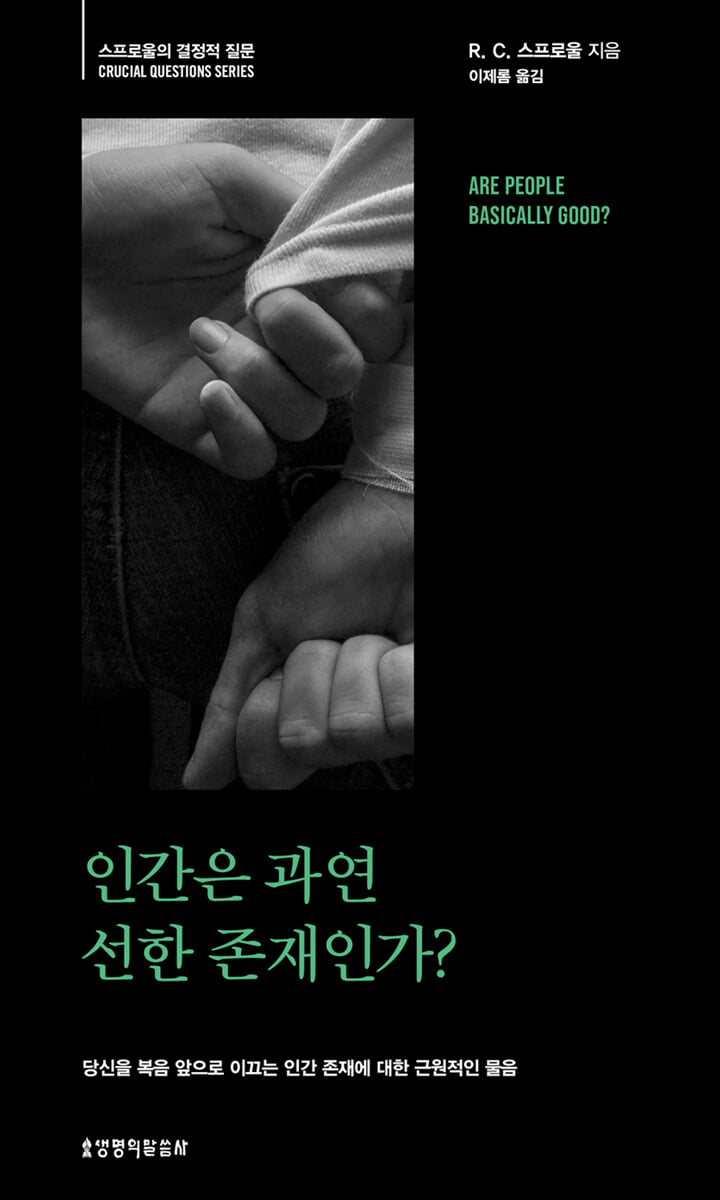
Are humans truly good beings?
 |
Description
Book Introduction
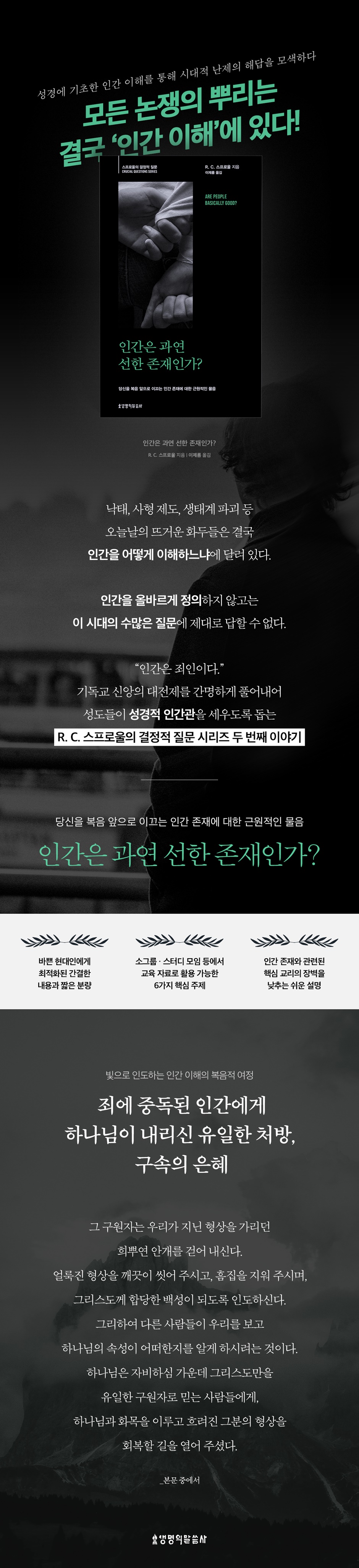
One keyword that permeates all issues: "understanding humanity."
We live in an age where the meaning of human existence is being shaken by the rapid advancement of technology and the expansion of relativism.
Today's hot topics, such as abortion, the death penalty, and the destruction of the ecosystem, ultimately depend on how we understand humans.
Without properly defining humanity, we cannot properly answer the many questions of our time.
This book will serve as an excellent guide for those who wish to establish the meaning of human existence based on the Bible.
We live in an age where the meaning of human existence is being shaken by the rapid advancement of technology and the expansion of relativism.
Today's hot topics, such as abortion, the death penalty, and the destruction of the ecosystem, ultimately depend on how we understand humans.
Without properly defining humanity, we cannot properly answer the many questions of our time.
This book will serve as an excellent guide for those who wish to establish the meaning of human existence based on the Bible.
index
01 - Humans, the pinnacle of paradox
02 - Humanity, the Image of God
03 - The Duality of Humanity
04 - The Reality of Our Sin
05 - The Depth of Our Sin
06 - The extent of our sin
02 - Humanity, the Image of God
03 - The Duality of Humanity
04 - The Reality of Our Sin
05 - The Depth of Our Sin
06 - The extent of our sin
Detailed image
Into the book
In the Christian faith, the meaning of being human is understood through the lens of the Bible.
The central question about what kind of being a human being is also found in the Bible.
David asks:
“What is man that you are mindful of him, the son of man that you care for him?” (Psalm 8:4).
Note that David's question is not just about people, but about their relationship with God.
--- From "Chapter 1: Humanity, the Peak of Paradox"
So, in what ways are we like God? Some reduce this to an abstract level.
Just as we have the ability to think, choose, and love, so too can God do all of these.
But the unique characteristics that reveal our being made in God's image are related to our ability to reflect and illuminate God's character.
--- From “Chapter 2: Humanity, the Image of God”
Platonism is a form of dualism, the idea that there are two equal but opposing forces in the world (in this case, the spiritual and the physical) that are in constant conflict and cannot be reconciled.
But the Christian teaching about people is different.
To say that a person has a body and a soul does not mean that the two are in competition or tension with each other.
Rather, Christianity teaches duality.
In other words, humans are beings in which two aspects, material and immaterial, harmoniously form one.
--- From "Chapter 3: The Duality of Humanity"
They say that making mistakes is human.
That means it's okay to that extent.
When we see someone committing a heinous and monstrous crime, such as mass murder, we feel a wound in our moral sensibilities.
On the other hand, we are so accustomed to our own corruption and depravity that we feel no discomfort in routinely disobeying God.
We don't consider this a major issue.
Because I believe that 'making mistakes is human and forgiveness is divine.'
--- From “Chapter 4: The Reality of Our Sin”
Because of the fall of mankind, human nature has become inclined and drawn toward sin.
David confessed about this, “Surely I was brought forth in iniquity, and in sin my mother conceived me” (Psalm 51:5).
From the moment we were in our mother's womb, we were corrupt beings.
From the moment of conception, we already participate in the fallen state of humanity.
Therefore, we are born with a disposition and inclination to sin.
This is the true meaning of original sin.
--- From "Chapter 5: The Depth of Our Sin"
The Savior removes the hazy mist that obscures our image.
He cleanses our stained image, erases our blemishes, and guides us to become a people worthy of Christ.
So that others may see us and know what God's attributes are.
In His mercy, God has opened the way for those who believe in Christ alone as their only Savior to be reconciled to Him and to have His image restored, which had been tarnished.
The central question about what kind of being a human being is also found in the Bible.
David asks:
“What is man that you are mindful of him, the son of man that you care for him?” (Psalm 8:4).
Note that David's question is not just about people, but about their relationship with God.
--- From "Chapter 1: Humanity, the Peak of Paradox"
So, in what ways are we like God? Some reduce this to an abstract level.
Just as we have the ability to think, choose, and love, so too can God do all of these.
But the unique characteristics that reveal our being made in God's image are related to our ability to reflect and illuminate God's character.
--- From “Chapter 2: Humanity, the Image of God”
Platonism is a form of dualism, the idea that there are two equal but opposing forces in the world (in this case, the spiritual and the physical) that are in constant conflict and cannot be reconciled.
But the Christian teaching about people is different.
To say that a person has a body and a soul does not mean that the two are in competition or tension with each other.
Rather, Christianity teaches duality.
In other words, humans are beings in which two aspects, material and immaterial, harmoniously form one.
--- From "Chapter 3: The Duality of Humanity"
They say that making mistakes is human.
That means it's okay to that extent.
When we see someone committing a heinous and monstrous crime, such as mass murder, we feel a wound in our moral sensibilities.
On the other hand, we are so accustomed to our own corruption and depravity that we feel no discomfort in routinely disobeying God.
We don't consider this a major issue.
Because I believe that 'making mistakes is human and forgiveness is divine.'
--- From “Chapter 4: The Reality of Our Sin”
Because of the fall of mankind, human nature has become inclined and drawn toward sin.
David confessed about this, “Surely I was brought forth in iniquity, and in sin my mother conceived me” (Psalm 51:5).
From the moment we were in our mother's womb, we were corrupt beings.
From the moment of conception, we already participate in the fallen state of humanity.
Therefore, we are born with a disposition and inclination to sin.
This is the true meaning of original sin.
--- From "Chapter 5: The Depth of Our Sin"
The Savior removes the hazy mist that obscures our image.
He cleanses our stained image, erases our blemishes, and guides us to become a people worthy of Christ.
So that others may see us and know what God's attributes are.
In His mercy, God has opened the way for those who believe in Christ alone as their only Savior to be reconciled to Him and to have His image restored, which had been tarnished.
--- From “Chapter 6: The Size of Our Sins”
Publisher's Review
An evangelical journey of human understanding guided by light
Great philosophers each understood humanity from their own perspective.
Regarding humans, Plato defined them as “featherless, two-legged animals” and Pascal described them as “the pinnacle of paradox among all creatures.”
So how does Christianity view humanity? Christianity diagnoses humans as sinners.
Author R.
C. Sproul concisely explains the major premise of Christian faith, helping believers establish a biblical view of humanity.
In particular, it illuminates the nature of human beings deeply under the themes of ‘the image of God’ and ‘sin,’ leading readers to come forward to the gospel.
Despite its short length, this book clearly covers concepts such as total depravity, original sin, and free will, lowering the barrier of theological terminology that can be difficult.
Sproul coldly explains human sinfulness, but he doesn't stop there.
It presents the only prescription God has given to humans addicted to sin, the grace of redemption, and leads readers into the light.
This book begins with the fundamental question, "What is a human being?"
Man, the most noble of all creatures, is in a paradoxical state of suffering while contemplating his own existence (Chapter 1).
Christianity answers this complex question with the concept of the “image of God” (Chapter 2) and tells us what that image means for us today (Chapter 3).
Next, it reveals the true nature of sin that humanity tries to ignore (Chapter 4) and makes us feel the weight of the words, “There is none righteous, not even one” (Chapter 5).
And finally, it presents the only way of salvation that God has given to these people and leads us to the gospel (Chapter 6).
Sproul's Crucial Questions Series
“Crucial Questions” is a series that provides concise, clear answers to common, yet difficult, questions frequently asked by Christians and those interested in the Christian faith.
I recommend it!
ㆍBelievers who want to understand humanity through a Christian worldview
ㆍMinisters seeking a theological foundation to apply to small group leadership, evangelism, and other ministries
Intellectual readers who are curious about what answers Christianity can provide to human understanding.
ㆍTheological students who want to briefly review the core doctrines related to human existence
Features of the book!
ㆍOptimized for busy modern people with a short length of less than 100 pages
ㆍEach chapter has a clear core topic, making it suitable for use as educational material within churches, such as for six-week study groups.
ㆍBy simply and clearly explaining theological subtopics under the main theme of humanity, we lower the barrier to doctrine.
Great philosophers each understood humanity from their own perspective.
Regarding humans, Plato defined them as “featherless, two-legged animals” and Pascal described them as “the pinnacle of paradox among all creatures.”
So how does Christianity view humanity? Christianity diagnoses humans as sinners.
Author R.
C. Sproul concisely explains the major premise of Christian faith, helping believers establish a biblical view of humanity.
In particular, it illuminates the nature of human beings deeply under the themes of ‘the image of God’ and ‘sin,’ leading readers to come forward to the gospel.
Despite its short length, this book clearly covers concepts such as total depravity, original sin, and free will, lowering the barrier of theological terminology that can be difficult.
Sproul coldly explains human sinfulness, but he doesn't stop there.
It presents the only prescription God has given to humans addicted to sin, the grace of redemption, and leads readers into the light.
This book begins with the fundamental question, "What is a human being?"
Man, the most noble of all creatures, is in a paradoxical state of suffering while contemplating his own existence (Chapter 1).
Christianity answers this complex question with the concept of the “image of God” (Chapter 2) and tells us what that image means for us today (Chapter 3).
Next, it reveals the true nature of sin that humanity tries to ignore (Chapter 4) and makes us feel the weight of the words, “There is none righteous, not even one” (Chapter 5).
And finally, it presents the only way of salvation that God has given to these people and leads us to the gospel (Chapter 6).
Sproul's Crucial Questions Series
“Crucial Questions” is a series that provides concise, clear answers to common, yet difficult, questions frequently asked by Christians and those interested in the Christian faith.
I recommend it!
ㆍBelievers who want to understand humanity through a Christian worldview
ㆍMinisters seeking a theological foundation to apply to small group leadership, evangelism, and other ministries
Intellectual readers who are curious about what answers Christianity can provide to human understanding.
ㆍTheological students who want to briefly review the core doctrines related to human existence
Features of the book!
ㆍOptimized for busy modern people with a short length of less than 100 pages
ㆍEach chapter has a clear core topic, making it suitable for use as educational material within churches, such as for six-week study groups.
ㆍBy simply and clearly explaining theological subtopics under the main theme of humanity, we lower the barrier to doctrine.
GOODS SPECIFICS
- Date of issue: July 23, 2025
- Page count, weight, size: 88 pages | 130g | 120*200*6mm
- ISBN13: 9788904169269
- ISBN10: 8904169267
You may also like
카테고리
korean


korean

![ELLE 엘르 스페셜 에디션 A형 : 12월 [2025]](http://librairie.coreenne.fr/cdn/shop/files/b8e27a3de6c9538896439686c6b0e8fb.jpg?v=1766436872&width=3840)


