

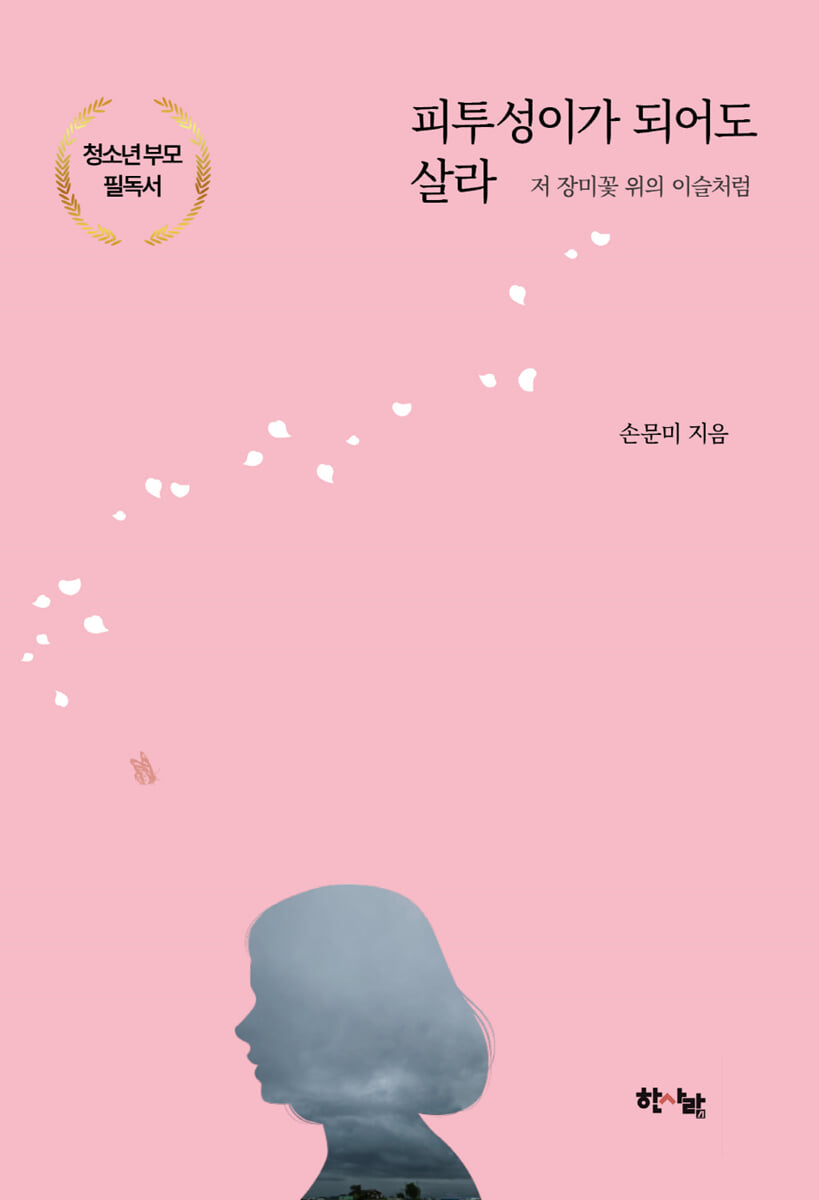
Live even if you get covered in blood
 |
Description
Book Introduction
This book was written with the hope that it will bring comfort and hope in the darkness, like dew on a rose in the early morning, to every soul, person, and family suffering from mental health issues.
In Korea, the risk of youth suicide is increasing in a sad reality where 37 people choose death every day, or 14,000 people a year.
It is crucial to understand the psychological distress experienced by Korean American youth during mental health crises.
This book reconstructs the vivid experiences of mental health crises experienced by eight Korean Christian youth studied in a doctoral dissertation in counseling at Liberty University in the United States, and explores the psychological aspects of Korean cultural characteristics (face) and mental health treatment for Korean youth.
Furthermore, based on the theoretical framework of Korean cultural psychology, this study aimed to help identify the unique family culture of Korean mental health and the factors that lead Korean Christian youth to avoid mental health treatment due to psychological distress.
This book vividly captures the stories of eight people suffering from psychological pain, hoping to understand one person who is still struggling with a mental health crisis on the borderline between life and death, and to help save each soul and restore each family.
We can think about what they needed and the role of parents and the church.
In Korea, the risk of youth suicide is increasing in a sad reality where 37 people choose death every day, or 14,000 people a year.
It is crucial to understand the psychological distress experienced by Korean American youth during mental health crises.
This book reconstructs the vivid experiences of mental health crises experienced by eight Korean Christian youth studied in a doctoral dissertation in counseling at Liberty University in the United States, and explores the psychological aspects of Korean cultural characteristics (face) and mental health treatment for Korean youth.
Furthermore, based on the theoretical framework of Korean cultural psychology, this study aimed to help identify the unique family culture of Korean mental health and the factors that lead Korean Christian youth to avoid mental health treatment due to psychological distress.
This book vividly captures the stories of eight people suffering from psychological pain, hoping to understand one person who is still struggling with a mental health crisis on the borderline between life and death, and to help save each soul and restore each family.
We can think about what they needed and the role of parents and the church.
- You can preview some of the book's contents.
Preview
index
[Recommendation]
*Dr. Lee Sang-myung, President of California Prestige University and Presbyterian Theological Seminary
*Scott D.
Edgar_Ph.
D. Liberty University Doctoral Mentor and Professor
*Elder Kim Cheol-min, President of CMF Ministries in the United States
*Professor Park Soon-ja, Professor Emeritus of Dance, Sookmyung Women's University
*Dr. Oh Sang-cheol, Visiting Professor, Department of Cultural Anthropology, Yonsei University Graduate School
*Dr. Jonathan Kang, PhD in Clinical Psychology & LCP
*Pastor Lee Dong-seong, Gangbuk Disciple Church
*Director Go Byeong-in, Director of Go Byeong-in Family Counseling Research Institute
*Pastor Lee Sang-yong, Full Gospel Nowon Church
Prologue/ Understanding Peopleㆍ018
Chapter 1: Panic Disorder: The Pain No One Knows About: Rebekah's Story? 027
Chapter 2: I'm Afraid of Speaking in Front of People, Feeling So Shameful I Could Die_Rachel's Story? 039
Chapter 3: I Think I Need to Adapt to Other People's Perspectives_Naomi's Story? 057
Chapter 4 I Can Do Something.
The Day I Decided to Die_Esther's Story? 075
Chapter 5: The Habit of Self-Harm Is Actually a Desire for Love_Andrew Story? 093
Chapter 6: I Can't Finish Anything_James' Story? 109
Chapter 7: Please Listen to Me! I Want to Live_Grace's Story? 127
Chapter 8: A Scary Addiction: I Needed Help!_Joseph's Story? 143
Chapter 9: A Confession from a Parent Who Experienced a Child's Mental Health Crisis? 159
Chapter 10: Adolescents and Young Adults in Mental Health Crisis? 177
1.
Youth in Mental Health Crisis? 179
2.
The Need for Mental Health Crisis Treatment? 182
3.
Understanding Mental Health Crisis Experiences? 184
Chapter 11: How Can We Help Youth and Young Adults Who Are Feeling Painful? 187
1.
Reflecting on Youth Mental Health Issues? 189
1) Understanding School Maladjustment Due to Psychological Distress? 190
2) Misconceptions and prejudices about psychiatric treatment? 192
3) The influence of Korean family style and Confucian culture? 194
4) Lack of awareness of the mental health crisis in the church? 196
2.
Suggestions for mental health treatment and recovery? 199
1) The need for a proper understanding of youth mental health crises? 200
2) The need for interventions to connect intimate emotional relationships? 201
3) Need for intervention for suicide risk? 203
4) The importance of mental health treatment approaches? 204
5) Approaches to Christian Counseling? 205
6) The church's mental health crisis response system? 207
3.
The Impact of Psychological Distress and Faith on Adolescents with Heartache? 209
Epilogue/ Like the dew on a rose, another morning comesㆍ212
Acknowledgmentsㆍ217
Referencesㆍ221
*Dr. Lee Sang-myung, President of California Prestige University and Presbyterian Theological Seminary
*Scott D.
Edgar_Ph.
D. Liberty University Doctoral Mentor and Professor
*Elder Kim Cheol-min, President of CMF Ministries in the United States
*Professor Park Soon-ja, Professor Emeritus of Dance, Sookmyung Women's University
*Dr. Oh Sang-cheol, Visiting Professor, Department of Cultural Anthropology, Yonsei University Graduate School
*Dr. Jonathan Kang, PhD in Clinical Psychology & LCP
*Pastor Lee Dong-seong, Gangbuk Disciple Church
*Director Go Byeong-in, Director of Go Byeong-in Family Counseling Research Institute
*Pastor Lee Sang-yong, Full Gospel Nowon Church
Prologue/ Understanding Peopleㆍ018
Chapter 1: Panic Disorder: The Pain No One Knows About: Rebekah's Story? 027
Chapter 2: I'm Afraid of Speaking in Front of People, Feeling So Shameful I Could Die_Rachel's Story? 039
Chapter 3: I Think I Need to Adapt to Other People's Perspectives_Naomi's Story? 057
Chapter 4 I Can Do Something.
The Day I Decided to Die_Esther's Story? 075
Chapter 5: The Habit of Self-Harm Is Actually a Desire for Love_Andrew Story? 093
Chapter 6: I Can't Finish Anything_James' Story? 109
Chapter 7: Please Listen to Me! I Want to Live_Grace's Story? 127
Chapter 8: A Scary Addiction: I Needed Help!_Joseph's Story? 143
Chapter 9: A Confession from a Parent Who Experienced a Child's Mental Health Crisis? 159
Chapter 10: Adolescents and Young Adults in Mental Health Crisis? 177
1.
Youth in Mental Health Crisis? 179
2.
The Need for Mental Health Crisis Treatment? 182
3.
Understanding Mental Health Crisis Experiences? 184
Chapter 11: How Can We Help Youth and Young Adults Who Are Feeling Painful? 187
1.
Reflecting on Youth Mental Health Issues? 189
1) Understanding School Maladjustment Due to Psychological Distress? 190
2) Misconceptions and prejudices about psychiatric treatment? 192
3) The influence of Korean family style and Confucian culture? 194
4) Lack of awareness of the mental health crisis in the church? 196
2.
Suggestions for mental health treatment and recovery? 199
1) The need for a proper understanding of youth mental health crises? 200
2) The need for interventions to connect intimate emotional relationships? 201
3) Need for intervention for suicide risk? 203
4) The importance of mental health treatment approaches? 204
5) Approaches to Christian Counseling? 205
6) The church's mental health crisis response system? 207
3.
The Impact of Psychological Distress and Faith on Adolescents with Heartache? 209
Epilogue/ Like the dew on a rose, another morning comesㆍ212
Acknowledgmentsㆍ217
Referencesㆍ221
Into the book
This book will be a valuable resource for Christian youth, their parents, church leaders, and Christian counselors in supporting youth by integrating the fields of cultural psychology, developmental psychology, counseling practice, and Christian faith.
It will also serve as a tool for Korean youth to intervene in the recovery of Korean youth experiencing mental health crises.
Above all, this book is nurturing and grace-centered, designed to help parents raise their children into adulthood, providing a proactive framework for supporting children and creating a holistic environment for healthy growth.
--- p.6
Even now, someone is probably fighting the pain of pain all night, covered in blood and gesturing for death.
But morning will come soon.
This book shares the stories of eight adolescents and young adults who faced deep hurt and pain, and one parent who walked alongside them.
So, it is a vivid, verbatim conversation, and a painful journey of people who fought hard in the darkness.
They say that they longed for someone who could understand them in their suffering.
Do we instinctively know that when just one person understands that pain, the darkness will disappear and a new morning will come?
--- p.21
“I used to think that I shouldn’t show my weaknesses.” I thought that in order to get along with people, I had to not show my weaknesses.
So, he confessed that he was always tense in interpersonal relationships.
Moreover, she said she could not tell anyone about the panic disorder she was suffering from.
--- p.31
“I didn’t understand because my dad was religious.
Believers said it had nothing to do with depression.
I'm not a very religious person and I certainly don't like church, but there were times when I was so depressed that I didn't even have the energy to shower.
I was so helpless that all I could do was cry.
But my dad wanted the whole family to get together and study the Bible.
I said something like I didn't want to do it.
But my dad said something really bad about this.
I said it because I was really having a hard time.
So for the first time in my life, I cried so loudly that I wondered if such a sound could come out.”
--- p.46
“I always smiled and walked around church, so I think I was seen as a bright person.
So, many people at church remember me as a bright person.
He just laughs like that.
To the point where I've never made an impression.
I was doing that in front of people.
I've never once said I was sad in front of people.
But sometimes I felt sad because when I told people I was sad, they would say, “You?”
So I never spoke about it in church.
Rather, when others were sad, I went and played the role of comforting them.
“It wasn’t my role to be comforted.”
--- p.70
One day my daughter said to me, “It’s all because of you, Mom.
“My mom raised me like this,” he poured out.
I held back my tears for a moment and ran to the bathroom.
I couldn't help but feel frustrated.
The son was barely holding back, but he couldn't stop the tears flowing in his eyes at his daughter's resentment.
I turned on the shower in the bathroom and started crying.
"God, what did I do so wrong? Shouldn't I have grown up well under an alcoholic father? But why? Is my daughter sick now, too?"
--- p.170
It is very important to accurately understand the mental health issues and psychological characteristics of Korean youth.
Unfortunately, however, there has been little research or literature on how to protect at-risk Korean American youth from the risks of depression and anxiety, which are mental health risk factors, and on factors that hinder access to treatment (Vaidyanathan et al., 2021).
Despite the increasing prevalence of depression and anxiety disorders among Korean American youth and the increasing suicide rate (Choi & Dancy, 2009).
--- p.181
In conclusion, it can be seen that high parental academic expectations have a negative impact on mental health (Lee et al., 2008).
As extreme anxiety worsened, stress increased, leading to sleep problems and ultimately depression.
During this process, it was found that there were also instances of repeated self-harm in an attempt to commit suicide (Osenk, 2020).
It will also serve as a tool for Korean youth to intervene in the recovery of Korean youth experiencing mental health crises.
Above all, this book is nurturing and grace-centered, designed to help parents raise their children into adulthood, providing a proactive framework for supporting children and creating a holistic environment for healthy growth.
--- p.6
Even now, someone is probably fighting the pain of pain all night, covered in blood and gesturing for death.
But morning will come soon.
This book shares the stories of eight adolescents and young adults who faced deep hurt and pain, and one parent who walked alongside them.
So, it is a vivid, verbatim conversation, and a painful journey of people who fought hard in the darkness.
They say that they longed for someone who could understand them in their suffering.
Do we instinctively know that when just one person understands that pain, the darkness will disappear and a new morning will come?
--- p.21
“I used to think that I shouldn’t show my weaknesses.” I thought that in order to get along with people, I had to not show my weaknesses.
So, he confessed that he was always tense in interpersonal relationships.
Moreover, she said she could not tell anyone about the panic disorder she was suffering from.
--- p.31
“I didn’t understand because my dad was religious.
Believers said it had nothing to do with depression.
I'm not a very religious person and I certainly don't like church, but there were times when I was so depressed that I didn't even have the energy to shower.
I was so helpless that all I could do was cry.
But my dad wanted the whole family to get together and study the Bible.
I said something like I didn't want to do it.
But my dad said something really bad about this.
I said it because I was really having a hard time.
So for the first time in my life, I cried so loudly that I wondered if such a sound could come out.”
--- p.46
“I always smiled and walked around church, so I think I was seen as a bright person.
So, many people at church remember me as a bright person.
He just laughs like that.
To the point where I've never made an impression.
I was doing that in front of people.
I've never once said I was sad in front of people.
But sometimes I felt sad because when I told people I was sad, they would say, “You?”
So I never spoke about it in church.
Rather, when others were sad, I went and played the role of comforting them.
“It wasn’t my role to be comforted.”
--- p.70
One day my daughter said to me, “It’s all because of you, Mom.
“My mom raised me like this,” he poured out.
I held back my tears for a moment and ran to the bathroom.
I couldn't help but feel frustrated.
The son was barely holding back, but he couldn't stop the tears flowing in his eyes at his daughter's resentment.
I turned on the shower in the bathroom and started crying.
"God, what did I do so wrong? Shouldn't I have grown up well under an alcoholic father? But why? Is my daughter sick now, too?"
--- p.170
It is very important to accurately understand the mental health issues and psychological characteristics of Korean youth.
Unfortunately, however, there has been little research or literature on how to protect at-risk Korean American youth from the risks of depression and anxiety, which are mental health risk factors, and on factors that hinder access to treatment (Vaidyanathan et al., 2021).
Despite the increasing prevalence of depression and anxiety disorders among Korean American youth and the increasing suicide rate (Choi & Dancy, 2009).
--- p.181
In conclusion, it can be seen that high parental academic expectations have a negative impact on mental health (Lee et al., 2008).
As extreme anxiety worsened, stress increased, leading to sleep problems and ultimately depression.
During this process, it was found that there were also instances of repeated self-harm in an attempt to commit suicide (Osenk, 2020).
--- p.191
GOODS SPECIFICS
- Date of issue: November 4, 2024
- Page count, weight, size: 224 pages | 358g | 140*205*15mm
- ISBN13: 9791192451350
- ISBN10: 119245135X
You may also like
카테고리
korean


korean

![GQ KOREA Mark (Monthly): December [2025]](http://librairie.coreenne.fr/cdn/shop/files/8ef265dbbfbf186523ed75ba7319009d.jpg?v=1765340328&width=3840)


