

Reading the Bible Beyond the Bible
 |
Description
Book Introduction
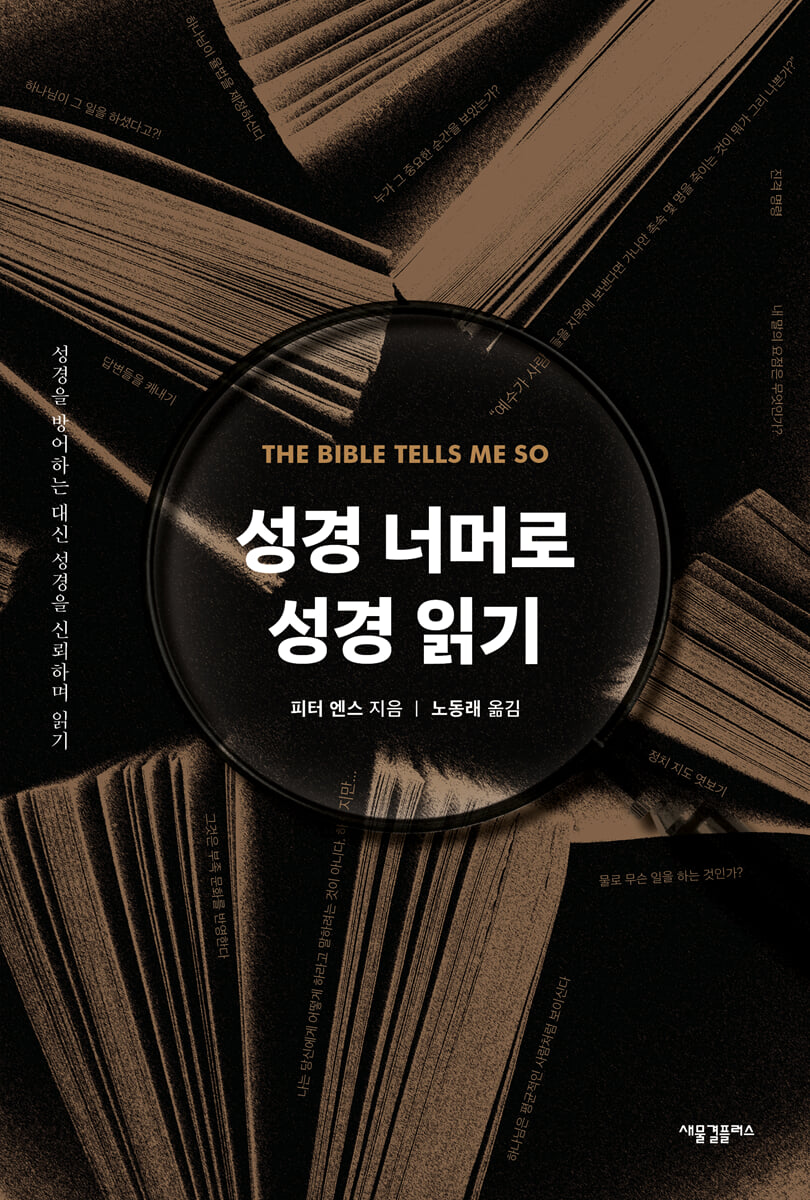
This book strongly urges us not to impose our own concerns and questions on the Bible in order to defend it, but to learn to question the circumstances and questions of the ancient people to whom the Bible spoke in the face of its content and challenges, and to think differently about the Bible, trusting in God rather than ourselves.
This is a must-read for anyone who is not satisfied with taking the Bible literally but wants to read it with thought.
This is a must-read for anyone who is not satisfied with taking the Bible literally but wants to read it with thought.
- You can preview some of the book's contents.
Preview
index
dedication
About the Bible
Note
Chapter 1 I Will Choose the Third Door
When the Bible goes beyond our expectations
The Bible is not the problem
A brief introduction about myself
About the camel's back and the beach ball
Third door
What is my point?
Chapter 2 God did it?!
How should we not treat others?
These wicked and terrible Canaanites
Advance order
“Jesus sent people to hell, so what’s so wrong with killing a few Canaanites?”
God's kinder side
The worst sinners of all time
It reflects tribal culture
Digging out the answers
God lets his children tell the story.
Why is this chapter so important and so long?
Chapter 3: God Loves Stories
What happened?
Stories of Jesus
Baby Jesus
Who saw that crucial moment?
Stories of Israel
The past serves the present
Preparation for a major event
A peek into the political landscape
Treat your younger sibling preferentially
Adam, who are you?
The Exodus Story
When the gods fight
What do you do with water?
Stories are effective
Chapter 4 Why Doesn't God Harden His Heart?
Raising Children Through the Bible
“If you wanted me to tell you what to do, I would have done it.”
When the Biblical Authors Became Capricious
“Please don’t quote the Bible to me, I am God.”
Are there multiple gods?
God looks like an average person
God establishes the law
Chapter 5: Jesus is Greater than the Bible
Jesus gets an "F" in Bible class
Jesus was actually Jewish
Jesus messes with the Bible
Jesus: Moses 2.0
Jesus is arguing
Jesus was human
Chapter 6 No one knew this was coming
Even if I tell you, you won't understand
Good news! Our leader has been executed by the Romans! Come and join us!
“It all concerns me” - Jesus' words
Are we still there?
Jesus, the Savior of the world, not the Savior of the Jews
God's answer to a question no one was asking
“Torah? Oh, that.
“It was only temporary.”
“Castrate Yourself” and Other Spiritual Advice
Chapter 7 The Bible as It Is
Summary of this book for busy people
A Brief Reflection on the Universe and God's Laughter
I'm not here to tell you what to do.
but…
Where were we in the Bible?
Some days I keep mentioning
If you don't believe me and want to read more
Acknowledgements
About the Bible
Note
Chapter 1 I Will Choose the Third Door
When the Bible goes beyond our expectations
The Bible is not the problem
A brief introduction about myself
About the camel's back and the beach ball
Third door
What is my point?
Chapter 2 God did it?!
How should we not treat others?
These wicked and terrible Canaanites
Advance order
“Jesus sent people to hell, so what’s so wrong with killing a few Canaanites?”
God's kinder side
The worst sinners of all time
It reflects tribal culture
Digging out the answers
God lets his children tell the story.
Why is this chapter so important and so long?
Chapter 3: God Loves Stories
What happened?
Stories of Jesus
Baby Jesus
Who saw that crucial moment?
Stories of Israel
The past serves the present
Preparation for a major event
A peek into the political landscape
Treat your younger sibling preferentially
Adam, who are you?
The Exodus Story
When the gods fight
What do you do with water?
Stories are effective
Chapter 4 Why Doesn't God Harden His Heart?
Raising Children Through the Bible
“If you wanted me to tell you what to do, I would have done it.”
When the Biblical Authors Became Capricious
“Please don’t quote the Bible to me, I am God.”
Are there multiple gods?
God looks like an average person
God establishes the law
Chapter 5: Jesus is Greater than the Bible
Jesus gets an "F" in Bible class
Jesus was actually Jewish
Jesus messes with the Bible
Jesus: Moses 2.0
Jesus is arguing
Jesus was human
Chapter 6 No one knew this was coming
Even if I tell you, you won't understand
Good news! Our leader has been executed by the Romans! Come and join us!
“It all concerns me” - Jesus' words
Are we still there?
Jesus, the Savior of the world, not the Savior of the Jews
God's answer to a question no one was asking
“Torah? Oh, that.
“It was only temporary.”
“Castrate Yourself” and Other Spiritual Advice
Chapter 7 The Bible as It Is
Summary of this book for busy people
A Brief Reflection on the Universe and God's Laughter
I'm not here to tell you what to do.
but…
Where were we in the Bible?
Some days I keep mentioning
If you don't believe me and want to read more
Acknowledgements
Into the book
Many Christians have been taught that the Bible is God's rulebook from heaven, a divine guide to truth, and that if you follow its instructions, true believers will emerge, and if you deviate from that script, God will come and do everything in his power to destroy you.
Believers are taught to “defend the Bible” against these attacks against God if anyone challenges this view.
Now the problem is solved.
Until you actually read the Bible.
When you actually read the Bible, you'll realize that this view of the Bible as a rulebook is as sleazy as a fake Chanel bag.
It's fine as long as you keep it away from curious and prying eyes.
What I have discovered and want to convey to you in this book is that this view of the Bible does not come from the Bible itself, but from a desire to protect the Bible and to regulate who reads it.
Why do I say this? Because the Bible tells me so.
There were three doors in front of me.
First question: I ignore what I heard that day at the Sanders Theater, pretend that what just happened to me never happened, and go on with my life on spiritual and intellectual autopilot, letting all these balls just sink below the surface.
Second Door: I could take the door that my tradition expected of me, which was to counter what I had just heard.
It was about becoming a “defender of the Bible,” swimming against the current to protect the faith’s demand for a Bible that would meet our expectations at all costs.
I could devote my life to “proving” that, despite appearances, Paul could not have entertained such a foolish idea about a rock becoming a portable well.
Third Door: I could face what I had just seen, accept the challenge, and begin to think differently about the Bible.
Instead of imposing my own questions on the Bible, I could learn to ask ancient questions, trust in God rather than myself, and embark on a long journey to guide those who know where they are.
Like the ancient Israelites and the early followers of Jesus, we do not encounter God up in the heavens, but here and now, through our own circumstances and ups and downs.
That is how the Holy Bible, the Word of God, functions as a book of spiritual comfort, guidance, and insight.
--- From "Chapter 1 I Will Choose the Third Door"
The Spaniards have been “settling” the West Indies in this way since 1493.
The massacres continued until 1552, when the Dominican friar Bartolome de Las Casas wrote A Short Account of the Destruction of the Indies, a grim account of all the horrors he had witnessed.
He convinced those in power that wiping out a people in the name of God was not on God's list of things to do, because he wanted the land and goods of the indigenous people.
Today, Christians, like Las Casas, condemn genocide as evil.
After all, it is difficult to believe that Jesus, who gave his life for others, would advocate the systematic extermination of the population.
Moreover, Jesus told his followers that true children of God love their enemies and pray for them.
We are not the first to be perplexed and distressed by God's violence as recorded in the Bible.
Christians and Jews have wrestled with this question since the Bible existed.
And God's command to slaughter the Canaanites so that the Israelites could take possession of the land certainly strikes most readers as excessive.
Atheists like Richard Dawkins happily tackle this point in The God Delusion, pointing out how the Christian “God of love” deals with conflict.
How can Islam be accused of promoting a warlike God who destroys infidels (a common Christian commentary on 9/11) when the Christian God of the Old Testament does the same thing, except without airplanes? I take this biblical portrayal of God seriously, but I don't accept it as the final word.
We can't hide this and hope it goes away.
Only as we grapple with the challenge of this part of Scripture will we begin to see how Scripture itself takes us on a journey beyond these stories, to see a much larger, richer terrain beyond them.
These ancient authors had an appropriate understanding of God for their time, not for all time.
And if we keep that in mind, we'll be in a better position to actually honor these ancient voices and know what they're saying, rather than glossing over details and inventing "explanations" to alleviate our stress.
And for Christians, the gospel has always been the lens through which the stories of Israel are read.
In other words, for Christians, it is Jesus, not the Bible, who is the final word.
The story of God's people has grown, and so must we.
--- From "Chapter 2 God Did It?"
Any attempt to put the past into words is not “pure history,” but an interpretation of the past.
Pure history does not exist.
Anywhere.
This includes the Bible.
The storytellers who wrote the Bible do not recall the past, often the distant past, “objectively,” but with purpose.
They had a vested interest.
The Bible was their stories.
They weave narratives of the past to give meaning to their present—to persuade, motivate, and inspire.
Like all storytellers, the Bible writers created and expanded upon dialogue, characters, and scenes for their own purposes, transforming moments from the past into a seamlessly flowing narrative.
It wasn't because they were lazy or mean, but because that's what every storyteller needs to do to create a narrative.
They moved and arranged the past, or stitched together separate moments, to tell their story for their audience.
Our attempt to discern what “actually” happened and what did not happen, and to call what actually happened the “real” Jesus, is not only a highly irrational pursuit, but also misses the point.
Christians believe, through faith, that the true Jesus is the Jesus of the whole story, the resurrected Jesus.
That Jesus was not understood by accompanying Jesus in and around Galilee, and could not be understood in that way.
The disciples whom Jesus chose to continue his work were themselves completely lost sight of the big picture.
The true Jesus can only be truly understood after his resurrection, when the broader implications of who he was and what he did are better understood.
That is the Jesus that the Gospel writers present to us, each in his own way.
The books of Samuel and Kings were written while the Israelites were in Babylonia (in the 6th century BCE) and were probably edited and updated when they returned to their homeland (sometimes between the late 6th and 5th centuries BCE).
The pressing question for this author was, "How could we have been exiled to Babylon when we believed God would be with us no matter what? What did we do to deserve such treatment?"
They tried to understand what had happened.
Chronicles was written sometime in the 4th century AD, about 200 years later, after the Israelites had lived in the land for several generations.
The author's question wasn't, "What have we done to deserve this?" but, "After all this, are we still God's people? Will God come and fix this mess? What does our future look like? Do we have a future?"
When you read the origin stories of Israel, especially Genesis, you will notice that they contain foreshadowings of what is to come, intentional background for what will later happen in Israel's life in the Promised Land.
The more familiar you are with the story of the nation of Israel (the monarchy and beyond), the more familiar you will find these stories when you read Israel's origin stories.
Let's say this another way.
The stories from the primeval period (the origins of Israel) were deliberately written to echo the present (the monarchy period, which ended in crisis).
In terms of the way it is spoken, the present is a more profound story that is being told now.
--- From “Chapter 3 God Loves Stories”
As we have already seen, the Bible is a story.
It is the story of the long, varied, and turbulent spiritual journey of God's people.
And it's a story written by many different people, in many different circumstances, for many different reasons, over a period of over 1,000 years.
The Bible was written in times of peace and war, in times of security and exile, in Israel's childhood and in her adulthood when she was punished.
The Bible was written by priests, scribes, and kings who were separated in time and geography, not to mention who had different Myers-Briggs MBTI personality types.
Such a book could never be a consistent, one-size-fits-all guide to how to grow into a life of faith in all kinds of situations.
Such books show us what a life of faith looks like.
Wisdom isn't about finding a key to give you quick answers to life.
You can find the topic you're trying to solve in the index and look at the section where it's mentioned.
Wisdom is about learning how to solve problems on your own in real time amidst the unpredictable and uncontrollable chaos of life.
Because the Bible records Israel's diverse spiritual journeys, it reflects diverse views of God.
At some point later in their journey (we don't know exactly when), the Israelites came to a final answer to that question: there is only one God.
Today, for both Jews and Christians, that one answer is true, and the other Biblical portrayals of God—the view that God is one god among many—have been discarded.
The portrayal of God that the ancient Israelites assumed for much of their history—that God was the supreme god among many—is not factually true.
And I believe God will not blame us for coming to that conclusion.
In the Christian story, God descends even further.
God becomes one of us, God incarnate.
We need a God who responds, who changes his mind, and with whom we can argue, more than a God who stays on high and keeps his distance.
If there is no such God, the concept of prayer cannot exist.
Think about the prayer, “God, please….”
Then fill in the blanks with things like cures for illness, comfort in pain, a new job, or the outcome of a sports game.
Many prayers may be about gratitude and praise to God, and sometimes they may be quiet meditation.
But prayer is often a cry for help, an attempt to persuade God to see things our way.
The editors of the Bible who lived after returning from the Babylonian exile compiled these codes in the way we see them in the Bible.
And if someone were to compile these various traditions into one long law, tensions and contradictions, as we saw in the examples above, would inevitably arise.
Other legal codes within the same Bible are similar to the four versions of Jesus' life and the two versions of Israel's monarchy that we discussed in the previous chapter.
Of course, the differences become more apparent when separate books, such as the Gospels and the Stories of Israel, are placed side by side.
However, the editors of the Law of Israel did not give us separate versions of the Law.
Instead, the various laws are woven into a single story of Moses receiving God's laws on Mount Sinai and passing them on to the Israelites below.
--- From Chapter 4, “Why Doesn’t God Harden His Heart?”
Jesus did not read his Bible the way we expect him to read it.
He was not bound by the words in his Bible and what they meant.
Two factors explain why Jesus treated Scripture in the way he did.
First, Jesus was a Jew.
The above example, however strange it may seem to us, fits the creative approach to Scripture that Jesus shared with his fellow Jews.
So, to understand how Jesus read his Scriptures, we must set aside our expectations and see Jesus as, yes, even a complete member of the ancient Jewish world.
Second, Jesus often read Scripture in a fresh way that challenged previous thinking about what it means to be God and God's people (a point we will explore in more detail later).
In particular, he often drew attention to himself as if he were not simply interpreting Scripture, but rather as if he were the focus of the Scripture.
By doing so, Jesus drew negative attention from Jewish teachers and religious authorities.
Considering these factors together, we arrive at the following conclusions about Jesus' reading of Scripture:
Jesus did not remain in the mode many Christian readers today assume the Son of God would have acted.
Jesus did not particularly consider himself bound to strictly follow what the Bible says.
Jesus was not a reader of the Bible's rulebook; he was greater than the Bible.
Debating the Bible, especially the Torah, and reading it creatively to address changing times has been a hallmark of devout Judaism.
The Jews were not “legalistic” about their treatment of the law.
Christians still often think that Jews were legalistic.
Although the Bible was the Word of God and was binding, they understood that the Bible, including the Torah, was not a book of rules to be followed literally at all times.
Being faithful to the Bible here and now meant being flexible.
The debate at the time was not about whether the Bible was still binding, but about how to be flexible and creative.
Jesus lived in such a world.
Jesus, like other Jews of his time, respected and honored his Bible.
On the other hand, Jesus believes that the Bible does not explicitly state what it means to have a right relationship with God as something to be followed literally.
Jesus creatively reworks the Bible, sometimes even discarding parts of it.
--- From “Chapter 5 Jesus is Greater than the Bible”
The Bible was the uncompromising word of God, but it was not the final word of God; Jesus was the final word.
The story of Israel, viewed on its own terms, is inadequate to bear the weight of God's amazing act of the crucified and resurrected Messiah.
It must be reshaped around Jesus.
If we miss that lesson, if we see the Bible as an unchanging collection of information about God and miss how the reality of Jesus inevitably transforms the story of Israel, we will miss what the early Christian authors were trying to say.
We will miss Jesus.
If the violation of the Torah is Israel's problem, preventing the Jews from being fully saved and restored, how can a crucified and resurrected Messiah be God's solution? It makes no sense.
If the violation of the Torah were the real issue, perhaps that would not make sense.
If Jesus' death and resurrection are God's solution, then perhaps the problem God has in mind—a deeper problem—is death.
Death is not just a Jewish problem, it is a universal problem.
So defeating death is the solution for everyone.
Likewise, sin—disobedience to God and wrongful actions toward others—was also a universal problem.
Jesus' death was not just another Roman execution, but a sacrifice for sin—not only for Jews but also for Gentiles.
If we cling to every part of Scripture as if it were a manual or guidebook for knowing God, we miss what Paul and the rest of the New Testament writers show us again and again: that it is not the written words of Scripture that drive the story, but Jesus.
Jesus is greater than the Bible.
So the question for Christians is not, “Who understands the Bible correctly?”
The question is still, and always has been, “Who understands Jesus correctly?”
The Gospel writers and Paul make that point very clear.
--- From "Chapter 6: No One Knew This Was Coming"
The Bible was written over a period of just 1,000 years by a small group of people living on one small part of one planet in one galaxy.
This Bible contains the thoughts and meditations of ancient pilgrims, and I believe that it has guided, comforted, and informed Christians throughout their existence, according to God's purpose.
But this God of creation, who is unthinkably large, immeasurably small, and incomprehensibly old, cannot be fully captured or limited by such words.
God cannot do that.
We don't necessarily need astrophysics or electron microscopy to tell us that.
The Bible already does that.
Don't try to explain the Bible.
Just accept it.
That doesn't mean you'll become a mindless zombie.
It simply means accepting your limitations as a human being and, through faith, recognizing that something bigger than ourselves is happening, that someone bigger than us is behind it, and that we have the privilege of being a part of it.
If we allow the Bible to be Scripture from its own perspective—from God's perspective—we will see this incarnate God at work not in spite of the challenges, the bumps, the ancient strangeness, but precisely because of them.
That may not be the way we will write our sacred books, but that is the way our good and wise God has allowed His people to have them.
If we read the Bible this way, truly humbly, rather than defending our version of it, we will find God as He wants to be found.
The Bible tells us so.
Believers are taught to “defend the Bible” against these attacks against God if anyone challenges this view.
Now the problem is solved.
Until you actually read the Bible.
When you actually read the Bible, you'll realize that this view of the Bible as a rulebook is as sleazy as a fake Chanel bag.
It's fine as long as you keep it away from curious and prying eyes.
What I have discovered and want to convey to you in this book is that this view of the Bible does not come from the Bible itself, but from a desire to protect the Bible and to regulate who reads it.
Why do I say this? Because the Bible tells me so.
There were three doors in front of me.
First question: I ignore what I heard that day at the Sanders Theater, pretend that what just happened to me never happened, and go on with my life on spiritual and intellectual autopilot, letting all these balls just sink below the surface.
Second Door: I could take the door that my tradition expected of me, which was to counter what I had just heard.
It was about becoming a “defender of the Bible,” swimming against the current to protect the faith’s demand for a Bible that would meet our expectations at all costs.
I could devote my life to “proving” that, despite appearances, Paul could not have entertained such a foolish idea about a rock becoming a portable well.
Third Door: I could face what I had just seen, accept the challenge, and begin to think differently about the Bible.
Instead of imposing my own questions on the Bible, I could learn to ask ancient questions, trust in God rather than myself, and embark on a long journey to guide those who know where they are.
Like the ancient Israelites and the early followers of Jesus, we do not encounter God up in the heavens, but here and now, through our own circumstances and ups and downs.
That is how the Holy Bible, the Word of God, functions as a book of spiritual comfort, guidance, and insight.
--- From "Chapter 1 I Will Choose the Third Door"
The Spaniards have been “settling” the West Indies in this way since 1493.
The massacres continued until 1552, when the Dominican friar Bartolome de Las Casas wrote A Short Account of the Destruction of the Indies, a grim account of all the horrors he had witnessed.
He convinced those in power that wiping out a people in the name of God was not on God's list of things to do, because he wanted the land and goods of the indigenous people.
Today, Christians, like Las Casas, condemn genocide as evil.
After all, it is difficult to believe that Jesus, who gave his life for others, would advocate the systematic extermination of the population.
Moreover, Jesus told his followers that true children of God love their enemies and pray for them.
We are not the first to be perplexed and distressed by God's violence as recorded in the Bible.
Christians and Jews have wrestled with this question since the Bible existed.
And God's command to slaughter the Canaanites so that the Israelites could take possession of the land certainly strikes most readers as excessive.
Atheists like Richard Dawkins happily tackle this point in The God Delusion, pointing out how the Christian “God of love” deals with conflict.
How can Islam be accused of promoting a warlike God who destroys infidels (a common Christian commentary on 9/11) when the Christian God of the Old Testament does the same thing, except without airplanes? I take this biblical portrayal of God seriously, but I don't accept it as the final word.
We can't hide this and hope it goes away.
Only as we grapple with the challenge of this part of Scripture will we begin to see how Scripture itself takes us on a journey beyond these stories, to see a much larger, richer terrain beyond them.
These ancient authors had an appropriate understanding of God for their time, not for all time.
And if we keep that in mind, we'll be in a better position to actually honor these ancient voices and know what they're saying, rather than glossing over details and inventing "explanations" to alleviate our stress.
And for Christians, the gospel has always been the lens through which the stories of Israel are read.
In other words, for Christians, it is Jesus, not the Bible, who is the final word.
The story of God's people has grown, and so must we.
--- From "Chapter 2 God Did It?"
Any attempt to put the past into words is not “pure history,” but an interpretation of the past.
Pure history does not exist.
Anywhere.
This includes the Bible.
The storytellers who wrote the Bible do not recall the past, often the distant past, “objectively,” but with purpose.
They had a vested interest.
The Bible was their stories.
They weave narratives of the past to give meaning to their present—to persuade, motivate, and inspire.
Like all storytellers, the Bible writers created and expanded upon dialogue, characters, and scenes for their own purposes, transforming moments from the past into a seamlessly flowing narrative.
It wasn't because they were lazy or mean, but because that's what every storyteller needs to do to create a narrative.
They moved and arranged the past, or stitched together separate moments, to tell their story for their audience.
Our attempt to discern what “actually” happened and what did not happen, and to call what actually happened the “real” Jesus, is not only a highly irrational pursuit, but also misses the point.
Christians believe, through faith, that the true Jesus is the Jesus of the whole story, the resurrected Jesus.
That Jesus was not understood by accompanying Jesus in and around Galilee, and could not be understood in that way.
The disciples whom Jesus chose to continue his work were themselves completely lost sight of the big picture.
The true Jesus can only be truly understood after his resurrection, when the broader implications of who he was and what he did are better understood.
That is the Jesus that the Gospel writers present to us, each in his own way.
The books of Samuel and Kings were written while the Israelites were in Babylonia (in the 6th century BCE) and were probably edited and updated when they returned to their homeland (sometimes between the late 6th and 5th centuries BCE).
The pressing question for this author was, "How could we have been exiled to Babylon when we believed God would be with us no matter what? What did we do to deserve such treatment?"
They tried to understand what had happened.
Chronicles was written sometime in the 4th century AD, about 200 years later, after the Israelites had lived in the land for several generations.
The author's question wasn't, "What have we done to deserve this?" but, "After all this, are we still God's people? Will God come and fix this mess? What does our future look like? Do we have a future?"
When you read the origin stories of Israel, especially Genesis, you will notice that they contain foreshadowings of what is to come, intentional background for what will later happen in Israel's life in the Promised Land.
The more familiar you are with the story of the nation of Israel (the monarchy and beyond), the more familiar you will find these stories when you read Israel's origin stories.
Let's say this another way.
The stories from the primeval period (the origins of Israel) were deliberately written to echo the present (the monarchy period, which ended in crisis).
In terms of the way it is spoken, the present is a more profound story that is being told now.
--- From “Chapter 3 God Loves Stories”
As we have already seen, the Bible is a story.
It is the story of the long, varied, and turbulent spiritual journey of God's people.
And it's a story written by many different people, in many different circumstances, for many different reasons, over a period of over 1,000 years.
The Bible was written in times of peace and war, in times of security and exile, in Israel's childhood and in her adulthood when she was punished.
The Bible was written by priests, scribes, and kings who were separated in time and geography, not to mention who had different Myers-Briggs MBTI personality types.
Such a book could never be a consistent, one-size-fits-all guide to how to grow into a life of faith in all kinds of situations.
Such books show us what a life of faith looks like.
Wisdom isn't about finding a key to give you quick answers to life.
You can find the topic you're trying to solve in the index and look at the section where it's mentioned.
Wisdom is about learning how to solve problems on your own in real time amidst the unpredictable and uncontrollable chaos of life.
Because the Bible records Israel's diverse spiritual journeys, it reflects diverse views of God.
At some point later in their journey (we don't know exactly when), the Israelites came to a final answer to that question: there is only one God.
Today, for both Jews and Christians, that one answer is true, and the other Biblical portrayals of God—the view that God is one god among many—have been discarded.
The portrayal of God that the ancient Israelites assumed for much of their history—that God was the supreme god among many—is not factually true.
And I believe God will not blame us for coming to that conclusion.
In the Christian story, God descends even further.
God becomes one of us, God incarnate.
We need a God who responds, who changes his mind, and with whom we can argue, more than a God who stays on high and keeps his distance.
If there is no such God, the concept of prayer cannot exist.
Think about the prayer, “God, please….”
Then fill in the blanks with things like cures for illness, comfort in pain, a new job, or the outcome of a sports game.
Many prayers may be about gratitude and praise to God, and sometimes they may be quiet meditation.
But prayer is often a cry for help, an attempt to persuade God to see things our way.
The editors of the Bible who lived after returning from the Babylonian exile compiled these codes in the way we see them in the Bible.
And if someone were to compile these various traditions into one long law, tensions and contradictions, as we saw in the examples above, would inevitably arise.
Other legal codes within the same Bible are similar to the four versions of Jesus' life and the two versions of Israel's monarchy that we discussed in the previous chapter.
Of course, the differences become more apparent when separate books, such as the Gospels and the Stories of Israel, are placed side by side.
However, the editors of the Law of Israel did not give us separate versions of the Law.
Instead, the various laws are woven into a single story of Moses receiving God's laws on Mount Sinai and passing them on to the Israelites below.
--- From Chapter 4, “Why Doesn’t God Harden His Heart?”
Jesus did not read his Bible the way we expect him to read it.
He was not bound by the words in his Bible and what they meant.
Two factors explain why Jesus treated Scripture in the way he did.
First, Jesus was a Jew.
The above example, however strange it may seem to us, fits the creative approach to Scripture that Jesus shared with his fellow Jews.
So, to understand how Jesus read his Scriptures, we must set aside our expectations and see Jesus as, yes, even a complete member of the ancient Jewish world.
Second, Jesus often read Scripture in a fresh way that challenged previous thinking about what it means to be God and God's people (a point we will explore in more detail later).
In particular, he often drew attention to himself as if he were not simply interpreting Scripture, but rather as if he were the focus of the Scripture.
By doing so, Jesus drew negative attention from Jewish teachers and religious authorities.
Considering these factors together, we arrive at the following conclusions about Jesus' reading of Scripture:
Jesus did not remain in the mode many Christian readers today assume the Son of God would have acted.
Jesus did not particularly consider himself bound to strictly follow what the Bible says.
Jesus was not a reader of the Bible's rulebook; he was greater than the Bible.
Debating the Bible, especially the Torah, and reading it creatively to address changing times has been a hallmark of devout Judaism.
The Jews were not “legalistic” about their treatment of the law.
Christians still often think that Jews were legalistic.
Although the Bible was the Word of God and was binding, they understood that the Bible, including the Torah, was not a book of rules to be followed literally at all times.
Being faithful to the Bible here and now meant being flexible.
The debate at the time was not about whether the Bible was still binding, but about how to be flexible and creative.
Jesus lived in such a world.
Jesus, like other Jews of his time, respected and honored his Bible.
On the other hand, Jesus believes that the Bible does not explicitly state what it means to have a right relationship with God as something to be followed literally.
Jesus creatively reworks the Bible, sometimes even discarding parts of it.
--- From “Chapter 5 Jesus is Greater than the Bible”
The Bible was the uncompromising word of God, but it was not the final word of God; Jesus was the final word.
The story of Israel, viewed on its own terms, is inadequate to bear the weight of God's amazing act of the crucified and resurrected Messiah.
It must be reshaped around Jesus.
If we miss that lesson, if we see the Bible as an unchanging collection of information about God and miss how the reality of Jesus inevitably transforms the story of Israel, we will miss what the early Christian authors were trying to say.
We will miss Jesus.
If the violation of the Torah is Israel's problem, preventing the Jews from being fully saved and restored, how can a crucified and resurrected Messiah be God's solution? It makes no sense.
If the violation of the Torah were the real issue, perhaps that would not make sense.
If Jesus' death and resurrection are God's solution, then perhaps the problem God has in mind—a deeper problem—is death.
Death is not just a Jewish problem, it is a universal problem.
So defeating death is the solution for everyone.
Likewise, sin—disobedience to God and wrongful actions toward others—was also a universal problem.
Jesus' death was not just another Roman execution, but a sacrifice for sin—not only for Jews but also for Gentiles.
If we cling to every part of Scripture as if it were a manual or guidebook for knowing God, we miss what Paul and the rest of the New Testament writers show us again and again: that it is not the written words of Scripture that drive the story, but Jesus.
Jesus is greater than the Bible.
So the question for Christians is not, “Who understands the Bible correctly?”
The question is still, and always has been, “Who understands Jesus correctly?”
The Gospel writers and Paul make that point very clear.
--- From "Chapter 6: No One Knew This Was Coming"
The Bible was written over a period of just 1,000 years by a small group of people living on one small part of one planet in one galaxy.
This Bible contains the thoughts and meditations of ancient pilgrims, and I believe that it has guided, comforted, and informed Christians throughout their existence, according to God's purpose.
But this God of creation, who is unthinkably large, immeasurably small, and incomprehensibly old, cannot be fully captured or limited by such words.
God cannot do that.
We don't necessarily need astrophysics or electron microscopy to tell us that.
The Bible already does that.
Don't try to explain the Bible.
Just accept it.
That doesn't mean you'll become a mindless zombie.
It simply means accepting your limitations as a human being and, through faith, recognizing that something bigger than ourselves is happening, that someone bigger than us is behind it, and that we have the privilege of being a part of it.
If we allow the Bible to be Scripture from its own perspective—from God's perspective—we will see this incarnate God at work not in spite of the challenges, the bumps, the ancient strangeness, but precisely because of them.
That may not be the way we will write our sacred books, but that is the way our good and wise God has allowed His people to have them.
If we read the Bible this way, truly humbly, rather than defending our version of it, we will find God as He wants to be found.
The Bible tells us so.
--- From "Chapter 7 The Bible as It Is"
Publisher's Review
2 Timothy 3:16-17 states, “All Scripture is given by inspiration of God and is profitable for doctrine, for reproof, for correction, for instruction in righteousness, that the man of God may be complete, thoroughly equipped for every good work.” Article 1 of the Presbyterian Creed declares, “The Scriptures of the Old and New Testaments are the Word of God, the only infallible rule of faith and conduct.” Other denominations’ creeds make similar provisions regarding the Bible.
There is no problem when reading this Bible verse or creed abstractly.
But when we seek guidance from the Bible on specific issues we face, things are different.
The Bible is silent on many complex modern issues, and at times appears to contradict what modern science has discovered about the origins of the universe, the earth, and life. At times, it commands the Israelites to exterminate the Canaanites, as when they escaped slavery in Egypt, and at other times it appears to contradict itself, as when the four Gospels give different accounts of the life of Jesus, or when Kings and Chronicles present different pictures of the monarchy in ancient Israel.
What attitude should we take when faced with this situation?
Anyone who accepts the Bible as the Word of God cannot take the view that the Bible is wrong and that only modern scientific truths and empirically verifiable facts are correct.
The author argues that many Christians today are taught to defend the Bible through the lens of our rational thinking, and that in trying to do so, they become stressed and miss the true meaning of the Bible.
Instead, the author challenges us to take the Bible at face value, ask what it meant to the ancients in their context, and then seriously consider what it means for us today. He challenges us to read the Bible with trust in God, not imposing our own expectations on it.
To this end, the author first presents the very uncomfortable issue of God's violent command to annihilate the Canaanites, and then presents various factors we must consider in relation to this command.
The author then presents seemingly contradictory and puzzling passages in the Old and New Testaments, and shows us how we should approach the Bible through the examples of Jesus and Paul.
The author emphasizes that Jesus, not the Bible, is the true focus of the Christian faith.
The focus is on God's plan to save all mankind in Jesus, beyond the literal interpretation of the Bible.
Therefore, Jesus is the starting point and the ending point of the story of Israel as told through the Bible, and it is not the letters written in the Bible that drive the story, but Jesus.
Jesus is greater than the Bible.
If you read the Bible with this in mind, you will experience a ray of light shining on your Bible reading, which had previously felt like you were wandering in the dark, trapped in literalism.
Today, we are witnessing the reality that faithful Christians who accept the Bible as the Word of God and respect it are blindly believing in the literal meaning of the Bible's records due to a mechanical understanding of the "inerrancy of the Bible," and are unable to escape the swamp of lies, becoming the primary producers, disseminators, and consumers of fake news, causing great harm to our society.
This book does not distort the Bible by projecting our rational thinking onto it in order to blindly defend it. Rather, it is an excellent book for those who seek to understand the original context and intention of what it says, and to explore the wisdom to live today based on that understanding.
Certainly, whether readers agree with the author's argument or not, this book will enable them to read the Bible with new eyes.
I highly recommend taking the time to read it carefully.
There is no problem when reading this Bible verse or creed abstractly.
But when we seek guidance from the Bible on specific issues we face, things are different.
The Bible is silent on many complex modern issues, and at times appears to contradict what modern science has discovered about the origins of the universe, the earth, and life. At times, it commands the Israelites to exterminate the Canaanites, as when they escaped slavery in Egypt, and at other times it appears to contradict itself, as when the four Gospels give different accounts of the life of Jesus, or when Kings and Chronicles present different pictures of the monarchy in ancient Israel.
What attitude should we take when faced with this situation?
Anyone who accepts the Bible as the Word of God cannot take the view that the Bible is wrong and that only modern scientific truths and empirically verifiable facts are correct.
The author argues that many Christians today are taught to defend the Bible through the lens of our rational thinking, and that in trying to do so, they become stressed and miss the true meaning of the Bible.
Instead, the author challenges us to take the Bible at face value, ask what it meant to the ancients in their context, and then seriously consider what it means for us today. He challenges us to read the Bible with trust in God, not imposing our own expectations on it.
To this end, the author first presents the very uncomfortable issue of God's violent command to annihilate the Canaanites, and then presents various factors we must consider in relation to this command.
The author then presents seemingly contradictory and puzzling passages in the Old and New Testaments, and shows us how we should approach the Bible through the examples of Jesus and Paul.
The author emphasizes that Jesus, not the Bible, is the true focus of the Christian faith.
The focus is on God's plan to save all mankind in Jesus, beyond the literal interpretation of the Bible.
Therefore, Jesus is the starting point and the ending point of the story of Israel as told through the Bible, and it is not the letters written in the Bible that drive the story, but Jesus.
Jesus is greater than the Bible.
If you read the Bible with this in mind, you will experience a ray of light shining on your Bible reading, which had previously felt like you were wandering in the dark, trapped in literalism.
Today, we are witnessing the reality that faithful Christians who accept the Bible as the Word of God and respect it are blindly believing in the literal meaning of the Bible's records due to a mechanical understanding of the "inerrancy of the Bible," and are unable to escape the swamp of lies, becoming the primary producers, disseminators, and consumers of fake news, causing great harm to our society.
This book does not distort the Bible by projecting our rational thinking onto it in order to blindly defend it. Rather, it is an excellent book for those who seek to understand the original context and intention of what it says, and to explore the wisdom to live today based on that understanding.
Certainly, whether readers agree with the author's argument or not, this book will enable them to read the Bible with new eyes.
I highly recommend taking the time to read it carefully.
GOODS SPECIFICS
- Date of issue: August 14, 2024
- Page count, weight, size: 356 pages | 463g | 152*225*30mm
- ISBN13: 9791161292847
- ISBN10: 1161292845
You may also like
카테고리
korean


korean

![GQ KOREA Mark (Monthly): December [2025]](http://librairie.coreenne.fr/cdn/shop/files/8ef265dbbfbf186523ed75ba7319009d.jpg?v=1765340328&width=3840)


