

Louis to Mary
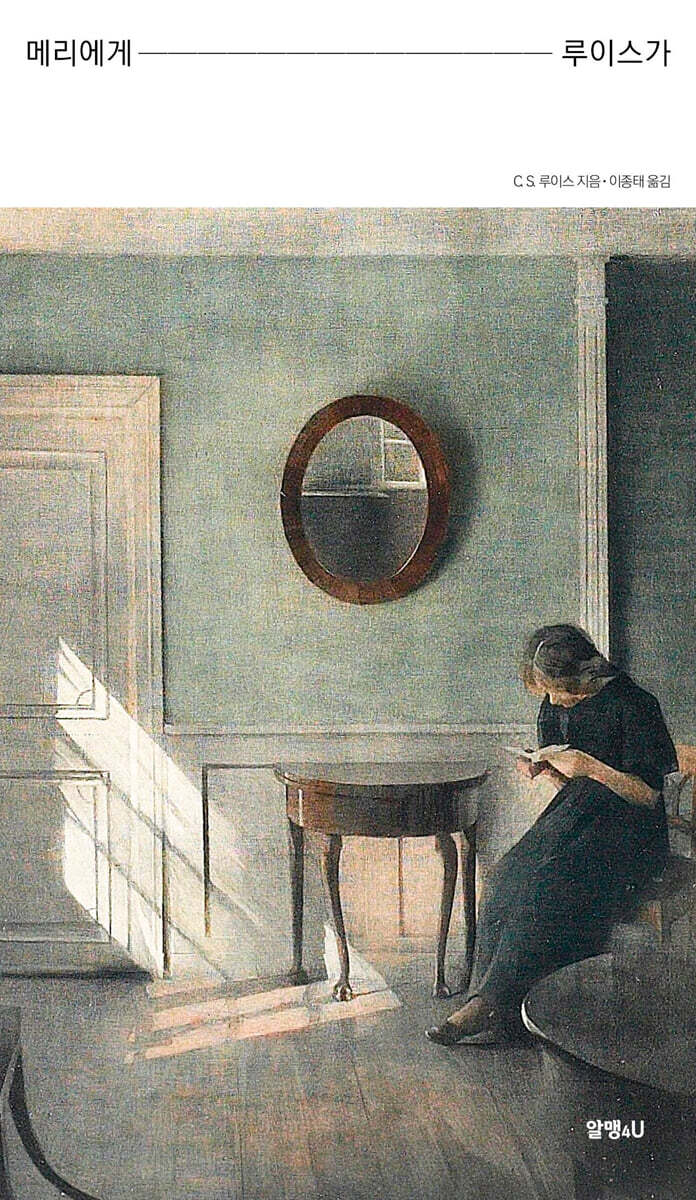 |
Description
Book Introduction
C., who died in 1963.
This last work of S. Lewis was published four years after his death by Eardmans Publishing in the United States under the title “Letters to an American Woman.”
Since then, the cover has changed several times, establishing this book as a steady bestseller for Admans.
This “American woman’s” real name was Mary Willis Shelburne, but at the time the book was published she did not want her real name revealed, so she was referred to in the book as simply “Mary.”
Shelburne and Lewis exchanged 145 letters over 14 years, beginning in 1950 when Lewis was 51 and ending in 1963 when Lewis died. About 130 of these letters have been selected and published in this book.
Lewis received so many letters that he dreaded the postman's knock, and out of a spirit of service, he tried to answer every one he could (it is estimated that he wrote about 30,000 letters).
So it was not surprising that he exchanged quite a few letters with a strange woman from a faraway country.
However, the initial cover of the book read, “Private Lives of Celebrities....
As the book is introduced as “a delightful glimpse into the life and personality of one of this century’s most famous Christian writers,” one might wonder if this book is a collection of love letters.
In fact, they never met each other face to face.
This is a bundle of letters, initially addressed to the author and reader as Mr. Lewis and Mrs. Shelburne, but later to female friends as Mary and Jack, as we would call them today.
These letters reveal aspects of Lewis's personality that are largely unknown to readers of his fantasy or scholarly writings.
Here is human Louis.
A generous, wise, compassionate, and humane person.
And, above all, here is Lewis, a devoted Christian.
A Christian who patiently offers encouragement and guidance to other Christians amidst the joys and sorrows of everyday life.
There are many books that could be cited as either representative works or “introductions” to Lewis, but this one has never been recommended in any of them.
But once you start reading the book, you'll wonder if there's a better introduction to Lewis than this one.
Even though Mere Christianity is said to be Lewis's best book, some people may find themselves dozing off after picking it up and reading a few pages.
Especially for the younger generation who find it difficult to read long texts like these, other long texts by Lewis, or thick books, can be difficult.
But this book is, first of all, the writings of a wonderful person who answers all the letters without “reading” a single one, in a humorous, sometimes mischievous, but always warm-hearted way.
After talking to each other about his constant toothache and his dog and cat, he guides us through several books, including his own, and points out parts he finds important.
If you read the letter while imagining what Louis would have said if he had sent it to you, you will find yourself becoming friends with him.
This last work of S. Lewis was published four years after his death by Eardmans Publishing in the United States under the title “Letters to an American Woman.”
Since then, the cover has changed several times, establishing this book as a steady bestseller for Admans.
This “American woman’s” real name was Mary Willis Shelburne, but at the time the book was published she did not want her real name revealed, so she was referred to in the book as simply “Mary.”
Shelburne and Lewis exchanged 145 letters over 14 years, beginning in 1950 when Lewis was 51 and ending in 1963 when Lewis died. About 130 of these letters have been selected and published in this book.
Lewis received so many letters that he dreaded the postman's knock, and out of a spirit of service, he tried to answer every one he could (it is estimated that he wrote about 30,000 letters).
So it was not surprising that he exchanged quite a few letters with a strange woman from a faraway country.
However, the initial cover of the book read, “Private Lives of Celebrities....
As the book is introduced as “a delightful glimpse into the life and personality of one of this century’s most famous Christian writers,” one might wonder if this book is a collection of love letters.
In fact, they never met each other face to face.
This is a bundle of letters, initially addressed to the author and reader as Mr. Lewis and Mrs. Shelburne, but later to female friends as Mary and Jack, as we would call them today.
These letters reveal aspects of Lewis's personality that are largely unknown to readers of his fantasy or scholarly writings.
Here is human Louis.
A generous, wise, compassionate, and humane person.
And, above all, here is Lewis, a devoted Christian.
A Christian who patiently offers encouragement and guidance to other Christians amidst the joys and sorrows of everyday life.
There are many books that could be cited as either representative works or “introductions” to Lewis, but this one has never been recommended in any of them.
But once you start reading the book, you'll wonder if there's a better introduction to Lewis than this one.
Even though Mere Christianity is said to be Lewis's best book, some people may find themselves dozing off after picking it up and reading a few pages.
Especially for the younger generation who find it difficult to read long texts like these, other long texts by Lewis, or thick books, can be difficult.
But this book is, first of all, the writings of a wonderful person who answers all the letters without “reading” a single one, in a humorous, sometimes mischievous, but always warm-hearted way.
After talking to each other about his constant toothache and his dog and cat, he guides us through several books, including his own, and points out parts he finds important.
If you read the letter while imagining what Louis would have said if he had sent it to you, you will find yourself becoming friends with him.
- You can preview some of the book's contents.
Preview
Into the book
One secret to getting through difficult times is to simply endure each moment, as you would when you were sick.
Because the present, this very moment, is rarely so painful as to be unbearable.
---From "14/6/56"
Remember, God gives us the strength to endure what has actually happened, not to foresee the countless things that may happen in the future.
---From "3/8/56"
I believe there are only three attitudes toward death.
Longing for, fearing, or ignoring death.
Modern people call the third attitude the “healthy” one, but in fact it is the most unstable and dangerous of the three.
---From "June 7th 1959"
The pain is terrible.
But there's no need to add fear to that, is there? Can't we see death as a friend, a savior? Death means the body that has been tormenting you for so long is now being shed.
It's like taking off uncomfortable clothes or escaping from a dungeon.
So what is there to fear? For a long time, you have striven to live a Christian life.
(Actually, everyone just tries.) The woman confessed her sins and was forgiven.
But was this world such a warm place for you that it was so sad to leave? There are far better things waiting for us than what we're leaving behind.
---From "17 June 63"
How true it is to say that our prayers are in fact His prayers.
When we pray, He is actually speaking to Himself through us.
---From "Nov 6/53"
Speaking of insomnia, did you know that a good secret (though it's not always easy) is to not worry about whether you're falling asleep or not? Sleep is a nasty woman who looks down on those who try to woo her, and woos those who look down on her.
---From "27/xi/53"
I have come to a deep realization that anxiety and worry are not only pains for which we must ask God to calm us, but also weaknesses for which we must ask Him for forgiveness.
Because God has commanded us not to worry about tomorrow.
---From "27/xi/53"
My confessor used to emphasize that we need three kinds of patience.
Patience is needed in our relationship with God, with our neighbors, and with ourselves.
---From "March 31st 54"
We were talking about cats and dogs and came to this conclusion.
Both cats and dogs have a conscience, but dogs are honest and humble, so they always live with an uneasy conscience, while cats are Pharisee, so they always live with a comfortable conscience.
When a cat sits still and stares at you in a perplexed manner, he is thanking God that he is not like other dogs, or like those humans, or like those other cats.
---From "21/3/55"
I would never laugh or make fun of someone who is grieving over a beloved pet.
Because I believe that God wants us to love Him more, not to love other creatures (including animals) less.
In some ways we love everything too much (i.e., at the expense of our love for God), but in other ways we love everything too little.
Because the present, this very moment, is rarely so painful as to be unbearable.
---From "14/6/56"
Remember, God gives us the strength to endure what has actually happened, not to foresee the countless things that may happen in the future.
---From "3/8/56"
I believe there are only three attitudes toward death.
Longing for, fearing, or ignoring death.
Modern people call the third attitude the “healthy” one, but in fact it is the most unstable and dangerous of the three.
---From "June 7th 1959"
The pain is terrible.
But there's no need to add fear to that, is there? Can't we see death as a friend, a savior? Death means the body that has been tormenting you for so long is now being shed.
It's like taking off uncomfortable clothes or escaping from a dungeon.
So what is there to fear? For a long time, you have striven to live a Christian life.
(Actually, everyone just tries.) The woman confessed her sins and was forgiven.
But was this world such a warm place for you that it was so sad to leave? There are far better things waiting for us than what we're leaving behind.
---From "17 June 63"
How true it is to say that our prayers are in fact His prayers.
When we pray, He is actually speaking to Himself through us.
---From "Nov 6/53"
Speaking of insomnia, did you know that a good secret (though it's not always easy) is to not worry about whether you're falling asleep or not? Sleep is a nasty woman who looks down on those who try to woo her, and woos those who look down on her.
---From "27/xi/53"
I have come to a deep realization that anxiety and worry are not only pains for which we must ask God to calm us, but also weaknesses for which we must ask Him for forgiveness.
Because God has commanded us not to worry about tomorrow.
---From "27/xi/53"
My confessor used to emphasize that we need three kinds of patience.
Patience is needed in our relationship with God, with our neighbors, and with ourselves.
---From "March 31st 54"
We were talking about cats and dogs and came to this conclusion.
Both cats and dogs have a conscience, but dogs are honest and humble, so they always live with an uneasy conscience, while cats are Pharisee, so they always live with a comfortable conscience.
When a cat sits still and stares at you in a perplexed manner, he is thanking God that he is not like other dogs, or like those humans, or like those other cats.
---From "21/3/55"
I would never laugh or make fun of someone who is grieving over a beloved pet.
Because I believe that God wants us to love Him more, not to love other creatures (including animals) less.
In some ways we love everything too much (i.e., at the expense of our love for God), but in other ways we love everything too little.
---From "18/8/56"
GOODS SPECIFICS
- Date of issue: June 10, 2024
- Page count, weight, size: 216 pages | 130*225*20mm
- ISBN13: 9791191822700
- ISBN10: 1191822702
You may also like
카테고리
korean


korean

![GQ KOREA Mark (Monthly): December [2025]](http://librairie.coreenne.fr/cdn/shop/files/8ef265dbbfbf186523ed75ba7319009d.jpg?v=1765340328&width=3840)


