

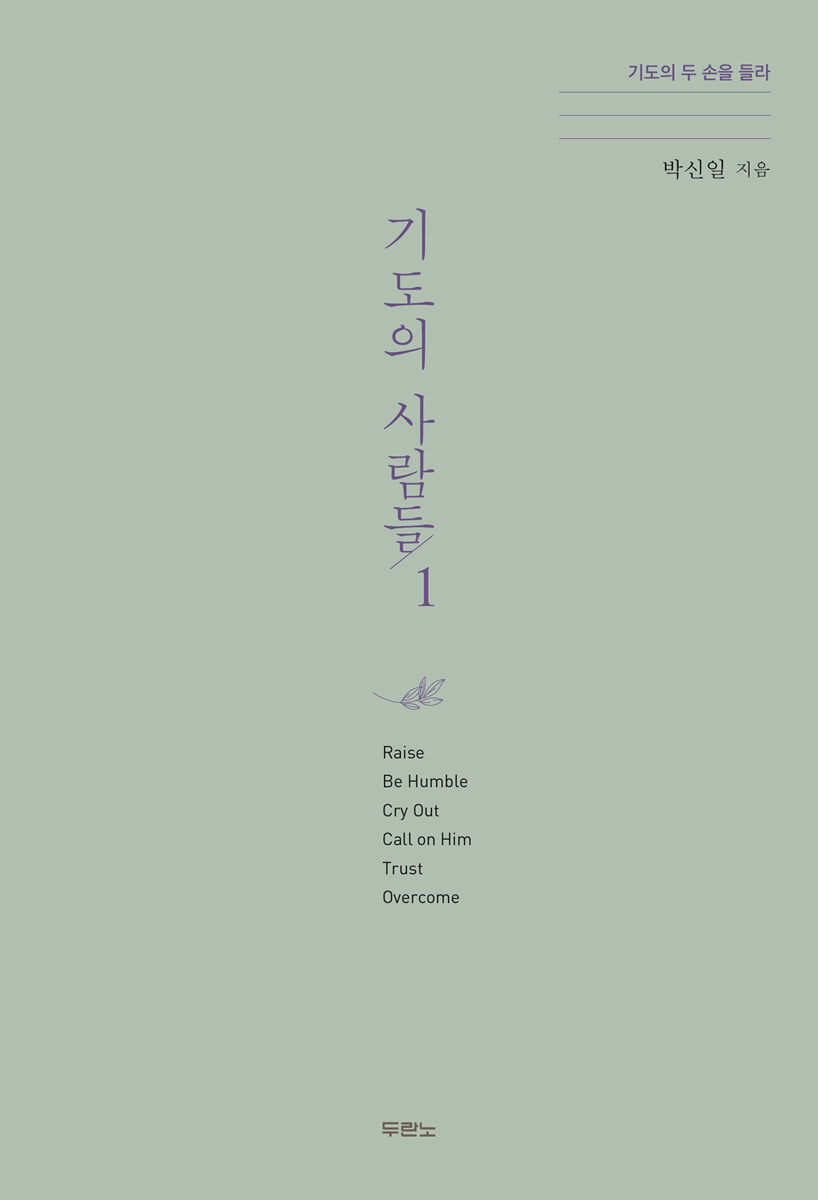
People of Prayer 1
 |
Description
Book Introduction
Pastor Park Shin-il's excellent small group study on prayer
About prayer through biblical characters
Let's learn, share, and pray together.
『People of Prayer 1』 derives the theology of what kind of prayer God desires through Moses, Eliezer, Hannah, Joshua, the daughters of Zelophehad, Jehoshaphat, and Hezekiah, and leads people to pray in accordance with that theology.
About prayer through biblical characters
Let's learn, share, and pray together.
『People of Prayer 1』 derives the theology of what kind of prayer God desires through Moses, Eliezer, Hannah, Joshua, the daughters of Zelophehad, Jehoshaphat, and Hezekiah, and leads people to pray in accordance with that theology.
- You can preview some of the book's contents.
Preview
index
Prologue 6
Lesson 1: Moses' Prayer
Raise both hands high 10
Lesson 2: The Old Servant's Prayer
Be humble 28
Lesson 3: Hannah's Prayer
Weep 46
Lesson 4: Joshua's Prayer
Stop and Call to the Lord 64
Lesson 5: The Prayer of the Daughters of Zelophehad
Be sure to respond 82
Lesson 6: The Prayers of Jehoshaphat and Hezekiah
Conquer the World 98
Week 124
Lesson 1: Moses' Prayer
Raise both hands high 10
Lesson 2: The Old Servant's Prayer
Be humble 28
Lesson 3: Hannah's Prayer
Weep 46
Lesson 4: Joshua's Prayer
Stop and Call to the Lord 64
Lesson 5: The Prayer of the Daughters of Zelophehad
Be sure to respond 82
Lesson 6: The Prayers of Jehoshaphat and Hezekiah
Conquer the World 98
Week 124
Into the book
Let's say we do this experiment.
There are 100 patients in the hospital.
Of these, only 50 people are selected and the congregation begins to pray intensively.
Will the conditions of the 50 patients for whom the believers pray improve more quickly than the other 50? Can we verify the effectiveness of prayer in this way? Of course, you'd want to answer yes.
But prayer cannot be statistically tested.
Praying for the sick is about genuine recovery, not about gathering statistics.
Such an experiment is inherently impossible.
Because if one side wants to get better while the other side wants to get worse, then there is no motivation for prayer.
Any attempt to prove the efficacy of prayer amounts to treating prayer as nothing more than magic or a vending machine.
To avoid falling into this error, we need a 'theology of prayer' based on the Bible.
--- p.12
Ezra, who had returned from the Babylonian captivity, knelt down and lifted up his hands to the Lord and prayed.
I pray because of my sins.
Because of the sins of their ancestors, Israel was punished by having their country taken away and being taken captive to Babylon.
Ezra repents of all these sins and prays for the darkness to disappear.
Although it has been darkness until now, I pray with a fervent heart that I now want to become light.
But why do they kneel and pray, their outer garments torn? It's to remind us that there are times when this is absolutely necessary.
No matter how serious the illness, there are times when you must kneel down and pray.
So why do we raise our hands in prayer? Is it because we're ignorant or fanatics? Does praying quietly without raising our hands make us mature intellectuals? No, it's not.
A truly desperate person raises both hands.
When you want to come out of the darkness, when you truly want to be the light, raise your hands and pray.
I hope you will raise both hands and pray to God for a distinct life.
--- pp.17~18
Is it okay to ask the Lord for "anything" when praying? Is it shameful to pray for even the most trivial things? God is our Father, and we are His children.
As we discussed in Lesson 1, since ‘prayer is a conversation that arises from a relationship,’ it doesn’t matter what we, as children, ask of God the Father.
Prayer is something we, weak as we are, offer to the Almighty Lord.
But when you seek something, sometimes you can get it through your greed.
Greed can become excessive and lead to sin.
However, this does not mean that we should hide our greed or sins.
The more so, the more important it is to pray very honestly.
If we pray openly and honestly, God will correct any excesses. 7 The Lord will reveal to us anything we are asking for wrongly.
--- p.30
If there is anyone who has caused me pain, anyone I cannot personally forgive, or anyone who has been hurt because of me, I will keep them in my heart and pray for them.
They are all weak people for whom I must pray.
Just as Abraham's old servant prayed, I will pray that they may prosper and prosper through God's grace.
God will grant forgiveness and a heart of restoration to those who pray with such sincerity.
And I will end my prayer by giving praise and glory to God who changes my heart.
--- p.43
Everyone gets hurt.
Christians are no exception.
The problem is that we take that hurt out on other people.
It mainly targets people you meet at home and at work.
So one wound creates another, and it spreads like an epidemic.
How can we stop this and cut it off? If you truly believe in Jesus, the gospel must work in your life.
The gospel is that Jesus died and rose again.
The gospel is the power to save those who are dying in sin.
The gospel turns despair into hope.
The gospel has the power to break broken hearts and discouraged thoughts.
When I pray in the name of Jesus, the power of the gospel works within me.
Then the hurt and despair will surely stop.
Pray to the Lord, the Master of the Gospel.
He will not allow our wounds to spread to others.
There are 100 patients in the hospital.
Of these, only 50 people are selected and the congregation begins to pray intensively.
Will the conditions of the 50 patients for whom the believers pray improve more quickly than the other 50? Can we verify the effectiveness of prayer in this way? Of course, you'd want to answer yes.
But prayer cannot be statistically tested.
Praying for the sick is about genuine recovery, not about gathering statistics.
Such an experiment is inherently impossible.
Because if one side wants to get better while the other side wants to get worse, then there is no motivation for prayer.
Any attempt to prove the efficacy of prayer amounts to treating prayer as nothing more than magic or a vending machine.
To avoid falling into this error, we need a 'theology of prayer' based on the Bible.
--- p.12
Ezra, who had returned from the Babylonian captivity, knelt down and lifted up his hands to the Lord and prayed.
I pray because of my sins.
Because of the sins of their ancestors, Israel was punished by having their country taken away and being taken captive to Babylon.
Ezra repents of all these sins and prays for the darkness to disappear.
Although it has been darkness until now, I pray with a fervent heart that I now want to become light.
But why do they kneel and pray, their outer garments torn? It's to remind us that there are times when this is absolutely necessary.
No matter how serious the illness, there are times when you must kneel down and pray.
So why do we raise our hands in prayer? Is it because we're ignorant or fanatics? Does praying quietly without raising our hands make us mature intellectuals? No, it's not.
A truly desperate person raises both hands.
When you want to come out of the darkness, when you truly want to be the light, raise your hands and pray.
I hope you will raise both hands and pray to God for a distinct life.
--- pp.17~18
Is it okay to ask the Lord for "anything" when praying? Is it shameful to pray for even the most trivial things? God is our Father, and we are His children.
As we discussed in Lesson 1, since ‘prayer is a conversation that arises from a relationship,’ it doesn’t matter what we, as children, ask of God the Father.
Prayer is something we, weak as we are, offer to the Almighty Lord.
But when you seek something, sometimes you can get it through your greed.
Greed can become excessive and lead to sin.
However, this does not mean that we should hide our greed or sins.
The more so, the more important it is to pray very honestly.
If we pray openly and honestly, God will correct any excesses. 7 The Lord will reveal to us anything we are asking for wrongly.
--- p.30
If there is anyone who has caused me pain, anyone I cannot personally forgive, or anyone who has been hurt because of me, I will keep them in my heart and pray for them.
They are all weak people for whom I must pray.
Just as Abraham's old servant prayed, I will pray that they may prosper and prosper through God's grace.
God will grant forgiveness and a heart of restoration to those who pray with such sincerity.
And I will end my prayer by giving praise and glory to God who changes my heart.
--- p.43
Everyone gets hurt.
Christians are no exception.
The problem is that we take that hurt out on other people.
It mainly targets people you meet at home and at work.
So one wound creates another, and it spreads like an epidemic.
How can we stop this and cut it off? If you truly believe in Jesus, the gospel must work in your life.
The gospel is that Jesus died and rose again.
The gospel is the power to save those who are dying in sin.
The gospel turns despair into hope.
The gospel has the power to break broken hearts and discouraged thoughts.
When I pray in the name of Jesus, the power of the gospel works within me.
Then the hurt and despair will surely stop.
Pray to the Lord, the Master of the Gospel.
He will not allow our wounds to spread to others.
--- p.48
Publisher's Review
Theology of Prayer 1: Prayer is a conversation born of relationship.
Prayer begins with a relationship with God.
Prayer is not about praying to some unknown being.
It is not a monologue that is spoken or repeated to oneself.
Theology of Prayer 2: Prayer is a conversation with the living God.
Prayer is an honest request. Honest prayer is a very important training and practice in getting to know the Lord.
Through this process, you can learn the content and attitude of prayer that the Lord desires.
Theology of Prayer 3: Prayer is Dependence
Those who need the Lord's help should kneel down and pray with all their heart.
Prayer is dependence on the Lord, the Creator of heaven and earth.
Theology of Prayer 4: Prayer is Pause
Failure is a sign that it is time to stop what I am doing and pray.
When we stop and pray, we can meditate on the great plan God has for us.
Theology of Prayer 5: Prayer is Born of Faith
The reason we pray to God is because we trust and believe in Him.
Prayer is born from the belief that God loves me.
Theology of Prayer 6: Prayer is God's Rule
Prayer is the most concrete way to bring my entire life under God's rule and make God my home.
Prayer begins with a relationship with God.
Prayer is not about praying to some unknown being.
It is not a monologue that is spoken or repeated to oneself.
Theology of Prayer 2: Prayer is a conversation with the living God.
Prayer is an honest request. Honest prayer is a very important training and practice in getting to know the Lord.
Through this process, you can learn the content and attitude of prayer that the Lord desires.
Theology of Prayer 3: Prayer is Dependence
Those who need the Lord's help should kneel down and pray with all their heart.
Prayer is dependence on the Lord, the Creator of heaven and earth.
Theology of Prayer 4: Prayer is Pause
Failure is a sign that it is time to stop what I am doing and pray.
When we stop and pray, we can meditate on the great plan God has for us.
Theology of Prayer 5: Prayer is Born of Faith
The reason we pray to God is because we trust and believe in Him.
Prayer is born from the belief that God loves me.
Theology of Prayer 6: Prayer is God's Rule
Prayer is the most concrete way to bring my entire life under God's rule and make God my home.
GOODS SPECIFICS
- Date of issue: March 8, 2023
- Page count, weight, size: 128 pages | 246g | 150*220*9mm
- ISBN13: 9788953144347
- ISBN10: 8953144345
You may also like
카테고리
korean


korean

![GQ KOREA Mark (Monthly): December [2025]](http://librairie.coreenne.fr/cdn/shop/files/8ef265dbbfbf186523ed75ba7319009d.jpg?v=1765340328&width=3840)


