

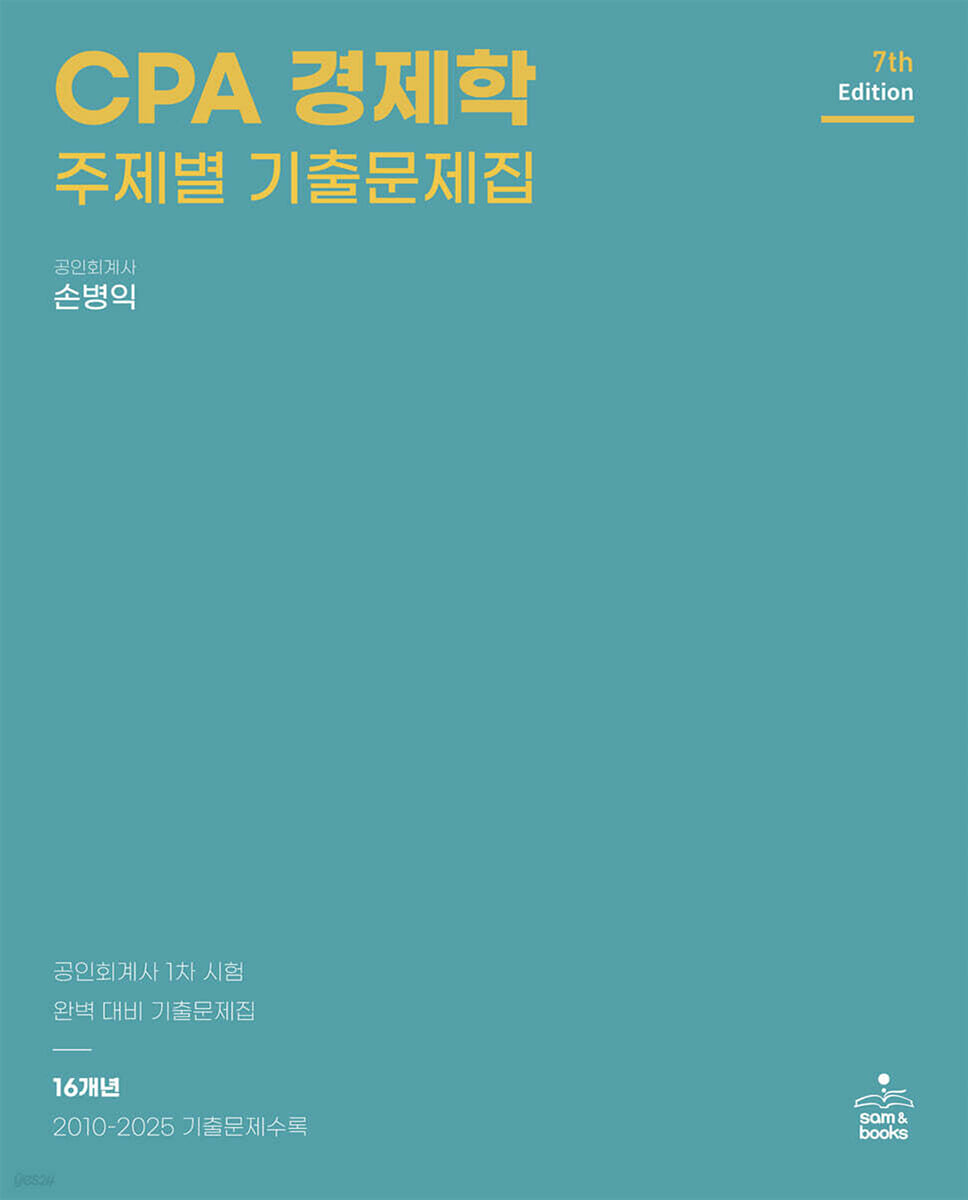
CPA Economics Subject-Specific Past Exam Questions
 |
Description
Book Introduction
For students preparing for the Certified Public Accountant exam, there is no better indicator of exam trends than past exam questions.
Past exam questions have recurring themes and types.
While questions occasionally appear that are beyond the level or knowledge of CPA candidates, we all know that it's not these exceptional questions that determine your success, but rather the consistently recurring topics and types of questions.
This book, which compiles past exam questions from the past 16 years, will help test-takers identify the topics and types preferred by the CPA exam.
This book, revised and revised based on feedback from the previous six editions and lectures using the book, features the following:
First, we classified the past 16 years of exam questions by topic.
Rather than vaguely studying all the topics, this book categorizes past exam questions by topic to help students understand the frequency and difficulty of the CPA exam and study more efficiently.
All past exam questions from the last 10 years are included, and only essential questions from 10 years ago are included.
Second, we made the problem-solving method as identical as possible.
The solutions to problems of the same type were written using a unified approach.
I think that if you practice the same framework repeatedly, you will be able to easily apply the same approach to find the correct answer in the exam room.
Third, we included explanations for as many fingerprints as possible.
We have included explanations for not only the correct answers but also the incorrect answers as much as possible.
As a senior who has already experienced the situation of a test taker, there have been more than a few times when I was more curious about the explanations for my wrong answers than the explanations for the correct answers.
To enable students studying this book to broadly study correct and incorrect answers, explanations for incorrect answers are also included.
Fourth, key concepts for each problem were added to the explanation.
Before explaining the problem, I organized the concepts that are repeated in that type.
If you remember the core concepts that don't change even if the problem type changes, you will be able to approach the correct answer without being confused.
Additionally, the same type of problem has been included with explanations in the same structure to help students learn the recurring core concepts.
Past exam questions have recurring themes and types.
While questions occasionally appear that are beyond the level or knowledge of CPA candidates, we all know that it's not these exceptional questions that determine your success, but rather the consistently recurring topics and types of questions.
This book, which compiles past exam questions from the past 16 years, will help test-takers identify the topics and types preferred by the CPA exam.
This book, revised and revised based on feedback from the previous six editions and lectures using the book, features the following:
First, we classified the past 16 years of exam questions by topic.
Rather than vaguely studying all the topics, this book categorizes past exam questions by topic to help students understand the frequency and difficulty of the CPA exam and study more efficiently.
All past exam questions from the last 10 years are included, and only essential questions from 10 years ago are included.
Second, we made the problem-solving method as identical as possible.
The solutions to problems of the same type were written using a unified approach.
I think that if you practice the same framework repeatedly, you will be able to easily apply the same approach to find the correct answer in the exam room.
Third, we included explanations for as many fingerprints as possible.
We have included explanations for not only the correct answers but also the incorrect answers as much as possible.
As a senior who has already experienced the situation of a test taker, there have been more than a few times when I was more curious about the explanations for my wrong answers than the explanations for the correct answers.
To enable students studying this book to broadly study correct and incorrect answers, explanations for incorrect answers are also included.
Fourth, key concepts for each problem were added to the explanation.
Before explaining the problem, I organized the concepts that are repeated in that type.
If you remember the core concepts that don't change even if the problem type changes, you will be able to approach the correct answer without being confused.
Additionally, the same type of problem has been included with explanations in the same structure to help students learn the recurring core concepts.
index
part.
01
microeconomics
Chapter 1: Fundamentals of Economics 9
Chapter 2 Supply and Demand 10
Chapter 3 Elasticity 11
Chapter 4: Applications of Supply and Demand Theory 14
Chapter 5: Indifference Curve Theory 19
Chapter 6: Present Preference Theory 33
Chapter 7: Applications of Consumer Theory 36
Chapter 8: Choice Theory under Uncertainty 41
Chapter 9: Production Function 43
Chapter 10 Cost Function 47
Chapter 11: Perfectly Competitive Markets 51
Chapter 12 Monopoly Markets 55
Chapter 13: Monopolistic Competition 62
Chapter 14: Oligopoly Markets 63
Chapter 15 Game Theory 67
Chapter 16: Element Markets 73
Chapter 17 General Equilibrium Theory 78
Chapter 18: Welfare Economics 83
Chapter 19: Market Failure 84
Chapter 20: Information Economics 92
part.
02
Macroeconomics
Chapter 1: Measurement of National Income and Economic Structure 99
Chapter 2: The Classical Theory of National Income Determination 105
Chapter 3: Keynes's Theory of National Income Determination 107
Chapter 4: Consumption Function Theory 111
Chapter 5: Investment Function Theory 114
Chapter 6: Financial Systems and the Money Supply 115
Chapter 7: Money Demand and Monetary Policy 117
Chapter 8: IS-LM and Policy Effects 121
Chapter 9 Aggregate Demand - Aggregate Supply 131
Chapter 10: Prices and Inflation 141
Chapter 11: Labor Markets and Unemployment 146
Chapter 12: The Phillips Curve and Stagflation 149
Chapter 13: Key Contents of Each School Model 155
Chapter 14: Debates Related to Stabilization Policy 158
Chapter 16: Economic Growth Theory 160
Chapter 17: International Trade Theory 167
Chapter 18: Trade Policy 177
Chapter 19 Exchange Rates 183
Chapter 20: Balance of Payments 195
※ Chapter 15, Economic Fluctuation Theory, is not included because there are no past exam questions.
part.
03
Past exam questions
2025 Exam Question 203
part.
04
Answers and Explanations
Microeconomics Answer Key 215
Macroeconomics Answer Key 373
2025 Exam Questions and Answers 489
01
microeconomics
Chapter 1: Fundamentals of Economics 9
Chapter 2 Supply and Demand 10
Chapter 3 Elasticity 11
Chapter 4: Applications of Supply and Demand Theory 14
Chapter 5: Indifference Curve Theory 19
Chapter 6: Present Preference Theory 33
Chapter 7: Applications of Consumer Theory 36
Chapter 8: Choice Theory under Uncertainty 41
Chapter 9: Production Function 43
Chapter 10 Cost Function 47
Chapter 11: Perfectly Competitive Markets 51
Chapter 12 Monopoly Markets 55
Chapter 13: Monopolistic Competition 62
Chapter 14: Oligopoly Markets 63
Chapter 15 Game Theory 67
Chapter 16: Element Markets 73
Chapter 17 General Equilibrium Theory 78
Chapter 18: Welfare Economics 83
Chapter 19: Market Failure 84
Chapter 20: Information Economics 92
part.
02
Macroeconomics
Chapter 1: Measurement of National Income and Economic Structure 99
Chapter 2: The Classical Theory of National Income Determination 105
Chapter 3: Keynes's Theory of National Income Determination 107
Chapter 4: Consumption Function Theory 111
Chapter 5: Investment Function Theory 114
Chapter 6: Financial Systems and the Money Supply 115
Chapter 7: Money Demand and Monetary Policy 117
Chapter 8: IS-LM and Policy Effects 121
Chapter 9 Aggregate Demand - Aggregate Supply 131
Chapter 10: Prices and Inflation 141
Chapter 11: Labor Markets and Unemployment 146
Chapter 12: The Phillips Curve and Stagflation 149
Chapter 13: Key Contents of Each School Model 155
Chapter 14: Debates Related to Stabilization Policy 158
Chapter 16: Economic Growth Theory 160
Chapter 17: International Trade Theory 167
Chapter 18: Trade Policy 177
Chapter 19 Exchange Rates 183
Chapter 20: Balance of Payments 195
※ Chapter 15, Economic Fluctuation Theory, is not included because there are no past exam questions.
part.
03
Past exam questions
2025 Exam Question 203
part.
04
Answers and Explanations
Microeconomics Answer Key 215
Macroeconomics Answer Key 373
2025 Exam Questions and Answers 489
Publisher's Review
We've created this book to reflect the needs of test takers as best as possible. However, please understand any shortcomings, and we will incorporate your feedback to improve future textbooks and lectures.
For many students, economics may just be one of the first subjects they must overcome to pass the exam, though it's difficult and boring.
However, economics is a discipline comprised of countless insights and logic that will help you determine the direction of your life, not just the accounting work you'll encounter after passing the exam.
The reason economics is included in the first year of your degree is to help you make better choices when faced with the countless decisions you'll face as an accountant.
I sincerely hope that you will pass the CPA exam and one day revisit the topics discussed in economics.
It's already been seven years since the first edition of this book came out.
Through this book, I delivered a new message to the accounting economics market, which had been solving all problems out of habit, that studying only past exam questions for accounting exams was more efficient, and many test takers have proven this message with results.
The ultimate goal of perfecting the instructor's methodology will be the passing of the final exam taker.
I am always grateful to all the students who studied through this book, as my colleagues and co-authors who helped me complete it.
I would also like to express my gratitude to Sam & Books CEO Lee Nak-gyu, Manager Hong Su-gi, Assistant Managers Kim Bo-young and Kim Yong-jae, and all employees, including Kim Eun-seo, who have provided us with unwavering support from the beginning to the present.
I also express my unchanging feelings to my beloved wife and children.
June 2025
Posted by Son Byeong-ik
For many students, economics may just be one of the first subjects they must overcome to pass the exam, though it's difficult and boring.
However, economics is a discipline comprised of countless insights and logic that will help you determine the direction of your life, not just the accounting work you'll encounter after passing the exam.
The reason economics is included in the first year of your degree is to help you make better choices when faced with the countless decisions you'll face as an accountant.
I sincerely hope that you will pass the CPA exam and one day revisit the topics discussed in economics.
It's already been seven years since the first edition of this book came out.
Through this book, I delivered a new message to the accounting economics market, which had been solving all problems out of habit, that studying only past exam questions for accounting exams was more efficient, and many test takers have proven this message with results.
The ultimate goal of perfecting the instructor's methodology will be the passing of the final exam taker.
I am always grateful to all the students who studied through this book, as my colleagues and co-authors who helped me complete it.
I would also like to express my gratitude to Sam & Books CEO Lee Nak-gyu, Manager Hong Su-gi, Assistant Managers Kim Bo-young and Kim Yong-jae, and all employees, including Kim Eun-seo, who have provided us with unwavering support from the beginning to the present.
I also express my unchanging feelings to my beloved wife and children.
June 2025
Posted by Son Byeong-ik
GOODS SPECIFICS
- Date of issue: June 23, 2025
- Page count, weight, size: 512 pages | 210*260*20mm
- ISBN13: 9791156265542
You may also like
카테고리
korean


korean

![GQ KOREA Mark (Monthly): December [2025]](http://librairie.coreenne.fr/cdn/shop/files/8ef265dbbfbf186523ed75ba7319009d.jpg?v=1765340328&width=3840)


