

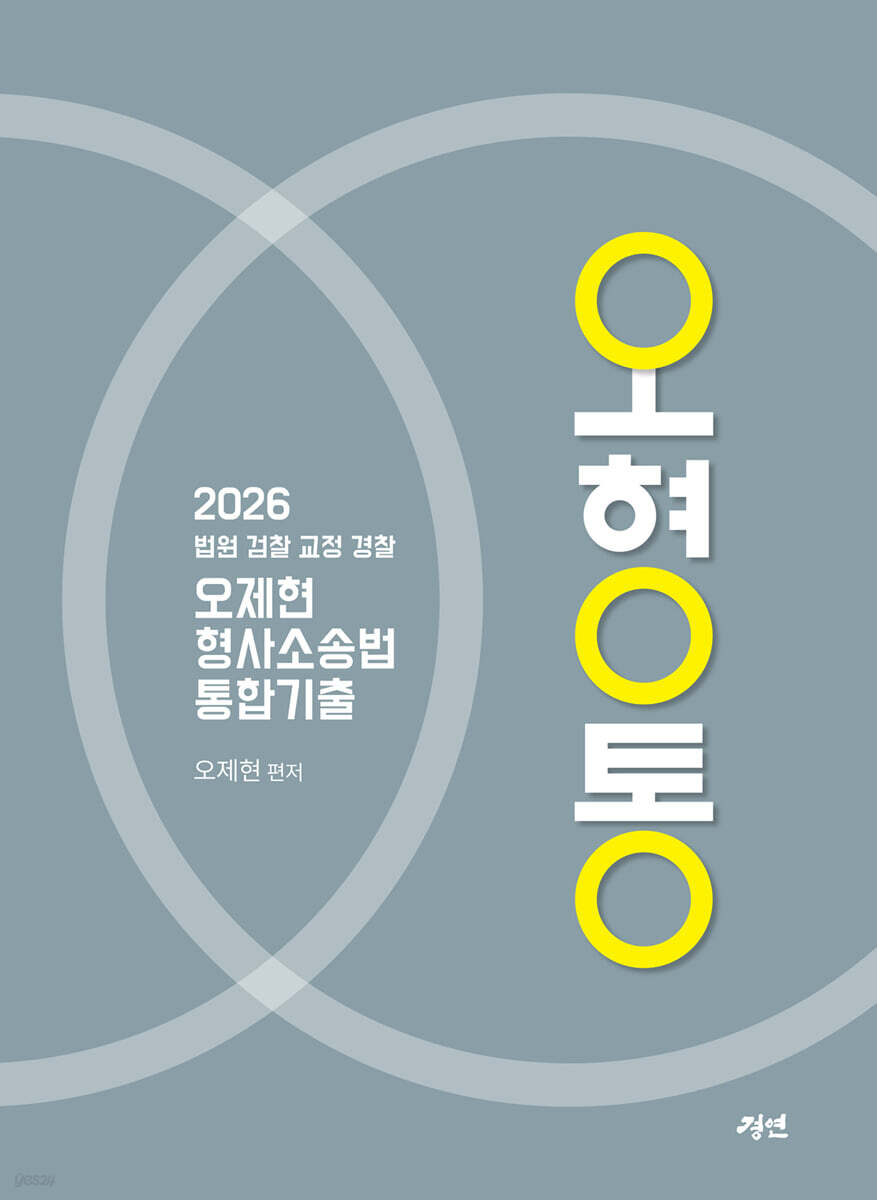
2026 Oh Je-Hyeon Criminal Procedure Law Integrated Exam Questions
 |
Description
Book Introduction
preface
This revised edition is the third revised edition of 'Ohyeongtong' and the eighth edition overall.
The composition and features of the original board have been maintained.
To fit the five-year scope, previous year's questions were deleted and questions from 2025 were added.
We have re-examined the textbook contents and re-organized incorrect explanations and content.
In addition, I have often heard questions mixed with doubts recently about whether the past 5 years of exam questions are not enough. However, I am sure that test takers are well aware that the past exam questions beyond that are not only old-style questions, but also many of them do not fit with current trends, and many of them are useless due to already changed precedents and articles.
Since this is the 8th edition of my Ohyeongtong Exam Questions Collection, I could have included at least 13 years of exam questions, but I believe that reducing the amount of exam questions students have to read, increasing the number of times they can read it, and providing faithful explanations so that students can accurately solve and organize the exam questions on their own will be more helpful for passing the exam. Please remember that I only include 5 years of exam questions every year.
Even if you visit my cafe, you can see that many test takers have achieved perfect scores in the 9th and 7th level national civil service exams and the 9th level court exams this year using this past exam book.
So, please use the previous exam solution booklet with the mindset that you will solve each problem correctly, and if you have any questions, please be sure to ask questions to resolve them.
Let me be clear: I am not trying to do business with you.
Please remember that I am an instructor who is dedicated solely to your success.
I am always grateful for the expectations and trust many people have placed in this textbook.
To repay this, I will continue to work harder on my teaching materials and lectures.
To all the test takers, I hope you continue to prepare without wavering for the remaining period.
I wish you success.
This revised edition is the third revised edition of 'Ohyeongtong' and the eighth edition overall.
The composition and features of the original board have been maintained.
To fit the five-year scope, previous year's questions were deleted and questions from 2025 were added.
We have re-examined the textbook contents and re-organized incorrect explanations and content.
In addition, I have often heard questions mixed with doubts recently about whether the past 5 years of exam questions are not enough. However, I am sure that test takers are well aware that the past exam questions beyond that are not only old-style questions, but also many of them do not fit with current trends, and many of them are useless due to already changed precedents and articles.
Since this is the 8th edition of my Ohyeongtong Exam Questions Collection, I could have included at least 13 years of exam questions, but I believe that reducing the amount of exam questions students have to read, increasing the number of times they can read it, and providing faithful explanations so that students can accurately solve and organize the exam questions on their own will be more helpful for passing the exam. Please remember that I only include 5 years of exam questions every year.
Even if you visit my cafe, you can see that many test takers have achieved perfect scores in the 9th and 7th level national civil service exams and the 9th level court exams this year using this past exam book.
So, please use the previous exam solution booklet with the mindset that you will solve each problem correctly, and if you have any questions, please be sure to ask questions to resolve them.
Let me be clear: I am not trying to do business with you.
Please remember that I am an instructor who is dedicated solely to your success.
I am always grateful for the expectations and trust many people have placed in this textbook.
To repay this, I will continue to work harder on my teaching materials and lectures.
To all the test takers, I hope you continue to prepare without wavering for the remaining period.
I wish you success.
- You can preview some of the book's contents.
Preview
index
Part 1: General Theory of Criminal Procedure
Chapter 1: The Significance and Character of Criminal Procedure Law 2
Chapter 2 Courts and Scope of Application of the Criminal Procedure Act 2
Chapter 3: The Idea and Basic Structure of Criminal Procedure 6
Part 2: Investigation and Prosecution
Chapter 1: Initiation of the Investigation 22
Chapter 2: Random Investigations 81
Chapter 3: Personal Enforcement (Arrest and Detention) 108
Chapter 4: Material Forced Disposition (Seizure, Search, and Verification) 177
Chapter 5 Preservation of Evidence in Investigation 266
Chapter 6: Conclusion of the Investigation 269
Chapter 7 Investigation after Filing a Public Prosecution 280
Chapter 8 Filing a Public Prosecution 285
Section 1: Basic Principles of Filing a Public Prosecution 285
Section 2: Financial Application and Compulsory Prosecution Procedures 293
Section 3. Method of Filing a Public Prosecution 301
Section 4 Effect of Filing a Public Prosecution 303
Section 5 Statute of Limitations 306
Part 3 Public Trial
Chapter 1: Subjects of Litigation 318
Section 1: The Law 318
Section 2 Inspection 330
Section 3 Defendant 332
Section 4: Defense Attorney 349
Chapter 2 Litigation Acts and Litigation Conditions 365
Section 1 Litigation Act 365
Section 2 Conditions for Litigation 378
Chapter 3: Basic Principles of Trial Procedure 380
Chapter 4 Scope of Trial 381
Chapter 5 Trial Preparation Procedures 396
Chapter 6: Trial in the Courtroom 404
Chapter 7: Examination of Evidence 417
Chapter 8 Special Provisions for Trial Procedures 445
Chapter 9 Evidence 466
Section 1: Basic Concepts of Evidence Law and Basic Principles of Proof 466
Section 2: Exclusion Rule for Illegal Evidence Collection 496
Section 3: The Law of Exclusion of Confession 529
Section 4: Special Law 538
Section 5: Consent of the Parties and Evidence Capacity 603
Section 6 Impeachment Evidence 618
Section 7: The Law of Confession Support 625
Section 8: The evidentiary power of trial records 641
Chapter 10: The Trial 644
Section 1: Basic Concepts of Trial 644
Section 2 Final Trial 644
Section 3 Finality and Effect of Judgment 665
4. Appeals, Emergency Relief Procedures, and Special Criminal Procedures
Chapter 1, Appeal 676
Section 1 General Theory of Appeals 676
Section 2 Appeal 695
Section 3, Appeal 705
Section 4 Appeal 715
Chapter 2 Retrial and Extraordinary Appeal 721
Chapter 3 Special Criminal Procedures 734
Section 1. Abbreviated Procedure 734
Section 2 Summary Trial Procedure 743
Section 3 Special Procedures for Juveniles 748
Section 4 Compensation Order Procedure 751
Chapter 4: Execution of Trials, Criminal Compensation, and Restoration of Honor 755
Section 1 Enforcement of Judgment 755
Chapter 1: The Significance and Character of Criminal Procedure Law 2
Chapter 2 Courts and Scope of Application of the Criminal Procedure Act 2
Chapter 3: The Idea and Basic Structure of Criminal Procedure 6
Part 2: Investigation and Prosecution
Chapter 1: Initiation of the Investigation 22
Chapter 2: Random Investigations 81
Chapter 3: Personal Enforcement (Arrest and Detention) 108
Chapter 4: Material Forced Disposition (Seizure, Search, and Verification) 177
Chapter 5 Preservation of Evidence in Investigation 266
Chapter 6: Conclusion of the Investigation 269
Chapter 7 Investigation after Filing a Public Prosecution 280
Chapter 8 Filing a Public Prosecution 285
Section 1: Basic Principles of Filing a Public Prosecution 285
Section 2: Financial Application and Compulsory Prosecution Procedures 293
Section 3. Method of Filing a Public Prosecution 301
Section 4 Effect of Filing a Public Prosecution 303
Section 5 Statute of Limitations 306
Part 3 Public Trial
Chapter 1: Subjects of Litigation 318
Section 1: The Law 318
Section 2 Inspection 330
Section 3 Defendant 332
Section 4: Defense Attorney 349
Chapter 2 Litigation Acts and Litigation Conditions 365
Section 1 Litigation Act 365
Section 2 Conditions for Litigation 378
Chapter 3: Basic Principles of Trial Procedure 380
Chapter 4 Scope of Trial 381
Chapter 5 Trial Preparation Procedures 396
Chapter 6: Trial in the Courtroom 404
Chapter 7: Examination of Evidence 417
Chapter 8 Special Provisions for Trial Procedures 445
Chapter 9 Evidence 466
Section 1: Basic Concepts of Evidence Law and Basic Principles of Proof 466
Section 2: Exclusion Rule for Illegal Evidence Collection 496
Section 3: The Law of Exclusion of Confession 529
Section 4: Special Law 538
Section 5: Consent of the Parties and Evidence Capacity 603
Section 6 Impeachment Evidence 618
Section 7: The Law of Confession Support 625
Section 8: The evidentiary power of trial records 641
Chapter 10: The Trial 644
Section 1: Basic Concepts of Trial 644
Section 2 Final Trial 644
Section 3 Finality and Effect of Judgment 665
4. Appeals, Emergency Relief Procedures, and Special Criminal Procedures
Chapter 1, Appeal 676
Section 1 General Theory of Appeals 676
Section 2 Appeal 695
Section 3, Appeal 705
Section 4 Appeal 715
Chapter 2 Retrial and Extraordinary Appeal 721
Chapter 3 Special Criminal Procedures 734
Section 1. Abbreviated Procedure 734
Section 2 Summary Trial Procedure 743
Section 3 Special Procedures for Juveniles 748
Section 4 Compensation Order Procedure 751
Chapter 4: Execution of Trials, Criminal Compensation, and Restoration of Honor 755
Section 1 Enforcement of Judgment 755
Publisher's Review
Features and study methods of this textbook
This textbook, Oh Hyung-tong 2025 Past Exam Questions Collection, is a textbook based on questions from various national examinations over the past five years, including the 9th grade court examination, 7th and 9th grade national civil service examinations (including correctional service examinations), general police, police officer, and police promotion examinations, which prepare for the criminal procedure law in multiple-choice format.
The range of included past exam questions is as follows:
Ⅰ.
Police Civil Service Regular Promotion Examination (2021-2025)
Ⅱ.
Police Officer Open Competitive Recruitment Examination (Police Officer Candidate Selection Examination) (71st - 75th)
Ⅲ.
Police Officer (Patrol) Recruitment Examination (2021-2025)
Ⅳ.
9th Grade Court Open Competitive Examination (2021-2025)
V.
National Civil Service Grade 7 Open Competitive Recruitment Examination (2021-2025) National Civil Service Grade 9 Open Competitive Recruitment Examination (Criminal Procedure Act, Introduction to Criminal Procedure Act) (2021-2025)
The reason I created this textbook is because I have seen many cases where self-studying test takers were unable to solve problems using only the explanations in the workbook.
So, to address this regret, the author has worked hard to make the explanations more thorough than those in existing workbooks, and has often heard many test takers express their gratitude for this.
Test takers preparing for the objective-type Criminal Procedure Law exam should prepare for the exam knowing that there are some differences in the areas covered in each series.
For example, judicial positions require more in-depth preparation than other positions, as they contain more questions about trial procedures.
Additionally, in the case of police officers and 7th grade national civil servants, the execution of sentences is sometimes included in the test.
And in police promotion, practical content sometimes appears as multiple choice questions.
Therefore, for test takers preparing for the 9th and 7th grade national civil service exams, it seems that there will be no major problem in boldly skipping the parts that were only tested on the police promotion exam. After closely analyzing the exams that tested on the criminal procedure law as multiple choice, the results showed that in the past, the facts of the case law and the original text of the case law were tested as they were, so there was no problem in solving the problems even if you memorized the case law based on keywords and only remembered the results. However, the recent trend is to ask whether you properly understand the issues and intent of the case law as well as the facts of the case law, so you should keep this in mind when preparing.
Therefore, I would like to tell our test takers that, if possible, they should first study the intent of the case law, not just the existing leading case law, but also the latest case law.
He also guided our students directly on site and said, “Teacher, this is what someone who passed the exam said.
I've received many questions like, "If you just go through the past exam questions 4-5 times, you'll definitely pass. Can't I do that too?"
However, this statement is only true when the test taker has the basic skills to solve the problem on his/her own.
In other words, if a test taker who does not yet have the ability to solve problems studies only with a past exam book, he or she will end up memorizing the problems rather than solving them.
So, if you are really lucky, there is a small chance that you will get a good score because many of the fingerprints are from previous exams.
However, the chances of such test takers receiving high scores are very slim.
Moreover, the recent trend is to ask whether you properly understand the intent of the case law, so if the previous exam questions are slightly modified or summarized, you will never be able to find the correct answer, and in the end, you will always end up with a score that is 2-3 questions short. Even if you try to calmly study from the textbook, when you solve the problems, it feels like you know most of them, and when you take a mock exam, you will always get a certain score, so you will go back to the summary or workbook, and the vicious cycle will continue.
Law is something you see as much as you know.
Therefore, when a system or procedure is presented, you must first understand the concept and necessity of that system or procedure, and then go through the process of figuring out why the related articles and precedents exist. This will allow you to accurately understand and memorize the problem when solving it.
We ask that you become a test taker who builds up the basics through textbooks and other materials before solving the problem book.
October 2025
Oh Je-hyeon
This textbook, Oh Hyung-tong 2025 Past Exam Questions Collection, is a textbook based on questions from various national examinations over the past five years, including the 9th grade court examination, 7th and 9th grade national civil service examinations (including correctional service examinations), general police, police officer, and police promotion examinations, which prepare for the criminal procedure law in multiple-choice format.
The range of included past exam questions is as follows:
Ⅰ.
Police Civil Service Regular Promotion Examination (2021-2025)
Ⅱ.
Police Officer Open Competitive Recruitment Examination (Police Officer Candidate Selection Examination) (71st - 75th)
Ⅲ.
Police Officer (Patrol) Recruitment Examination (2021-2025)
Ⅳ.
9th Grade Court Open Competitive Examination (2021-2025)
V.
National Civil Service Grade 7 Open Competitive Recruitment Examination (2021-2025) National Civil Service Grade 9 Open Competitive Recruitment Examination (Criminal Procedure Act, Introduction to Criminal Procedure Act) (2021-2025)
The reason I created this textbook is because I have seen many cases where self-studying test takers were unable to solve problems using only the explanations in the workbook.
So, to address this regret, the author has worked hard to make the explanations more thorough than those in existing workbooks, and has often heard many test takers express their gratitude for this.
Test takers preparing for the objective-type Criminal Procedure Law exam should prepare for the exam knowing that there are some differences in the areas covered in each series.
For example, judicial positions require more in-depth preparation than other positions, as they contain more questions about trial procedures.
Additionally, in the case of police officers and 7th grade national civil servants, the execution of sentences is sometimes included in the test.
And in police promotion, practical content sometimes appears as multiple choice questions.
Therefore, for test takers preparing for the 9th and 7th grade national civil service exams, it seems that there will be no major problem in boldly skipping the parts that were only tested on the police promotion exam. After closely analyzing the exams that tested on the criminal procedure law as multiple choice, the results showed that in the past, the facts of the case law and the original text of the case law were tested as they were, so there was no problem in solving the problems even if you memorized the case law based on keywords and only remembered the results. However, the recent trend is to ask whether you properly understand the issues and intent of the case law as well as the facts of the case law, so you should keep this in mind when preparing.
Therefore, I would like to tell our test takers that, if possible, they should first study the intent of the case law, not just the existing leading case law, but also the latest case law.
He also guided our students directly on site and said, “Teacher, this is what someone who passed the exam said.
I've received many questions like, "If you just go through the past exam questions 4-5 times, you'll definitely pass. Can't I do that too?"
However, this statement is only true when the test taker has the basic skills to solve the problem on his/her own.
In other words, if a test taker who does not yet have the ability to solve problems studies only with a past exam book, he or she will end up memorizing the problems rather than solving them.
So, if you are really lucky, there is a small chance that you will get a good score because many of the fingerprints are from previous exams.
However, the chances of such test takers receiving high scores are very slim.
Moreover, the recent trend is to ask whether you properly understand the intent of the case law, so if the previous exam questions are slightly modified or summarized, you will never be able to find the correct answer, and in the end, you will always end up with a score that is 2-3 questions short. Even if you try to calmly study from the textbook, when you solve the problems, it feels like you know most of them, and when you take a mock exam, you will always get a certain score, so you will go back to the summary or workbook, and the vicious cycle will continue.
Law is something you see as much as you know.
Therefore, when a system or procedure is presented, you must first understand the concept and necessity of that system or procedure, and then go through the process of figuring out why the related articles and precedents exist. This will allow you to accurately understand and memorize the problem when solving it.
We ask that you become a test taker who builds up the basics through textbooks and other materials before solving the problem book.
October 2025
Oh Je-hyeon
GOODS SPECIFICS
- Date of issue: November 10, 2025
- Page count, weight, size: 756 pages | 190*260*40mm
- ISBN13: 9791193144985
- ISBN10: 1193144981
You may also like
카테고리
korean


korean

![GQ KOREA Mark (Monthly): December [2025]](http://librairie.coreenne.fr/cdn/shop/files/8ef265dbbfbf186523ed75ba7319009d.jpg?v=1765340328&width=3840)


