

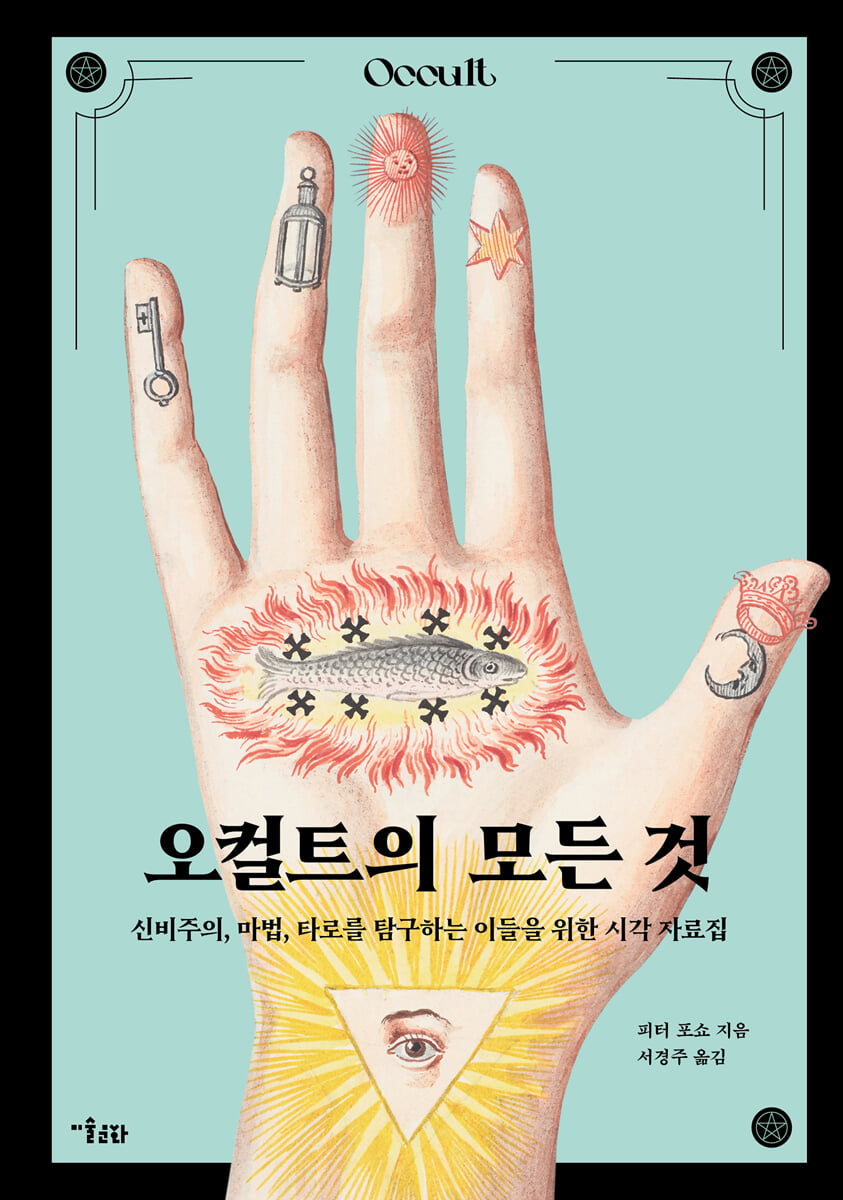
All About the Occult
 |
Description
Book Introduction
"Occult: supernatural and mysterious phenomena that cannot be scientifically explained."
From the early esoteric traditions of the ancient Egyptians
From a Reinterpretation of Modern Occultism
A thorough exploration of the beliefs, rituals, and philosophies of occultists around the world.
From the early esoteric traditions of the ancient Egyptians
From a Reinterpretation of Modern Occultism
A thorough exploration of the beliefs, rituals, and philosophies of occultists around the world.
- You can preview some of the book's contents.
Preview
index
Introduction: As above, so below
Part 1: Basic Studies
1.
Astrology
2.
alchemy
3.
Kabbalah
Part 2: Occult Philosophy
1.
natural magic
2.
Celestial magic
3.
ritual magic
Part 3: The Resurrection of the Occult
1.
occultism
2.
Tarot
3.
New Age and Occult
Glossary
References
List of illustrations
index
Part 1: Basic Studies
1.
Astrology
2.
alchemy
3.
Kabbalah
Part 2: Occult Philosophy
1.
natural magic
2.
Celestial magic
3.
ritual magic
Part 3: The Resurrection of the Occult
1.
occultism
2.
Tarot
3.
New Age and Occult
Glossary
References
List of illustrations
index
Detailed image

Into the book
Stories about the occult are ancient and date back to ancient times.
It is a story about the sky above and the earth below, and a story about the relationship between God (or God), humans, and nature.
And it is a belief in the mutual harmony of all things, a story about the intricately intertwined creation, the great chain of being.
--- p.10
These individuals and groups often had a much broader range of interests than their medieval and early modern predecessors, adding new elements to the occult.
Examples include card reading and tarot, an interest in the East, religious wisdom, mostly from India, a new orientation toward parapsychology and psychic research, animal magnetism, hypnotism, spiritualism and psychic powers, out-of-body experiences or ascended masters, and a gradual liberation from (or hostility to) Christianity.
--- p.32
Astrology is based on the premise that there is a connection between the positions and movements of the sun, moon, and planets as seen against the background of the constellations and life on earth.
Astrologers believe that knowledge of these relationships can be beneficial to human life.
--- p.37
Western alchemy is by no means a single system; it has many varieties.
For centuries, some people have combined alchemy and astrology, while others have tried to interpret the highly obscure alchemy using other approaches, such as the Jewish Kabbalah and the Christian Kabbalistic texts.
Some people communicated through text, others through a combination of text and images, or sometimes through images alone.
--- p.67
Christian Kabbalah and modern Kabbalah deviate significantly from their original Jewish Kabbalah.
However, the ideas of Pico della Mirandola and his successors had an undeniable influence on the history of Western esotericism and occultism.
--- p.112
Physiognomy is the ability to predict a person's fate by reading the wrinkles on their forehead.
According to theory, everyone has up to seven deep wrinkles on their forehead.
At this time, each wrinkle has an associated planet.
The Moon rules the lowermost wrinkles just above the eyebrows, while Saturn, the planet furthest from Earth, rules the uppermost wrinkles near the hairline.
--- p.133
The main task in celestial magic is to create magical seals.
These seals are usually associated with one specific planet to bring good energy.
If possible, the seal is made of a metal or gem associated with that planet.
The seals contain the symbolism of the planets, the symbols of the zodiac signs associated with them, the names of the gods, usually written in Hebrew, the names of the angels, spirits and demons representing the planets, signs representing their mysteries, images of pagan gods associated with the planets, and a magic square containing the answers.
--- p.142
Ritual magic is the most controversial form of magical practice.
It mainly deals with the supernatural world, invoking angels through spells and summoning ghosts.
It involves a complex series of acts, including drawing a magic circle to protect the wizard and confine spirits, using the language of power to subdue evil spirits, and lengthy preparatory rituals of purification and prayer.
--- p.159
Public interest in occult philosophy waned during the Enlightenment, but it persisted in Freemasonry and was revived in the 19th century, first in France and later in the United States and Britain, through groups such as the Theosophical Society.
Occultism drew on sources from earlier periods, but added new aspects, such as religious enthusiasm for spiritualism.
--- p.179
Some scholars consider the 'Kabbalah Tarot 22 Arcana' to be the first occult tarot.
These cards were drawn by the Swiss occultist and Freemason Oswald Wirth under the direction of Stanislas de Guaita and published in Paris in 1889 as a limited edition of three hundred and fifty hand-painted lithographs.
This card was used by members of the Rosicrucian Kabbalistic Order of de Guaita.
--- p.206
Palmistry, or palm reading, examines the overall appearance of the hand, as well as the lines of the palm, the length and shape of the fingers and fingernails.
A psychic synthesizes all these factors to determine a person's physical and moral disposition and to predict what will happen in the future.
Each finger is associated with a planet and has its own meaning.
The thumb is Venus and represents willpower, the index finger is Jupiter and represents ambition and leadership, the middle finger is Saturn and represents justice and morality, the ring finger is the Sun and represents creativity, and the little finger is Mercury and represents self-expression.
Mars rules the center of the palm, and the Moon rules the outer side of the palm.
--- p.238
Occult ideas are flexible and easily modified.
The occult has persisted for centuries, adapting to cultural changes and finding new mediums through which to convey its ideas and practices.
Sometimes it was part of mainstream culture, sometimes it was part of a hidden trend or counterculture, and what might seem conservative and conventional now was at the time cutting-edge, innovative, moral, and transcendent.
The occult is enjoying a renaissance today.
Because many people who seek inspiration to fuel their imagination are deeply attracted to the hybrid, eclectic, and polymorphous nature of the occult.
It is a story about the sky above and the earth below, and a story about the relationship between God (or God), humans, and nature.
And it is a belief in the mutual harmony of all things, a story about the intricately intertwined creation, the great chain of being.
--- p.10
These individuals and groups often had a much broader range of interests than their medieval and early modern predecessors, adding new elements to the occult.
Examples include card reading and tarot, an interest in the East, religious wisdom, mostly from India, a new orientation toward parapsychology and psychic research, animal magnetism, hypnotism, spiritualism and psychic powers, out-of-body experiences or ascended masters, and a gradual liberation from (or hostility to) Christianity.
--- p.32
Astrology is based on the premise that there is a connection between the positions and movements of the sun, moon, and planets as seen against the background of the constellations and life on earth.
Astrologers believe that knowledge of these relationships can be beneficial to human life.
--- p.37
Western alchemy is by no means a single system; it has many varieties.
For centuries, some people have combined alchemy and astrology, while others have tried to interpret the highly obscure alchemy using other approaches, such as the Jewish Kabbalah and the Christian Kabbalistic texts.
Some people communicated through text, others through a combination of text and images, or sometimes through images alone.
--- p.67
Christian Kabbalah and modern Kabbalah deviate significantly from their original Jewish Kabbalah.
However, the ideas of Pico della Mirandola and his successors had an undeniable influence on the history of Western esotericism and occultism.
--- p.112
Physiognomy is the ability to predict a person's fate by reading the wrinkles on their forehead.
According to theory, everyone has up to seven deep wrinkles on their forehead.
At this time, each wrinkle has an associated planet.
The Moon rules the lowermost wrinkles just above the eyebrows, while Saturn, the planet furthest from Earth, rules the uppermost wrinkles near the hairline.
--- p.133
The main task in celestial magic is to create magical seals.
These seals are usually associated with one specific planet to bring good energy.
If possible, the seal is made of a metal or gem associated with that planet.
The seals contain the symbolism of the planets, the symbols of the zodiac signs associated with them, the names of the gods, usually written in Hebrew, the names of the angels, spirits and demons representing the planets, signs representing their mysteries, images of pagan gods associated with the planets, and a magic square containing the answers.
--- p.142
Ritual magic is the most controversial form of magical practice.
It mainly deals with the supernatural world, invoking angels through spells and summoning ghosts.
It involves a complex series of acts, including drawing a magic circle to protect the wizard and confine spirits, using the language of power to subdue evil spirits, and lengthy preparatory rituals of purification and prayer.
--- p.159
Public interest in occult philosophy waned during the Enlightenment, but it persisted in Freemasonry and was revived in the 19th century, first in France and later in the United States and Britain, through groups such as the Theosophical Society.
Occultism drew on sources from earlier periods, but added new aspects, such as religious enthusiasm for spiritualism.
--- p.179
Some scholars consider the 'Kabbalah Tarot 22 Arcana' to be the first occult tarot.
These cards were drawn by the Swiss occultist and Freemason Oswald Wirth under the direction of Stanislas de Guaita and published in Paris in 1889 as a limited edition of three hundred and fifty hand-painted lithographs.
This card was used by members of the Rosicrucian Kabbalistic Order of de Guaita.
--- p.206
Palmistry, or palm reading, examines the overall appearance of the hand, as well as the lines of the palm, the length and shape of the fingers and fingernails.
A psychic synthesizes all these factors to determine a person's physical and moral disposition and to predict what will happen in the future.
Each finger is associated with a planet and has its own meaning.
The thumb is Venus and represents willpower, the index finger is Jupiter and represents ambition and leadership, the middle finger is Saturn and represents justice and morality, the ring finger is the Sun and represents creativity, and the little finger is Mercury and represents self-expression.
Mars rules the center of the palm, and the Moon rules the outer side of the palm.
--- p.238
Occult ideas are flexible and easily modified.
The occult has persisted for centuries, adapting to cultural changes and finding new mediums through which to convey its ideas and practices.
Sometimes it was part of mainstream culture, sometimes it was part of a hidden trend or counterculture, and what might seem conservative and conventional now was at the time cutting-edge, innovative, moral, and transcendent.
The occult is enjoying a renaissance today.
Because many people who seek inspiration to fuel their imagination are deeply attracted to the hybrid, eclectic, and polymorphous nature of the occult.
--- p.246
Publisher's Review
Music, novels, comics, movies, games, etc.
An occult genre that merges with various fields
Mozart's [The Magic Flute], inspired by Freemasonry; Salvador Dali's various works on the theme of alchemy; the American dark fantasy series [Supernatural], which depicts the war between angels, demons, and humans; Dan Brown's films featuring a professor of symbolic studies as the main character; and J.
From K. Rowling's "Harry Potter" to the film "The Grave," which set Korean theaters ablaze in 2024... What do these works, which transcend time and genre, have in common? It's the occult.
So what is the occult? Demons? Supernatural powers? Mysticism? Many words probably come to mind.
If you look up the dictionary definition of occult, it says, “a supernatural and mysterious phenomenon that cannot be explained scientifically.”
To explain this word, which is both familiar and unfamiliar to modern people, we must go back to ancient times.
From the early esoteric traditions of the ancient Egyptians to the reinterpretations of modern occultism, we will examine in detail the beliefs of occultists around the world, the rituals they practice, and the occult philosophies they advocate.
It's a story about the sky above and the earth below.
A story about the relationship between gods, humans, and nature
The occult is the story of humans being fascinated by the mysterious and wondrous and trying to uncover their secrets and find what is hidden.
These stories have been told in many ways and in many countries over the centuries, not only by the mouths of magicians, sages, astrologers, alchemists, hermits, and mystics, but also by the hands of artists, composers, performers, and others fascinated by the occult wisdom of the past.
The occult worldview may seem absurdly vague at first glance.
That is because the Latin word occultus, from which the word 'occult' is derived, means 'obscure', 'secret', or 'hidden'.
However, the basic disciplines of astrology, alchemy, and magic that appear in Part 1 existed long before they were transmitted in Latin and adopted in the West.
That is to say, it has a long history and tradition.
Today's interest in the occult goes further.
Card reading and tarot, interest in the East, religious wisdom from India, new trends in parapsychology and psychic research, animal magnetism, hypnotism, spiritualism and psychic powers, out-of-body experiences or ascended masters, and gradual liberation from or hostility to Christianity.
They are also willing to embrace anything as occult, from vampires and UFOs to parapsychology and even "occulture," a combination of the occult and popular culture.
About astrology, alchemy, and the occult
Over 170 beautiful and bizarre visual artifacts
"All About the Occult" begins with an introduction to where the occult originated and what it means.
It traces the pre-esoteric origins of astrology and alchemy and their development as occult sciences, then embraces the Kabbalah and nature, celestial, and ritual magic.
The book then covers the foundations of occult philosophy and the revival of modern occultism.
This book provides readers with a comprehensive overview of the ancient occult origins, spiritualism, mysticism, 20th-century anthropology, and the New Age.
It covers nine major themes, with examples of key practices, figures, and symbols related to each theme.
This collection of over 170 beautifully crafted and bizarre visuals, carefully selected from a range of original images found in books and manuscripts, tangible artifacts (amulets, magic mirrors, crystal balls), and some of the most fascinating examples, is presented.
Through these visual aids, we hope to not only gain an understanding of the mystical practices and secret codes of the occult, but also to immerse ourselves in its hybrid, eclectic, and polymorphous allure.
An occult genre that merges with various fields
Mozart's [The Magic Flute], inspired by Freemasonry; Salvador Dali's various works on the theme of alchemy; the American dark fantasy series [Supernatural], which depicts the war between angels, demons, and humans; Dan Brown's films featuring a professor of symbolic studies as the main character; and J.
From K. Rowling's "Harry Potter" to the film "The Grave," which set Korean theaters ablaze in 2024... What do these works, which transcend time and genre, have in common? It's the occult.
So what is the occult? Demons? Supernatural powers? Mysticism? Many words probably come to mind.
If you look up the dictionary definition of occult, it says, “a supernatural and mysterious phenomenon that cannot be explained scientifically.”
To explain this word, which is both familiar and unfamiliar to modern people, we must go back to ancient times.
From the early esoteric traditions of the ancient Egyptians to the reinterpretations of modern occultism, we will examine in detail the beliefs of occultists around the world, the rituals they practice, and the occult philosophies they advocate.
It's a story about the sky above and the earth below.
A story about the relationship between gods, humans, and nature
The occult is the story of humans being fascinated by the mysterious and wondrous and trying to uncover their secrets and find what is hidden.
These stories have been told in many ways and in many countries over the centuries, not only by the mouths of magicians, sages, astrologers, alchemists, hermits, and mystics, but also by the hands of artists, composers, performers, and others fascinated by the occult wisdom of the past.
The occult worldview may seem absurdly vague at first glance.
That is because the Latin word occultus, from which the word 'occult' is derived, means 'obscure', 'secret', or 'hidden'.
However, the basic disciplines of astrology, alchemy, and magic that appear in Part 1 existed long before they were transmitted in Latin and adopted in the West.
That is to say, it has a long history and tradition.
Today's interest in the occult goes further.
Card reading and tarot, interest in the East, religious wisdom from India, new trends in parapsychology and psychic research, animal magnetism, hypnotism, spiritualism and psychic powers, out-of-body experiences or ascended masters, and gradual liberation from or hostility to Christianity.
They are also willing to embrace anything as occult, from vampires and UFOs to parapsychology and even "occulture," a combination of the occult and popular culture.
About astrology, alchemy, and the occult
Over 170 beautiful and bizarre visual artifacts
"All About the Occult" begins with an introduction to where the occult originated and what it means.
It traces the pre-esoteric origins of astrology and alchemy and their development as occult sciences, then embraces the Kabbalah and nature, celestial, and ritual magic.
The book then covers the foundations of occult philosophy and the revival of modern occultism.
This book provides readers with a comprehensive overview of the ancient occult origins, spiritualism, mysticism, 20th-century anthropology, and the New Age.
It covers nine major themes, with examples of key practices, figures, and symbols related to each theme.
This collection of over 170 beautifully crafted and bizarre visuals, carefully selected from a range of original images found in books and manuscripts, tangible artifacts (amulets, magic mirrors, crystal balls), and some of the most fascinating examples, is presented.
Through these visual aids, we hope to not only gain an understanding of the mystical practices and secret codes of the occult, but also to immerse ourselves in its hybrid, eclectic, and polymorphous allure.
GOODS SPECIFICS
- Date of issue: July 15, 2024
- Format: Hardcover book binding method guide
- Page count, weight, size: 256 pages | 872g | 173*244*29mm
- ISBN13: 9791192768182
- ISBN10: 1192768183
You may also like
카테고리
korean


korean

![GQ KOREA Mark (Monthly): December [2025]](http://librairie.coreenne.fr/cdn/shop/files/8ef265dbbfbf186523ed75ba7319009d.jpg?v=1765340328&width=3840)


