

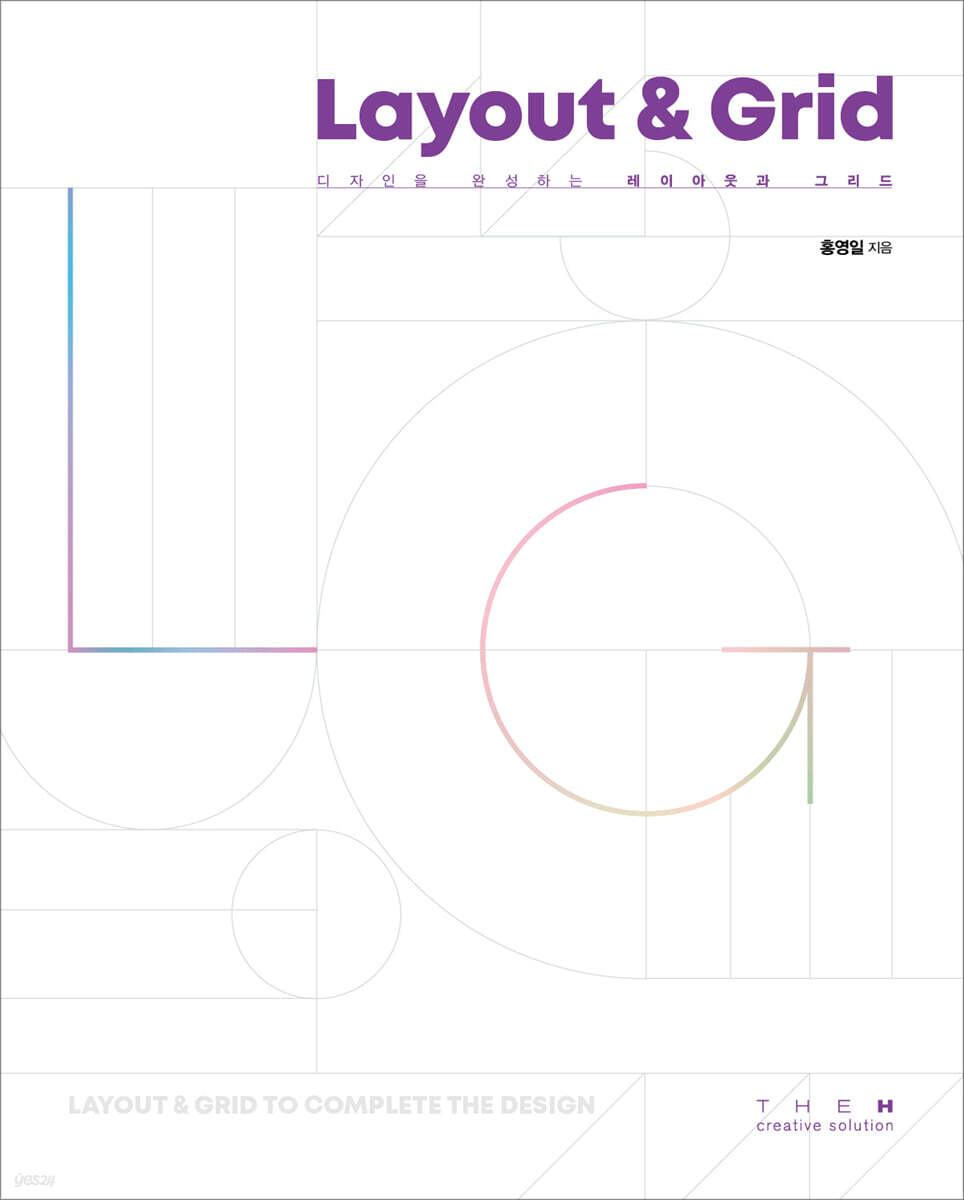
Layout & Grid to complete the design
 |
Description
Book Introduction
This book is designed to be easily understood by anyone interested in design, design students, and even designers working in industrial settings.
I hope that the many examples presented here will help you gain practical experience and inspire new designs.
This book is broadly divided into two areas.
One part introduces the components and principles of layout, and the other covers layouts using grids and layouts that ignore grids.
Layouts serve to facilitate smooth communication with the public, and grids can be said to be tools for appropriately arranging layout components and principles.
I hope that the many examples presented here will help you gain practical experience and inspire new designs.
This book is broadly divided into two areas.
One part introduces the components and principles of layout, and the other covers layouts using grids and layouts that ignore grids.
Layouts serve to facilitate smooth communication with the public, and grids can be said to be tools for appropriately arranging layout components and principles.
index
■ Understanding the layout
■ Layout components
· Typography
(1) Letters and words
① Self-destruction
② Letter spacing
③ Stem
④ Weight
⑤ Italics
⑥ Uppercase and lowercase letters
⑦ Serif and sans serif
(2) Lines and paragraphs
① Font size
② Width
③ Line spacing
④ Paragraph
(3) Sorting
① Align both ends
② Left-aligned
③ Right-aligned
④ Center alignment
⑤ Asymmetric alignment
⑥ Outline alignment
· image
(1) Photo
① Consignment photo
② Purchased photos
③ Rental photos
(2) Illustration
① Commissioned illustration
② Purchase illustration
③ Rental Illustration
· color
(1) Understanding color
① Color properties
② Color classification
③ Color wheel
(2) Color system
① CMYK
② RGB
③ Special color
④ Fluorescent color
⑤ Metallic effect
(3) Expression of color
① Red
② Orange
③ Yellow
④ Green
⑤ Blue
⑥ Bora
⑦ Brown
⑧ Gray
⑨ White
⑩ Black
⑪ Gold
⑫ Silver
· Margin
(1) Meaning of margin
(2) Function of margins
■ Layout composition principles
· Unification
(1) Harmony
(2) Order
· change
(1) Proportionality
(2) Transformation
· Balance
(1) Symmetry
(2) Asymmetry
· Rhythm
(1) Repeat
(2) Continuous
(3) Point
(4) Radiation
(5) Shift
· Emphasis
(1) Contrast
(2) Background
■ Understanding the Grid
· Golden ratio
Fibonacci sequence
· Modular
■ Grid components
· Column (short)
· Module (unit)
· Margin
· Flow line
· Zone (spatial area)
· Marker
· Spare printing lines
· Column margins
■ Layout using grid
· Block grid
· Column grid
· Module grid
· Hierarchical grid
· Mixed grid
· Flexible grid
· Symmetric grid and asymmetric grid
(1) Symmetric grid
(2) Asymmetric grid
· How to create a grid
(1) Grid based on the text
(2) Image-based grid
■ Layout that ignores the grid
· Deconstruction of typography
· Design based on intuitive sense
· Implications through expression of concepts
· Effects according to unexpected variables
· Integration of typography and images
· Consistency and opposition of forms
(1) Matching format
(2) Opposition of forms
Appendix: Color Chart
· Color matching by color
· Thematic color scheme
References
■ Layout components
· Typography
(1) Letters and words
① Self-destruction
② Letter spacing
③ Stem
④ Weight
⑤ Italics
⑥ Uppercase and lowercase letters
⑦ Serif and sans serif
(2) Lines and paragraphs
① Font size
② Width
③ Line spacing
④ Paragraph
(3) Sorting
① Align both ends
② Left-aligned
③ Right-aligned
④ Center alignment
⑤ Asymmetric alignment
⑥ Outline alignment
· image
(1) Photo
① Consignment photo
② Purchased photos
③ Rental photos
(2) Illustration
① Commissioned illustration
② Purchase illustration
③ Rental Illustration
· color
(1) Understanding color
① Color properties
② Color classification
③ Color wheel
(2) Color system
① CMYK
② RGB
③ Special color
④ Fluorescent color
⑤ Metallic effect
(3) Expression of color
① Red
② Orange
③ Yellow
④ Green
⑤ Blue
⑥ Bora
⑦ Brown
⑧ Gray
⑨ White
⑩ Black
⑪ Gold
⑫ Silver
· Margin
(1) Meaning of margin
(2) Function of margins
■ Layout composition principles
· Unification
(1) Harmony
(2) Order
· change
(1) Proportionality
(2) Transformation
· Balance
(1) Symmetry
(2) Asymmetry
· Rhythm
(1) Repeat
(2) Continuous
(3) Point
(4) Radiation
(5) Shift
· Emphasis
(1) Contrast
(2) Background
■ Understanding the Grid
· Golden ratio
Fibonacci sequence
· Modular
■ Grid components
· Column (short)
· Module (unit)
· Margin
· Flow line
· Zone (spatial area)
· Marker
· Spare printing lines
· Column margins
■ Layout using grid
· Block grid
· Column grid
· Module grid
· Hierarchical grid
· Mixed grid
· Flexible grid
· Symmetric grid and asymmetric grid
(1) Symmetric grid
(2) Asymmetric grid
· How to create a grid
(1) Grid based on the text
(2) Image-based grid
■ Layout that ignores the grid
· Deconstruction of typography
· Design based on intuitive sense
· Implications through expression of concepts
· Effects according to unexpected variables
· Integration of typography and images
· Consistency and opposition of forms
(1) Matching format
(2) Opposition of forms
Appendix: Color Chart
· Color matching by color
· Thematic color scheme
References
Detailed image

Into the book
In general, in design, layout can be defined as a series of processes for arranging and organizing visual components in a given space in a pleasing manner.
Here, visual components refer to typography, photography and illustration, color, and margins, which are the main topics covered in this book. Composition principles such as unity, variation, balance, rhythm, and emphasis are also important.
In addition, basic conditions such as visibility, readability, clarity, formativeness, and creativity must also be considered.
Layout is an important skill that should be focused on to entertain the audience and make them more immersed in the production.
Therefore, a well-designed layout helps facilitate smooth communication with the public within the complex online and offline media information.
There are two ways to organize layouts: the free method, which relies on the designer's sense, and the grid method, which relies on the structure of modules.
A grid is a horizontal and vertical network used to harmoniously visualize elements of a layout.
This means that subjective and sensory elements are made objective and scientific and modularized into an invisible grid-like network.
At this time, in order to systematically arrange the given space, it is calculated meticulously and divided into columns, leading, and margins (white space).
This calculated grid gives the audience a sense of unity and stability.
Grids are a great help in building consistency in your work and provide a basis for an organized system.
The number and size of grid modules, which are the spatial units that divide the grid, are not necessarily fixed, but since grid modules are a tool that makes layout components shine with visual consistency, the more they are used, the greater the likelihood of good results.
Here, visual components refer to typography, photography and illustration, color, and margins, which are the main topics covered in this book. Composition principles such as unity, variation, balance, rhythm, and emphasis are also important.
In addition, basic conditions such as visibility, readability, clarity, formativeness, and creativity must also be considered.
Layout is an important skill that should be focused on to entertain the audience and make them more immersed in the production.
Therefore, a well-designed layout helps facilitate smooth communication with the public within the complex online and offline media information.
There are two ways to organize layouts: the free method, which relies on the designer's sense, and the grid method, which relies on the structure of modules.
A grid is a horizontal and vertical network used to harmoniously visualize elements of a layout.
This means that subjective and sensory elements are made objective and scientific and modularized into an invisible grid-like network.
At this time, in order to systematically arrange the given space, it is calculated meticulously and divided into columns, leading, and margins (white space).
This calculated grid gives the audience a sense of unity and stability.
Grids are a great help in building consistency in your work and provide a basis for an organized system.
The number and size of grid modules, which are the spatial units that divide the grid, are not necessarily fixed, but since grid modules are a tool that makes layout components shine with visual consistency, the more they are used, the greater the likelihood of good results.
--- From the text
Publisher's Review
I hope this guide will inspire designers' creative spirit...
Although many publishers have published books on layout and grids, it is difficult to find textbooks that can be recommended to juniors or students working in related industries.
Although a few design translations are recognized as high-quality books and are mainstream, many of them contain theories and examples that are somewhat distant from the realities of Korea, which makes them lack a sense of realism and a sense of disconnect.
Many designers still rely on their own senses to create designs, avoiding a systematic theoretical foundation.
However, the results of designers who rely on their senses are unsystematic and thus lack the power to persuade the public of their creations.
It is important for designers to have a sense of humor, but it is important to remember that its foundation lies in a solid theoretical background.
This book is designed to be easily understood by anyone interested in design, design students, and even designers working in industrial settings.
I hope that the many examples presented here will help you gain practical experience and inspire new designs.
This book is broadly divided into two areas.
One part introduces the components and principles of layout, and the other covers layouts using grids and layouts that ignore grids.
Layouts serve to facilitate smooth communication with the public, and grids can be said to be tools for appropriately arranging layout components and principles.
The first section, Layout, provides a detailed approach to building a solid foundation by presenting appropriate example works related to the components of typography, photography and illustration, color, and margins.
In addition, we attempted to provide practical assistance through a clear analysis of the layout principles of unity, change, balance, rhythm, and emphasis.
The second section, Grid, divides layouts using grids into types such as blocks, columns, modules, hierarchies, mixed, and flexible, to make them easy and quick to understand.
In layouts that ignore the grid, various application cases were shown, such as deconstruction of typography, design based on intuitive sense, suggestion through expression of concept, and effects according to unexpected variables.
Now, with a heavy heart, I bear this small fruit and express my gratitude to everyone who helped me.
I would like to express my gratitude to the professors at Hongik University who provided me with guidance and advice on my academic path, to Jo Ho-gun who worked with me on the design, to Yoo Young-hwa and Shin Jeong-ho who helped with the photographic materials, to the staff at The H who took charge of publishing, to my beloved family who have always been by my side and supported me, and to all the wonderful people who have given me continuous encouragement and love.
Hong Young-il
Although many publishers have published books on layout and grids, it is difficult to find textbooks that can be recommended to juniors or students working in related industries.
Although a few design translations are recognized as high-quality books and are mainstream, many of them contain theories and examples that are somewhat distant from the realities of Korea, which makes them lack a sense of realism and a sense of disconnect.
Many designers still rely on their own senses to create designs, avoiding a systematic theoretical foundation.
However, the results of designers who rely on their senses are unsystematic and thus lack the power to persuade the public of their creations.
It is important for designers to have a sense of humor, but it is important to remember that its foundation lies in a solid theoretical background.
This book is designed to be easily understood by anyone interested in design, design students, and even designers working in industrial settings.
I hope that the many examples presented here will help you gain practical experience and inspire new designs.
This book is broadly divided into two areas.
One part introduces the components and principles of layout, and the other covers layouts using grids and layouts that ignore grids.
Layouts serve to facilitate smooth communication with the public, and grids can be said to be tools for appropriately arranging layout components and principles.
The first section, Layout, provides a detailed approach to building a solid foundation by presenting appropriate example works related to the components of typography, photography and illustration, color, and margins.
In addition, we attempted to provide practical assistance through a clear analysis of the layout principles of unity, change, balance, rhythm, and emphasis.
The second section, Grid, divides layouts using grids into types such as blocks, columns, modules, hierarchies, mixed, and flexible, to make them easy and quick to understand.
In layouts that ignore the grid, various application cases were shown, such as deconstruction of typography, design based on intuitive sense, suggestion through expression of concept, and effects according to unexpected variables.
Now, with a heavy heart, I bear this small fruit and express my gratitude to everyone who helped me.
I would like to express my gratitude to the professors at Hongik University who provided me with guidance and advice on my academic path, to Jo Ho-gun who worked with me on the design, to Yoo Young-hwa and Shin Jeong-ho who helped with the photographic materials, to the staff at The H who took charge of publishing, to my beloved family who have always been by my side and supported me, and to all the wonderful people who have given me continuous encouragement and love.
Hong Young-il
GOODS SPECIFICS
- Date of issue: July 1, 2023
- Page count, weight, size: 272 pages | 205*255*20mm
- ISBN13: 9791196210014
- ISBN10: 1196210012
You may also like
카테고리
korean


korean

![GQ KOREA Mark (Monthly): December [2025]](http://librairie.coreenne.fr/cdn/shop/files/8ef265dbbfbf186523ed75ba7319009d.jpg?v=1765340328&width=3840)


