

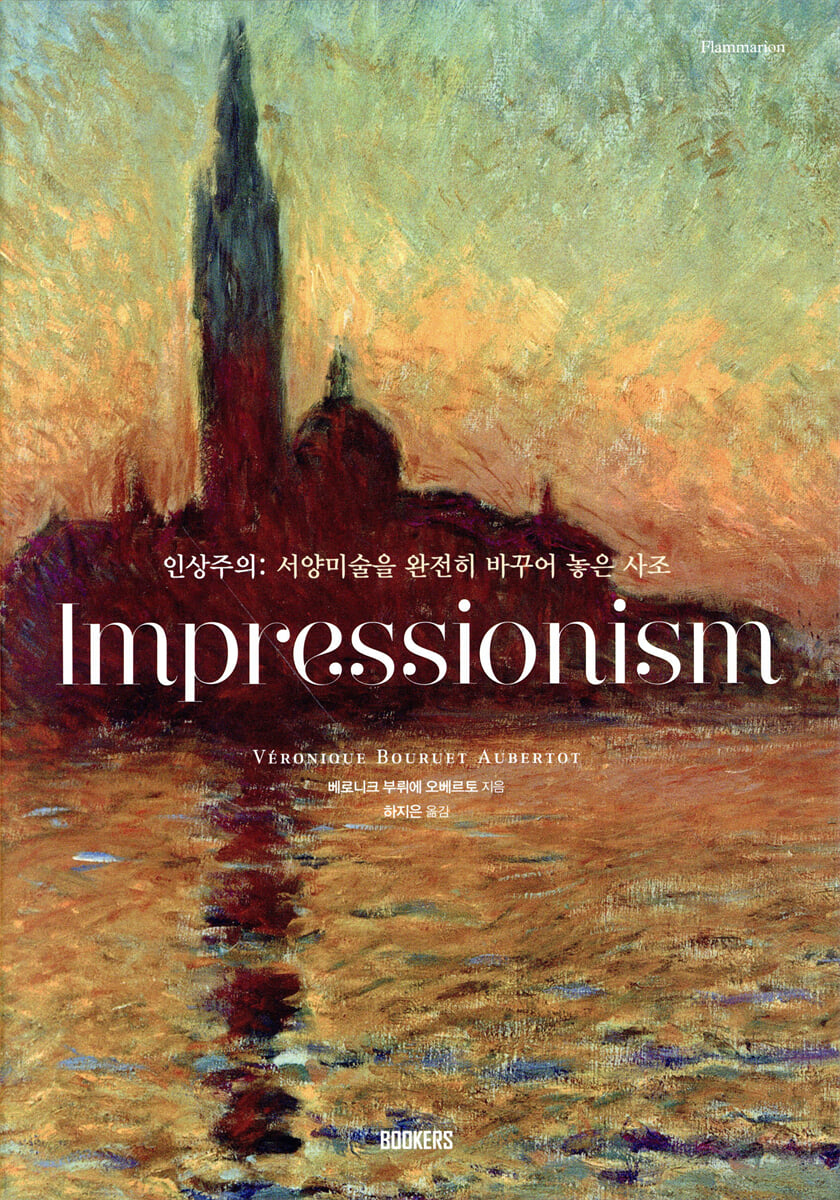
Impressionism
 |
Description
Book Introduction
Everything about Impressionism, the movement that completely changed Western art.
The book vividly depicts the reactions of young Parisian painters—Monet, Renoir, Bazille, Sisley, and others—who began to rebel against the academic art world that adhered to tradition through various historical materials such as newspaper articles and documents.
You can fully understand Impressionism by looking at the colorful paintings of Impressionist painters who expressed their 'impressions' of landscapes, everyday subjects, etc.
The book vividly depicts the reactions of young Parisian painters—Monet, Renoir, Bazille, Sisley, and others—who began to rebel against the academic art world that adhered to tradition through various historical materials such as newspaper articles and documents.
You can fully understand Impressionism by looking at the colorful paintings of Impressionist painters who expressed their 'impressions' of landscapes, everyday subjects, etc.
- You can preview some of the book's contents.
Preview
index
Timeline 6
Impressionism and its era 16
Haussmann's Paris 18
City of Pleasure and Sightseeing 32
The Ever-Changing World 44
The Photography Revolution 62
Academic Art 72
A New Perspective on Landscape 94
Impressionism: A New Perspective 104
Fresh Air 106
120 Favorite Places
Everyday Topics 136
Color is the most important thing 152
Capturing the Moment 168
Impressionism: A Rebellious Movement 182
Non-mainstream exhibition 184
Independent orbit 198
Art Harshly Criticized 214
The New Role of Art Dealers and Collectors 228
A Hard Life and a Late Recognition 246
Widespread influence 258
260 after Impressionism
272 external waves around the world
A World of Infinite Possibilities 282
The Painter's Life 292
List of works 358
Appendix 362
Search 364
References 367
Impressionism and its era 16
Haussmann's Paris 18
City of Pleasure and Sightseeing 32
The Ever-Changing World 44
The Photography Revolution 62
Academic Art 72
A New Perspective on Landscape 94
Impressionism: A New Perspective 104
Fresh Air 106
120 Favorite Places
Everyday Topics 136
Color is the most important thing 152
Capturing the Moment 168
Impressionism: A Rebellious Movement 182
Non-mainstream exhibition 184
Independent orbit 198
Art Harshly Criticized 214
The New Role of Art Dealers and Collectors 228
A Hard Life and a Late Recognition 246
Widespread influence 258
260 after Impressionism
272 external waves around the world
A World of Infinite Possibilities 282
The Painter's Life 292
List of works 358
Appendix 362
Search 364
References 367
Detailed image

Into the book
“They asked me what they should write the title in the catalog.
Since it was clear that this painting would not be considered a view of Le Havre, I replied:
“Less impressions!” - Claude Monet
--- p.196
“I want to make Impressionism something solid and enduring, like a work of art in a museum.”
- Paul Cezanne
--- p.200
“Never lose the first impression that moved your heart.”
- Jean-Baptiste Camille Corot
--- p.96
“Draw what you see, what you desire, and what you feel.”
- Gustave Courbet
Since it was clear that this painting would not be considered a view of Le Havre, I replied:
“Less impressions!” - Claude Monet
--- p.196
“I want to make Impressionism something solid and enduring, like a work of art in a museum.”
- Paul Cezanne
--- p.200
“Never lose the first impression that moved your heart.”
- Jean-Baptiste Camille Corot
--- p.96
“Draw what you see, what you desire, and what you feel.”
- Gustave Courbet
--- p.95
Publisher's Review
'Ossmann's Paris Urban Renovation Project'
Paris, France, a city of pleasure and spectacle
Until the mid-19th century, Paris, France was an old, dirty city with tangled alleys and rampant epidemics.
However, after the establishment of the Second Empire under Napoleon III, work began on transforming Paris into the 'capital of capitals'.
Georges-Eugène Haussmann was appointed Prefect of Seine and began the 'Haussmann's Urban Renovation Project for Paris', which transformed the medieval city of Paris into a modern city and implemented projects to improve the living conditions of the extremely poor and solve sanitary problems.
Above all, the greatest achievement was the large-scale road renovation, which transformed Paris into a 'new city' by replacing the maze-like winding roads with wide intersections such as the Boulevard de Sébastopol and the Boulevard Saint-Michel.
And it soon became a city of entertainment.
Cafe terraces lined the newly formed street, attracting socialites.
'Haussmann's Paris' was depicted in Caillebotte's 'A Street in Paris: A Rainy Day' (1877), and the image of Parisians enjoying themselves was depicted in Renoir's 'Ball at the Moulin de la Galette' (1876).
Monet, Renoir, Bazille, Sisley??
In opposition to the academic art world
Young painters go 'outdoors' in search of new 'landscapes'!
Changes in daily life and landscapes, along with technological advancements and scientific discoveries brought about by industrialization, have transformed the working environment of artists.
As paint containers improved, portable paintbrushes were developed, and photography freed artists from the art of accurately reproducing reality.
Contrary to concerns that photography would make it difficult for artists to make a living, many artists are starting to use the characteristics of photography to create paintings.
I studied various poses and movements, and composed the pictures like snapshots, like photographs that capture a moment.
And, influenced by the color wheel and color theory of chemist Chevreul, painters express their subjects and feelings through 'colors' such as color contrast and pointillism.
On the other hand, the academic painters of the same period repeatedly copied the same and worn-out models, and, steeped in tradition, they desperately defended their privileges.
Impressionist painters, who showed off their individuality through free forms and shapes, naturally expressed resistance and rebellion against the academic art world, and they went 'out into the open air'.
The natural landscapes of Argenteuil, Louveciennes, Vetheuil, and Rouen near Paris were the subject of their paintings.
Bazille left behind a scene of people playing in the water in midsummer with “Summer Landscape” (1869), and Sisley left behind a scene of clouds and sky over the Seine with “The Seine at Suresnes” (1877).
Impressionist painters who began to walk an independent path
And their patron, Durand-Ruel
Because his works included everyday subjects such as gardens, nature, the sky, and people that previous 'traditionalist' painters had not dealt with, they were not accepted for the salon exhibitions of the then mainstream academic art world.
However, they began to walk an independent path, holding the 'Impressionism Exhibition' eight times a year.
At this time, Degas, Pissarro, Caillebotte, Monet, Renoir, Guillaumin, and Berthe Morisot participated and presented their paintings.
They were ridiculed and laughed at as a "non-mainstream exhibition" and received harsh criticism from the press for their "poor drawing" and "bad coloring." However, some literary writers who were tired of academicism—such as Jules Laforgue and Octave Mirabeau—supported them.
In addition, art dealers such as Durand-Ruel and Uncle Tanguy are mentioned significantly because they were ardent supporters of Impressionism who ran art shops, provided painting supplies, helped sell their paintings on consignment or hold exhibitions, and paved the way for Impressionist painters to advance to the international stage.
Their kind appearance can be seen in Van Gogh's "Uncle Tanguy" (1887-1888) and Renoir's "Portrait of Paul Durand-Ruel" (1910).
A trend that completely changed Western art
All About Impressionism
'Impressionism' is the 'impression' of contemporary painters.
Impressionism does not only mean the individuality and freedom of painters.
Because it opened up infinite possibilities for art, the history of art can be divided into before and after the emergence of Impressionism.
The author mentions the influence of Impressionism, which not only had a great influence on all avant-garde movements, but also extended particularly to the pointillism of Neo-Impressionism and the plein air movement of the 'world'.
Thanks to the active activities of its patron Durand-Ruel, Impressionism spread throughout Europe beyond France and even across the sea to the American continent. The American painter Whistler became a representative figure of British Impressionism, and this is clearly shown in his work, “Nocturne: Blue and Gold - Old Battersea Bridge” (c. 1872-1875).
Refusing to work in a studio (atelier) and painting outdoors transformed the meaning of the painter from a 'painter' to a 'creator'.
Impressionist painters not only stepped outside of tradition and created a 'new' painting style, but also pioneered everything from 'exhibition methods' to 'selling methods.'
The works of abstract painter Jackson Pollock, Roy Lichtenstein's series Rouen Cathedral, Set 5 (1969), and James Turrell's installation art Inner Light (1999) could perhaps be seen as an extension of the 'art of resistance' of the Impressionist painters.
Impressionist painters, who, as the painter Courbet said, painted 'what they saw, hoped for, and felt', and who, as Camille said, devised a method of painting quickly so as 'not to lose the first impression that moved the heart'.
Their spirit of experimentation, challenge, and resistance completely changed the concept of Western art, and its influence continues to this day.
Paris, France, a city of pleasure and spectacle
Until the mid-19th century, Paris, France was an old, dirty city with tangled alleys and rampant epidemics.
However, after the establishment of the Second Empire under Napoleon III, work began on transforming Paris into the 'capital of capitals'.
Georges-Eugène Haussmann was appointed Prefect of Seine and began the 'Haussmann's Urban Renovation Project for Paris', which transformed the medieval city of Paris into a modern city and implemented projects to improve the living conditions of the extremely poor and solve sanitary problems.
Above all, the greatest achievement was the large-scale road renovation, which transformed Paris into a 'new city' by replacing the maze-like winding roads with wide intersections such as the Boulevard de Sébastopol and the Boulevard Saint-Michel.
And it soon became a city of entertainment.
Cafe terraces lined the newly formed street, attracting socialites.
'Haussmann's Paris' was depicted in Caillebotte's 'A Street in Paris: A Rainy Day' (1877), and the image of Parisians enjoying themselves was depicted in Renoir's 'Ball at the Moulin de la Galette' (1876).
Monet, Renoir, Bazille, Sisley??
In opposition to the academic art world
Young painters go 'outdoors' in search of new 'landscapes'!
Changes in daily life and landscapes, along with technological advancements and scientific discoveries brought about by industrialization, have transformed the working environment of artists.
As paint containers improved, portable paintbrushes were developed, and photography freed artists from the art of accurately reproducing reality.
Contrary to concerns that photography would make it difficult for artists to make a living, many artists are starting to use the characteristics of photography to create paintings.
I studied various poses and movements, and composed the pictures like snapshots, like photographs that capture a moment.
And, influenced by the color wheel and color theory of chemist Chevreul, painters express their subjects and feelings through 'colors' such as color contrast and pointillism.
On the other hand, the academic painters of the same period repeatedly copied the same and worn-out models, and, steeped in tradition, they desperately defended their privileges.
Impressionist painters, who showed off their individuality through free forms and shapes, naturally expressed resistance and rebellion against the academic art world, and they went 'out into the open air'.
The natural landscapes of Argenteuil, Louveciennes, Vetheuil, and Rouen near Paris were the subject of their paintings.
Bazille left behind a scene of people playing in the water in midsummer with “Summer Landscape” (1869), and Sisley left behind a scene of clouds and sky over the Seine with “The Seine at Suresnes” (1877).
Impressionist painters who began to walk an independent path
And their patron, Durand-Ruel
Because his works included everyday subjects such as gardens, nature, the sky, and people that previous 'traditionalist' painters had not dealt with, they were not accepted for the salon exhibitions of the then mainstream academic art world.
However, they began to walk an independent path, holding the 'Impressionism Exhibition' eight times a year.
At this time, Degas, Pissarro, Caillebotte, Monet, Renoir, Guillaumin, and Berthe Morisot participated and presented their paintings.
They were ridiculed and laughed at as a "non-mainstream exhibition" and received harsh criticism from the press for their "poor drawing" and "bad coloring." However, some literary writers who were tired of academicism—such as Jules Laforgue and Octave Mirabeau—supported them.
In addition, art dealers such as Durand-Ruel and Uncle Tanguy are mentioned significantly because they were ardent supporters of Impressionism who ran art shops, provided painting supplies, helped sell their paintings on consignment or hold exhibitions, and paved the way for Impressionist painters to advance to the international stage.
Their kind appearance can be seen in Van Gogh's "Uncle Tanguy" (1887-1888) and Renoir's "Portrait of Paul Durand-Ruel" (1910).
A trend that completely changed Western art
All About Impressionism
'Impressionism' is the 'impression' of contemporary painters.
Impressionism does not only mean the individuality and freedom of painters.
Because it opened up infinite possibilities for art, the history of art can be divided into before and after the emergence of Impressionism.
The author mentions the influence of Impressionism, which not only had a great influence on all avant-garde movements, but also extended particularly to the pointillism of Neo-Impressionism and the plein air movement of the 'world'.
Thanks to the active activities of its patron Durand-Ruel, Impressionism spread throughout Europe beyond France and even across the sea to the American continent. The American painter Whistler became a representative figure of British Impressionism, and this is clearly shown in his work, “Nocturne: Blue and Gold - Old Battersea Bridge” (c. 1872-1875).
Refusing to work in a studio (atelier) and painting outdoors transformed the meaning of the painter from a 'painter' to a 'creator'.
Impressionist painters not only stepped outside of tradition and created a 'new' painting style, but also pioneered everything from 'exhibition methods' to 'selling methods.'
The works of abstract painter Jackson Pollock, Roy Lichtenstein's series Rouen Cathedral, Set 5 (1969), and James Turrell's installation art Inner Light (1999) could perhaps be seen as an extension of the 'art of resistance' of the Impressionist painters.
Impressionist painters, who, as the painter Courbet said, painted 'what they saw, hoped for, and felt', and who, as Camille said, devised a method of painting quickly so as 'not to lose the first impression that moved the heart'.
Their spirit of experimentation, challenge, and resistance completely changed the concept of Western art, and its influence continues to this day.
GOODS SPECIFICS
- Publication date: July 20, 2021
- Format: Hardcover book binding method guide
- Page count, weight, size: 368 pages | 1,302g | 180*255*32mm
- ISBN13: 9791190118224
- ISBN10: 119011822X
You may also like
카테고리
korean


korean

![GQ KOREA Mark (Monthly): December [2025]](http://librairie.coreenne.fr/cdn/shop/files/8ef265dbbfbf186523ed75ba7319009d.jpg?v=1765340328&width=3840)


