

Again, it's a picture
 |
Description
Book Introduction
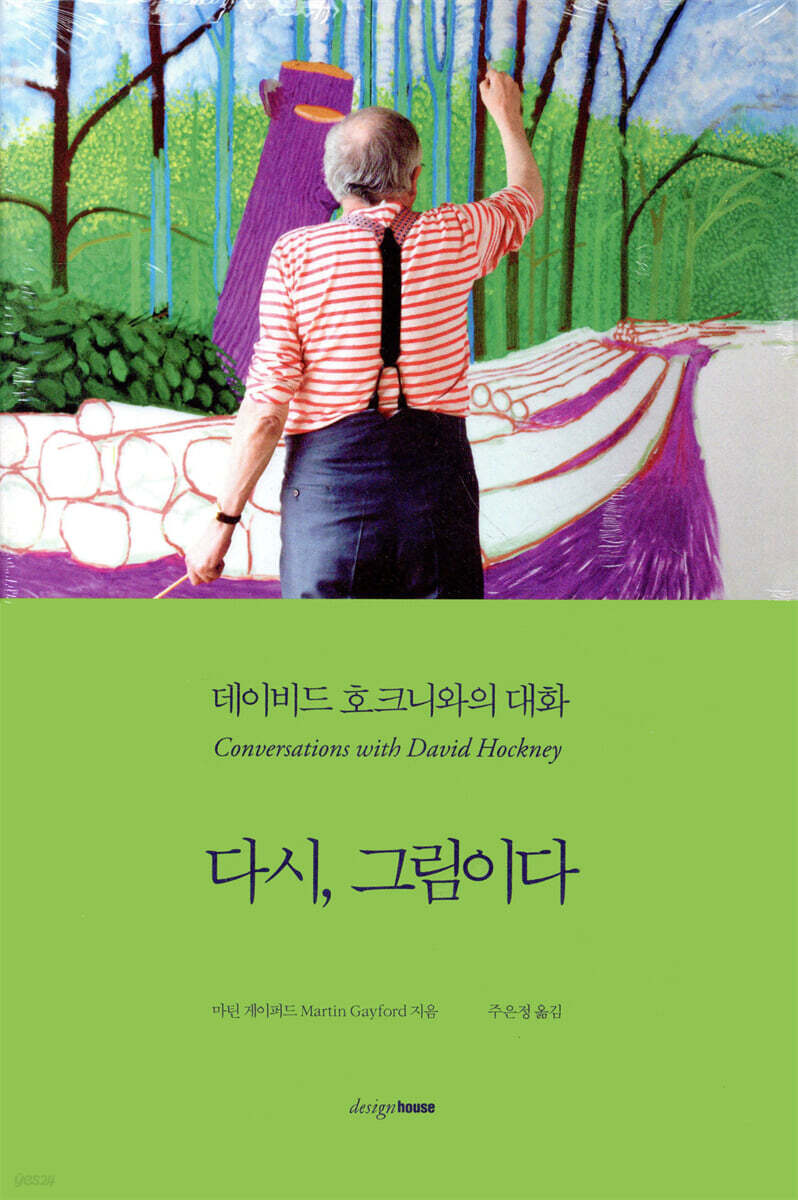
Everything about David Hockney, the British pop artist and greatest painter!
The author, a renowned art critic, has published a book based on his conversations with David Hockney, a representative British pop artist of the 1960s, the founder of photo collage, illustrator, painter, and stage designer, who is considered to be the greatest British painter.
David Hockney has continued to experiment with his art in almost every medium, from his series of swimming pool paintings to his massive landscapes and photo collages.
With a perspective as unique as his works, he asked and answered questions about how the world came to be and how humans have recreated it.
His intimate world of works unfolds, based on the lifelong theme of 'people and paintings' and the belief that paintings can 'see' the world.
As I immerse myself in the author's conversation about art with Hockney, I realize that the purpose of visual art is to 'make people look, to focus their attention.'
Additionally, we can see that intense pleasure is obtained through looking.
Sometimes serious, sometimes humorous, it is the result of Hockney's lifelong, persistent and serious reflections on the pleasures of the visual and the essence of art and creativity.
Also, interesting stories about the masters of art history.
You'll also get a detailed look at the history of art, including stories about the contrasting landscapes of California and Yorkshire, and stories of talented artists like Henri Cartier and Billy Wilder.
The author, a renowned art critic, has published a book based on his conversations with David Hockney, a representative British pop artist of the 1960s, the founder of photo collage, illustrator, painter, and stage designer, who is considered to be the greatest British painter.
David Hockney has continued to experiment with his art in almost every medium, from his series of swimming pool paintings to his massive landscapes and photo collages.
With a perspective as unique as his works, he asked and answered questions about how the world came to be and how humans have recreated it.
His intimate world of works unfolds, based on the lifelong theme of 'people and paintings' and the belief that paintings can 'see' the world.
As I immerse myself in the author's conversation about art with Hockney, I realize that the purpose of visual art is to 'make people look, to focus their attention.'
Additionally, we can see that intense pleasure is obtained through looking.
Sometimes serious, sometimes humorous, it is the result of Hockney's lifelong, persistent and serious reflections on the pleasures of the visual and the essence of art and creativity.
Also, interesting stories about the masters of art history.
You'll also get a detailed look at the history of art, including stories about the contrasting landscapes of California and Yorkshire, and stories of talented artists like Henri Cartier and Billy Wilder.
- You can preview some of the book's contents.
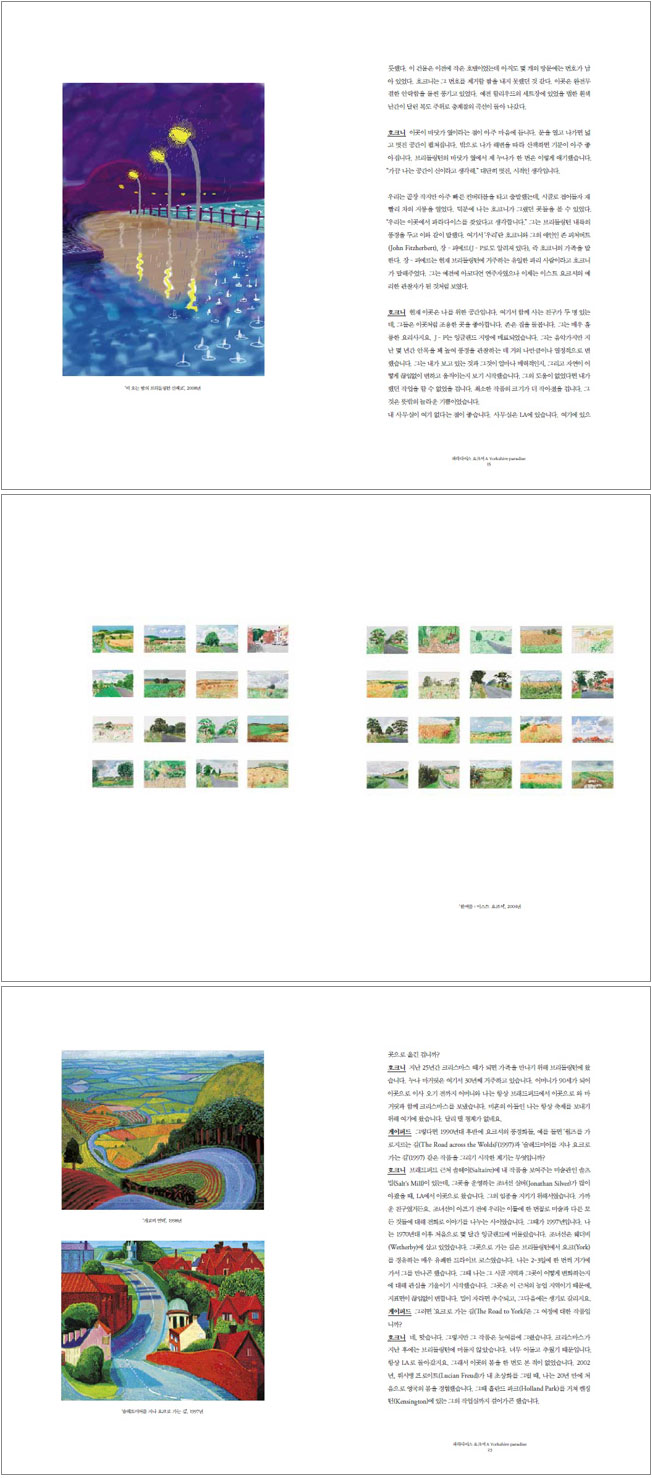
Preview
index
Introduction - Turner with an iPhone
1 Paradise Yorkshire A Yorkshire paradise
2 Drawing
3 The trap of naturalism
4 The problems of depiction
5 A bigger and bigger picture
6 Scale: a bigger studio
7 Seeing more clearly
8 Drawing on a telephone and in a computer
9 Painting with memory
10 Photography and Drawing
11 Caravaggio's camera
12 Way out west: space exploration
13 Cleaning Claude
14 Movies and moving through the landscape
15 Music and movement
16 Van Gogh and the Power of Drawing
17 Drawing on an iPad
18 The power of images
Stage 19 Theatre
20 Lighting
Nine screens on Woldgate
1 Paradise Yorkshire A Yorkshire paradise
2 Drawing
3 The trap of naturalism
4 The problems of depiction
5 A bigger and bigger picture
6 Scale: a bigger studio
7 Seeing more clearly
8 Drawing on a telephone and in a computer
9 Painting with memory
10 Photography and Drawing
11 Caravaggio's camera
12 Way out west: space exploration
13 Cleaning Claude
14 Movies and moving through the landscape
15 Music and movement
16 Van Gogh and the Power of Drawing
17 Drawing on an iPad
18 The power of images
Stage 19 Theatre
20 Lighting
Nine screens on Woldgate
Detailed image
Into the book
“Paintings fascinate us, allowing us to understand and enjoy what we see.
All the great painters of the world make the world around us more complex, more interesting, and more mysterious than it appears.
This is one of the most important things they do.
Hockney is an artist of extraordinary scope, boldness and passion.
The question that constantly preoccupies him is what the world is like and how humanity reproduces it.
That is, it is about people and pictures.
This is a broad and profound question, and it is the subject of this book. " --- From Martin Gayford's 'Preface'
“It’s really good to have limits.
It becomes a stimulant.
If you were asked to draw a tulip using five lines or 100 lines, you would be much more creative if you used five lines.
After all, drawing itself always has limitations.
It is made of black and white or line and non-line and is drawn with charcoal, pencil or pen.
You could probably use some color.
But if you only have three colors, you'll have to use those three colors to make it look like the color you want.
What did Picasso say? "If you don't have red, use blue." He meant to make blue look like red.
---From "David Hockney"
“We see with memory.
Because my memories are different from yours, even if we stand in the same place, we don't see the same things.
We each have different memories.
So different factors come into play.
How you've been to a place before and how well you know it will influence you.
Therefore, there is no such thing as an objective viewpoint.” ---From “David Hockney”
“Being able to draw means being able to place objects in a plausible space.
People who are not good at drawing are not good at doing that very thing.
This is usually the case with digitally edited photos.
The space in that photo is not plausible.
Digital has changed everything.
These days, I don't think I need to trust any kind of photo, no matter where it comes from.
There is a specific kind of language about photography.
But you can manipulate all of that with a computer.”
All the great painters of the world make the world around us more complex, more interesting, and more mysterious than it appears.
This is one of the most important things they do.
Hockney is an artist of extraordinary scope, boldness and passion.
The question that constantly preoccupies him is what the world is like and how humanity reproduces it.
That is, it is about people and pictures.
This is a broad and profound question, and it is the subject of this book. " --- From Martin Gayford's 'Preface'
“It’s really good to have limits.
It becomes a stimulant.
If you were asked to draw a tulip using five lines or 100 lines, you would be much more creative if you used five lines.
After all, drawing itself always has limitations.
It is made of black and white or line and non-line and is drawn with charcoal, pencil or pen.
You could probably use some color.
But if you only have three colors, you'll have to use those three colors to make it look like the color you want.
What did Picasso say? "If you don't have red, use blue." He meant to make blue look like red.
---From "David Hockney"
“We see with memory.
Because my memories are different from yours, even if we stand in the same place, we don't see the same things.
We each have different memories.
So different factors come into play.
How you've been to a place before and how well you know it will influence you.
Therefore, there is no such thing as an objective viewpoint.” ---From “David Hockney”
“Being able to draw means being able to place objects in a plausible space.
People who are not good at drawing are not good at doing that very thing.
This is usually the case with digitally edited photos.
The space in that photo is not plausible.
Digital has changed everything.
These days, I don't think I need to trust any kind of photo, no matter where it comes from.
There is a specific kind of language about photography.
But you can manipulate all of that with a computer.”
---From "David Hockney"
Publisher's Review
An original and captivating self-portrait featuring David Hockney, one of the greatest living painters!
A pop artist representing British pop art in the 1960s, a photographer, illustrator, printmaker, and stage designer who attempted a new approach to photo collage.
There are many words to describe David Hockney, considered one of Britain's greatest painters.
When you think of Hockney, you think of his swimming pool paintings like "The Splash," his massive landscapes, and his photo collages that reinterpret perspective using photographs, but Hockney has created work in almost every possible medium.
This book is a record of conversations between renowned art critic Martin Gayford and David Hockney over a period of ten years.
With a perspective as unique as his paintings, Hockney asks and answers questions about what the world is like and how humans represent it.
From traditional landscapes to iPhone drawings, from opera stage designs to video work using nine cameras.
Although he crossed over various media and artistic fields with his strong curiosity and experimental spirit, the question that Hockney devoted his life to was 'people and paintings'.
And he always believed that painting allowed him to 'see' the world.
How can a painting that transfers three dimensions onto a two-dimensional plane, rather than a photograph or video that gives the illusion of showing reality as it is, 'allow us to see' something?
Look for a long time, look intently
Hockney painted anything that triggered his desire to observe and describe.
The same scenery he sees every day, the vase of flowers that is always there, the hat or slippers he just took off – these were all subjects that always contained something new and diverse to him.
Hockney, who used to stop his car on the road, open his sketchbook, and sketch grass that no one noticed, said that if he had only taken a photo of the grass, he would not have looked at it as carefully as he did when drawing it.
The unique characteristics and charm of every subject in the world can only be discovered by those who observe it closely.
In this way, ‘looking intently for a long time’ was a central act in Hockney’s life and art, and a source of great joy.
For Hockney, who has painted many attractive landscapes, nature, which is always there, has been a subject with infinite diversity, so the more you look at it, the more you see.
Hockney says that what makes the paintings of Rembrandt, Van Gogh, and Monet so striking and moving is that the artists saw so many things with their eyes and their hearts.
Enjoying observing and seeing the world around you with passion.
That is what every painter must do, and it is the instinct of 'Homo Pictor', the human race that draws pictures with a desire for description.
As you immerse yourself in the conversation between the author and Hockney, you come to a profound realization that the purpose of visual art is to "make you look, to focus your attention," and to derive intense pleasure from looking.
After all, it's a painting
Hockney believed that media like the iPhone were about ways to create traces, not about creating the traces themselves.
Whether he was taking photographs and stitching them together, shooting a video and displaying it on multiple screens, drawing on an iPad with his finger, or designing an opera stage, for Hockney it was all part of the process of 'drawing' to create meaningful traces.
Drawings that allow us to 'see things more clearly', the relationship between various media and the way we see things, the relationship between images and reality, the impact of technological changes on depiction, and the joy of 'seeing'.
At times serious, at times humorous, the conversations between Gayford and Hockney reflect the pleasures of the visual and Hockney's lifelong, persistent and serious reflections on the nature of art and creativity.
The book is enriched by a variety of conversations spanning the history of art, including entertaining stories about many of the great masters of art history, such as Constable, Van Gogh, Vermeer, Caravaggio, Monet, and Picasso; stories about the contrasting landscapes of California and Yorkshire where he lived; and stories about talented artists he interacted with, such as Henri Cartier and Billy Wilder.
This book, a unique and captivating self-portrait of Britain's greatest artist, David Hockney, will offer readers a fresh perspective on art and the world of art.
A pop artist representing British pop art in the 1960s, a photographer, illustrator, printmaker, and stage designer who attempted a new approach to photo collage.
There are many words to describe David Hockney, considered one of Britain's greatest painters.
When you think of Hockney, you think of his swimming pool paintings like "The Splash," his massive landscapes, and his photo collages that reinterpret perspective using photographs, but Hockney has created work in almost every possible medium.
This book is a record of conversations between renowned art critic Martin Gayford and David Hockney over a period of ten years.
With a perspective as unique as his paintings, Hockney asks and answers questions about what the world is like and how humans represent it.
From traditional landscapes to iPhone drawings, from opera stage designs to video work using nine cameras.
Although he crossed over various media and artistic fields with his strong curiosity and experimental spirit, the question that Hockney devoted his life to was 'people and paintings'.
And he always believed that painting allowed him to 'see' the world.
How can a painting that transfers three dimensions onto a two-dimensional plane, rather than a photograph or video that gives the illusion of showing reality as it is, 'allow us to see' something?
Look for a long time, look intently
Hockney painted anything that triggered his desire to observe and describe.
The same scenery he sees every day, the vase of flowers that is always there, the hat or slippers he just took off – these were all subjects that always contained something new and diverse to him.
Hockney, who used to stop his car on the road, open his sketchbook, and sketch grass that no one noticed, said that if he had only taken a photo of the grass, he would not have looked at it as carefully as he did when drawing it.
The unique characteristics and charm of every subject in the world can only be discovered by those who observe it closely.
In this way, ‘looking intently for a long time’ was a central act in Hockney’s life and art, and a source of great joy.
For Hockney, who has painted many attractive landscapes, nature, which is always there, has been a subject with infinite diversity, so the more you look at it, the more you see.
Hockney says that what makes the paintings of Rembrandt, Van Gogh, and Monet so striking and moving is that the artists saw so many things with their eyes and their hearts.
Enjoying observing and seeing the world around you with passion.
That is what every painter must do, and it is the instinct of 'Homo Pictor', the human race that draws pictures with a desire for description.
As you immerse yourself in the conversation between the author and Hockney, you come to a profound realization that the purpose of visual art is to "make you look, to focus your attention," and to derive intense pleasure from looking.
After all, it's a painting
Hockney believed that media like the iPhone were about ways to create traces, not about creating the traces themselves.
Whether he was taking photographs and stitching them together, shooting a video and displaying it on multiple screens, drawing on an iPad with his finger, or designing an opera stage, for Hockney it was all part of the process of 'drawing' to create meaningful traces.
Drawings that allow us to 'see things more clearly', the relationship between various media and the way we see things, the relationship between images and reality, the impact of technological changes on depiction, and the joy of 'seeing'.
At times serious, at times humorous, the conversations between Gayford and Hockney reflect the pleasures of the visual and Hockney's lifelong, persistent and serious reflections on the nature of art and creativity.
The book is enriched by a variety of conversations spanning the history of art, including entertaining stories about many of the great masters of art history, such as Constable, Van Gogh, Vermeer, Caravaggio, Monet, and Picasso; stories about the contrasting landscapes of California and Yorkshire where he lived; and stories about talented artists he interacted with, such as Henri Cartier and Billy Wilder.
This book, a unique and captivating self-portrait of Britain's greatest artist, David Hockney, will offer readers a fresh perspective on art and the world of art.
GOODS SPECIFICS
- Date of publication: October 20, 2012
- Page count, weight, size: 248 pages | 594g | 152*229*20mm
- ISBN13: 9788970415857
- ISBN10: 8970415858
You may also like
카테고리
korean


korean

![GQ KOREA Mark (Monthly): December [2025]](http://librairie.coreenne.fr/cdn/shop/files/8ef265dbbfbf186523ed75ba7319009d.jpg?v=1765340328&width=3840)


