

The magic of silence
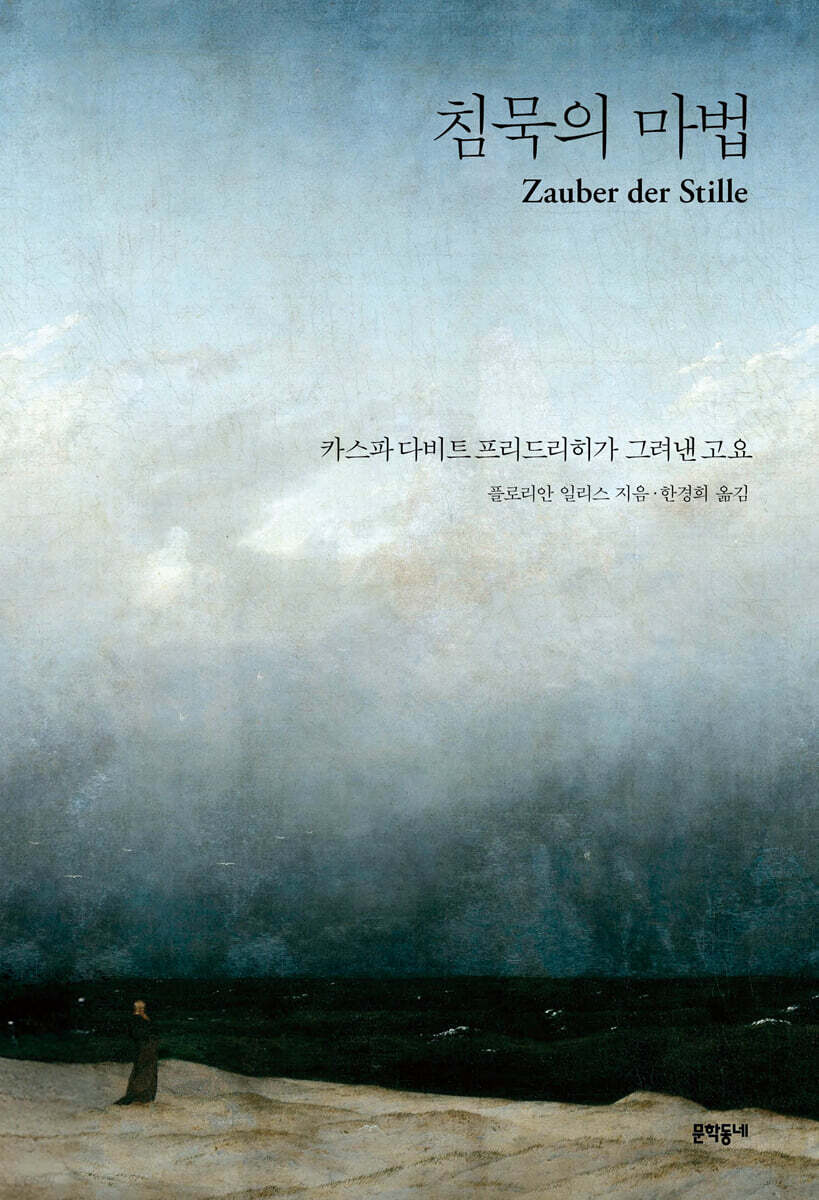 |
Description
Book Introduction
Florian Illis's cinematic account of the great painter's life
Florian Illis, the bestselling author who achieved international fame with his book, "1913, the Summer of the Century," has published "The Magic of Silence" by Munhakdongne.
With his unique composition and highly readable writing style, Illis, who has secured a wide readership not only in Europe but also in the United States and Asia, unfolds in his signature light and lyrical style how the life and works of Caspar David Friedrich, a representative painter of European Romanticism, have resonated deeply across the ages.
It also fascinatingly traces the history of his paintings, from praise and oblivion to appropriation and rediscovery over the past 250 years.
A blend of biography, essay, and cultural-historical insight, "The Magic of Silence" is a moving drama that transcends the life of an artist and shows how an "image" created by a painter lives and moves through time.
Florian Illis does not treat the works of Caspar David Friedrich as mere paintings.
He sees this painting as a kind of spirit flowing through time, a symbol reflecting the emotions and desires of the times.
And it vividly and meticulously describes, as if unfolding a movie, how this image was loved, forgotten, and why it came back.
Reading the book naturally leads us to think about and understand how familiar works of art, often encountered in everyday life, have transcended time and permeated our lives today, and what influence their excellence has had.
Florian Illis, the bestselling author who achieved international fame with his book, "1913, the Summer of the Century," has published "The Magic of Silence" by Munhakdongne.
With his unique composition and highly readable writing style, Illis, who has secured a wide readership not only in Europe but also in the United States and Asia, unfolds in his signature light and lyrical style how the life and works of Caspar David Friedrich, a representative painter of European Romanticism, have resonated deeply across the ages.
It also fascinatingly traces the history of his paintings, from praise and oblivion to appropriation and rediscovery over the past 250 years.
A blend of biography, essay, and cultural-historical insight, "The Magic of Silence" is a moving drama that transcends the life of an artist and shows how an "image" created by a painter lives and moves through time.
Florian Illis does not treat the works of Caspar David Friedrich as mere paintings.
He sees this painting as a kind of spirit flowing through time, a symbol reflecting the emotions and desires of the times.
And it vividly and meticulously describes, as if unfolding a movie, how this image was loved, forgotten, and why it came back.
Reading the book naturally leads us to think about and understand how familiar works of art, often encountered in everyday life, have transcended time and permeated our lives today, and what influence their excellence has had.
- You can preview some of the book's contents.
Preview
index
007 on a sailboat
1.
fire
2.
water
3.
soil
4.
air
Acknowledgements
Caspar David Friedrich Chronology
Further Reading
List of pictures
1.
fire
2.
water
3.
soil
4.
air
Acknowledgements
Caspar David Friedrich Chronology
Further Reading
List of pictures
Detailed image

Into the book
Friedrich loved this moment, when the great linen sails were unfurled with a loud roar and the ship moved magically! Has the human spirit ever conceived anything more beautiful?
When I return to Dresden, I will breathe life into the canvas with my brush, just as the wind brings the sails to life.
--- p.7
'Ah, humans are so strange to me,' he thinks.
Especially women.
If you were a tree, you would know how it feels.
Then I could stare at those trees for hours and draw them accurately, without missing a single one.
--- p.20
As the sun takes the lead and its rays shine through millions of sulfur particles, the light scatters, creating unprecedentedly intense colors.
The sky was especially spectacular in the morning and evening when the sun was slanted.
Yet, it is only painters who tell us about this natural disaster.
The burning sky painted in 1815 and 1816 is pure realism.
--- p.43
Oh, how he loves this moment.
This moment, before the stillness of the evening settles over the water, when the sun sinks very, very slowly, as if in slow motion, beyond the horizon, and the sunlight briefly shines once more behind the clouds.
--- p.77
People wanted to see winter fun if there was snow and ice in the painting.
And why is the ice brown, as if the ground had cracked?
Was it a hallucination caused by a high fever? No one wanted to buy the painting until Friedrich died.
It was the same after Frederick died.
Only one person, the French sculptor David d'Angers, recognized the "tragedy of landscape" in this painting.
--- p.129
We do not know whether the painting is set in the evening or morning, nor whether the setting is Harz or Saxony.
The trees in the picture are sketches of trees that were in Neubrandenburg and the Riesen Mountains.
So let's give up.
Caspar David Friedrich inhales nature and then exhales it back into art.
--- p.153
“He is painting the sky now.
You can't disturb him now.
“As you know, painting the sky is like worship to him,” says Friedrich’s wife to a visitor who rings the doorbell.
Seriously, that's exactly what she said.
--- p.185~186
In 1823, when he gave a painting to his brother Adolf, who expressed his gratitude by saying that “a storm was raging in his soul like the painting,” Friedrich responded as follows:
“At least the storm clears the air.”
--- p.204
Friedrich gazes at the sky for a long time on this warm spring evening.
My son comes over and we watch the evening show together.
Even when Caroline calls them to dinner, the father and son just look up at the sky.
And then he shouts like this.
“Okay, I’ll be there soon. Let’s start eating first. The sky is so beautiful today.”
When I return to Dresden, I will breathe life into the canvas with my brush, just as the wind brings the sails to life.
--- p.7
'Ah, humans are so strange to me,' he thinks.
Especially women.
If you were a tree, you would know how it feels.
Then I could stare at those trees for hours and draw them accurately, without missing a single one.
--- p.20
As the sun takes the lead and its rays shine through millions of sulfur particles, the light scatters, creating unprecedentedly intense colors.
The sky was especially spectacular in the morning and evening when the sun was slanted.
Yet, it is only painters who tell us about this natural disaster.
The burning sky painted in 1815 and 1816 is pure realism.
--- p.43
Oh, how he loves this moment.
This moment, before the stillness of the evening settles over the water, when the sun sinks very, very slowly, as if in slow motion, beyond the horizon, and the sunlight briefly shines once more behind the clouds.
--- p.77
People wanted to see winter fun if there was snow and ice in the painting.
And why is the ice brown, as if the ground had cracked?
Was it a hallucination caused by a high fever? No one wanted to buy the painting until Friedrich died.
It was the same after Frederick died.
Only one person, the French sculptor David d'Angers, recognized the "tragedy of landscape" in this painting.
--- p.129
We do not know whether the painting is set in the evening or morning, nor whether the setting is Harz or Saxony.
The trees in the picture are sketches of trees that were in Neubrandenburg and the Riesen Mountains.
So let's give up.
Caspar David Friedrich inhales nature and then exhales it back into art.
--- p.153
“He is painting the sky now.
You can't disturb him now.
“As you know, painting the sky is like worship to him,” says Friedrich’s wife to a visitor who rings the doorbell.
Seriously, that's exactly what she said.
--- p.185~186
In 1823, when he gave a painting to his brother Adolf, who expressed his gratitude by saying that “a storm was raging in his soul like the painting,” Friedrich responded as follows:
“At least the storm clears the air.”
--- p.204
Friedrich gazes at the sky for a long time on this warm spring evening.
My son comes over and we watch the evening show together.
Even when Caroline calls them to dinner, the father and son just look up at the sky.
And then he shouts like this.
“Okay, I’ll be there soon. Let’s start eating first. The sky is so beautiful today.”
--- p.217
Publisher's Review
Who is Caspar David Friedrich?
Caspar David Friedrich, a painter representing 19th-century Romanticism, was the first person to create landscape as a subjective genre.
He established a standard for painting that allowed for inner reflection through nature by infusing religious and emotional depth into the traditionally neglected genre of landscape painting.
Through Friedrich, landscape became not simply a depiction, but a device for evoking the sublime and inner reflection.
Friedrich's direction, which guides the viewer's gaze with gentle fog, dark night skies, and blurred silhouettes of people, making the "presence of the viewer" a part of the work, has had a great influence on art history and culture in general since then.
Walt Disney was so impressed by his drawings that he used Friedrich's landscapes as the backdrop for his animated film Bambi, Hitler's Nazis used the Watzmann Mountains as a symbol of the strong German people, and Rainer Maria Rilke wrote a beautiful poem after seeing The Solitary Tree.
Even Heinrich von Kleist fell into deep despair after seeing The Monk by the Sea and committed suicide shortly thereafter.
How can one person's painting be interpreted in so many different ways?
The sky he painted appears to some as morning, and to others as evening.
The mountain landscapes he painted look like those of the Harz Mountains or the Riesen Mountains.
Caspar David Friedrich, known for his elaborate depictions, was in fact a conceptual artist and not a naturalist artist.
He used his memories from a wide variety of drawers to express his inner fantasies.
His paintings always deal with the themes of “landscape,” “forest,” “port,” and “mountain,” but he never depicts actual, specific places.
Caspar David Friedrich inhales nature and then exhales it back into art.
During Friedrich's lifetime, people were unfamiliar with his paintings, and while they acknowledged his outstanding talent, they did not properly evaluate him.
Goethe could not stand the dark and gloomy mood in his paintings and became angry.
Thus, Friedrich's paintings were both noticed and hated, and at times became part of the Russian imperial collection and then completely forgotten.
Many paintings were destroyed by fire, others were found covered in dust in abandoned warehouses in some city, and others were given new meaning in the waves of war and ideology.
Florian Illis skillfully weaves together the historical events and cultural variations that Friedrich's works traverse, presenting a three-dimensional picture of 250 years of European history.
Modern and contemporary art history through the paintings of masters
"The Magic of Silence" makes us realize that works of art are not just static images hanging on the walls of museums, but living entities that appear with completely different faces at every crossroads of history.
Friedrich's work began as a symbol of Romanticism, became a political symbol, and was reinterpreted in the language of modern art and popular culture, surviving to this day.
Illis focuses on precisely that fluidity and historical destiny.
He goes beyond the rigid grammar of art history and reconstructs Friedrich's life and works with the temperament of a storyteller and essayist.
Each chapter, composed of 'fire', 'water', 'earth', and 'air', is accompanied by Friedrich's paintings that match its theme, helping with understanding, and the story is powerfully pushed forward with a rhythm that matches the sensory flow without breaking immersion.
Illis's characteristically light-hearted style completes Friedrich's "Silence" and "The Sublimity of Landscape" into a grand narrative, allowing readers to follow the life of an artist while simultaneously witnessing the evolution of European history and aesthetics.
Friedrich's paintings have been alternately praised and misunderstood over time, and the traces of their reception have left various traces on European culture since the 19th century.
Tracing how his work has been reinterpreted and repositioned in various contexts is itself an important key to reading modern and contemporary cultural history.
His work was revered as "romantic sublime" in one era, consumed as "nationalistic imagery" in another, and devalued as "overly sentimental landscapes" in yet another.
However, from the late 20th century onwards, Friedrich began to recover again.
Because his silence and stillness most closely resembled the emotions of modern people.
Illis captures this dramatic wave of acceptance with meticulous detail, demonstrating that Friedrich was not merely a 'master of the past' but an artist who still permeates the world today.
Friedrich's paintings are now familiar to Korean readers.
However, it is rare to find a book that evenly captures the complex fate of these paintings and the layers of meaning that the times have layered upon them.
In this age of deepening isolation, fatigue, and a yearning for nature, the tranquil landscapes painted by Friedrich are once again refreshing.
"The Magic of Silence" takes us on a time travel through half a century of the artist Caspar David Friedrich and the two centuries that followed.
It elegantly shows what it means to see the world through the eyes of an artist, and what meaning an image can have as it endures history and returns to us.
This book, which poses profound questions about art, humanity, history, and image, will provide Korean readers with a solid and enduring reading experience.
Friedrich absorbs everything with the artist's eyes.
The ships, the ropes, the masts, the fluttering sails, the coastline stretching out to the left and right, the deep green trees visible on the cliffs, I never got tired of looking at them.
The magical August day was slowly fading away, but the warmth of the sun lingered on the deck, so there was no need for a coat or shawl.
Then, in the evening smoke, Stralsund appears before my eyes like a vision.
Caroline solemnly puts her hair up.
The towers stand tall in the red light, and the sailboat carrying the two men glides towards them.
Friedrich's heart was filled with awe and a yearning.
Friedrich believes the same will be true for Caroline.
"I must paint this very moment." Friedrich felt a burning flame of passion burning within him. _From the text
Caspar David Friedrich, a painter representing 19th-century Romanticism, was the first person to create landscape as a subjective genre.
He established a standard for painting that allowed for inner reflection through nature by infusing religious and emotional depth into the traditionally neglected genre of landscape painting.
Through Friedrich, landscape became not simply a depiction, but a device for evoking the sublime and inner reflection.
Friedrich's direction, which guides the viewer's gaze with gentle fog, dark night skies, and blurred silhouettes of people, making the "presence of the viewer" a part of the work, has had a great influence on art history and culture in general since then.
Walt Disney was so impressed by his drawings that he used Friedrich's landscapes as the backdrop for his animated film Bambi, Hitler's Nazis used the Watzmann Mountains as a symbol of the strong German people, and Rainer Maria Rilke wrote a beautiful poem after seeing The Solitary Tree.
Even Heinrich von Kleist fell into deep despair after seeing The Monk by the Sea and committed suicide shortly thereafter.
How can one person's painting be interpreted in so many different ways?
The sky he painted appears to some as morning, and to others as evening.
The mountain landscapes he painted look like those of the Harz Mountains or the Riesen Mountains.
Caspar David Friedrich, known for his elaborate depictions, was in fact a conceptual artist and not a naturalist artist.
He used his memories from a wide variety of drawers to express his inner fantasies.
His paintings always deal with the themes of “landscape,” “forest,” “port,” and “mountain,” but he never depicts actual, specific places.
Caspar David Friedrich inhales nature and then exhales it back into art.
During Friedrich's lifetime, people were unfamiliar with his paintings, and while they acknowledged his outstanding talent, they did not properly evaluate him.
Goethe could not stand the dark and gloomy mood in his paintings and became angry.
Thus, Friedrich's paintings were both noticed and hated, and at times became part of the Russian imperial collection and then completely forgotten.
Many paintings were destroyed by fire, others were found covered in dust in abandoned warehouses in some city, and others were given new meaning in the waves of war and ideology.
Florian Illis skillfully weaves together the historical events and cultural variations that Friedrich's works traverse, presenting a three-dimensional picture of 250 years of European history.
Modern and contemporary art history through the paintings of masters
"The Magic of Silence" makes us realize that works of art are not just static images hanging on the walls of museums, but living entities that appear with completely different faces at every crossroads of history.
Friedrich's work began as a symbol of Romanticism, became a political symbol, and was reinterpreted in the language of modern art and popular culture, surviving to this day.
Illis focuses on precisely that fluidity and historical destiny.
He goes beyond the rigid grammar of art history and reconstructs Friedrich's life and works with the temperament of a storyteller and essayist.
Each chapter, composed of 'fire', 'water', 'earth', and 'air', is accompanied by Friedrich's paintings that match its theme, helping with understanding, and the story is powerfully pushed forward with a rhythm that matches the sensory flow without breaking immersion.
Illis's characteristically light-hearted style completes Friedrich's "Silence" and "The Sublimity of Landscape" into a grand narrative, allowing readers to follow the life of an artist while simultaneously witnessing the evolution of European history and aesthetics.
Friedrich's paintings have been alternately praised and misunderstood over time, and the traces of their reception have left various traces on European culture since the 19th century.
Tracing how his work has been reinterpreted and repositioned in various contexts is itself an important key to reading modern and contemporary cultural history.
His work was revered as "romantic sublime" in one era, consumed as "nationalistic imagery" in another, and devalued as "overly sentimental landscapes" in yet another.
However, from the late 20th century onwards, Friedrich began to recover again.
Because his silence and stillness most closely resembled the emotions of modern people.
Illis captures this dramatic wave of acceptance with meticulous detail, demonstrating that Friedrich was not merely a 'master of the past' but an artist who still permeates the world today.
Friedrich's paintings are now familiar to Korean readers.
However, it is rare to find a book that evenly captures the complex fate of these paintings and the layers of meaning that the times have layered upon them.
In this age of deepening isolation, fatigue, and a yearning for nature, the tranquil landscapes painted by Friedrich are once again refreshing.
"The Magic of Silence" takes us on a time travel through half a century of the artist Caspar David Friedrich and the two centuries that followed.
It elegantly shows what it means to see the world through the eyes of an artist, and what meaning an image can have as it endures history and returns to us.
This book, which poses profound questions about art, humanity, history, and image, will provide Korean readers with a solid and enduring reading experience.
Friedrich absorbs everything with the artist's eyes.
The ships, the ropes, the masts, the fluttering sails, the coastline stretching out to the left and right, the deep green trees visible on the cliffs, I never got tired of looking at them.
The magical August day was slowly fading away, but the warmth of the sun lingered on the deck, so there was no need for a coat or shawl.
Then, in the evening smoke, Stralsund appears before my eyes like a vision.
Caroline solemnly puts her hair up.
The towers stand tall in the red light, and the sailboat carrying the two men glides towards them.
Friedrich's heart was filled with awe and a yearning.
Friedrich believes the same will be true for Caroline.
"I must paint this very moment." Friedrich felt a burning flame of passion burning within him. _From the text
GOODS SPECIFICS
- Date of issue: November 24, 2025
- Format: Hardcover book binding method guide
- Page count, weight, size: 244 pages | 149*216*20mm
- ISBN13: 9791141602802
- ISBN10: 1141602806
You may also like
카테고리
korean


korean

![GQ KOREA Mark (Monthly): December [2025]](http://librairie.coreenne.fr/cdn/shop/files/8ef265dbbfbf186523ed75ba7319009d.jpg?v=1765340328&width=3840)


