

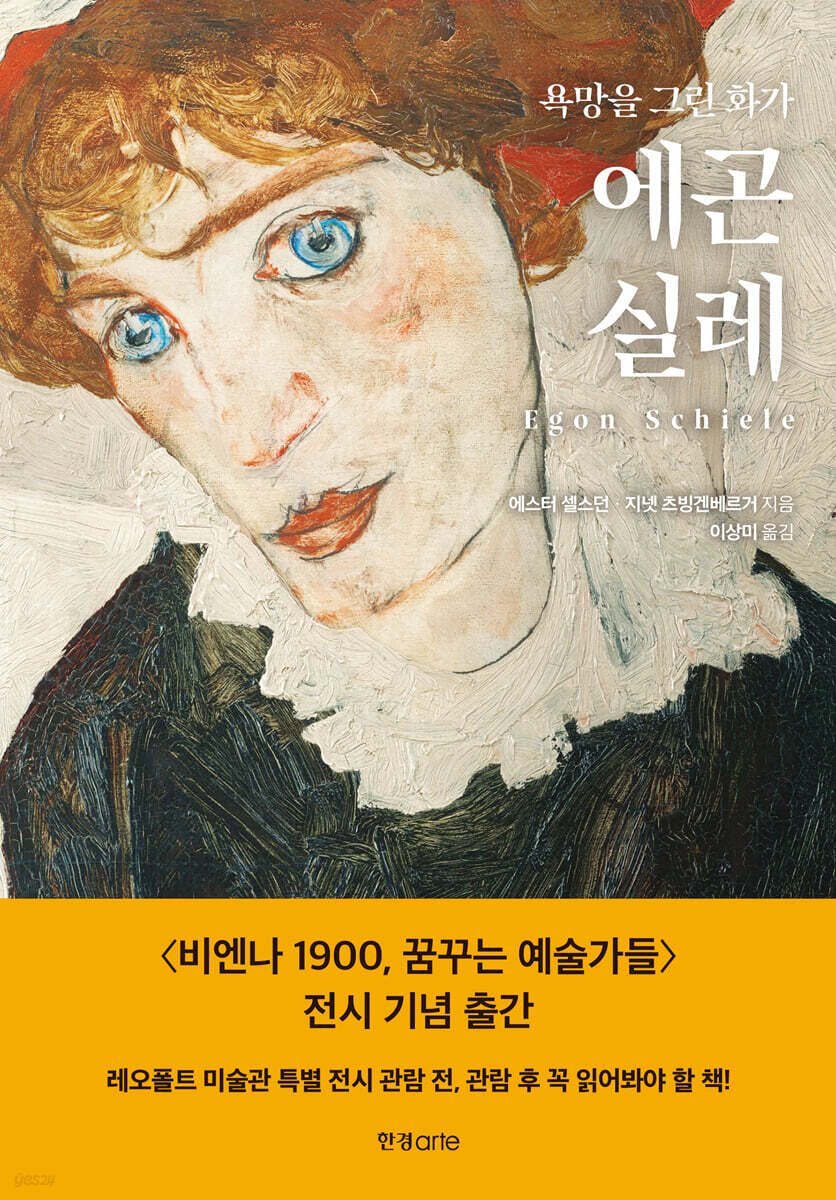
Egon Schiele, the painter of desire
 |
Description
Book Introduction
“There is sacredness even in erotic works.”
The painter who painted the alluring desires,
Discover the life and art of Egon Schiele in one book!
*[Vienna 1900, Dreaming Artists], a book commemorating the special exhibition at the Leopold Museum, published*
A special exhibition titled [Vienna 1900, Dreaming Artists] will be held at the National Museum of Korea from November 2024.
To commemorate this exhibition showcasing the collection of the Leopold Museum, books on the lives and works of Gustav Klimt and Egon Schiele, titled “Gustav Klimt, the Painter of Gold” and “Egon Schiele, the Painter of Desire,” will be published by Hankyung Arte.
By examining the works of these two geniuses, who were both teacher and student and who represented Expressionism, you will be able to grasp their lives and artistic world at a glance.
Egon Schiele (1890-1918) was one of the masters of Expressionism, associated with Gustav Klimt, and, like other senior artists of the Vienna Secession, rejected the traditions of Austrian institutional art at a very young age.
A variety of self-portraits and nudes appear consistently throughout his oeuvre, consistently displaying his own erotic, sensual, and painful vision of art.
Schiele, who died of the Spanish flu at the young age of 28, left behind many outstanding works during his short life.
This book contains Schiele's diverse works, representative works by year, along with the life and journey of this great artist.
The painter who painted the alluring desires,
Discover the life and art of Egon Schiele in one book!
*[Vienna 1900, Dreaming Artists], a book commemorating the special exhibition at the Leopold Museum, published*
A special exhibition titled [Vienna 1900, Dreaming Artists] will be held at the National Museum of Korea from November 2024.
To commemorate this exhibition showcasing the collection of the Leopold Museum, books on the lives and works of Gustav Klimt and Egon Schiele, titled “Gustav Klimt, the Painter of Gold” and “Egon Schiele, the Painter of Desire,” will be published by Hankyung Arte.
By examining the works of these two geniuses, who were both teacher and student and who represented Expressionism, you will be able to grasp their lives and artistic world at a glance.
Egon Schiele (1890-1918) was one of the masters of Expressionism, associated with Gustav Klimt, and, like other senior artists of the Vienna Secession, rejected the traditions of Austrian institutional art at a very young age.
A variety of self-portraits and nudes appear consistently throughout his oeuvre, consistently displaying his own erotic, sensual, and painful vision of art.
Schiele, who died of the Spanish flu at the young age of 28, left behind many outstanding works during his short life.
This book contains Schiele's diverse works, representative works by year, along with the life and journey of this great artist.
- You can preview some of the book's contents.
Preview
index
The story of Sille
Schiele's work
Schiele's life
Schiele's work
Schiele's life
Detailed image

Into the book
His sister, four years younger than Sille, was an obedient subject to him.
At a time when Freud was discovering that self-discovery was achieved through erotic experience and that the "urge to see" appeared as a spontaneous sexual expression of the inner self from childhood, young Egon was recording his encounters with the opposite sex on paper.
He was passionate about erotic play leading to discovery, and shamelessly revealed his fascination with the models' genitals through nude sketches.
--- p.27~29
Towards the end of the 19th century, Schiele depicted young girls from the working class.
Vienna had the highest number of prostitutes per capita of any European city.
Working-class women were vulnerable beings who could fulfill the desires that upper-class men could not fulfill in their wives.
For the lower classes, 'selling one's body for love', or prostitution, was a way to earn daily bread.
The young, skinny bodies of the models in Schiele's nude drawings evoke compassion.
--- p.36
Schiele was fascinated by his own image and continually painted his own face and body.
In this relatively early gouache, he plays a dual role as both model and artist, deconstructing his own image and showing himself in a distorted and ugly form, thus forcing the viewer to look directly at himself.
--- p.132
In 1911, Schiele mastered the watercolor technique and began experimenting with it.
He did not particularly like the classic watercolor feel, and used mainly a mixture of gouache, pencil, and watercolor, as in this painting of the dancer Moa.
The artist used three materials together to add a newness and depth, along with an exotic feel, to the model dancer.
--- p.150
When he finally decided to marry Edith, Schiele was still seeing Valli.
Sille suggested that they continue their meeting, but Bali refused and never saw him again.
Shortly after this life-changing event, Schiele began painting this allegorical work in which a female figure (Bali) eerily clings to Schiele, the figure of death.
At a time when Freud was discovering that self-discovery was achieved through erotic experience and that the "urge to see" appeared as a spontaneous sexual expression of the inner self from childhood, young Egon was recording his encounters with the opposite sex on paper.
He was passionate about erotic play leading to discovery, and shamelessly revealed his fascination with the models' genitals through nude sketches.
--- p.27~29
Towards the end of the 19th century, Schiele depicted young girls from the working class.
Vienna had the highest number of prostitutes per capita of any European city.
Working-class women were vulnerable beings who could fulfill the desires that upper-class men could not fulfill in their wives.
For the lower classes, 'selling one's body for love', or prostitution, was a way to earn daily bread.
The young, skinny bodies of the models in Schiele's nude drawings evoke compassion.
--- p.36
Schiele was fascinated by his own image and continually painted his own face and body.
In this relatively early gouache, he plays a dual role as both model and artist, deconstructing his own image and showing himself in a distorted and ugly form, thus forcing the viewer to look directly at himself.
--- p.132
In 1911, Schiele mastered the watercolor technique and began experimenting with it.
He did not particularly like the classic watercolor feel, and used mainly a mixture of gouache, pencil, and watercolor, as in this painting of the dancer Moa.
The artist used three materials together to add a newness and depth, along with an exotic feel, to the model dancer.
--- p.150
When he finally decided to marry Edith, Schiele was still seeing Valli.
Sille suggested that they continue their meeting, but Bali refused and never saw him again.
Shortly after this life-changing event, Schiele began painting this allegorical work in which a female figure (Bali) eerily clings to Schiele, the figure of death.
--- p.204
Publisher's Review
From his representative works [Self-Portrait with a Goji Berry] to [Moa] and [Death and the Maiden]
Discover the life and art of a genius painter representing the era of modernism in one book.
The Austrian genius painter who died young, a rebel in the art world, a disciple of Klimt… … Egon Schiele, who has been described by countless epithets.
In the era when modern art (modernism) began and traditional 'subjects' were disappearing, Schiele said, "Art cannot be modern.
He argued that “it is eternal in itself.”
Gustav Klimt was like a father figure to this energetic young painter, influencing Schiele's early work and providing constant encouragement and support.
From 1909 onwards, Schiele began to develop his own individual style, moving away from the linear and clear style taught by his teacher Klimt.
Schiele, like Klimt, painted many nudes, but while Klimt's paintings were peaceful, dreamy, and delicate, Schiele's reflected extreme pain and neurotic mental states.
Schiele endlessly depicted himself in frail and distressed form, and his drawings of female nudes were simultaneously sexually alluring and repulsive.
Although Schiele, who passed away at a young age, only painted prolifically for less than ten years, he left behind 334 oil paintings and 2,503 drawings during this period.
From his representative works [Self-Portrait with Goji Berries] to [Dream Observations] depicting the erotic nature of humans, [Seated Male Nude] using himself as a model, and [Death and the Maiden] depicting a breakup with one's first love, we introduce a selection of iconic paintings from Schiele's works, including his life, art history, and changes in his painting style.
Egon Schiele's life as an artist, depicted in paintings
Schiele is also called an 'eroticist' because his work erotically depicts the human body.
He broke with the organic Art Nouveau style and the worship of beauty inherent in decorative arts, stripping his models of all decorative accessories and focusing solely on their bodies.
However, unlike conventional academic nudes, which primarily depicted the body neutrally from an anatomical perspective, Schiele shows the body in an erotically aroused state.
Schiele explored both male and female bodies, and his models skillfully seduced the viewer with astonishing freedom in expressing their sexuality, narcissism, homosexuality, and voyeurism.
He knew that he needed sexual stimulation to hold the audience's eyes, and he added erotic signs such as red lips, plump labia, and dark circles under the eyes.
Furthermore, Schiele did not remain a voyeur who merely observed and drew models, but participated in his work by posing as models (self-portraits). For him, the nude was more than just a painting; it was a means of expressing the inner self of the soul.
Therefore, this work of presenting himself and expressing himself was also a study of his own life.
Discover the life and art of a genius painter representing the era of modernism in one book.
The Austrian genius painter who died young, a rebel in the art world, a disciple of Klimt… … Egon Schiele, who has been described by countless epithets.
In the era when modern art (modernism) began and traditional 'subjects' were disappearing, Schiele said, "Art cannot be modern.
He argued that “it is eternal in itself.”
Gustav Klimt was like a father figure to this energetic young painter, influencing Schiele's early work and providing constant encouragement and support.
From 1909 onwards, Schiele began to develop his own individual style, moving away from the linear and clear style taught by his teacher Klimt.
Schiele, like Klimt, painted many nudes, but while Klimt's paintings were peaceful, dreamy, and delicate, Schiele's reflected extreme pain and neurotic mental states.
Schiele endlessly depicted himself in frail and distressed form, and his drawings of female nudes were simultaneously sexually alluring and repulsive.
Although Schiele, who passed away at a young age, only painted prolifically for less than ten years, he left behind 334 oil paintings and 2,503 drawings during this period.
From his representative works [Self-Portrait with Goji Berries] to [Dream Observations] depicting the erotic nature of humans, [Seated Male Nude] using himself as a model, and [Death and the Maiden] depicting a breakup with one's first love, we introduce a selection of iconic paintings from Schiele's works, including his life, art history, and changes in his painting style.
Egon Schiele's life as an artist, depicted in paintings
Schiele is also called an 'eroticist' because his work erotically depicts the human body.
He broke with the organic Art Nouveau style and the worship of beauty inherent in decorative arts, stripping his models of all decorative accessories and focusing solely on their bodies.
However, unlike conventional academic nudes, which primarily depicted the body neutrally from an anatomical perspective, Schiele shows the body in an erotically aroused state.
Schiele explored both male and female bodies, and his models skillfully seduced the viewer with astonishing freedom in expressing their sexuality, narcissism, homosexuality, and voyeurism.
He knew that he needed sexual stimulation to hold the audience's eyes, and he added erotic signs such as red lips, plump labia, and dark circles under the eyes.
Furthermore, Schiele did not remain a voyeur who merely observed and drew models, but participated in his work by posing as models (self-portraits). For him, the nude was more than just a painting; it was a means of expressing the inner self of the soul.
Therefore, this work of presenting himself and expressing himself was also a study of his own life.
GOODS SPECIFICS
- Date of issue: October 22, 2024
- Format: Hardcover book binding method guide
- Page count, weight, size: 244 pages | 584g | 156*218*20mm
- ISBN13: 9788947549769
- ISBN10: 8947549762
You may also like
카테고리
korean


korean

![GQ KOREA Mark (Monthly): December [2025]](http://librairie.coreenne.fr/cdn/shop/files/8ef265dbbfbf186523ed75ba7319009d.jpg?v=1765340328&width=3840)


