

A city where people meet
 |
Description
Book Introduction
An 'Uncomfortable City' Witnessed by Civil Servants
Inhumane and dehumanizing environments everywhere
The path to finding the right to enjoy a better city!
What kind of life do we enjoy, in what kind of environment? On roads taken over by cars, we walk absentmindedly toward our destination.
Chance encounters are nowhere to be found and neighbors are cut off.
This city is overflowing with nothing but purposeful communication.
This is the current state of affairs resulting from car-centric urban design, where people are pushed to the back burner and natural encounters disappear.
But we have become so accustomed to the current city that we are numb to it, only occasionally complaining about the extreme traffic congestion.
The cause of the city's problems today lies right here.
Not recognizing a problem as a problem.
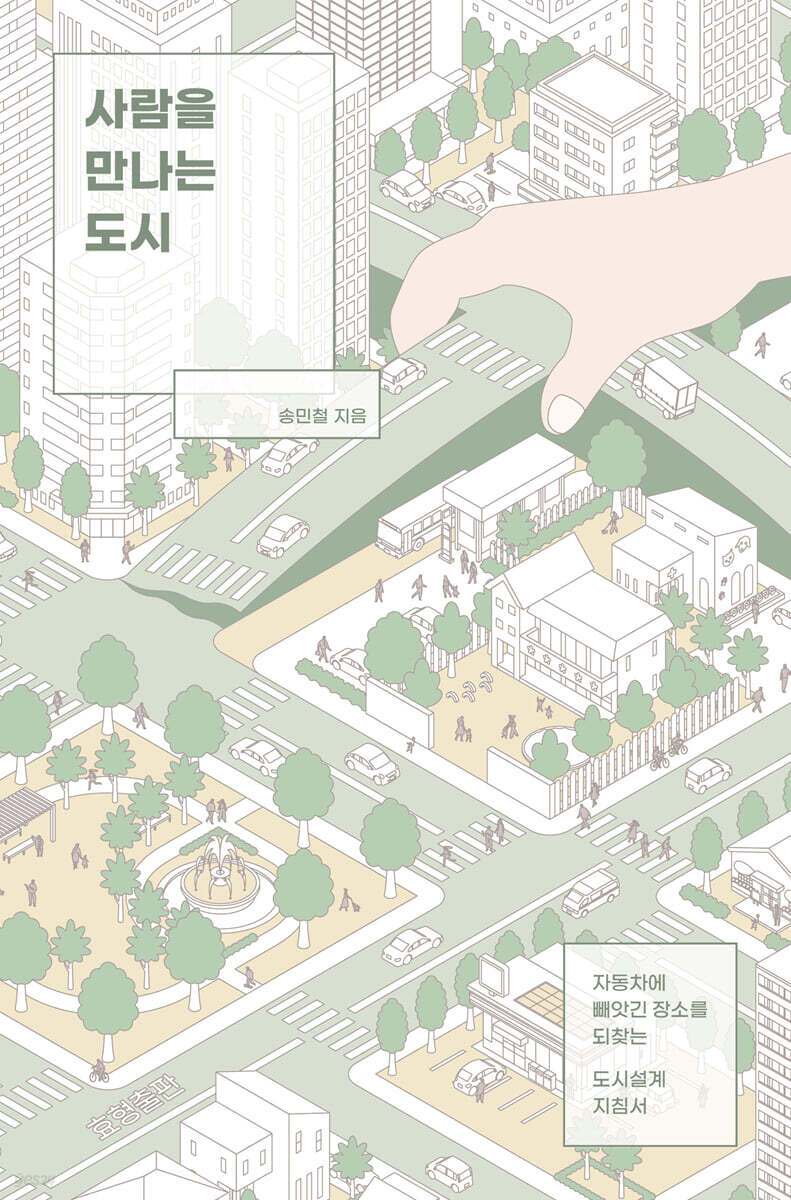
"A City Where People Meet" begins with facing the problems that surround us.
Furthermore, it discusses the importance of roads as a starting point for resolving urban problems that we witness around us both physically and socially.
The author emphasizes three steps (3S) to create a city where people can meet and walk.
First, secure a place for the meeting.
The place for meeting is ‘walkways and public spaces.’
The second is to separate the elements that hinder the meeting.
The third and final step is to add elements that facilitate encounters (Serve).
The ultimate goal of urban planning, he says, is to 'create streets bustling with people.'
In accordance with this principle, I believe that we must first establish pedestrian paths, roads, public transportation stops, and plazas, and then follow this process of making the places into beautiful spaces that people want to stay in.
Urban design is the process of considering the specific forms of life presented to people.
Countries that have taken the lead in creating pedestrian-friendly cities are also known for their beautiful cityscapes.
For example, the Dutch city of Houten, mentioned in the book, operates a transportation network that separates bicycle and pedestrian paths from automobile roads, centered around the main public transportation, the train line.
Here, riding a bicycle is a more reasonable option than driving a car in terms of time and cost.
Cities renowned for their beautiful alleys and streets all offer walkable environments that encourage chance encounters.
It creates a desirable environment where people naturally interact and connect as they walk along the street.
It is not a bleak city that operates around cars and emphasizes only efficiency and convenience.
We too must create a cityscape where we empathize with each other and stand shoulder to shoulder, each with our own breathing and rhythm.
Improving a city is ultimately no different from improving the quality of life.
Let's take a close look at the streets and alleys where I stand.
You will begin to see regrets in various places in the city that you have so far passed by without a second thought, that were just backgrounds.
With this, we will take a step forward on our ‘journey towards a better city.’
Inhumane and dehumanizing environments everywhere
The path to finding the right to enjoy a better city!
What kind of life do we enjoy, in what kind of environment? On roads taken over by cars, we walk absentmindedly toward our destination.
Chance encounters are nowhere to be found and neighbors are cut off.
This city is overflowing with nothing but purposeful communication.
This is the current state of affairs resulting from car-centric urban design, where people are pushed to the back burner and natural encounters disappear.
But we have become so accustomed to the current city that we are numb to it, only occasionally complaining about the extreme traffic congestion.
The cause of the city's problems today lies right here.
Not recognizing a problem as a problem.
"A City Where People Meet" begins with facing the problems that surround us.
Furthermore, it discusses the importance of roads as a starting point for resolving urban problems that we witness around us both physically and socially.
The author emphasizes three steps (3S) to create a city where people can meet and walk.
First, secure a place for the meeting.
The place for meeting is ‘walkways and public spaces.’
The second is to separate the elements that hinder the meeting.
The third and final step is to add elements that facilitate encounters (Serve).
The ultimate goal of urban planning, he says, is to 'create streets bustling with people.'
In accordance with this principle, I believe that we must first establish pedestrian paths, roads, public transportation stops, and plazas, and then follow this process of making the places into beautiful spaces that people want to stay in.
Urban design is the process of considering the specific forms of life presented to people.
Countries that have taken the lead in creating pedestrian-friendly cities are also known for their beautiful cityscapes.
For example, the Dutch city of Houten, mentioned in the book, operates a transportation network that separates bicycle and pedestrian paths from automobile roads, centered around the main public transportation, the train line.
Here, riding a bicycle is a more reasonable option than driving a car in terms of time and cost.
Cities renowned for their beautiful alleys and streets all offer walkable environments that encourage chance encounters.
It creates a desirable environment where people naturally interact and connect as they walk along the street.
It is not a bleak city that operates around cars and emphasizes only efficiency and convenience.
We too must create a cityscape where we empathize with each other and stand shoulder to shoulder, each with our own breathing and rhythm.
Improving a city is ultimately no different from improving the quality of life.
Let's take a close look at the streets and alleys where I stand.
You will begin to see regrets in various places in the city that you have so far passed by without a second thought, that were just backgrounds.
With this, we will take a step forward on our ‘journey towards a better city.’
- You can preview some of the book's contents.
Preview
index
Prologue: The Road to Meeting People 6
Part 1: Are we okay?
1 Are we okay? 10
2 Outside the building 14
3 Outside the looted building 18
4 Outside the abandoned building 26
Part 2: The Road to Goodbye
5 The Mission of Public Spaces 32
6 The Power of Space 40
Let's meet 7 people 48
Part 3: What to do?
8 Designing Encounters: 3S 54 Creating a New City
9 Secure: Secure walking space 58
10 Separate: Separate the security net 70
11 Serve: Architecture for the City 92
Part 4: What should I do?
12 Setting the Plan Scope 116
13 Square Plan 122
14 Pedestrian Street Network Plan 128
15th Road Network Plan 132
16 parcels of land 138
17 Horizontal Design 142
18 Commercial Design 150
19 Park Plan 154
Part 5: The Road Continues
20 Retrofit 160
21 Outside the design 168
Epilogue: The Path Where the Heart Stays 184
Recommendation 186
Reference 192
Source: Illustration 194
Part 1: Are we okay?
1 Are we okay? 10
2 Outside the building 14
3 Outside the looted building 18
4 Outside the abandoned building 26
Part 2: The Road to Goodbye
5 The Mission of Public Spaces 32
6 The Power of Space 40
Let's meet 7 people 48
Part 3: What to do?
8 Designing Encounters: 3S 54 Creating a New City
9 Secure: Secure walking space 58
10 Separate: Separate the security net 70
11 Serve: Architecture for the City 92
Part 4: What should I do?
12 Setting the Plan Scope 116
13 Square Plan 122
14 Pedestrian Street Network Plan 128
15th Road Network Plan 132
16 parcels of land 138
17 Horizontal Design 142
18 Commercial Design 150
19 Park Plan 154
Part 5: The Road Continues
20 Retrofit 160
21 Outside the design 168
Epilogue: The Path Where the Heart Stays 184
Recommendation 186
Reference 192
Source: Illustration 194
Detailed image

Into the book
Compared to the intense urban planning work, designing cities was outside people's interest.
It was hard to find anyone who was concerned or excited about the city's appearance.
Citizens only occasionally complained about traffic congestion.
--- p.6
We must not forget that the environment we live in is not something that was given to us, but something we planned and created ourselves.
By the end of the story, you'll have a clear idea of what to see in the city and how to evaluate it.
--- p.7
Right now, we are not well.
Despite the significant progress our society has made in almost every area, including economic scale, the reason why the daily lives of city dwellers remain impoverished is because the 'city', the vessel that holds our daily lives, is not well.
--- p.12
When we think of a particular city, the scenery that usually comes to mind is also the outside of the building.
The exterior of a building goes beyond visual aesthetics and profoundly impacts our lives and relationships.
--- p.16
Unlike the roads of the past that were used in various ways as places for all neighbors, the roads we build today are used only for the passage of people and cars.
The community space that was once shared with neighbors has become a tool that serves only the single purpose of transportation.
--- p.19
Today, nearly 100 people are killed in traffic accidents while walking down the street, and two or three of them never return to their families.
Moreover, 60 percent of pedestrian traffic accident fatalities are elderly people with limited mobility.
This is the reality of the 'road' we walk today and the price we pay for the 'transportation efficiency' we have achieved.
To solve the problem and reclaim our place, we need to question the structure of the city before blaming the law-abidingness of pedestrians or drivers.
--- p.23
Our cities today are nothing more than machines with homes and workplaces.
It is natural that we do not feel affection for spaces where our lives are not buried.
--- p.37
As awareness of the importance of a pedestrian environment grows, a movement has emerged to improve cities beyond simply securing sidewalks.
In other words, various research and efforts are being conducted to create a 'city you want to walk in' that encourages voluntary movement beyond a city where you can walk if you really want to.
A step further is the 'walkable city'.
--- p.55
The current urban structure, which makes it difficult to form bonds with neighbors, is a direct and indirect cause of the various social problems we face and a factor that hinders the search for solutions.
If sidewalks and plazas are transformed into spaces where pedestrians can proactively engage in social interaction, people can form communities and work together to address social issues.
--- p.69
The new urban plan doesn't exclude cars.
It is simply planned to divide the road for cars and the road for people.
Just as roads are transformed into spaces for people by separating cars, roads for cars can also be reborn as roads more suited to their characteristics.
--- p.80
The problems caused by inadequate urban planning are more serious in functional terms than in aesthetic terms.
While a lack of visual unity and an unattractive landscape are not desirable, they are unlikely to cause significant problems.
However, if public spaces do not function properly due to a lack of functional review, it will have a negative impact on the overall quality of life, including the vitality, economic activity, and safety of the entire city.
--- p.96
To blame architecture for urban problems is an irresponsible act that puts the cart before the horse.
It is not valid from a moral standpoint, let alone from a problem-solving standpoint.
Attempts to solve urban problems with buildings that serve as the surface of space when the urban structure is already established are nothing more than a stopgap measure.
Architecture is not without sin.
It is only through architecture that the good and bad of urban planning are revealed.
--- p.178
The surrounding environment that comes into view like that will create some dissatisfaction and expectations in your mind.
Discontent is the force that creates change.
We must ensure that the place where our hearts dwell is no longer just a memory, but the very place where we live today.
It was hard to find anyone who was concerned or excited about the city's appearance.
Citizens only occasionally complained about traffic congestion.
--- p.6
We must not forget that the environment we live in is not something that was given to us, but something we planned and created ourselves.
By the end of the story, you'll have a clear idea of what to see in the city and how to evaluate it.
--- p.7
Right now, we are not well.
Despite the significant progress our society has made in almost every area, including economic scale, the reason why the daily lives of city dwellers remain impoverished is because the 'city', the vessel that holds our daily lives, is not well.
--- p.12
When we think of a particular city, the scenery that usually comes to mind is also the outside of the building.
The exterior of a building goes beyond visual aesthetics and profoundly impacts our lives and relationships.
--- p.16
Unlike the roads of the past that were used in various ways as places for all neighbors, the roads we build today are used only for the passage of people and cars.
The community space that was once shared with neighbors has become a tool that serves only the single purpose of transportation.
--- p.19
Today, nearly 100 people are killed in traffic accidents while walking down the street, and two or three of them never return to their families.
Moreover, 60 percent of pedestrian traffic accident fatalities are elderly people with limited mobility.
This is the reality of the 'road' we walk today and the price we pay for the 'transportation efficiency' we have achieved.
To solve the problem and reclaim our place, we need to question the structure of the city before blaming the law-abidingness of pedestrians or drivers.
--- p.23
Our cities today are nothing more than machines with homes and workplaces.
It is natural that we do not feel affection for spaces where our lives are not buried.
--- p.37
As awareness of the importance of a pedestrian environment grows, a movement has emerged to improve cities beyond simply securing sidewalks.
In other words, various research and efforts are being conducted to create a 'city you want to walk in' that encourages voluntary movement beyond a city where you can walk if you really want to.
A step further is the 'walkable city'.
--- p.55
The current urban structure, which makes it difficult to form bonds with neighbors, is a direct and indirect cause of the various social problems we face and a factor that hinders the search for solutions.
If sidewalks and plazas are transformed into spaces where pedestrians can proactively engage in social interaction, people can form communities and work together to address social issues.
--- p.69
The new urban plan doesn't exclude cars.
It is simply planned to divide the road for cars and the road for people.
Just as roads are transformed into spaces for people by separating cars, roads for cars can also be reborn as roads more suited to their characteristics.
--- p.80
The problems caused by inadequate urban planning are more serious in functional terms than in aesthetic terms.
While a lack of visual unity and an unattractive landscape are not desirable, they are unlikely to cause significant problems.
However, if public spaces do not function properly due to a lack of functional review, it will have a negative impact on the overall quality of life, including the vitality, economic activity, and safety of the entire city.
--- p.96
To blame architecture for urban problems is an irresponsible act that puts the cart before the horse.
It is not valid from a moral standpoint, let alone from a problem-solving standpoint.
Attempts to solve urban problems with buildings that serve as the surface of space when the urban structure is already established are nothing more than a stopgap measure.
Architecture is not without sin.
It is only through architecture that the good and bad of urban planning are revealed.
--- p.178
The surrounding environment that comes into view like that will create some dissatisfaction and expectations in your mind.
Discontent is the force that creates change.
We must ensure that the place where our hearts dwell is no longer just a memory, but the very place where we live today.
--- p.185
Publisher's Review
In exchange for convenient transportation
How to Reclaim Your Abundant Life
From the moment we step outside the building, we are faced with discomfort everywhere.
How many crosswalks do we cross after leaving home and reaching our destination? How many times do we have to give way to the car tailgating us? We may have become accustomed to these daily inconveniences.
Are cities inherently unpleasant and uncomfortable places? Is there no way they can become better? Nearly 100 people are killed in traffic accidents every day, some of whom never return to their families.
In particular, the fact that 60 percent of pedestrian traffic fatalities are elderly people with mobility difficulties shows how fragile the urban structure of our society is.
We need to look critically at the structure of the city and find the root of the problem.
"The City Where People Meet" takes a hard look at the reality of our cities, coldly reflecting on the bleak urban landscape created by indifference and the value of life sacrificed for convenient transportation.
It emphasizes that many of the problems we face today stem from urban design and provides clues for solving them.
“Social contact reduces not only social pain but also physical pain.
The act of hugging our injured children is in the same vein.
We prefer lively streets with lots of people.
The reason why cafe chairs are usually positioned facing the sidewalk is to provide a view of city life.
As the old Icelandic verse says, "People are man's greatest joy," and the Scandinavian proverb says, "Where there are people, there people come," human joy and interest in others are powerful factors that energize cities.
In this way, encounters are the foundation and ultimate goal of our lives.
Meetings and conversations that take place in open spaces develop individual thoughts into public opinion and serve as a driving force for social change.
In order to understand others and live together, we must encounter and meet them more frequently.
Therefore, a meeting place is needed.
“Cities should not be mere passageways or empty spaces, but should have public spaces for encounters.” - From ‘The Road to Hello’
How to Reclaim Your Abundant Life
From the moment we step outside the building, we are faced with discomfort everywhere.
How many crosswalks do we cross after leaving home and reaching our destination? How many times do we have to give way to the car tailgating us? We may have become accustomed to these daily inconveniences.
Are cities inherently unpleasant and uncomfortable places? Is there no way they can become better? Nearly 100 people are killed in traffic accidents every day, some of whom never return to their families.
In particular, the fact that 60 percent of pedestrian traffic fatalities are elderly people with mobility difficulties shows how fragile the urban structure of our society is.
We need to look critically at the structure of the city and find the root of the problem.
"The City Where People Meet" takes a hard look at the reality of our cities, coldly reflecting on the bleak urban landscape created by indifference and the value of life sacrificed for convenient transportation.
It emphasizes that many of the problems we face today stem from urban design and provides clues for solving them.
“Social contact reduces not only social pain but also physical pain.
The act of hugging our injured children is in the same vein.
We prefer lively streets with lots of people.
The reason why cafe chairs are usually positioned facing the sidewalk is to provide a view of city life.
As the old Icelandic verse says, "People are man's greatest joy," and the Scandinavian proverb says, "Where there are people, there people come," human joy and interest in others are powerful factors that energize cities.
In this way, encounters are the foundation and ultimate goal of our lives.
Meetings and conversations that take place in open spaces develop individual thoughts into public opinion and serve as a driving force for social change.
In order to understand others and live together, we must encounter and meet them more frequently.
Therefore, a meeting place is needed.
“Cities should not be mere passageways or empty spaces, but should have public spaces for encounters.” - From ‘The Road to Hello’
GOODS SPECIFICS
- Date of issue: September 20, 2024
- Page count, weight, size: 196 pages | 340g | 145*220*17mm
- ISBN13: 9788958722342
- ISBN10: 8958722347
You may also like
카테고리
korean


korean

![GQ KOREA Mark (Monthly): December [2025]](http://librairie.coreenne.fr/cdn/shop/files/8ef265dbbfbf186523ed75ba7319009d.jpg?v=1765340328&width=3840)


