

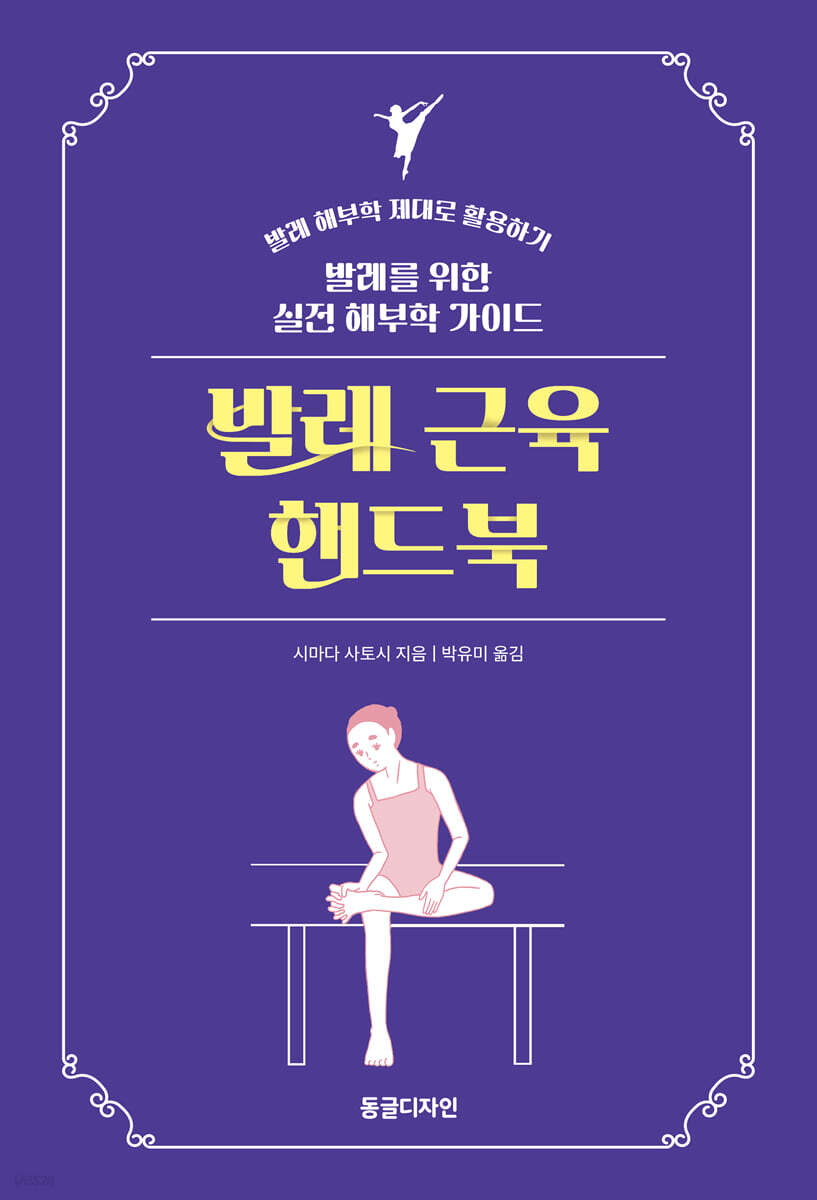
Ballet Muscle Handbook
 |
Description
Book Introduction
“Korea’s first ballet professional guide series!”
Proper muscle use for ballerinas and amateur ballet dancers alike!
Ballet, the pinnacle of elegance! But ballet is no longer the exclusive domain of ballerinas or ballet dancers.
These days, not only celebrities but also ordinary people are choosing ballet to maintain their body shape.
As ballet became more popular, the barriers to entry became lower.
As the number of people, both children and adults, who want to learn ballet as a hobby increases, the number of professional training institutions is also increasing.
They choose ballet because of its positive effects, such as posture correction, flexibility, balance, and physical strength.
But like any other sport, ballet doesn't have many movements that look easy.
Just looking at the ballet shoes, it looks difficult.
How long can you stand in those shoes? How about turning? These difficult movements can extinguish your passion for ballet and even lead to injuries.
This also applies to professional ballerinas and ballet dancers.
So this book was published!
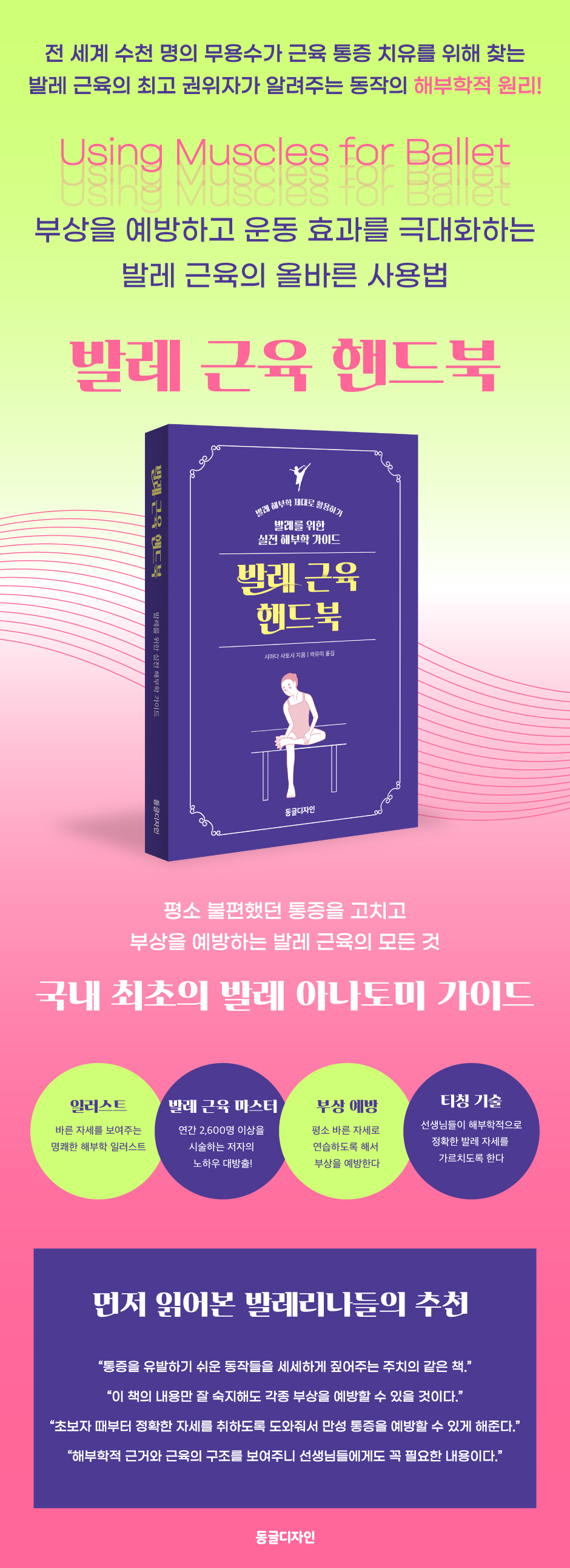
The author of this book, Satoshi Shimada, who runs an acupuncture clinic in Tokyo, Japan, and performs treatments on over 2,600 patients annually, is renowned worldwide for his knowledge of how dancers effectively use their bodies and how to utilize their muscles.
Unlike other books, this book explains each part of our body in detail from an anatomical perspective, allowing for self-exercise.
Additionally, by providing detailed illustrations of the principles of the body's bones and muscles, it is possible to identify and resolve why movements are not working properly and what causes pain.
If you exercise according to the method introduced by the author, you will find that the movements become easier and you will find yourself dancing more beautifully and safely.
This book is written in a friendly manner, as if a health trainer were right next to you, explaining in detail the positions of bones, the positions of the muscles within them, and the corresponding movements. It will be of great help to professional ballerinas as well as those who do ballet as a hobby.
There is no better book to keep by your side and exercise with.
Proper muscle use for ballerinas and amateur ballet dancers alike!
Ballet, the pinnacle of elegance! But ballet is no longer the exclusive domain of ballerinas or ballet dancers.
These days, not only celebrities but also ordinary people are choosing ballet to maintain their body shape.
As ballet became more popular, the barriers to entry became lower.
As the number of people, both children and adults, who want to learn ballet as a hobby increases, the number of professional training institutions is also increasing.
They choose ballet because of its positive effects, such as posture correction, flexibility, balance, and physical strength.
But like any other sport, ballet doesn't have many movements that look easy.
Just looking at the ballet shoes, it looks difficult.
How long can you stand in those shoes? How about turning? These difficult movements can extinguish your passion for ballet and even lead to injuries.
This also applies to professional ballerinas and ballet dancers.
So this book was published!
The author of this book, Satoshi Shimada, who runs an acupuncture clinic in Tokyo, Japan, and performs treatments on over 2,600 patients annually, is renowned worldwide for his knowledge of how dancers effectively use their bodies and how to utilize their muscles.
Unlike other books, this book explains each part of our body in detail from an anatomical perspective, allowing for self-exercise.
Additionally, by providing detailed illustrations of the principles of the body's bones and muscles, it is possible to identify and resolve why movements are not working properly and what causes pain.
If you exercise according to the method introduced by the author, you will find that the movements become easier and you will find yourself dancing more beautifully and safely.
This book is written in a friendly manner, as if a health trainer were right next to you, explaining in detail the positions of bones, the positions of the muscles within them, and the corresponding movements. It will be of great help to professional ballerinas as well as those who do ballet as a hobby.
There is no better book to keep by your side and exercise with.
index
Header_Building Muscles Suitable for Ballet
Structure of this book
Make sure to do this before the lesson!
Self-tuning 1.
Belly-clutching breathing that switches on the transverse abdominis
Column 1.
Muscle Structure: The "Stretching Trap"
Chapter 1.
Ballet Abs Training: Building Your Core and Torso
What decides the outcome is, of course, the core!
Tip 1.
There are two groups of ballet abs!
Don't stick your stomach out to avoid putting strain on your lower back.
If your pelvis is not misaligned, it is easier to use your legs.
Tip 2.
Each abdominal muscle has its own specific movements
Self-tuning 2.
Consciously rub your abs
Jang Psoas × Leg Lift
Self-tuning 3.
Relaxing the psoas muscle
Self-tuning 4.
Ballet Abdominal Tuning
Self-tuning 5.
Oblique and Adductor Adjustment Method
Self-tuning 6.
Rectus abdominis adjustment method
Column 2.
Abs x Arabesque
Self-tuning 7.
Quadratus lumborum adjustment method
Using Ballet Abs While Dancing
Two Keys to Strengthening Your Ballet Abs Through Breathing
Training Ballet Abs with Breathing and Acupressure
Self-tuning 8.
Basic Methods of Ballet Abdominal Breathing Exercises
Effective for all ballet abs! Acupoint (1) Combination of the diaphragm and transverse abdominis
Self-tuning 9.
Strengthening the Abdominal Muscles! Acupoint (2) Bringing the Transverse Abdominis Closer to the Main Muscle
Self-tuning 10.
Strengthening Your Pelvic Floor! Acupoint (3) Combination of the Transverse Abdominis and Pelvic Floor
Strengthen your core by taking into account the twisting of your back.
Self-tuning 11.
Basic method of core gymnastics that twists the back
Self-tuning 12.
Two-axis gymnastics that makes it easier to use the trunk by focusing on the axis
Divide by purpose and cover weaknesses
Chapter 2.
Train your ballet muscles to create beautiful, strong pointes.
How to Create Beautiful, Strong Toes
If you want to stretch your toes beautifully, flex is important!
Summary: The Relationship Between Foot Movement and Dance
Pushing the top of the foot by training the intrinsic muscles
Self-tuning 13.
Action to revive the arch
Self-tuning 14.
Fibula Flex
Self-tuning 15.
Toe grip
How are the toes and the torso connected?
When pushing off the top of the foot in the Demi Pointe movement, big toe flex is important!
Self-tuning 16.
Foot doming, which strengthens the muscles and arches of the toes and soles of the feet
Self-tuning 17.
Toe training
Column 3.
About fascia
Chapter 3: Training Ballet Muscles to Create Basic Technique
Turn Out Muscle Cleanse
Self-tuning 18.
Hip Stretching with Hand Guiding
Self-tuning 19.
How to control more advanced turnout muscles
Self-tuning 20.
Creating a neutral hip posture
Train your adductor muscles
Two easy ways to engage your adductor muscles
Self-tuning 21.
Adductor training divided into three types according to location
Train your pulling muscles
A map showing where to strengthen the lifting muscles
Self-tuning 22.
Sideways pull-up motion
Self-tuning 23.
Long de Jangbe pull-up movement
Training the muscles that help move the shoulder blade
Self-tuning 24.
Pectoralis minor reset to relieve tension in the anterior cruciate ligament
Column 4.
Why Your Shoulders Rise When Doing Pointe and Floor Pushups and How to Deal with It
Appendix 1.
Muscle Structure You Should Know
Appendix 2.
The 'muscle development' and 'nervous system control' required to develop dance skills
Structure of this book
Make sure to do this before the lesson!
Self-tuning 1.
Belly-clutching breathing that switches on the transverse abdominis
Column 1.
Muscle Structure: The "Stretching Trap"
Chapter 1.
Ballet Abs Training: Building Your Core and Torso
What decides the outcome is, of course, the core!
Tip 1.
There are two groups of ballet abs!
Don't stick your stomach out to avoid putting strain on your lower back.
If your pelvis is not misaligned, it is easier to use your legs.
Tip 2.
Each abdominal muscle has its own specific movements
Self-tuning 2.
Consciously rub your abs
Jang Psoas × Leg Lift
Self-tuning 3.
Relaxing the psoas muscle
Self-tuning 4.
Ballet Abdominal Tuning
Self-tuning 5.
Oblique and Adductor Adjustment Method
Self-tuning 6.
Rectus abdominis adjustment method
Column 2.
Abs x Arabesque
Self-tuning 7.
Quadratus lumborum adjustment method
Using Ballet Abs While Dancing
Two Keys to Strengthening Your Ballet Abs Through Breathing
Training Ballet Abs with Breathing and Acupressure
Self-tuning 8.
Basic Methods of Ballet Abdominal Breathing Exercises
Effective for all ballet abs! Acupoint (1) Combination of the diaphragm and transverse abdominis
Self-tuning 9.
Strengthening the Abdominal Muscles! Acupoint (2) Bringing the Transverse Abdominis Closer to the Main Muscle
Self-tuning 10.
Strengthening Your Pelvic Floor! Acupoint (3) Combination of the Transverse Abdominis and Pelvic Floor
Strengthen your core by taking into account the twisting of your back.
Self-tuning 11.
Basic method of core gymnastics that twists the back
Self-tuning 12.
Two-axis gymnastics that makes it easier to use the trunk by focusing on the axis
Divide by purpose and cover weaknesses
Chapter 2.
Train your ballet muscles to create beautiful, strong pointes.
How to Create Beautiful, Strong Toes
If you want to stretch your toes beautifully, flex is important!
Summary: The Relationship Between Foot Movement and Dance
Pushing the top of the foot by training the intrinsic muscles
Self-tuning 13.
Action to revive the arch
Self-tuning 14.
Fibula Flex
Self-tuning 15.
Toe grip
How are the toes and the torso connected?
When pushing off the top of the foot in the Demi Pointe movement, big toe flex is important!
Self-tuning 16.
Foot doming, which strengthens the muscles and arches of the toes and soles of the feet
Self-tuning 17.
Toe training
Column 3.
About fascia
Chapter 3: Training Ballet Muscles to Create Basic Technique
Turn Out Muscle Cleanse
Self-tuning 18.
Hip Stretching with Hand Guiding
Self-tuning 19.
How to control more advanced turnout muscles
Self-tuning 20.
Creating a neutral hip posture
Train your adductor muscles
Two easy ways to engage your adductor muscles
Self-tuning 21.
Adductor training divided into three types according to location
Train your pulling muscles
A map showing where to strengthen the lifting muscles
Self-tuning 22.
Sideways pull-up motion
Self-tuning 23.
Long de Jangbe pull-up movement
Training the muscles that help move the shoulder blade
Self-tuning 24.
Pectoralis minor reset to relieve tension in the anterior cruciate ligament
Column 4.
Why Your Shoulders Rise When Doing Pointe and Floor Pushups and How to Deal with It
Appendix 1.
Muscle Structure You Should Know
Appendix 2.
The 'muscle development' and 'nervous system control' required to develop dance skills
Detailed image
Into the book
There are differing opinions as to whether muscle training is necessary for ballet.
Some instructors say that muscle training is good, while others say that it is not.
The basics are to follow the instructor's guidelines, but if you understand 'how muscles help dance', you will realize that muscle training helps ballet more than anything else.
--- p.4
You may have felt frustrated because you were stretching hard but your range of motion didn't seem to expand.
This is often due to the structure of the muscles.
This structure is called the 'stretch reflex'.
Simply put, it refers to a reflex that causes muscles to contract involuntarily when they are stretched beyond a certain amount.
Why does this happen? Because it's dangerous when muscles are stretched too much and damaged.
--- p.20
When you do ballet, you may be coached to train your toes.
Stronger toes make it easier to support your body and prevent your toes from curling when you try to straighten them, but there's a more important reason.
This is because, when looking at the body's connections in oriental medicine, the toes are connected to the trunk.
--- p.111
The adductor muscles are the muscles that bring the legs together.
So why is this muscle so important in ballet? Because it keeps you from losing your center of gravity.
For example, the adductors are used when you bring your legs together during a turnout, when you raise your legs straight, or when you balance on one leg to create an axis for your body.
If you can't use your adductor muscles, you'll only be using the muscles on the outside of your legs, so your knees won't touch in position 1, you'll have trouble doing positions 4 and 5, and you won't be able to stand on one leg.
That is, the axis is shaking.
Some instructors say that muscle training is good, while others say that it is not.
The basics are to follow the instructor's guidelines, but if you understand 'how muscles help dance', you will realize that muscle training helps ballet more than anything else.
--- p.4
You may have felt frustrated because you were stretching hard but your range of motion didn't seem to expand.
This is often due to the structure of the muscles.
This structure is called the 'stretch reflex'.
Simply put, it refers to a reflex that causes muscles to contract involuntarily when they are stretched beyond a certain amount.
Why does this happen? Because it's dangerous when muscles are stretched too much and damaged.
--- p.20
When you do ballet, you may be coached to train your toes.
Stronger toes make it easier to support your body and prevent your toes from curling when you try to straighten them, but there's a more important reason.
This is because, when looking at the body's connections in oriental medicine, the toes are connected to the trunk.
--- p.111
The adductor muscles are the muscles that bring the legs together.
So why is this muscle so important in ballet? Because it keeps you from losing your center of gravity.
For example, the adductors are used when you bring your legs together during a turnout, when you raise your legs straight, or when you balance on one leg to create an axis for your body.
If you can't use your adductor muscles, you'll only be using the muscles on the outside of your legs, so your knees won't touch in position 1, you'll have trouble doing positions 4 and 5, and you won't be able to stand on one leg.
That is, the axis is shaking.
--- p.148
Publisher's Review
The secret of muscles that make beautiful movements even more beautiful
Ballet muscle training that anyone can easily follow!
When you think of 'ballet', the first thing that comes to mind is 'flexibility' and the 'muscle strength' that surrounds that flexibility.
The posture and body shape perfected through ballet are expressed in a beautiful way, making one imagine the appearance of a princess or fairy.
To develop this flexibility and strength, everyone started wearing toe shoes.
However, if you do not receive proper guidance from an expert, there is a high possibility that you will not achieve the desired effect due to incorrect movements.
The beautiful movements of ballet are not just achieved with a light body.
To jump high and beautifully, we need to know what role the numerous muscles in our body play.
This way, the beauty can be further highlighted.
If you only seek external beauty without seeing the inner beauty, you may end up ruining or hurting your body.
The author, who can see through the physical symptoms of a dancer just by looking at their posture, will help both ballet beginners and long-time ballerinas dance more efficiently and safely.
The key word is ‘ballet muscle.’
My goal is to train the muscles that will give me the strength to fly beautifully and dream of a more skilled ballet life.
For example, some people complain, “Only my calves are getting thicker,” or “My Achilles tendons and heels often hurt.”
In that case, if you used your calf because some part was tired or unusable, it is likely that your heel was pulled too much.
But you can't dance with beautiful, strong toes if you rely only on your calves.
So how can we strengthen our ankles without relying solely on our calves or hurting our heels? The key is flex! Flexing movements hold the secrets of foot structure, and this book unravels those structural secrets, one by one.
This book explains the symptoms that can occur through movement and illustrates each movement with pictures to show how to perform muscle exercises.
Additionally, by providing detailed instructions on which muscles to move and develop through clear human anatomy illustrations, this book provides a complete guide that readers can use for self-training.
A guide to all things ballet muscle, guided by the world's best dance therapists.
A great opportunity to really tune up your ballet muscles!
Until now, books focusing on stretching and dieting have been published when it comes to ballet.
In particular, it was difficult to find a book that covered ballet muscles in detail and helped with self-tuning, like 『Ballet Muscle Handbook』, the first book in the “Ballet Handbook” series, which was published for the first time in Korea for ballet dancers and those who enjoy ballet as a hobby.
This book was loved by many ballerinas throughout Japan and became a textbook for most ballet teachers.
The author, a professional dance therapist who is also interested in ballet from overseas, has explained in this book all the muscle knowledge essential for ballet.
You may have some idea about the muscles that hold the beauty of the splendid stage called ballet firmly in place.
But how many people actually knew that ballet muscles play such an important role and that anyone can easily replicate beautiful ballet movements by training their ballet muscles?
This book has the strength of using the author's expertise to explain the muscles of the human body that we use a lot, based on medical knowledge.
So it provides an opportunity to tune up postures or pain that were usually uncomfortable.
This is a guide that will help you understand your body more accurately and exercise in the most suitable way, so if you are a reader interested in health, I recommend keeping it by your side and reading it consistently and putting it into practice.
Ballet muscle training that anyone can easily follow!
When you think of 'ballet', the first thing that comes to mind is 'flexibility' and the 'muscle strength' that surrounds that flexibility.
The posture and body shape perfected through ballet are expressed in a beautiful way, making one imagine the appearance of a princess or fairy.
To develop this flexibility and strength, everyone started wearing toe shoes.
However, if you do not receive proper guidance from an expert, there is a high possibility that you will not achieve the desired effect due to incorrect movements.
The beautiful movements of ballet are not just achieved with a light body.
To jump high and beautifully, we need to know what role the numerous muscles in our body play.
This way, the beauty can be further highlighted.
If you only seek external beauty without seeing the inner beauty, you may end up ruining or hurting your body.
The author, who can see through the physical symptoms of a dancer just by looking at their posture, will help both ballet beginners and long-time ballerinas dance more efficiently and safely.
The key word is ‘ballet muscle.’
My goal is to train the muscles that will give me the strength to fly beautifully and dream of a more skilled ballet life.
For example, some people complain, “Only my calves are getting thicker,” or “My Achilles tendons and heels often hurt.”
In that case, if you used your calf because some part was tired or unusable, it is likely that your heel was pulled too much.
But you can't dance with beautiful, strong toes if you rely only on your calves.
So how can we strengthen our ankles without relying solely on our calves or hurting our heels? The key is flex! Flexing movements hold the secrets of foot structure, and this book unravels those structural secrets, one by one.
This book explains the symptoms that can occur through movement and illustrates each movement with pictures to show how to perform muscle exercises.
Additionally, by providing detailed instructions on which muscles to move and develop through clear human anatomy illustrations, this book provides a complete guide that readers can use for self-training.
A guide to all things ballet muscle, guided by the world's best dance therapists.
A great opportunity to really tune up your ballet muscles!
Until now, books focusing on stretching and dieting have been published when it comes to ballet.
In particular, it was difficult to find a book that covered ballet muscles in detail and helped with self-tuning, like 『Ballet Muscle Handbook』, the first book in the “Ballet Handbook” series, which was published for the first time in Korea for ballet dancers and those who enjoy ballet as a hobby.
This book was loved by many ballerinas throughout Japan and became a textbook for most ballet teachers.
The author, a professional dance therapist who is also interested in ballet from overseas, has explained in this book all the muscle knowledge essential for ballet.
You may have some idea about the muscles that hold the beauty of the splendid stage called ballet firmly in place.
But how many people actually knew that ballet muscles play such an important role and that anyone can easily replicate beautiful ballet movements by training their ballet muscles?
This book has the strength of using the author's expertise to explain the muscles of the human body that we use a lot, based on medical knowledge.
So it provides an opportunity to tune up postures or pain that were usually uncomfortable.
This is a guide that will help you understand your body more accurately and exercise in the most suitable way, so if you are a reader interested in health, I recommend keeping it by your side and reading it consistently and putting it into practice.
GOODS SPECIFICS
- Date of issue: May 8, 2023
- Page count, weight, size: 192 pages | 128*188*20mm
- ISBN13: 9791191925128
- ISBN10: 1191925129
You may also like
카테고리
korean


korean

![GQ KOREA Mark (Monthly): December [2025]](http://librairie.coreenne.fr/cdn/shop/files/8ef265dbbfbf186523ed75ba7319009d.jpg?v=1765340328&width=3840)


