

Dark Art
 |
Description
Book Introduction
Good and evil have their own value only when they coexist, and one cannot exist without the other.
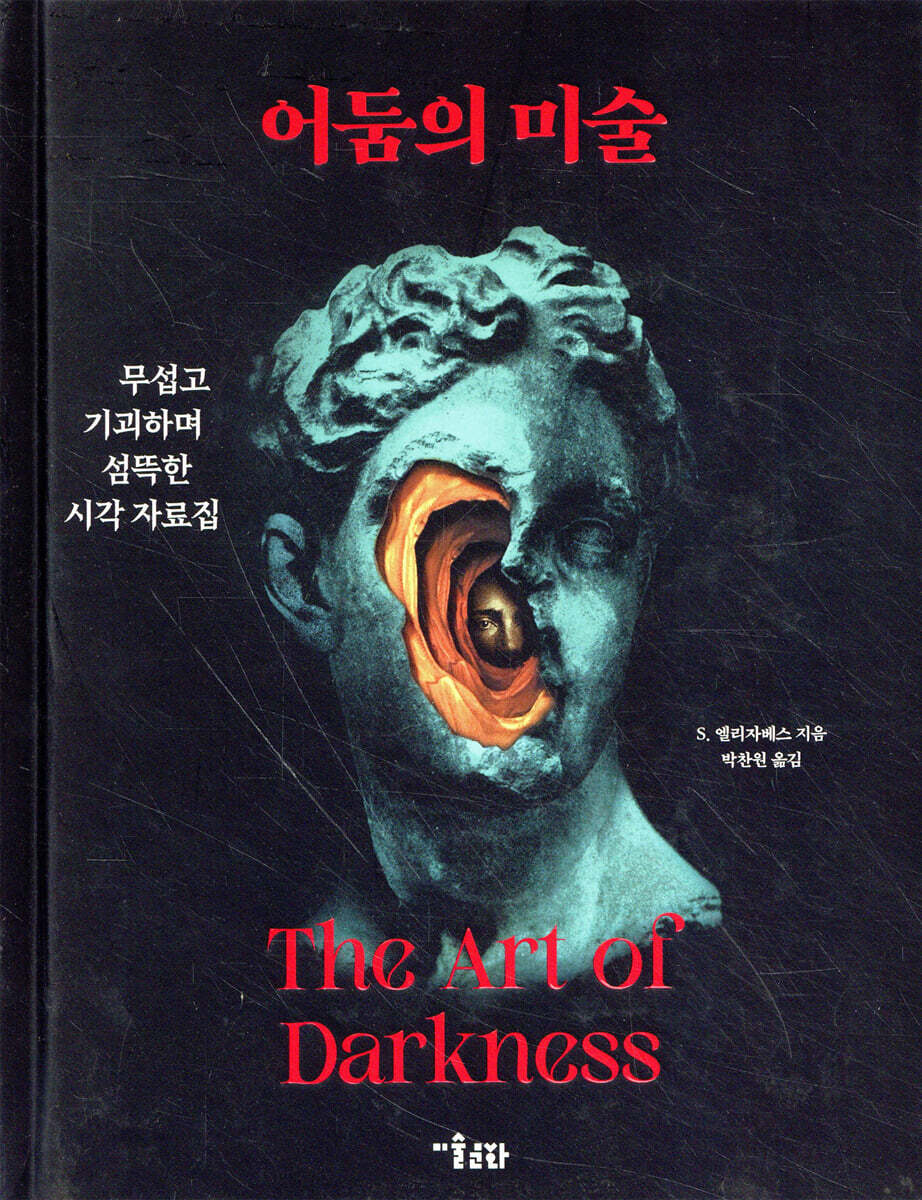
The author brings together over 150 paintings depicting horrific nightmares, inescapable death, desolate ruins, eerie ghosts, and mysterious magic.
While viewing this painting, we are not only visually captivated, but also explore the nature of fear and evil.
The author brings together over 150 paintings depicting horrific nightmares, inescapable death, desolate ruins, eerie ghosts, and mysterious magic.
While viewing this painting, we are not only visually captivated, but also explore the nature of fear and evil.
- You can preview some of the book's contents.
Preview
index
Preface: In Praise of Shadows
PART.
1 It's all in your head
1.
Dreams and Nightmares
2.
misery
3.
Whispers from the air
PART.
2 The Human Condition
4.
disease and suffering
5.
Corruption and Destruction
6.
The problem of mortality
PART.
3 The world around us
7.
The darkness of flowers
8.
Where the wild things are
9.
Mysterious landscapes, ruins, and destroyed places
PART.
4 A Vision from Beyond
10.
Gods and Monsters
11.
The Unsleeping Death and Other Creepy Beings
12.
Dark Art and Forbidden Mysteries
Read more
Search
Illustration credits
PART.
1 It's all in your head
1.
Dreams and Nightmares
2.
misery
3.
Whispers from the air
PART.
2 The Human Condition
4.
disease and suffering
5.
Corruption and Destruction
6.
The problem of mortality
PART.
3 The world around us
7.
The darkness of flowers
8.
Where the wild things are
9.
Mysterious landscapes, ruins, and destroyed places
PART.
4 A Vision from Beyond
10.
Gods and Monsters
11.
The Unsleeping Death and Other Creepy Beings
12.
Dark Art and Forbidden Mysteries
Read more
Search
Illustration credits
Detailed image

Into the book
But you can think of it differently.
If we lived forever in the light, in a place where everything was bright and happy, without worry or discomfort, we might become dull and bland beings, lacking both darkness and subtlety.
If you only pursue positive feelings, you will see the world in a very fragmented way.
We will not be able to face reality as it is, nor will we be able to adequately prepare for the pain and suffering that will come to us in life.
To deny the darkness within is to put yourself at risk.
Tragedy and disaster can happen to anyone, and at some point in life, no matter what mindset you have, darkness will overtake you.
Good things don't always happen to good people, bad things don't always happen to bad people, and just because you think positive or negative thoughts, those things don't actually happen.
As you live, all kinds of things are bound to happen.
Pain is pain and feelings are feelings.
For emotional health, it is important to fully experience and embody the full spectrum of emotions.
--- p.6
What would psychoanalyst Sigmund Freud have said about this work? Rumor has it that he even hung a reproduction of "The Nightmare" on the wall of his apartment in Vienna, Austria.
Freud emphasized the importance of dreams in understanding the mind, and his theories inspired the Surrealists and later artists.
Surrealists were also deeply interested in the interpretation that dreams serve as conduits for unexpressed emotions and desires, and Surrealist painters used motifs they discovered in their dreams to create powerful and provocative works.
--- p.18
In 2007, Damien Hirst (1965-) made headlines by creating a platinum cast of a human skull from the mid-1800s, encrusted with 8,601 of the world's finest diamonds, and completed the piece with real human teeth from the original skull.
The title was "Oh My God," which was taken from his mother's question: "Oh my God, what are you going to do next?"
Hirst had been interested in skeletons since he was a child.
At the age of 16, he visited the anatomy department of the University of Leeds and sketched corpses.
“[Death] doesn’t break me down, it inspires me,” he explained, “and my relationship with death changes every day.”
Since its first exhibition, "My God," which has become a hugely famous work of modern art, reveals Hirst's particular interest in the inevitability of death.
--- p.113
When darkness takes hold of us, we must be ready to face it, embrace it, and swallow it.
I eagerly await the artwork that will be born from such a story.
--- p.189
Saska Schneider (1870-1927) was a painter of mysticism.
His dreamlike work is full of powerful symbolism and, despite its shocking depictions of homosexuality, was a success in fin-de-siècle Germany.
During this period, a life reform movement (Freikorperkultur) arose in Germany, which sought a return to classical ideals, traditional exercise, and a healthy lifestyle, and among its practices was nudism.
Schneider was passionate about this classical ideal, even creating a gym in his studio.
His explicit depictions of muscular bodies and masculine beauty, rendered in charcoal and oil, paradoxically brought his work into the mainstream.
German society was willing to accept homosexual images, but was not ready to confront and accept homosexuality itself.
He resigned from Weimar University, which had raised issues about homosexuality, and moved to Italy in the early 1900s.
If we lived forever in the light, in a place where everything was bright and happy, without worry or discomfort, we might become dull and bland beings, lacking both darkness and subtlety.
If you only pursue positive feelings, you will see the world in a very fragmented way.
We will not be able to face reality as it is, nor will we be able to adequately prepare for the pain and suffering that will come to us in life.
To deny the darkness within is to put yourself at risk.
Tragedy and disaster can happen to anyone, and at some point in life, no matter what mindset you have, darkness will overtake you.
Good things don't always happen to good people, bad things don't always happen to bad people, and just because you think positive or negative thoughts, those things don't actually happen.
As you live, all kinds of things are bound to happen.
Pain is pain and feelings are feelings.
For emotional health, it is important to fully experience and embody the full spectrum of emotions.
--- p.6
What would psychoanalyst Sigmund Freud have said about this work? Rumor has it that he even hung a reproduction of "The Nightmare" on the wall of his apartment in Vienna, Austria.
Freud emphasized the importance of dreams in understanding the mind, and his theories inspired the Surrealists and later artists.
Surrealists were also deeply interested in the interpretation that dreams serve as conduits for unexpressed emotions and desires, and Surrealist painters used motifs they discovered in their dreams to create powerful and provocative works.
--- p.18
In 2007, Damien Hirst (1965-) made headlines by creating a platinum cast of a human skull from the mid-1800s, encrusted with 8,601 of the world's finest diamonds, and completed the piece with real human teeth from the original skull.
The title was "Oh My God," which was taken from his mother's question: "Oh my God, what are you going to do next?"
Hirst had been interested in skeletons since he was a child.
At the age of 16, he visited the anatomy department of the University of Leeds and sketched corpses.
“[Death] doesn’t break me down, it inspires me,” he explained, “and my relationship with death changes every day.”
Since its first exhibition, "My God," which has become a hugely famous work of modern art, reveals Hirst's particular interest in the inevitability of death.
--- p.113
When darkness takes hold of us, we must be ready to face it, embrace it, and swallow it.
I eagerly await the artwork that will be born from such a story.
--- p.189
Saska Schneider (1870-1927) was a painter of mysticism.
His dreamlike work is full of powerful symbolism and, despite its shocking depictions of homosexuality, was a success in fin-de-siècle Germany.
During this period, a life reform movement (Freikorperkultur) arose in Germany, which sought a return to classical ideals, traditional exercise, and a healthy lifestyle, and among its practices was nudism.
Schneider was passionate about this classical ideal, even creating a gym in his studio.
His explicit depictions of muscular bodies and masculine beauty, rendered in charcoal and oil, paradoxically brought his work into the mainstream.
German society was willing to accept homosexual images, but was not ready to confront and accept homosexuality itself.
He resigned from Weimar University, which had raised issues about homosexuality, and moved to Italy in the early 1900s.
--- p.229
Publisher's Review
A terrible nightmare, an inevitable death, a desolate ruin
Creepy ghosts, mysterious magic, hideous monsters…
It's scary once you see it, but you'll get hooked the second time you see it.
A gallery of terrifying yet beautiful works of art
S., who introduced readers to mysterious and strange works of art through 『Occult Art』.
Elizabeth returns with a collection of dark and bizarre artworks, this time titled "The Art of Darkness."
It is divided into four parts, and the major themes are 'Nightmares and Delirium', 'Pain and Death', 'Wildness and Nature', and 'Monsters and Witches'.
The author has carefully selected over 150 famous paintings that best illustrate each theme while also providing food for thought, and explains the artists who created the paintings, their backgrounds, and points worth noting.
Through the included illustrations, readers can vividly capture the essence of 'darkness' that has captivated artists for a long time, and project this onto themselves to create a new 'darkness'.
But the purpose of this book is not simply to convey fear for the sake of fear.
The point is to confront our inner demons as we approach and then retreat from these seductive yet terrifying images, and in the process, discover the other half of ourselves that is steeped in fear.
Let's look at Munch's painting "Anxiety" (1894).
What darkness is contained in this painting, which at first glance exudes an eerie and bizarre impression? Why did Munch paint such a work? The truth is, Munch had a very unhappy youth.
His closest sister and mother died of tuberculosis, another sister suffered from mental illness, and Munch himself suffered from frequent fevers and bronchitis.
Later, Munch wrote:
“I inherited two of humanity’s most fearsome enemies.
“It is a legacy of tuberculosis and mental illness.” These elements of anxiety permeated Munch’s early work, and he continued to explore this theme until his death.
Less well known than The Scream, this painting displays a sense of despair and inexplicable fear, a subtle paranoia, discomfort and distrust emanating from the eerie, inhuman faces.
It is an expression of collective despair that lasts longer than the sharp agony experienced by the isolated individual in “The Scream.”
These works still influence us and resonate deeply with viewers today.
The author asks us a question.
Who hasn't felt this painful emotion at some point in their lives? How would you express it? What does this painting make you feel?
“What good is your good if evil does not exist?
And what will the earth look like when all darkness disappears?”
Only when good and evil coexist can they be valuable.
Sharp pictures that penetrate the essence
“Exploring this dark side of human nature is often painful and troubling, but it is a necessary step.
If we look into the weaknesses of human nature, unfortunately, what we see is not very pleasing.
But to fully understand and appreciate humans and the world around them, we must face and embrace all aspects of nature, both its natural beauty and the horror of our own minds.” (Page 65) Life is not beautiful 24 hours a day, 365 days a year.
There are bound to be moments of pain and moments of frustration.
At such times, we can find solace in looking at bright and vibrant paintings, or we can find courage in looking at paintings that reveal dark and raw emotions, realizing that the artist who painted these paintings also walked a similar path to us and found salvation through paintings.
If you come across a picture that catches your eye while flipping through the pages, stop and just look at it.
This picture may evoke immediate disgust in you, or it may give you a chilling feeling of fear.
You can enjoy the moment and move on to the next painting, or you can stay a little longer and listen to the background of the painting and the artist's intimate story.
That picture will somehow linger in your mind and serve as a guide in your exploration of the source of darkness.
Creepy ghosts, mysterious magic, hideous monsters…
It's scary once you see it, but you'll get hooked the second time you see it.
A gallery of terrifying yet beautiful works of art
S., who introduced readers to mysterious and strange works of art through 『Occult Art』.
Elizabeth returns with a collection of dark and bizarre artworks, this time titled "The Art of Darkness."
It is divided into four parts, and the major themes are 'Nightmares and Delirium', 'Pain and Death', 'Wildness and Nature', and 'Monsters and Witches'.
The author has carefully selected over 150 famous paintings that best illustrate each theme while also providing food for thought, and explains the artists who created the paintings, their backgrounds, and points worth noting.
Through the included illustrations, readers can vividly capture the essence of 'darkness' that has captivated artists for a long time, and project this onto themselves to create a new 'darkness'.
But the purpose of this book is not simply to convey fear for the sake of fear.
The point is to confront our inner demons as we approach and then retreat from these seductive yet terrifying images, and in the process, discover the other half of ourselves that is steeped in fear.
Let's look at Munch's painting "Anxiety" (1894).
What darkness is contained in this painting, which at first glance exudes an eerie and bizarre impression? Why did Munch paint such a work? The truth is, Munch had a very unhappy youth.
His closest sister and mother died of tuberculosis, another sister suffered from mental illness, and Munch himself suffered from frequent fevers and bronchitis.
Later, Munch wrote:
“I inherited two of humanity’s most fearsome enemies.
“It is a legacy of tuberculosis and mental illness.” These elements of anxiety permeated Munch’s early work, and he continued to explore this theme until his death.
Less well known than The Scream, this painting displays a sense of despair and inexplicable fear, a subtle paranoia, discomfort and distrust emanating from the eerie, inhuman faces.
It is an expression of collective despair that lasts longer than the sharp agony experienced by the isolated individual in “The Scream.”
These works still influence us and resonate deeply with viewers today.
The author asks us a question.
Who hasn't felt this painful emotion at some point in their lives? How would you express it? What does this painting make you feel?
“What good is your good if evil does not exist?
And what will the earth look like when all darkness disappears?”
Only when good and evil coexist can they be valuable.
Sharp pictures that penetrate the essence
“Exploring this dark side of human nature is often painful and troubling, but it is a necessary step.
If we look into the weaknesses of human nature, unfortunately, what we see is not very pleasing.
But to fully understand and appreciate humans and the world around them, we must face and embrace all aspects of nature, both its natural beauty and the horror of our own minds.” (Page 65) Life is not beautiful 24 hours a day, 365 days a year.
There are bound to be moments of pain and moments of frustration.
At such times, we can find solace in looking at bright and vibrant paintings, or we can find courage in looking at paintings that reveal dark and raw emotions, realizing that the artist who painted these paintings also walked a similar path to us and found salvation through paintings.
If you come across a picture that catches your eye while flipping through the pages, stop and just look at it.
This picture may evoke immediate disgust in you, or it may give you a chilling feeling of fear.
You can enjoy the moment and move on to the next painting, or you can stay a little longer and listen to the background of the painting and the artist's intimate story.
That picture will somehow linger in your mind and serve as a guide in your exploration of the source of darkness.
GOODS SPECIFICS
- Date of issue: January 25, 2023
- Format: Hardcover book binding method guide
- Page count, weight, size: 240 pages | 846g | 171*224*25mm
- ISBN13: 9791185954981
- ISBN10: 1185954988
You may also like
카테고리
korean


korean

![GQ KOREA Mark (Monthly): December [2025]](http://librairie.coreenne.fr/cdn/shop/files/8ef265dbbfbf186523ed75ba7319009d.jpg?v=1765340328&width=3840)


