

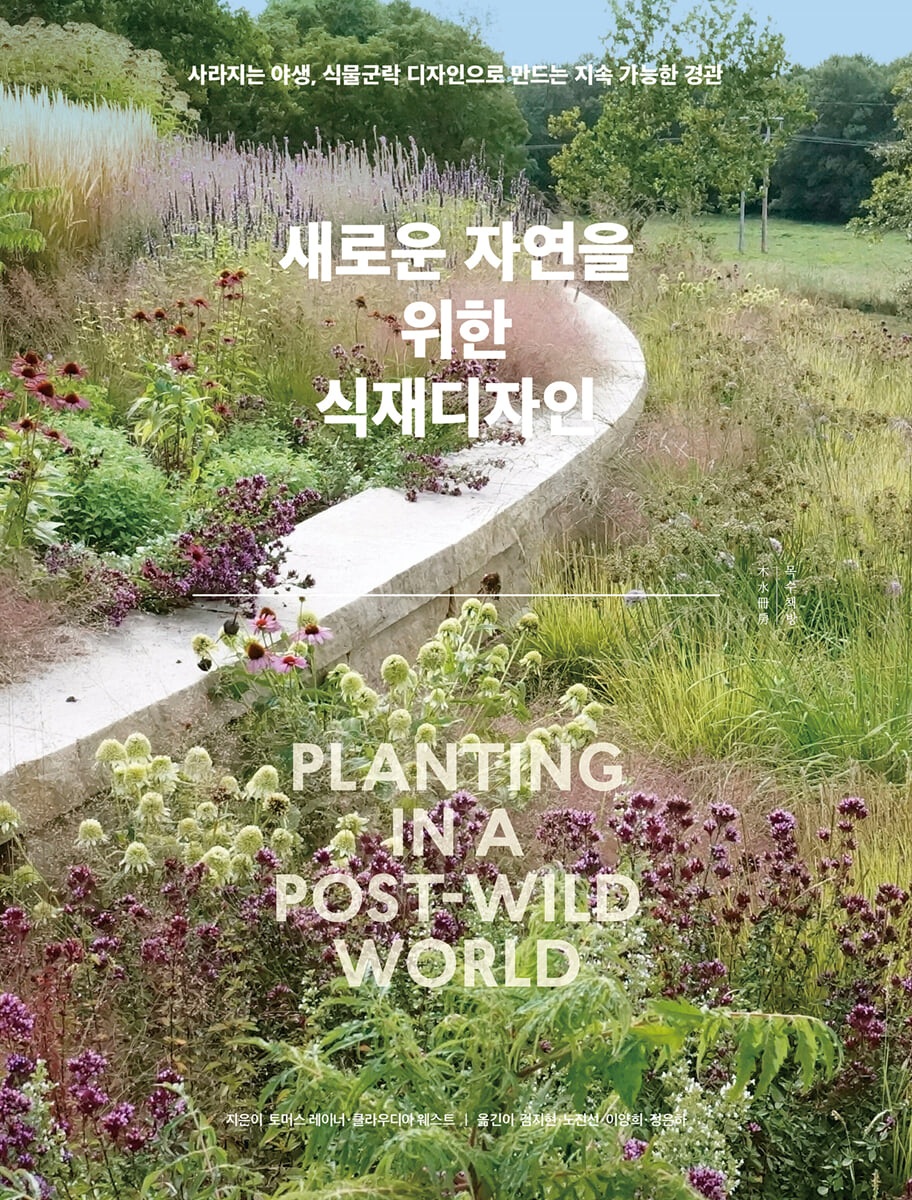
Planting Design for a New Nature
 |
Description
Book Introduction
This is the book "Food Design for a New Nature"!
An innovative guide to sustainable plant community design from Thomas Rayner and Claudia West, leaders in ecological landscape design.
This book compellingly demonstrates how understanding the ways in which wild plants survive and how planting design that reproduces and reconstructs natural plant communities can create sustainable and beautiful landscapes.
Selected as a 'Book of the Year' by the American Society for Horticultural Science in 2016.
An innovative guide to sustainable plant community design from Thomas Rayner and Claudia West, leaders in ecological landscape design.
This book compellingly demonstrates how understanding the ways in which wild plants survive and how planting design that reproduces and reconstructs natural plant communities can create sustainable and beautiful landscapes.
Selected as a 'Book of the Year' by the American Society for Horticultural Science in 2016.
- You can preview some of the book's contents.
Preview
index
introduction
Chapter 1: Lost Nature, Rediscovered
New Hope: The Future of Food Design
Bridging the Gap Between Nature and Gardens
Inspiration from naturally occurring plant communities
Connecting with our memories of nature
Chapter 2: Principles of Plant Community Design
Understanding Plant Communities
Distinctive features of designed plant communities
The importance of native species
Essential Principles
Chapter 3: Inspiration from the Wild
Wild Echoes
circular landscape
prairie
Shaolin and shrubbery
forest
edge
Chapter 4: The Process of Food Design
Respect for the Three Essential Relationships
The relationship between plants and places
The relationship between plants and humans
Relationships between plants
Chapter 5: Plant Community Creation and Management
Site Preparation: An Extension of Design
Planting: Utilizing the natural growth cycle of plants
Efficient and successful planting
Creative Management: Maintaining Design Readability and Functionality
Chapter 6 Conclusion
Meditation on Three Gardens
Why We Need Plant Community Design Now
Acknowledgements
Translator's Note
Summary of key concepts
Search
Chapter 1: Lost Nature, Rediscovered
New Hope: The Future of Food Design
Bridging the Gap Between Nature and Gardens
Inspiration from naturally occurring plant communities
Connecting with our memories of nature
Chapter 2: Principles of Plant Community Design
Understanding Plant Communities
Distinctive features of designed plant communities
The importance of native species
Essential Principles
Chapter 3: Inspiration from the Wild
Wild Echoes
circular landscape
prairie
Shaolin and shrubbery
forest
edge
Chapter 4: The Process of Food Design
Respect for the Three Essential Relationships
The relationship between plants and places
The relationship between plants and humans
Relationships between plants
Chapter 5: Plant Community Creation and Management
Site Preparation: An Extension of Design
Planting: Utilizing the natural growth cycle of plants
Efficient and successful planting
Creative Management: Maintaining Design Readability and Functionality
Chapter 6 Conclusion
Meditation on Three Gardens
Why We Need Plant Community Design Now
Acknowledgements
Translator's Note
Summary of key concepts
Search
Detailed image

Into the book
This book is a manifesto calling for positive action.
It embodies the belief that a new nature, a blend of wild and human touch, can thrive in cities and suburbs.
…we must let go of the idea that nature is separate from us and accept the reality that the nature of the future will require our design and management.
The front lines for nature aren't in the Amazon rainforest or the Alaskan wilderness.
The front lines are right in our backyards, medians, parking lots, and elementary schools.
Scientists and engineers aren't the only ecological warriors of the future.
Gardeners and horticulturists, land managers, landscape architects, transportation officials, elementary school teachers, and local association directors will also be key players.
Our challenge is to imagine and realize a new nature that can survive and support ecosystem functions within an artificial landscape.
We must let go of our romantic fantasies about pristine wilderness and embrace a new nature we design and manage.
The new nature is based on resilient native and invasive species that naturally adapt to environments similar to artificial landscapes.
It is not what has grown there in the past that is important, but what will grow there in the future.
This book is a guide to designing resilient plant communities.
We aim to explain in an accessible way the process by which naturally occurring plant communities in harsh, overcrowded environments become stylized, and to inspire plant placement based on their natural inclinations—that is, their competitive strategies and cooperative behaviors.
We also introduce the tools needed to select plants appropriate for the location, arrange plants in vertical layers, and create naturalistic plantings in eye-catching compositions.
This book offers simple, practical methods for those interested in practical ways to achieve a more abundant diet with fewer resources, while still providing enjoyment for people and animals.
Why you should consider plant community design: Aesthetic and emotional aspects.
We are deeply connected to nature, and we remember a time when nature surrounded us and played a greater role in our lives.
I still long for moments of connection with nature.
We have not lost the ability to read and see the landscape, we have simply not used that sense for a long time.
We desperately need to restore it now.
Designed plant communities can be very naturalistic, but can also be applied to formal or modern styles.
Any type of garden can benefit from incorporating plants as they would naturally occur.
The important thing is to make the plant adapt to its location and fulfill its given role by conforming to its destiny.
The circular landscape allows us to understand the intersection between actual plant communities and our emotional perception of them.
By observing the most powerful layers of landscape in more detail, we can understand the essence of these communities and integrate their visual and ecological layers into a single, universal expression.
These simplifications do not diminish the complexity and infinite variation of naturally occurring plant communities.
Rather, our goal is to create regional variations that truly reflect the characteristics of local plant communities.
To make these archetypes meaningful in urban and suburban landscapes, we first derive the essential layers that designers can use.
It needs to be expanded.
We begin by understanding how plants connect with their place, and go through an intuitive process of observing and analyzing the site.
The goal of this process is to interpret the subject in its archetypal form, providing inspiration for connecting plants with our emotional experiences.
The next step is to develop the relationship between plants and people into a design format.
It provides a structural framework for mixed plantings, helping them blend well into urban and suburban environments.
Finally, plants are carefully arranged according to their various ecological niches and interact with each other to form truly functional communities of the highest ecological value.
Any type of garden can benefit from applying nature's principles.
Whether formal or informal, classical or modern, highly stylized or naturalistic, it is all the same.
The important thing is that plants interact with other plants and respond to their location.
This is the essence of resilient food.
It embodies the belief that a new nature, a blend of wild and human touch, can thrive in cities and suburbs.
…we must let go of the idea that nature is separate from us and accept the reality that the nature of the future will require our design and management.
The front lines for nature aren't in the Amazon rainforest or the Alaskan wilderness.
The front lines are right in our backyards, medians, parking lots, and elementary schools.
Scientists and engineers aren't the only ecological warriors of the future.
Gardeners and horticulturists, land managers, landscape architects, transportation officials, elementary school teachers, and local association directors will also be key players.
Our challenge is to imagine and realize a new nature that can survive and support ecosystem functions within an artificial landscape.
We must let go of our romantic fantasies about pristine wilderness and embrace a new nature we design and manage.
The new nature is based on resilient native and invasive species that naturally adapt to environments similar to artificial landscapes.
It is not what has grown there in the past that is important, but what will grow there in the future.
This book is a guide to designing resilient plant communities.
We aim to explain in an accessible way the process by which naturally occurring plant communities in harsh, overcrowded environments become stylized, and to inspire plant placement based on their natural inclinations—that is, their competitive strategies and cooperative behaviors.
We also introduce the tools needed to select plants appropriate for the location, arrange plants in vertical layers, and create naturalistic plantings in eye-catching compositions.
This book offers simple, practical methods for those interested in practical ways to achieve a more abundant diet with fewer resources, while still providing enjoyment for people and animals.
Why you should consider plant community design: Aesthetic and emotional aspects.
We are deeply connected to nature, and we remember a time when nature surrounded us and played a greater role in our lives.
I still long for moments of connection with nature.
We have not lost the ability to read and see the landscape, we have simply not used that sense for a long time.
We desperately need to restore it now.
Designed plant communities can be very naturalistic, but can also be applied to formal or modern styles.
Any type of garden can benefit from incorporating plants as they would naturally occur.
The important thing is to make the plant adapt to its location and fulfill its given role by conforming to its destiny.
The circular landscape allows us to understand the intersection between actual plant communities and our emotional perception of them.
By observing the most powerful layers of landscape in more detail, we can understand the essence of these communities and integrate their visual and ecological layers into a single, universal expression.
These simplifications do not diminish the complexity and infinite variation of naturally occurring plant communities.
Rather, our goal is to create regional variations that truly reflect the characteristics of local plant communities.
To make these archetypes meaningful in urban and suburban landscapes, we first derive the essential layers that designers can use.
It needs to be expanded.
We begin by understanding how plants connect with their place, and go through an intuitive process of observing and analyzing the site.
The goal of this process is to interpret the subject in its archetypal form, providing inspiration for connecting plants with our emotional experiences.
The next step is to develop the relationship between plants and people into a design format.
It provides a structural framework for mixed plantings, helping them blend well into urban and suburban environments.
Finally, plants are carefully arranged according to their various ecological niches and interact with each other to form truly functional communities of the highest ecological value.
Any type of garden can benefit from applying nature's principles.
Whether formal or informal, classical or modern, highly stylized or naturalistic, it is all the same.
The important thing is that plants interact with other plants and respond to their location.
This is the essence of resilient food.
--- From the text
Publisher's Review
Disappearing Wilds: Invite a 'New Nature'
Industrialization and urbanization have pushed nature out of where we live.
No matter how much we yearn for the bountiful nature of the past, turning back time no longer seems possible.
As biodiversity is disappearing to the point where it threatens humanity's survival, should we simply mourn what we've lost?
Thomas Rainer and Claudia West suggest finding 'nature' not on remote, untouched mountaintops, but in the heart of cities and suburbs.
The authors argue that it is entirely possible to create planting designs that look and function like the wild, yet are more robust, more diverse, and visually harmonious, yet require less maintenance.
This can be achieved by understanding a plantation as a community of plant species that work together harmoniously, and by understanding how these interwoven plants form layers on top of each other to cover the ground.
This book systematically presents practical methods for inviting a "new nature" back into our lives by designing resilient, diverse, and visually harmonious landscapes that function like naturally formed wild plant communities.
The future of food starts right outside your door.
What should the food of the future look like? The answer isn't far away.
Even in a city surrounded by gray concrete buildings on all sides, there is nature.
If you've ever looked under a wall, under a street tree, or between sidewalk blocks, you've probably noticed how densely packed a variety of plant species can be in a palm-sized patch of land.
Go to the mountain or forest behind your neighborhood and take a close look at how the plants grow.
Then, back in your neighborhood, compare the plant communities you see in nature with those in your urban landscape or garden.
You will realize that there is a huge difference between plants that grow in places untouched by human hands and those that grow in places untouched by humans.
Understanding this difference is the starting point and key to transforming our future diet.
Bridging the gap between wild and artificial nature
For a long time, our plant design has treated plants as 'objects' for decorating space.
We have been repeatedly selecting and planting plants that look beautiful at first glance, without thinking about the environment in which the plants can grow well, and then killing them.
There are countless books out there that promise to help you create a beautiful garden, but few that actually help you understand how the plants in your garden live, influence each other, and interact with each other.
Natural plant communities are different from the gardens we cultivate.
Wild plants are much better adapted to their location, have richer layers, are more harmonious, and have a strong sense of place.
These characteristics are very attractive to designers.
To achieve this captivating natural look in your garden, you must first arrange your plants so that they interact dynamically with their surroundings and understand the various roles they play within the community.
This book guides us through the process of how to create "designed plantings" that function like natural plant communities and how to create a "new nature" that combines wild and artificial nature, using a different approach from existing gardening and landscaping books.
Design based on plant communities not only connects nature with our landscapes, but also suggests the possibility of integrating ecological planting with traditional horticulture.
An Innovative Guide to Sustainable Plant Community Design
The book proposes methods for creating 'designed plant communities' that can be applied to both urban and suburban settings.
Chapter 1 explains why we must begin by observing and applying the wisdom of natural plant communities and why plant community-based design is necessary.
Chapter 2 covers the concepts and core principles of plant community design, and Chapter 3 explores inspiration from the wild.
In particular, the concept of 'archetypal landscape', which is important in the work of finding and reinterpreting the essence of wild plant communities, is introduced in detail.
Chapter 4 details the process of designing actual plant communities, taking into account the relationships between plants and places, plants and people, and plants themselves.
Chapter 5 explores how to create and manage a plant community designed in the field.
Now more than ever, we need planting solutions that are resilient, ecologically functional, and beautiful.
It's not just about making plants more functional, it's about helping people come back and rekindle memories of being connected to nature.
It is not the plants themselves that are powerful, but their patterns, textures and colors that suggest their wildness.
Only when they are permeated with light and life do they become vibrant.
The food designer of the future is someone who creates a space for the plants around us to possess this 'power'.
The author emphasizes that future designers must first understand plants ecologically to design plant communities, but they must also have an eye for combinations, a sense of color, and an intuitive sense of natural harmony.
Industrialization and urbanization have pushed nature out of where we live.
No matter how much we yearn for the bountiful nature of the past, turning back time no longer seems possible.
As biodiversity is disappearing to the point where it threatens humanity's survival, should we simply mourn what we've lost?
Thomas Rainer and Claudia West suggest finding 'nature' not on remote, untouched mountaintops, but in the heart of cities and suburbs.
The authors argue that it is entirely possible to create planting designs that look and function like the wild, yet are more robust, more diverse, and visually harmonious, yet require less maintenance.
This can be achieved by understanding a plantation as a community of plant species that work together harmoniously, and by understanding how these interwoven plants form layers on top of each other to cover the ground.
This book systematically presents practical methods for inviting a "new nature" back into our lives by designing resilient, diverse, and visually harmonious landscapes that function like naturally formed wild plant communities.
The future of food starts right outside your door.
What should the food of the future look like? The answer isn't far away.
Even in a city surrounded by gray concrete buildings on all sides, there is nature.
If you've ever looked under a wall, under a street tree, or between sidewalk blocks, you've probably noticed how densely packed a variety of plant species can be in a palm-sized patch of land.
Go to the mountain or forest behind your neighborhood and take a close look at how the plants grow.
Then, back in your neighborhood, compare the plant communities you see in nature with those in your urban landscape or garden.
You will realize that there is a huge difference between plants that grow in places untouched by human hands and those that grow in places untouched by humans.
Understanding this difference is the starting point and key to transforming our future diet.
Bridging the gap between wild and artificial nature
For a long time, our plant design has treated plants as 'objects' for decorating space.
We have been repeatedly selecting and planting plants that look beautiful at first glance, without thinking about the environment in which the plants can grow well, and then killing them.
There are countless books out there that promise to help you create a beautiful garden, but few that actually help you understand how the plants in your garden live, influence each other, and interact with each other.
Natural plant communities are different from the gardens we cultivate.
Wild plants are much better adapted to their location, have richer layers, are more harmonious, and have a strong sense of place.
These characteristics are very attractive to designers.
To achieve this captivating natural look in your garden, you must first arrange your plants so that they interact dynamically with their surroundings and understand the various roles they play within the community.
This book guides us through the process of how to create "designed plantings" that function like natural plant communities and how to create a "new nature" that combines wild and artificial nature, using a different approach from existing gardening and landscaping books.
Design based on plant communities not only connects nature with our landscapes, but also suggests the possibility of integrating ecological planting with traditional horticulture.
An Innovative Guide to Sustainable Plant Community Design
The book proposes methods for creating 'designed plant communities' that can be applied to both urban and suburban settings.
Chapter 1 explains why we must begin by observing and applying the wisdom of natural plant communities and why plant community-based design is necessary.
Chapter 2 covers the concepts and core principles of plant community design, and Chapter 3 explores inspiration from the wild.
In particular, the concept of 'archetypal landscape', which is important in the work of finding and reinterpreting the essence of wild plant communities, is introduced in detail.
Chapter 4 details the process of designing actual plant communities, taking into account the relationships between plants and places, plants and people, and plants themselves.
Chapter 5 explores how to create and manage a plant community designed in the field.
Now more than ever, we need planting solutions that are resilient, ecologically functional, and beautiful.
It's not just about making plants more functional, it's about helping people come back and rekindle memories of being connected to nature.
It is not the plants themselves that are powerful, but their patterns, textures and colors that suggest their wildness.
Only when they are permeated with light and life do they become vibrant.
The food designer of the future is someone who creates a space for the plants around us to possess this 'power'.
The author emphasizes that future designers must first understand plants ecologically to design plant communities, but they must also have an eye for combinations, a sense of color, and an intuitive sense of natural harmony.
GOODS SPECIFICS
- Date of issue: November 25, 2025
- Format: Hardcover book binding method guide
- Page count, weight, size: 280 pages | 190*250*20mm
- ISBN13: 9791188806720
- ISBN10: 1188806726
You may also like
카테고리
korean


korean

![GQ KOREA Mark (Monthly): December [2025]](http://librairie.coreenne.fr/cdn/shop/files/8ef265dbbfbf186523ed75ba7319009d.jpg?v=1765340328&width=3840)


