

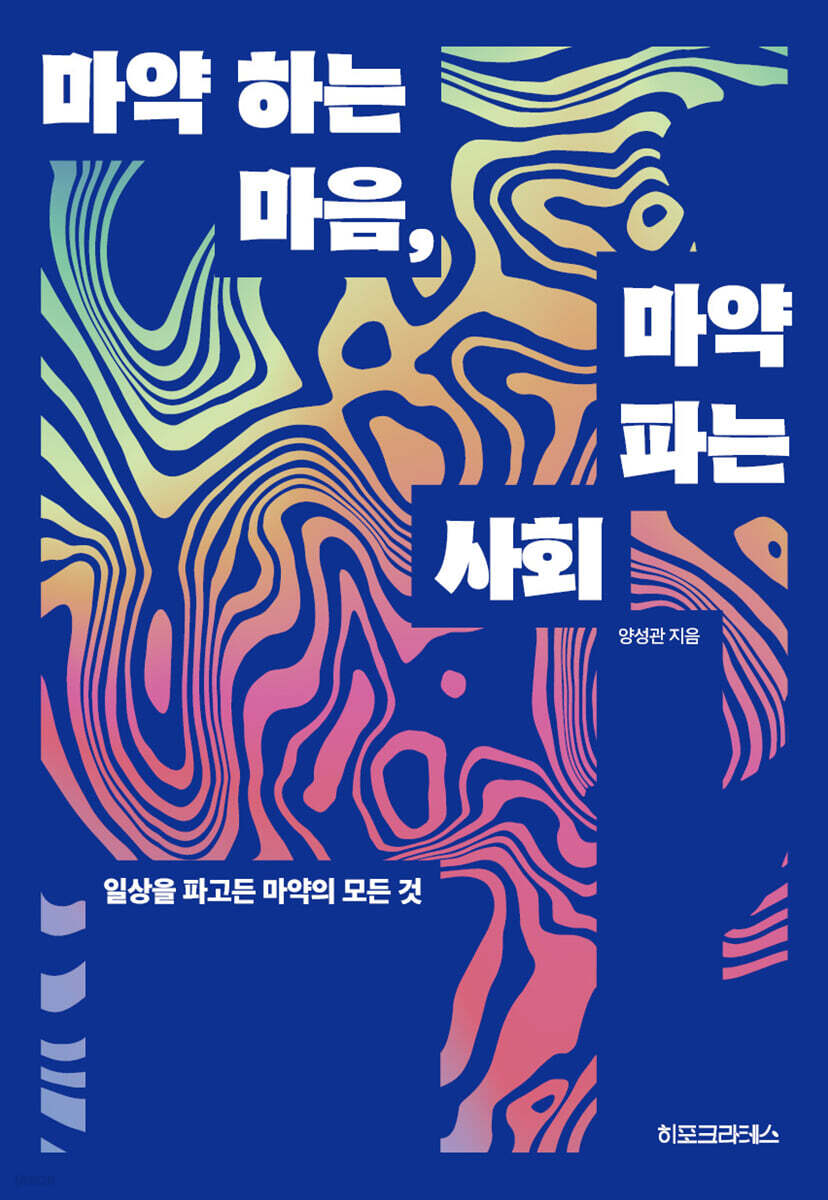
Drug-using mindset, drug-selling society
 |
Description
Book Introduction
"The First Drug Guide Written by a Doctor in the Age of the Drug Pandemic"
A breathtaking tracing of the relentless evolution of drugs.
Can Korean Society End Drug Abuse? A Strong and Stern Message to Politicians
Drugs, the dark temptation that uncontrollably invades our daily lives
But the real crisis hasn't even begun yet!
As South Korea enters a drug pandemic, can the current government truly win the "war on drugs"?
The infiltration of drugs into our daily lives is faster than ever.
From illegal drugs like opium, cocaine, heroin, LSD, ecstasy, GHB, and yaba to medicinal drugs like pethidine, fentanyl, zolpidem, propofol, and phentermine, the temptation of addiction is felt everywhere in society.
Perhaps that's why the number of domestic drug offenders increased by nearly 50% in just two years, from 2018 to 2020, and the number of marijuana offenders, which had been dormant until 2015, more than quadrupled by 2022.
Additionally, the number of drug offenders under the age of 19 reached a record high of 481 in 2022, increasing by nearly 12 times compared to 2011.
In the first half of 2023, the number of drug offenders is expected to reach 20,000 for the first time ever, with 10,252 already recorded.
The era of drug pandemic has begun in earnest, with drugs evolving in all types, forms, and methods of dealing encroaching upon the lives of ordinary people.
Author Yang Seong-gwan, a doctor who has treated 200,000 patients over 15 years in the family medicine department, which encompasses various medical fields, and who has communicated with the public through various portals and media, has published a must-read drug guidebook in times of drug disaster.
This is the first drug analysis book published by a domestic doctor.
This book, which traces the chain of production, distribution, sale, and consumption of drugs, exposes the dark side of drug addiction in a rich and colorful way, drawing on the doctor's experience treating patients, analyzing various statistical indicators and quantitative research data, and even describing related history.
In particular, the analysis of the trend of drug offenders and their causes in modern Korean history, which has not been well covered in previously published books on drugs, and the critical examination of the drug policies adopted by each administration make it impossible to simply accept the current crisis situation in which the drug pandemic has become full-blown.
How can we avoid repeating the drug policy that ended up being nothing more than a verbal spectacle amidst the ideological war between progressive and conservative politics? The author's message to politicians who have been entangled in ideology and political logic and have failed to respond swiftly to the spread of drug addiction is clear.
We need to stop the unnecessary ideological war that defines drug addicts as criminals or patients, and instead transform the drug industry into a "high-risk, low-return" business by combining crackdowns and punishments to block supply with treatments to curb demand.
Will Minister Han Dong-hoon and the Yoon Seok-yeol administration, which declared war on drugs from the beginning of their term, truly be able to win this war? We hope to find a clue in the author's efforts to find effective, community-level measures that transcend the individual.
A breathtaking tracing of the relentless evolution of drugs.
Can Korean Society End Drug Abuse? A Strong and Stern Message to Politicians
Drugs, the dark temptation that uncontrollably invades our daily lives
But the real crisis hasn't even begun yet!
As South Korea enters a drug pandemic, can the current government truly win the "war on drugs"?
The infiltration of drugs into our daily lives is faster than ever.
From illegal drugs like opium, cocaine, heroin, LSD, ecstasy, GHB, and yaba to medicinal drugs like pethidine, fentanyl, zolpidem, propofol, and phentermine, the temptation of addiction is felt everywhere in society.
Perhaps that's why the number of domestic drug offenders increased by nearly 50% in just two years, from 2018 to 2020, and the number of marijuana offenders, which had been dormant until 2015, more than quadrupled by 2022.
Additionally, the number of drug offenders under the age of 19 reached a record high of 481 in 2022, increasing by nearly 12 times compared to 2011.
In the first half of 2023, the number of drug offenders is expected to reach 20,000 for the first time ever, with 10,252 already recorded.
The era of drug pandemic has begun in earnest, with drugs evolving in all types, forms, and methods of dealing encroaching upon the lives of ordinary people.
Author Yang Seong-gwan, a doctor who has treated 200,000 patients over 15 years in the family medicine department, which encompasses various medical fields, and who has communicated with the public through various portals and media, has published a must-read drug guidebook in times of drug disaster.
This is the first drug analysis book published by a domestic doctor.
This book, which traces the chain of production, distribution, sale, and consumption of drugs, exposes the dark side of drug addiction in a rich and colorful way, drawing on the doctor's experience treating patients, analyzing various statistical indicators and quantitative research data, and even describing related history.
In particular, the analysis of the trend of drug offenders and their causes in modern Korean history, which has not been well covered in previously published books on drugs, and the critical examination of the drug policies adopted by each administration make it impossible to simply accept the current crisis situation in which the drug pandemic has become full-blown.
How can we avoid repeating the drug policy that ended up being nothing more than a verbal spectacle amidst the ideological war between progressive and conservative politics? The author's message to politicians who have been entangled in ideology and political logic and have failed to respond swiftly to the spread of drug addiction is clear.
We need to stop the unnecessary ideological war that defines drug addicts as criminals or patients, and instead transform the drug industry into a "high-risk, low-return" business by combining crackdowns and punishments to block supply with treatments to curb demand.
Will Minister Han Dong-hoon and the Yoon Seok-yeol administration, which declared war on drugs from the beginning of their term, truly be able to win this war? We hope to find a clue in the author's efforts to find effective, community-level measures that transcend the individual.
- You can preview some of the book's contents.
Preview
index
Prologue: Have You Tried Drugs? ·004
Part 1: Drug addicts
Chapter 1: A Glimpse into Heaven
Because I'm sick ·022 Hiding my pain ·036 The secret of the butterfly medicine ·047
The Pretense of Being the Ultimate Fatigue Reliever ·053 'Bach's Symphony': The Enchanting World ·071
Want to try it too? ·080 I'm committing a crime without even realizing it ·084
Chapter 2: Addiction: Falling In Before You Know It
Conditions of Addiction ·092 The Beginning of the Curse ·101 The Falling World ·124
Chapter 3: Ending in Hell
Prison, Drug Academy ·138 From Hallucinations to Murder ·142
Is there a recommended dosage for drugs? ·144 Just once, finally ·149
Chapter 4 Is there hope?
Between Criminal and Patient ·154 The End of Despair, the Beginning of Hope ·156
Part 2: A Drug-Selling Society
Chapter 1: The Best High Value-Added Business
Black Gold and White Gold ·170 Colombia, the Land of Coffee and Coca ·176
The Poor Farmer's Dilemma ·184 If You Were Born Here ·189
Blessing and Curse ·197 The Eternal Tournament ·201
Chapter 2: Dreaming of a Drug Empire
Escobar, the Man Who Dreamed of Being King ·210 Kunsa's Heroin Kingdom ·214
National Project "Baekdoraji" ·221 North Korea's Household Medicine, Opium ·229
North Korean Defectors and Drugs ·232
Chapter 3: Pharmaceutical Companies Become Drug Dealers
A History of Drugs in America ·238 The Perfect Condition ·243 The Beginning of Armageddon: OxyContin ·249
Wave 1: Planned Fraud ·255 Wave 2: Heroin Express ·266
Missed Opportunities ·269 The Third Wave: The Fentanyl Tsunami ·271
Chapter 4: Drugs of this Land
The Rise of Opium Dens and Drugstores ·280 Turbulent Politics and Drugs ·284
Korea Connection ·289 The War on Crime, the IMF, and the World Cup ·297
Evolving Drugs ·302 Criminals, Patients, and Politics ·313
Epilogue: High Risk, Low Return ·324
Acknowledgments ·333 Copyright and Sources of Figures and Tables ·336 References ·34
Part 1: Drug addicts
Chapter 1: A Glimpse into Heaven
Because I'm sick ·022 Hiding my pain ·036 The secret of the butterfly medicine ·047
The Pretense of Being the Ultimate Fatigue Reliever ·053 'Bach's Symphony': The Enchanting World ·071
Want to try it too? ·080 I'm committing a crime without even realizing it ·084
Chapter 2: Addiction: Falling In Before You Know It
Conditions of Addiction ·092 The Beginning of the Curse ·101 The Falling World ·124
Chapter 3: Ending in Hell
Prison, Drug Academy ·138 From Hallucinations to Murder ·142
Is there a recommended dosage for drugs? ·144 Just once, finally ·149
Chapter 4 Is there hope?
Between Criminal and Patient ·154 The End of Despair, the Beginning of Hope ·156
Part 2: A Drug-Selling Society
Chapter 1: The Best High Value-Added Business
Black Gold and White Gold ·170 Colombia, the Land of Coffee and Coca ·176
The Poor Farmer's Dilemma ·184 If You Were Born Here ·189
Blessing and Curse ·197 The Eternal Tournament ·201
Chapter 2: Dreaming of a Drug Empire
Escobar, the Man Who Dreamed of Being King ·210 Kunsa's Heroin Kingdom ·214
National Project "Baekdoraji" ·221 North Korea's Household Medicine, Opium ·229
North Korean Defectors and Drugs ·232
Chapter 3: Pharmaceutical Companies Become Drug Dealers
A History of Drugs in America ·238 The Perfect Condition ·243 The Beginning of Armageddon: OxyContin ·249
Wave 1: Planned Fraud ·255 Wave 2: Heroin Express ·266
Missed Opportunities ·269 The Third Wave: The Fentanyl Tsunami ·271
Chapter 4: Drugs of this Land
The Rise of Opium Dens and Drugstores ·280 Turbulent Politics and Drugs ·284
Korea Connection ·289 The War on Crime, the IMF, and the World Cup ·297
Evolving Drugs ·302 Criminals, Patients, and Politics ·313
Epilogue: High Risk, Low Return ·324
Acknowledgments ·333 Copyright and Sources of Figures and Tables ·336 References ·34
Detailed image

Into the book
The pathology of society is not simply a matter of one individual, but of everything being intertwined.
This book will tell you stories no one has ever told before, from the characteristics of drugs to how some people start using them to why people make them and how they buy and sell them.
As you read, you will experience a mix of emotions: curiosity and fear, regret and anger, sympathy and contempt.
--- p.11-12, from “Prologue”
Fentanyl, it was a really good drug.
Thanks to fentanyl, the most powerful opioid painkiller, Kim Jong-chul was able to fulfill his last wish: to spend the holidays at home.
Fentanyl may not cure the disease, but if used carefully, it can reduce the patient's suffering.
There was absolutely no need to consider addiction when administering fentanyl to Kim Jong-chul.
Because he was terminally ill with cancer.
However, there are quite a few cases of addiction to narcotic painkillers used for non-cancerous pain.
--- p.25, from “Part 1, Chapter 1”
When learning about drugs, it is easier to understand them as ups (excitement), downs (happiness), and hallucinogens, depending on their efficacy and effects.
Just as the same knife is a cooking tool when used by a chef but a murder weapon when used by a murderer, it would be a good idea to divide drugs into those that are currently used for medical purposes but are problematic when used arbitrarily by patients (fentanyl, a narcotic painkiller, tranquilizers, some diet pills, sleeping pills, propofol) and those that are completely illegal (opium, cocaine, LSD, ecstasy, heroin).
Additionally, they can be categorized into 'soft (marijuana, LSD, ecstasy) - medium (alcohol, cigarettes, tranquilizers) - hard (cocaine, heroin, methamphetamine, fentanyl) drugs' depending on the degree of addiction, dependence, and risk.
For example, alcohol is a medium-drug in the down category and is legal, but methamphetamine (cocaine) is a hard drug in the up category and was illegal from the beginning, and is highly addictive and dependent.
--- p.45-46, from “Part 1, Chapter 1”
The reason relatively mild psychotropic drugs like marijuana or propofol are dangerous is because they are the first step toward stronger and more dangerous drugs.
The gateway theory explains this phenomenon.
In the past, in Korea, the drug addiction that goes from bonds to gas, from gas to pills (Romilar), from pills to marijuana, and from marijuana to methamphetamine was called the 'elite course.'
In the United States, the standard route is to start with marijuana, move on to LSD, ecstasy, cocaine, heroin, and fentanyl.
--- p.110-111, from “Part 1, Chapter 2”
You are a drug addict.
Due to its tolerance, it does not show any effect even in moderate amounts.
I am experiencing auditory and visual hallucinations, my vision is blurry, and my hands are shaking.
Besides, I feel like I'm going to die if I don't take medicine right now.
In order to buy the drug a little cheaper, I bought it in 1g units instead of 0.03g, which is the single dose, so I had to divide it into small amounts.
It's not easy.
In the heat of the moment, without even using a scale, they roughly administer the medicine based on a rough estimate.
There is no effect at all, whether the dose was underdone or the purity of the drug changed.
This time, we'll administer double, no, triple the dose.
When you do drugs, you lose your sense of time.
I can't quite remember whether I did it just now or the day before.
And again, and again.
Just as you start drinking alcohol and at some point you start to lose track of how much you've had, you will continue to use drugs in the same way.
The result is death due to overdose or drug side effects.
--- p.145, from “Part 1, Chapter 3”
People who use drugs are both criminals and patients.
You should never use drugs, but if you do, you should seek treatment.
When we break our leg, we either have surgery or put a cast on it.
It is not possible to walk simply by willpower without any treatment.
Even if the cast is removed later, you won't be able to run like before right away.
If you make a mistake and fall while your muscles are weak, not just your bones, the bones that have barely healed can break again.
To walk perfectly like before, it takes six months to a year of rehabilitation treatment, starting with slow strengthening.
The same goes for drugs.
You can't quit just by willpower.
Professional medical treatment is required.
If symptoms are severe, hospitalization for 2 to 3 weeks is required, and subsequent outpatient treatment is essential.
After about a year of stopping the medication, the damaged brain and nerve structures recover to some extent.
Various rehabilitation treatments are needed to restore relationships with family members, financial problems, etc.
Without this type of rehabilitation, you could fall and get hurt again.
Rehabilitation is essential along with medical treatment.
--- p.155-156, from “Part 1, Chapter 4”
The reason we do this is all because of money.
A kilogram of cocaine, which was worth 5 million won in Colombia, costs between 70 million won and 120 million won in the United States.
Once you reach the US, the price jumps from 14 to 20 times.
One gram of cocaine costs 150,000 won, which is twice as expensive as gold of the same weight, which costs 80,000 won.
White gold, or rather, something more expensive than gold, is cocaine.
But it doesn't end here.
When cocaine gets into the hands of drug users, it is usually around 50% pure, so it can be double the amount.
Also, in the case of crack, which is made by mixing cocaine and baking powder so that it can be smoked like a cigarette rather than a nose, 1 gram of cocaine can increase the amount by about 5 to 30 times depending on the ratio.
The price of 1g of crack ranges from 70,000 won to 130,000 won.
If you make 1 gram of cocaine into crack and sell it, you can make another 3 to 10 times the profit.
--- p.182-183, from “Part 2, Chapter 1”
North Korea's top product is not nuclear weapons or missiles, but drugs, particularly methamphetamine.
Philopon crystals are as transparent as ice and are called 'ice', 'ice', or 'crystal', but in China and North Korea, they are called bingdu?毒 (the Chinese pronunciation of poison, ice poison).
North Korean Philopon boasts the highest quality in the world, with a purity of 98-100%.
The reason is simple.
Philopon, a synthetic drug, is usually made in small quantities by a small number of individuals or groups using pseudoephedrine, an ingredient in cold medicine, as a raw material.
However, in North Korea, in the 5th workshop on the 2nd basement floor of the 'Hungnam Pharmaceutical Factory', which boasts history and tradition, doctoral-level workers professionally produce methamphetamine under the orders of the state.
The quality can't be bad unless it's bad.
--- p.227, from “Part 2, Chapter 2”
As concerns about OxyContin were being raised, on September 11, 2001, a plane hijacked by Al-Qaeda crashed into the World Trade Center in Manhattan, New York.
Nearly 3,000 people were killed and at least 6,000 were injured.
The 9/11 terrorist attacks destroyed the World Trade Center, but saved one company.
“This national tragedy could have wiped OxyContin off the front pages of newspapers across the country.” That was the message left by a Purdue Pharma sales representative on September 11th.
Instead of a "war on drugs," the United States declared a "war on terror."
As a result, dozens of times more people lost their lives to drugs than died in the 9/11 terrorist attacks.
However, even the September 11th terrorist attacks couldn't completely stop the growing number of complaints and lawsuits about the risks of OxyContin. In January 2002, the FDA convened an advisory committee comprised of the country's leading pain experts to discuss OxyContin.
But eight out of ten pain experts who gathered that way were either spokespeople for Purdue Pharma or other pharmaceutical companies or paid speakers.
The conclusion was as expected.
--- p.262, from “Part 2, Chapter 3”
Here's a brief summary of the drug crisis in the United States we've seen so far.
A corrupt pharmaceutical company blinded by money introduced OxyContin to America in 1995.
The first wave of OxyContin crises began in 1996 and peaked in 2010-2011.
As the supply of OxyContin dwindled, people addicted to OxyContin switched to heroin.
It was the second wave of heroin that started in 2010 and peaked in 2015-2016.
Not missing a beat, Mexican cartels began producing their own fentanyl.
So, following OxyContin and heroin, the third wave of fentanyl overdose began in 2013, and deaths have been rising rapidly since then.
In the United States, someone dies from fentanyl every seven minutes.
What's even more frightening is that this wave hasn't even peaked yet.
--- p.278, from “Part 2, Chapter 3”
When conservatives come to power, they try to highlight the problems of drugs and crime.
That was also in the early days of the regime.
It probably means that a just conservative government will eradicate the crime and drug problem that increased due to the mistakes of the previous government.
Looking at past precedents, the number of drug offenders was temporarily reduced for two to three years through measures such as Roh Tae-woo's war on crime in 1990 and the strong crackdown on drugs implemented ahead of the 2002 World Cup.
However, history has proven that no matter how hard you try to suppress a balloon, it will eventually return to its original state after a few years unless you take the wind (demand) out of it.
…The United States, which has been waging war on drugs for 50 years with Richard Nixon, who started the war on drugs with impure motives from the beginning, has effectively lost the war.
No one knows how many more people will die in the future.
Meanwhile, Rodrigo Duterte, who gained popularity during his time as a prosecutor through his war on drugs, rose from prosecutor to mayor and then to president, so his war on drugs was a huge personal success.
Will Minister Han Dong-hoon and the conservative government, which declared war on drugs, truly win the war? On June 26, 2023, the Ministry of Justice established the Drug Offender Rehabilitation Team.
In a subsequent interview, Minister Han Dong-hoon expressed his firm commitment to the war on drugs, saying, “We will catch many, punish them severely, and provide proper treatment.”
He may dream of Rodrigo Duterte's success, but he must never forget Richard Nixon's failure.
--- p.321-322, from “Part 2, Chapter 4”
Supply creates demand, and demand creates supply.
Distribution and sales, which connect supply and demand, must be blocked while simultaneously reducing demand.
When demand decreases, prices naturally fall.
If demand for drugs decreases and prices fall, there is no reason to take risks supplying drugs.
Many people jump into 'high risk, high return', but no one jumps into 'high risk, low return'.
Noam Chomsky, a famous American progressive scholar, also said this.
“The drug problem is fundamentally a demand problem, not a supply problem.
This level of reasoning is common sense.
“So the root of all the problems lies in the United States, not in Colombia.”
This book will tell you stories no one has ever told before, from the characteristics of drugs to how some people start using them to why people make them and how they buy and sell them.
As you read, you will experience a mix of emotions: curiosity and fear, regret and anger, sympathy and contempt.
--- p.11-12, from “Prologue”
Fentanyl, it was a really good drug.
Thanks to fentanyl, the most powerful opioid painkiller, Kim Jong-chul was able to fulfill his last wish: to spend the holidays at home.
Fentanyl may not cure the disease, but if used carefully, it can reduce the patient's suffering.
There was absolutely no need to consider addiction when administering fentanyl to Kim Jong-chul.
Because he was terminally ill with cancer.
However, there are quite a few cases of addiction to narcotic painkillers used for non-cancerous pain.
--- p.25, from “Part 1, Chapter 1”
When learning about drugs, it is easier to understand them as ups (excitement), downs (happiness), and hallucinogens, depending on their efficacy and effects.
Just as the same knife is a cooking tool when used by a chef but a murder weapon when used by a murderer, it would be a good idea to divide drugs into those that are currently used for medical purposes but are problematic when used arbitrarily by patients (fentanyl, a narcotic painkiller, tranquilizers, some diet pills, sleeping pills, propofol) and those that are completely illegal (opium, cocaine, LSD, ecstasy, heroin).
Additionally, they can be categorized into 'soft (marijuana, LSD, ecstasy) - medium (alcohol, cigarettes, tranquilizers) - hard (cocaine, heroin, methamphetamine, fentanyl) drugs' depending on the degree of addiction, dependence, and risk.
For example, alcohol is a medium-drug in the down category and is legal, but methamphetamine (cocaine) is a hard drug in the up category and was illegal from the beginning, and is highly addictive and dependent.
--- p.45-46, from “Part 1, Chapter 1”
The reason relatively mild psychotropic drugs like marijuana or propofol are dangerous is because they are the first step toward stronger and more dangerous drugs.
The gateway theory explains this phenomenon.
In the past, in Korea, the drug addiction that goes from bonds to gas, from gas to pills (Romilar), from pills to marijuana, and from marijuana to methamphetamine was called the 'elite course.'
In the United States, the standard route is to start with marijuana, move on to LSD, ecstasy, cocaine, heroin, and fentanyl.
--- p.110-111, from “Part 1, Chapter 2”
You are a drug addict.
Due to its tolerance, it does not show any effect even in moderate amounts.
I am experiencing auditory and visual hallucinations, my vision is blurry, and my hands are shaking.
Besides, I feel like I'm going to die if I don't take medicine right now.
In order to buy the drug a little cheaper, I bought it in 1g units instead of 0.03g, which is the single dose, so I had to divide it into small amounts.
It's not easy.
In the heat of the moment, without even using a scale, they roughly administer the medicine based on a rough estimate.
There is no effect at all, whether the dose was underdone or the purity of the drug changed.
This time, we'll administer double, no, triple the dose.
When you do drugs, you lose your sense of time.
I can't quite remember whether I did it just now or the day before.
And again, and again.
Just as you start drinking alcohol and at some point you start to lose track of how much you've had, you will continue to use drugs in the same way.
The result is death due to overdose or drug side effects.
--- p.145, from “Part 1, Chapter 3”
People who use drugs are both criminals and patients.
You should never use drugs, but if you do, you should seek treatment.
When we break our leg, we either have surgery or put a cast on it.
It is not possible to walk simply by willpower without any treatment.
Even if the cast is removed later, you won't be able to run like before right away.
If you make a mistake and fall while your muscles are weak, not just your bones, the bones that have barely healed can break again.
To walk perfectly like before, it takes six months to a year of rehabilitation treatment, starting with slow strengthening.
The same goes for drugs.
You can't quit just by willpower.
Professional medical treatment is required.
If symptoms are severe, hospitalization for 2 to 3 weeks is required, and subsequent outpatient treatment is essential.
After about a year of stopping the medication, the damaged brain and nerve structures recover to some extent.
Various rehabilitation treatments are needed to restore relationships with family members, financial problems, etc.
Without this type of rehabilitation, you could fall and get hurt again.
Rehabilitation is essential along with medical treatment.
--- p.155-156, from “Part 1, Chapter 4”
The reason we do this is all because of money.
A kilogram of cocaine, which was worth 5 million won in Colombia, costs between 70 million won and 120 million won in the United States.
Once you reach the US, the price jumps from 14 to 20 times.
One gram of cocaine costs 150,000 won, which is twice as expensive as gold of the same weight, which costs 80,000 won.
White gold, or rather, something more expensive than gold, is cocaine.
But it doesn't end here.
When cocaine gets into the hands of drug users, it is usually around 50% pure, so it can be double the amount.
Also, in the case of crack, which is made by mixing cocaine and baking powder so that it can be smoked like a cigarette rather than a nose, 1 gram of cocaine can increase the amount by about 5 to 30 times depending on the ratio.
The price of 1g of crack ranges from 70,000 won to 130,000 won.
If you make 1 gram of cocaine into crack and sell it, you can make another 3 to 10 times the profit.
--- p.182-183, from “Part 2, Chapter 1”
North Korea's top product is not nuclear weapons or missiles, but drugs, particularly methamphetamine.
Philopon crystals are as transparent as ice and are called 'ice', 'ice', or 'crystal', but in China and North Korea, they are called bingdu?毒 (the Chinese pronunciation of poison, ice poison).
North Korean Philopon boasts the highest quality in the world, with a purity of 98-100%.
The reason is simple.
Philopon, a synthetic drug, is usually made in small quantities by a small number of individuals or groups using pseudoephedrine, an ingredient in cold medicine, as a raw material.
However, in North Korea, in the 5th workshop on the 2nd basement floor of the 'Hungnam Pharmaceutical Factory', which boasts history and tradition, doctoral-level workers professionally produce methamphetamine under the orders of the state.
The quality can't be bad unless it's bad.
--- p.227, from “Part 2, Chapter 2”
As concerns about OxyContin were being raised, on September 11, 2001, a plane hijacked by Al-Qaeda crashed into the World Trade Center in Manhattan, New York.
Nearly 3,000 people were killed and at least 6,000 were injured.
The 9/11 terrorist attacks destroyed the World Trade Center, but saved one company.
“This national tragedy could have wiped OxyContin off the front pages of newspapers across the country.” That was the message left by a Purdue Pharma sales representative on September 11th.
Instead of a "war on drugs," the United States declared a "war on terror."
As a result, dozens of times more people lost their lives to drugs than died in the 9/11 terrorist attacks.
However, even the September 11th terrorist attacks couldn't completely stop the growing number of complaints and lawsuits about the risks of OxyContin. In January 2002, the FDA convened an advisory committee comprised of the country's leading pain experts to discuss OxyContin.
But eight out of ten pain experts who gathered that way were either spokespeople for Purdue Pharma or other pharmaceutical companies or paid speakers.
The conclusion was as expected.
--- p.262, from “Part 2, Chapter 3”
Here's a brief summary of the drug crisis in the United States we've seen so far.
A corrupt pharmaceutical company blinded by money introduced OxyContin to America in 1995.
The first wave of OxyContin crises began in 1996 and peaked in 2010-2011.
As the supply of OxyContin dwindled, people addicted to OxyContin switched to heroin.
It was the second wave of heroin that started in 2010 and peaked in 2015-2016.
Not missing a beat, Mexican cartels began producing their own fentanyl.
So, following OxyContin and heroin, the third wave of fentanyl overdose began in 2013, and deaths have been rising rapidly since then.
In the United States, someone dies from fentanyl every seven minutes.
What's even more frightening is that this wave hasn't even peaked yet.
--- p.278, from “Part 2, Chapter 3”
When conservatives come to power, they try to highlight the problems of drugs and crime.
That was also in the early days of the regime.
It probably means that a just conservative government will eradicate the crime and drug problem that increased due to the mistakes of the previous government.
Looking at past precedents, the number of drug offenders was temporarily reduced for two to three years through measures such as Roh Tae-woo's war on crime in 1990 and the strong crackdown on drugs implemented ahead of the 2002 World Cup.
However, history has proven that no matter how hard you try to suppress a balloon, it will eventually return to its original state after a few years unless you take the wind (demand) out of it.
…The United States, which has been waging war on drugs for 50 years with Richard Nixon, who started the war on drugs with impure motives from the beginning, has effectively lost the war.
No one knows how many more people will die in the future.
Meanwhile, Rodrigo Duterte, who gained popularity during his time as a prosecutor through his war on drugs, rose from prosecutor to mayor and then to president, so his war on drugs was a huge personal success.
Will Minister Han Dong-hoon and the conservative government, which declared war on drugs, truly win the war? On June 26, 2023, the Ministry of Justice established the Drug Offender Rehabilitation Team.
In a subsequent interview, Minister Han Dong-hoon expressed his firm commitment to the war on drugs, saying, “We will catch many, punish them severely, and provide proper treatment.”
He may dream of Rodrigo Duterte's success, but he must never forget Richard Nixon's failure.
--- p.321-322, from “Part 2, Chapter 4”
Supply creates demand, and demand creates supply.
Distribution and sales, which connect supply and demand, must be blocked while simultaneously reducing demand.
When demand decreases, prices naturally fall.
If demand for drugs decreases and prices fall, there is no reason to take risks supplying drugs.
Many people jump into 'high risk, high return', but no one jumps into 'high risk, low return'.
Noam Chomsky, a famous American progressive scholar, also said this.
“The drug problem is fundamentally a demand problem, not a supply problem.
This level of reasoning is common sense.
“So the root of all the problems lies in the United States, not in Colombia.”
--- p.329, from "Epilogue"
Publisher's Review
Drugs, the dark temptation that invades everyday life
The relentless evolution of drugs, manifested in their types, forms, and methods of trade.
A practicing doctor's breathtaking account of individuals caught up in the dark allure of drugs and a society that commercializes them.
The infiltration of drugs into our daily lives is faster than ever.
From illegal drugs like opium, cocaine, heroin, LSD, ecstasy, GHB, and yaba to drugs with medical uses like pethidine, fentanyl, zolpidem, propofol, and phentermine, drugs have evolved in all types, forms, and methods of dealing, reaching out to all corners of society with their tempting hands.
It's not just celebrities, sports stars, or people who indulge in entertainment who become addicted to drugs.
Many people become exposed to and addicted to drugs for various reasons, such as 'because of physical or mental pain, to lose weight, to work, to hang out with friends, or out of curiosity.'
The era of drug pandemic has begun in earnest.
In this book, author Yang Seong-gwan, who has treated 200,000 patients over 15 years in the family medicine department covering various medical fields, closely analyzes both the personal aspect of drug consumption (Part 1) and the social system aspect leading to production, distribution, and sales (Part 2).
In particular, the public's most pressing questions regarding drug-related issues—why do people use drugs? Why can't they quit? Why is drug use spreading so rapidly domestically and globally?—are addressed in a rich and colorful way, drawing on his experience as a physician, various statistical indicators, quantitative research data, and relevant historical accounts.
This book, which vividly depicts the individuals and society entangled in drugs, goes beyond simple knowledge of drugs and provides insight into the subject, as befits the first drug commentary written by a doctor.
From marijuana to cocaine, heroin, and fentanyl.
A stark warning about the potential fallout from marijuana legalization.
The swamp of addiction born from denial that it is not an addiction and the delusion that it can be controlled.
There is only one reason why the author shows the mind of a drug user and the process of becoming addicted without reservation.
This is to show that once you start using drugs, whether voluntarily or involuntarily, it is only a matter of time before you turn to drugs with stronger effects and more severe addiction and withdrawal symptoms.
There is literally no escape from the addiction that begins with opioids and marijuana, then LSD, ecstasy, cocaine, and then heroin and fentanyl.
This is also why it is not uncommon for up-, down-, and hallucinogenic drugs to be detected together in the majority of drug addicts.
The author proves this by analyzing real-life cases and testimonies of drug addicts, research findings, and clinical cases, and reveals the potential social repercussions of marijuana legalization through the experiences of some U.S. states and Thailand.
Moreover, the delusion and illusion that 'I am not addicted' and 'I can adjust the dosage at any time' prevents an individual from getting out of the swamp of addiction.
This book silently shows the horrific process by which a casual touch with drugs can lead to prison, emergency rooms, death from drug overdose, or suicide. Rather than simply admonishing people about the dangers of drugs, it raises the barrier to entry by naturally making people aware of them.
“There is no product on earth more valuable than cocaine.”
The history of the drug industry, stained by ignorance and greed,
Victims of uncontrollable mass-produced drugs
Drugs weren't always drugs.
Before the 19th century, opium, morphine, and heroin were prescribed as pain relievers regardless of the type of illness, and cocaine was used as a stimulant, tonic, or treatment for depression.
Methamphetamine-based drugs were also supplied in large quantities to boost the morale of soldiers participating in the war and to increase the work motivation of workers at the workplace, and they were even added to food products such as drinks and chocolate that anyone could consume.
The ignorance of a time when scientific and medical advancements were slow led to the emergence of numerous drug addicts.
The problem doesn't stop there.
The number of drug victims has grown uncontrollably as not only drug cartels but also the state and pharmaceutical companies have joined forces to produce the highest value-added product, drugs.
Pablo Escobar and Khun Sa, who dreamed of a drug empire, North Korea's drug production as a national enterprise, the third drug wave in the US, from Purdue Pharma's OxyContin to heroin and fentanyl, and the transformation from the Korea Connection to the New White Connection, all contain the history of the drug industry, stained by greed.
The zombie streets of Kensington, Philadelphia, USA, which shocked the world not long ago, are one such example, and as the author points out, this is not just a problem in the US, but is happening now in all places where drugs are produced, distributed, and consumed.
Korea is no exception, of course.
Korea enters a drug pandemic
However, the drug policy ended up being nothing more than a verbal feast due to the ideological war.
A strong and stern message to the political world
Korea has long since transformed from a drug-producing country to a drug-consuming country.
Since the 'Korea Connection', which involved importing pseudoephedrine or ephedrine from Taiwan, producing methamphetamine in Busan, and then selling it to Japan, has weakened, domestic consumers have been importing and consuming drugs produced cheaply overseas.
Recently, as new drugs are introduced through various distribution channels such as the dark web, social networks, and international delivery, the trend of increasing drug crimes and the downward trend of the main consumer base is accelerating.
In this book, the author closely analyzes the trends and causes of drug crimes and criticizes the drug-related policies of both the past conservative and progressive administrations.
There is a need for a parallel approach to blocking the actual supply of drugs (the war on drugs) and suppressing the demand for drugs (the treatment protection system), but both previous administrations have made the mistake of choosing one over the other.
In particular, the author's fierce criticism of the fact that the budget for treatment and protection programs for drug addicts was set extremely low, leading to chaos in the operation of designated treatment hospitals, makes us seriously reflect on both the mistakes of progressive politics, which regards drug addicts as patients but fails to properly lead treatment programs, and the narrow-minded approach of conservative politics, which views drug addicts only as criminals.
“Drug production abroad cannot be stopped.
Instead, we must strongly crack down on and punish drug smuggling, distribution, and sales within the country to reduce the supply.
At the same time, we must reduce the demand for drugs by raising awareness about drugs through education and reducing recidivism through treatment.
“By making drugs a ‘high-risk, low-return’ business through these two methods, we can prevent the drug epidemic from spreading.” (From the epilogue)
The author's message to both progressive and conservative politics is clear.
We need to stop the unnecessary ideological war that defines drug addicts solely as criminals or patients, and instead transform the drug industry into a "high-list, low-return" business by combining crackdowns and punishments to curb supply with treatment to curb demand.
Will Minister Han Dong-hoon and the Yoon Seok-yeol administration, which declared war on drugs from the beginning of their term, truly be able to win this war? Now, more than ever, effective success beyond the individual is needed at the community level.
The relentless evolution of drugs, manifested in their types, forms, and methods of trade.
A practicing doctor's breathtaking account of individuals caught up in the dark allure of drugs and a society that commercializes them.
The infiltration of drugs into our daily lives is faster than ever.
From illegal drugs like opium, cocaine, heroin, LSD, ecstasy, GHB, and yaba to drugs with medical uses like pethidine, fentanyl, zolpidem, propofol, and phentermine, drugs have evolved in all types, forms, and methods of dealing, reaching out to all corners of society with their tempting hands.
It's not just celebrities, sports stars, or people who indulge in entertainment who become addicted to drugs.
Many people become exposed to and addicted to drugs for various reasons, such as 'because of physical or mental pain, to lose weight, to work, to hang out with friends, or out of curiosity.'
The era of drug pandemic has begun in earnest.
In this book, author Yang Seong-gwan, who has treated 200,000 patients over 15 years in the family medicine department covering various medical fields, closely analyzes both the personal aspect of drug consumption (Part 1) and the social system aspect leading to production, distribution, and sales (Part 2).
In particular, the public's most pressing questions regarding drug-related issues—why do people use drugs? Why can't they quit? Why is drug use spreading so rapidly domestically and globally?—are addressed in a rich and colorful way, drawing on his experience as a physician, various statistical indicators, quantitative research data, and relevant historical accounts.
This book, which vividly depicts the individuals and society entangled in drugs, goes beyond simple knowledge of drugs and provides insight into the subject, as befits the first drug commentary written by a doctor.
From marijuana to cocaine, heroin, and fentanyl.
A stark warning about the potential fallout from marijuana legalization.
The swamp of addiction born from denial that it is not an addiction and the delusion that it can be controlled.
There is only one reason why the author shows the mind of a drug user and the process of becoming addicted without reservation.
This is to show that once you start using drugs, whether voluntarily or involuntarily, it is only a matter of time before you turn to drugs with stronger effects and more severe addiction and withdrawal symptoms.
There is literally no escape from the addiction that begins with opioids and marijuana, then LSD, ecstasy, cocaine, and then heroin and fentanyl.
This is also why it is not uncommon for up-, down-, and hallucinogenic drugs to be detected together in the majority of drug addicts.
The author proves this by analyzing real-life cases and testimonies of drug addicts, research findings, and clinical cases, and reveals the potential social repercussions of marijuana legalization through the experiences of some U.S. states and Thailand.
Moreover, the delusion and illusion that 'I am not addicted' and 'I can adjust the dosage at any time' prevents an individual from getting out of the swamp of addiction.
This book silently shows the horrific process by which a casual touch with drugs can lead to prison, emergency rooms, death from drug overdose, or suicide. Rather than simply admonishing people about the dangers of drugs, it raises the barrier to entry by naturally making people aware of them.
“There is no product on earth more valuable than cocaine.”
The history of the drug industry, stained by ignorance and greed,
Victims of uncontrollable mass-produced drugs
Drugs weren't always drugs.
Before the 19th century, opium, morphine, and heroin were prescribed as pain relievers regardless of the type of illness, and cocaine was used as a stimulant, tonic, or treatment for depression.
Methamphetamine-based drugs were also supplied in large quantities to boost the morale of soldiers participating in the war and to increase the work motivation of workers at the workplace, and they were even added to food products such as drinks and chocolate that anyone could consume.
The ignorance of a time when scientific and medical advancements were slow led to the emergence of numerous drug addicts.
The problem doesn't stop there.
The number of drug victims has grown uncontrollably as not only drug cartels but also the state and pharmaceutical companies have joined forces to produce the highest value-added product, drugs.
Pablo Escobar and Khun Sa, who dreamed of a drug empire, North Korea's drug production as a national enterprise, the third drug wave in the US, from Purdue Pharma's OxyContin to heroin and fentanyl, and the transformation from the Korea Connection to the New White Connection, all contain the history of the drug industry, stained by greed.
The zombie streets of Kensington, Philadelphia, USA, which shocked the world not long ago, are one such example, and as the author points out, this is not just a problem in the US, but is happening now in all places where drugs are produced, distributed, and consumed.
Korea is no exception, of course.
Korea enters a drug pandemic
However, the drug policy ended up being nothing more than a verbal feast due to the ideological war.
A strong and stern message to the political world
Korea has long since transformed from a drug-producing country to a drug-consuming country.
Since the 'Korea Connection', which involved importing pseudoephedrine or ephedrine from Taiwan, producing methamphetamine in Busan, and then selling it to Japan, has weakened, domestic consumers have been importing and consuming drugs produced cheaply overseas.
Recently, as new drugs are introduced through various distribution channels such as the dark web, social networks, and international delivery, the trend of increasing drug crimes and the downward trend of the main consumer base is accelerating.
In this book, the author closely analyzes the trends and causes of drug crimes and criticizes the drug-related policies of both the past conservative and progressive administrations.
There is a need for a parallel approach to blocking the actual supply of drugs (the war on drugs) and suppressing the demand for drugs (the treatment protection system), but both previous administrations have made the mistake of choosing one over the other.
In particular, the author's fierce criticism of the fact that the budget for treatment and protection programs for drug addicts was set extremely low, leading to chaos in the operation of designated treatment hospitals, makes us seriously reflect on both the mistakes of progressive politics, which regards drug addicts as patients but fails to properly lead treatment programs, and the narrow-minded approach of conservative politics, which views drug addicts only as criminals.
“Drug production abroad cannot be stopped.
Instead, we must strongly crack down on and punish drug smuggling, distribution, and sales within the country to reduce the supply.
At the same time, we must reduce the demand for drugs by raising awareness about drugs through education and reducing recidivism through treatment.
“By making drugs a ‘high-risk, low-return’ business through these two methods, we can prevent the drug epidemic from spreading.” (From the epilogue)
The author's message to both progressive and conservative politics is clear.
We need to stop the unnecessary ideological war that defines drug addicts solely as criminals or patients, and instead transform the drug industry into a "high-list, low-return" business by combining crackdowns and punishments to curb supply with treatment to curb demand.
Will Minister Han Dong-hoon and the Yoon Seok-yeol administration, which declared war on drugs from the beginning of their term, truly be able to win this war? Now, more than ever, effective success beyond the individual is needed at the community level.
GOODS SPECIFICS
- Date of issue: August 31, 2023
- Page count, weight, size: 368 pages | 584g | 145*210*23mm
- ISBN13: 9791198356611
- ISBN10: 1198356618
You may also like
카테고리
korean


korean

![ELLE 엘르 스페셜 에디션 A형 : 12월 [2025]](http://librairie.coreenne.fr/cdn/shop/files/b8e27a3de6c9538896439686c6b0e8fb.jpg?v=1766436872&width=3840)


