

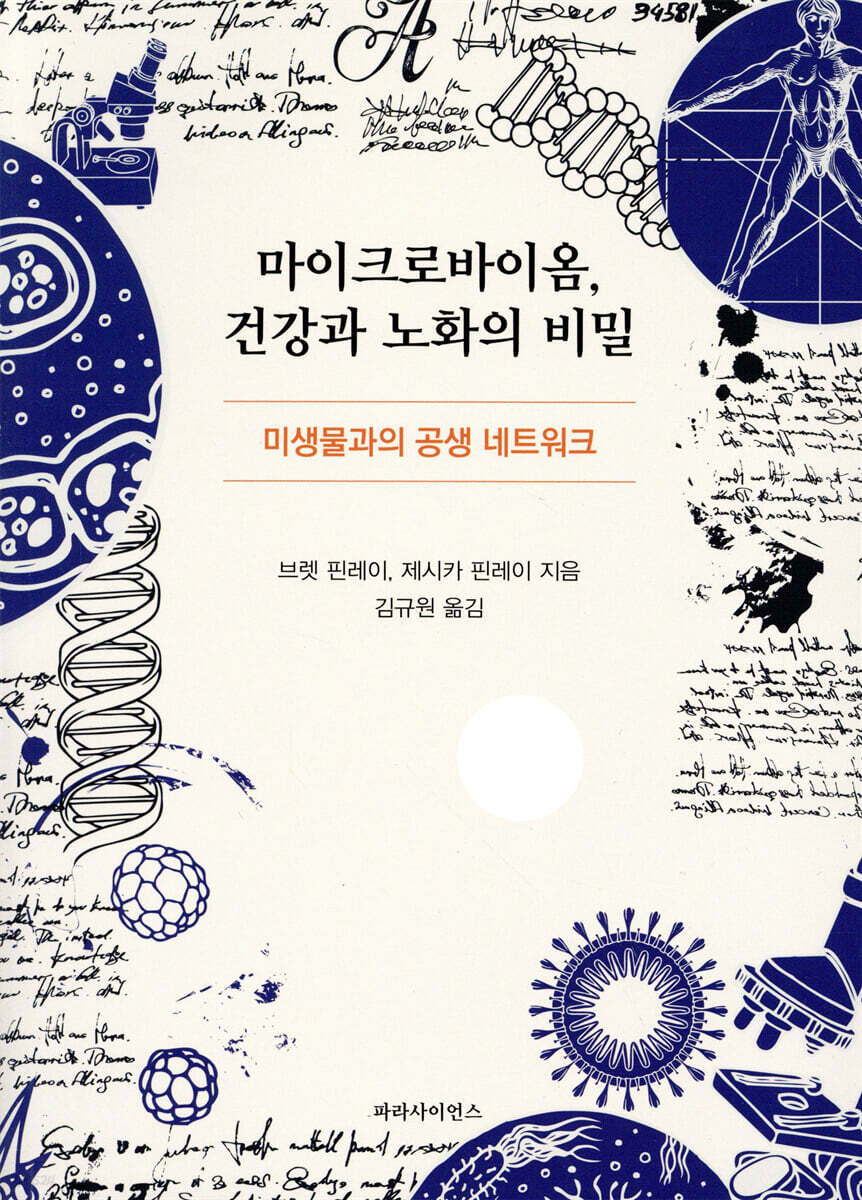
The Microbiome: The Secret to Health and Aging
 |
Description
Book Introduction
The microbiome, a cutting-edge research field in modern medicine, is receiving significant attention in health and aging.
There are more microorganisms living in our bodies than there are cells in our bodies.
What is needed for healthy aging is to form a healthy symbiotic network with microbes.
This book is a detailed guide to aging healthily with microbes, and an innovative guide to the future world of microbes that will lead to longevity.
There are more microorganisms living in our bodies than there are cells in our bodies.
What is needed for healthy aging is to form a healthy symbiotic network with microbes.
This book is a detailed guide to aging healthily with microbes, and an innovative guide to the future world of microbes that will lead to longevity.
- You can preview some of the book's contents.
Preview
index
Translator's Note
introduction
01.
The fountain of youth is...
It's full of microbes?
02.
Your Microbiome Is Glowing: Your Skin Microbiome
03.
Listen to the Microbes: Microbes and the Brain
04.
Healthy Smile, Healthy You: Oral Microbiome
05.
Let's take a deep breath: Lung Microbes
06.
The Kingpins of Your Stomach: Stomach Microbes
07.
The Holy Land of Microbes: Gut Microbes
08.
The Microbes That Lead to Love: The Heart and the Microbes
09.
Women Are Not Miniature Men: Menopause and the Vaginal Microbiome
10.
Encountering Cancer: Microbes That Help Treat Cancer
11.
The tug-of-war between microbes and the immune system
12.
Flex Your Microbiome: Muscles and Skeletons
13.
So clean, even a little dirty is okay: Microbes around us
14.
The fountain of youth is full of microbes!:
Living with our body's microbes
Acknowledgements
References
Search
introduction
01.
The fountain of youth is...
It's full of microbes?
02.
Your Microbiome Is Glowing: Your Skin Microbiome
03.
Listen to the Microbes: Microbes and the Brain
04.
Healthy Smile, Healthy You: Oral Microbiome
05.
Let's take a deep breath: Lung Microbes
06.
The Kingpins of Your Stomach: Stomach Microbes
07.
The Holy Land of Microbes: Gut Microbes
08.
The Microbes That Lead to Love: The Heart and the Microbes
09.
Women Are Not Miniature Men: Menopause and the Vaginal Microbiome
10.
Encountering Cancer: Microbes That Help Treat Cancer
11.
The tug-of-war between microbes and the immune system
12.
Flex Your Microbiome: Muscles and Skeletons
13.
So clean, even a little dirty is okay: Microbes around us
14.
The fountain of youth is full of microbes!:
Living with our body's microbes
Acknowledgements
References
Search
Into the book
There are far more microorganisms than the tens of trillions of cells that make up our bodies, and most of them, except for a few that cause disease, form a symbiotic relationship with the cells in our bodies.
We depend on each other, help each other, and co-evolve together.
In particular, it is becoming increasingly clear that the help of microorganisms is essential for healthy aging.
This is the subject of this book and it is a matter of concern to us all.
The fountain of youth, necessary for healthy aging, is not in some distant utopia, but right within our own bodies, and that fountain is teeming with microorganisms.
---From the translator's note
In conclusion, this book approaches aging as a lifelong process.
It's not that we wake up one morning and suddenly find ourselves old. Our health is built up over our lifetime through our individual strengths and vulnerabilities.
Therefore, I sincerely hope that this book, written with the intention of guiding the aging process in a more positive direction, will provide readers with new ways to support and support the microbes that exist in our bodies and all around us, so that we can live as vibrant and healthy lives as possible.
“There’s nothing you can do about age.
But growing old is a choice.” ---From the “Preface”
One of the most exciting and cutting-edge areas of research in aging science involves the oldest organisms on Earth.
It is ‘microorganism’.
Unlike the high-tech products we use to try to turn back the clock on aging, bacteria have been around for over 3.5 billion years, dating back to when the Earth was covered in boiling water.
While Earth's climate has changed dramatically over the past billions of years, microbes remain a persistent presence everywhere: in the air we breathe (they created the oxygen in our atmosphere in the first place!), on the chair you're sitting on, and in the food in your refrigerator.
In fact, can you believe that there are more microbes on the palm of your hand than on the entire human population on Earth?
---「01.
The fountain of youth...
"It's full of microbes?"
It is known that human lifespan is determined by 25% genetics and the remaining 75% by environmental factors.
What this means is that we can control the majority of factors that affect our health and longevity.
Therefore, it is not true that children are destined to develop cancer just because their parents have cancer.
While we may inherit genes that predispose us to cancer, our future will be determined far more by the environmental conditions in which we live.
It is now clear that the most representative of these environmental conditions refers to the microorganisms that are most closely related to us.
---「01.
The fountain of youth...
"It's full of microbes?"
It's not easy for us to judge a person's age by their face, but using microbes, it becomes possible.
Because microbes are integral to the aging process and constantly adapt to the changing internal and external environments of the body, simply scraping the microbes from the forehead with a cotton swab and examining their composition can estimate age within an error of less than 10 years.
Especially after the age of 50, the microbial composition shows a clear difference compared to younger people.
Research into the processes and causes of changes in the composition and diversity of these microorganisms as we age is only recently beginning.
---「02.
Your Microbiome is Glowing: From "Skin Microbiome"
In the near future, it's not hard to imagine storing your own skin microbiome for 30 years, or even creating a skin rejuvenation cocktail made with vibrant microbes harvested from young people.
Furthermore, if we find microorganisms related to hair growth, we can use them to treat baldness by increasing the health of hair cells.
And if we could use microbes to improve the health and longevity of hair cells that produce pigment, we could potentially prevent graying as we age.
---「02.
Your Microbiome is Glowing: From "Skin Microbiome"
What role do microbes play in Alzheimer's and other types of dementia? While research is still in its early stages, numerous reports suggest that the microbiome directly or indirectly influences these diseases.
The fact that the incidence of Alzheimer's disease is much higher in developed countries suggests that factors such as high sanitation, Western-style eating habits, and resulting negative changes in microorganisms may be involved.
The link between Alzheimer's disease and microbes is also supported by the fact that urban areas have a 10-fold higher incidence rate than rural areas, which are rich in microbes.
---「03.
From "Follow the Microbes: Microbes and the Brain"
A representative example is a large-scale retrospective study conducted in the UK on antibiotic use among 200,000 depressed patients.
A one-year follow-up study of patients who had been administered one type of antibiotic more than once found that seven types of antibiotics increased depression, and among them, depression increased by 50% in the group that had been administered penicillin more than five times.
Other antibiotics also increased anxiety.
......
Therefore, the overuse of antibiotics has been expanded to affect not only physical health but also mental health such as depression, anxiety, and stress.
---「03.
From "Follow the Microbes: Microbes and the Brain"
There are surprising research findings linking oral hygiene, the oral microbiome, and dementia.
A large study of twins found that twins who lost their teeth before age 35 had a higher incidence of dementia.
The most surprising statistic is that the group that did not brush their teeth had a 22-65% higher risk of dementia than the group that brushed their teeth three times a day.
---「04.
Healthy Smile, Healthy You: From Oral Microbiome
Should I get a flu shot? Yes! The flu is a viral infection caused by the influenza virus, primarily affecting the nose, throat, bronchial tubes, and sometimes the lungs.
Most of us have suffered from the flu to some degree at some point.
These include fever, muscle pain, headache, sore throat, cough, chills, and fatigue.
Older people are particularly susceptible to the flu.
80-90% of deaths from influenza are in people over 65 years of age.
This is because as we age, our immune systems weaken and we become more susceptible to infections, which increases the incidence of influenza and can worsen underlying medical conditions such as heart disease, lung disease, and asthma.
---「05.
Let's take a deep breath: from "Lung Microbes"
“Humans and Helicobacter pylori clearly have a history of co-evolution.
This coevolution will take its toll as humans age, sometimes in the form of stomach cancer, and sometimes in the form of less serious conditions like stomach ulcers.
However, the benefits of H. pylori infection in childhood are not yet clearly understood, but it may have the advantage of fighting off infections by other bacteria.
Because we already know that a healthy microbiome is important, and Helicobacter pylori certainly falls into this category.
Humans have lived alongside this fungus for at least the past 100,000 years, so it must have played an important role.
But now, in the United States, Germany, and Scandinavian countries, less than 5% of children carry the bacteria.
This phenomenon is a frightening ecological shift that has occurred over a period of just a few generations.
“We need to make good use of our heritage, but it seems we are not doing so.”
---「06.
From "The King of the Stomach: Stomach Microorganisms"
If you change your diet to a high-fiber, low-fat diet, your microbiome will change within three days.
Changes in diet can alter more than half of the human microbiome, or 57%.
In comparison, genetic mutations only alter about 12% of the microbial community.
---「07.
From "The Holy Land of Microorganisms: Gut Microbes"
Our bodies have evolved in a symbiotic relationship with the microorganisms within us.
Therefore, it is essential for health and longevity to avoid disturbing the intestinal microbiota ecosystem as much as possible.
Disruption of the gut microbiome has devastating consequences, increasing the risk of chronic gastrointestinal diseases such as ulcerative colitis and irritable bowel syndrome, as well as metabolic diseases such as type 2 diabetes and obesity.
Therefore, much research is being conducted to identify specific “core” gut microbiomes that may be responsible for these specific diseases.
The environmental factor that can have the greatest influence on the composition of the gut microbiome and that can be controlled is diet.
---「07.
From "The Holy Land of Microorganisms: Gut Microbes"
Further evidence that gut microbes are involved in cardiovascular disease comes from fecal transplantation experiments. When feces from mice with high TMAO levels are transplanted into mice with low TMAO levels, both TMAO levels and the abundance of microbes with TMA synthase increase.
It's astonishing that simply transplanting feces (and the microbes within it) can alter the risk of cardiovascular disease! While this finding would have been unimaginable just a decade ago, research is now progressing at a rapid pace to elucidate how microbes contribute to heart attacks and strokes.
Perhaps in the future this treatment will be equally successful for humans.
---「08.
From “Microbes that Lead to Love: The Heart and Microbes”
Vaginal health is closely related to the microorganisms that reside in the vagina.
If strategies are developed to modulate or supplement specific vaginal microbes, treatment of vaginal infections could be improved and vaginal health during menopause could be significantly improved.
Because the gut microbiome may regulate estrogen levels after menopause, it is hoped that dietary changes including specific probiotics, prebiotics, and fermented foods may one day improve menopausal symptoms.
Because the vagina is composed of a mucosal surface that is closely linked to the immune system, attempts are being made to use vaginal microbes as vaccines or to alter immune responses.
---「09.
From “Women are not miniature men: Menopause and the vaginal microbiome”
One of the most groundbreaking findings across all fields of cancer research is the potential for the microbiome to be harnessed to enhance the efficacy of immunotherapy.
To explain this fact, we need to look at the basic principles of immunochemotherapy.
Immunotherapy uses immune checkpoint inhibitors to block immune checkpoints that interfere with the immune response.
These anticancer drugs trigger an immune response, enabling our body's own defense system to fight the cancer.
In other words, immunotherapy increases or restores the function of the immune system to stop or reduce the proliferation of cancer cells and also blocks the metastasis of cancer cells.
… … Two papers published in 2015 turned the entire field of immunotherapy upside down by announcing that microbes could modulate the effectiveness of cancer treatment, and served as an opportunity to bring the role of microbes to the forefront in traditional cancer treatment.
---「10.
From "Meeting Cancer: Microbes That Help Treat Cancer"
Another question arises here.
If inflammatory aging is so detrimental to our bodies and longevity, why hasn't it been eliminated through evolution? The simple answer is that inflammatory aging primarily occurs in older individuals, well past the reproductive stage, so there's no evolutionary pressure to eliminate it.
Evolution is so closely linked to reproduction that it seems genetically unrelated to how long we live after producing offspring.
Inflammation is also essential for survival and protection against infections and other diseases in early life, especially during the reproductive years.
Survival itself at this time is also key to longevity.
Therefore, there is no evolutionary reason to eliminate this defense mechanism even if it is harmful in old age.
---「11.
From “The Tug-of-War Between Microbes and the Immune System”
The most compelling evidence that the microbiome influences bone density comes from studies using probiotics and prebiotics.
That is, in mice, changes in the gut microbiome by probiotics such as Lactobacillus increased bone mass and suppressed estrogen-related bone loss.
Similar results have been obtained in humans.
The probiotic Lactobacillus reuteri increased blood vitamin D levels, promoting calcium absorption and bone health.
And when 417 elderly people with arm fractures were administered the probiotic Lactobacillus casei to some of them, the fractures healed faster in the administered group than in the non-administered group.
---「12.
From "Bend Your Microbiome: Muscles and Bones"
The fundamental shift in our living environment from an agricultural to an urban society has resulted in reduced contact with the microbial communities essential for the development of our body's immune system.
As a result, respiratory diseases are on the rise, with 300 million asthmatics worldwide and more than 40% of the population in developed countries suffering from allergies.
And studies have reported that several environmental factors that increase contact with microorganisms reduce the risk of developing asthma.
For example, children raised on Bavarian or Amish farms, where they have close contact with livestock, generally have a much lower incidence of asthma than children from non-farm areas.
Factors that reduce the incidence of allergic diseases include contact with animals at an early age, such as going to a stable or breastfeeding before the age of one, normal delivery, and not taking antibiotics in childhood.
---「13.
So clean, it's okay if it's a little dirty: From "Microorganisms around us"
Antibiotics are one of the greatest medical discoveries of the 20th century, miracle drugs that have saved countless lives.
Thanks to antibiotics, we live much longer than people did a century ago.
However, these antibiotics are causing new problems by affecting the microbial community.
More than 80% of antibiotics used in Canada and the United States are not used to treat disease, but are used in animal husbandry as growth promoters.
This use is already banned in Europe.
North America is also beginning to recognize this problem, with major fast-food companies like McDonald's, Subway, and Kentucky Fried Chicken now using antibiotic-free livestock and poultry.
In addition to the mass use of antibiotics for animal husbandry, unnecessary overprescription and overuse of antibiotics are leading to the emergence of antibiotic-resistant pathogens.
These 'super-resistant pathogens' are so difficult to treat that there are serious concerns worldwide that we are returning to the pre-antibiotic era.
As we have seen, more than 2 million people in the United States become infected with antibiotic-resistant bacteria each year, and at least 23,000 of them die.
---「14.
The Fountain of Youth is Full of Microbes!: Living with Our Body's Microbes
The past decade has been a renaissance in microbiology, with remarkable achievements in understanding the microbes in and around us, from the discovery that we co-evolved with them to the groundbreaking discovery that microbes are fundamentally involved in health and disease throughout our lives.
This new knowledge opens up a new era of possibilities for exploiting the many beneficial capabilities of microbes for human health.
We depend on each other, help each other, and co-evolve together.
In particular, it is becoming increasingly clear that the help of microorganisms is essential for healthy aging.
This is the subject of this book and it is a matter of concern to us all.
The fountain of youth, necessary for healthy aging, is not in some distant utopia, but right within our own bodies, and that fountain is teeming with microorganisms.
---From the translator's note
In conclusion, this book approaches aging as a lifelong process.
It's not that we wake up one morning and suddenly find ourselves old. Our health is built up over our lifetime through our individual strengths and vulnerabilities.
Therefore, I sincerely hope that this book, written with the intention of guiding the aging process in a more positive direction, will provide readers with new ways to support and support the microbes that exist in our bodies and all around us, so that we can live as vibrant and healthy lives as possible.
“There’s nothing you can do about age.
But growing old is a choice.” ---From the “Preface”
One of the most exciting and cutting-edge areas of research in aging science involves the oldest organisms on Earth.
It is ‘microorganism’.
Unlike the high-tech products we use to try to turn back the clock on aging, bacteria have been around for over 3.5 billion years, dating back to when the Earth was covered in boiling water.
While Earth's climate has changed dramatically over the past billions of years, microbes remain a persistent presence everywhere: in the air we breathe (they created the oxygen in our atmosphere in the first place!), on the chair you're sitting on, and in the food in your refrigerator.
In fact, can you believe that there are more microbes on the palm of your hand than on the entire human population on Earth?
---「01.
The fountain of youth...
"It's full of microbes?"
It is known that human lifespan is determined by 25% genetics and the remaining 75% by environmental factors.
What this means is that we can control the majority of factors that affect our health and longevity.
Therefore, it is not true that children are destined to develop cancer just because their parents have cancer.
While we may inherit genes that predispose us to cancer, our future will be determined far more by the environmental conditions in which we live.
It is now clear that the most representative of these environmental conditions refers to the microorganisms that are most closely related to us.
---「01.
The fountain of youth...
"It's full of microbes?"
It's not easy for us to judge a person's age by their face, but using microbes, it becomes possible.
Because microbes are integral to the aging process and constantly adapt to the changing internal and external environments of the body, simply scraping the microbes from the forehead with a cotton swab and examining their composition can estimate age within an error of less than 10 years.
Especially after the age of 50, the microbial composition shows a clear difference compared to younger people.
Research into the processes and causes of changes in the composition and diversity of these microorganisms as we age is only recently beginning.
---「02.
Your Microbiome is Glowing: From "Skin Microbiome"
In the near future, it's not hard to imagine storing your own skin microbiome for 30 years, or even creating a skin rejuvenation cocktail made with vibrant microbes harvested from young people.
Furthermore, if we find microorganisms related to hair growth, we can use them to treat baldness by increasing the health of hair cells.
And if we could use microbes to improve the health and longevity of hair cells that produce pigment, we could potentially prevent graying as we age.
---「02.
Your Microbiome is Glowing: From "Skin Microbiome"
What role do microbes play in Alzheimer's and other types of dementia? While research is still in its early stages, numerous reports suggest that the microbiome directly or indirectly influences these diseases.
The fact that the incidence of Alzheimer's disease is much higher in developed countries suggests that factors such as high sanitation, Western-style eating habits, and resulting negative changes in microorganisms may be involved.
The link between Alzheimer's disease and microbes is also supported by the fact that urban areas have a 10-fold higher incidence rate than rural areas, which are rich in microbes.
---「03.
From "Follow the Microbes: Microbes and the Brain"
A representative example is a large-scale retrospective study conducted in the UK on antibiotic use among 200,000 depressed patients.
A one-year follow-up study of patients who had been administered one type of antibiotic more than once found that seven types of antibiotics increased depression, and among them, depression increased by 50% in the group that had been administered penicillin more than five times.
Other antibiotics also increased anxiety.
......
Therefore, the overuse of antibiotics has been expanded to affect not only physical health but also mental health such as depression, anxiety, and stress.
---「03.
From "Follow the Microbes: Microbes and the Brain"
There are surprising research findings linking oral hygiene, the oral microbiome, and dementia.
A large study of twins found that twins who lost their teeth before age 35 had a higher incidence of dementia.
The most surprising statistic is that the group that did not brush their teeth had a 22-65% higher risk of dementia than the group that brushed their teeth three times a day.
---「04.
Healthy Smile, Healthy You: From Oral Microbiome
Should I get a flu shot? Yes! The flu is a viral infection caused by the influenza virus, primarily affecting the nose, throat, bronchial tubes, and sometimes the lungs.
Most of us have suffered from the flu to some degree at some point.
These include fever, muscle pain, headache, sore throat, cough, chills, and fatigue.
Older people are particularly susceptible to the flu.
80-90% of deaths from influenza are in people over 65 years of age.
This is because as we age, our immune systems weaken and we become more susceptible to infections, which increases the incidence of influenza and can worsen underlying medical conditions such as heart disease, lung disease, and asthma.
---「05.
Let's take a deep breath: from "Lung Microbes"
“Humans and Helicobacter pylori clearly have a history of co-evolution.
This coevolution will take its toll as humans age, sometimes in the form of stomach cancer, and sometimes in the form of less serious conditions like stomach ulcers.
However, the benefits of H. pylori infection in childhood are not yet clearly understood, but it may have the advantage of fighting off infections by other bacteria.
Because we already know that a healthy microbiome is important, and Helicobacter pylori certainly falls into this category.
Humans have lived alongside this fungus for at least the past 100,000 years, so it must have played an important role.
But now, in the United States, Germany, and Scandinavian countries, less than 5% of children carry the bacteria.
This phenomenon is a frightening ecological shift that has occurred over a period of just a few generations.
“We need to make good use of our heritage, but it seems we are not doing so.”
---「06.
From "The King of the Stomach: Stomach Microorganisms"
If you change your diet to a high-fiber, low-fat diet, your microbiome will change within three days.
Changes in diet can alter more than half of the human microbiome, or 57%.
In comparison, genetic mutations only alter about 12% of the microbial community.
---「07.
From "The Holy Land of Microorganisms: Gut Microbes"
Our bodies have evolved in a symbiotic relationship with the microorganisms within us.
Therefore, it is essential for health and longevity to avoid disturbing the intestinal microbiota ecosystem as much as possible.
Disruption of the gut microbiome has devastating consequences, increasing the risk of chronic gastrointestinal diseases such as ulcerative colitis and irritable bowel syndrome, as well as metabolic diseases such as type 2 diabetes and obesity.
Therefore, much research is being conducted to identify specific “core” gut microbiomes that may be responsible for these specific diseases.
The environmental factor that can have the greatest influence on the composition of the gut microbiome and that can be controlled is diet.
---「07.
From "The Holy Land of Microorganisms: Gut Microbes"
Further evidence that gut microbes are involved in cardiovascular disease comes from fecal transplantation experiments. When feces from mice with high TMAO levels are transplanted into mice with low TMAO levels, both TMAO levels and the abundance of microbes with TMA synthase increase.
It's astonishing that simply transplanting feces (and the microbes within it) can alter the risk of cardiovascular disease! While this finding would have been unimaginable just a decade ago, research is now progressing at a rapid pace to elucidate how microbes contribute to heart attacks and strokes.
Perhaps in the future this treatment will be equally successful for humans.
---「08.
From “Microbes that Lead to Love: The Heart and Microbes”
Vaginal health is closely related to the microorganisms that reside in the vagina.
If strategies are developed to modulate or supplement specific vaginal microbes, treatment of vaginal infections could be improved and vaginal health during menopause could be significantly improved.
Because the gut microbiome may regulate estrogen levels after menopause, it is hoped that dietary changes including specific probiotics, prebiotics, and fermented foods may one day improve menopausal symptoms.
Because the vagina is composed of a mucosal surface that is closely linked to the immune system, attempts are being made to use vaginal microbes as vaccines or to alter immune responses.
---「09.
From “Women are not miniature men: Menopause and the vaginal microbiome”
One of the most groundbreaking findings across all fields of cancer research is the potential for the microbiome to be harnessed to enhance the efficacy of immunotherapy.
To explain this fact, we need to look at the basic principles of immunochemotherapy.
Immunotherapy uses immune checkpoint inhibitors to block immune checkpoints that interfere with the immune response.
These anticancer drugs trigger an immune response, enabling our body's own defense system to fight the cancer.
In other words, immunotherapy increases or restores the function of the immune system to stop or reduce the proliferation of cancer cells and also blocks the metastasis of cancer cells.
… … Two papers published in 2015 turned the entire field of immunotherapy upside down by announcing that microbes could modulate the effectiveness of cancer treatment, and served as an opportunity to bring the role of microbes to the forefront in traditional cancer treatment.
---「10.
From "Meeting Cancer: Microbes That Help Treat Cancer"
Another question arises here.
If inflammatory aging is so detrimental to our bodies and longevity, why hasn't it been eliminated through evolution? The simple answer is that inflammatory aging primarily occurs in older individuals, well past the reproductive stage, so there's no evolutionary pressure to eliminate it.
Evolution is so closely linked to reproduction that it seems genetically unrelated to how long we live after producing offspring.
Inflammation is also essential for survival and protection against infections and other diseases in early life, especially during the reproductive years.
Survival itself at this time is also key to longevity.
Therefore, there is no evolutionary reason to eliminate this defense mechanism even if it is harmful in old age.
---「11.
From “The Tug-of-War Between Microbes and the Immune System”
The most compelling evidence that the microbiome influences bone density comes from studies using probiotics and prebiotics.
That is, in mice, changes in the gut microbiome by probiotics such as Lactobacillus increased bone mass and suppressed estrogen-related bone loss.
Similar results have been obtained in humans.
The probiotic Lactobacillus reuteri increased blood vitamin D levels, promoting calcium absorption and bone health.
And when 417 elderly people with arm fractures were administered the probiotic Lactobacillus casei to some of them, the fractures healed faster in the administered group than in the non-administered group.
---「12.
From "Bend Your Microbiome: Muscles and Bones"
The fundamental shift in our living environment from an agricultural to an urban society has resulted in reduced contact with the microbial communities essential for the development of our body's immune system.
As a result, respiratory diseases are on the rise, with 300 million asthmatics worldwide and more than 40% of the population in developed countries suffering from allergies.
And studies have reported that several environmental factors that increase contact with microorganisms reduce the risk of developing asthma.
For example, children raised on Bavarian or Amish farms, where they have close contact with livestock, generally have a much lower incidence of asthma than children from non-farm areas.
Factors that reduce the incidence of allergic diseases include contact with animals at an early age, such as going to a stable or breastfeeding before the age of one, normal delivery, and not taking antibiotics in childhood.
---「13.
So clean, it's okay if it's a little dirty: From "Microorganisms around us"
Antibiotics are one of the greatest medical discoveries of the 20th century, miracle drugs that have saved countless lives.
Thanks to antibiotics, we live much longer than people did a century ago.
However, these antibiotics are causing new problems by affecting the microbial community.
More than 80% of antibiotics used in Canada and the United States are not used to treat disease, but are used in animal husbandry as growth promoters.
This use is already banned in Europe.
North America is also beginning to recognize this problem, with major fast-food companies like McDonald's, Subway, and Kentucky Fried Chicken now using antibiotic-free livestock and poultry.
In addition to the mass use of antibiotics for animal husbandry, unnecessary overprescription and overuse of antibiotics are leading to the emergence of antibiotic-resistant pathogens.
These 'super-resistant pathogens' are so difficult to treat that there are serious concerns worldwide that we are returning to the pre-antibiotic era.
As we have seen, more than 2 million people in the United States become infected with antibiotic-resistant bacteria each year, and at least 23,000 of them die.
---「14.
The Fountain of Youth is Full of Microbes!: Living with Our Body's Microbes
The past decade has been a renaissance in microbiology, with remarkable achievements in understanding the microbes in and around us, from the discovery that we co-evolved with them to the groundbreaking discovery that microbes are fundamentally involved in health and disease throughout our lives.
This new knowledge opens up a new era of possibilities for exploiting the many beneficial capabilities of microbes for human health.
---「14.
The Fountain of Youth is Full of Microbes!: Living with Our Body's Microbes
The Fountain of Youth is Full of Microbes!: Living with Our Body's Microbes
Publisher's Review
The Microbiome: Changing the Textbook of Modern Medicine
The microbiome, or microorganisms, have been thriving on this planet for over 3.5 billion years, dating back to when the planet was covered in boiling water.
While Earth's climate has changed dramatically over time, microbes have made their home everywhere on Earth, creating the air we breathe.
However, the existence of microorganisms was not revealed to mankind until the invention of the microscope in the late 17th century.
Since then, microorganisms have been known as mostly bad pathogens that spread diseases.
For the sake of health, it was something that had to be thoroughly eradicated.
Following the success of the Human Genome Project in analyzing human genes in the early 21st century, research on microorganisms has rapidly advanced as cutting-edge technologies have been applied to analyzing microorganisms.
Today's research on microbes shows that microbes are present throughout our bodies, co-evolving with us for millions of years, forming a symbiotic network.
The close relationship between humans and microorganisms inspires various imaginations.
For example, how to maintain the microbiome in the bodies of astronauts who embark on a nearly three-year exploration of Mars is also emerging as a matter of great interest.
The medical community has recently been focusing on research on the microbiome, and the new research results they are producing are shaking up the existing molecular biology-centered medical textbook system.
Some scientists have gone so far as to call our body's microbiome "the newest organ discovered."
The cutting edge research field of aging science is microbiology.
Scientific research has led to the development of a number of methods that can slow down the aging process.
Anti-aging treatments include antioxidant medications, dietary restrictions, hormone replacement therapy to alleviate menopausal symptoms, and a variety of dermatological treatments, including dietary supplements, chemical or surgical peels, laser resurfacing, ultrasound, and plastic surgery.
While many of these methods are hyped and touted as cutting-edge, the most exciting and cutting-edge research in current aging science involves some of the oldest organisms on Earth.
It is ‘microorganism’.
It is known that human lifespan is determined by 25% genetics and the remaining 75% by environmental factors.
What this means is that we can control the majority of factors that affect our health and longevity.
Therefore, it is not true that children are destined to develop cancer just because their parents have cancer.
Of course, we may have inherited genes that make us more prone to cancer, but our future is much more determined by the environmental conditions in which we live.
And the biggest part of environmental factors is the microbiome within our bodies.
Humans reach their biological peak around age 12, and until then, the body and its microbiome grow together.
However, after the age of 12, the chance of death doubles every eight years, and if you remain at the age of 12, it is said that you can live for over a thousand years.
How to manage your microbiome well is not far away.
When we look at how lifestyle, diet, and exercise affect our microbiome, it becomes clear that our daily lives are key to caring for not only our bodies but also the microbes that live within them.
Structural features of this book
This book does not provide complete and exhaustive information on the functions of microorganisms involved in aging.
Instead, it helps readers realize that living a healthy life is a lifelong process, and suggests where to start for readers who want to age healthily.
Each chapter in this book explores the fascinating and unknown world of microbes and how they affect our body's major organs and systems.
In particular, we will explain scientifically discovered facts about how microorganisms in various organs are involved in the aging process throughout the body, from head to toe.
It also provides lifestyle tips and “tips and tricks” to help readers age as healthily and gracefully as possible for the rest of their lives, whether they are 18 or 80.
Three key perspectives of this book
The first is a new study from the field of microbiology that will change the modern medical textbook.
However, these concepts have emerged very recently, less than 10 years ago, and there are still many areas that need improvement before they can be applied directly in the field.
As with any new scientific field, the results obtained so far are conflicting and ambiguous, making it difficult to obtain clear answers.
Nonetheless, the richness of the gut microbiome, as highlighted in this book, is beneficial to health, and the involvement of microbes in inflammatory responses occurring throughout the body is a concept that can be generalized to everyone.
Therefore, we have compiled and condensed a vast amount of information about microorganisms and made its essence available to readers for use in their daily lives.
A second perspective focuses on the influence of microbes on healthy aging, a process that has not yet been generally addressed.
As I'll mention in several places in this book, the concept of aging while maintaining good health by making good use of microbes is beginning to emerge.
It's easy to think that aging healthily is something that only applies to people over 65.
But in reality, aging healthily is a lifelong process.
Things you do in your 20s often have repercussions decades later.
For example, wouldn't a sprained ankle from a basketball game at age 22 make it difficult to walk at age 70? From this perspective, this book is aimed at readers of all ages who are concerned about their long-term health throughout their lives.
The third is the view that microbes are everywhere, inside and around our bodies.
Until now, most of the literature on microbiology has focused on colonic microbes.
There is no doubt that gut microbes play a vital role in all human functions.
But now we're increasingly learning that microbes in other organs are deeply involved in our health, disease, and aging in different and fascinating ways.
Just like the microbes in the large intestine, many types of microbial communities coexist harmoniously in the mouth and oral cavity, on the skin, and in the urinary and reproductive organs, lungs, etc. At the same time, microbes not only busily produce chemicals, but also influence countless functions of our body through various activities.
For example, it has been reported that microbes are responsible for more than one-third of HDL/cholesterol content and one-quarter of body mass index (BMI), a measure of obesity.
These research findings could lead to the development of effective personalized diets based on each individual's unique microbial composition.
The microbiome, or microorganisms, have been thriving on this planet for over 3.5 billion years, dating back to when the planet was covered in boiling water.
While Earth's climate has changed dramatically over time, microbes have made their home everywhere on Earth, creating the air we breathe.
However, the existence of microorganisms was not revealed to mankind until the invention of the microscope in the late 17th century.
Since then, microorganisms have been known as mostly bad pathogens that spread diseases.
For the sake of health, it was something that had to be thoroughly eradicated.
Following the success of the Human Genome Project in analyzing human genes in the early 21st century, research on microorganisms has rapidly advanced as cutting-edge technologies have been applied to analyzing microorganisms.
Today's research on microbes shows that microbes are present throughout our bodies, co-evolving with us for millions of years, forming a symbiotic network.
The close relationship between humans and microorganisms inspires various imaginations.
For example, how to maintain the microbiome in the bodies of astronauts who embark on a nearly three-year exploration of Mars is also emerging as a matter of great interest.
The medical community has recently been focusing on research on the microbiome, and the new research results they are producing are shaking up the existing molecular biology-centered medical textbook system.
Some scientists have gone so far as to call our body's microbiome "the newest organ discovered."
The cutting edge research field of aging science is microbiology.
Scientific research has led to the development of a number of methods that can slow down the aging process.
Anti-aging treatments include antioxidant medications, dietary restrictions, hormone replacement therapy to alleviate menopausal symptoms, and a variety of dermatological treatments, including dietary supplements, chemical or surgical peels, laser resurfacing, ultrasound, and plastic surgery.
While many of these methods are hyped and touted as cutting-edge, the most exciting and cutting-edge research in current aging science involves some of the oldest organisms on Earth.
It is ‘microorganism’.
It is known that human lifespan is determined by 25% genetics and the remaining 75% by environmental factors.
What this means is that we can control the majority of factors that affect our health and longevity.
Therefore, it is not true that children are destined to develop cancer just because their parents have cancer.
Of course, we may have inherited genes that make us more prone to cancer, but our future is much more determined by the environmental conditions in which we live.
And the biggest part of environmental factors is the microbiome within our bodies.
Humans reach their biological peak around age 12, and until then, the body and its microbiome grow together.
However, after the age of 12, the chance of death doubles every eight years, and if you remain at the age of 12, it is said that you can live for over a thousand years.
How to manage your microbiome well is not far away.
When we look at how lifestyle, diet, and exercise affect our microbiome, it becomes clear that our daily lives are key to caring for not only our bodies but also the microbes that live within them.
Structural features of this book
This book does not provide complete and exhaustive information on the functions of microorganisms involved in aging.
Instead, it helps readers realize that living a healthy life is a lifelong process, and suggests where to start for readers who want to age healthily.
Each chapter in this book explores the fascinating and unknown world of microbes and how they affect our body's major organs and systems.
In particular, we will explain scientifically discovered facts about how microorganisms in various organs are involved in the aging process throughout the body, from head to toe.
It also provides lifestyle tips and “tips and tricks” to help readers age as healthily and gracefully as possible for the rest of their lives, whether they are 18 or 80.
Three key perspectives of this book
The first is a new study from the field of microbiology that will change the modern medical textbook.
However, these concepts have emerged very recently, less than 10 years ago, and there are still many areas that need improvement before they can be applied directly in the field.
As with any new scientific field, the results obtained so far are conflicting and ambiguous, making it difficult to obtain clear answers.
Nonetheless, the richness of the gut microbiome, as highlighted in this book, is beneficial to health, and the involvement of microbes in inflammatory responses occurring throughout the body is a concept that can be generalized to everyone.
Therefore, we have compiled and condensed a vast amount of information about microorganisms and made its essence available to readers for use in their daily lives.
A second perspective focuses on the influence of microbes on healthy aging, a process that has not yet been generally addressed.
As I'll mention in several places in this book, the concept of aging while maintaining good health by making good use of microbes is beginning to emerge.
It's easy to think that aging healthily is something that only applies to people over 65.
But in reality, aging healthily is a lifelong process.
Things you do in your 20s often have repercussions decades later.
For example, wouldn't a sprained ankle from a basketball game at age 22 make it difficult to walk at age 70? From this perspective, this book is aimed at readers of all ages who are concerned about their long-term health throughout their lives.
The third is the view that microbes are everywhere, inside and around our bodies.
Until now, most of the literature on microbiology has focused on colonic microbes.
There is no doubt that gut microbes play a vital role in all human functions.
But now we're increasingly learning that microbes in other organs are deeply involved in our health, disease, and aging in different and fascinating ways.
Just like the microbes in the large intestine, many types of microbial communities coexist harmoniously in the mouth and oral cavity, on the skin, and in the urinary and reproductive organs, lungs, etc. At the same time, microbes not only busily produce chemicals, but also influence countless functions of our body through various activities.
For example, it has been reported that microbes are responsible for more than one-third of HDL/cholesterol content and one-quarter of body mass index (BMI), a measure of obesity.
These research findings could lead to the development of effective personalized diets based on each individual's unique microbial composition.
GOODS SPECIFICS
- Publication date: October 30, 2022
- Page count, weight, size: 407 pages | 560g | 150*210*20mm
- ISBN13: 9791188509621
- ISBN10: 1188509624
You may also like
카테고리
korean


korean

![GQ KOREA Mark (Monthly): December [2025]](http://librairie.coreenne.fr/cdn/shop/files/8ef265dbbfbf186523ed75ba7319009d.jpg?v=1765340328&width=3840)


