

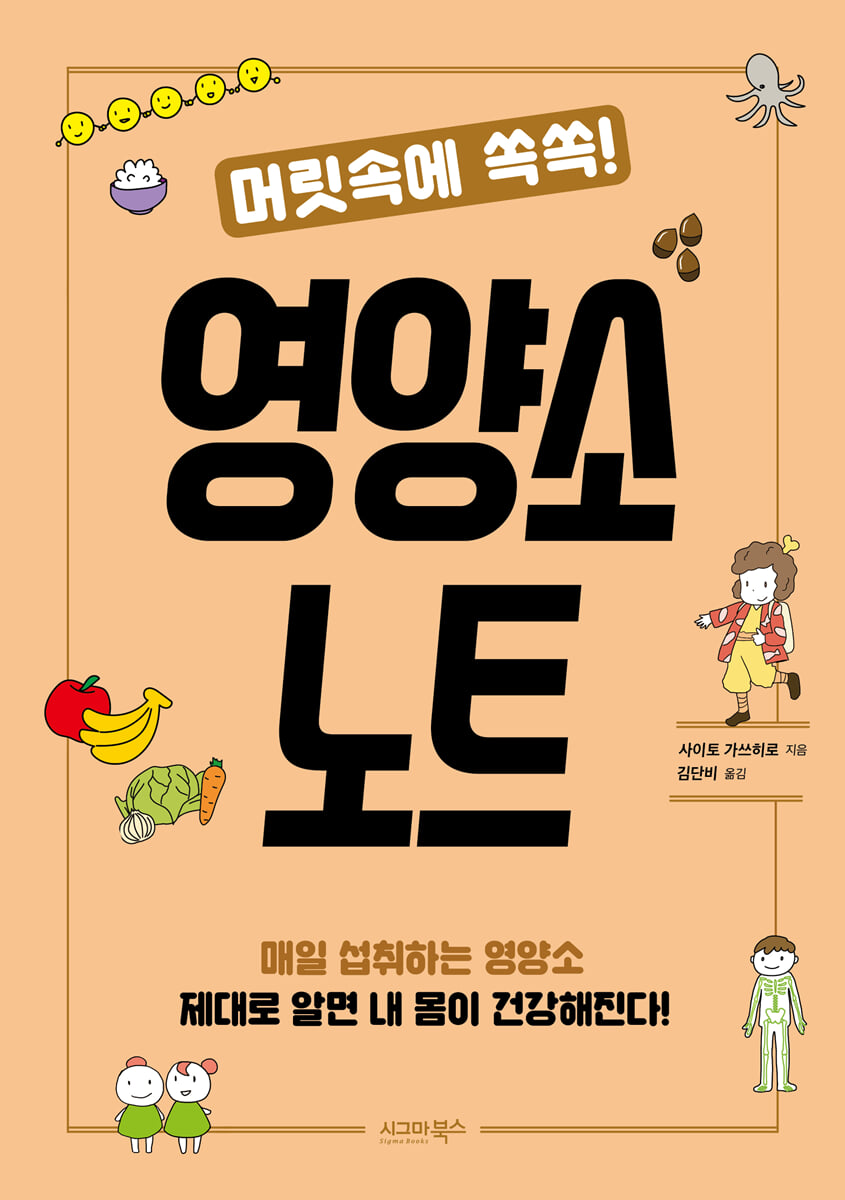
Nutrient Notes in Your Head!
 |
Description
Book Introduction
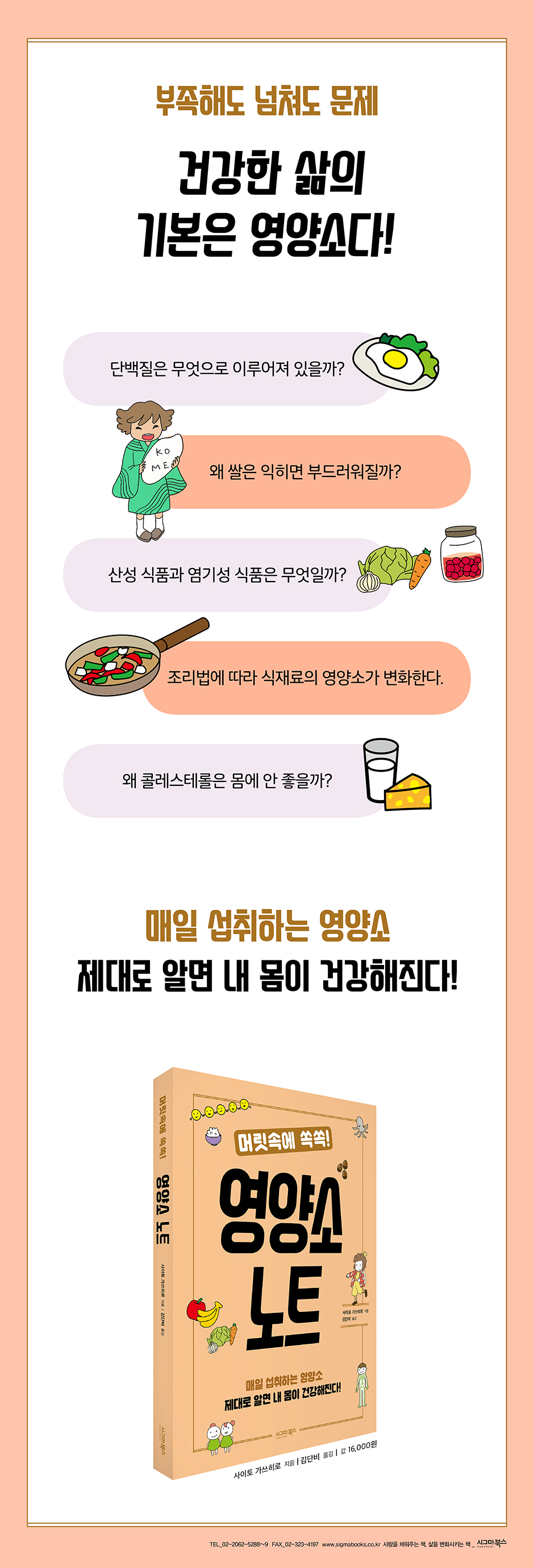
Whether it's lacking or overflowing, it's a problem
The foundation of a healthy life is nutrition!
This book scientifically explains why the timeless advice, “Eat a balanced diet,” is true.
There's no need to be afraid of something scientific.
We took questions that people might have had at least once in their daily lives as our subtopics and explained the principles of nutrition in an easy and fun way with pictures.
Reading with a light heart will help you resolve misunderstandings and questions about nutrition and build up nutritional knowledge for a more enjoyable and healthy diet.
The foundation of a healthy life is nutrition!
This book scientifically explains why the timeless advice, “Eat a balanced diet,” is true.
There's no need to be afraid of something scientific.
We took questions that people might have had at least once in their daily lives as our subtopics and explained the principles of nutrition in an easy and fun way with pictures.
Reading with a light heart will help you resolve misunderstandings and questions about nutrition and build up nutritional knowledge for a more enjoyable and healthy diet.
- You can preview some of the book's contents.
Preview
index
To begin with
Key nutrients featured in this book
Chapter 1: What are nutrients?
01 What is nutrition?
02 What are nutrients?
03 What happens when nutrients enter the body?
04 What happens if you lack nutrients?
05 What is a calorie?
06 What is the relationship between calories and diet?
07 What is an ambassador?
Chapter 2: The Three Major Nutrients Around Us
08 What kind of nutrient is protein?
09 What are proteins made of?
What are the 'amino acids' that make up 10 proteins?
11 What is the structure of a protein?
12 Can Protein Cause Disease?
13 What kind of nutrient is carbohydrate?
14 What types of parties are there?
15 What is the difference between starch and cellulose?
16 Why does rice become soft when cooked?
17 What kind of nutrient is lipid?
18 Are there good and bad fats for the body?
19 Are trans fats bad for you?
20 Are nucleic acids nutrients?
21 What are acidic and alkaline foods?
Chapter 3: Vitamins and Minerals Around Us
22 What kind of nutrients are vitamins?
23 What types of vitamins are there?
24 What happens if you have a vitamin deficiency?
25 Are vitamins only found in plants?
26 Are hormones nutrients?
27 What kind of nutrients are minerals?
28 What are the minerals contained in?
29 What are trace elements?
What is the difference between 30 years and 30 years of experience?
31 Do vitamins and minerals have antioxidant properties?
Chapter 4 Cooking and Nutrients
32 Do the nutrients in food change when you cook it?
33 Do nutrients disappear when you wash food?
34 Why do we wash fish in salt water instead of fresh water?
35 Do nutrients get lost when you cut food with a dull knife?
36 What happens when you heat protein?
37 Meat becomes hard when grilled
Why does it become soft when boiled for a long time?
38 Do the nutrients contained in different types of meat differ?
39 What happens when you heat carbohydrates?
40 Is alcohol made by using changes in sugar?
41 What happens when you heat lipids?
42 What is the difference between beef tallow and lard?
43 What happens when you heat vitamins?
44 Do minerals change depending on the recipe?
45 Why does the bitter taste of pot cooking get removed?
Chapter 5 Disease and Nutrients
48 Why do diseases occur?
49 Does a lack of nutrients cause disease?
50 What nutrients should I consume to avoid disease?
51 Are health functional foods good for your body?
Can restricting 52 calories help you live longer?
53 What nutrients should I consume if I have a disease?
54 What are unhealthy foods?
55 What foods contain poison?
56 Why does food poisoning occur?
57 What are shellfish toxins?
Chapter 6 Lifestyle Habits and Nutrients
58 Why is cholesterol harmful to the body?
59 Is it good for your health to drink tea or coffee every day?
60 Why do I get a hangover?
61 What nutrients should I consume as a side dish with alcohol?
62 What nutrients should children consume?
63 What nutrients should seniors consume?
64 What nutrients should I consume to prevent lifestyle-related diseases?
65 Is eating three times a day good for your health?
66 What nutrients should I consume in my snacks?
67 Why does obesity occur?
References
Key nutrients featured in this book
Chapter 1: What are nutrients?
01 What is nutrition?
02 What are nutrients?
03 What happens when nutrients enter the body?
04 What happens if you lack nutrients?
05 What is a calorie?
06 What is the relationship between calories and diet?
07 What is an ambassador?
Chapter 2: The Three Major Nutrients Around Us
08 What kind of nutrient is protein?
09 What are proteins made of?
What are the 'amino acids' that make up 10 proteins?
11 What is the structure of a protein?
12 Can Protein Cause Disease?
13 What kind of nutrient is carbohydrate?
14 What types of parties are there?
15 What is the difference between starch and cellulose?
16 Why does rice become soft when cooked?
17 What kind of nutrient is lipid?
18 Are there good and bad fats for the body?
19 Are trans fats bad for you?
20 Are nucleic acids nutrients?
21 What are acidic and alkaline foods?
Chapter 3: Vitamins and Minerals Around Us
22 What kind of nutrients are vitamins?
23 What types of vitamins are there?
24 What happens if you have a vitamin deficiency?
25 Are vitamins only found in plants?
26 Are hormones nutrients?
27 What kind of nutrients are minerals?
28 What are the minerals contained in?
29 What are trace elements?
What is the difference between 30 years and 30 years of experience?
31 Do vitamins and minerals have antioxidant properties?
Chapter 4 Cooking and Nutrients
32 Do the nutrients in food change when you cook it?
33 Do nutrients disappear when you wash food?
34 Why do we wash fish in salt water instead of fresh water?
35 Do nutrients get lost when you cut food with a dull knife?
36 What happens when you heat protein?
37 Meat becomes hard when grilled
Why does it become soft when boiled for a long time?
38 Do the nutrients contained in different types of meat differ?
39 What happens when you heat carbohydrates?
40 Is alcohol made by using changes in sugar?
41 What happens when you heat lipids?
42 What is the difference between beef tallow and lard?
43 What happens when you heat vitamins?
44 Do minerals change depending on the recipe?
45 Why does the bitter taste of pot cooking get removed?
Chapter 5 Disease and Nutrients
48 Why do diseases occur?
49 Does a lack of nutrients cause disease?
50 What nutrients should I consume to avoid disease?
51 Are health functional foods good for your body?
Can restricting 52 calories help you live longer?
53 What nutrients should I consume if I have a disease?
54 What are unhealthy foods?
55 What foods contain poison?
56 Why does food poisoning occur?
57 What are shellfish toxins?
Chapter 6 Lifestyle Habits and Nutrients
58 Why is cholesterol harmful to the body?
59 Is it good for your health to drink tea or coffee every day?
60 Why do I get a hangover?
61 What nutrients should I consume as a side dish with alcohol?
62 What nutrients should children consume?
63 What nutrients should seniors consume?
64 What nutrients should I consume to prevent lifestyle-related diseases?
65 Is eating three times a day good for your health?
66 What nutrients should I consume in my snacks?
67 Why does obesity occur?
References
Detailed image
Into the book
The word 'nutritious' is often used to mean 'full of nutrition' or 'lacking nutrition', but its original meaning is completely different.
Nutrition refers to a series of activities necessary for sustaining life, such as taking in substances such as food or drink from outside the body and creating energy or body components.
In other words, nutrition is a word that represents ‘activity.’
Meanwhile, nutrients refer to ‘ingredients necessary for the body’ contained in food.
---From "01 What is Nutrition?"
Amino acids are the raw materials for proteins.
If any one of the amino acids required for protein production is deficient, protein will not be synthesized sufficiently even if other amino acids are consumed in sufficient quantities.
If one side of the barrel is made of a short board, as shown in the picture below, no matter how much water is put in, the water will not reach the top of the barrel.
When synthesizing proteins, only the smallest amount of amino acids is utilized, so other amino acids consumed in large quantities are of no use.
In other words, it is meaningless to consume too much of any one amino acid, and it is very important to consume them in a balanced manner.
---From "09 What is protein made of?"
Food contains a lot of moisture, so when frozen, ice crystals form inside the food.
Because these decisions are sharp, they can damage or destroy the cell membranes of food ingredients.
When frozen food is thawed, nutrients and flavor within the cells leak out through these scratches and holes.
How can I stop it?
---From "32. Does the nutritional value of ingredients change when you cook them?"
A bitter taste is always present when boiling food, whether it is fish, meat, or vegetables, not just in pot dishes.
A light brown, unsightly foam appears around the edges of the pot or around the food.
A bitter taste is a result of the water-soluble components in the food ingredients dissolving and then hardening due to thermal denaturation.
If it is a plant-based ingredient, it will be part of the plant-based protein or dietary fiber, and if it is an animal-based ingredient, it will be solidified blood or lymph.
---From "Why does the bitter taste of 45 pot dishes come off?"
Losing weight by limiting calorie intake can also help prevent the development of diabetes or arteriosclerosis.
In fact, a study conducted by the University of Wisconsin on rhesus macaques, a species closely related to humans, found that monkeys whose diet was calorie-restricted had significantly lower rates of cancer, cardiovascular disease, and metabolic disorders than monkeys who ate freely.
---From "Can you live longer if you restrict 52 calories?"
Alcohol absorbed from the stomach and intestines is oxidized in the liver by an enzyme called alcohol dehydrogenase, turning into a chemical substance called acetaldehyde.
This is a harmful substance that causes hangovers.
However, aldehyde dehydrogenase oxidizes acetaldehyde and converts it into harmless acetic acid, which is ultimately excreted from the body as carbon dioxide and water.
In order to break down and neutralize alcohol, the liver function is important, and to keep the liver active, protein and vitamins, especially vitamin B1, are needed.
Side dishes serve to supplement these nutrients.
Nutrition refers to a series of activities necessary for sustaining life, such as taking in substances such as food or drink from outside the body and creating energy or body components.
In other words, nutrition is a word that represents ‘activity.’
Meanwhile, nutrients refer to ‘ingredients necessary for the body’ contained in food.
---From "01 What is Nutrition?"
Amino acids are the raw materials for proteins.
If any one of the amino acids required for protein production is deficient, protein will not be synthesized sufficiently even if other amino acids are consumed in sufficient quantities.
If one side of the barrel is made of a short board, as shown in the picture below, no matter how much water is put in, the water will not reach the top of the barrel.
When synthesizing proteins, only the smallest amount of amino acids is utilized, so other amino acids consumed in large quantities are of no use.
In other words, it is meaningless to consume too much of any one amino acid, and it is very important to consume them in a balanced manner.
---From "09 What is protein made of?"
Food contains a lot of moisture, so when frozen, ice crystals form inside the food.
Because these decisions are sharp, they can damage or destroy the cell membranes of food ingredients.
When frozen food is thawed, nutrients and flavor within the cells leak out through these scratches and holes.
How can I stop it?
---From "32. Does the nutritional value of ingredients change when you cook them?"
A bitter taste is always present when boiling food, whether it is fish, meat, or vegetables, not just in pot dishes.
A light brown, unsightly foam appears around the edges of the pot or around the food.
A bitter taste is a result of the water-soluble components in the food ingredients dissolving and then hardening due to thermal denaturation.
If it is a plant-based ingredient, it will be part of the plant-based protein or dietary fiber, and if it is an animal-based ingredient, it will be solidified blood or lymph.
---From "Why does the bitter taste of 45 pot dishes come off?"
Losing weight by limiting calorie intake can also help prevent the development of diabetes or arteriosclerosis.
In fact, a study conducted by the University of Wisconsin on rhesus macaques, a species closely related to humans, found that monkeys whose diet was calorie-restricted had significantly lower rates of cancer, cardiovascular disease, and metabolic disorders than monkeys who ate freely.
---From "Can you live longer if you restrict 52 calories?"
Alcohol absorbed from the stomach and intestines is oxidized in the liver by an enzyme called alcohol dehydrogenase, turning into a chemical substance called acetaldehyde.
This is a harmful substance that causes hangovers.
However, aldehyde dehydrogenase oxidizes acetaldehyde and converts it into harmless acetic acid, which is ultimately excreted from the body as carbon dioxide and water.
In order to break down and neutralize alcohol, the liver function is important, and to keep the liver active, protein and vitamins, especially vitamin B1, are needed.
Side dishes serve to supplement these nutrients.
---From "61 What nutrients should I consume as a side dish with alcohol?"
Publisher's Review
Nutrients consumed daily
If I know it properly, my body will become healthy!
Everyone is a little picky eater.
They cut up vegetables into small pieces to hide them for feeding to children, or they use all kinds of fancy shapes to deceive them.
The same goes for adults.
They leave out cucumbers and carrots from kimbap, don't like the fluorescent purple color in food, or don't eat eggplant because it's mushy.
There are many different reasons for disliking foods.
But what's important is not the food itself, but the nutrients it contains.
Even if it is not necessarily cucumber or eggplant, you should find and consume the necessary nutrients from other foods to ensure you do not lack any.
Conversely, it is also a problem if there are too many nutrients.
For example, if you have a lack of cholesterol, your immunity will be weakened and your risk of cerebral hemorrhage will increase, but if you have too much cholesterol in your blood, you may develop arteriosclerosis.
The classic nagging to 'eat a balanced diet' can be more accurately expressed as 'eat a balanced diet of nutrients.'
Still, you might think it's the sound of rice being cooked.
This is because knowledge about nutrients is abundant in many places, such as TV, the Internet, and people around us, so we may think we know enough.
However, there are probably many areas that are misunderstood and many questions that have crossed your mind at least once but have not been resolved.
This book briefly and easily explains the questions and answers about nutrients that are problematic whether they are insufficient or excessive.
There are no grand scientific theories or explanations.
It contains concise information with illustrations that help you understand topics that you may encounter in everyday life.
This book consists of five chapters.
Chapter 1 provides a basic understanding of nutrients.
Chapter 2 covers the three major nutrients: protein, carbohydrates, and fat; Chapter 3 covers vitamins and minerals; Chapter 4 covers cooking and nutrients; and Chapter 5 covers various questions and answers about diseases and nutrients.
If I know it properly, my body will become healthy!
Everyone is a little picky eater.
They cut up vegetables into small pieces to hide them for feeding to children, or they use all kinds of fancy shapes to deceive them.
The same goes for adults.
They leave out cucumbers and carrots from kimbap, don't like the fluorescent purple color in food, or don't eat eggplant because it's mushy.
There are many different reasons for disliking foods.
But what's important is not the food itself, but the nutrients it contains.
Even if it is not necessarily cucumber or eggplant, you should find and consume the necessary nutrients from other foods to ensure you do not lack any.
Conversely, it is also a problem if there are too many nutrients.
For example, if you have a lack of cholesterol, your immunity will be weakened and your risk of cerebral hemorrhage will increase, but if you have too much cholesterol in your blood, you may develop arteriosclerosis.
The classic nagging to 'eat a balanced diet' can be more accurately expressed as 'eat a balanced diet of nutrients.'
Still, you might think it's the sound of rice being cooked.
This is because knowledge about nutrients is abundant in many places, such as TV, the Internet, and people around us, so we may think we know enough.
However, there are probably many areas that are misunderstood and many questions that have crossed your mind at least once but have not been resolved.
This book briefly and easily explains the questions and answers about nutrients that are problematic whether they are insufficient or excessive.
There are no grand scientific theories or explanations.
It contains concise information with illustrations that help you understand topics that you may encounter in everyday life.
This book consists of five chapters.
Chapter 1 provides a basic understanding of nutrients.
Chapter 2 covers the three major nutrients: protein, carbohydrates, and fat; Chapter 3 covers vitamins and minerals; Chapter 4 covers cooking and nutrients; and Chapter 5 covers various questions and answers about diseases and nutrients.
GOODS SPECIFICS
- Date of issue: August 12, 2021
- Page count, weight, size: 246 pages | 418g | 150*210*15mm
- ISBN13: 9791191307658
- ISBN10: 1191307654
You may also like
카테고리
korean


korean

![ELLE 엘르 스페셜 에디션 A형 : 12월 [2025]](http://librairie.coreenne.fr/cdn/shop/files/b8e27a3de6c9538896439686c6b0e8fb.jpg?v=1766436872&width=3840)


