

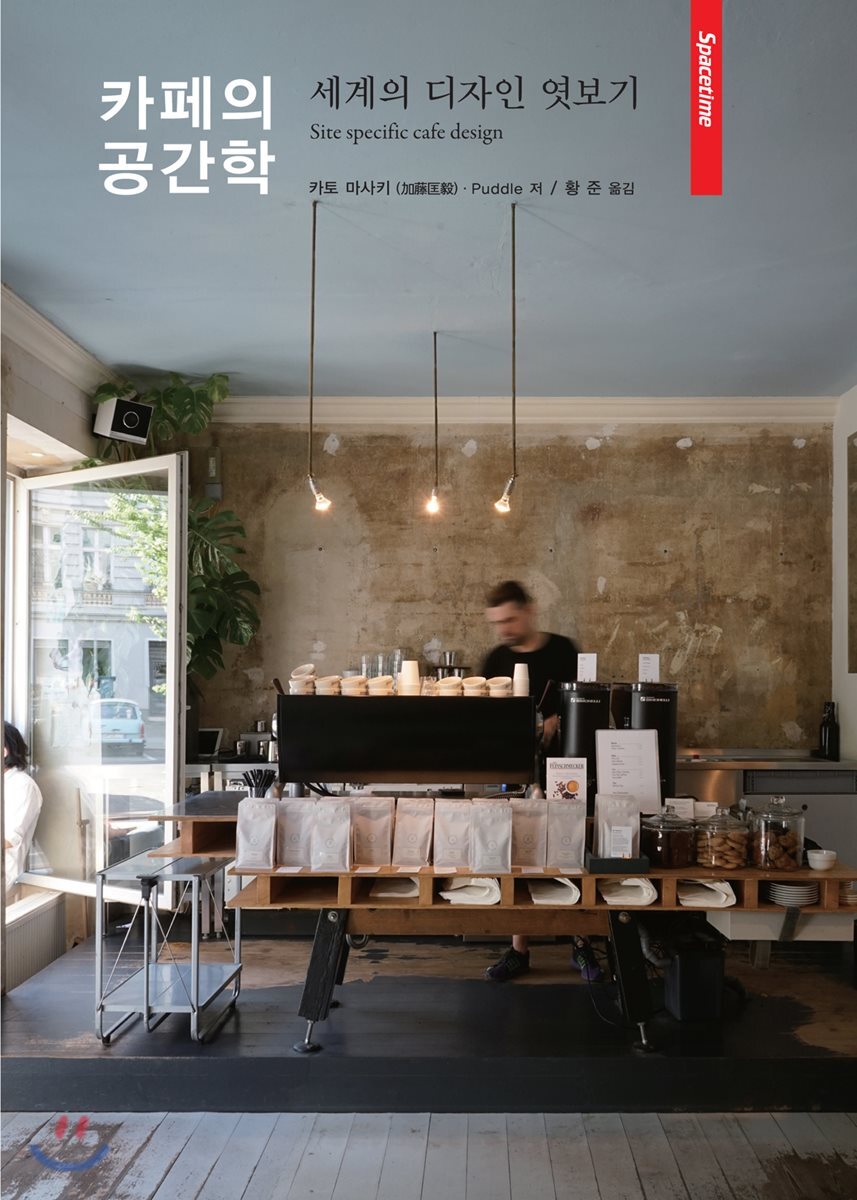
Spatial studies of cafes
 |
Description
Book Introduction
A collection of space design materials from cafes around the world!
Introducing various cases, not just new construction/renovation.
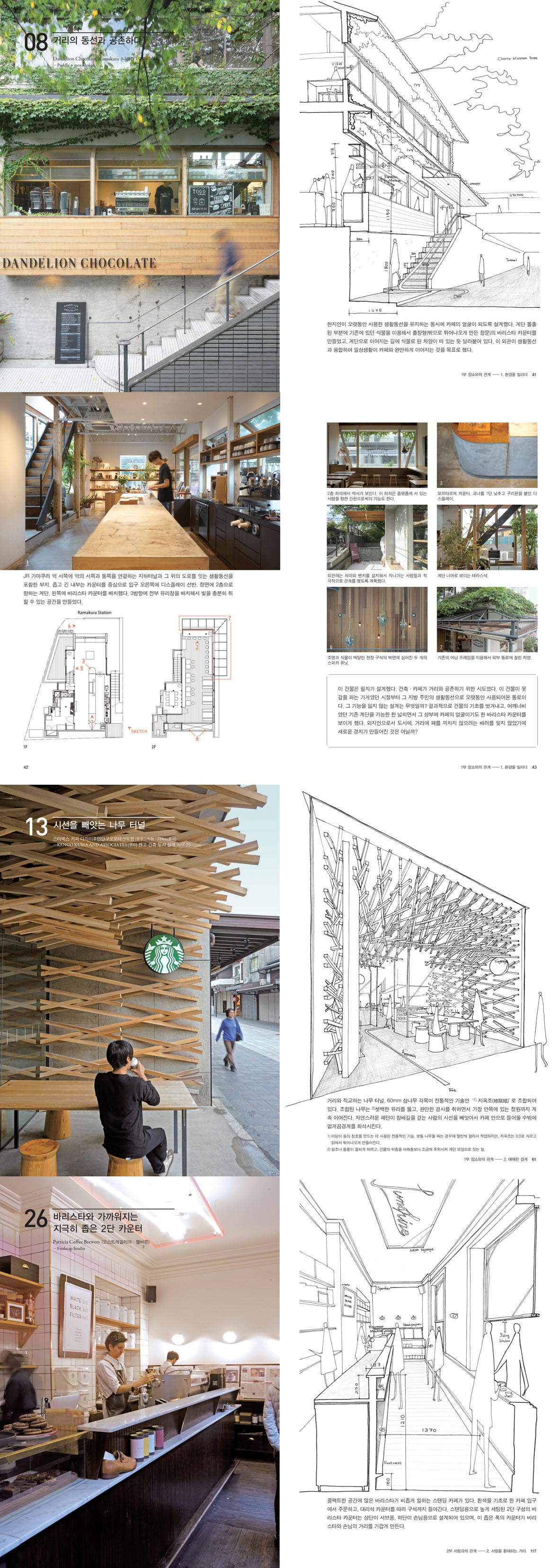
Using rich photographs, floor plans, and sketches that include details, this book interprets good design from the designer's perspective and allows you to consider the impact of design on the city in which it is located.
A must-read book for anyone who wants to open a cafe, not just designers.
Introducing various cases, not just new construction/renovation.
Using rich photographs, floor plans, and sketches that include details, this book interprets good design from the designer's perspective and allows you to consider the impact of design on the city in which it is located.
A must-read book for anyone who wants to open a cafe, not just designers.
index
Part 1 / Relationship with Place
1.
borrow the environment
01 Respect for Nature, Environmental Protection - Third Waver Kiosk / Toki
02 More than just tea - CAFE POMEGRANATE / Bali
03 Creating a River in the Office District - BROOKLYN ROASTING COMPANY KITAHAMA / Osaka City
04 Detachable Cafe - Skye Coffee co.
/ Barcelona
05 Courtyard with Steps - HONOR / Paris
06 Staying in an Urban Vacant Lot - the AIRSTREAM GARDEN / Shibuya Ward
07 Large awning emphasizing the axis - fluctuat nec mergitur / Paris
08 Coexisting with the Street's Circulation - Dandelion Chocolate, Kamakura / Kamakura City
09 The Meaning of Using Indigenous Materials and Technologies in the Financial District - The Magazine Shop / Dubai
2.
Ambiguous boundaries
10 Flat Relationships Create Openness - Seesaw Coffee_Bund Finance Center / Shanghai
Mobile counter pushed out to 11th Street - Dandelion Chocolate Ferry Building / San Francisco
12 Window design that creates a sense of unity between the interior and exterior - Slater St.
Bench / Melbourne
13. A Stunning Tree Tunnel - Starbucks Coffee Dazaifu Tenmangu Omotesando Branch / Dazaifu City
14 The Value of Space at the Entrance - SATURDAYS NEW YORK CITY TOKYO / Meguro Ward
15. Facade of "Approach" - Blue Bottle Coffee Sangenjaya Cafe / Setagaya Ward
A small open-air cafe on the 16th street - ONIBUS COFFEE Nakameguro / Meguro-ku
3.
Cut off ties with the outside world
17 Looking out onto the street from the semi-basement - GLITCH COFFEE BREWED @ 9h / Minato-ku
18-Hour Ship - Rokuyousha Coffee Shop / Kyoto City
19 Barista's Stage in a Windowless Space - KOFFEE MAMEYA / Shibuya Ward
Designing the Column1 Period
Part 2 / Relationships with people
1.
Man-made facades
20 A small urban terrace with a sliding window - Elephant Grounds Star Street / Hong Kong
21 Modern Parisian Open Terrace - KB CAFESHOP by KB COFFEE ROASTERS / Paris
Sauna-style bench leading to 22nd Street - HIGUMA Doughnuts X Coffee Wright Omotesando / Shibuya Ward
The Face of the Street Created by 23 Street Furniture - Santomi Center / Kyoto City
2.
A street that welcomes people
24 Four-Legged Counter - Bonanza Coffee Heroes / Berlin
25 A 'Road' in White Space - ACOFFEE / Melbourne
26 An extremely narrow two-tiered counter that brings you closer to the barista - Patricia Coffee Brewers / Melbourne
27 Mortar Stage - NO COFFEE / Fukuoka City
28 A long, narrow counter that can be entered from anywhere - COFFEE SUPREME TOKYO / Shibuya Ward
29 'A Very Small Counter' in 'Narrow Architecture' - ABOUT LIFE COFFEE BREWERS / Shibuya Ward
30 Reconstruction of everyday scenes modeled after tobacco shops - MAMEBACO / Kyoto City
31 A hospitality space that extends to the owner's small universe - CAFE Ryusenkei / Ashigarashimo-gun, Hakonemachi
3.
Multiplication of occupations
32 The Relationship Between Occupation and Residence - FINETIME COFFEE ROASTERS / Setagaya Ward
33 A Dental Clinic with a Cafe Face - Ikebuchi Dental Clinic POND Sakaimachi / Kishiwada City
Column 2: Who is this space for? ...148
Part 3 / Relationship with Time
1.
Saving old buildings
34 Six skip floors fill a large space - Higher Ground Melbourne / Melbourne
35 Staged Kitchen - Lune Croissanterie / Melbourne
36 Japanese-style cube-shaped kiosks - OMOTESANDO KOFFE / Shibuya Ward
37 All White - Walden Woods Kyoto / Kyoto City
2.
Process Design
38 Finishes and materials that make gestures look beautiful - artless craft tea & coffee / artless appointment gallery / Meguro-ku
39 Experience Design - Dandelion Chocolate, Factory & Cafe Kuramae / Taito Ward
column3 Visualizing time
Review - Memories of Space
Posted cafe information
1.
borrow the environment
01 Respect for Nature, Environmental Protection - Third Waver Kiosk / Toki
02 More than just tea - CAFE POMEGRANATE / Bali
03 Creating a River in the Office District - BROOKLYN ROASTING COMPANY KITAHAMA / Osaka City
04 Detachable Cafe - Skye Coffee co.
/ Barcelona
05 Courtyard with Steps - HONOR / Paris
06 Staying in an Urban Vacant Lot - the AIRSTREAM GARDEN / Shibuya Ward
07 Large awning emphasizing the axis - fluctuat nec mergitur / Paris
08 Coexisting with the Street's Circulation - Dandelion Chocolate, Kamakura / Kamakura City
09 The Meaning of Using Indigenous Materials and Technologies in the Financial District - The Magazine Shop / Dubai
2.
Ambiguous boundaries
10 Flat Relationships Create Openness - Seesaw Coffee_Bund Finance Center / Shanghai
Mobile counter pushed out to 11th Street - Dandelion Chocolate Ferry Building / San Francisco
12 Window design that creates a sense of unity between the interior and exterior - Slater St.
Bench / Melbourne
13. A Stunning Tree Tunnel - Starbucks Coffee Dazaifu Tenmangu Omotesando Branch / Dazaifu City
14 The Value of Space at the Entrance - SATURDAYS NEW YORK CITY TOKYO / Meguro Ward
15. Facade of "Approach" - Blue Bottle Coffee Sangenjaya Cafe / Setagaya Ward
A small open-air cafe on the 16th street - ONIBUS COFFEE Nakameguro / Meguro-ku
3.
Cut off ties with the outside world
17 Looking out onto the street from the semi-basement - GLITCH COFFEE BREWED @ 9h / Minato-ku
18-Hour Ship - Rokuyousha Coffee Shop / Kyoto City
19 Barista's Stage in a Windowless Space - KOFFEE MAMEYA / Shibuya Ward
Designing the Column1 Period
Part 2 / Relationships with people
1.
Man-made facades
20 A small urban terrace with a sliding window - Elephant Grounds Star Street / Hong Kong
21 Modern Parisian Open Terrace - KB CAFESHOP by KB COFFEE ROASTERS / Paris
Sauna-style bench leading to 22nd Street - HIGUMA Doughnuts X Coffee Wright Omotesando / Shibuya Ward
The Face of the Street Created by 23 Street Furniture - Santomi Center / Kyoto City
2.
A street that welcomes people
24 Four-Legged Counter - Bonanza Coffee Heroes / Berlin
25 A 'Road' in White Space - ACOFFEE / Melbourne
26 An extremely narrow two-tiered counter that brings you closer to the barista - Patricia Coffee Brewers / Melbourne
27 Mortar Stage - NO COFFEE / Fukuoka City
28 A long, narrow counter that can be entered from anywhere - COFFEE SUPREME TOKYO / Shibuya Ward
29 'A Very Small Counter' in 'Narrow Architecture' - ABOUT LIFE COFFEE BREWERS / Shibuya Ward
30 Reconstruction of everyday scenes modeled after tobacco shops - MAMEBACO / Kyoto City
31 A hospitality space that extends to the owner's small universe - CAFE Ryusenkei / Ashigarashimo-gun, Hakonemachi
3.
Multiplication of occupations
32 The Relationship Between Occupation and Residence - FINETIME COFFEE ROASTERS / Setagaya Ward
33 A Dental Clinic with a Cafe Face - Ikebuchi Dental Clinic POND Sakaimachi / Kishiwada City
Column 2: Who is this space for? ...148
Part 3 / Relationship with Time
1.
Saving old buildings
34 Six skip floors fill a large space - Higher Ground Melbourne / Melbourne
35 Staged Kitchen - Lune Croissanterie / Melbourne
36 Japanese-style cube-shaped kiosks - OMOTESANDO KOFFE / Shibuya Ward
37 All White - Walden Woods Kyoto / Kyoto City
2.
Process Design
38 Finishes and materials that make gestures look beautiful - artless craft tea & coffee / artless appointment gallery / Meguro-ku
39 Experience Design - Dandelion Chocolate, Factory & Cafe Kuramae / Taito Ward
column3 Visualizing time
Review - Memories of Space
Posted cafe information
Detailed image
Publisher's Review
A book introducing approximately 40 cafes selected from the perspective of globally active space designer Masaki Kato.
In the sentences and sketches analyzing the cafe's original stance, the surrounding environment and the distance from people, we can see the seriousness of his design philosophy and his standard of judgment that focuses on the people in the cafe.
This is a book that introduces beautiful cafes around the world.
What this book talks about is 'consideration' for people and distance, which can be said to be the essence of spatial design.
For readers who directly deal with architecture and interior design, this is the perfect visual book to examine modern 'comfort.'
This book is the result of the author's revisiting and organizing 39 cafes in Korea and abroad that left an impression on him while working or personally visiting them, using a camera, scale, paper, and pen.
(Both places do not currently exist.
(I was involved as a designer in three places).
What exactly makes a guest feel comfortable and relaxed, a memorable experience when they casually visit a café? I've added my own interpretation to the insights gleaned from interviews with owners and designers, deciphering the intentions behind each café's "individuality."
I think it is easy to read even for non-designers or architectural experts, as it focuses on 'sketching' and 'photography', which have been my hobbies since before I started designing.
I'll introduce the three things I always keep in mind when designing, categorized below.
Part 1: Relationship with Place
Part 2: Relationships with People
Part 3: Relationship with Time
In Part 1, we thought about how the design of a café is influenced by and has an influence on the location itself and its surroundings. In Part 2, we thought about the people who use the café and the inherent nature of the design. In Part 3, we thought about how the various passages of time in a café are revealed.
(From the author's preface)
In the sentences and sketches analyzing the cafe's original stance, the surrounding environment and the distance from people, we can see the seriousness of his design philosophy and his standard of judgment that focuses on the people in the cafe.
This is a book that introduces beautiful cafes around the world.
What this book talks about is 'consideration' for people and distance, which can be said to be the essence of spatial design.
For readers who directly deal with architecture and interior design, this is the perfect visual book to examine modern 'comfort.'
This book is the result of the author's revisiting and organizing 39 cafes in Korea and abroad that left an impression on him while working or personally visiting them, using a camera, scale, paper, and pen.
(Both places do not currently exist.
(I was involved as a designer in three places).
What exactly makes a guest feel comfortable and relaxed, a memorable experience when they casually visit a café? I've added my own interpretation to the insights gleaned from interviews with owners and designers, deciphering the intentions behind each café's "individuality."
I think it is easy to read even for non-designers or architectural experts, as it focuses on 'sketching' and 'photography', which have been my hobbies since before I started designing.
I'll introduce the three things I always keep in mind when designing, categorized below.
Part 1: Relationship with Place
Part 2: Relationships with People
Part 3: Relationship with Time
In Part 1, we thought about how the design of a café is influenced by and has an influence on the location itself and its surroundings. In Part 2, we thought about the people who use the café and the inherent nature of the design. In Part 3, we thought about how the various passages of time in a café are revealed.
(From the author's preface)
GOODS SPECIFICS
- Date of issue: January 6, 2020
- Format: Paperback book binding method guide
- Page count, weight, size: 184 pages | 150*210*20mm
- ISBN13: 9788955924268
- ISBN10: 8955924267
You may also like
카테고리
korean


korean

![ELLE 엘르 스페셜 에디션 A형 : 12월 [2025]](http://librairie.coreenne.fr/cdn/shop/files/b8e27a3de6c9538896439686c6b0e8fb.jpg?v=1766436872&width=3840)


