

Life Sciences: Challenging God
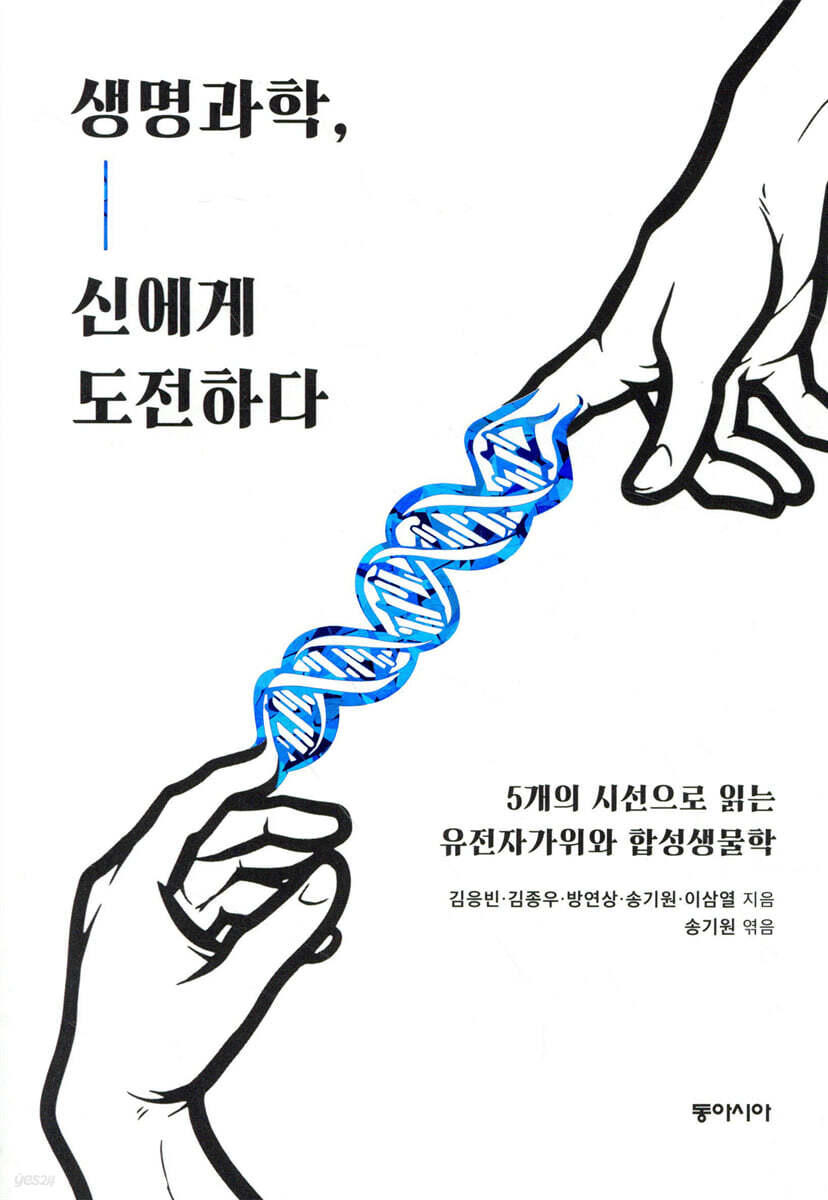 |
Description
Book Introduction
How will gene editing and synthetic biology change our lives?
This book is the first in Korea to deal with the major issues in the scientific community, CRISPR gene scissors and synthetic biology, in depth, by domestic researchers.
The five authors agreed that issues in life sciences that will bring about significant changes to our society should not be discussed solely within the scientific community, but should be discussed socially.
This is why we have been holding ongoing seminars on the topic of gene scissors and synthetic biology for the past two years.
This book, which is also the result, presents and questions ethical, philosophical, religious, and policy issues that we must consider while conveying accurate information about scientific facts.
It covers a wide range of topics, from the current state of life sciences, which are racing forward at breakneck speeds, such as restoration of extinct animals, treatment of incurable diseases, and designer babies, to discussions of bioethics and biosecurity, such as bioterrorism and eugenics issues.
This book is the first in Korea to deal with the major issues in the scientific community, CRISPR gene scissors and synthetic biology, in depth, by domestic researchers.
The five authors agreed that issues in life sciences that will bring about significant changes to our society should not be discussed solely within the scientific community, but should be discussed socially.
This is why we have been holding ongoing seminars on the topic of gene scissors and synthetic biology for the past two years.
This book, which is also the result, presents and questions ethical, philosophical, religious, and policy issues that we must consider while conveying accurate information about scientific facts.
It covers a wide range of topics, from the current state of life sciences, which are racing forward at breakneck speeds, such as restoration of extinct animals, treatment of incurable diseases, and designer babies, to discussions of bioethics and biosecurity, such as bioterrorism and eugenics issues.
- You can preview some of the book's contents.
Preview
index
〔Prologue〕 "A Showdown with the Creator?" 5
A New Era of Synthetic Biology and Gene-Scissors Technology (Song Ki-won)
Chapter 1.
The Scientist Who Became a God
Synthetic biology ushering in an era of life creation.
〔Science〕 The Age of Life Design
: Talking about synthetic biology, the frontier of life sciences (Song Ki-won)
〔Learn more〕 The history of lifeform transformation by humans
〔Theology〕 Opposition to viewing life as a machine
Synthetic Biology Through the Eyes of Theology (Bang Yeon-sang)
Chapter 2.
CRISPR gene scissors, the technology of God
: Opening the era of life editing
[Science] CRISPR gene-editing technology
: Proofreading and editing biographical information (Song Ki-won)
〔Ethics〕Why are we so drawn to the eugenic temptations of gene editing?
Is it inevitable that it will be vulnerable?
: The Dialectics of Desire and Ethics Surrounding Gene Editing (Kim Jong-woo)
Chapter 3.
The Race of Science vs.
The institutional dilemma
[Science] Will the Mammoth Resurrection Become a Reality?
: The Current State of Synthetic Biology (Kim Eung-bin)
〔Policy〕Industrial Promotion or Risk Prevention?
Policy Responses to Synthetic Biology (Lee Sam-yeol)
Chapter 4.
Asking for life again
〔Science〕Questions about Life
: Why We Question Life Now (Kim Eung-bin)
〔Philosophy〕 Synthetic Biology: Living or Water?
: Questions, Feelings, Perceptions, and Knowledge about Synthetic Biology (Kim Jong-woo)
main
References
Search
About the Author
A New Era of Synthetic Biology and Gene-Scissors Technology (Song Ki-won)
Chapter 1.
The Scientist Who Became a God
Synthetic biology ushering in an era of life creation.
〔Science〕 The Age of Life Design
: Talking about synthetic biology, the frontier of life sciences (Song Ki-won)
〔Learn more〕 The history of lifeform transformation by humans
〔Theology〕 Opposition to viewing life as a machine
Synthetic Biology Through the Eyes of Theology (Bang Yeon-sang)
Chapter 2.
CRISPR gene scissors, the technology of God
: Opening the era of life editing
[Science] CRISPR gene-editing technology
: Proofreading and editing biographical information (Song Ki-won)
〔Ethics〕Why are we so drawn to the eugenic temptations of gene editing?
Is it inevitable that it will be vulnerable?
: The Dialectics of Desire and Ethics Surrounding Gene Editing (Kim Jong-woo)
Chapter 3.
The Race of Science vs.
The institutional dilemma
[Science] Will the Mammoth Resurrection Become a Reality?
: The Current State of Synthetic Biology (Kim Eung-bin)
〔Policy〕Industrial Promotion or Risk Prevention?
Policy Responses to Synthetic Biology (Lee Sam-yeol)
Chapter 4.
Asking for life again
〔Science〕Questions about Life
: Why We Question Life Now (Kim Eung-bin)
〔Philosophy〕 Synthetic Biology: Living or Water?
: Questions, Feelings, Perceptions, and Knowledge about Synthetic Biology (Kim Jong-woo)
main
References
Search
About the Author
Into the book
What image does the term "synthetic biology" conjure up in you? Perhaps you picture a bizarre scientist, like Dr. Frankenstein, secretly creating life forms in a gloomy laboratory.
Perhaps it's because the idea of 'synthesizing' a living thing feels so unnatural.
However, since 2010, synthetic biology has become one of the most important trends in life sciences and biotechnology.
Synthetic biology is a general term for the creation of a complete living organism, cell organelle, or biological system composed of proteins by directly designing and synthesizing it from the genetic level, the basic building blocks of living organisms.
Synthetic biology is once again attracting public attention, with the recent announcement by the American scientific community of a plan to synthesize a human genome.
--- p.18
In April 2015, a research team led by Professor Jinju Huang of Sun Yat-sen University in China announced the results of a study in which they had edited the genes of human embryos using CRISPR gene-editing technology.
In this study, experiments were conducted using CRISPR to edit the HBB gene involved in beta-thalassemia using 'discarded' human embryos provided by an infertility clinic.
Professor Hwang Jin-joo's research using human embryos sparked much controversy even before it was published, dividing scientists into two camps.
Seventeen scientists, including Jennifer Doudna, one of the pioneers of CRISPR-Cas9 technology, have strongly urged an immediate halt to research attempting to genetically modify human embryos.
On the other hand, the opposing camp, including George Church, took the position that meaningful scientific results could be achieved through human embryo gene editing and that there would be no problem if established guidelines were followed.
--- pp.113-114
In particular, the problems of liberal eugenics can emerge anew in the desire for human improvement.
If parents insist on genetic enhancement as long as it does not restrict their child's autonomy, it will be difficult for a third party to interfere with it.
As Nicholas Agger argues, one could argue that “the old authoritarian eugenics sought to produce citizens within a framework designed by the central power, while the characteristic mark of the new eugenics is state neutrality.”
The argument that parents should design only for the aptitudes that can improve a child's abilities without changing the child's life plan sounds very appealing.
So, if only the burdens and benefits of the genetics movement could be fairly distributed, it could be argued that eugenic measures might actually be morally required. … … However, Sandel predicts that genetic enhancement will likely ultimately become a duty and an obligation within a competitive market system.
This was also true for Habermas, who opposed all embryo selection or genetic manipulation for non-medical enhancement.
Such actions, in fact, violate the liberal principles of autonomy and equality.
--- pp.152-153
Synthetic biology is expected to bring various possibilities and benefits to humanity, but it also has risks.
The U.S. President's Advisory Council on Bioethics has prioritized biosecurity over the risks of synthetic biology.
Biosecurity is defined as efforts to prevent the misuse of biological agents and living organisms or their use for nefarious purposes that would harm others, emphasizing the duality of synthetic biology.
As previously discussed, synthetic biology technology can be used to produce viral vaccines at low cost and with high efficiency, but if this technology falls into the hands of terrorists, it could be used to produce new viruses for bioterrorism.
He also pointed out that the public's interest tends to be too focused on the rosy potential applications of synthetic biology, and emphasized the need for public education about the potential risks as well as the benefits of synthetic biology.
In addition to biosecurity, another concern with synthetic biology arises when synthetic life forms escape from the laboratory.
In the case of chemicals, even if they leak into the natural world, they can be controlled to a certain extent, and the damage is gradually restored over time through natural decomposition, etc.
However, it is completely impossible to predict what consequences life forms created through synthetic biology will have if released into the natural world.
This is because if released into the natural world, it can proliferate abnormally and harm the existing species diversity, and it can also mate with existing life forms to create new, unexpected life forms.
--- pp.190-191
Many countries, including the United States, have recognized the importance of synthetic biology and have already begun policy discussions related to it.
Our country, which is actively conducting research, also needs to systematically prepare policy discussions related to this.
First, we need to establish a legal framework for effective monitoring and management of synthetic biology.
Currently, our country is establishing a legal basis for regulating matters related to synthetic biology through the [Act on the Transboundary Movement of Genetically Modified Organisms] and the [Biochemical Weapons Act].
However, according to Kim Hoon-ki, these laws are targeting ‘existing genetically modified organisms (hereinafter referred to as LMOs)’ and are insufficient in controlling them, making it difficult to control new LMOs created through synthetic biology.
Advances in science and technology require changes to the relevant legal system, so it is time to consider new legal and regulatory frameworks to manage and control synthetic biology research and its results.
Perhaps it's because the idea of 'synthesizing' a living thing feels so unnatural.
However, since 2010, synthetic biology has become one of the most important trends in life sciences and biotechnology.
Synthetic biology is a general term for the creation of a complete living organism, cell organelle, or biological system composed of proteins by directly designing and synthesizing it from the genetic level, the basic building blocks of living organisms.
Synthetic biology is once again attracting public attention, with the recent announcement by the American scientific community of a plan to synthesize a human genome.
--- p.18
In April 2015, a research team led by Professor Jinju Huang of Sun Yat-sen University in China announced the results of a study in which they had edited the genes of human embryos using CRISPR gene-editing technology.
In this study, experiments were conducted using CRISPR to edit the HBB gene involved in beta-thalassemia using 'discarded' human embryos provided by an infertility clinic.
Professor Hwang Jin-joo's research using human embryos sparked much controversy even before it was published, dividing scientists into two camps.
Seventeen scientists, including Jennifer Doudna, one of the pioneers of CRISPR-Cas9 technology, have strongly urged an immediate halt to research attempting to genetically modify human embryos.
On the other hand, the opposing camp, including George Church, took the position that meaningful scientific results could be achieved through human embryo gene editing and that there would be no problem if established guidelines were followed.
--- pp.113-114
In particular, the problems of liberal eugenics can emerge anew in the desire for human improvement.
If parents insist on genetic enhancement as long as it does not restrict their child's autonomy, it will be difficult for a third party to interfere with it.
As Nicholas Agger argues, one could argue that “the old authoritarian eugenics sought to produce citizens within a framework designed by the central power, while the characteristic mark of the new eugenics is state neutrality.”
The argument that parents should design only for the aptitudes that can improve a child's abilities without changing the child's life plan sounds very appealing.
So, if only the burdens and benefits of the genetics movement could be fairly distributed, it could be argued that eugenic measures might actually be morally required. … … However, Sandel predicts that genetic enhancement will likely ultimately become a duty and an obligation within a competitive market system.
This was also true for Habermas, who opposed all embryo selection or genetic manipulation for non-medical enhancement.
Such actions, in fact, violate the liberal principles of autonomy and equality.
--- pp.152-153
Synthetic biology is expected to bring various possibilities and benefits to humanity, but it also has risks.
The U.S. President's Advisory Council on Bioethics has prioritized biosecurity over the risks of synthetic biology.
Biosecurity is defined as efforts to prevent the misuse of biological agents and living organisms or their use for nefarious purposes that would harm others, emphasizing the duality of synthetic biology.
As previously discussed, synthetic biology technology can be used to produce viral vaccines at low cost and with high efficiency, but if this technology falls into the hands of terrorists, it could be used to produce new viruses for bioterrorism.
He also pointed out that the public's interest tends to be too focused on the rosy potential applications of synthetic biology, and emphasized the need for public education about the potential risks as well as the benefits of synthetic biology.
In addition to biosecurity, another concern with synthetic biology arises when synthetic life forms escape from the laboratory.
In the case of chemicals, even if they leak into the natural world, they can be controlled to a certain extent, and the damage is gradually restored over time through natural decomposition, etc.
However, it is completely impossible to predict what consequences life forms created through synthetic biology will have if released into the natural world.
This is because if released into the natural world, it can proliferate abnormally and harm the existing species diversity, and it can also mate with existing life forms to create new, unexpected life forms.
--- pp.190-191
Many countries, including the United States, have recognized the importance of synthetic biology and have already begun policy discussions related to it.
Our country, which is actively conducting research, also needs to systematically prepare policy discussions related to this.
First, we need to establish a legal framework for effective monitoring and management of synthetic biology.
Currently, our country is establishing a legal basis for regulating matters related to synthetic biology through the [Act on the Transboundary Movement of Genetically Modified Organisms] and the [Biochemical Weapons Act].
However, according to Kim Hoon-ki, these laws are targeting ‘existing genetically modified organisms (hereinafter referred to as LMOs)’ and are insufficient in controlling them, making it difficult to control new LMOs created through synthetic biology.
Advances in science and technology require changes to the relevant legal system, so it is time to consider new legal and regulatory frameworks to manage and control synthetic biology research and its results.
--- p.
220
220
Publisher's Review
99% of people don't even notice the revolution in life sciences that is happening at a rapid pace!
Genetic scissors and synthetic biology: questions about ethics, philosophy, religion, and law in the quietly advancing cutting-edge life sciences!
“This book provides an opportunity for experts and the general public to reflect on and contemplate the future society that innovative life science technologies will create.” (Kim Jin-soo, Director of the IBS Genome Editing Research Center)
"How far can humans approach the boundaries of creation and transformation of life, once considered the domain of God? This book is a masterful work that aims to provide readers with an accessible and comprehensive assessment of the future of life and human society." (Sociology Professor Kim Wang-bae)
Organ transplant pigs, a bright future for humanity, including cures for cancer, AIDS, and blindness.
From bioterrorism, designer babies, and human genome synthesis to bioethical controversies and risks.
Discussing the future of science fiction that has become reality!
A few years ago, Angelina Jolie made headlines when she was diagnosed with a gene that could cause breast cancer and actually had a double mastectomy.
But now, we can simply use genetic scissors to cut out the genes that cause cancer.
As CRISPR gene scissors began to be used in life sciences, it became possible to precisely cut out genes that cause problems.
Thanks to this, treatment for incurable diseases such as cancer, AIDS, blindness, and Lou Gehrig's disease has become possible or the results of clinical trials are about to be announced.
Additionally, it will soon be possible to remove disease genes from the genes of unborn babies.
In China, experiments have already been successful in removing disease genes from fertilized eggs, and it appears that the "designer babies" seen in the movie "Gattaca" and the novel "Brave New World" will soon become possible.
Of course, Chinese researchers have sparked a fierce bioethics debate, and the controversy is likely to intensify in the future.
In the United States, a plan to synthesize a human genome by synthesizing a human from the cellular level has already been announced, and NASA is conducting research to create new life forms that can survive in space, which can be used for terraforming (the process of modifying the environment of another planet to make it habitable for humans).
Genetic scissors and synthetic biology have brought a future that we only imagined in science fiction closer to reality.
CRISPR gene-editing technology was selected as the most groundbreaking achievement of the year by the two major scientific journals, [Nature] and [Science], in 2015, and emerged as the biggest issue in the scientific community, receiving attention as a strong candidate for the Nobel Prize in 2016.
Synthetic biology, which involves editing the genes of living organisms and creating new life forms, has made rapid progress since the discovery of CRISPR gene scissors.
This is because, unlike existing gene scissors, it can edit genes quickly and very accurately at a low cost.
Gene editing and synthetic biology are being selected as representative technologies that will lead the Fourth Industrial Revolution.
This book differs from existing books in that it is the first in Korea to seriously address CRISPR gene scissors and synthetic biology, which are major issues in the scientific community, by domestic researchers.
Moreover, while existing textbooks have been faithful to conveying general knowledge about genes, this book is unique in that researchers from various fields of study discuss and address issues of ethics, philosophy, religion, and policy related to gene editing and synthetic biology.
The authors first met 10 years ago through Yonsei University's "Science, Technology, and Society Forum." Since then, they have maintained an ongoing interest in the relationship between science and society, even establishing a "Science and Technology Policy" major at Underwood International College.
The five authors, who focused particularly on gene editing and synthetic biology, agreed that issues in life sciences that will bring about significant changes to our society should not be discussed solely within the scientific community, but should be discussed socially.
This is why we have been holding ongoing seminars on the topic of gene scissors and synthetic biology for the past two years.
This book, which is also the result of this, presents and questions ethical, philosophical, religious, and institutional issues that we must consider while conveying accurate information about scientific facts.
A strong Nobel Prize candidate! [Nature] and [Science] selected this year's most groundbreaking achievement!
Genetic scissors open an era of human creation beyond human cloning!
How will gene editing and synthetic biology change our lives?
A new world of treatment for incurable diseases such as cancer, AIDS, and blindness has opened!
Recently, there was a media report that a domestic research team had succeeded in curing blindness.
The story was about successfully correcting the gene that causes age-related macular degeneration, which accounts for 5% of all blindness.
In the United States, clinical trials are underway to insert genes that detect cancer cells using gene scissors into T immune cells, allowing them to directly attack cancer cells, and the results are expected to be announced soon.
Successful cases of AIDS treatment using gene editing technology have also been reported. The HIV virus is said to enter immune cells through a receptor called CCR5.
An actual AIDS patient was treated by transplanting hematopoietic stem cells with CCR5 removed through gene scissors, and research is currently ongoing.
Research is also underway to use gene-editing technology to create pigs whose organs can be transplanted into humans without the risk of viral infection or rejection.
It is expected that gene scissors will be used to treat various incurable diseases such as cancer, AIDS, Lou Gehrig's disease, and dementia, and will bring about groundbreaking results.
This book introduces specific research contents and cases.
From designer babies to synthetic human genomes.
Scientists challenge the realm of the gods!
―Will we be able to choose our children's genes like we do when shopping at a large supermarket or department store?
With the introduction of technology that allows us to precisely cut out genes and replace them with others, it may soon be possible to choose the genes of our unborn babies.
In China, experiments have already been successful in removing genes that cause certain diseases from human embryos.
‘Custom-made babies’ or ‘designer babies’ are already theoretically possible.
So, will we now be able to select our unborn babies' genes, just like we choose items at a supermarket or department store? This issue is expected to spark a heated debate surrounding bioethics, including whether it's acceptable to use human embryos as experimental subjects and whether it's ethical to select genes for purposes other than therapeutics.
―Will we ever encounter a human created in a laboratory?
“What we cannot make, we do not understand.” This quote by Richard Feynman is a key proposition of synthetic biology.
Now, scientists are on the verge of going beyond 'human cloning' to 'human creation.'
In the United States, a plan to 'synthesize the human genome', which involves designing and creating a human being, has already been announced.
In 2016, a closed-door meeting on human genome synthesis research was held at Harvard University in the United States, sparking controversy.
This book argues that social discussion is necessary regarding the changes made possible by the rapid advancement of science and technology, and presents each position.
Are we safe from North Korea's bioterrorism threat?
Bill Gates, well known as the founder of Microsoft, has warned that bioterrorism could be far more dangerous to humanity than nuclear weapons and climate change.
We have entered an era where we can easily assemble and create living things like fitting together Lego blocks using genetic information already publicly available on the Internet.
In the UK, the US and Europe, DIY biology, which anyone can learn and experiment with, is widely spread as part of the popularization of science.
Just as we can learn yoga or Samulnori at the local community center, anyone can become a scientist at the Community Lab if they want.
Synthetic biology, which creates new life forms by synthesizing cells, is the most popular topic in the 'Community Lab'.
This environment, where anyone can easily synthesize cells, coupled with the digitalization of genetic information, is meaningful in terms of popularizing science, but it also raises concerns in that it provides opportunities for bioterrorists.
This book argues that South Korea is also not safe from the threat of bioterrorism from North Korea.
It also talks about what policies are needed for regulation.
Unpredictable Ecosystem Changes: Are We Ready?
A research team in the UK successfully modified three genes involved in pregnancy in malaria mosquitoes, resulting in 75 percent of the mosquitoes having sterility genes after four generations.
However, it is unclear what impact these genetically edited malaria mosquitoes would have when released into the ecosystem, so the researchers say they are taking special care to prevent them from leaking out of the laboratory.
As synthetic biology advances in the future, not only will genetically modified organisms emerge, but also synthetic life forms that did not previously exist in the ecosystem will emerge.
The problem is that it is difficult to predict how these synthetic life forms will fit into the ecosystem.
Additionally, the authors of this book say that the outcomes of synthetic biology require much consideration because they involve issues with global impact, such as global warming.
Science doesn't just happen in the lab; it's our future!
Science, ethics, philosophy, theology, and even policy
Contains concerns and questions that have been discussed for two years!
Science and society are interconnected.
Scientific advancements have a huge impact on society, and at the same time, public funds such as citizens' taxes are invested in scientific advancements.
Although the pace of advancement in life sciences has been remarkable in recent years, discussions beyond the scientific community have not been properly conducted.
This also means that the wall of expertise is high, and that more interest in science is needed.
This book faithfully conveys the scientific facts about gene editing and synthetic biology, while also providing a variety of content that allows for reflection from the perspectives of ethics, philosophy, religion, and policy.
It can be said to be a book of questions to open a forum for discussion.
Chapter 1 covers synthetic biology.
[Science] provides a detailed explanation of the content of the newly emerging field of synthetic biology, as well as the trend of popularizing synthetic biology, such as the synthetic biology competition 'iGEM' and the local community laboratory 'Community Lab'.
The author of this article, Song Ki-won, points out that synthetic biology is currently perceived in our society as a new technology for generating economic benefits, and there is no policy consideration or open discussion regarding its ethical implications, stability, security issues, or regulations.
In [Theology], we discuss how synthetic biology will strengthen our view of life and humanity, borrowing from the discussions of various scholars, including Francis Bacon, Descartes, Erwin Schrödinger, and Jacques Monod.
The author of this article, Bang Yeon-sang, says that the term “synthetic biology” already contains a specific metaphysical position and ethical judgment.
I believe that synthetic biology is the field where the dualistic understanding of matter and mind and the reductionist understanding of life are most firmly intertwined.
I also worry that this way of thinking will lead to the human body being treated like a machine.
Chapter 2 covers CRISPR gene scissors and gene editing.
[Science] explains in detail what CRISPR gene scissors are, why they are important, and what their achievements are.
It also addresses the controversies surrounding human genome editing research.
The author of this article, Song Ki-won, says that it is difficult to distinguish where gene editing ends up as disease prevention and treatment and where it ends up as simply enhancing the abilities of living organisms.
Gene editing has different stances depending on whether the term is called correction or editing.
While CRISPR researchers argue that the term "correction" is appropriate because "correction" means correcting something that is wrong, Song Ki-won argues that "correction" also ultimately involves value judgments that determine right from wrong.
This is a controversial point.
In [Ethics], we examine how we culturally perceive 'genes' through superheroes like the Hulk, X-Men, and Spider-Man, titles of popular music, and popular expressions like 'genes are different' and 'genes are all over the place.'
This speaks to our society's desire for 'superior genes'.
Kim Jong-woo, the author of this article, says that the word 'gene' is mainly used in a eugenic sense.
Furthermore, borrowing from Michael Sandel's argument, he argues that genetic enhancement can become a duty and a necessity within a market economy, and that it runs counter to true human freedom.
The differences of opinion surrounding gene editing are expected to intensify in the future, and this is an area that requires careful judgment from readers.
Chapter 3 covers the current status of synthetic biology research and domestic and international policies.
[Science] introduces the current state of synthetic biology research, which has rapidly increased recently, from projects to restore extinct animals and research to revive mammoths.
The author of this article, Kim Eung-bin, speaks of the duality of synthetic biology and emphasizes the risks of synthetic biology from the perspective of ‘biosecurity.’
He emphasizes the need for public education about the potential risks as well as the benefits of synthetic biology.
[Policy] examines the respective positions on risk prevention and bio-industry promotion, and discusses the characteristics of synthetic biology policy.
Additionally, we assess the risks of synthetic biology and introduce domestic and international policies.
The author of this article, Samyeol Lee, argues that because advances in science and technology require changes in the relevant legal system, new laws and regulations are needed to manage and control synthetic biology research and its results.
Chapter 4 questions life again, discussing it from the perspectives of science and philosophy.
[Science] traces the age-old question in biology: "What is life?" and tells the story of the questions scientists have asked about life and the trials and errors they have experienced.
[Philosophy] helps us think about how we should view synthetic life forms through phenomenology and other methods.
Genetic scissors and synthetic biology: questions about ethics, philosophy, religion, and law in the quietly advancing cutting-edge life sciences!
“This book provides an opportunity for experts and the general public to reflect on and contemplate the future society that innovative life science technologies will create.” (Kim Jin-soo, Director of the IBS Genome Editing Research Center)
"How far can humans approach the boundaries of creation and transformation of life, once considered the domain of God? This book is a masterful work that aims to provide readers with an accessible and comprehensive assessment of the future of life and human society." (Sociology Professor Kim Wang-bae)
Organ transplant pigs, a bright future for humanity, including cures for cancer, AIDS, and blindness.
From bioterrorism, designer babies, and human genome synthesis to bioethical controversies and risks.
Discussing the future of science fiction that has become reality!
A few years ago, Angelina Jolie made headlines when she was diagnosed with a gene that could cause breast cancer and actually had a double mastectomy.
But now, we can simply use genetic scissors to cut out the genes that cause cancer.
As CRISPR gene scissors began to be used in life sciences, it became possible to precisely cut out genes that cause problems.
Thanks to this, treatment for incurable diseases such as cancer, AIDS, blindness, and Lou Gehrig's disease has become possible or the results of clinical trials are about to be announced.
Additionally, it will soon be possible to remove disease genes from the genes of unborn babies.
In China, experiments have already been successful in removing disease genes from fertilized eggs, and it appears that the "designer babies" seen in the movie "Gattaca" and the novel "Brave New World" will soon become possible.
Of course, Chinese researchers have sparked a fierce bioethics debate, and the controversy is likely to intensify in the future.
In the United States, a plan to synthesize a human genome by synthesizing a human from the cellular level has already been announced, and NASA is conducting research to create new life forms that can survive in space, which can be used for terraforming (the process of modifying the environment of another planet to make it habitable for humans).
Genetic scissors and synthetic biology have brought a future that we only imagined in science fiction closer to reality.
CRISPR gene-editing technology was selected as the most groundbreaking achievement of the year by the two major scientific journals, [Nature] and [Science], in 2015, and emerged as the biggest issue in the scientific community, receiving attention as a strong candidate for the Nobel Prize in 2016.
Synthetic biology, which involves editing the genes of living organisms and creating new life forms, has made rapid progress since the discovery of CRISPR gene scissors.
This is because, unlike existing gene scissors, it can edit genes quickly and very accurately at a low cost.
Gene editing and synthetic biology are being selected as representative technologies that will lead the Fourth Industrial Revolution.
This book differs from existing books in that it is the first in Korea to seriously address CRISPR gene scissors and synthetic biology, which are major issues in the scientific community, by domestic researchers.
Moreover, while existing textbooks have been faithful to conveying general knowledge about genes, this book is unique in that researchers from various fields of study discuss and address issues of ethics, philosophy, religion, and policy related to gene editing and synthetic biology.
The authors first met 10 years ago through Yonsei University's "Science, Technology, and Society Forum." Since then, they have maintained an ongoing interest in the relationship between science and society, even establishing a "Science and Technology Policy" major at Underwood International College.
The five authors, who focused particularly on gene editing and synthetic biology, agreed that issues in life sciences that will bring about significant changes to our society should not be discussed solely within the scientific community, but should be discussed socially.
This is why we have been holding ongoing seminars on the topic of gene scissors and synthetic biology for the past two years.
This book, which is also the result of this, presents and questions ethical, philosophical, religious, and institutional issues that we must consider while conveying accurate information about scientific facts.
A strong Nobel Prize candidate! [Nature] and [Science] selected this year's most groundbreaking achievement!
Genetic scissors open an era of human creation beyond human cloning!
How will gene editing and synthetic biology change our lives?
A new world of treatment for incurable diseases such as cancer, AIDS, and blindness has opened!
Recently, there was a media report that a domestic research team had succeeded in curing blindness.
The story was about successfully correcting the gene that causes age-related macular degeneration, which accounts for 5% of all blindness.
In the United States, clinical trials are underway to insert genes that detect cancer cells using gene scissors into T immune cells, allowing them to directly attack cancer cells, and the results are expected to be announced soon.
Successful cases of AIDS treatment using gene editing technology have also been reported. The HIV virus is said to enter immune cells through a receptor called CCR5.
An actual AIDS patient was treated by transplanting hematopoietic stem cells with CCR5 removed through gene scissors, and research is currently ongoing.
Research is also underway to use gene-editing technology to create pigs whose organs can be transplanted into humans without the risk of viral infection or rejection.
It is expected that gene scissors will be used to treat various incurable diseases such as cancer, AIDS, Lou Gehrig's disease, and dementia, and will bring about groundbreaking results.
This book introduces specific research contents and cases.
From designer babies to synthetic human genomes.
Scientists challenge the realm of the gods!
―Will we be able to choose our children's genes like we do when shopping at a large supermarket or department store?
With the introduction of technology that allows us to precisely cut out genes and replace them with others, it may soon be possible to choose the genes of our unborn babies.
In China, experiments have already been successful in removing genes that cause certain diseases from human embryos.
‘Custom-made babies’ or ‘designer babies’ are already theoretically possible.
So, will we now be able to select our unborn babies' genes, just like we choose items at a supermarket or department store? This issue is expected to spark a heated debate surrounding bioethics, including whether it's acceptable to use human embryos as experimental subjects and whether it's ethical to select genes for purposes other than therapeutics.
―Will we ever encounter a human created in a laboratory?
“What we cannot make, we do not understand.” This quote by Richard Feynman is a key proposition of synthetic biology.
Now, scientists are on the verge of going beyond 'human cloning' to 'human creation.'
In the United States, a plan to 'synthesize the human genome', which involves designing and creating a human being, has already been announced.
In 2016, a closed-door meeting on human genome synthesis research was held at Harvard University in the United States, sparking controversy.
This book argues that social discussion is necessary regarding the changes made possible by the rapid advancement of science and technology, and presents each position.
Are we safe from North Korea's bioterrorism threat?
Bill Gates, well known as the founder of Microsoft, has warned that bioterrorism could be far more dangerous to humanity than nuclear weapons and climate change.
We have entered an era where we can easily assemble and create living things like fitting together Lego blocks using genetic information already publicly available on the Internet.
In the UK, the US and Europe, DIY biology, which anyone can learn and experiment with, is widely spread as part of the popularization of science.
Just as we can learn yoga or Samulnori at the local community center, anyone can become a scientist at the Community Lab if they want.
Synthetic biology, which creates new life forms by synthesizing cells, is the most popular topic in the 'Community Lab'.
This environment, where anyone can easily synthesize cells, coupled with the digitalization of genetic information, is meaningful in terms of popularizing science, but it also raises concerns in that it provides opportunities for bioterrorists.
This book argues that South Korea is also not safe from the threat of bioterrorism from North Korea.
It also talks about what policies are needed for regulation.
Unpredictable Ecosystem Changes: Are We Ready?
A research team in the UK successfully modified three genes involved in pregnancy in malaria mosquitoes, resulting in 75 percent of the mosquitoes having sterility genes after four generations.
However, it is unclear what impact these genetically edited malaria mosquitoes would have when released into the ecosystem, so the researchers say they are taking special care to prevent them from leaking out of the laboratory.
As synthetic biology advances in the future, not only will genetically modified organisms emerge, but also synthetic life forms that did not previously exist in the ecosystem will emerge.
The problem is that it is difficult to predict how these synthetic life forms will fit into the ecosystem.
Additionally, the authors of this book say that the outcomes of synthetic biology require much consideration because they involve issues with global impact, such as global warming.
Science doesn't just happen in the lab; it's our future!
Science, ethics, philosophy, theology, and even policy
Contains concerns and questions that have been discussed for two years!
Science and society are interconnected.
Scientific advancements have a huge impact on society, and at the same time, public funds such as citizens' taxes are invested in scientific advancements.
Although the pace of advancement in life sciences has been remarkable in recent years, discussions beyond the scientific community have not been properly conducted.
This also means that the wall of expertise is high, and that more interest in science is needed.
This book faithfully conveys the scientific facts about gene editing and synthetic biology, while also providing a variety of content that allows for reflection from the perspectives of ethics, philosophy, religion, and policy.
It can be said to be a book of questions to open a forum for discussion.
Chapter 1 covers synthetic biology.
[Science] provides a detailed explanation of the content of the newly emerging field of synthetic biology, as well as the trend of popularizing synthetic biology, such as the synthetic biology competition 'iGEM' and the local community laboratory 'Community Lab'.
The author of this article, Song Ki-won, points out that synthetic biology is currently perceived in our society as a new technology for generating economic benefits, and there is no policy consideration or open discussion regarding its ethical implications, stability, security issues, or regulations.
In [Theology], we discuss how synthetic biology will strengthen our view of life and humanity, borrowing from the discussions of various scholars, including Francis Bacon, Descartes, Erwin Schrödinger, and Jacques Monod.
The author of this article, Bang Yeon-sang, says that the term “synthetic biology” already contains a specific metaphysical position and ethical judgment.
I believe that synthetic biology is the field where the dualistic understanding of matter and mind and the reductionist understanding of life are most firmly intertwined.
I also worry that this way of thinking will lead to the human body being treated like a machine.
Chapter 2 covers CRISPR gene scissors and gene editing.
[Science] explains in detail what CRISPR gene scissors are, why they are important, and what their achievements are.
It also addresses the controversies surrounding human genome editing research.
The author of this article, Song Ki-won, says that it is difficult to distinguish where gene editing ends up as disease prevention and treatment and where it ends up as simply enhancing the abilities of living organisms.
Gene editing has different stances depending on whether the term is called correction or editing.
While CRISPR researchers argue that the term "correction" is appropriate because "correction" means correcting something that is wrong, Song Ki-won argues that "correction" also ultimately involves value judgments that determine right from wrong.
This is a controversial point.
In [Ethics], we examine how we culturally perceive 'genes' through superheroes like the Hulk, X-Men, and Spider-Man, titles of popular music, and popular expressions like 'genes are different' and 'genes are all over the place.'
This speaks to our society's desire for 'superior genes'.
Kim Jong-woo, the author of this article, says that the word 'gene' is mainly used in a eugenic sense.
Furthermore, borrowing from Michael Sandel's argument, he argues that genetic enhancement can become a duty and a necessity within a market economy, and that it runs counter to true human freedom.
The differences of opinion surrounding gene editing are expected to intensify in the future, and this is an area that requires careful judgment from readers.
Chapter 3 covers the current status of synthetic biology research and domestic and international policies.
[Science] introduces the current state of synthetic biology research, which has rapidly increased recently, from projects to restore extinct animals and research to revive mammoths.
The author of this article, Kim Eung-bin, speaks of the duality of synthetic biology and emphasizes the risks of synthetic biology from the perspective of ‘biosecurity.’
He emphasizes the need for public education about the potential risks as well as the benefits of synthetic biology.
[Policy] examines the respective positions on risk prevention and bio-industry promotion, and discusses the characteristics of synthetic biology policy.
Additionally, we assess the risks of synthetic biology and introduce domestic and international policies.
The author of this article, Samyeol Lee, argues that because advances in science and technology require changes in the relevant legal system, new laws and regulations are needed to manage and control synthetic biology research and its results.
Chapter 4 questions life again, discussing it from the perspectives of science and philosophy.
[Science] traces the age-old question in biology: "What is life?" and tells the story of the questions scientists have asked about life and the trials and errors they have experienced.
[Philosophy] helps us think about how we should view synthetic life forms through phenomenology and other methods.
GOODS SPECIFICS
- Date of publication: March 29, 2017
- Page count, weight, size: 292 pages | 380g | 142*205*15mm
- ISBN13: 9788962621778
- ISBN10: 8962621770
You may also like
카테고리
korean


korean

![GQ KOREA Mark (Monthly): December [2025]](http://librairie.coreenne.fr/cdn/shop/files/8ef265dbbfbf186523ed75ba7319009d.jpg?v=1765340328&width=3840)


