

Water, the most familiar science
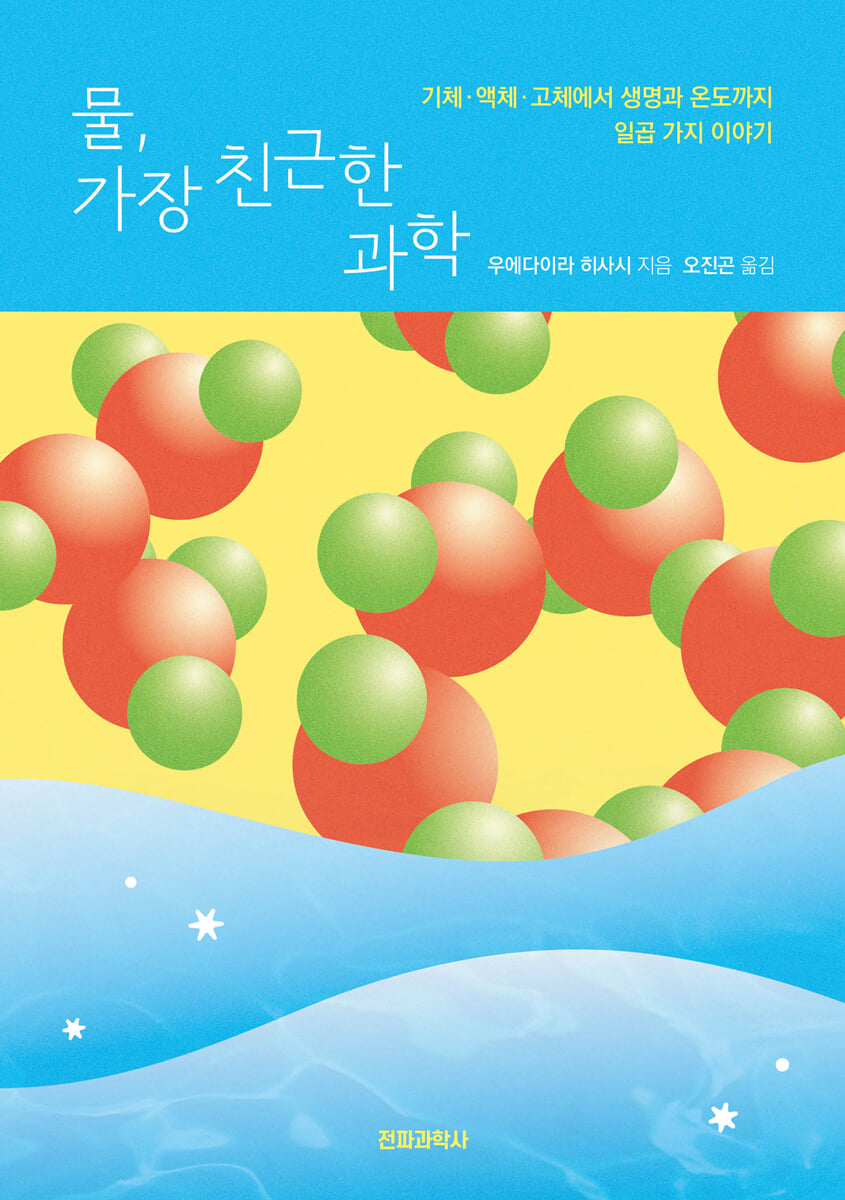 |
Description
Book Introduction
Water, the most familiar science
Water is the most common substance we encounter every day, but it hides scientific mysteries that have yet to be fully discovered.
Water exhibits completely different properties in its three states of gas, liquid, and solid, and small differences in molecular structure become a powerful force that moves the world.
This book guides you on a journey to understand science through the familiar water and to see nature in a new way.
The book covers seven topics in total.
The structure of aqueous solutions, water at the interface, water within water, and even anesthesia and temperature, and life at low temperatures.
Rather than rigid knowledge from textbooks, it reveals the various faces of water through stories connected to our lives.
Instead of complex technical terms, it is written in language that anyone can understand, so that it can be read by people of all ages, from teenagers to adults.
Through this book, readers will come to see water as more than just something to 'drink'.
As we learn how molecular motion intersects with life and how temperature changes open up new possibilities, we discover that water, the most familiar substance, is also the subject of the deepest science.
Water is the most common substance we encounter every day, but it hides scientific mysteries that have yet to be fully discovered.
Water exhibits completely different properties in its three states of gas, liquid, and solid, and small differences in molecular structure become a powerful force that moves the world.
This book guides you on a journey to understand science through the familiar water and to see nature in a new way.
The book covers seven topics in total.
The structure of aqueous solutions, water at the interface, water within water, and even anesthesia and temperature, and life at low temperatures.
Rather than rigid knowledge from textbooks, it reveals the various faces of water through stories connected to our lives.
Instead of complex technical terms, it is written in language that anyone can understand, so that it can be read by people of all ages, from teenagers to adults.
Through this book, readers will come to see water as more than just something to 'drink'.
As we learn how molecular motion intersects with life and how temperature changes open up new possibilities, we discover that water, the most familiar substance, is also the subject of the deepest science.
- You can preview some of the book's contents.
Preview
index
preface
Chapter 1 Gases, Liquids, and Solids at the Molecular Level
Differences between gases, liquids, and solids
The speed of gas molecules is about the speed of a bullet
Gases and liquids as seen from molecular motion
Translational and rotational motion
Various forces acting between molecules
Van der Waals force
The scope of power
potential curve
Valley of Potential
Grab the molecule
Chapter 2: Uncovering the Structure of Water
Is water the representative liquid?
The structure and forces of water molecules
The dual nature of water molecules
properties of water
Liquids that are difficult to cool
Water is difficult to evaporate
Water shrinks
18 types of water
What is distilled water
Why does ice float on water?
Ice crystals moving fiercely
Glassy water
The structure of water
Average lifespan of water structures
Chapter 3 Structure of Aqueous Solutions
Special ability to melt substances
Distillation and brewing
Properties of alcohol solutions
5cc+10cc=14.6cc!?
Substitution type and empty house type
Ease of molecular activity in alcoholic solutions
Similarities between sugar and water
electrolyte solution
Forces between ions and water molecules
Arrangement of water molecules around ions
Integerization and fractionization
Thermal motion of ions
Chapter 4 Interface and Water
surface tension
The action of detergent
capillarity
The story of water and oil
Decrease in entropy
Hydrophobic hydration
hydrophobic interactions
Gases that freeze at 20℃
water between the cracks
Osmotic pressure
Water activity
Osmosis and biology
Chapter 5 Water in the Body
How much water does a person need per day?
Composition of body fluids
cell
protein structure
Tertiary structure and hydrophobic interactions
The state of water around proteins
Protein surrounded by three layers of water
Protein biosynthesis and the action of water molecules
Structured water that protects proteins
Enzyme reaction
Why can dolphins swim so fast?
State of intracellular water
The speed at which water circulates through the body
Identification of old age, frailty, and life and death
Similar red blood cells and cancer cells
Hibernation and dormancy
Physiological functions of heavy water
Chapter 6 Anesthesia and Temperature
The relationship between anesthesia and temperature
Properties of noble gases
gas anesthesia
Stops cell proliferation
What causes trees to dry up and die like totem poles?
At what temperature does a person freeze to death?
Water and temperature changes between the gaps
Life-threatening temperatures of 15, 30, 45, and 60 degrees
Ecology
Chapter 7: Cryobiology
What is cryobiology?
At what temperature does water inside a cell freeze?
freezing of living tissue
Sperm freezing
Ice Baby
Frozen blood has many benefits
Can cryonic people be revived?
The Mystery of Melted Snow
Freeze-drying of blood and sperm
How to freeze cancer
human experimentation
Reviews
After finishing the translation
Chapter 1 Gases, Liquids, and Solids at the Molecular Level
Differences between gases, liquids, and solids
The speed of gas molecules is about the speed of a bullet
Gases and liquids as seen from molecular motion
Translational and rotational motion
Various forces acting between molecules
Van der Waals force
The scope of power
potential curve
Valley of Potential
Grab the molecule
Chapter 2: Uncovering the Structure of Water
Is water the representative liquid?
The structure and forces of water molecules
The dual nature of water molecules
properties of water
Liquids that are difficult to cool
Water is difficult to evaporate
Water shrinks
18 types of water
What is distilled water
Why does ice float on water?
Ice crystals moving fiercely
Glassy water
The structure of water
Average lifespan of water structures
Chapter 3 Structure of Aqueous Solutions
Special ability to melt substances
Distillation and brewing
Properties of alcohol solutions
5cc+10cc=14.6cc!?
Substitution type and empty house type
Ease of molecular activity in alcoholic solutions
Similarities between sugar and water
electrolyte solution
Forces between ions and water molecules
Arrangement of water molecules around ions
Integerization and fractionization
Thermal motion of ions
Chapter 4 Interface and Water
surface tension
The action of detergent
capillarity
The story of water and oil
Decrease in entropy
Hydrophobic hydration
hydrophobic interactions
Gases that freeze at 20℃
water between the cracks
Osmotic pressure
Water activity
Osmosis and biology
Chapter 5 Water in the Body
How much water does a person need per day?
Composition of body fluids
cell
protein structure
Tertiary structure and hydrophobic interactions
The state of water around proteins
Protein surrounded by three layers of water
Protein biosynthesis and the action of water molecules
Structured water that protects proteins
Enzyme reaction
Why can dolphins swim so fast?
State of intracellular water
The speed at which water circulates through the body
Identification of old age, frailty, and life and death
Similar red blood cells and cancer cells
Hibernation and dormancy
Physiological functions of heavy water
Chapter 6 Anesthesia and Temperature
The relationship between anesthesia and temperature
Properties of noble gases
gas anesthesia
Stops cell proliferation
What causes trees to dry up and die like totem poles?
At what temperature does a person freeze to death?
Water and temperature changes between the gaps
Life-threatening temperatures of 15, 30, 45, and 60 degrees
Ecology
Chapter 7: Cryobiology
What is cryobiology?
At what temperature does water inside a cell freeze?
freezing of living tissue
Sperm freezing
Ice Baby
Frozen blood has many benefits
Can cryonic people be revived?
The Mystery of Melted Snow
Freeze-drying of blood and sperm
How to freeze cancer
human experimentation
Reviews
After finishing the translation
Detailed image

Publisher's Review
Water, the Most Familiar Science - Seven Stories from Molecules to Life
Water, which we encounter every day, seems like the most common and simple substance, but it still hides scientific secrets that have yet to be solved.
The newly revised "Water, the Most Friendly Science (What is Water)" provides a guide that allows anyone, from teenagers to adults, to enter the world of science in an interesting way through water.
This book explores water in seven themes.
Starting with the changes in state of gas, liquid, and solid, water in aqueous solutions and at interfaces, other structures existing in water, the relationship between anesthesia and temperature, and finally, cryobiology.
Rather than simply listing the complex theories of physical chemistry, it explains them by connecting them to everyday examples, helping readers understand them naturally.
Through this book, readers who have viewed science as difficult and rigid will be able to see water in a new light.
The fact that the most familiar thing, water, is actually the most profound science, and the scientific and biological implications revealed within it, will open new perspectives for readers.
"Water, the Most Friendly Science" is a popular science book that simultaneously satisfies everyday curiosity and scientific stories not found in textbooks.
Water, which we encounter every day, seems like the most common and simple substance, but it still hides scientific secrets that have yet to be solved.
The newly revised "Water, the Most Friendly Science (What is Water)" provides a guide that allows anyone, from teenagers to adults, to enter the world of science in an interesting way through water.
This book explores water in seven themes.
Starting with the changes in state of gas, liquid, and solid, water in aqueous solutions and at interfaces, other structures existing in water, the relationship between anesthesia and temperature, and finally, cryobiology.
Rather than simply listing the complex theories of physical chemistry, it explains them by connecting them to everyday examples, helping readers understand them naturally.
Through this book, readers who have viewed science as difficult and rigid will be able to see water in a new light.
The fact that the most familiar thing, water, is actually the most profound science, and the scientific and biological implications revealed within it, will open new perspectives for readers.
"Water, the Most Friendly Science" is a popular science book that simultaneously satisfies everyday curiosity and scientific stories not found in textbooks.
GOODS SPECIFICS
- Date of issue: September 23, 2025
- Page count, weight, size: 216 pages | 148*210*20mm
- ISBN13: 9791194832256
- ISBN10: 1194832253
You may also like
카테고리
korean


korean

![ELLE 엘르 스페셜 에디션 A형 : 12월 [2025]](http://librairie.coreenne.fr/cdn/shop/files/b8e27a3de6c9538896439686c6b0e8fb.jpg?v=1766436872&width=3840)


