

People are like bugs
 |
Description
Book Introduction
What is true for insects is true for people!
The starting point of the Human Genome Project and the forefront of life sciences.
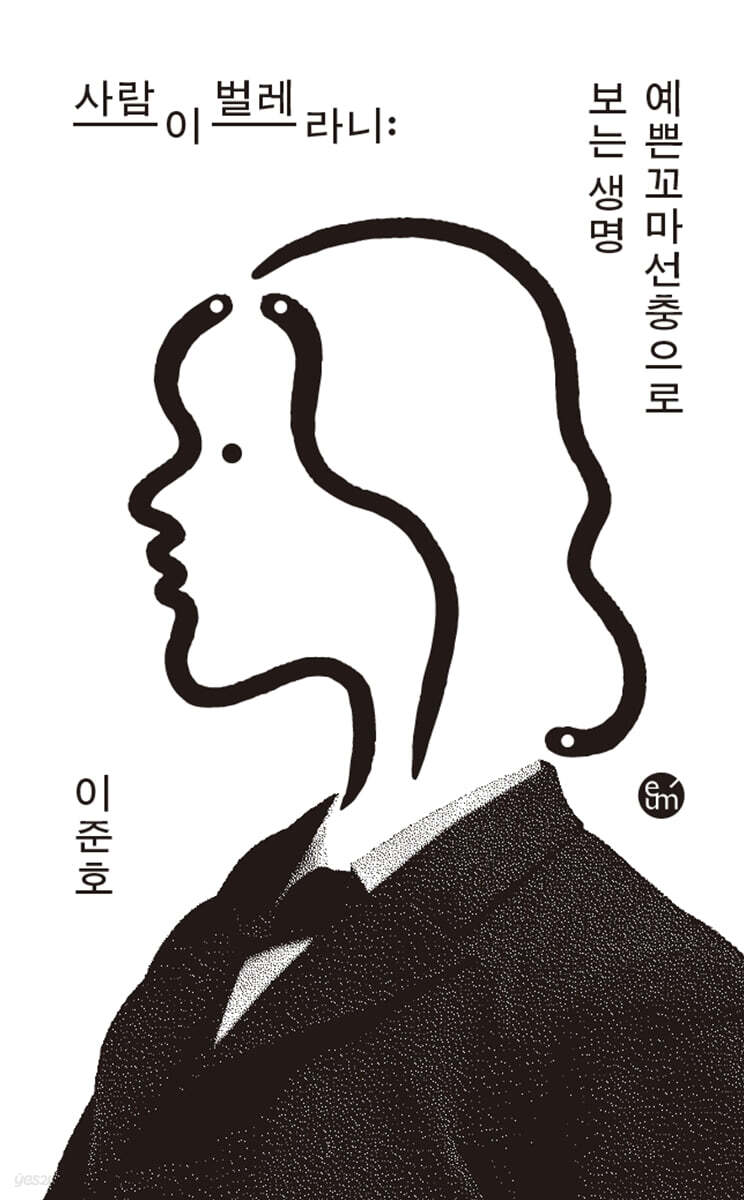
"Humans are Bugs: Life Seen Through the Eyes of the Pretty Little Roundworm" is a science textbook that covers how the pretty little roundworm, a tiny 1mm-sized bug and a "human," has advanced human science.
The beautiful nematode C. elegans shares about half of its genes with humans and became the starting point for the Human Genome Project. It also made a significant mark in the history of science by winning four Nobel Prizes for research on cell death, RNA interference, and fluorescent proteins.
As we follow the story of the beautiful C. elegans, which Lee Jun-ho, a biologist and pioneer of Korean nematode research, has studied for 30 years, we will discover that the key to explaining the complex phenomena of human life lies within this 1mm worm, and that science is about changing the world with curiosity and persistence even before it can prove beneficial to humans.
The starting point of the Human Genome Project and the forefront of life sciences.
"Humans are Bugs: Life Seen Through the Eyes of the Pretty Little Roundworm" is a science textbook that covers how the pretty little roundworm, a tiny 1mm-sized bug and a "human," has advanced human science.
The beautiful nematode C. elegans shares about half of its genes with humans and became the starting point for the Human Genome Project. It also made a significant mark in the history of science by winning four Nobel Prizes for research on cell death, RNA interference, and fluorescent proteins.
As we follow the story of the beautiful C. elegans, which Lee Jun-ho, a biologist and pioneer of Korean nematode research, has studied for 30 years, we will discover that the key to explaining the complex phenomena of human life lies within this 1mm worm, and that science is about changing the world with curiosity and persistence even before it can prove beneficial to humans.
- You can preview some of the book's contents.
Preview
index
Glossary of terms
Entering
C. elegans, recognized by the Nobel Prize
In the beginning there was a nematode
Man is a worm: The Human Genome Project also started from a nematode.
The special life cycle of C. elegans
Sydney Brenner's grand dream through C. elegans
Cells don't just die; they live and die according to a program.
Double-stranded RNA regulates gene expression
A pretty little roundworm that glows green fluorescently.
The fourth Nobel Prize for the pretty worm C. elegans, which we met in 2024.
What Uses Can C. elegans Be?
The Genetics of C. elegans: All You Need to Know
C. elegans, a beautiful worm, is at the forefront of aging research.
Discovering new substances that contribute to longevity
C. elegans, with just 302 neurons, manages to accomplish a lot.
Reproductive development in C. elegans and human cancer share the same genes.
C. elegans, a beautiful worm, is more similar to humans than you might think.
New technologies, new discoveries, and new ideas
Research on C. elegans has blossomed in Korea.
Announcing the start of nematode research in Korea
The Rise and Fall of the Alcohol Mechanisms Laboratory
The Biology of Hitchhiking: Initiating a Niction Study
Niction, the mechanism of species spread, published in an international academic journal.
Ivo-Divo: Why Hawaiian Nematodes Don't Dance
Are Hawaiian nematodes the only ones that don't dance?
How were the neurons that enable nictation created?
Beginning comparative connectome research
Discovering a mechanism for maintaining telomeres without telomerase
ALT in C. elegans is not unique to nematodes.
Towards the Future with C. elegans: The Endless Adventures of C. elegans
Can the placebo effect be solved with nematodes?
Lessons from Failed Genetics Experiments
Can a nematode teach another nematode?
Dreams about colorful nematodes
Pseudomonas aeruginosa even makes C. elegans dance
Let's make a pretty C. elegans cell line!
Where on Earth Is the RNA Component of the Nematode Telomerase Enzyme?
Korean Nematode Project
Yeonpyeong Island is an island in the world.
C. elegans, a beautiful worm, is at the forefront of popularizing science.
The past will help the present and save the future.
In closing: Democracy and Basic Science
References
Entering
C. elegans, recognized by the Nobel Prize
In the beginning there was a nematode
Man is a worm: The Human Genome Project also started from a nematode.
The special life cycle of C. elegans
Sydney Brenner's grand dream through C. elegans
Cells don't just die; they live and die according to a program.
Double-stranded RNA regulates gene expression
A pretty little roundworm that glows green fluorescently.
The fourth Nobel Prize for the pretty worm C. elegans, which we met in 2024.
What Uses Can C. elegans Be?
The Genetics of C. elegans: All You Need to Know
C. elegans, a beautiful worm, is at the forefront of aging research.
Discovering new substances that contribute to longevity
C. elegans, with just 302 neurons, manages to accomplish a lot.
Reproductive development in C. elegans and human cancer share the same genes.
C. elegans, a beautiful worm, is more similar to humans than you might think.
New technologies, new discoveries, and new ideas
Research on C. elegans has blossomed in Korea.
Announcing the start of nematode research in Korea
The Rise and Fall of the Alcohol Mechanisms Laboratory
The Biology of Hitchhiking: Initiating a Niction Study
Niction, the mechanism of species spread, published in an international academic journal.
Ivo-Divo: Why Hawaiian Nematodes Don't Dance
Are Hawaiian nematodes the only ones that don't dance?
How were the neurons that enable nictation created?
Beginning comparative connectome research
Discovering a mechanism for maintaining telomeres without telomerase
ALT in C. elegans is not unique to nematodes.
Towards the Future with C. elegans: The Endless Adventures of C. elegans
Can the placebo effect be solved with nematodes?
Lessons from Failed Genetics Experiments
Can a nematode teach another nematode?
Dreams about colorful nematodes
Pseudomonas aeruginosa even makes C. elegans dance
Let's make a pretty C. elegans cell line!
Where on Earth Is the RNA Component of the Nematode Telomerase Enzyme?
Korean Nematode Project
Yeonpyeong Island is an island in the world.
C. elegans, a beautiful worm, is at the forefront of popularizing science.
The past will help the present and save the future.
In closing: Democracy and Basic Science
References
Into the book
Charles Darwin's last publication before his death on April 19, 1882, was surprisingly a book about earthworms.
People seemed to laugh at the fact that the last subject of his research was earthworms, conducted by the world's most serious researcher at the time, the author of "The Origin of Species" and a century-old scholar who advocated evolution against divine providence.
In an 1882 cartoon published in the comic magazine Punch, Charles Darwin sits in the center with a solemn expression, and as the clock of evolution is turned back, a bug appears at the end.
And the title is written as “Man is but a worm.”
People are just insects.
--- p.19, "Humans are Insects: The Human Genome Project also began with nematodes."
Looking back, the Nobel Prize-winning RNA interference phenomenon was discovered as a completely unexpected phenomenon: that two strands of RNA could regulate gene expression. This teaches us the lesson that the Nobel Prize is not awarded to those who aim for it, but to scientists who, with curiosity and perseverance, never give up and continue on their path.
--- p.52~53, "The Fourth Nobel Prize for the Pretty C. elegans, Met in 2024"
This fascinating example shows that novelty in evolution can arise without creating entirely new genes, but rather by modifying existing genes slightly to suit a specific purpose.
--- p.125, “How were the neurons that make nictation possible created?”
Basic science becomes meaningful only when it has public support.
Just as something only has a name when it is called.
I strongly recommend this to all readers, as I am confident that by browsing the various contents that can be found by searching the Internet with my name and the pretty little nematode, you will experience the beauty of nematodes, the mystery of life, and the wonderful journey of a biologist who tries to unravel it.
--- p.178, "Pretty Little Nematode, Leading the Popularization of Science"
I also want to live a life of giving from now on.
So we must make sure that the past helps the present and saves the future.
People seemed to laugh at the fact that the last subject of his research was earthworms, conducted by the world's most serious researcher at the time, the author of "The Origin of Species" and a century-old scholar who advocated evolution against divine providence.
In an 1882 cartoon published in the comic magazine Punch, Charles Darwin sits in the center with a solemn expression, and as the clock of evolution is turned back, a bug appears at the end.
And the title is written as “Man is but a worm.”
People are just insects.
--- p.19, "Humans are Insects: The Human Genome Project also began with nematodes."
Looking back, the Nobel Prize-winning RNA interference phenomenon was discovered as a completely unexpected phenomenon: that two strands of RNA could regulate gene expression. This teaches us the lesson that the Nobel Prize is not awarded to those who aim for it, but to scientists who, with curiosity and perseverance, never give up and continue on their path.
--- p.52~53, "The Fourth Nobel Prize for the Pretty C. elegans, Met in 2024"
This fascinating example shows that novelty in evolution can arise without creating entirely new genes, but rather by modifying existing genes slightly to suit a specific purpose.
--- p.125, “How were the neurons that make nictation possible created?”
Basic science becomes meaningful only when it has public support.
Just as something only has a name when it is called.
I strongly recommend this to all readers, as I am confident that by browsing the various contents that can be found by searching the Internet with my name and the pretty little nematode, you will experience the beauty of nematodes, the mystery of life, and the wonderful journey of a biologist who tries to unravel it.
--- p.178, "Pretty Little Nematode, Leading the Popularization of Science"
I also want to live a life of giving from now on.
So we must make sure that the past helps the present and saves the future.
--- p.184, "The past will help the present and save the future."
Publisher's Review
“Every episode is imbued with a tenacity for science, a grace to endure failure, and a poetic reverence for life.”
_Jeong Jae-seung (Professor, Department of Brain and Cognitive Sciences, KAIST)
"Where does his spirit of challenge come from? I'm confident that the life of this outstanding scientist, who fearlessly walked the right path, will serve as an example to many young people in this land."
Choi Jae-cheon (Professor Emeritus, Department of Eco-Science, Ewha Womans University/Chairman, Biodiversity Foundation)
Did you know that Charles Darwin's last published work was on earthworms? It's no coincidence that the evolutionary giant's last subject of study before his death was worms.
Humans and insects are much more deeply connected than we think.
This book tells that story.
"Humans are Bugs: Life Seen Through the Eyes of the Pretty Little Roundworm" is a book that explores the essence of life through the eyes of the pretty little roundworm, a tiny bug about 1mm long.
Author Lee Jun-ho is a first-generation scientist who pioneered the study of C. elegans in Korea. Based on his 30 years of research experience, he explains biology in an easy and interesting way.
People are bugs?
1mm human, pretty little C. elegans
But people are like bugs.
It's understandable to feel resistance.
In the past, attempts were made to carry out the Human Genome Project, but they faced strong opposition due to issues such as practicality and cost.
So, what scientists suggested as a starting point was the pretty worm C. elegans, which is like a taste of humans in terms of base sequence.
He convinced opponents that if the entire genome of a nematode could be identified, it could be extended to humans.
As a result, C. elegans became the first animal to have its entire genome sequenced, and the Human Genome Project began in earnest.
From this, it has been discovered that humans and C. elegans share approximately half of their genes. So, isn't it safe to say that humans are actually insects? The key to understanding the complexities of human life lies within this 1mm worm.
A tiny bug changed human science.
Although it looks simple, C. elegans is an amazing creature that has been the subject of four Nobel Prize-winning research.
The Human Genome Project, cell lineage studies, programmed cell death, RNA interference, and fluorescent protein experiments.
All the core concepts of life science were revealed through this little bug.
Why C. elegans? The reason is simple.
Although they are small and transparent and have less than 1,000 cells, they contain all the basic elements of a living organism.
It is rare to find an animal whose entire life cycle, from a single fertilized egg through four molts to adulthood, can be observed under a microscope.
So, the greatest scientists of the 20th century, including Sydney Brenner, chose C. elegans.
The choice was a great success.
C. elegans became the first animal to have its cell lineage fully traced, and its concept of programmed cell death earned it a Nobel Prize. It was this worm that led to the discovery of RNA interference and the realization of green fluorescent protein (GFP) technology.
30 Years of Korean Nematode Research and the Future
This book is both a science textbook and an autobiographical record of a researcher.
The author is a scientist who opened the first C. elegans research lab in Korea in 1995.
It honestly describes the failures and successes experienced over the past 30 years since the establishment of the laboratory, as well as the challenges and hopes of basic science research in Korea.
This book also highlights the world-class achievements of Korean researchers, including the study of a unique behavior called "nictation," the comparative connectome project, and the discovery of a telomere maintenance mechanism.
In the final chapter, the author poses questions about the future.
“Can we overcome the placebo effect with nematodes?”, “Can we teach C. elegans?”, “Will we ever see an era where we can create colorful nematodes?” These questions are not mere imaginations, but the starting point of new discoveries.
The author describes science as “like a plum blossom that blooms even in the snow.”
This book demonstrates that science, through curiosity and persistence, can change the world even before it can prove beneficial to humans.
_Jeong Jae-seung (Professor, Department of Brain and Cognitive Sciences, KAIST)
"Where does his spirit of challenge come from? I'm confident that the life of this outstanding scientist, who fearlessly walked the right path, will serve as an example to many young people in this land."
Choi Jae-cheon (Professor Emeritus, Department of Eco-Science, Ewha Womans University/Chairman, Biodiversity Foundation)
Did you know that Charles Darwin's last published work was on earthworms? It's no coincidence that the evolutionary giant's last subject of study before his death was worms.
Humans and insects are much more deeply connected than we think.
This book tells that story.
"Humans are Bugs: Life Seen Through the Eyes of the Pretty Little Roundworm" is a book that explores the essence of life through the eyes of the pretty little roundworm, a tiny bug about 1mm long.
Author Lee Jun-ho is a first-generation scientist who pioneered the study of C. elegans in Korea. Based on his 30 years of research experience, he explains biology in an easy and interesting way.
People are bugs?
1mm human, pretty little C. elegans
But people are like bugs.
It's understandable to feel resistance.
In the past, attempts were made to carry out the Human Genome Project, but they faced strong opposition due to issues such as practicality and cost.
So, what scientists suggested as a starting point was the pretty worm C. elegans, which is like a taste of humans in terms of base sequence.
He convinced opponents that if the entire genome of a nematode could be identified, it could be extended to humans.
As a result, C. elegans became the first animal to have its entire genome sequenced, and the Human Genome Project began in earnest.
From this, it has been discovered that humans and C. elegans share approximately half of their genes. So, isn't it safe to say that humans are actually insects? The key to understanding the complexities of human life lies within this 1mm worm.
A tiny bug changed human science.
Although it looks simple, C. elegans is an amazing creature that has been the subject of four Nobel Prize-winning research.
The Human Genome Project, cell lineage studies, programmed cell death, RNA interference, and fluorescent protein experiments.
All the core concepts of life science were revealed through this little bug.
Why C. elegans? The reason is simple.
Although they are small and transparent and have less than 1,000 cells, they contain all the basic elements of a living organism.
It is rare to find an animal whose entire life cycle, from a single fertilized egg through four molts to adulthood, can be observed under a microscope.
So, the greatest scientists of the 20th century, including Sydney Brenner, chose C. elegans.
The choice was a great success.
C. elegans became the first animal to have its cell lineage fully traced, and its concept of programmed cell death earned it a Nobel Prize. It was this worm that led to the discovery of RNA interference and the realization of green fluorescent protein (GFP) technology.
30 Years of Korean Nematode Research and the Future
This book is both a science textbook and an autobiographical record of a researcher.
The author is a scientist who opened the first C. elegans research lab in Korea in 1995.
It honestly describes the failures and successes experienced over the past 30 years since the establishment of the laboratory, as well as the challenges and hopes of basic science research in Korea.
This book also highlights the world-class achievements of Korean researchers, including the study of a unique behavior called "nictation," the comparative connectome project, and the discovery of a telomere maintenance mechanism.
In the final chapter, the author poses questions about the future.
“Can we overcome the placebo effect with nematodes?”, “Can we teach C. elegans?”, “Will we ever see an era where we can create colorful nematodes?” These questions are not mere imaginations, but the starting point of new discoveries.
The author describes science as “like a plum blossom that blooms even in the snow.”
This book demonstrates that science, through curiosity and persistence, can change the world even before it can prove beneficial to humans.
GOODS SPECIFICS
- Date of issue: August 28, 2025
- Page count, weight, size: 196 pages | 198g | 115*180*12mm
- ISBN13: 9791194172154
- ISBN10: 1194172156
You may also like
카테고리
korean


korean

![GQ KOREA Mark (Monthly): December [2025]](http://librairie.coreenne.fr/cdn/shop/files/8ef265dbbfbf186523ed75ba7319009d.jpg?v=1765340328&width=3840)


