

Again, ask for directions to school
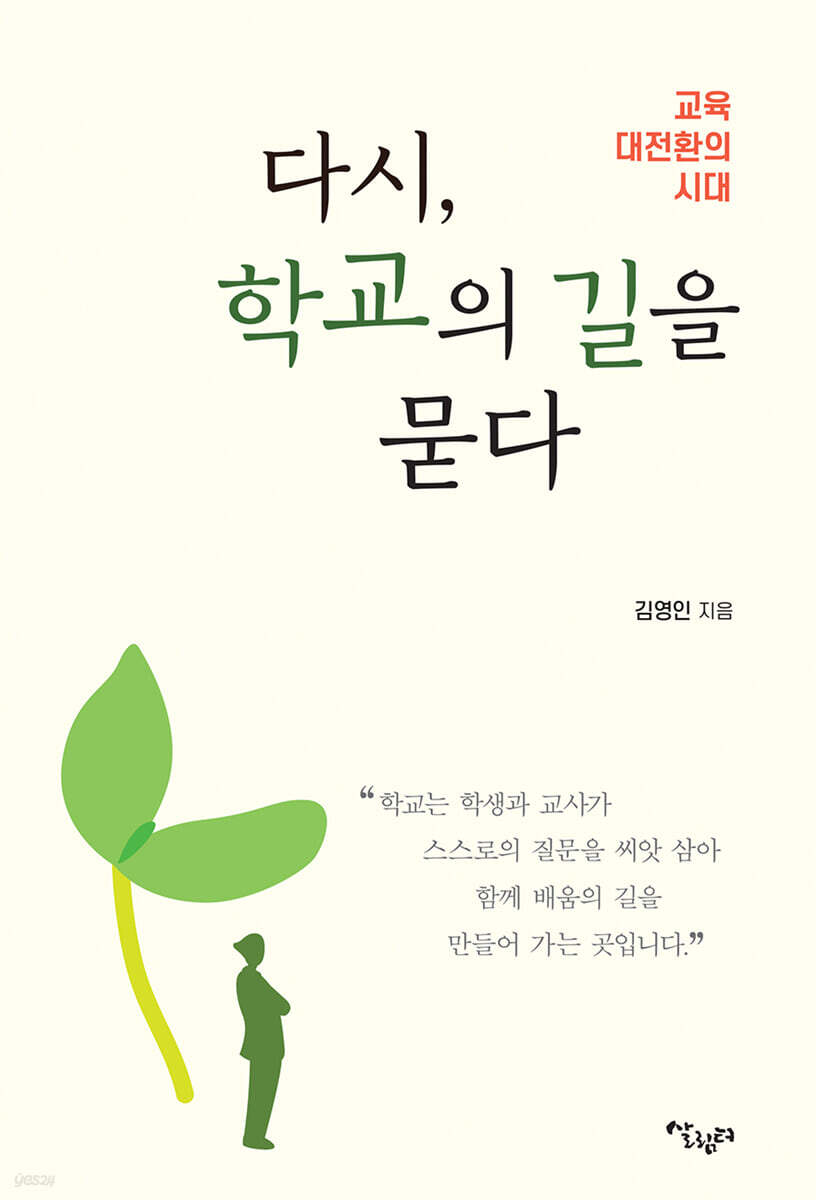 |
Description
Book Introduction
Where should our education go?
On the Boundary of AI Innovation and Humanity
"Again, Asking the Way to School" is a vivid report on education from a current principal, delivered to students and teachers in our classrooms where AI teachers have taken the lead.
"Where do we stand now? Who are we, and for what purpose do we teach and learn?" The author asks himself these questions as he reflects on the "path of school."
And on behalf of students and teachers who are swimming in the era of technological innovation, I ask the question, “What kind of education would be like that utilizes AI without being driven by AI, and what kind of college entrance exam would be like that is for ‘students’ without being driven by the college entrance exam system?”
This book contains friendly answers to these questions.
“Schools should be communities of thought and philosophy that go beyond the realm of policy.
Schools should be communities where we share our lives, not places where we instill knowledge.
Students should be seen as beings who grow together, not as objects of competition.
“A teacher should not be someone who teaches the right answers, but a companion on the path that each student takes.”
Building on this philosophy of students and schools, the author offers a very realistic direction for curriculum, instruction, and assessment.
This book's greatest strength lies in its ability to go beyond simply declaring that education should be "people-centered" and offer practical alternatives for navigating the era of AI technological innovation.
The author, who ponders how to “become a teacher who sets a path for children today,” and thinks of “a teacher who sets a milestone, a teacher who looks after, understands, and protects students,” emphasizes that “all of a teacher’s teaching process should be an evaluation and feedback process,” and talks about creating “a classroom where teacher-led and student-led initiative interact.”
Above all, the author's detailed explanation of the "student-led project-based inquiry learning" proposed by the author, who aims to move toward "recovery education" rather than "separate education," stands out, and will be sufficient to serve as useful material for actual classes.
“Again, Asking the Way to School” is a book that all teachers and parents who are currently teaching children in our schools, as well as all educational policymakers and educational officials, must read.
Because the author offers advice on the most basic and fundamental things that our schools and education must not overlook in order to move forward during this time of confusion and great transition.”
On the Boundary of AI Innovation and Humanity
"Again, Asking the Way to School" is a vivid report on education from a current principal, delivered to students and teachers in our classrooms where AI teachers have taken the lead.
"Where do we stand now? Who are we, and for what purpose do we teach and learn?" The author asks himself these questions as he reflects on the "path of school."
And on behalf of students and teachers who are swimming in the era of technological innovation, I ask the question, “What kind of education would be like that utilizes AI without being driven by AI, and what kind of college entrance exam would be like that is for ‘students’ without being driven by the college entrance exam system?”
This book contains friendly answers to these questions.
“Schools should be communities of thought and philosophy that go beyond the realm of policy.
Schools should be communities where we share our lives, not places where we instill knowledge.
Students should be seen as beings who grow together, not as objects of competition.
“A teacher should not be someone who teaches the right answers, but a companion on the path that each student takes.”
Building on this philosophy of students and schools, the author offers a very realistic direction for curriculum, instruction, and assessment.
This book's greatest strength lies in its ability to go beyond simply declaring that education should be "people-centered" and offer practical alternatives for navigating the era of AI technological innovation.
The author, who ponders how to “become a teacher who sets a path for children today,” and thinks of “a teacher who sets a milestone, a teacher who looks after, understands, and protects students,” emphasizes that “all of a teacher’s teaching process should be an evaluation and feedback process,” and talks about creating “a classroom where teacher-led and student-led initiative interact.”
Above all, the author's detailed explanation of the "student-led project-based inquiry learning" proposed by the author, who aims to move toward "recovery education" rather than "separate education," stands out, and will be sufficient to serve as useful material for actual classes.
“Again, Asking the Way to School” is a book that all teachers and parents who are currently teaching children in our schools, as well as all educational policymakers and educational officials, must read.
Because the author offers advice on the most basic and fundamental things that our schools and education must not overlook in order to move forward during this time of confusion and great transition.”
- You can preview some of the book's contents.
Preview
index
Recommended Reading | Advice on Things Our Education Should Not Miss_Kim Byeong-chan
| Deep Reflections on Teaching and Assessment_Lee Hye-jeong
Opening remarks
I. Where is Education Headed in the AI Era?
1.
A Look at Education in the Waves of Change
2. Individualized learning with AI
3.
Essay-based assessment that fosters creativity and critical thinking skills
4. Questions We Need to Ask Together in the AI Era
5.
Drawing the School of the Future
II.
Leadership, the power that saves schools
1. Classroom with AI teaching assistant
2.
The evolving face of teachers
3.
Learner-led path
4.
The power of voluntary activism and academic excellence
5.
Demonstration of student-led and teacher-led initiative
III.
Student-led project-based inquiry learning
1.
Changes and leadership in the curriculum
2.
Foundation of Project-Based Exploratory Learning
3.
Project-based learning through collaborative exploration
IV.
Dialogue on Growth: The Reason Schools Exist
1.
What is evaluation for teachers?
2.
What is assessment for students?
3.
Student Evaluation and the Reason for School Existence
4.
The Power of Evaluation to Redefine Schools
5.
Assessment that guides the curriculum
6.
Assessments that enrich classes and expand learning
7.
Understanding and Issues in Evaluation
8.
Absolute evaluation and essay-based evaluation
9.
Beyond 'selection' to 'growth'
V.
Imagining and questioning assessment, the future of assessment
1.
Does education begin again at the end of evaluation?
2.
What will future assessments look like?
3.
Are essay-based assessments still valid?
4. Is AI-based essay grading reliable?
5. Are AI-based assessments educational?
6. Is the administrative foundation for AI-based essay grading in place?
7.
Minimum Achievement Level Guarantee 1: Learning Recovery Project
8.
Guaranteed Minimum Achievement Level 2: Creating a Stepping Stone by Improving the Teacher Supply and Demand System
9.
Minimum Achievement Level Guarantee 3: An Education That Shines in Public Education for All Students
| Deep Reflections on Teaching and Assessment_Lee Hye-jeong
Opening remarks
I. Where is Education Headed in the AI Era?
1.
A Look at Education in the Waves of Change
2. Individualized learning with AI
3.
Essay-based assessment that fosters creativity and critical thinking skills
4. Questions We Need to Ask Together in the AI Era
5.
Drawing the School of the Future
II.
Leadership, the power that saves schools
1. Classroom with AI teaching assistant
2.
The evolving face of teachers
3.
Learner-led path
4.
The power of voluntary activism and academic excellence
5.
Demonstration of student-led and teacher-led initiative
III.
Student-led project-based inquiry learning
1.
Changes and leadership in the curriculum
2.
Foundation of Project-Based Exploratory Learning
3.
Project-based learning through collaborative exploration
IV.
Dialogue on Growth: The Reason Schools Exist
1.
What is evaluation for teachers?
2.
What is assessment for students?
3.
Student Evaluation and the Reason for School Existence
4.
The Power of Evaluation to Redefine Schools
5.
Assessment that guides the curriculum
6.
Assessments that enrich classes and expand learning
7.
Understanding and Issues in Evaluation
8.
Absolute evaluation and essay-based evaluation
9.
Beyond 'selection' to 'growth'
V.
Imagining and questioning assessment, the future of assessment
1.
Does education begin again at the end of evaluation?
2.
What will future assessments look like?
3.
Are essay-based assessments still valid?
4. Is AI-based essay grading reliable?
5. Are AI-based assessments educational?
6. Is the administrative foundation for AI-based essay grading in place?
7.
Minimum Achievement Level Guarantee 1: Learning Recovery Project
8.
Guaranteed Minimum Achievement Level 2: Creating a Stepping Stone by Improving the Teacher Supply and Demand System
9.
Minimum Achievement Level Guarantee 3: An Education That Shines in Public Education for All Students
Into the book
This book is an existential, handwritten report on what we, as educators living today in the AI era, a major shift in human civilization, and amidst the lingering challenges of college entrance exams, are losing and what we must protect.
--- From "Advice on Fundamentals Our Education Should Not Miss"
This book is kind and compassionate in that it provides specific guidance on how to conduct these classes and assessments.
Of course, the greatest virtue is the detailed discussion of how classes and assessments that center on students' lives and growth are possible within the current college entrance exam system and education system.
--- From "Delivering Deep Reflections on Classes and Assessment"
Movements change schools, change education, and mark milestones of change.
It is easy for administration to manage schools, formalize education, and remove the context for change.
I wrote this book with the intention of establishing a context for changes in curriculum, classes, and assessment centered on voluntary movement.
--- From the "Opening Remarks"
It should be ‘Teacher-led AI’, not ‘AI-led teachers’.
Schools today are experiencing a technology overload.
You must have the power to judge what is more important and essential.
As we reflect together on the very reason for the existence of schools, we see that "people" must always be present at the beginning, process, and end of school education.
--- From "Where is Education Headed in the AI Era?"
If we don't forget the classroom, and don't forget the perspectives of students, parents, and fellow teachers, I believe we can create a world of learning that's even more expansive by leveraging YouTube and AI assistant teachers.
--- From "Initiative, the Power to Save Schools"
Project-based learning is not about finding answers.
The goal is not to find answers and present them well, but to learn about yourself, the world, and put what you know into practice during the project process.
Project-based inquiry learning expands knowledge and experience by connecting self-awareness, understanding the world, rational judgment, and practice.
--- From "Student-led Project Exploratory Learning"
Evaluation must have the breath of learning in it.
A teacher is someone who discovers students' potential through assessment.
Evaluation should be about trust, not selection, and a commitment to growth.
A teacher's word is sometimes a stronger echo of the soul than a grade, and it gives us strength to live our whole lives.
--- From "Dialogue on Growth, the Reason for School's Existence"
AI can grade, but it can't read your breath.
Evaluation is a story, not a skill.
A student's life breathes in crooked handwriting, unfinished sentences, and clumsy thoughts.
It is not AI that reads that life, but the eyes and heart of the teacher.
The future is about people, not scores.
--- From "Advice on Fundamentals Our Education Should Not Miss"
This book is kind and compassionate in that it provides specific guidance on how to conduct these classes and assessments.
Of course, the greatest virtue is the detailed discussion of how classes and assessments that center on students' lives and growth are possible within the current college entrance exam system and education system.
--- From "Delivering Deep Reflections on Classes and Assessment"
Movements change schools, change education, and mark milestones of change.
It is easy for administration to manage schools, formalize education, and remove the context for change.
I wrote this book with the intention of establishing a context for changes in curriculum, classes, and assessment centered on voluntary movement.
--- From the "Opening Remarks"
It should be ‘Teacher-led AI’, not ‘AI-led teachers’.
Schools today are experiencing a technology overload.
You must have the power to judge what is more important and essential.
As we reflect together on the very reason for the existence of schools, we see that "people" must always be present at the beginning, process, and end of school education.
--- From "Where is Education Headed in the AI Era?"
If we don't forget the classroom, and don't forget the perspectives of students, parents, and fellow teachers, I believe we can create a world of learning that's even more expansive by leveraging YouTube and AI assistant teachers.
--- From "Initiative, the Power to Save Schools"
Project-based learning is not about finding answers.
The goal is not to find answers and present them well, but to learn about yourself, the world, and put what you know into practice during the project process.
Project-based inquiry learning expands knowledge and experience by connecting self-awareness, understanding the world, rational judgment, and practice.
--- From "Student-led Project Exploratory Learning"
Evaluation must have the breath of learning in it.
A teacher is someone who discovers students' potential through assessment.
Evaluation should be about trust, not selection, and a commitment to growth.
A teacher's word is sometimes a stronger echo of the soul than a grade, and it gives us strength to live our whole lives.
--- From "Dialogue on Growth, the Reason for School's Existence"
AI can grade, but it can't read your breath.
Evaluation is a story, not a skill.
A student's life breathes in crooked handwriting, unfinished sentences, and clumsy thoughts.
It is not AI that reads that life, but the eyes and heart of the teacher.
The future is about people, not scores.
--- From “Imagination and Questions about Evaluation, the Future of Evaluation”
GOODS SPECIFICS
- Date of issue: November 27, 2025
- Page count, weight, size: 294 pages | 153*224*20mm
- ISBN13: 9791159303418
- ISBN10: 115930341X
You may also like
카테고리
korean


korean

![GQ KOREA Mark (Monthly): December [2025]](http://librairie.coreenne.fr/cdn/shop/files/8ef265dbbfbf186523ed75ba7319009d.jpg?v=1765340328&width=3840)


