

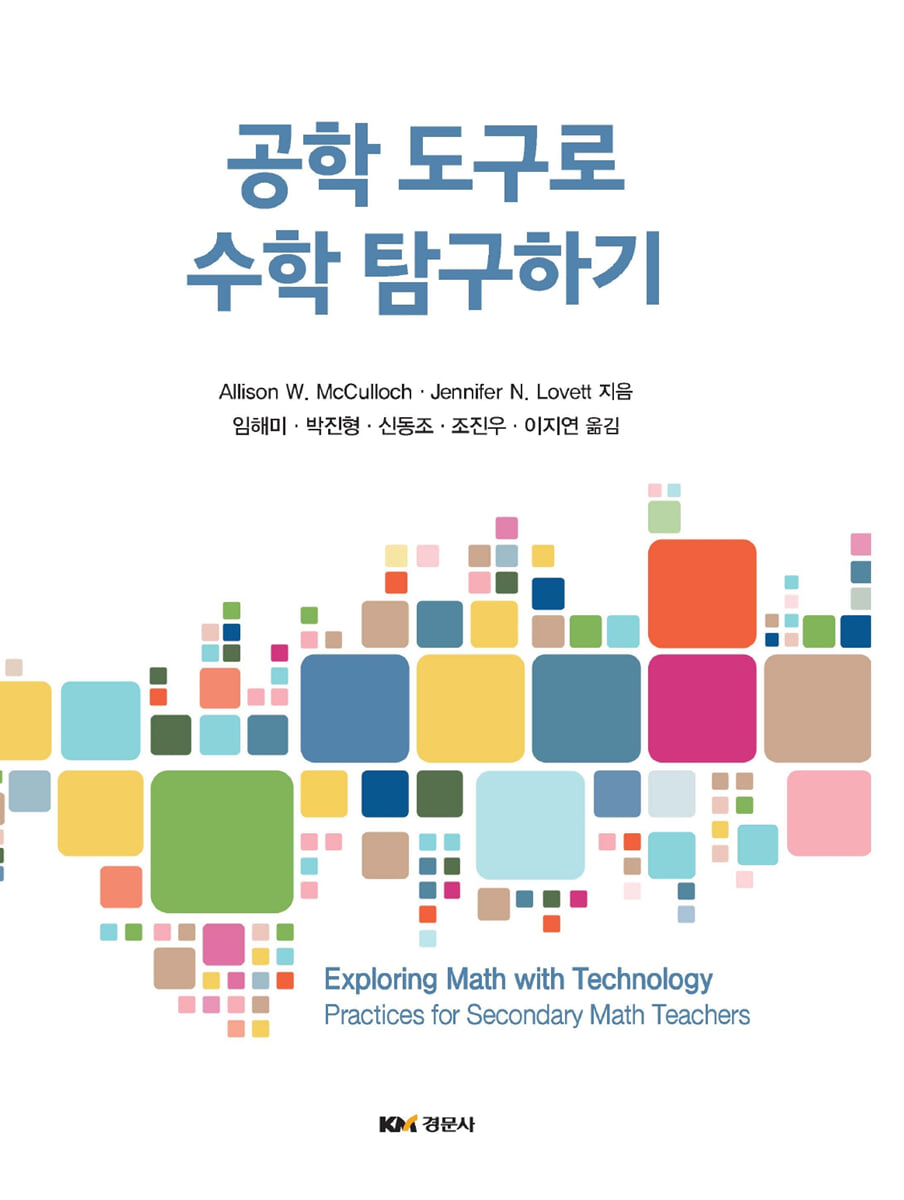
Exploring Mathematics with Engineering Tools
 |
Description
Book Introduction
Our country's 2022 revised mathematics curriculum emphasizes the use of engineering tools more than ever before.
This change responds to the educational need to enable students living in the future society to develop not only mathematical thinking skills but also the ability to utilize integrated tools for problem-solving.
However, many teachers still need concrete guidance and examples of how to effectively utilize engineering tools in their classrooms. "Exploring Math with Technology: Practices for Secondary Math Teachers" is a perfect answer to this need.
This book does not simply list the functions of engineering tools or approach them theoretically. Rather, it focuses on specific teaching cases and practical strategies that utilize engineering tools in actual classroom settings.
In particular, it vividly shows a scene where a teacher explores mathematical concepts through interaction with students while implementing the lessons he or she designed.
The links to websites provided with the book are expected to be useful resources for classes utilizing engineering tools.
This change responds to the educational need to enable students living in the future society to develop not only mathematical thinking skills but also the ability to utilize integrated tools for problem-solving.
However, many teachers still need concrete guidance and examples of how to effectively utilize engineering tools in their classrooms. "Exploring Math with Technology: Practices for Secondary Math Teachers" is a perfect answer to this need.
This book does not simply list the functions of engineering tools or approach them theoretically. Rather, it focuses on specific teaching cases and practical strategies that utilize engineering tools in actual classroom settings.
In particular, it vividly shows a scene where a teacher explores mathematical concepts through interaction with students while implementing the lessons he or she designed.
The links to websites provided with the book are expected to be useful resources for classes utilizing engineering tools.
- You can preview some of the book's contents.
Preview
index
Part 1: Planning and Executing Mathematical Assignments Using Engineering Tools
What do we mean by "engineering-based math assignments"? 2
5 Things to Expect from This Book
Chapter 1: Empowering Students as Mathematical Explorers Using Engineering Tools
Case 1: Tangent to a circle 12
Case 2: The concept of a function
Leaving this chapter 23
24 Questions to Discuss with Your Colleagues
Chapter 2 Mathematical Engineering Tools
Type 27 of Mathematical Engineering Tools
Leaving this chapter 43
44 Questions to Discuss with Your Colleagues
Chapter 3: Deciding What to Use and When
Determining Whether to Use Engineering Tools in Class 45
Deciding Which Engineering Tools to Use 59
Using Mathematical Engineering Tools in Activity Creation Tools 61
63 Questions to Discuss with Your Colleagues
Chapter 4: Selecting Tasks Using Engineering Tools
67 Characteristics of Good Mathematical Problems Using Engineering Tools
Engineering Tools for Mathematical Exploration: Sketch Design Principles 70
Instructions for Engineering Sketches for Mathematical Exploration 82
Advice for Choosing Engineering Tool Applications 84
87 Questions to Discuss with Your Colleagues
Chapter 5: Starting an Assignment Using Engineering Tools
90 Features of Effective Initiation of Engineering Tool Utilization Tasks
93 Effective Start-Up Examples for Engineering Tool Utilization Tasks
112 Questions to Discuss with Your Colleagues
Chapter 6: Attention and Eliciting Student Thinking in an Engineering Tool-Based Environment
Case: Mystery Transformations 113
A Framework to Support Attention to Student Thinking 120
131 Questions to Discuss with Your Colleagues
Chapter 7: Facilitating Whole-Class Discussion in an Engineering Tool-Based Environment
Case: Discussion of the Characteristics of Ellipses 133
Norms that Support Cooperation and Discourse 135
Facilitating whole-class discussion in the context of engineering tool use assignments 137
Using the Teacher Dashboard to Support Equitable Participation in Mathematical Discussions 145
Case Study: Exploring Representative Values 146
Strategies for Selection and Seriesing 157
Selecting and Sequencing Without a Teacher Dashboard 159
162 Questions to Discuss with Your Colleagues
Part 2 Putting It All Together
Chapter 8: Algebra and Functions Using Engineering Tools
Case 1: Distance traveled over time scenario and its graph 166
Case 2: Introduction to Polar Coordinate Functions 172
Case 3: Representing Instantaneous Rates of Change 176
Chapter 9: Supporting Students' Geometric Exploration Using Engineering Tool Assignments
Case 1: Exploring Congruent Transformations 183
Case 2: Introduction of the Hodo Law 189
Case 3: Geometric Construction in GeoGebra 195
Chapter 10: Supporting Student Exploration in Probability and Statistics Using Engineering Toolkit Assignments
Case 1: Exploring Standard Deviation 204
Case 2: Testing the Rationality of Randomness Through Simulation 210
Case 3: Examining Sample Statistics for Random and Nonrandom Samples 218
Reference 226
Search 229
What do we mean by "engineering-based math assignments"? 2
5 Things to Expect from This Book
Chapter 1: Empowering Students as Mathematical Explorers Using Engineering Tools
Case 1: Tangent to a circle 12
Case 2: The concept of a function
Leaving this chapter 23
24 Questions to Discuss with Your Colleagues
Chapter 2 Mathematical Engineering Tools
Type 27 of Mathematical Engineering Tools
Leaving this chapter 43
44 Questions to Discuss with Your Colleagues
Chapter 3: Deciding What to Use and When
Determining Whether to Use Engineering Tools in Class 45
Deciding Which Engineering Tools to Use 59
Using Mathematical Engineering Tools in Activity Creation Tools 61
63 Questions to Discuss with Your Colleagues
Chapter 4: Selecting Tasks Using Engineering Tools
67 Characteristics of Good Mathematical Problems Using Engineering Tools
Engineering Tools for Mathematical Exploration: Sketch Design Principles 70
Instructions for Engineering Sketches for Mathematical Exploration 82
Advice for Choosing Engineering Tool Applications 84
87 Questions to Discuss with Your Colleagues
Chapter 5: Starting an Assignment Using Engineering Tools
90 Features of Effective Initiation of Engineering Tool Utilization Tasks
93 Effective Start-Up Examples for Engineering Tool Utilization Tasks
112 Questions to Discuss with Your Colleagues
Chapter 6: Attention and Eliciting Student Thinking in an Engineering Tool-Based Environment
Case: Mystery Transformations 113
A Framework to Support Attention to Student Thinking 120
131 Questions to Discuss with Your Colleagues
Chapter 7: Facilitating Whole-Class Discussion in an Engineering Tool-Based Environment
Case: Discussion of the Characteristics of Ellipses 133
Norms that Support Cooperation and Discourse 135
Facilitating whole-class discussion in the context of engineering tool use assignments 137
Using the Teacher Dashboard to Support Equitable Participation in Mathematical Discussions 145
Case Study: Exploring Representative Values 146
Strategies for Selection and Seriesing 157
Selecting and Sequencing Without a Teacher Dashboard 159
162 Questions to Discuss with Your Colleagues
Part 2 Putting It All Together
Chapter 8: Algebra and Functions Using Engineering Tools
Case 1: Distance traveled over time scenario and its graph 166
Case 2: Introduction to Polar Coordinate Functions 172
Case 3: Representing Instantaneous Rates of Change 176
Chapter 9: Supporting Students' Geometric Exploration Using Engineering Tool Assignments
Case 1: Exploring Congruent Transformations 183
Case 2: Introduction of the Hodo Law 189
Case 3: Geometric Construction in GeoGebra 195
Chapter 10: Supporting Student Exploration in Probability and Statistics Using Engineering Toolkit Assignments
Case 1: Exploring Standard Deviation 204
Case 2: Testing the Rationality of Randomness Through Simulation 210
Case 3: Examining Sample Statistics for Random and Nonrandom Samples 218
Reference 226
Search 229
GOODS SPECIFICS
- Date of issue: August 30, 2025
- Page count, weight, size: 256 pages | 188*257*20mm
- ISBN13: 9791160737868
- ISBN10: 116073786X
You may also like
카테고리
korean


korean

![GQ KOREA Mark (Monthly): December [2025]](http://librairie.coreenne.fr/cdn/shop/files/8ef265dbbfbf186523ed75ba7319009d.jpg?v=1765340328&width=3840)


