

Introduction to Modern Economics
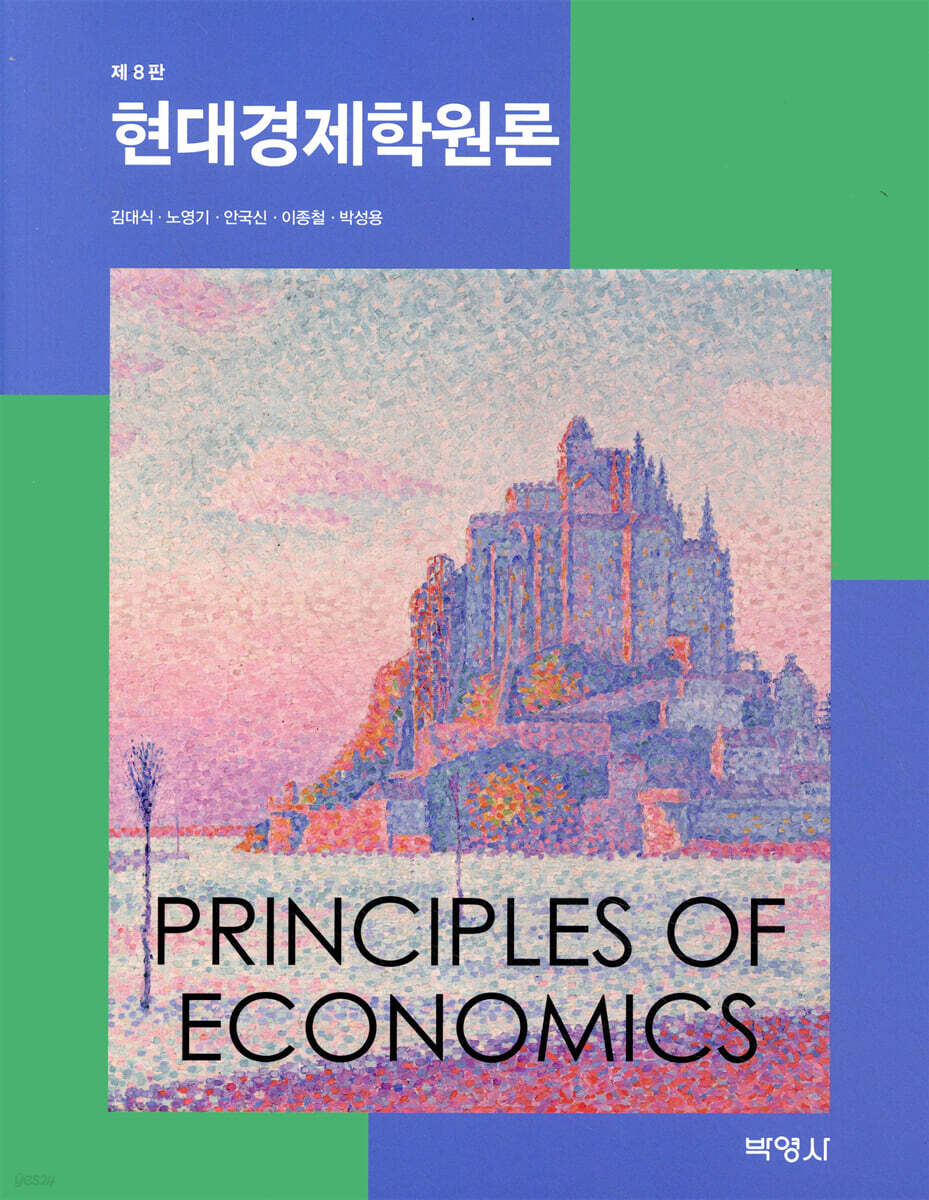 |
Description
Book Introduction
The main features of this 8th edition are as follows:
First, following the 7th edition, we have explained the basic economic concept of 'opportunity cost' so that it can be clearly understood.
Second, we have accommodated changes in systems, laws, and regulations and extended various statistics to recent years.
Third, in the introduction to macroeconomics section, the IS-LM model, which readers find difficult, was removed and simplified to the theory of aggregate demand and aggregate supply.
Fourth, the growth and development of the Korean economy was added at the end of Chapter 29, ‘Theory of Economic Growth and Development.’
First, following the 7th edition, we have explained the basic economic concept of 'opportunity cost' so that it can be clearly understood.
Second, we have accommodated changes in systems, laws, and regulations and extended various statistics to recent years.
Third, in the introduction to macroeconomics section, the IS-LM model, which readers find difficult, was removed and simplified to the theory of aggregate demand and aggregate supply.
Fourth, the growth and development of the Korean economy was added at the end of Chapter 29, ‘Theory of Economic Growth and Development.’
index
Part I: Fundamentals of Economics
CHAPTER 1 Economic Problems and Economic Systems 002
CHAPTER 2 The Essence of Economics 024
| Introduction to Microeconomics |
Part II: Theory of Supply and Demand and Its Applications
CHAPTER 3 Theory of Supply and Demand - 052
CHAPTER 4 Elasticities of Supply and Demand - 088
CHAPTER 5: APPLICATION OF THE THEORY OF SUPPLY AND DEMAND - 112
Part III Theory of Consumer Choice
CHAPTER 6 Marginal Utility Theory - 142
CHAPTER 7: Indifference Curve Theory - 166
CHAPTER 8: APPLICATIONS AND EXTENSIONS OF CONSUMER CHOICE THEORY - 202
Part IV Theory of Producer Choice
CHAPTER 9: Firms and Production Functions 226
CHAPTER 10: PRODUCTION AND COST FUNCTIONS 264
Part V Theory of Product Markets
CHAPTER 11: PRICE AND PRODUCTION IN PERFECTLY COMPETITIVE MARKETS - 302
CHAPTER 12 PRICE AND PRODUCTION IN A MONOPOLY MARKET - 332
CHAPTER 13 PRICING AND PRODUCTION IN MONOPOLOPICALLY COMPETITIVE AND OLIGOPOLITICAL MARKETS366
Part VI: Factor Markets and the Theory of Income Distribution
CHAPTER 14 Theory of Factor Markets 406
CHAPTER 15 Theory of Income Distribution 432
Part VII Welfare Economics and the Extension of Microeconomic Theory
CHAPTER 16: General Equilibrium Analysis and Welfare Economics 464
CHAPTER 17 Market Failure and Government Theory - 486
CHAPTER 18: Applications of Microeconomic Theory - Extensions and Modifications - 514
| Introduction to Macroeconomics |
Part VIII: Fundamental Concepts and Theories of Macroeconomics
CHAPTER 19: Basic Concepts and Measurement of Key Macroeconomic Variables 548
CHAPTER 20: Basic Theory of Determination of Real National Income 594
CHAPTER 21 Finance and Fiscal Policy 632
Part IX: Money and the National Economy
CHAPTER 22: Financial Systems and Money Supply - 666
CHAPTER 23 Money Demand and Monetary Policy - 702
Part X Aggregate Demand - Aggregate Supply Theory and Stabilization Policy
CHAPTER 24: The Theory of Aggregate Demand and Aggregate Supply - 736
CHAPTER 25: Business Cycles and Stabilization Policies: Two Trends in Macroeconomics756
CHAPTER 26: INFLATION AND UNEMPLOYMENT
Part XI International Economic Theory
CHAPTER 27 Theory of International Trade 828
CHAPTER 28: Balance of Payments, Exchange Rates, and the Open Economy Model - 870
Part XII Economic Development and Financial Crisis
CHAPTER 29: THEORIES OF ECONOMIC GROWTH AND DEVELOPMENT - 910
CHAPTER 30: The Financial Crisis 954
Part XIII The Flow of Economics and Political Economy
CHAPTER 31: The Flow of Economics and Political Economy - 996
CHAPTER 1 Economic Problems and Economic Systems 002
CHAPTER 2 The Essence of Economics 024
| Introduction to Microeconomics |
Part II: Theory of Supply and Demand and Its Applications
CHAPTER 3 Theory of Supply and Demand - 052
CHAPTER 4 Elasticities of Supply and Demand - 088
CHAPTER 5: APPLICATION OF THE THEORY OF SUPPLY AND DEMAND - 112
Part III Theory of Consumer Choice
CHAPTER 6 Marginal Utility Theory - 142
CHAPTER 7: Indifference Curve Theory - 166
CHAPTER 8: APPLICATIONS AND EXTENSIONS OF CONSUMER CHOICE THEORY - 202
Part IV Theory of Producer Choice
CHAPTER 9: Firms and Production Functions 226
CHAPTER 10: PRODUCTION AND COST FUNCTIONS 264
Part V Theory of Product Markets
CHAPTER 11: PRICE AND PRODUCTION IN PERFECTLY COMPETITIVE MARKETS - 302
CHAPTER 12 PRICE AND PRODUCTION IN A MONOPOLY MARKET - 332
CHAPTER 13 PRICING AND PRODUCTION IN MONOPOLOPICALLY COMPETITIVE AND OLIGOPOLITICAL MARKETS366
Part VI: Factor Markets and the Theory of Income Distribution
CHAPTER 14 Theory of Factor Markets 406
CHAPTER 15 Theory of Income Distribution 432
Part VII Welfare Economics and the Extension of Microeconomic Theory
CHAPTER 16: General Equilibrium Analysis and Welfare Economics 464
CHAPTER 17 Market Failure and Government Theory - 486
CHAPTER 18: Applications of Microeconomic Theory - Extensions and Modifications - 514
| Introduction to Macroeconomics |
Part VIII: Fundamental Concepts and Theories of Macroeconomics
CHAPTER 19: Basic Concepts and Measurement of Key Macroeconomic Variables 548
CHAPTER 20: Basic Theory of Determination of Real National Income 594
CHAPTER 21 Finance and Fiscal Policy 632
Part IX: Money and the National Economy
CHAPTER 22: Financial Systems and Money Supply - 666
CHAPTER 23 Money Demand and Monetary Policy - 702
Part X Aggregate Demand - Aggregate Supply Theory and Stabilization Policy
CHAPTER 24: The Theory of Aggregate Demand and Aggregate Supply - 736
CHAPTER 25: Business Cycles and Stabilization Policies: Two Trends in Macroeconomics756
CHAPTER 26: INFLATION AND UNEMPLOYMENT
Part XI International Economic Theory
CHAPTER 27 Theory of International Trade 828
CHAPTER 28: Balance of Payments, Exchange Rates, and the Open Economy Model - 870
Part XII Economic Development and Financial Crisis
CHAPTER 29: THEORIES OF ECONOMIC GROWTH AND DEVELOPMENT - 910
CHAPTER 30: The Financial Crisis 954
Part XIII The Flow of Economics and Political Economy
CHAPTER 31: The Flow of Economics and Political Economy - 996
Publisher's Review
It has been almost 40 years since the first publication of 『Introduction to Modern Economics』, which aims to provide an easy-to-understand introduction to economics.
The 8th edition is being published seven years after the previous 7th edition. Economic issues such as production, distribution, and consumption, which are essential for making a living, are as important now as they were in the past.
Economic problems and the resulting economic phenomena are becoming increasingly complex and diverse.
It is important for individuals and businesses to understand economic issues and phenomena in a logical manner and to conduct economic activities wisely.
Of course, it is also important for countries that implement economic policies.
There are numerous economic problems and phenomena in modern society, but if you have a firm grasp of just a few key principles of economics, you can grasp the core issues and discuss rational countermeasures.
With this problem in mind, my initial intention was to write an easy economics introduction that would teach students a few key principles and an interesting economics introduction that would help them understand the reality of our country.
This writing intention has been achieved to some extent through the process of revising the book up to the 7th edition amidst the numerous American economics textbooks on the market.
This is why the 8th edition was published belatedly and slowly.
Over the past seven years, Korea has faced a structural transition, with low birth rates and an aging population accelerating faster than before, and economic growth rates dropping from 2-3% per year to 0%.
The world experienced two major shocks.
The major pandemic called COVID-19 and the AI technological revolution are two examples.
COVID-19 has hit the entire world hard, causing many countries to experience severe economic recession.
Major countries around the world have been able to prevent recessions from escalating into economic crises by implementing expansionary fiscal and monetary policies, as prescribed by economics. The AI technological revolution is impacting every sector of the world, and its impact is growing increasingly uncontrollable.
There is still no economic theory that systematically analyzes this and predicts the future.
As the full scope of the AI technological revolution becomes more apparent, a comprehensive economic theory of AI is likely to emerge.
We promise our readers that we will faithfully introduce this in the next edition.
Key features of this 8th edition include:
First, following the 7th edition, we have explained the basic economic concept of 'opportunity cost' so that it can be clearly understood.
Economics explains why people engage in or do not engage in certain economic activities through cost-benefit analysis.
Cost-benefit analysis is a method of comparing the benefits and costs of an activity and explaining that if the benefits are greater than the costs, the economic activity should be performed, and if the costs are greater than the benefits, the economic activity should not be performed.
The cost here is opportunity cost.
Because of the opportunity cost concept unique to economics, cost-benefit analysis can be applied not only to economics but also to related fields of study such as political science, sociology, and psychology to persuasively explain various phenomena.
It is no exaggeration to say that economics is called the queen of social sciences because of the concept of opportunity cost.
There are many introductory economics books available both domestically and internationally, but I am confident that none of them explains the concept of opportunity cost as consistently and clearly as this book.
After reading this book, readers will be able to conduct interesting economic analyses of various political, social, and cultural phenomena other than economic phenomena (e.g., martial law declared by President Yoon Seok-yeol in December 2024, or President Trump's construction of a high wall along the U.S.-Mexico border).
Second, we have accommodated changes in systems, laws, and regulations and extended various statistics to recent years.
Over the years, there have been considerable changes in areas such as imperfect competition markets and fair trade systems, income distribution and social welfare, national accounts, financial systems, public finance, and the international economy, and these have been faithfully reflected.
We have changed several reading materials and illustrations (picture files) to make them more realistic.
We have added practice problems that address our country's economic issues by utilizing basic concepts and key principles.
Through these large and small revisions, we have created a Korean-style economics textbook that is easier for readers, especially the new generation, to understand.
Third, in the Introduction to Macroeconomics section, we removed the IS-LM model, which readers found difficult, and simplified it to the theory of aggregate demand and aggregate supply. The IS-LM model is a theoretically elegant theory of aggregate demand, but it is unnecessarily complex.
You can understand the theory of aggregate demand and aggregate supply without necessarily dealing with this model (for readers who want to learn at a more advanced level, the IS-LM model is introduced at the end of Chapter 25 of the answer book).
Fourth, the growth and development of the Korean economy was added at the end of Chapter 29, ‘Theory of Economic Growth and Development.’
We discuss the need to confirm that our country has become an advanced country in the economic field and to expand our growth potential to become a true advanced country in other fields as well, thereby raising our economic growth rate, which is currently at 0%, to 2-3%.
Only by maintaining robust growth at a global average can we maintain our position within the top 10, increase welfare for the socially disadvantaged, and cultivate the ability to lead in the AI era.
With the publication of this revised edition, this book, which was known to be co-authored by three people, has evolved from co-authored by four people in the previous 7th edition to co-authored by five people.
Professor Park Seong-yong, who is currently teaching at the Department of Economics at Chung-Ang University, participated as a co-author and revised and polished the Introduction to Microeconomics section.
Many people helped in the production of the 8th edition.
I would like to express my gratitude to the professors at Chung-Ang University's Department of Economics and other universities across the country who provided detailed comments and suggestions.
I would like to express my gratitude to Park Young-sa CEO Sang-jun Ahn and Director Seong-ho Cho for their active support of the revision process, and to the editorial department's deputy manager Geun-ha Bae for his sharp editing skills.
2025.
2. 8.
All authors
The 8th edition is being published seven years after the previous 7th edition. Economic issues such as production, distribution, and consumption, which are essential for making a living, are as important now as they were in the past.
Economic problems and the resulting economic phenomena are becoming increasingly complex and diverse.
It is important for individuals and businesses to understand economic issues and phenomena in a logical manner and to conduct economic activities wisely.
Of course, it is also important for countries that implement economic policies.
There are numerous economic problems and phenomena in modern society, but if you have a firm grasp of just a few key principles of economics, you can grasp the core issues and discuss rational countermeasures.
With this problem in mind, my initial intention was to write an easy economics introduction that would teach students a few key principles and an interesting economics introduction that would help them understand the reality of our country.
This writing intention has been achieved to some extent through the process of revising the book up to the 7th edition amidst the numerous American economics textbooks on the market.
This is why the 8th edition was published belatedly and slowly.
Over the past seven years, Korea has faced a structural transition, with low birth rates and an aging population accelerating faster than before, and economic growth rates dropping from 2-3% per year to 0%.
The world experienced two major shocks.
The major pandemic called COVID-19 and the AI technological revolution are two examples.
COVID-19 has hit the entire world hard, causing many countries to experience severe economic recession.
Major countries around the world have been able to prevent recessions from escalating into economic crises by implementing expansionary fiscal and monetary policies, as prescribed by economics. The AI technological revolution is impacting every sector of the world, and its impact is growing increasingly uncontrollable.
There is still no economic theory that systematically analyzes this and predicts the future.
As the full scope of the AI technological revolution becomes more apparent, a comprehensive economic theory of AI is likely to emerge.
We promise our readers that we will faithfully introduce this in the next edition.
Key features of this 8th edition include:
First, following the 7th edition, we have explained the basic economic concept of 'opportunity cost' so that it can be clearly understood.
Economics explains why people engage in or do not engage in certain economic activities through cost-benefit analysis.
Cost-benefit analysis is a method of comparing the benefits and costs of an activity and explaining that if the benefits are greater than the costs, the economic activity should be performed, and if the costs are greater than the benefits, the economic activity should not be performed.
The cost here is opportunity cost.
Because of the opportunity cost concept unique to economics, cost-benefit analysis can be applied not only to economics but also to related fields of study such as political science, sociology, and psychology to persuasively explain various phenomena.
It is no exaggeration to say that economics is called the queen of social sciences because of the concept of opportunity cost.
There are many introductory economics books available both domestically and internationally, but I am confident that none of them explains the concept of opportunity cost as consistently and clearly as this book.
After reading this book, readers will be able to conduct interesting economic analyses of various political, social, and cultural phenomena other than economic phenomena (e.g., martial law declared by President Yoon Seok-yeol in December 2024, or President Trump's construction of a high wall along the U.S.-Mexico border).
Second, we have accommodated changes in systems, laws, and regulations and extended various statistics to recent years.
Over the years, there have been considerable changes in areas such as imperfect competition markets and fair trade systems, income distribution and social welfare, national accounts, financial systems, public finance, and the international economy, and these have been faithfully reflected.
We have changed several reading materials and illustrations (picture files) to make them more realistic.
We have added practice problems that address our country's economic issues by utilizing basic concepts and key principles.
Through these large and small revisions, we have created a Korean-style economics textbook that is easier for readers, especially the new generation, to understand.
Third, in the Introduction to Macroeconomics section, we removed the IS-LM model, which readers found difficult, and simplified it to the theory of aggregate demand and aggregate supply. The IS-LM model is a theoretically elegant theory of aggregate demand, but it is unnecessarily complex.
You can understand the theory of aggregate demand and aggregate supply without necessarily dealing with this model (for readers who want to learn at a more advanced level, the IS-LM model is introduced at the end of Chapter 25 of the answer book).
Fourth, the growth and development of the Korean economy was added at the end of Chapter 29, ‘Theory of Economic Growth and Development.’
We discuss the need to confirm that our country has become an advanced country in the economic field and to expand our growth potential to become a true advanced country in other fields as well, thereby raising our economic growth rate, which is currently at 0%, to 2-3%.
Only by maintaining robust growth at a global average can we maintain our position within the top 10, increase welfare for the socially disadvantaged, and cultivate the ability to lead in the AI era.
With the publication of this revised edition, this book, which was known to be co-authored by three people, has evolved from co-authored by four people in the previous 7th edition to co-authored by five people.
Professor Park Seong-yong, who is currently teaching at the Department of Economics at Chung-Ang University, participated as a co-author and revised and polished the Introduction to Microeconomics section.
Many people helped in the production of the 8th edition.
I would like to express my gratitude to the professors at Chung-Ang University's Department of Economics and other universities across the country who provided detailed comments and suggestions.
I would like to express my gratitude to Park Young-sa CEO Sang-jun Ahn and Director Seong-ho Cho for their active support of the revision process, and to the editorial department's deputy manager Geun-ha Bae for his sharp editing skills.
2025.
2. 8.
All authors
GOODS SPECIFICS
- Date of issue: February 28, 2025
- Page count, weight, size: 1,080 pages | 188*257*60mm
- ISBN13: 9791130321400
- ISBN10: 1130321401
You may also like
카테고리
korean


korean

![GQ KOREA Mark (Monthly): December [2025]](http://librairie.coreenne.fr/cdn/shop/files/8ef265dbbfbf186523ed75ba7319009d.jpg?v=1765340328&width=3840)


