

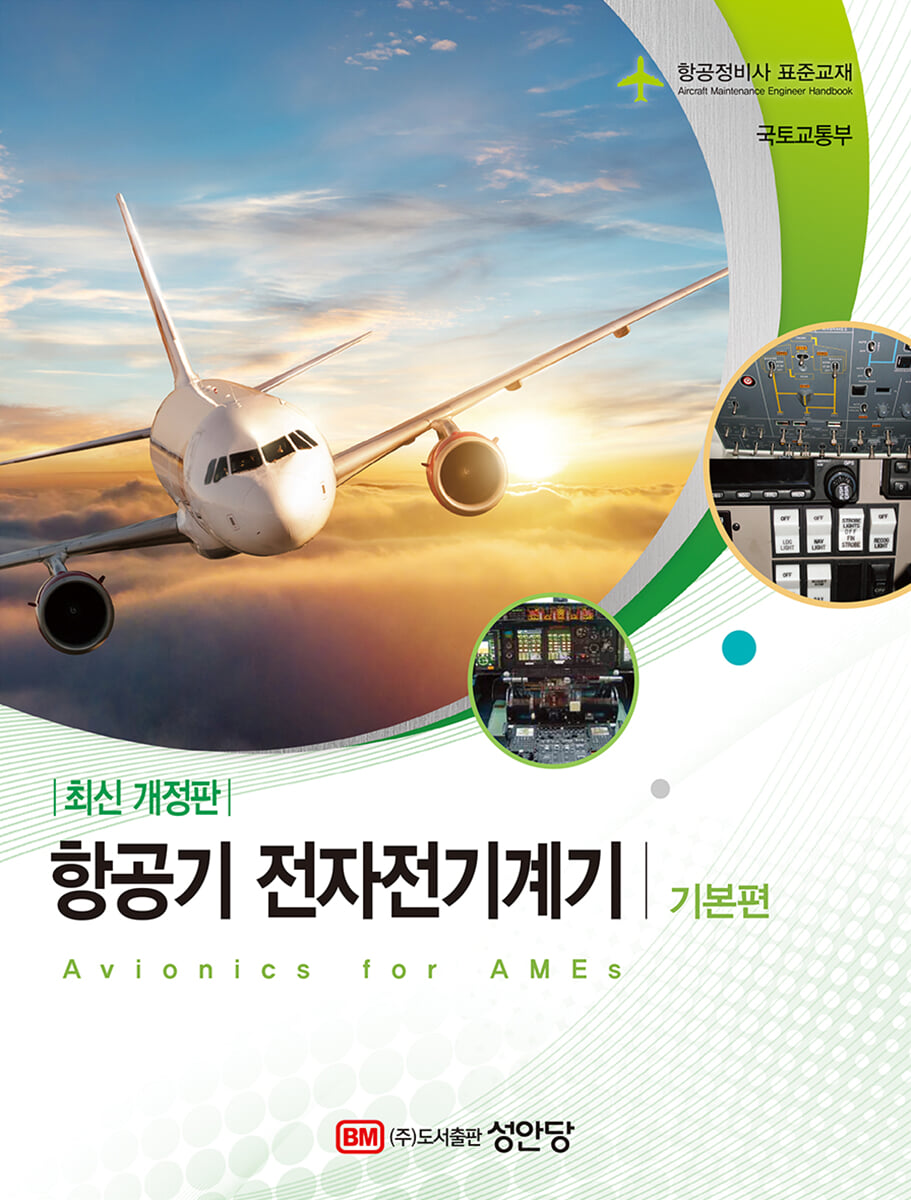
Aircraft Electronic and Electrical Instrumentation Fundamentals
 |
Description
Book Introduction
Ministry of Land, Infrastructure and Transport standard textbook for training aircraft maintenance engineers!!
『Aircraft Electronic and Electrical Instrumentation Fundamentals』
As the domestic aviation industry continues to grow day by day, the Ministry of Land, Infrastructure and Transport has published the "Standard Textbook for Aviation Professionals" for aircraft maintenance engineers, pilots, air traffic controllers, etc. in order to train aviation professionals more systematically. It has also been newly revised to reflect the newly changed aviation safety laws and development trends in maintenance technology.
The revised standard textbook for aircraft maintenance engineers focuses on reflecting the latest trends so that students can learn about new systems, equipment, and procedures that have emerged with the advent of ultra-large aircraft equipped with advanced materials, powertrains, and electrical and electronic systems that were not available in previous aircraft types. In addition, terms that were difficult to understand were revised to terms actually used in the workplace, and Korean and original languages were written together to improve learners' understanding. In addition, the pictorial materials were also made use of materials from domestic workplaces, etc., and suggestions from actual textbook users were sufficiently reviewed and reflected to increase learning convenience.
In addition, this standard textbook for aircraft maintenance engineers published by Seongandang includes a special appendix, “Aviation Terminology Explanation,” which carefully selects “key terms” from the text and provides detailed explanations with illustrations to help with more effective learning.
『Aircraft Electronic and Electrical Instrumentation Fundamentals』
As the domestic aviation industry continues to grow day by day, the Ministry of Land, Infrastructure and Transport has published the "Standard Textbook for Aviation Professionals" for aircraft maintenance engineers, pilots, air traffic controllers, etc. in order to train aviation professionals more systematically. It has also been newly revised to reflect the newly changed aviation safety laws and development trends in maintenance technology.
The revised standard textbook for aircraft maintenance engineers focuses on reflecting the latest trends so that students can learn about new systems, equipment, and procedures that have emerged with the advent of ultra-large aircraft equipped with advanced materials, powertrains, and electrical and electronic systems that were not available in previous aircraft types. In addition, terms that were difficult to understand were revised to terms actually used in the workplace, and Korean and original languages were written together to improve learners' understanding. In addition, the pictorial materials were also made use of materials from domestic workplaces, etc., and suggestions from actual textbook users were sufficiently reviewed and reflected to increase learning convenience.
In addition, this standard textbook for aircraft maintenance engineers published by Seongandang includes a special appendix, “Aviation Terminology Explanation,” which carefully selects “key terms” from the text and provides detailed explanations with illustrations to help with more effective learning.
index
PART 01.
Basic Electrical and Electronics
1.1 Overview
1.2 General composition of matter
1.3 Prefixes used in electrical calculations
1.4 Static electricity
1.5 self
1.6 Types of magnets
1.7 Electromagnetism
1.8 Traditional flow and electronic flow
1.9 electromotive force
1.10 Current
1.11 Resistance and Ohm's Law
1.12 Resistance of conductors
1.13 Power and Energy
1.14 Types of Resistance
1.15 Circuit protection devices
1.16 Control Unit
1.17 Series DC Circuit
1.18 Parallel DC Circuit
1.19 Series and parallel DC circuits
1.20 Alternating current and voltage
1.21 Generator Principle
1.22 capacitance
1.23 Inductance
1.24 AC circuit
1.25 transformer
1.26 DC measuring instrument
1.27 Voltmeter
1.28 Electrical resistance meter
1.29 AC meter
1.30 Basic Circuit Analysis and Fault Finding
1.31 Battery
1.32 nickel cadmium battery
1.33 inverter
1.34 Semiconductor
1.35 rectifier
1.36 Transistor Overview
1.37 vacuum tube
1.38 Filtering
1.39 Amplifier Circuit
1.40 Magnetic Amplifier
1.41 Logic Circuits
1.42 DC generator
1.43 DC generator maintenance
1.44 DC motor
1.45 DC motor structure
1.46 Types of DC motors
1.47 Counter electromotive force
1.48 AC motor
1.49 alternator
1.50 Generator Control Unit
1.51 Alternator Constant Speed Drive Device
1.52 hydraulic transmission
1.53 Voltage regulation of alternator
PART 02.
aircraft electrical systems
2.1 Aircraft Electrical System Overview
2.2 Aircraft DC systems and batteries
2.3 Aircraft Electrical Systems
2.4 Wiring equipment
2.5 Electrical System Components
2.6 Aircraft Lighting System
PART 03.
aircraft instrument system
3.1 Introduction
3.2 Classification of aviation instruments
3.3 Pressure gauge
3.4 Remote Sensing and Instrumentation
3.5 Mechanical operating instruments
3.6 Temperature measuring instrument
3.7 Flight Direction Indication Mooring
3.8 Power source of the gyro instrument
3.9 Gyro Instrument Principle
3.10 Gyro Instrument
3.11 Autopilot System
3.12 Components of the Autopilot
3.13 Autopilot
3.14 Flight Direction Device
3.15 Electronic instruments
3.16 Electronic Flight Information System
3.17 Warnings and Cautions
3.18 watch
3.19 Instrument case and handling
3.20 Instrument mounting and instrument color display
3.21 Instrument and instrument system maintenance
PART 04.
Communication and navigation system
4.1 Wireless Communication
4.2 Navigation System
· Aviation Terminology Explanation in a separate appendix
Basic Electrical and Electronics
1.1 Overview
1.2 General composition of matter
1.3 Prefixes used in electrical calculations
1.4 Static electricity
1.5 self
1.6 Types of magnets
1.7 Electromagnetism
1.8 Traditional flow and electronic flow
1.9 electromotive force
1.10 Current
1.11 Resistance and Ohm's Law
1.12 Resistance of conductors
1.13 Power and Energy
1.14 Types of Resistance
1.15 Circuit protection devices
1.16 Control Unit
1.17 Series DC Circuit
1.18 Parallel DC Circuit
1.19 Series and parallel DC circuits
1.20 Alternating current and voltage
1.21 Generator Principle
1.22 capacitance
1.23 Inductance
1.24 AC circuit
1.25 transformer
1.26 DC measuring instrument
1.27 Voltmeter
1.28 Electrical resistance meter
1.29 AC meter
1.30 Basic Circuit Analysis and Fault Finding
1.31 Battery
1.32 nickel cadmium battery
1.33 inverter
1.34 Semiconductor
1.35 rectifier
1.36 Transistor Overview
1.37 vacuum tube
1.38 Filtering
1.39 Amplifier Circuit
1.40 Magnetic Amplifier
1.41 Logic Circuits
1.42 DC generator
1.43 DC generator maintenance
1.44 DC motor
1.45 DC motor structure
1.46 Types of DC motors
1.47 Counter electromotive force
1.48 AC motor
1.49 alternator
1.50 Generator Control Unit
1.51 Alternator Constant Speed Drive Device
1.52 hydraulic transmission
1.53 Voltage regulation of alternator
PART 02.
aircraft electrical systems
2.1 Aircraft Electrical System Overview
2.2 Aircraft DC systems and batteries
2.3 Aircraft Electrical Systems
2.4 Wiring equipment
2.5 Electrical System Components
2.6 Aircraft Lighting System
PART 03.
aircraft instrument system
3.1 Introduction
3.2 Classification of aviation instruments
3.3 Pressure gauge
3.4 Remote Sensing and Instrumentation
3.5 Mechanical operating instruments
3.6 Temperature measuring instrument
3.7 Flight Direction Indication Mooring
3.8 Power source of the gyro instrument
3.9 Gyro Instrument Principle
3.10 Gyro Instrument
3.11 Autopilot System
3.12 Components of the Autopilot
3.13 Autopilot
3.14 Flight Direction Device
3.15 Electronic instruments
3.16 Electronic Flight Information System
3.17 Warnings and Cautions
3.18 watch
3.19 Instrument case and handling
3.20 Instrument mounting and instrument color display
3.21 Instrument and instrument system maintenance
PART 04.
Communication and navigation system
4.1 Wireless Communication
4.2 Navigation System
· Aviation Terminology Explanation in a separate appendix
Publisher's Review
1.
Reflects the latest trends to enable learning about the systems, equipment, and procedures of the latest aircraft.
2.
Difficult-to-understand aviation terms are revised to terms actually used in the field, and Korean and original language are written together to improve comprehension.
3.
Includes a variety of picture materials to enhance learning convenience.
4.
Includes a special appendix, 『Aviation Terminology』, which carefully selects and explains in detail key terms from the main text.
Reflects the latest trends to enable learning about the systems, equipment, and procedures of the latest aircraft.
2.
Difficult-to-understand aviation terms are revised to terms actually used in the field, and Korean and original language are written together to improve comprehension.
3.
Includes a variety of picture materials to enhance learning convenience.
4.
Includes a special appendix, 『Aviation Terminology』, which carefully selects and explains in detail key terms from the main text.
GOODS SPECIFICS
- Date of issue: September 4, 2024
- Page count, weight, size: 620 pages | 190*250*35mm
- ISBN13: 9788931511727
- ISBN10: 8931511728
You may also like
카테고리
korean


korean

![GQ KOREA Mark (Monthly): December [2025]](http://librairie.coreenne.fr/cdn/shop/files/8ef265dbbfbf186523ed75ba7319009d.jpg?v=1765340328&width=3840)


