

General Aviation Maintenance
 |
Description
Book Introduction
Ministry of Land, Infrastructure and Transport standard textbook for training aircraft maintenance engineers!!
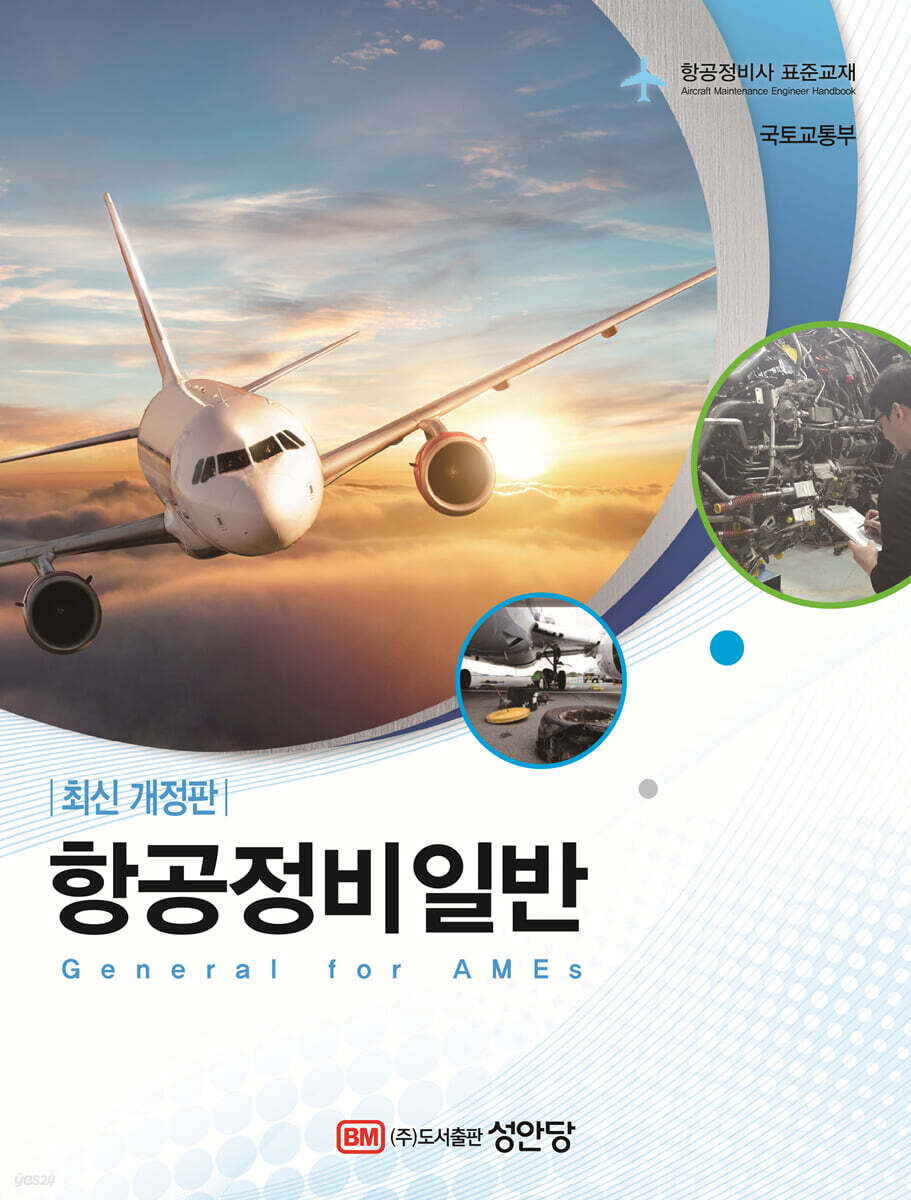
『Aircraft Maintenance General』
As the domestic aviation industry continues to grow day by day, the Ministry of Land, Infrastructure and Transport has published the "Standard Textbook for Aviation Professionals" for aircraft maintenance engineers, pilots, air traffic controllers, etc. in order to train aviation professionals more systematically. It has also been newly revised to reflect the newly changed aviation safety laws and development trends in maintenance technology.
The revised standard textbook for aircraft maintenance engineers focuses on reflecting the latest trends so that students can learn about new systems, equipment, and procedures that have emerged with the advent of ultra-large aircraft equipped with advanced materials, powertrains, and electrical and electronic systems that were not available in previous aircraft types. In addition, terms that were difficult to understand were revised to terms actually used in the workplace, and Korean and original languages were written together to improve learners' understanding. In addition, the pictorial materials were also made use of materials from domestic workplaces, etc., and suggestions from actual textbook users were sufficiently reviewed and reflected to increase learning convenience.
In addition, this standard textbook for aircraft maintenance engineers published by Seongandang includes a special appendix, “Aviation Terminology Explanation,” which carefully selects “key terms” from the text and provides detailed explanations with illustrations to help with more effective learning.
『Aircraft Maintenance General』
As the domestic aviation industry continues to grow day by day, the Ministry of Land, Infrastructure and Transport has published the "Standard Textbook for Aviation Professionals" for aircraft maintenance engineers, pilots, air traffic controllers, etc. in order to train aviation professionals more systematically. It has also been newly revised to reflect the newly changed aviation safety laws and development trends in maintenance technology.
The revised standard textbook for aircraft maintenance engineers focuses on reflecting the latest trends so that students can learn about new systems, equipment, and procedures that have emerged with the advent of ultra-large aircraft equipped with advanced materials, powertrains, and electrical and electronic systems that were not available in previous aircraft types. In addition, terms that were difficult to understand were revised to terms actually used in the workplace, and Korean and original languages were written together to improve learners' understanding. In addition, the pictorial materials were also made use of materials from domestic workplaces, etc., and suggestions from actual textbook users were sufficiently reviewed and reflected to increase learning convenience.
In addition, this standard textbook for aircraft maintenance engineers published by Seongandang includes a special appendix, “Aviation Terminology Explanation,” which carefully selects “key terms” from the text and provides detailed explanations with illustrations to help with more effective learning.
index
PART 01.
physics
1.1 Material
1.2 Energy
1.3 Force, work, power, torque
1.4 Mechanical Devices
1.5 stress
1.6 Exercise
1.7 columns
1.8 pressure
1.9 Gas Laws
1.10 Fluid Mechanics
1.11 Sound
PART 02.
Aerodynamics
2.1 Introduction
2.2 Wait
2.3 Aerodynamics and the Laws of Physics
2.4 Airfoil
2.5 Thrust and drag
2.6 Center of gravity
2.7 Airplane fuselage axis
2.8 Stability and Control
2.9 Primary Control Unit
2.10 Balanced Flight Control
2.11 Auxiliary lifting device
2.12 Control systems for large aircraft
2.13 High-Speed Aerodynamics
2.14 Rotary-wing aircraft configuration
2.15 Types of Rotor System
2.16 Helicopter load
2.17 Helicopter Flight Status
2.18 Rotary-wing aircraft control
PART 03.
aircraft drawings
3.1 Computer Graphics
3.2 Purpose and function of aircraft drawings
3.3 Management and Use of Drawings
3.4 Types of drawings
3.5 Title
3.6 General numbering system
3.7 Parts List
3.8 Other drawing materials
3.9 Drawing method
3.10 Types and Meanings of Lines
3.11 Drawing symbols
3.12 Reading drawings
3.13 Drawing Sketch
3.14 Management of institutional tools
3.15 Graphs and Charts
3.16 Microfilm and Microfiche
3.17 Digital Images
PART 04.
Aircraft Weight and Balance Management
4.1 Overview
4.2 Weight and Balance Management Theory
4.3 Weight and Balance Management Terminology
4.4 Aircraft Weight Measurement Procedure
4.5.
Onboard management
4.6 Aircraft Modification and Equipment Exchange
4.7 Loading graph and center of gravity limit range diagram
4.8 Helicopter Weight and Balance
4.9 Weight and balance of weight-shifting aircraft and powered parachutes
4.10 Weight and Balance of Large Aircraft
4.11 Weight and Balance Record
PART 05.
Aircraft materials, processes, and hardware
5.1 Aircraft Metals
5.2 Aircraft non-metallic materials
5.3 Buffer Code
5.4 days
5.5 Aircraft Hardware
5.6 Rivets for aircraft
PART 06.
Aircraft cleaning and corrosion protection
6.1 Corrosion prevention treatment
6.2 Aircraft Cleaning
PART 07.
Fluid lines and fasteners
7.1 Rigid fluid lines
7.2 Flexible hose fluid lines
PART 08.
Hand tools and measuring instruments
8.1 General-purpose tools
8.2 Metal Cutting Tools
8.3 Taps and Dies
8.4 Design and Measurement Tools
PART 09.
Safety, ground handling and service operations
9.1 Workplace Safety
9.2 Operational Maintenance Safety
9.3 Fire Prevention
9.4 Pending Procedures
9.5 Land-based aircraft mooring procedures
9.6 Aircraft Ground Movement
9.7 Aircraft Servicing
9.8 Aircraft Refueling
PART 10.
Inspection concepts and techniques
10.1 Basic Testing
10.2 Aircraft Log
10.3 Checklist
10.4 Publications
10.5 Routine/Required Inspection
10.6 Aircraft System Classification
10.7 Special Prosecutor
10.8 Special Flight Permit
10.9 Non-destructive testing
10.10.
Inspection of joint structures
10.11 Inspection of composite materials
10.12 Welding Inspection
PART 11.
human factors
11.1 Overview of Human Factors
11.2 History of Human Factors
11.3 Fair Model
11.4 Human Factors Tool
11.5 Human error
11.6 Dirty Dozen
11.7 Common Maintenance Errors
· Aviation Terminology Explanation in a separate appendix
physics
1.1 Material
1.2 Energy
1.3 Force, work, power, torque
1.4 Mechanical Devices
1.5 stress
1.6 Exercise
1.7 columns
1.8 pressure
1.9 Gas Laws
1.10 Fluid Mechanics
1.11 Sound
PART 02.
Aerodynamics
2.1 Introduction
2.2 Wait
2.3 Aerodynamics and the Laws of Physics
2.4 Airfoil
2.5 Thrust and drag
2.6 Center of gravity
2.7 Airplane fuselage axis
2.8 Stability and Control
2.9 Primary Control Unit
2.10 Balanced Flight Control
2.11 Auxiliary lifting device
2.12 Control systems for large aircraft
2.13 High-Speed Aerodynamics
2.14 Rotary-wing aircraft configuration
2.15 Types of Rotor System
2.16 Helicopter load
2.17 Helicopter Flight Status
2.18 Rotary-wing aircraft control
PART 03.
aircraft drawings
3.1 Computer Graphics
3.2 Purpose and function of aircraft drawings
3.3 Management and Use of Drawings
3.4 Types of drawings
3.5 Title
3.6 General numbering system
3.7 Parts List
3.8 Other drawing materials
3.9 Drawing method
3.10 Types and Meanings of Lines
3.11 Drawing symbols
3.12 Reading drawings
3.13 Drawing Sketch
3.14 Management of institutional tools
3.15 Graphs and Charts
3.16 Microfilm and Microfiche
3.17 Digital Images
PART 04.
Aircraft Weight and Balance Management
4.1 Overview
4.2 Weight and Balance Management Theory
4.3 Weight and Balance Management Terminology
4.4 Aircraft Weight Measurement Procedure
4.5.
Onboard management
4.6 Aircraft Modification and Equipment Exchange
4.7 Loading graph and center of gravity limit range diagram
4.8 Helicopter Weight and Balance
4.9 Weight and balance of weight-shifting aircraft and powered parachutes
4.10 Weight and Balance of Large Aircraft
4.11 Weight and Balance Record
PART 05.
Aircraft materials, processes, and hardware
5.1 Aircraft Metals
5.2 Aircraft non-metallic materials
5.3 Buffer Code
5.4 days
5.5 Aircraft Hardware
5.6 Rivets for aircraft
PART 06.
Aircraft cleaning and corrosion protection
6.1 Corrosion prevention treatment
6.2 Aircraft Cleaning
PART 07.
Fluid lines and fasteners
7.1 Rigid fluid lines
7.2 Flexible hose fluid lines
PART 08.
Hand tools and measuring instruments
8.1 General-purpose tools
8.2 Metal Cutting Tools
8.3 Taps and Dies
8.4 Design and Measurement Tools
PART 09.
Safety, ground handling and service operations
9.1 Workplace Safety
9.2 Operational Maintenance Safety
9.3 Fire Prevention
9.4 Pending Procedures
9.5 Land-based aircraft mooring procedures
9.6 Aircraft Ground Movement
9.7 Aircraft Servicing
9.8 Aircraft Refueling
PART 10.
Inspection concepts and techniques
10.1 Basic Testing
10.2 Aircraft Log
10.3 Checklist
10.4 Publications
10.5 Routine/Required Inspection
10.6 Aircraft System Classification
10.7 Special Prosecutor
10.8 Special Flight Permit
10.9 Non-destructive testing
10.10.
Inspection of joint structures
10.11 Inspection of composite materials
10.12 Welding Inspection
PART 11.
human factors
11.1 Overview of Human Factors
11.2 History of Human Factors
11.3 Fair Model
11.4 Human Factors Tool
11.5 Human error
11.6 Dirty Dozen
11.7 Common Maintenance Errors
· Aviation Terminology Explanation in a separate appendix
Publisher's Review
1.
Reflects the latest trends to enable learning about the systems, equipment, and procedures of the latest aircraft.
2.
Difficult-to-understand aviation terms are revised to terms actually used in the field, and Korean and original language are written together to improve comprehension.
3.
Includes a variety of picture materials to enhance learning convenience.
4.
Includes a special appendix, 『Aviation Terminology』, which carefully selects and explains in detail key terms from the main text.
Reflects the latest trends to enable learning about the systems, equipment, and procedures of the latest aircraft.
2.
Difficult-to-understand aviation terms are revised to terms actually used in the field, and Korean and original language are written together to improve comprehension.
3.
Includes a variety of picture materials to enhance learning convenience.
4.
Includes a special appendix, 『Aviation Terminology』, which carefully selects and explains in detail key terms from the main text.
GOODS SPECIFICS
- Date of issue: September 4, 2024
- Page count, weight, size: 600 pages | 190*250*35mm
- ISBN13: 9788931511710
- ISBN10: 893151171X
You may also like
카테고리
korean


korean

![GQ KOREA Mark (Monthly): December [2025]](http://librairie.coreenne.fr/cdn/shop/files/8ef265dbbfbf186523ed75ba7319009d.jpg?v=1765340328&width=3840)


