

First Reading of Korean Archaeology
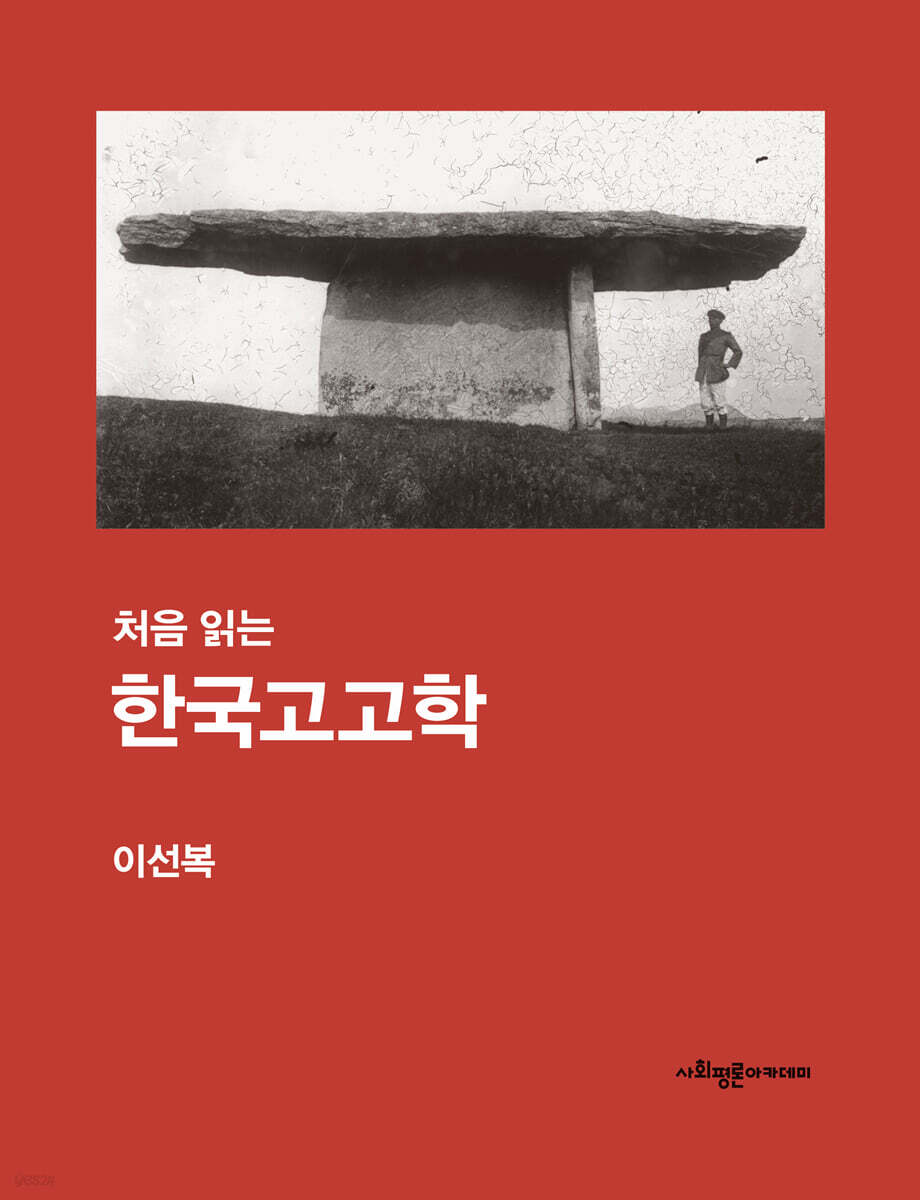 |
Description
Book Introduction
An introductory book on Korean archaeology published after 40 years
The late Professor Won-Yong Kim's 『Introduction to Korean Archaeology』, revised and published in its third edition in 1987, is still considered by many to be the best introductory book on archaeology.
More than 40 years have passed since then, and a vast amount of data has been accumulated.
Many books have been published to reflect the latest research findings.
However, it was not easy to find an introductory book on Korean archaeology that could fully fulfill the role that 『Introduction to Korean Archaeology』 had played.
After more than 40 years, an introductory book on archaeology has finally been published.
This is 『Reading Korean Archaeology for the First Time』, published by Professor Lee Seon-bok (retired from the Department of Archaeology and Art History, Seoul National University), an authority on Korean archaeology and a leader in popularizing archaeology.
In "Korean Archaeology for Beginners," key information is explained in an easy-to-understand manner, allowing readers to visualize the overall reality and flow of human life on the Korean Peninsula, from the Paleolithic Age, when humans began to leave traces on the peninsula, to the 20th century.
It is written in a way that even those who are new to archaeology can easily understand.
But this book is not just for beginners in archaeology.
This book, which offers readers something to ponder through its interesting stories interspersed throughout, also faithfully provides archaeology experts with the academic training they need as scholars.
It also provides a sober diagnosis of the current problems and limitations of academia and suggests the direction in which Korean archaeology should advance.
The book clearly demonstrates the expertise of Professor Lee Seon-bok, who has been teaching Korean archaeology for decades and has been involved in the field of Korean archaeology for a long time.
"Korean Archaeology for Beginners" is an excellent introductory book on Korean archaeology that fills the gap left by the 40-year gap since "Introduction to Korean Archaeology."
The late Professor Won-Yong Kim's 『Introduction to Korean Archaeology』, revised and published in its third edition in 1987, is still considered by many to be the best introductory book on archaeology.
More than 40 years have passed since then, and a vast amount of data has been accumulated.
Many books have been published to reflect the latest research findings.
However, it was not easy to find an introductory book on Korean archaeology that could fully fulfill the role that 『Introduction to Korean Archaeology』 had played.
After more than 40 years, an introductory book on archaeology has finally been published.
This is 『Reading Korean Archaeology for the First Time』, published by Professor Lee Seon-bok (retired from the Department of Archaeology and Art History, Seoul National University), an authority on Korean archaeology and a leader in popularizing archaeology.
In "Korean Archaeology for Beginners," key information is explained in an easy-to-understand manner, allowing readers to visualize the overall reality and flow of human life on the Korean Peninsula, from the Paleolithic Age, when humans began to leave traces on the peninsula, to the 20th century.
It is written in a way that even those who are new to archaeology can easily understand.
But this book is not just for beginners in archaeology.
This book, which offers readers something to ponder through its interesting stories interspersed throughout, also faithfully provides archaeology experts with the academic training they need as scholars.
It also provides a sober diagnosis of the current problems and limitations of academia and suggests the direction in which Korean archaeology should advance.
The book clearly demonstrates the expertise of Professor Lee Seon-bok, who has been teaching Korean archaeology for decades and has been involved in the field of Korean archaeology for a long time.
"Korean Archaeology for Beginners" is an excellent introductory book on Korean archaeology that fills the gap left by the 40-year gap since "Introduction to Korean Archaeology."
- You can preview some of the book's contents.
Preview
index
Starting the book
List of pictures
Chapter 1 Introduction
The Beginning and Development of Korean Archaeology | Periodization and Cultural Regions
Chapter 2 The First Residents of the Korean Peninsula
The Natural Environment of the Korean Peninsula | Environmental Changes in the Pleistocene | Paleoanthropology of the Korean Peninsula | Research History and Major Sites | The Imjin River Basin and Hand Axes | The Divergence of the Paleolithic | The Emergence of Modern Humans | The End of the Pleistocene and New Technologies
Chapter 3: Hunter-Gatherer Societies and the Beginning of a Production Economy
Defining the Neolithic | The Legacy of Colonial Archaeology | Chronology and Regionality | Habitat and Lifestyles | Agriculture and Agricultural Villages | Population and Burial Sites | Subsistence Economy | The Mystery of the End Times
Chapter 4: Progress and Development of Social Differentiation
The Bronze Age and North and South Korea | Chronological Issues | Unpatterned Pottery, Dolmens, Polished Stone Tools, and Bronze Daggers | Periodization and Regionality | Agricultural Villages | The Spread of Rice Farming | Stratification and Burial Sites | The Eve of the Emergence of Complex Societies
Chapter 5: The Dawn of an Ancient State
The Spread of Iron and the Emergence of Political Systems | The Transformation of Korean Cultural Regions | The Unfinished Mystery of the Bronze Age | The Emergence of a Cosmopolitan Society?
Chapter 6: The Beginning of Historical Era
The Three Hans and the Three Kingdoms | Diversification and Multipolarity: Pottery, Iron, and Housing | Towns and Villages | The Eve of the Birth of a Nation
Chapter 7: From the Three Kingdoms Period to the 20th Century
The emergence of ancient tombs | Goguryeo | Balhae | Baekje | Yeongsan River Basin | Gaya | Silla | Unified Silla | Goryeo, Joseon, and modern heritage
In closing the book
Recommended Reading for Readers
Picture source
List of pictures
Chapter 1 Introduction
The Beginning and Development of Korean Archaeology | Periodization and Cultural Regions
Chapter 2 The First Residents of the Korean Peninsula
The Natural Environment of the Korean Peninsula | Environmental Changes in the Pleistocene | Paleoanthropology of the Korean Peninsula | Research History and Major Sites | The Imjin River Basin and Hand Axes | The Divergence of the Paleolithic | The Emergence of Modern Humans | The End of the Pleistocene and New Technologies
Chapter 3: Hunter-Gatherer Societies and the Beginning of a Production Economy
Defining the Neolithic | The Legacy of Colonial Archaeology | Chronology and Regionality | Habitat and Lifestyles | Agriculture and Agricultural Villages | Population and Burial Sites | Subsistence Economy | The Mystery of the End Times
Chapter 4: Progress and Development of Social Differentiation
The Bronze Age and North and South Korea | Chronological Issues | Unpatterned Pottery, Dolmens, Polished Stone Tools, and Bronze Daggers | Periodization and Regionality | Agricultural Villages | The Spread of Rice Farming | Stratification and Burial Sites | The Eve of the Emergence of Complex Societies
Chapter 5: The Dawn of an Ancient State
The Spread of Iron and the Emergence of Political Systems | The Transformation of Korean Cultural Regions | The Unfinished Mystery of the Bronze Age | The Emergence of a Cosmopolitan Society?
Chapter 6: The Beginning of Historical Era
The Three Hans and the Three Kingdoms | Diversification and Multipolarity: Pottery, Iron, and Housing | Towns and Villages | The Eve of the Birth of a Nation
Chapter 7: From the Three Kingdoms Period to the 20th Century
The emergence of ancient tombs | Goguryeo | Balhae | Baekje | Yeongsan River Basin | Gaya | Silla | Unified Silla | Goryeo, Joseon, and modern heritage
In closing the book
Recommended Reading for Readers
Picture source
Into the book
This book is intended to answer questions about how people on the Korean Peninsula have lived since the Paleolithic Age, but it fails to provide satisfactory answers to the numerous questions about our country's archaeological past.
Rather, I hope that after reading the book, we will understand how fragile and full of gaps our knowledge is.
I believe that this book will fulfill its purpose as more and more readers begin to question whether the stories about prehistoric times and ancient history that they learned in Korean history classes in middle and high school or college, or that circulate on YouTube and other media, are all true.
--- p.6~7, from “Starting the Book”
I believe that a worthwhile introductory book on archaeology should not ignore these issues but confront them head-on, and be able to say what it knows and what it doesn't.
At the same time, I believe that the content should not be a simple listing and description of archaeological data, but rather a story about the changes and trends in society and culture that it signifies.
Because the purpose of archaeological research is not to stop at understanding the characteristics or changes in material evidence itself, but to learn about the lives of people in the past through it.
It's such an obvious fact that even many researchers often seem to forget it, but similar remains or artifacts found in distant places are not the result of them having walked and reproduced.
If such a phenomenon is confirmed, researchers must try to explain who, what, when, and how it occurred, and further, why it happened.
--- p.7~8, from “Starting the Book”
In other words, what is necessary and important in establishing a new chronology for Korean archaeology is to clearly determine the target region and the chronological standard.
If we want a chronology that encompasses the Korean Peninsula, northeastern China, and southern Maritime Province, we must first accurately grasp the archaeological data covering this vast region.
Any attempt at periodization without such work will once again fall into the error of defining reality by only certain aspects.
Attempts to fit fragmentary and uncertain historical records into an archaeological chronology only serve to fuel confusion.
For the convenience of description, this book uses the same period division terms that have been used for the past half century, including the Early Iron Age and the Proto-Three Kingdoms period.
Although these terms have several weaknesses and problems, as long as we are aware of their limitations, we need not be constrained in their use; we should simply understand that they have been adopted for convenience.
--- p.29, from “Chapter 1 “Introduction””
As Paleolithic people moved around in search of livelihood resources, hunting animals would have been important for their livelihood, but in reality, utilizing plant resources may have been more important.
In terms of resource acquisition, sharp-edged stone tools would probably have been useful for dismembering animal carcasses, while larger, blunt stone tools may have been used for activities such as cutting plant stems or fruits or digging up roots.
The actual use of stone tools can be known to some extent by observing the traces of use remaining on the blade under a microscope and comparing them with the experimental results, but in fact, it is very difficult to determine the exact use.
Therefore, research on stone tools is mainly focused on the analysis of their form and production technology.
In this regard, many of the stone tools discovered in our country are made of rough stone, have low standardization of shape, and are rarely made through a systematic process, so we have not yet gone far beyond briefly explaining the characteristics of stone tools.
--- p.43, from Chapter 2, “The First Residents of the Korean Peninsula”
If we were to summarize the nature of the Korean Neolithic Age in one word by synthesizing the archaeological data revealed so far, we could say that it was essentially a hunter-gatherer society comprised of small communities that depended on natural resources.
Childe believed that the emergence of agriculture in the Neolithic period was more important than the emergence of any other cultural element.
However, the evidence related to agriculture in the Korean Neolithic Age is negligible in both quality and quantity, and the appearance of residential remains is far from that of a village where people settled in one place and lived dependent on agriculture.
Because it was not yet a full-fledged agricultural society, the society at that time was relatively simple compared to the Neolithic Age in other countries, and the level of social organization and economic activity was low, and the population size was very small.
--- p.74~75, from Chapter 3, “Hunter-Gatherer Society and the Beginning of the Production Economy”
However, there are several problems with this perception.
First of all, these 'agricultural village' ruins are from the Middle Neolithic Age, a considerable period of time after the start of the Neolithic Age.
Whether early agriculture in the Neolithic Age was practiced through slash-and-burn farming, shifting cultivation using arable land in rotation, or silviculture combined with forest resource management, it is difficult to find evidence that it was practiced before 4,000 BC.
Therefore, we must first abandon the idea that the Neolithic Age began in Korea and that agriculture began there.
--- p.106, from Chapter 3, “Hunter-Gatherer Society and the Beginning of the Production Economy”
However, bronze artifacts were very rare throughout the Bronze Age.
Regardless of the type, size, state of preservation, location, or context of excavation, the total number of artifacts reported academically is less than 100, and if we only count the artifacts whose locations and contexts of discovery are known in detail, the number is truly small.
Moreover, as direct evidence related to the production of bronze, no remains with traces of mining, smelting, or processing of minerals have been discovered, and only a few molds have been discovered as related work tools.
In other words, it is no exaggeration to say that there is no known data related to the production of bronzeware.
In fact, at least in the southern part of Korea, the production of bronze seems to have begun in earnest only after around 400 BC, when ironware became known.
--- p.139, from Chapter 4, “The Progress and Development of Social Differentiation”
Regardless of the identity of the tomb's occupant, the remaining material culture of this period, at least in the southern part of Korea, is not much different from that of the previous period, except for the bronze and iron artifacts found in the tomb.
That is, the material culture revealed in the few relics from this period, excluding tombs, is no different from that of the Bronze Age.
Ironware was buried in tombs merely as status symbols.
It is doubtful whether ironware was spread evenly and simultaneously throughout the Korean Peninsula, and it was not used at all in daily life.
(Omitted) Also, there is no sudden and significant change in archaeological data around 100 BC, which is considered the end of the Early Iron Age.
Therefore, the term "Early Iron Age" fails to adequately summarize the material culture of the entire Korean cultural sphere, let alone the southern part of the Korean Peninsula during that period.
--- p.221, from Chapter 5, “The Dawn of an Ancient State”
Researchers of ancient history have attempted to determine the locations of the small states of the Three Han Kingdoms by examining historical records, but with the exception of Baekje and Saroguk, the exact locations are unknown, and there are no archaeological data that indicate their locations.
Due to the nature of archaeological data, it will be difficult to determine the location of a specific 'country' using archaeological data unless written records are unearthed, and it will be even more difficult to determine spatial boundaries and cultural differences between small countries.
As archaeological data, we can only be satisfied with examining cultural aspects and differences within a spatial scope much larger than that of individual small countries.
However, the innovation and adoption of various cultural elements at the time would have occurred in various ways and at various speeds. As mentioned earlier, tracing the process of such change requires an accurate dating of archaeological data.
However, both absolute dating and relative dating have limitations in achieving that goal.
--- p.243-244, from Chapter 6, “The Beginning of the Historical Era”
In relation to the lives of ordinary people, Hanok, commonly called traditional houses with tiled roofs, were not houses that ordinary people could easily live in because they required a lot of money to build and maintain, even today and during the Joseon Dynasty.
Most of the hanoks in the so-called 'Bukchon' and 'Seochon' areas, which are now tourist attractions in Seoul, did not exist in the 1920s.
Accordingly, pit houses are commonly found in relics from the Joseon Dynasty following the Goryeo Dynasty, and many are found to have well-made ondol facilities.
In the case of tombs, stone chamber tombs from the Goryeo Dynasty with painted murals continued to exist until the 15th century, but disappeared in the 16th century.
Most tombs from the Joseon Dynasty were stone-walled tombs, and a large number of stone-walled tombs were discovered during excavations conducted in conjunction with the development of Eunpyeong New Town in the northwest of Seoul.
Because the coffin is placed in a pit and covered with thick lime, the contents of the tomb are sometimes found to be surprisingly well preserved.
The bodies, almost perfectly preserved in a mummified state, provide information not only about the health and physical appearance of the people of that time, but also about the society and individuals of that time.
--- p.317~320, from Chapter 7, “From the Three Kingdoms Period to the 20th Century”
In archaeology, the purpose of dividing time into periods is to summarize in one word how people's lifestyles and content of life have changed over a long period of time since prehistoric times.
As already emphasized, in principle, periodization in archaeology must be based on a series of necessary assumptions, premises, and approaches.
Such considerations include what standards or indicators of change are significant enough to allow us to distinguish eras, what degree of change is required to distinguish eras from those standards or indicators, how to measure the degree of change, and what vocabulary should be used to express the distinguished eras.
And above all, the target area for the era division must be clear.
(Omitted) The problem is not solved by simply adjusting the chronology of a specific period or by conveniently using terminology while ignoring the necessary conditions for period division.
However, the fact that these attempts are repeated makes me wonder if there is some fundamental problem with the Korean archaeological community.
Rather, I hope that after reading the book, we will understand how fragile and full of gaps our knowledge is.
I believe that this book will fulfill its purpose as more and more readers begin to question whether the stories about prehistoric times and ancient history that they learned in Korean history classes in middle and high school or college, or that circulate on YouTube and other media, are all true.
--- p.6~7, from “Starting the Book”
I believe that a worthwhile introductory book on archaeology should not ignore these issues but confront them head-on, and be able to say what it knows and what it doesn't.
At the same time, I believe that the content should not be a simple listing and description of archaeological data, but rather a story about the changes and trends in society and culture that it signifies.
Because the purpose of archaeological research is not to stop at understanding the characteristics or changes in material evidence itself, but to learn about the lives of people in the past through it.
It's such an obvious fact that even many researchers often seem to forget it, but similar remains or artifacts found in distant places are not the result of them having walked and reproduced.
If such a phenomenon is confirmed, researchers must try to explain who, what, when, and how it occurred, and further, why it happened.
--- p.7~8, from “Starting the Book”
In other words, what is necessary and important in establishing a new chronology for Korean archaeology is to clearly determine the target region and the chronological standard.
If we want a chronology that encompasses the Korean Peninsula, northeastern China, and southern Maritime Province, we must first accurately grasp the archaeological data covering this vast region.
Any attempt at periodization without such work will once again fall into the error of defining reality by only certain aspects.
Attempts to fit fragmentary and uncertain historical records into an archaeological chronology only serve to fuel confusion.
For the convenience of description, this book uses the same period division terms that have been used for the past half century, including the Early Iron Age and the Proto-Three Kingdoms period.
Although these terms have several weaknesses and problems, as long as we are aware of their limitations, we need not be constrained in their use; we should simply understand that they have been adopted for convenience.
--- p.29, from “Chapter 1 “Introduction””
As Paleolithic people moved around in search of livelihood resources, hunting animals would have been important for their livelihood, but in reality, utilizing plant resources may have been more important.
In terms of resource acquisition, sharp-edged stone tools would probably have been useful for dismembering animal carcasses, while larger, blunt stone tools may have been used for activities such as cutting plant stems or fruits or digging up roots.
The actual use of stone tools can be known to some extent by observing the traces of use remaining on the blade under a microscope and comparing them with the experimental results, but in fact, it is very difficult to determine the exact use.
Therefore, research on stone tools is mainly focused on the analysis of their form and production technology.
In this regard, many of the stone tools discovered in our country are made of rough stone, have low standardization of shape, and are rarely made through a systematic process, so we have not yet gone far beyond briefly explaining the characteristics of stone tools.
--- p.43, from Chapter 2, “The First Residents of the Korean Peninsula”
If we were to summarize the nature of the Korean Neolithic Age in one word by synthesizing the archaeological data revealed so far, we could say that it was essentially a hunter-gatherer society comprised of small communities that depended on natural resources.
Childe believed that the emergence of agriculture in the Neolithic period was more important than the emergence of any other cultural element.
However, the evidence related to agriculture in the Korean Neolithic Age is negligible in both quality and quantity, and the appearance of residential remains is far from that of a village where people settled in one place and lived dependent on agriculture.
Because it was not yet a full-fledged agricultural society, the society at that time was relatively simple compared to the Neolithic Age in other countries, and the level of social organization and economic activity was low, and the population size was very small.
--- p.74~75, from Chapter 3, “Hunter-Gatherer Society and the Beginning of the Production Economy”
However, there are several problems with this perception.
First of all, these 'agricultural village' ruins are from the Middle Neolithic Age, a considerable period of time after the start of the Neolithic Age.
Whether early agriculture in the Neolithic Age was practiced through slash-and-burn farming, shifting cultivation using arable land in rotation, or silviculture combined with forest resource management, it is difficult to find evidence that it was practiced before 4,000 BC.
Therefore, we must first abandon the idea that the Neolithic Age began in Korea and that agriculture began there.
--- p.106, from Chapter 3, “Hunter-Gatherer Society and the Beginning of the Production Economy”
However, bronze artifacts were very rare throughout the Bronze Age.
Regardless of the type, size, state of preservation, location, or context of excavation, the total number of artifacts reported academically is less than 100, and if we only count the artifacts whose locations and contexts of discovery are known in detail, the number is truly small.
Moreover, as direct evidence related to the production of bronze, no remains with traces of mining, smelting, or processing of minerals have been discovered, and only a few molds have been discovered as related work tools.
In other words, it is no exaggeration to say that there is no known data related to the production of bronzeware.
In fact, at least in the southern part of Korea, the production of bronze seems to have begun in earnest only after around 400 BC, when ironware became known.
--- p.139, from Chapter 4, “The Progress and Development of Social Differentiation”
Regardless of the identity of the tomb's occupant, the remaining material culture of this period, at least in the southern part of Korea, is not much different from that of the previous period, except for the bronze and iron artifacts found in the tomb.
That is, the material culture revealed in the few relics from this period, excluding tombs, is no different from that of the Bronze Age.
Ironware was buried in tombs merely as status symbols.
It is doubtful whether ironware was spread evenly and simultaneously throughout the Korean Peninsula, and it was not used at all in daily life.
(Omitted) Also, there is no sudden and significant change in archaeological data around 100 BC, which is considered the end of the Early Iron Age.
Therefore, the term "Early Iron Age" fails to adequately summarize the material culture of the entire Korean cultural sphere, let alone the southern part of the Korean Peninsula during that period.
--- p.221, from Chapter 5, “The Dawn of an Ancient State”
Researchers of ancient history have attempted to determine the locations of the small states of the Three Han Kingdoms by examining historical records, but with the exception of Baekje and Saroguk, the exact locations are unknown, and there are no archaeological data that indicate their locations.
Due to the nature of archaeological data, it will be difficult to determine the location of a specific 'country' using archaeological data unless written records are unearthed, and it will be even more difficult to determine spatial boundaries and cultural differences between small countries.
As archaeological data, we can only be satisfied with examining cultural aspects and differences within a spatial scope much larger than that of individual small countries.
However, the innovation and adoption of various cultural elements at the time would have occurred in various ways and at various speeds. As mentioned earlier, tracing the process of such change requires an accurate dating of archaeological data.
However, both absolute dating and relative dating have limitations in achieving that goal.
--- p.243-244, from Chapter 6, “The Beginning of the Historical Era”
In relation to the lives of ordinary people, Hanok, commonly called traditional houses with tiled roofs, were not houses that ordinary people could easily live in because they required a lot of money to build and maintain, even today and during the Joseon Dynasty.
Most of the hanoks in the so-called 'Bukchon' and 'Seochon' areas, which are now tourist attractions in Seoul, did not exist in the 1920s.
Accordingly, pit houses are commonly found in relics from the Joseon Dynasty following the Goryeo Dynasty, and many are found to have well-made ondol facilities.
In the case of tombs, stone chamber tombs from the Goryeo Dynasty with painted murals continued to exist until the 15th century, but disappeared in the 16th century.
Most tombs from the Joseon Dynasty were stone-walled tombs, and a large number of stone-walled tombs were discovered during excavations conducted in conjunction with the development of Eunpyeong New Town in the northwest of Seoul.
Because the coffin is placed in a pit and covered with thick lime, the contents of the tomb are sometimes found to be surprisingly well preserved.
The bodies, almost perfectly preserved in a mummified state, provide information not only about the health and physical appearance of the people of that time, but also about the society and individuals of that time.
--- p.317~320, from Chapter 7, “From the Three Kingdoms Period to the 20th Century”
In archaeology, the purpose of dividing time into periods is to summarize in one word how people's lifestyles and content of life have changed over a long period of time since prehistoric times.
As already emphasized, in principle, periodization in archaeology must be based on a series of necessary assumptions, premises, and approaches.
Such considerations include what standards or indicators of change are significant enough to allow us to distinguish eras, what degree of change is required to distinguish eras from those standards or indicators, how to measure the degree of change, and what vocabulary should be used to express the distinguished eras.
And above all, the target area for the era division must be clear.
(Omitted) The problem is not solved by simply adjusting the chronology of a specific period or by conveniently using terminology while ignoring the necessary conditions for period division.
However, the fact that these attempts are repeated makes me wonder if there is some fundamental problem with the Korean archaeological community.
--- p.323, from “Ending the Book”
Publisher's Review
The Archaeology Bible for Anyone Beginning to Archaeology
『Korean Archaeology for Beginners』 is a book written in an easy-to-understand manner for those new to archaeology.
The author, a leading expert in prehistoric studies, devotes a significant portion of the book to prehistoric times, but does not neglect to explain the historical period either.
The book provides basic information in a chronological order from the Paleolithic Age to the 20th century, while also piquing the reader's interest with interesting stories throughout.
As you read the book, you will find yourself completely absorbed in the natural storyteller's penmanship.
By the time you close the last chapter of the book, even readers new to archaeology will be able to naturally grasp the major trends of Korean archaeology.
But this book is not just for beginners.
The book not only provides a general understanding of Korean archaeology, but also provides the academic training necessary for those majoring in archaeology.
In other words, it is not lacking even for archaeology experts to read.
This is because the book does not simply list and explain relics and artifacts from each era.
The book delivers key information, but also throws in hints like licorice to give the reader something to chew on.
The passage that raises fundamental questions about premises that are commonly accepted as established theories, using strict logic and evidence, is bold.
This is also the author's character as a bold 'critic' who has not hesitated to make many social comments and accusations for a long time, which is revealed throughout the book.
For example, they question whether there is any concrete evidence for the Neolithic Revolution other than the discovery of a small amount of grain, and question the validity of the logic of defining the Bronze Age based on plain pottery when no bronze has been found, and they also question the historical reality of Gojoseon and whether there are any records that tell in detail what kind of country it was and where it was located.
These passages, scattered throughout the book, awaken established archaeologists to the facts and foster their capacity to question and doubt.
Furthermore, the author's remark that although there are problems and controversies in the setting of periods and the use of terminology in many areas of archaeology, it is sufficient to recognize this accurately and recognize that periods and terminology are simply used for convenience is impressive.
This sentence, written without a hint of hesitation, clearly reveals the depth of knowledge Professor Lee Seon-bok has accumulated in the field of Korean archaeology and the confidence that stems from it.
In addition, the author, based on his own solid insight, keenly points out various practical problems and academic limitations in academia without overlooking them.
It does not stop there, but ultimately suggests the direction in which Korean archaeology should move forward.
A "problematic work" that shows a bold attempt to break the mold
According to the author, the fundamental purpose of archaeology is to reveal the overall reality of how people lived on the Korean Peninsula through the remaining material evidence.
The author says that it is regrettable that, despite the great progress made in Korean archaeology today, it is still largely focused on the relics and artifacts themselves.
He also explained the background of writing this book, saying that he felt the need for a modern introductory book on archaeology that contained content different from existing books.
“The purpose of this book is to help people understand what the major trends in archaeology are, what problems there are, and what life was like for people at the time.”
The intention of this book is to make specialists think about fundamental questions such as why they are doing the work they have been doing without any special consciousness, and why such work is ultimately necessary.” The word “first” in the title of “Reading Korean Archaeology for the First Time” has an ambiguous meaning.
First, this book conveys basic knowledge reflecting the latest research findings in an easy-to-understand manner for readers.
Therefore, it is ideal for first reading by those studying archaeology.
Second, it simultaneously provides an objective diagnosis of the discipline of archaeology.
This book serves as a guide for those new to archaeology, helping readers clearly understand the fascination of archaeology as well as the blind spots and weaknesses of the academic world.
Third, this book can be used as a textbook for many archaeology courses.
The potential uses of books at this time are endless.
If you just skim the content, you can read it very quickly.
However, if the potential is fully realized, countless textbooks can be derived from this book.
This book, which is a "first" in many ways, is also Professor Lee Seon-bok's bold attempt to create a crack in the current academic atmosphere that has been unknowingly solidifying into inertia.
"Korean Archaeology for Beginners" helps beginners take their first steps into the potentially daunting field of archaeology, while also providing valuable insights for archaeology majors.
While inheriting the role of an introductory book on archaeology that Professor Kim Won-yong's "Introduction to Korean Archaeology" has played for over 40 years, this book is expected to have a significant role and influence as an introductory book that reflects the research achievements accumulated over the years.
Book structure
This book consists of a front and back cover with seven chapters in between.
It is noteworthy that this book avoids the era-specific names and structures commonly employed in various existing period-specific and regional introductory books, and its contents are not limited to technical descriptions or explanations of artifact names, formal classifications, or chronology.
Rather, it was structured in a way that summarizes and conveys ‘cultural changes’ over time.
For example, the title of Chapter 1, which deals with the cultural aspects of the Paleolithic Age, is not the name of the era, but rather ‘The First Inhabitants of the Korean Peninsula.’
This book mainly describes the period from the Paleolithic Age to the beginning of the historical era on the Korean Peninsula.
The book's primary purpose is to explain, from a diachronic perspective, how the prehistoric culture of the Korean Peninsula developed and differentiated over time, and how it ultimately entered the Three Kingdoms period and emerged as unique cultures in each region.
The author argues that an approach from this perspective would be more helpful than an explanation of changes in pottery or bronze form or tomb structure.
The author, in the preface and epilogue of the book, does not hide the many limitations of this book and of academia in general.
He adds that he hopes this shortcoming will be quickly filled by the rise of new researchers.
While talking about shortcomings and limitations, he acknowledges them without making any excuses and suggests a direction to move forward.
This author's attitude is likely a product of the confidence of Professor Lee Seon-bok, who has maintained a long-standing interest in archaeology and has constantly added depth to his own research.
Ultimately, 『Reading Korean Archaeology for Beginners』 serves as a guide to the attitude of a scholar not only toward archaeology but also toward all academic disciplines in the world.
『Korean Archaeology for Beginners』 is a book written in an easy-to-understand manner for those new to archaeology.
The author, a leading expert in prehistoric studies, devotes a significant portion of the book to prehistoric times, but does not neglect to explain the historical period either.
The book provides basic information in a chronological order from the Paleolithic Age to the 20th century, while also piquing the reader's interest with interesting stories throughout.
As you read the book, you will find yourself completely absorbed in the natural storyteller's penmanship.
By the time you close the last chapter of the book, even readers new to archaeology will be able to naturally grasp the major trends of Korean archaeology.
But this book is not just for beginners.
The book not only provides a general understanding of Korean archaeology, but also provides the academic training necessary for those majoring in archaeology.
In other words, it is not lacking even for archaeology experts to read.
This is because the book does not simply list and explain relics and artifacts from each era.
The book delivers key information, but also throws in hints like licorice to give the reader something to chew on.
The passage that raises fundamental questions about premises that are commonly accepted as established theories, using strict logic and evidence, is bold.
This is also the author's character as a bold 'critic' who has not hesitated to make many social comments and accusations for a long time, which is revealed throughout the book.
For example, they question whether there is any concrete evidence for the Neolithic Revolution other than the discovery of a small amount of grain, and question the validity of the logic of defining the Bronze Age based on plain pottery when no bronze has been found, and they also question the historical reality of Gojoseon and whether there are any records that tell in detail what kind of country it was and where it was located.
These passages, scattered throughout the book, awaken established archaeologists to the facts and foster their capacity to question and doubt.
Furthermore, the author's remark that although there are problems and controversies in the setting of periods and the use of terminology in many areas of archaeology, it is sufficient to recognize this accurately and recognize that periods and terminology are simply used for convenience is impressive.
This sentence, written without a hint of hesitation, clearly reveals the depth of knowledge Professor Lee Seon-bok has accumulated in the field of Korean archaeology and the confidence that stems from it.
In addition, the author, based on his own solid insight, keenly points out various practical problems and academic limitations in academia without overlooking them.
It does not stop there, but ultimately suggests the direction in which Korean archaeology should move forward.
A "problematic work" that shows a bold attempt to break the mold
According to the author, the fundamental purpose of archaeology is to reveal the overall reality of how people lived on the Korean Peninsula through the remaining material evidence.
The author says that it is regrettable that, despite the great progress made in Korean archaeology today, it is still largely focused on the relics and artifacts themselves.
He also explained the background of writing this book, saying that he felt the need for a modern introductory book on archaeology that contained content different from existing books.
“The purpose of this book is to help people understand what the major trends in archaeology are, what problems there are, and what life was like for people at the time.”
The intention of this book is to make specialists think about fundamental questions such as why they are doing the work they have been doing without any special consciousness, and why such work is ultimately necessary.” The word “first” in the title of “Reading Korean Archaeology for the First Time” has an ambiguous meaning.
First, this book conveys basic knowledge reflecting the latest research findings in an easy-to-understand manner for readers.
Therefore, it is ideal for first reading by those studying archaeology.
Second, it simultaneously provides an objective diagnosis of the discipline of archaeology.
This book serves as a guide for those new to archaeology, helping readers clearly understand the fascination of archaeology as well as the blind spots and weaknesses of the academic world.
Third, this book can be used as a textbook for many archaeology courses.
The potential uses of books at this time are endless.
If you just skim the content, you can read it very quickly.
However, if the potential is fully realized, countless textbooks can be derived from this book.
This book, which is a "first" in many ways, is also Professor Lee Seon-bok's bold attempt to create a crack in the current academic atmosphere that has been unknowingly solidifying into inertia.
"Korean Archaeology for Beginners" helps beginners take their first steps into the potentially daunting field of archaeology, while also providing valuable insights for archaeology majors.
While inheriting the role of an introductory book on archaeology that Professor Kim Won-yong's "Introduction to Korean Archaeology" has played for over 40 years, this book is expected to have a significant role and influence as an introductory book that reflects the research achievements accumulated over the years.
Book structure
This book consists of a front and back cover with seven chapters in between.
It is noteworthy that this book avoids the era-specific names and structures commonly employed in various existing period-specific and regional introductory books, and its contents are not limited to technical descriptions or explanations of artifact names, formal classifications, or chronology.
Rather, it was structured in a way that summarizes and conveys ‘cultural changes’ over time.
For example, the title of Chapter 1, which deals with the cultural aspects of the Paleolithic Age, is not the name of the era, but rather ‘The First Inhabitants of the Korean Peninsula.’
This book mainly describes the period from the Paleolithic Age to the beginning of the historical era on the Korean Peninsula.
The book's primary purpose is to explain, from a diachronic perspective, how the prehistoric culture of the Korean Peninsula developed and differentiated over time, and how it ultimately entered the Three Kingdoms period and emerged as unique cultures in each region.
The author argues that an approach from this perspective would be more helpful than an explanation of changes in pottery or bronze form or tomb structure.
The author, in the preface and epilogue of the book, does not hide the many limitations of this book and of academia in general.
He adds that he hopes this shortcoming will be quickly filled by the rise of new researchers.
While talking about shortcomings and limitations, he acknowledges them without making any excuses and suggests a direction to move forward.
This author's attitude is likely a product of the confidence of Professor Lee Seon-bok, who has maintained a long-standing interest in archaeology and has constantly added depth to his own research.
Ultimately, 『Reading Korean Archaeology for Beginners』 serves as a guide to the attitude of a scholar not only toward archaeology but also toward all academic disciplines in the world.
GOODS SPECIFICS
- Date of issue: January 25, 2024
- Page count, weight, size: 344 pages | 188*245*30mm
- ISBN13: 9791167071347
- ISBN10: 1167071344
You may also like
카테고리
korean


korean

![GQ KOREA Mark (Monthly): December [2025]](http://librairie.coreenne.fr/cdn/shop/files/8ef265dbbfbf186523ed75ba7319009d.jpg?v=1765340328&width=3840)


