

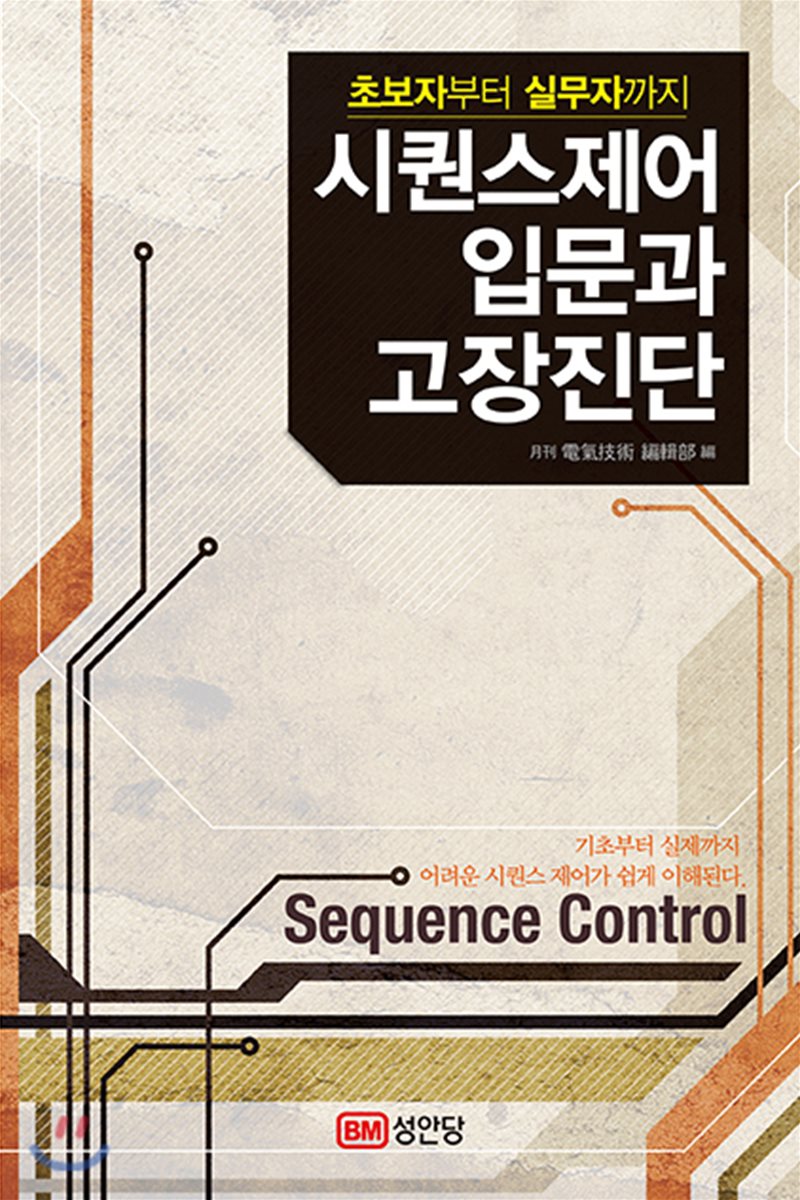
Introduction to Sequence Control and Fault Diagnosis
 |
Description
Book Introduction
Learn the basics of sequence control and fault diagnosis all at once!
"Introduction to Sequence Control and Fault Diagnosis" for beginners and professionals alike!
In modern industrial society, all industries are becoming automated and economized.
With the development of automation, sequence control is widely used in various facilities such as power facilities, industrial machinery such as steel and chemical industries, traffic signals, and elevators.
Although sequence control is an important technology in today's industrial world, it is very difficult to handle it systematically.
This book is an introductory book for those who want to learn sequence control for the first time, providing basic knowledge for fault diagnosis of sequence control and examples of fault diagnosis of commonly used sequence control circuits in an easy-to-understand manner.
It consists of two parts. In the first part, you can learn how the circuit works using a physical wiring diagram, and you can learn by comparing the conventional sequence and the logic sequence in relation to each other.
In Part 2, we explained how to find and repair a faulty sequence control circuit.
"Introduction to Sequence Control and Fault Diagnosis" for beginners and professionals alike!
In modern industrial society, all industries are becoming automated and economized.
With the development of automation, sequence control is widely used in various facilities such as power facilities, industrial machinery such as steel and chemical industries, traffic signals, and elevators.
Although sequence control is an important technology in today's industrial world, it is very difficult to handle it systematically.
This book is an introductory book for those who want to learn sequence control for the first time, providing basic knowledge for fault diagnosis of sequence control and examples of fault diagnosis of commonly used sequence control circuits in an easy-to-understand manner.
It consists of two parts. In the first part, you can learn how the circuit works using a physical wiring diagram, and you can learn by comparing the conventional sequence and the logic sequence in relation to each other.
In Part 2, we explained how to find and repair a faulty sequence control circuit.
index
Part 1: Introduction to Sequence Control
Chapter 1: Basic Knowledge of Sequence Control
1.
What is sequence control?
1-1.
Sequence control used in close proximity
1-2.
Electrical symbols indicating devices for sequence control
2. Opening and closing contacts that generate ON and OFF signals
2-1.
A contact, B contact, and C contact as opening and closing contacts
2-2.
Manually operated pushbutton switch
2-3.
Electronic relay that operates by electromagnetic force
2-4.
Contact function symbols and operating method symbols combined with contact symbols
3.
Sequence diagram showing how to deploy sequence control
3-1.
How to create a sequence diagram
3-2.
Sequence control symbol indicating the device name
4.
Semiconductors also function in the same way as switches.
4-1.
Switching behavior of diodes
4-2.
Switching operation of transistors
Chapter 2 Logic Circuits of Logic Sequences
5.
AND circuit that produces an output signal when all input signals are input
5-1.
Secondary signals indicating logic sequence operations
5-2. AND circuit operation table and logic symbol
5-3.
Method for creating and operating an OR circuit using a relay sequence
5-4.
Method of constructing and operating an AND circuit using diodes
6.
OR circuit that produces an output signal when one input signal is input
6-1. OR circuit operation table and logic symbol
6-2.
Method for creating and operating an OR circuit using a relay sequence
6-3.
Method for creating and operating an OR circuit using diodes
7.
NOT circuit that inverts the input signal
7-1. NOT circuit operation table and logic symbol
7-2.
Method for creating and operating a NOT circuit using a relay sequence
7-3.
Method for creating and operating a NOT circuit using a transistor
8.
A NAND circuit that produces no output when all input signals are input
8-1. NAND circuit operation table and logic symbols
8-2.
Method for creating and operating a NAND circuit using a relay sequence
8-3.
Method for creating and operating a NAND circuit using diodes and transistors
9.
A NOR circuit in which no output signal is produced when any one input signal is input.
9-1. Operation table and logic symbol of NOR circuit
9-2.
Method for creating and operating a NOR circuit using a relay sequence
9-3.
Method for creating and operating a NOR circuit using diodes and transistors
Chapter 3 Basic Circuit of Sequence Control
10.
A self-maintaining circuit that maintains operation by its own contacts
10-1.
Self-maintenance circuit by relay sequence
10-2.
Self-sustaining circuit by logic sequence
11.
An interlock circuit that prohibits the opponent's actions
11-1.
Interlock circuit by relay sequence
11-2.
Interlock circuit by logic sequence
12.
A time-limited circuit that operates with a time difference
12-1.
Time-limited operation circuit by relay sequence
12-2.
Time delay circuit by contactless sequence
Chapter 4 Control Circuit of Actual Device
13.
Motor start control circuit by relay sequence
13-1.
Main circuit of motor starting circuit
13-2.
Sequence diagram of motor start control circuit
13-3.
Relay sequence operation of the motor start control circuit
14.
Starting control circuit of a motor by logic sequence
14-1.
Input circuit and output circuit of logic sequence
14-2.
Logic sequence diagram of the motor start control circuit
14-3.
Logic sequence operation of the motor start control circuit
15.
Automatic opening and closing control circuit of the shutter
15-1.
Sequence diagram of the automatic opening and closing control circuit of the shutter
15-2.
Function and operation of shutter opening and closing control
15-3.
Forward/reverse circuit and interlock circuit of the shutter drive motor
15-4.
Method for creating an automatic shutter opening and closing control circuit
15-5.
Sequence operation of the automatic opening and closing control circuit of the shutter
16.
Automatic water supply control circuit using Protress liquid level switch
16-1.
Sequence diagram of automatic water supply control circuit
16-2.
Water level detection method using a protress liquid level switch
16-3.
Configuration of the sequence control system of the automatic watering device
16-4.
Sequence operation of automatic water supply control circuit
Part 2: Fault Diagnosis of Sequence Control Circuits
Chapter 1. Regulations for assembling sequence control circuits
1-1.
Arrangement and color of devices and conductors according to the phase of the exchange
1-2.
Arrangement and color of devices and conductors according to the polarity of the DC circuit
1-3.
Electric switch, electromagnetic contactor
1-4.
indicator lights
1-5.
pushbutton switch
Chapter 2 How to View and Read Sequence Circuit Diagrams
2-1.
Deployment connection rate
2-2.
How to view the deployment connection diagram
2-3.
Reading method of sequence control circuit
Chapter 3. Failures that can easily occur in devices used in sequence control circuits
3-1.
Knife switch (KS)
3-2.
Molded Case Circuit Breaker (MCCB)
3-3.
electromagnetic switch, magnetic contactor (MC)
3-4.
Thermal overload relay (THR)
3-5.
Wiring fuses and fuse holders (F.XF)
3-6.
Control Button Switch (BS)
3-7.
Indicator lights (SL. PL)
3-8.
Timer (TLR)
3-9.
Terminal block (TB)
Chapter 4 Measuring Instruments for Investigating Faults in Sequence Control Circuits
4-1.
Circuit (tester)
4-2.
Insulation resistance meter (megger)
4-3.
Grounding resistance meter (earth tester)
4-4.
Phase rotation detector
4-5.
torque driver
4-6.
Conductivity tester
Chapter 5 Fault Diagnosis of Sequence Control Circuits
5-1.
Operation control of three-phase induction motor
5-2.
Reversible operation circuit of a three-phase induction motor
5-3.
Y-△ starting circuit of a three-phase induction motor
Chapter 6: Fault Diagnosis of Automatic Recharge Circuits
6-1.
Protease circuit
6-2.
Fault diagnosis of automatic water supply circuit using protress circuit
6-3.
Fault diagnosis of automatic drain circuit using protress circuit
6-4.
Fault diagnosis of automatic water supply circuit that also prevents idle running of the pump
Chapter 7 Protease Circuit
7-1.
Protress internal circuit
7-2.
Protress electronic circuit unit
Chapter 8 Fault Diagnosis of Prot-Type Automatic Liquid Level Control Circuits
8-1.
Liquid level control relay circuit using a probe
8-2.
Operation of the liquid level control circuit
8-3.
Fault diagnosis using Prochart
Chapter 1: Basic Knowledge of Sequence Control
1.
What is sequence control?
1-1.
Sequence control used in close proximity
1-2.
Electrical symbols indicating devices for sequence control
2. Opening and closing contacts that generate ON and OFF signals
2-1.
A contact, B contact, and C contact as opening and closing contacts
2-2.
Manually operated pushbutton switch
2-3.
Electronic relay that operates by electromagnetic force
2-4.
Contact function symbols and operating method symbols combined with contact symbols
3.
Sequence diagram showing how to deploy sequence control
3-1.
How to create a sequence diagram
3-2.
Sequence control symbol indicating the device name
4.
Semiconductors also function in the same way as switches.
4-1.
Switching behavior of diodes
4-2.
Switching operation of transistors
Chapter 2 Logic Circuits of Logic Sequences
5.
AND circuit that produces an output signal when all input signals are input
5-1.
Secondary signals indicating logic sequence operations
5-2. AND circuit operation table and logic symbol
5-3.
Method for creating and operating an OR circuit using a relay sequence
5-4.
Method of constructing and operating an AND circuit using diodes
6.
OR circuit that produces an output signal when one input signal is input
6-1. OR circuit operation table and logic symbol
6-2.
Method for creating and operating an OR circuit using a relay sequence
6-3.
Method for creating and operating an OR circuit using diodes
7.
NOT circuit that inverts the input signal
7-1. NOT circuit operation table and logic symbol
7-2.
Method for creating and operating a NOT circuit using a relay sequence
7-3.
Method for creating and operating a NOT circuit using a transistor
8.
A NAND circuit that produces no output when all input signals are input
8-1. NAND circuit operation table and logic symbols
8-2.
Method for creating and operating a NAND circuit using a relay sequence
8-3.
Method for creating and operating a NAND circuit using diodes and transistors
9.
A NOR circuit in which no output signal is produced when any one input signal is input.
9-1. Operation table and logic symbol of NOR circuit
9-2.
Method for creating and operating a NOR circuit using a relay sequence
9-3.
Method for creating and operating a NOR circuit using diodes and transistors
Chapter 3 Basic Circuit of Sequence Control
10.
A self-maintaining circuit that maintains operation by its own contacts
10-1.
Self-maintenance circuit by relay sequence
10-2.
Self-sustaining circuit by logic sequence
11.
An interlock circuit that prohibits the opponent's actions
11-1.
Interlock circuit by relay sequence
11-2.
Interlock circuit by logic sequence
12.
A time-limited circuit that operates with a time difference
12-1.
Time-limited operation circuit by relay sequence
12-2.
Time delay circuit by contactless sequence
Chapter 4 Control Circuit of Actual Device
13.
Motor start control circuit by relay sequence
13-1.
Main circuit of motor starting circuit
13-2.
Sequence diagram of motor start control circuit
13-3.
Relay sequence operation of the motor start control circuit
14.
Starting control circuit of a motor by logic sequence
14-1.
Input circuit and output circuit of logic sequence
14-2.
Logic sequence diagram of the motor start control circuit
14-3.
Logic sequence operation of the motor start control circuit
15.
Automatic opening and closing control circuit of the shutter
15-1.
Sequence diagram of the automatic opening and closing control circuit of the shutter
15-2.
Function and operation of shutter opening and closing control
15-3.
Forward/reverse circuit and interlock circuit of the shutter drive motor
15-4.
Method for creating an automatic shutter opening and closing control circuit
15-5.
Sequence operation of the automatic opening and closing control circuit of the shutter
16.
Automatic water supply control circuit using Protress liquid level switch
16-1.
Sequence diagram of automatic water supply control circuit
16-2.
Water level detection method using a protress liquid level switch
16-3.
Configuration of the sequence control system of the automatic watering device
16-4.
Sequence operation of automatic water supply control circuit
Part 2: Fault Diagnosis of Sequence Control Circuits
Chapter 1. Regulations for assembling sequence control circuits
1-1.
Arrangement and color of devices and conductors according to the phase of the exchange
1-2.
Arrangement and color of devices and conductors according to the polarity of the DC circuit
1-3.
Electric switch, electromagnetic contactor
1-4.
indicator lights
1-5.
pushbutton switch
Chapter 2 How to View and Read Sequence Circuit Diagrams
2-1.
Deployment connection rate
2-2.
How to view the deployment connection diagram
2-3.
Reading method of sequence control circuit
Chapter 3. Failures that can easily occur in devices used in sequence control circuits
3-1.
Knife switch (KS)
3-2.
Molded Case Circuit Breaker (MCCB)
3-3.
electromagnetic switch, magnetic contactor (MC)
3-4.
Thermal overload relay (THR)
3-5.
Wiring fuses and fuse holders (F.XF)
3-6.
Control Button Switch (BS)
3-7.
Indicator lights (SL. PL)
3-8.
Timer (TLR)
3-9.
Terminal block (TB)
Chapter 4 Measuring Instruments for Investigating Faults in Sequence Control Circuits
4-1.
Circuit (tester)
4-2.
Insulation resistance meter (megger)
4-3.
Grounding resistance meter (earth tester)
4-4.
Phase rotation detector
4-5.
torque driver
4-6.
Conductivity tester
Chapter 5 Fault Diagnosis of Sequence Control Circuits
5-1.
Operation control of three-phase induction motor
5-2.
Reversible operation circuit of a three-phase induction motor
5-3.
Y-△ starting circuit of a three-phase induction motor
Chapter 6: Fault Diagnosis of Automatic Recharge Circuits
6-1.
Protease circuit
6-2.
Fault diagnosis of automatic water supply circuit using protress circuit
6-3.
Fault diagnosis of automatic drain circuit using protress circuit
6-4.
Fault diagnosis of automatic water supply circuit that also prevents idle running of the pump
Chapter 7 Protease Circuit
7-1.
Protress internal circuit
7-2.
Protress electronic circuit unit
Chapter 8 Fault Diagnosis of Prot-Type Automatic Liquid Level Control Circuits
8-1.
Liquid level control relay circuit using a probe
8-2.
Operation of the liquid level control circuit
8-3.
Fault diagnosis using Prochart
Publisher's Review
First, the physical wiring diagram was used.
By using a physical wiring diagram with actual switches and relays drawn in the sequence diagram, readers' understanding of the sequence is enhanced.
Second, the existing sequence and the logic sequence were compared and explained.
By comparing the existing sequence and the logic sequence in relation to each other, you can learn both at the same time.
Third, the fault diagnosis procedure of the sequence control circuit was explained in an easy-to-understand manner.
By providing detailed examples of fault diagnosis procedures for sequence control circuits, more complex sequence control circuits can be diagnosed using this method.
By using a physical wiring diagram with actual switches and relays drawn in the sequence diagram, readers' understanding of the sequence is enhanced.
Second, the existing sequence and the logic sequence were compared and explained.
By comparing the existing sequence and the logic sequence in relation to each other, you can learn both at the same time.
Third, the fault diagnosis procedure of the sequence control circuit was explained in an easy-to-understand manner.
By providing detailed examples of fault diagnosis procedures for sequence control circuits, more complex sequence control circuits can be diagnosed using this method.
GOODS SPECIFICS
- Date of issue: May 3, 2018
- Page count, weight, size: 408 pages | 573g | 150*225*30mm
- ISBN13: 9788931526165
- ISBN10: 8931526164
You may also like
카테고리
korean


korean

![GQ KOREA Mark (Monthly): December [2025]](http://librairie.coreenne.fr/cdn/shop/files/8ef265dbbfbf186523ed75ba7319009d.jpg?v=1765340328&width=3840)


